Cheapside: London’s original high street
Cheapside was a bustling marketplace for centuries, thriving first as a medieval food market and evolving into a hub for luxury goods. It’s also the site of a spectacular jewellery discovery.
Cheapside, City of London
Since 1087
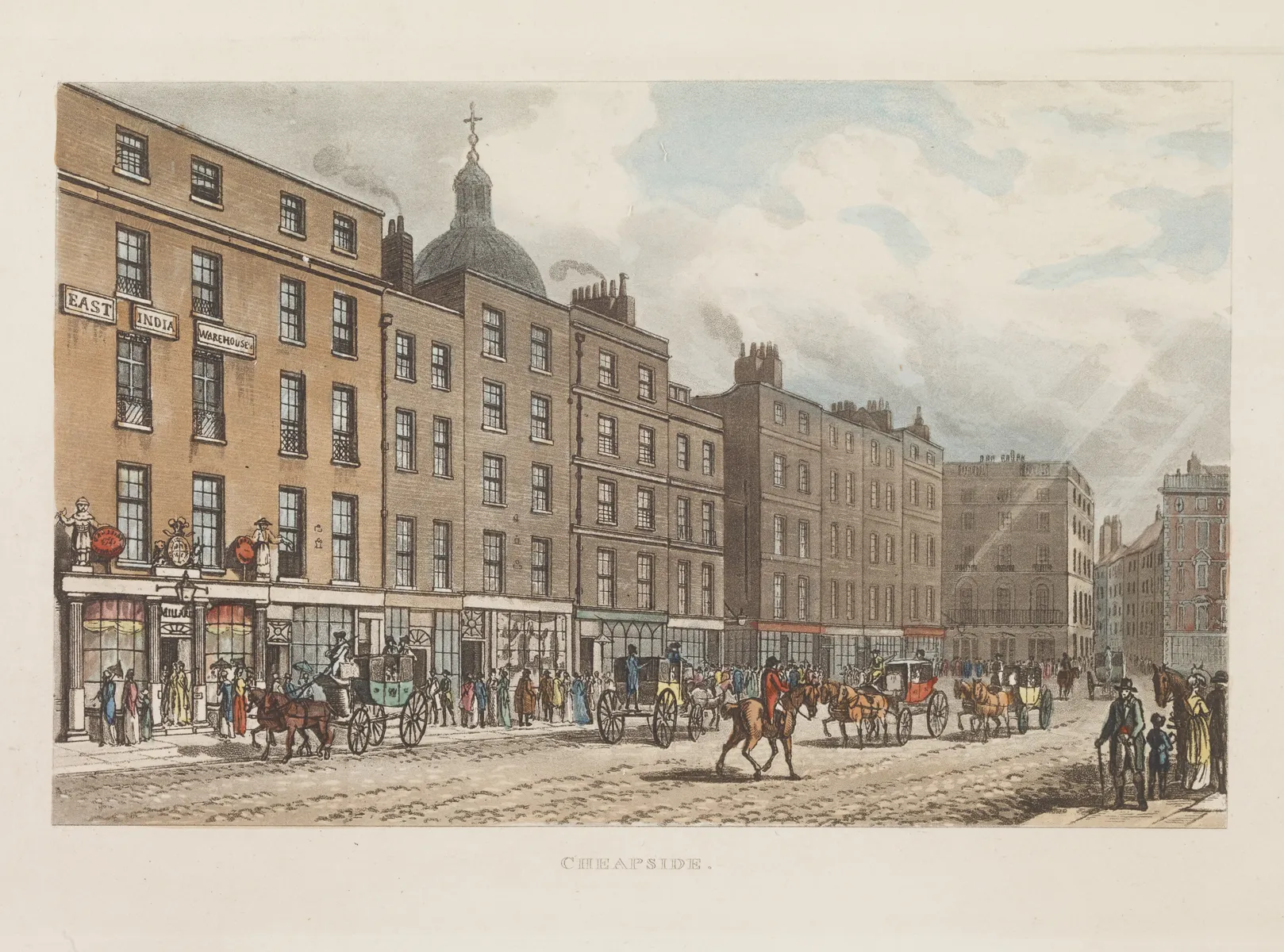
A bustling Cheapside street scene.
From bread and vegetables to jewels and gems
Before Londoners and tourists flocked to Oxford Street and Bond Street, Cheapside, in the City of London, was the place to shop. It became a busy thoroughfare after the east-to-west route between Aldgate and Ludgate got congested following construction on Old St Paul’s Cathedral in 1087.
The name Cheapside is derived from the word ‘chepe’, meaning market or bargaining place. The area was home to a thriving medieval market. You can get a sense of what was sold there by looking at the surrounding street names, like Poultry and Milk Street.
Cheapside remained a popular shopping district for centuries, even after it was rebuilt following the destruction of the Great Fire of London in 1666.
A large concentration of goldsmith shops made it a destination for jewellery and other luxury goods. We can imagine the finery that would have been on display thanks to the Cheapside Hoard, a spectacular collection of jewels buried around 1640 or 1641.
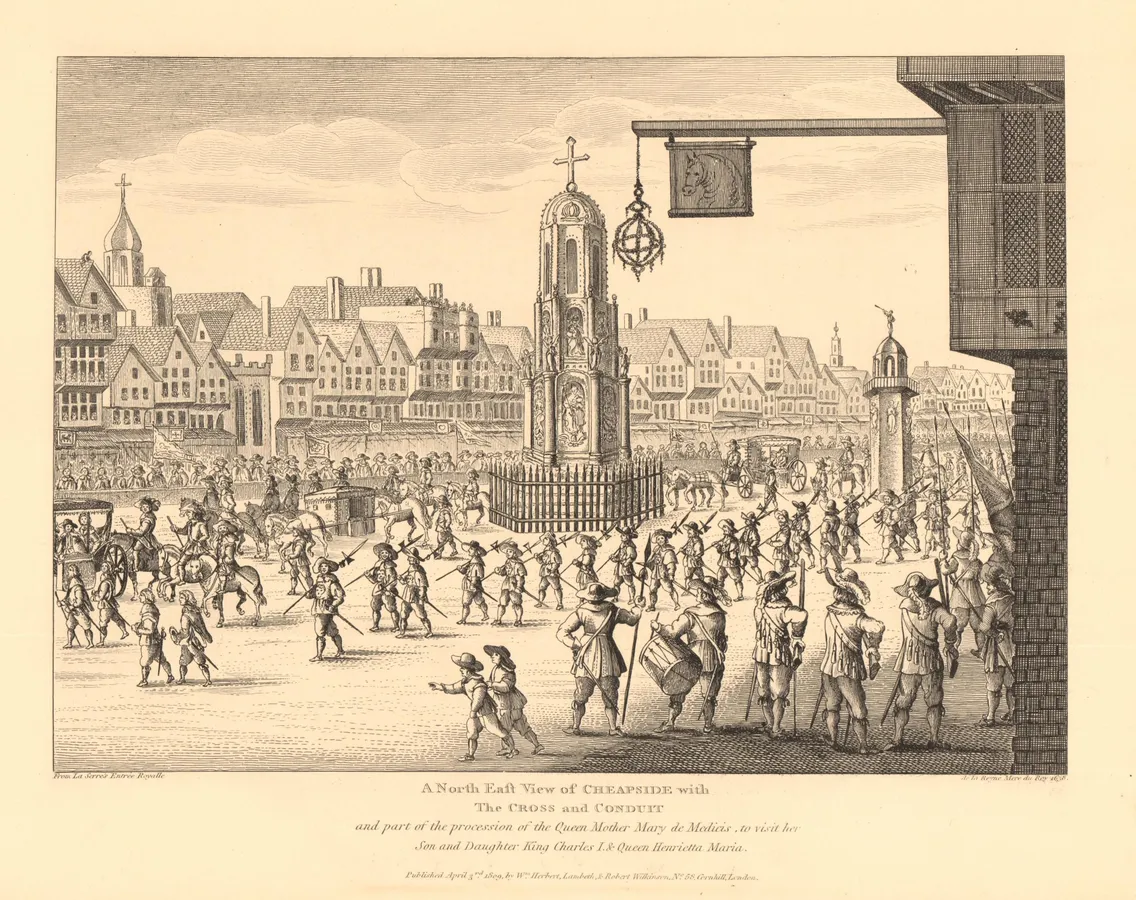
Many important processions, including coronations and the Lord Mayor’s Show, have also passed through Cheapside for hundreds of years.
Cheapside’s long-lost landmarks
An underground channel called the Great Conduit took fresh water from the River Tyburn, around modern-day Oxford Street, all the way to Cheapside. It ended at a large public fountain called the Cheapside Standard.
The fountain became a major landmark used for public events, celebrations and even executions. Both the conduit and the fountain were destroyed in the Great Fire of London.
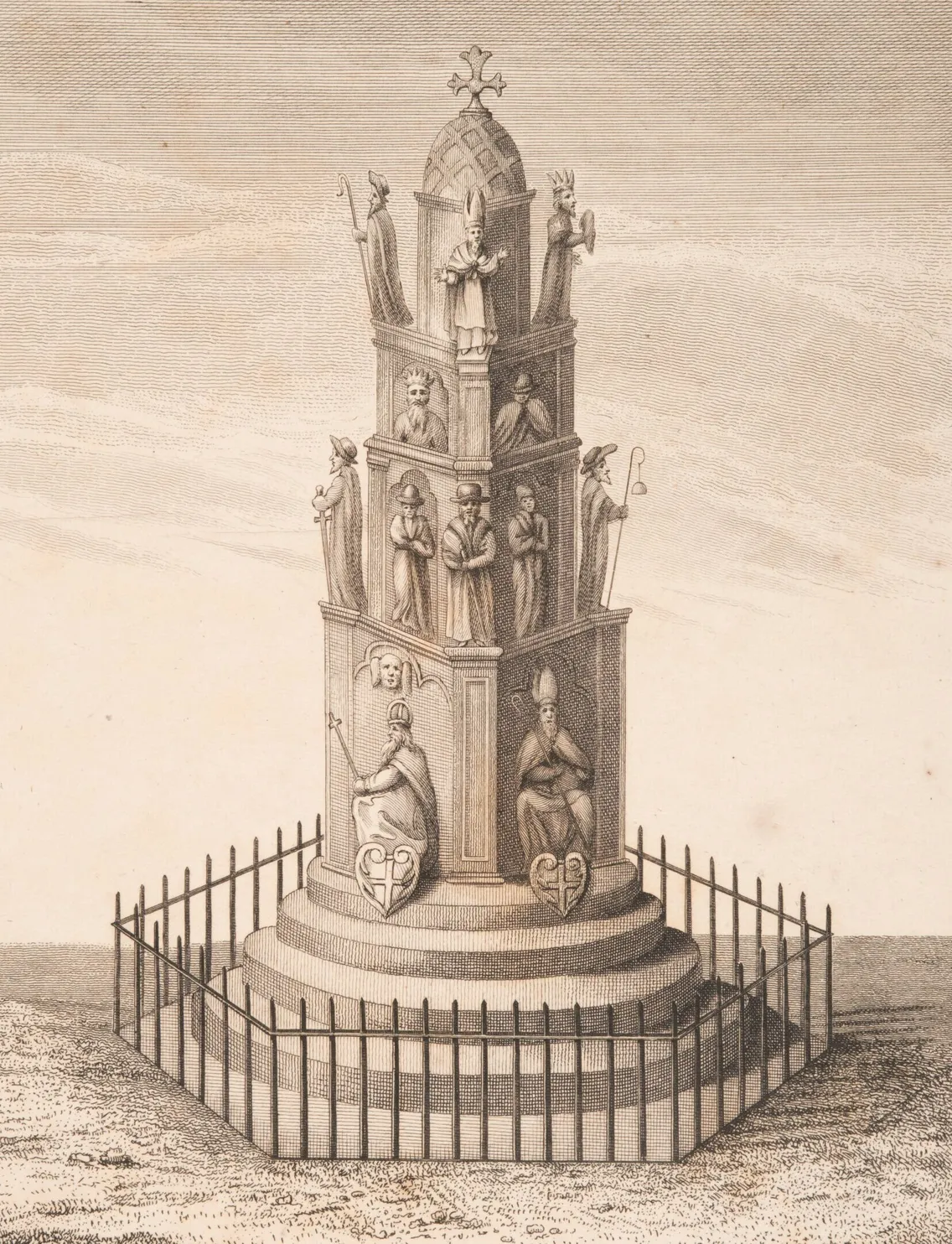
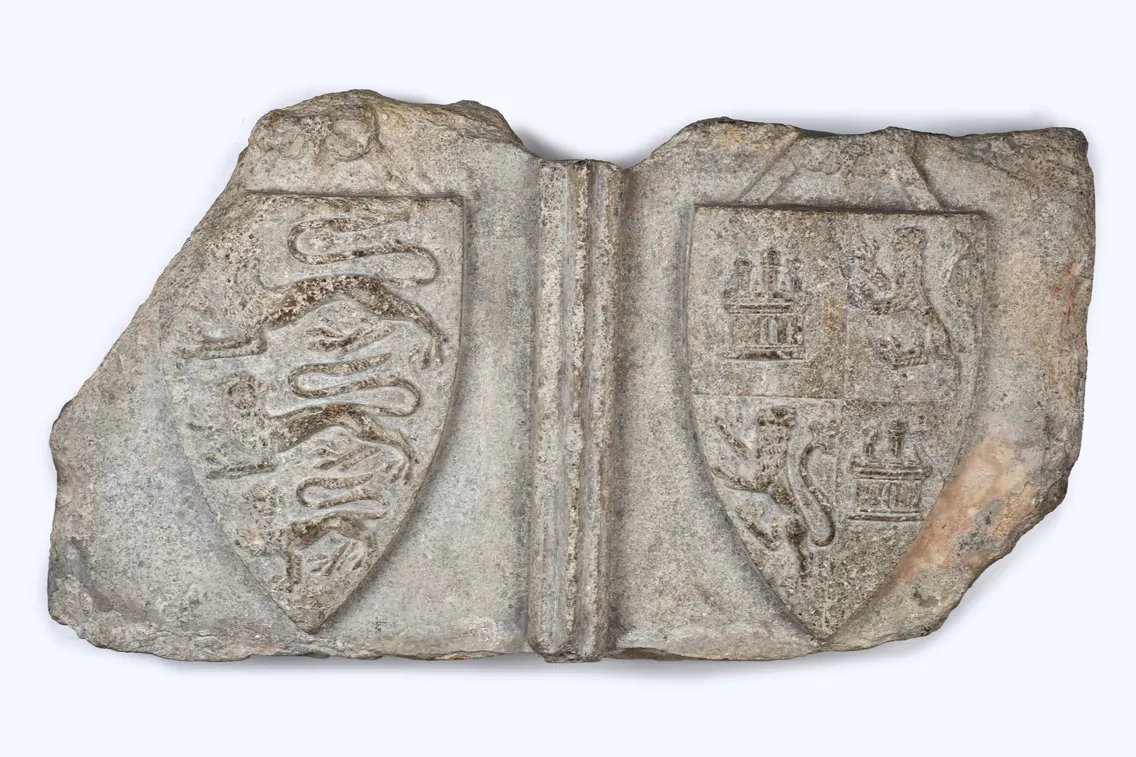
In the 1290s, King Edward I built the Cheapside Cross in memory of his late wife Eleanor of Castile. The ornate Catholic stone memorial was one of twelve built along her funeral route from Nottinghamshire to London.
It stood for 350 years before becoming a source of religious conflict as England became a more Protestant country in the mid-1500s. It was eventually dismantled in 1643.
Shopping in Cheapside
There were two medieval food markets in the area, East Cheap and West Cheap. The latter became the main marketplace and was known as Cheapside. The names of the streets running off Cheapside – like Bread Street, Poultry, Milk Street and Honey Lane – indicate the goods that would have been on sale.
It evolved into a bustling shopping district, filled with activity and buildings up to four or five stories high. People would sell their wares in the street, and shops were stocked with leather, haberdashery, spices and jewellery. The small hoard of late medieval metal dress accessories and fittings in our collection, like belt-ends and buckles, shows there was metalworking in the area.
Up to the 1760s, shops were identified by different signs rather than numbers. People would have seen signs of lions, bears, crowns, roses, foxes and eagles lining the street.
“the shops of Milan, Rome, Venice and Florence together have not so many of so great size”
Anonymous Venetian, 1503
Home of the goldsmiths
Cheapside was internationally famous as a centre of the goldsmith trade, with part of the south-west end of the street known as Goldsmith’s Row. There were impressive displays of gold, silver and jewels in the shop windows.
A Venetian visitor to the city in 1503 remarked: “there are in London 52 goldsmith’s shops in one single street.” They were so “well-stocked with vessels of silver… that in my opinion all the shops of Milan, Rome, Venice and Florence together have not so many of so great size".
The goldsmith trade began to expand out of Cheapside in the early 17th century as rents rose and space became limited. The destruction caused by the Great Fire of London meant Cheapside was no longer a hub for the trade. But Goldsmiths Hall, the historic headquarters of the Goldsmiths’ Company, still stands on Foster Lane, off Cheapside.
-
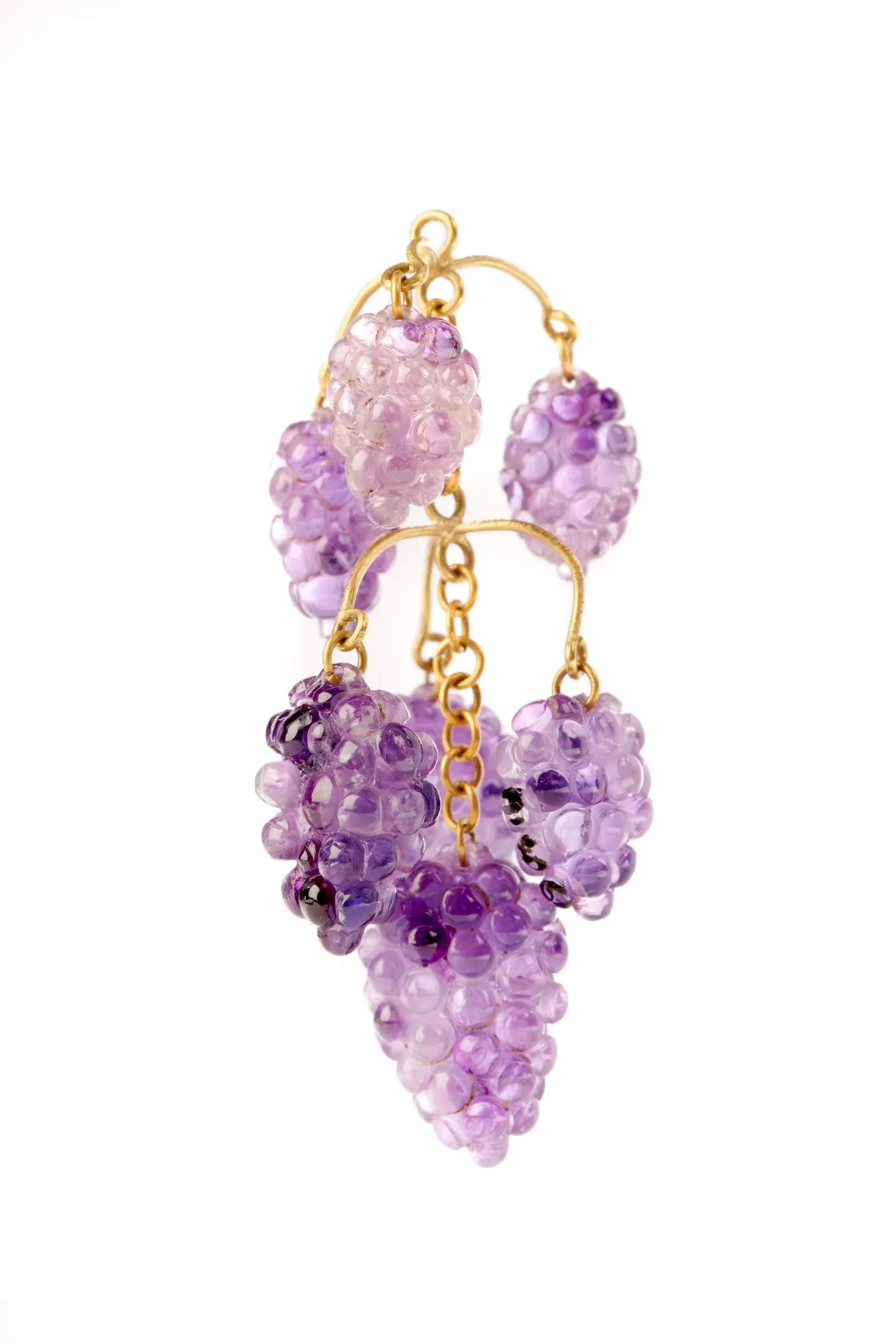
This pendant, part of the Cheapside Hoard, features bunches of grapes made of amethysts.
-
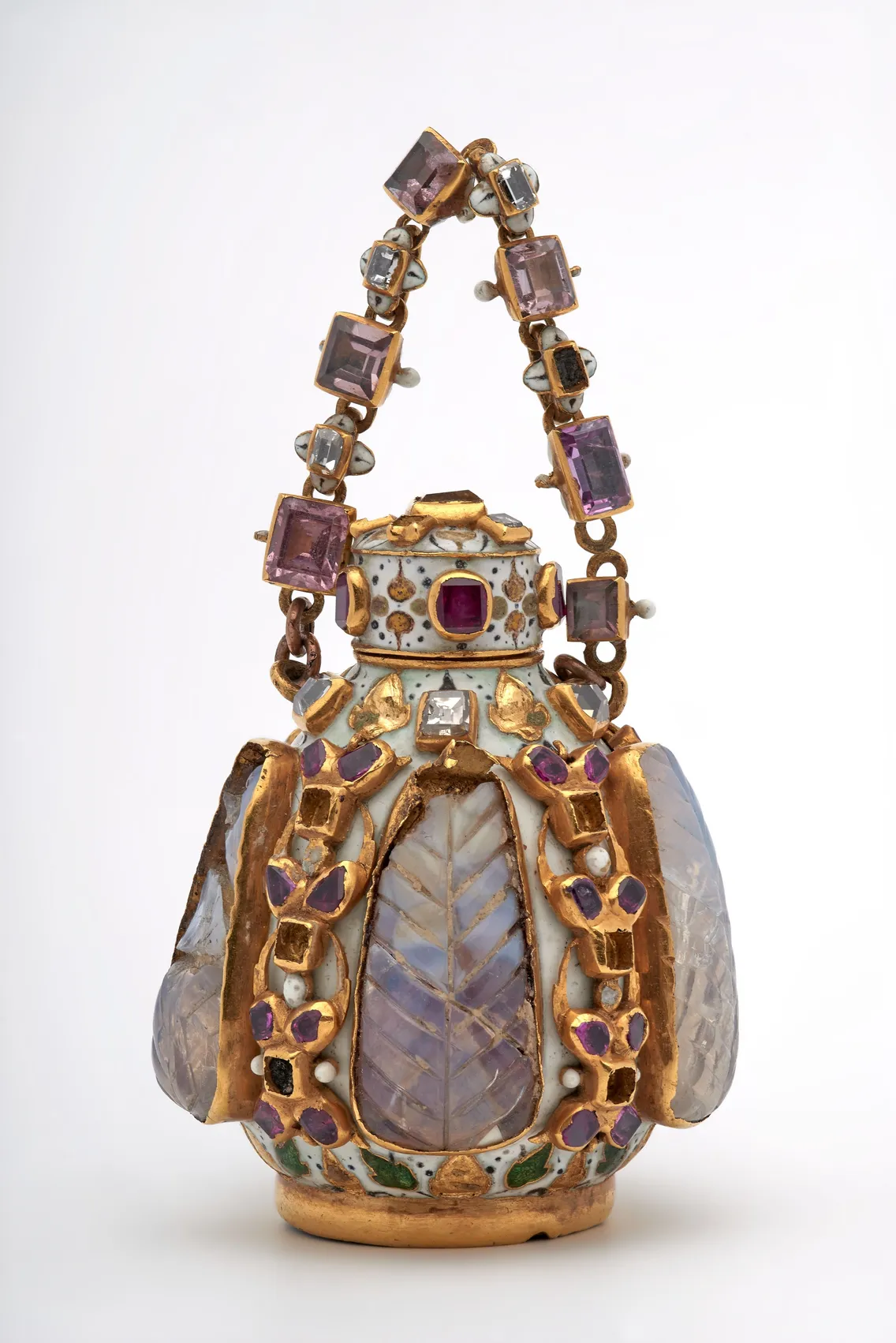
A scent bottle decorated with gold, enamel and gems.
-
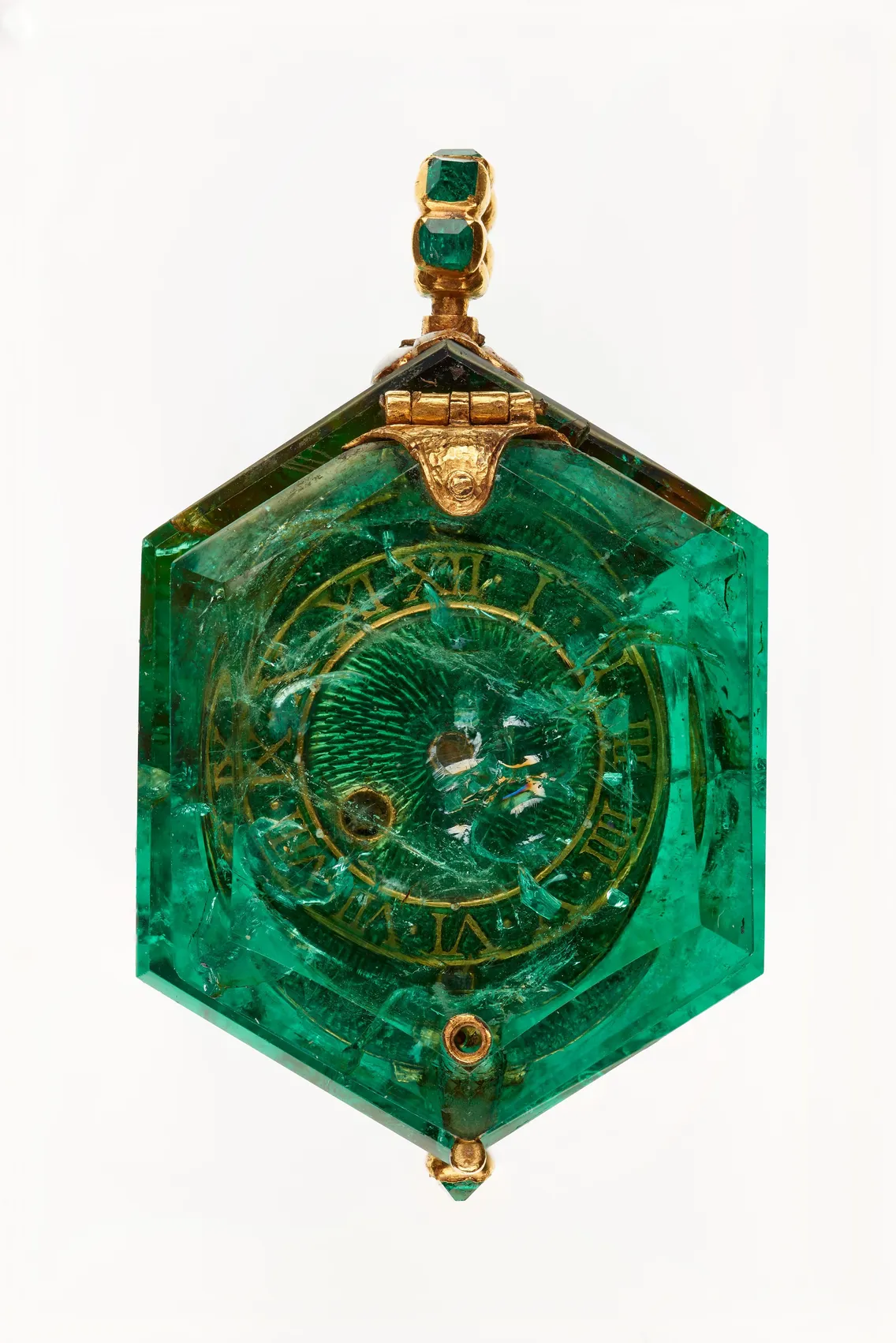
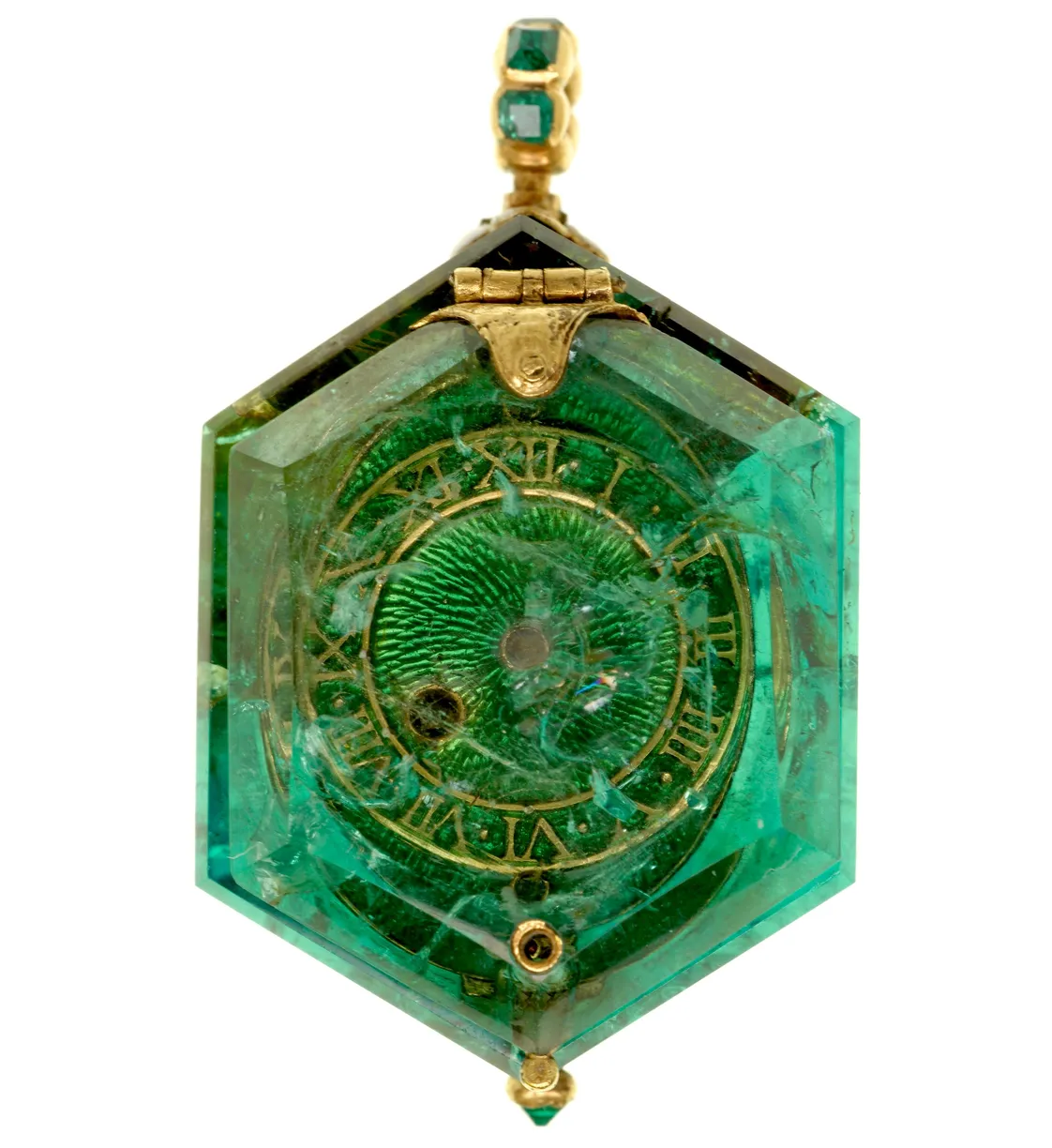
A watch set inside an emerald case.
The Cheapside Hoard
In June 1912, workmen discovered a heap of jewellery and gemstones underneath a cellar floor in Cheapside. This treasure was buried around 1640, lying undisturbed below this busy shopping street for almost 300 years. It’s known as the Cheapside Hoard.
We don’t know for sure who buried it and why. Given the location and the nature of the material, it’s likely that the jewellery was stock belonging to a goldsmith. The date also gives us an important clue. The English Civil Wars (1642–1651) began around the time the hoard was buried, so it’s possible it was stashed before violence erupted.
The Cheapside Hoard is the single greatest collection of Tudor and Stuart jewellery in the world, and we hold most of these magnificent jewels in our collection.
Processions and pageantry
As well as being a major shopping thoroughfare, many processions, pageants and tournaments happened around Cheapside.
Monarchs journeyed from the Tower of London to Westminster for their coronations, and Cheapside would be filled with people, banners and flags. During these processions, it was common for the water fountains at each end of the street to be filled with wine.
The Lord Mayor’s Show, a procession that takes the newly-elected mayor of the City of London to swear allegiance to the crown, passes through Cheapside. This 800-year-old event has grown into a noisy and colourful parade. Every November, you can see the new lord mayor travel the route in the opulent lord mayor’s coach.
-
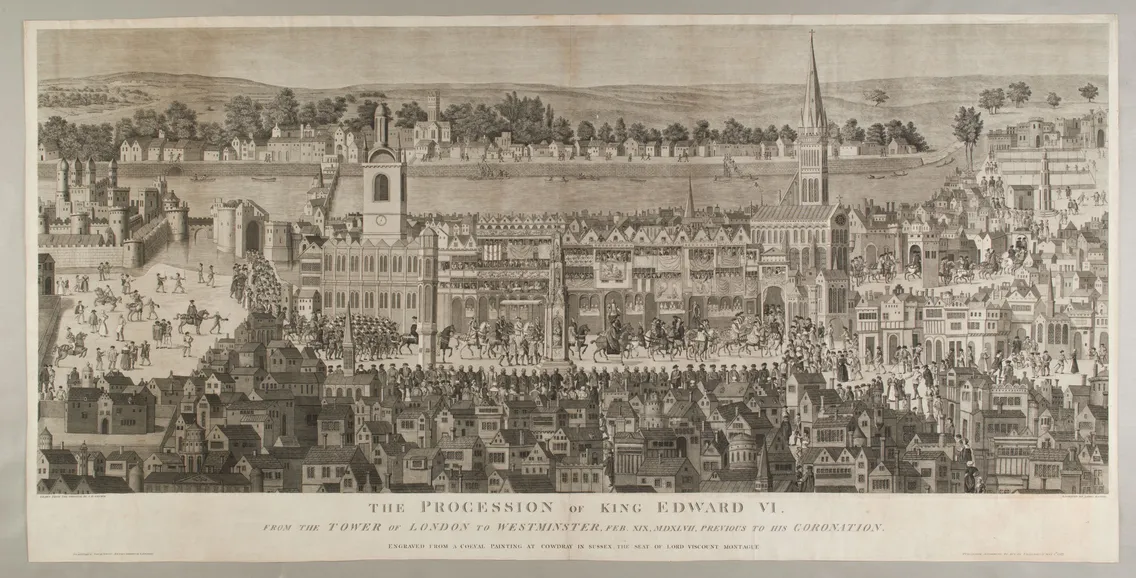
This print depicts the coronation procession of King Edward VI passing through Cheapside.
Cheapside today
There are two significant Cheapside landmarks worth seeing today. St Mary-le-Bow church burnt down during the Great Fire of London and was rebuilt by the architect and scientist Christoper Wren in 1670.
The church was also heavily damaged during the Blitz in the Second World War (1939–1945). But it was restored again and is now a listed building. Tradition goes that anyone born within earshot of the church’s Bow Bells is a true Cockney.
The Cheapside tree, on the corner of Cheapside and Wood Street, is less noticeable but still significant. This London plane tree is tucked away behind shops and offices on the site of a former medieval church. It’s been there for centuries, potentially as far back as the 1700s, and local businesses used to reference their proximity to the tree in their addresses.
-
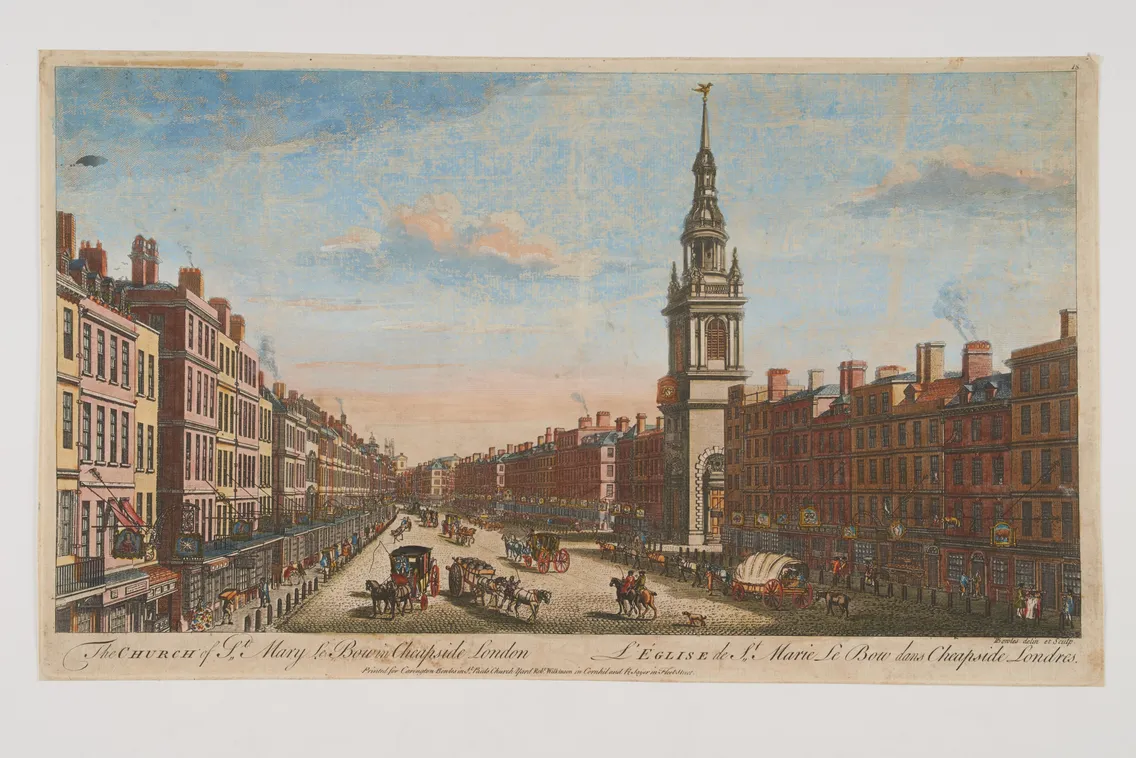
The church of St Mary-le-Bow standing tall.
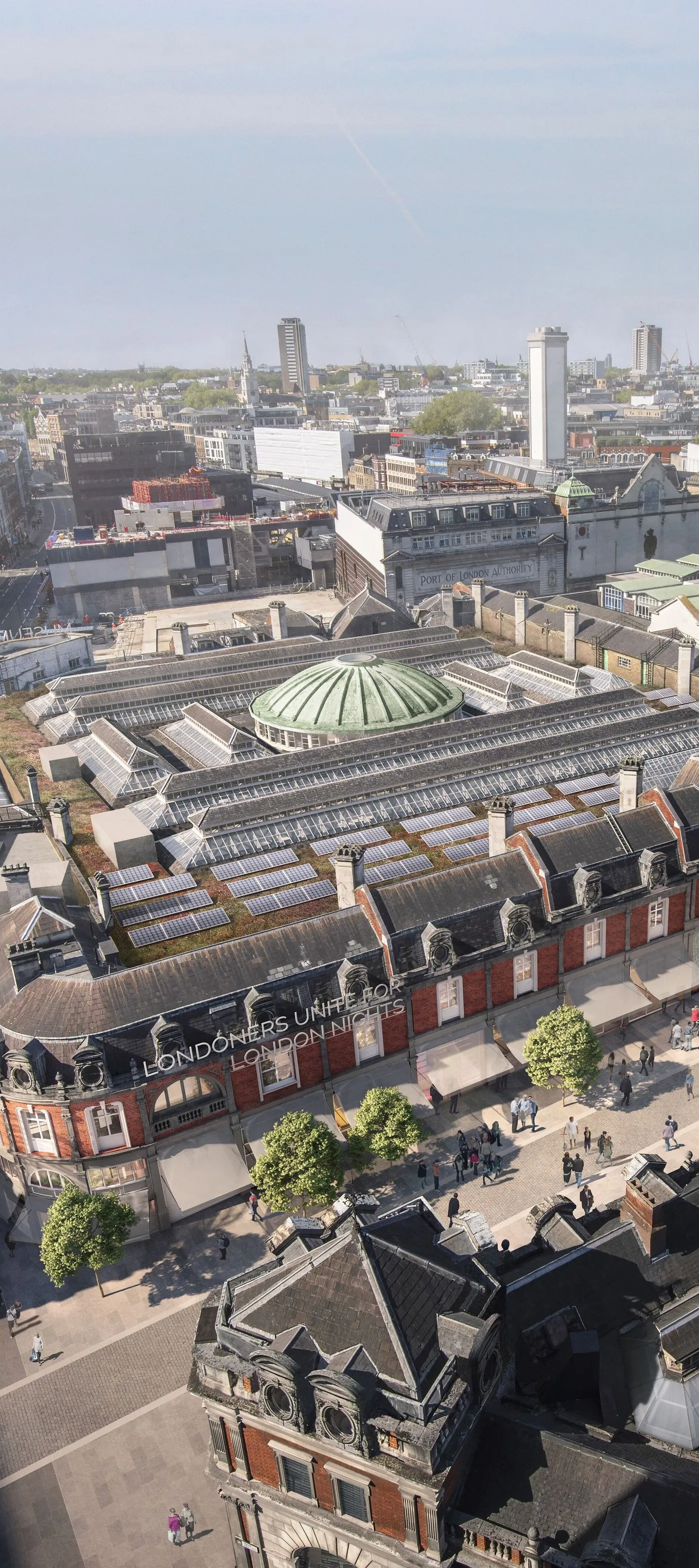
Much of Cheapside was rebuilt during the 1950s and 1960s following heavy damage during the Blitz. The area has undergone another wave of regeneration since and is now a mix of offices and shops. It’s home to One New Change, the only large shopping centre in the City of London.
Tags
-

-
 Fashion & Style
Jewels of the Cheapside Hoard
An emerald watch, a salamander brooch and a cornelian squirrel
-
 Religion & Beliefs
What was the Cheapside Cross?
A monument to a queen – and a point of religious conflict