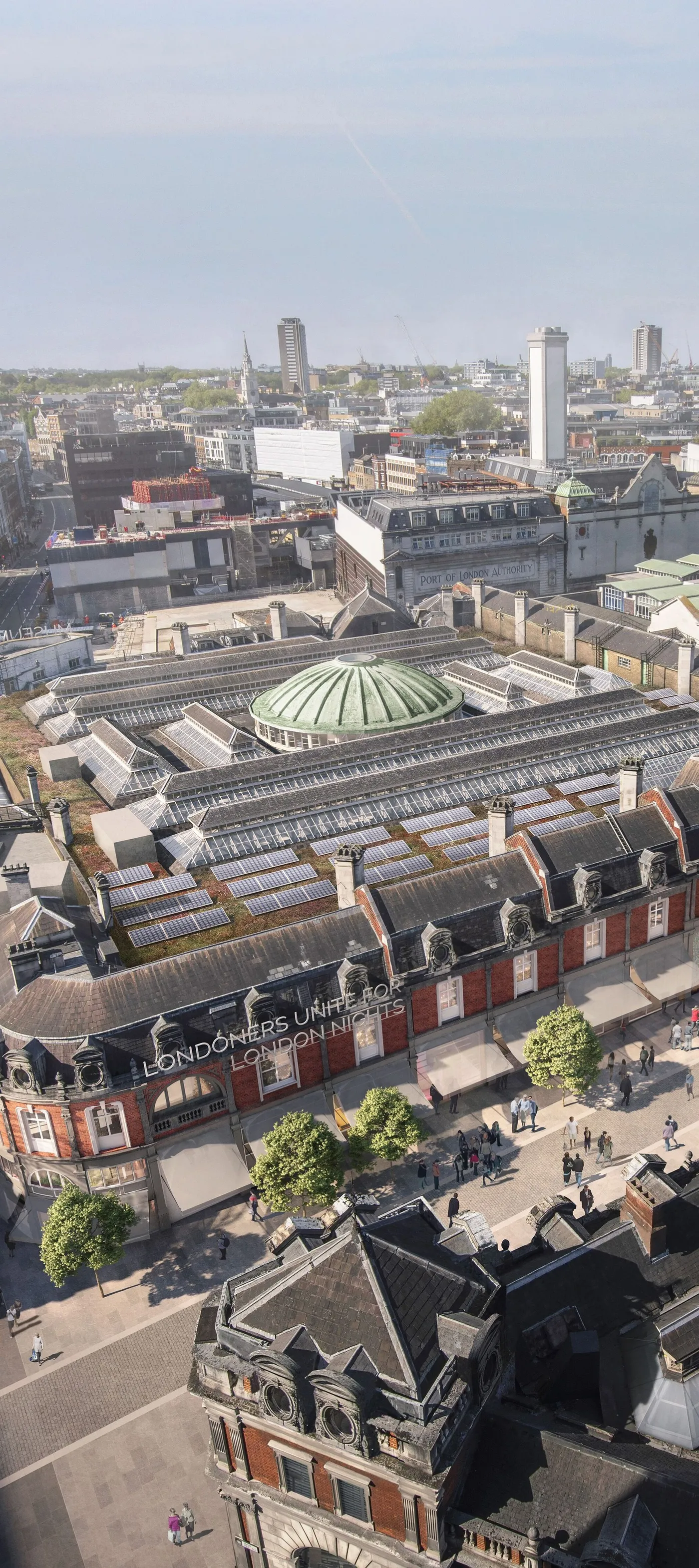
Putney Bridge
Putney Bridge is the third oldest bridge crossing the River Thames in London. It’s a significant one for rowers – and those cheering on the teams in blue – as it's the start point of the Boat Race.
Putney and Fulham
Since 1729
The wooden bridge
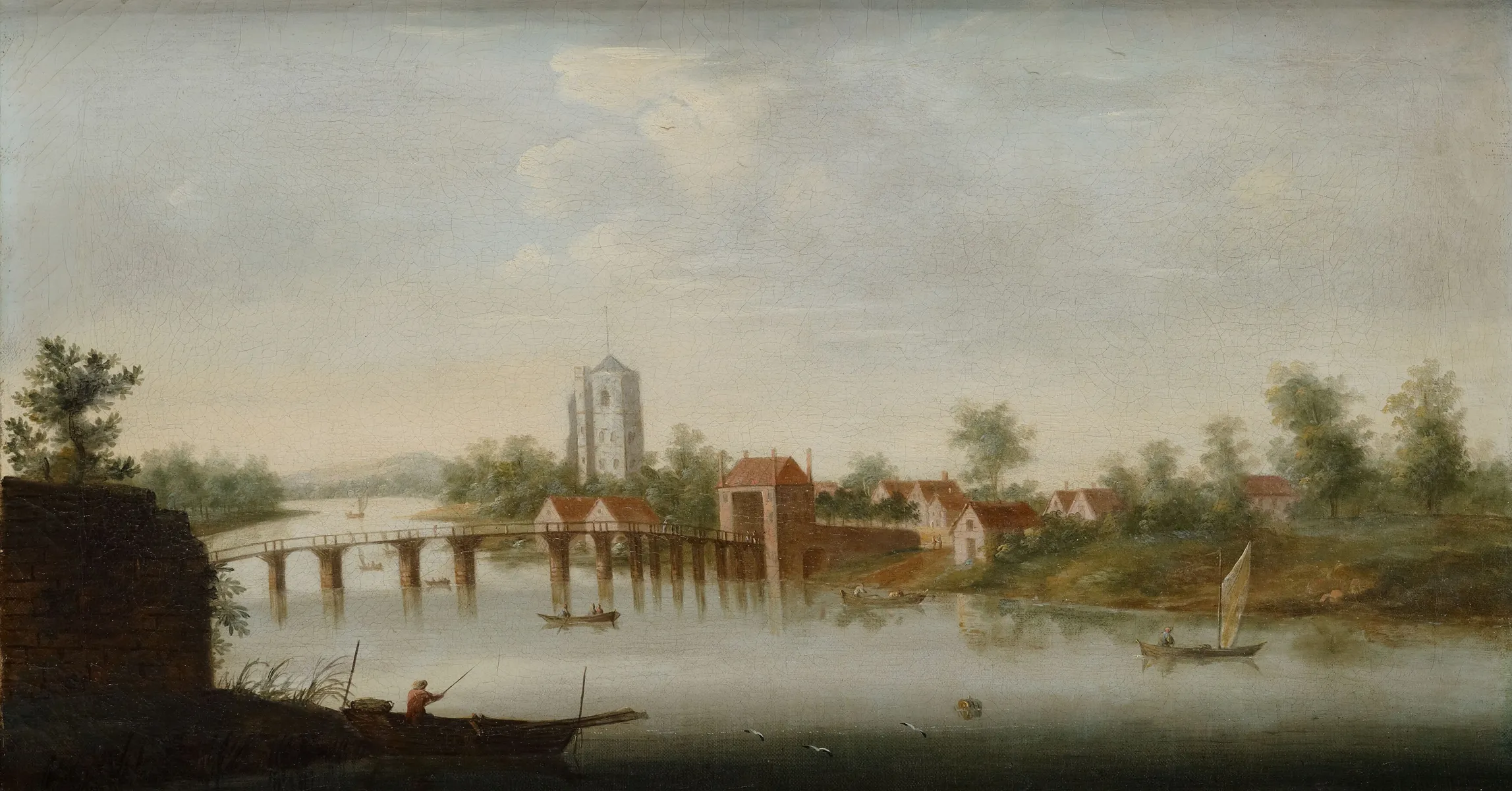
Before the construction of a wooden bridge in 1729, the only way to cross the River Thames between Putney and Fulham was via the Putney Ferry.
At the outbreak of the English Civil Wars (1642–1651), a temporary bridge made of boats was set up across the river. This gave anti-monarchist parliamentarians quick access to opposing forces based in Kingston, downriver in south-west London.
The story goes that Robert Walpole, known as the first prime minister, was the originator of the first Putney Bridge. On a journey to see George I, the ferry was on the Fulham side of the river. The watermen, drinking in the Swan Inn, ignored his calls for help from the Putney side and he had to take a longer way around. After this inconvenience, he vowed to replace them with a bridge crossing.
Shipwright and surveyor Jacob Acworth and the king’s carpenter Thomas Phillips built the wooden Putney Bridge, with tollbooths at either end, in 1729. It was only the third bridge built across the Thames, after London Bridge and Kingston Bridge.
Death and highwaymen
The Green Man pub, located just south of the bridge up Putney Hill, was a known haunt for highwaymen and a meeting point for duellers. It wouldn’t have been unusual to encounter them on the bridge.
In 1795, after discovering her lover was having an affair, author and women’s rights advocate Mary Wollstonecraft tried to end her life by jumping off Putney Bridge. The intervention of two passing watermen saved her.
-
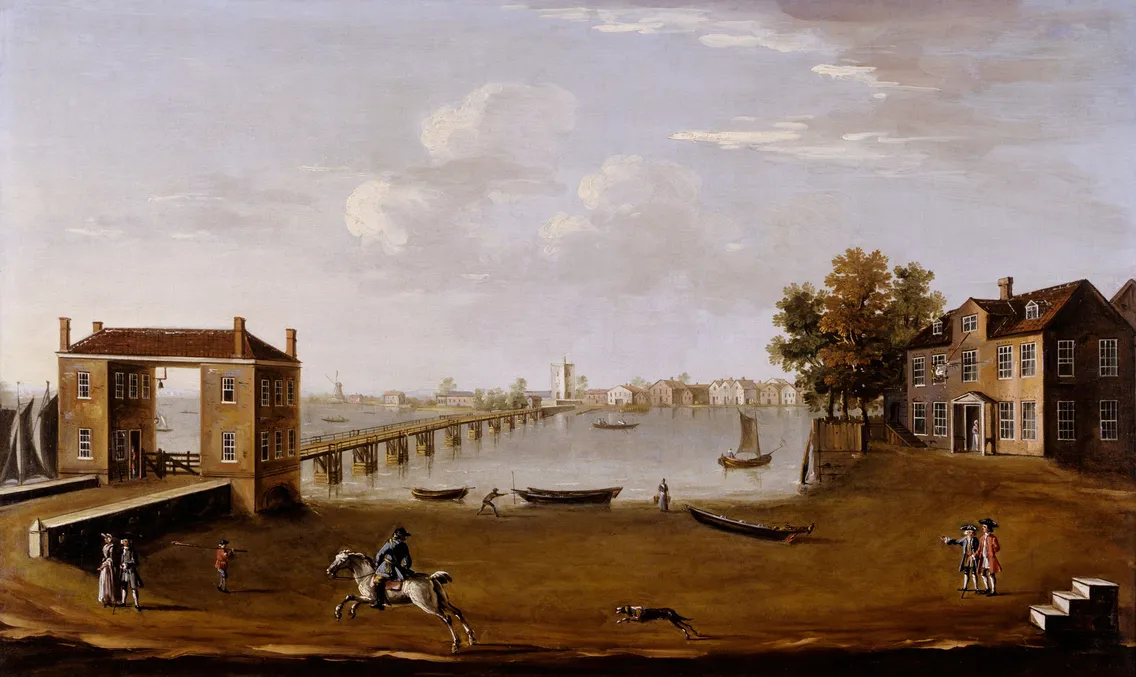
The bell underneath the roof of the main toll-house was used to warn of approaching highwaymen.
“The action of the Board of Works is highly to be commended. They have erected a splendid bridge”
Lloyd’s Illustrated Newspaper, 1886
The bridge was rebuilt in stone
The Metropolitan Board of Works (MBW) bought Putney Bridge in 1879, bringing the bridge under local government control. In 1880, the same year that the District Line arrived in Fulham, they removed the tolls.
The MBW rebuilt Putney Bridge as a five-span stone bridge, which opened in 1886. It was designed by Joseph Bazalgette, chief engineer of the MBW and the man responsible for London’s modern sewer system. Lloyd’s Illustrated News reported on the bridge’s opening ceremony: “The action of the Board of Works is highly to be commended. They have erected a splendid bridge”.
In 1909, Putney Bridge became one of the first bridges crossing the Thames to include London’s tram network. To cope with the increased traffic, London County Council decided to widen the bridge by nine metres in the 1930s.
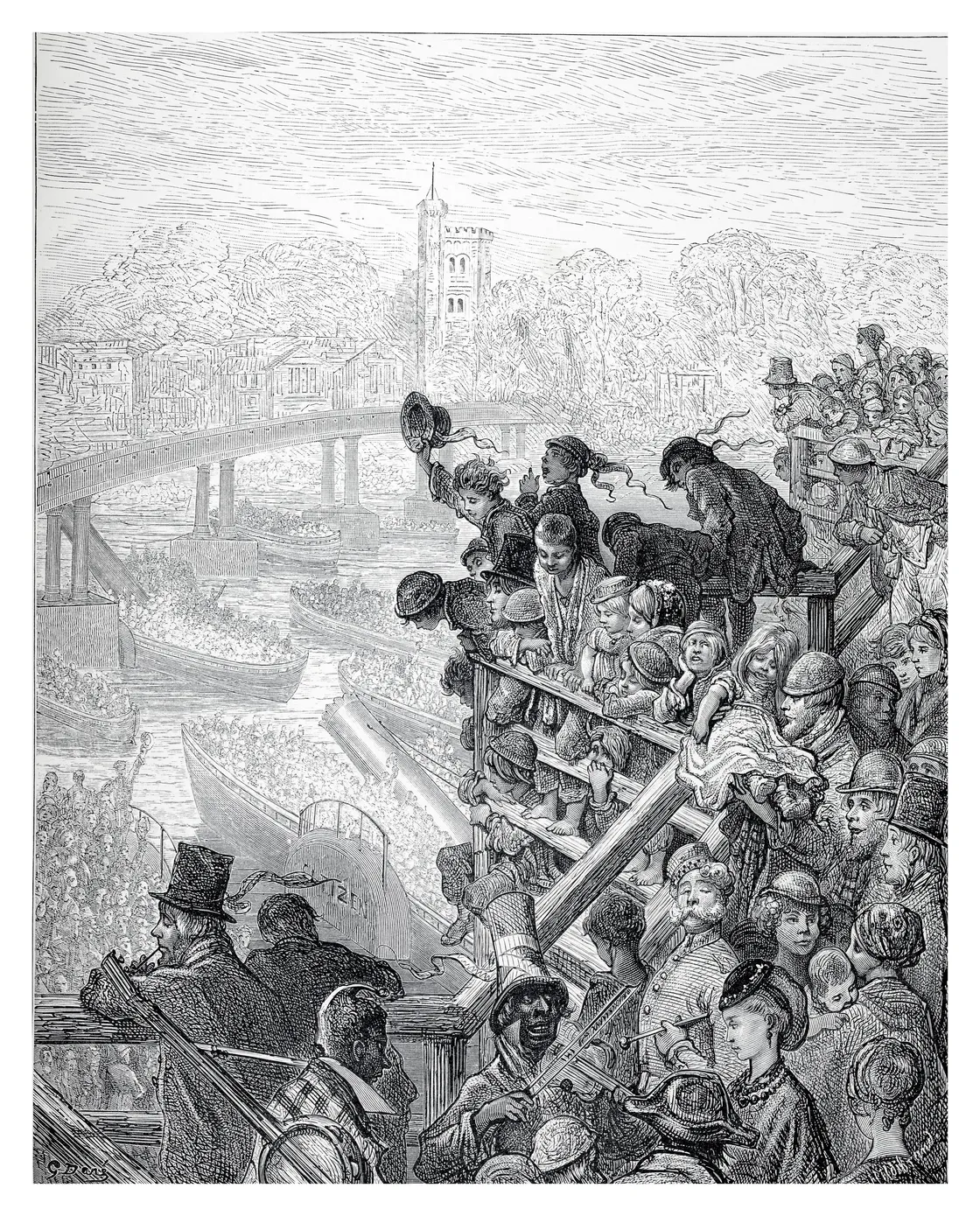
This illustration depicts the raucous atmosphere on Putney Bridge during the Boat Race.
The start of the Boat Race
Since 1845, the annual Boat Race competition between the Universities of Oxford and Cambridge has begun at Putney Bridge. It’s a popular place to watch the rowers launch into the gruelling 4.5-mile course, which ends near Chiswick Bridge, in Mortlake. The boat race-branded University Stone, just a few steps west of Putney Bridge on Putney Embankment, marks the start point.
-
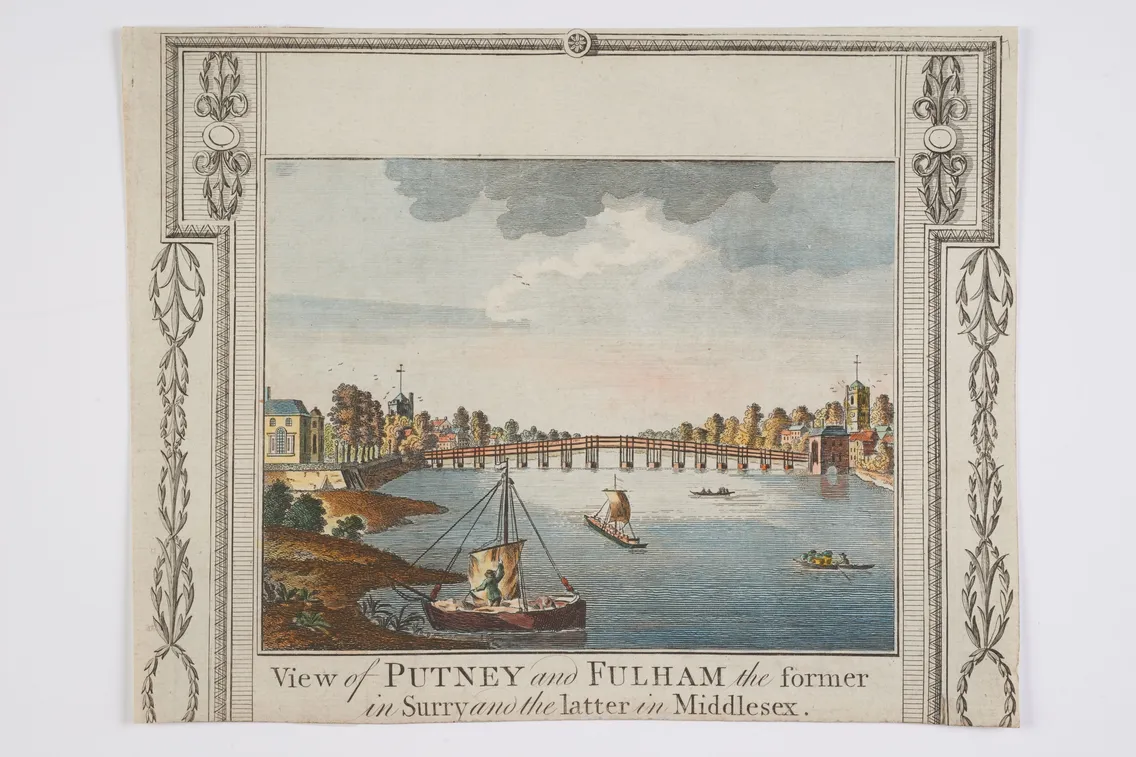
The churches at either end of Putney Bridge.
-
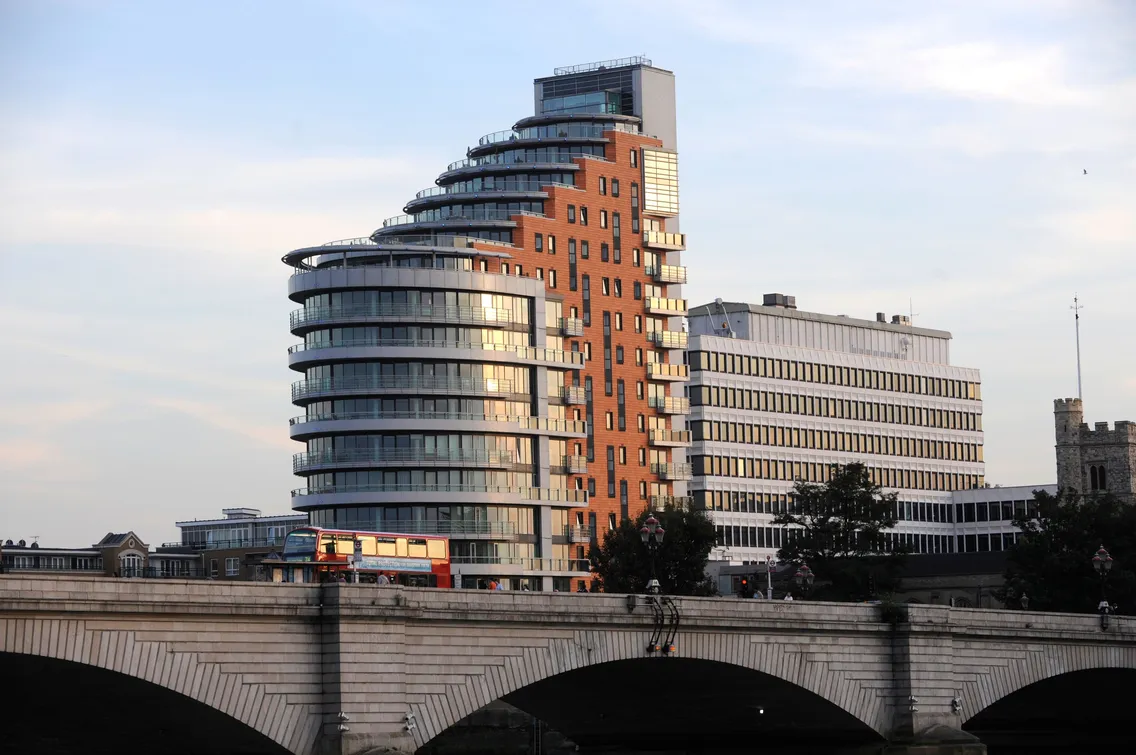
The stone Putney Bridge as it is now.
Connections: Putney and Fulham
Putney Bridge links Putney on the south side of the Thames with Fulham on the north.
Notably, there’s a church at either end of Putney Bridge. On the Putney side is St Mary the Virgin, the site of the 1647 Putney Debates. Soldiers, army leaders and radicals gathered here to discuss the nation following the defeat of King Charles I during the English Civil Wars (1642–1651). All Saints is over on the Fulham side.
Also on the north side is Fulham Palace, which was home to the bishops of London for almost 1,300 years.
Fulham Railway Bridge, which carries District Line trains, is very close to Putney Bridge. The next river crossing options are Hammersmith Bridge to the west and Wandsworth Bridge to the east.
Tags
-
Paintings, Prints & Drawings

-
Paintings, Prints & Drawings
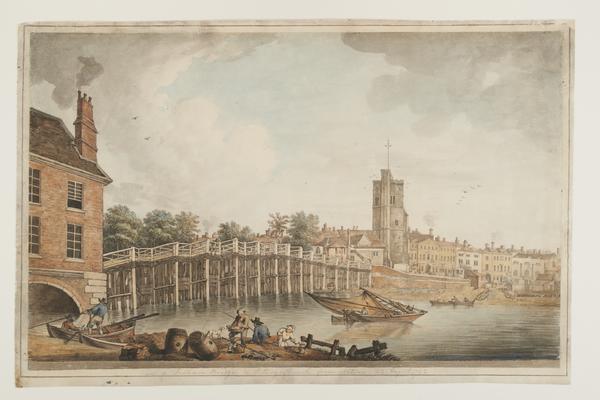 Paintings, Prints & Drawings
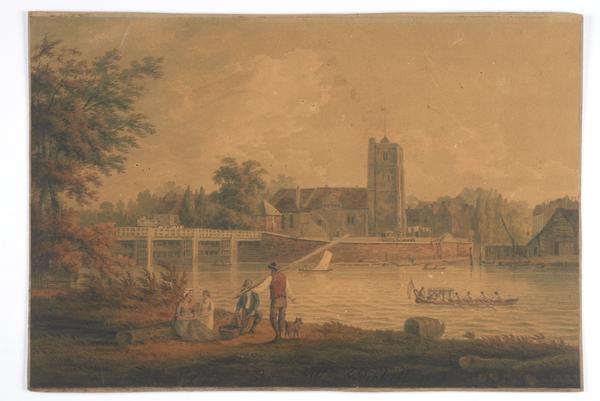
View of Fulham Bridge and Putney Church from Nature (watercolour)
Miller, James
1792-08-22
-
Paintings, Prints & Drawings
 Paintings, Prints & Drawings
Bloody News - Bloody News - or the Fatal Putney Duel (coloured etching)
Fores, Samuel William
1798-05-26
-
Paintings, Prints & Drawings