The match girls’ strike of 1888
After enduring long hours, terrible pay and hazardous conditions, the match girls working at Bryant & May went on strike. They captured public attention and encouraged a new wave of industrial action.
Bow
July 1888
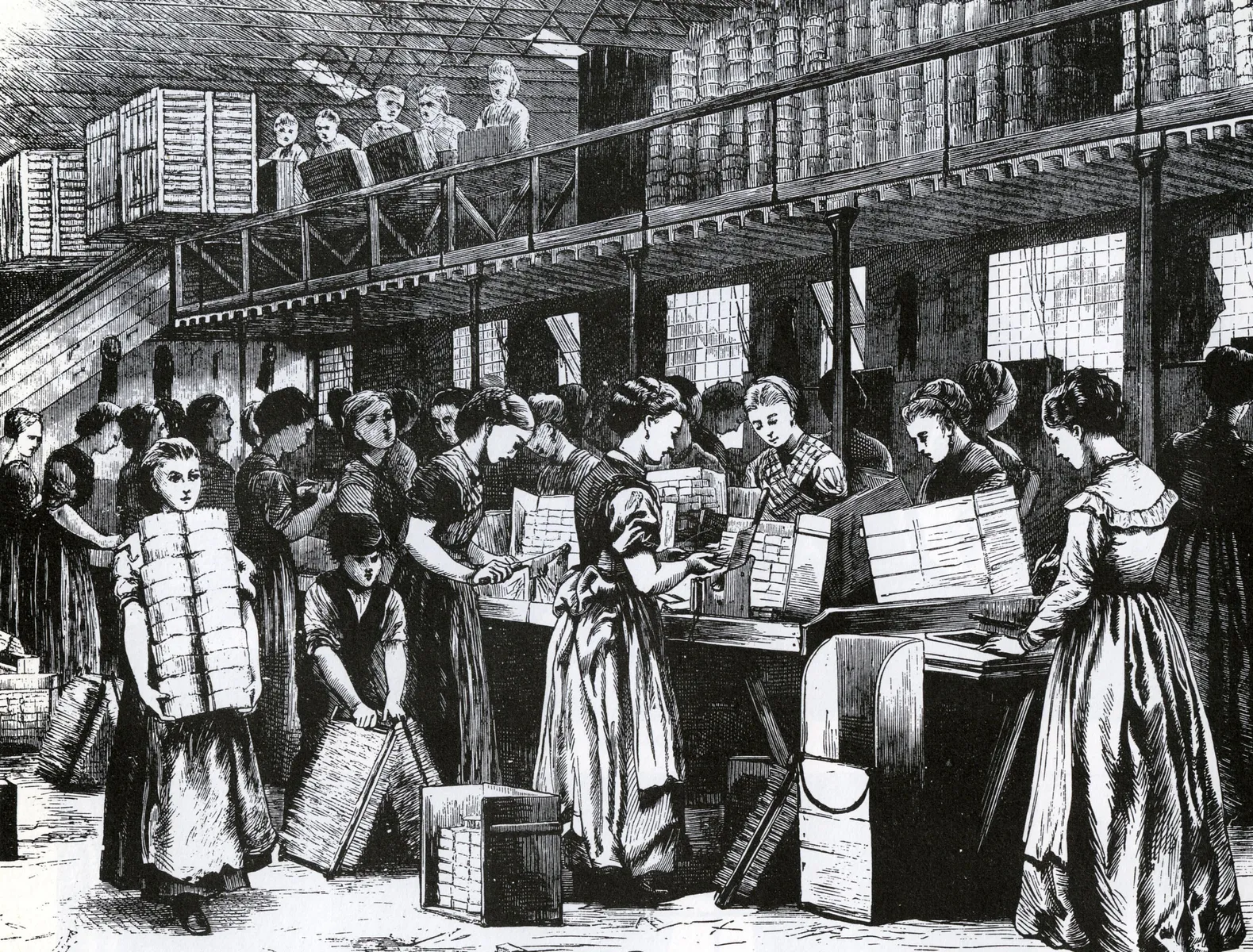
Matchmaking at Bryant & May.
The sparks for a strike
Matches were essential in the Victorian era – without them, people wouldn’t have lighting, heating or be able to cook.
But matchmaking was dangerous work. The most popular type of matches, ones that you could strike anywhere to light, were made with toxic white phosphorus.
Bryant & May was one of the largest match factories in east London. The young women who worked there were exposed to white phosphorus, causing many of them to suffer ‘phossy jaw’ – rotting of the teeth and bones.
They were also paid meagre wages and fined on the whims of the supervisors, while the factory’s shareholders enjoyed large payouts.
The socialist Annie Besant exposed the conditions at Bryant & May in a magazine article in June 1888. Days later, 1,400 women at the factory went on strike and won. Their victory was a significant moment in the country’s labour movement.
Matchmaking in Victorian London
Friction matches, which could be lit by striking the tip, were developed in the 19th century. ‘Lucifer’ matches, named after the Latin for ‘bringer of light’, came first. These matches would ignite by being struck across pretty much any surface – practical but prone to spontaneous combustion. They were also made with highly toxic white phosphorus.
Safety matches were introduced in the 1850s. These were made with non-toxic red phosphorus and were ignited by striking a special strip on the matchbox.
Despite the dangers, public demand for lucifers, which were cheaper and easier to use, remained high. Factories like Bryant & May kept on making them, even as their workers breathed in poisonous fumes day after day.
-
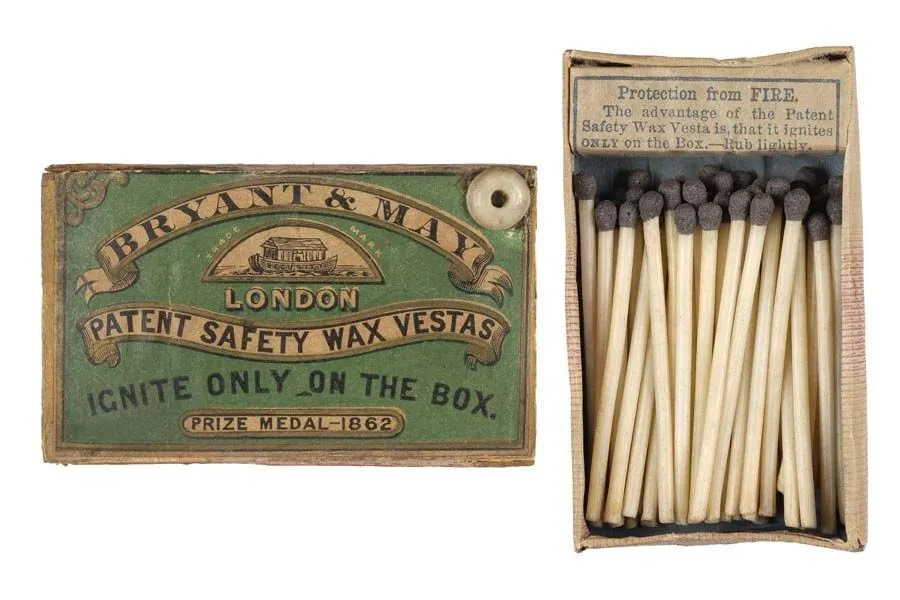
Safety matches made by Bryant & May.
The Bryant & May factory
Bryant & May in Bow was one of the largest factories in east London, employing over 5,600 workers by 1875.
Most of the workers at Bryant & May were women. A large percentage of the workforce were teenage girls. Some were as young as six years old.
They’d work 12 to 14 hours a day, six days a week, dipping frames of wood slices into white phosphorus paste, cutting and boxing them up. Homeworkers were employed to make the boxes.
The pay was meagre, and the women would often get fined for trivial things like having dirty feet, untidy benches and even talking. Homeworkers were paid even less and had to pay for their own glue and string. The women were also subject to physical and verbal abuse by the mostly male supervisors who oversaw their work.
Bryant & May had such a monopoly on match production that it had forced wages right down, but still generously paid its shareholders.
The conditions were also terrible. Exposure to white phosphorus was constant as there was nowhere separate for the women to eat their meals.
‘Phossy jaw’ and rotting bones
White phosphorus made lucifer matches easier to ignite. It also rotted bones. Inhaling the chemical’s toxic fumes led to ‘phossy jaw’ – severe toothaches, abscesses, bone decay, disfigurement and even death.
Charles Dickens wrote about ‘phossy jaw’ in the magazine Household Words as early as 1852, so it was not an unknown disease. Bryant & May’s practice was to conceal, rather than prevent, the condition. The factory would dismiss workers with swollen faces or force them to have their teeth pulled. It didn’t seem to help much – the mortality rate in ‘phossy jaw’ cases at Bryant & May was almost one in five.
“who cares if they die or go on the streets, provided only that the Bryant and May shareholders get their 23 per cent?”
Annie Besant, White Slavery in London, 23 June 1888
Annie Besant and the match girls
After speaking to women who worked at Bryant & May, activist Annie Besant drew attention to the poor pay and awful conditions at the factory. She published White Slavery in London in her weekly magazine The Link on 23 June 1888. The article exposed the sizeable payouts shareholders received, the punishing fines and the prevalence of ‘phossy jaw’.
The title was designed to be sensationalist. The factory women weren’t enslaved, but they were ‘sweated’ labour, defined by their low pay, long hours and poor working conditions.
She wrote: “Born in slums, driven to work while still children, undersized because underfed… who cares if they die or go on the streets, provided only that the Bryant and May shareholders get their 23 per cent?”
The factory owners threatened to sue Besant for libel and demanded that their workers say her claims were untrue. They refused, so management sacked three women who were deemed troublemakers on 2 July. Days later, 1,400 workers walked out in protest.
The match girls go on strike
-
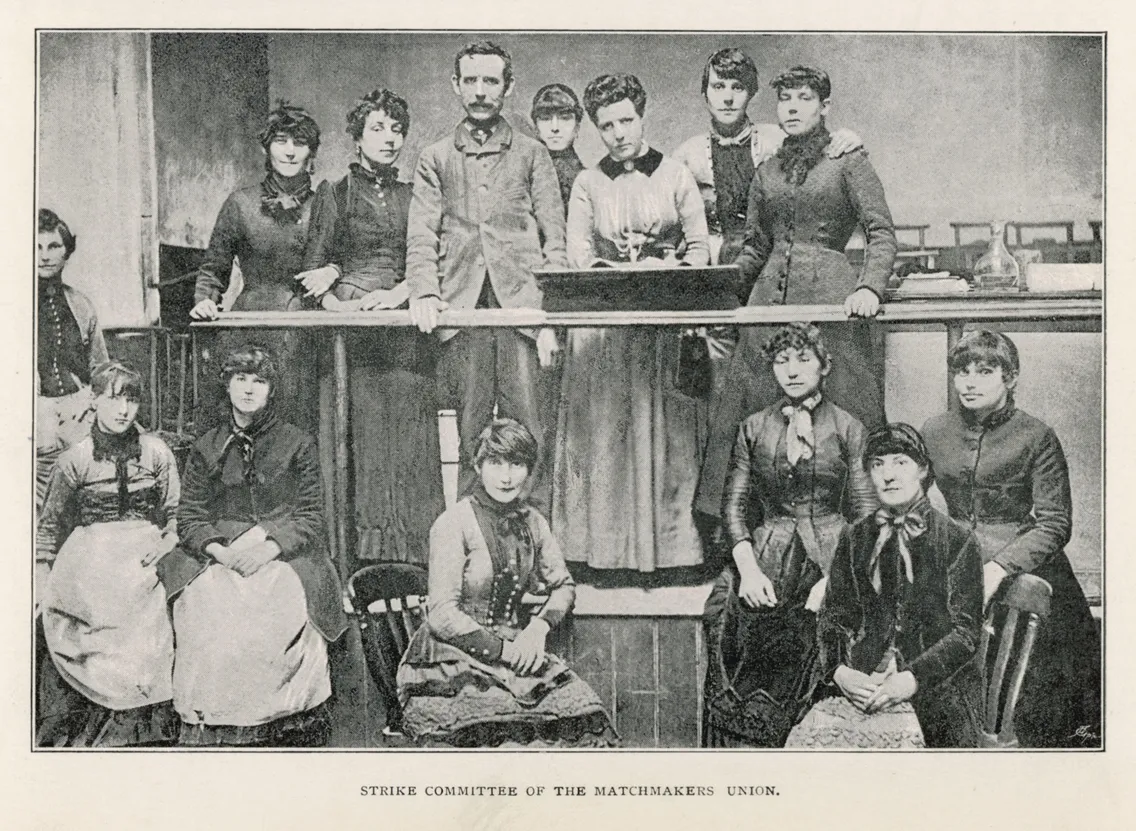
The matchmakers union featuring Annie Besant.
This wasn’t the first time women at Bryant & May initiated a strike, but it was the first success. Following the walkout, a group of eight workers formed a strike committee. Sarah Chapman, who worked at the factory alongside her mother and sister, was a dominant force during and after the strike.
They caught the attention of the public, meeting with MPs, raising money, holding mass meetings and earning positive press coverage for the cause. This was a time when women played little role in public or political life. The strikers showed great courage in confidently presenting their case to the media and the government.
The women win
The London Trades Council, an early labour organisation, acted as a mediator between the Bryant & May directors and the strike committee. On 17 July, following its intervention, the women’s demands were met. They included the abolition of fines and the reinstatement of the sacked workers.
The Union of Women Match Workers was formed following the strike, with Sarah Chapman as its president and Annie Besant as secretary. It was the largest union of women and girls in the country.
The birth of new unionism
The match girls’ strike was one of the first times a union of ‘unskilled workers’ had successfully won better pay and conditions. Most notably, this was a strike organised and driven by working-class women, with the support of the middle-class Annie Besant.
The ripple effect was significant. New unionism – a more aggressive approach to industrial action across a broader range of workers – was born.
A year after the match girls, east London’s dockers and tailors also went on strike, inspired by the women’s victory. Trade union membership rose from 750,000 in 1888 to more than two million by 1900.
-
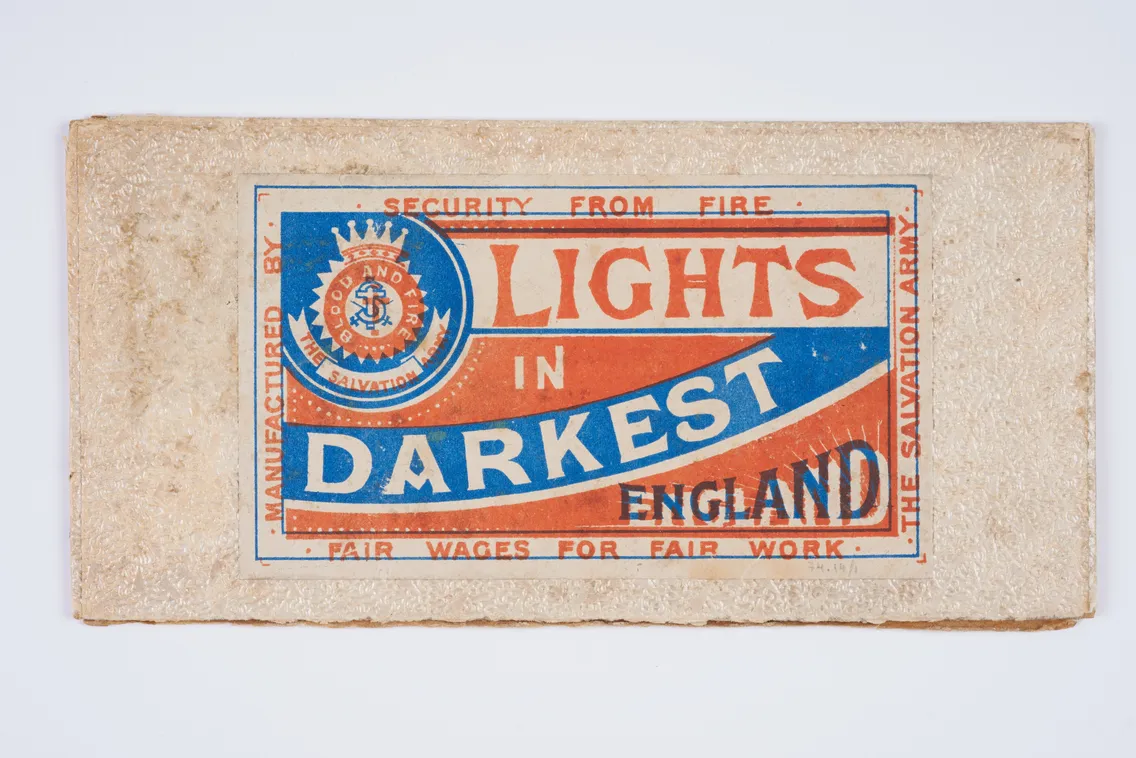
The lid of a matchbox from the Salvation Army factory.
Lights in darkest England
By 1891, Bryant & May had competition. The Salvation Army opened a factory in east London, making ‘Lights in Darkest England’ matches. The name was a reference to the organisation’s mission of tackling poverty, homelessness, unemployment, hunger, slum housing and sex work.
The factory was well-ventilated. There were tea-making facilities. The wages were fair. The matches were made using harmless red phosphorus, so there was no risk of ‘phossy jaw’. However, the matches were more expensive to manufacture and to buy, and declining sales saw the factory close in 1901.
The phasing out of white phosphorus
The use of white phosphorus continued after the match girls’ strike. The government didn’t ban it, fearing that it would damage the matchmaking industry by encouraging imports.
New regulations around the chemical were introduced, such as compulsory reporting of phosphorus poisoning cases. Bryant & May continued to cover these up across the 1890s.
Technological advances meant that by 1901, the same year that the Salvation Army factory closed, Byrant & May stopped using white phosphorus.
Tags
-
-
Photography
 Photography
View from the Greenway looking west towards Bow Quarter, formerly the Bryant and May factory (pigment print)
Seaborne, Michael John
2006-09
-


-
 Rights & Activism
What was Bloody Sunday 1887?
A demonstration of desperate working-class Londoners met with police brutality
-

-
 Collections
The 1889 London dockers’ & tailors’ strikes
When workers from two key local industries – tailoring and the docks – fought for better pay and working conditions
-
 Behind the scenes
Suffragettes’ secret prison diaries: History on toilet paper
Resourceful and heroic – how incarcerated Suffragettes used toilet paper