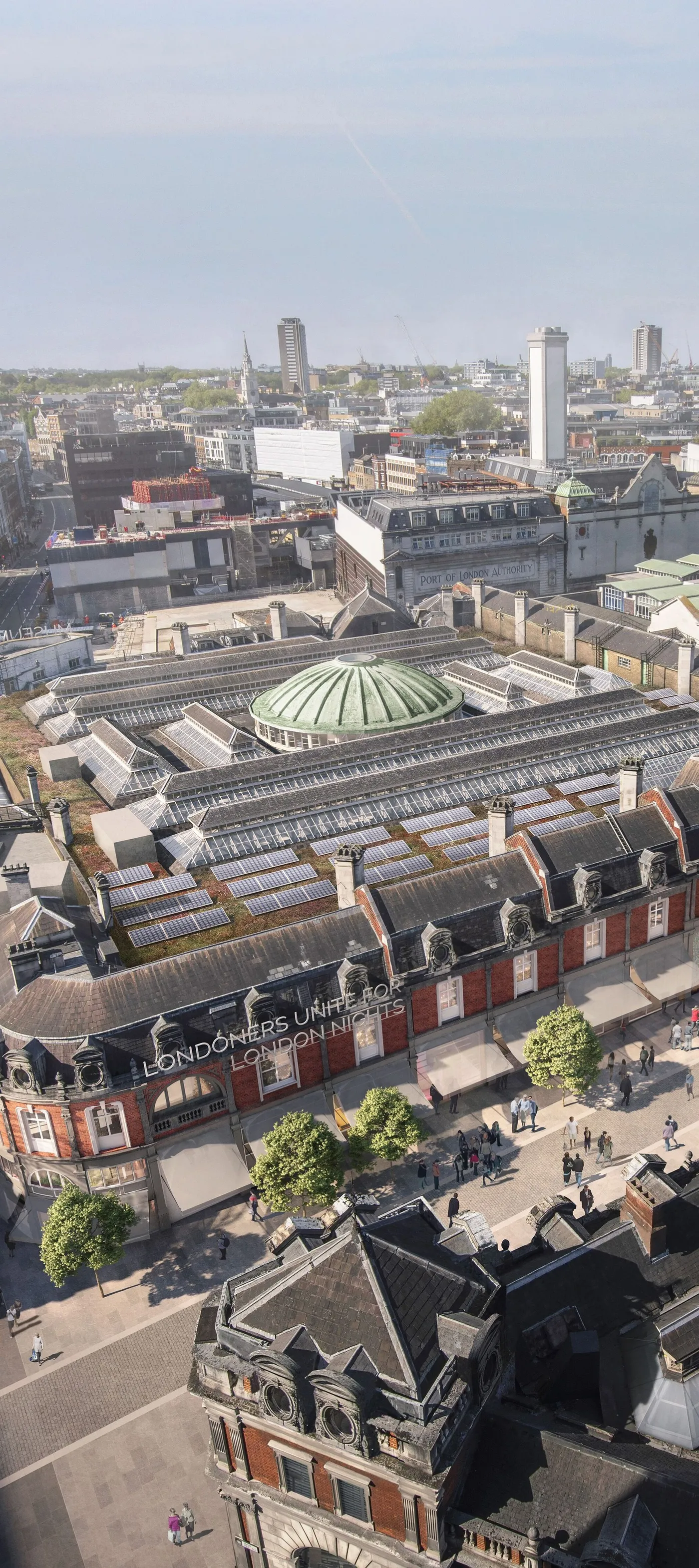
What was Bloody Sunday 1887?
An 1887 protest in Trafalgar Square about unemployment was met with police brutality. As three protestors died and over two hundred more were injured, it became known as Bloody Sunday.
Trafalgar Square
13 November 1887
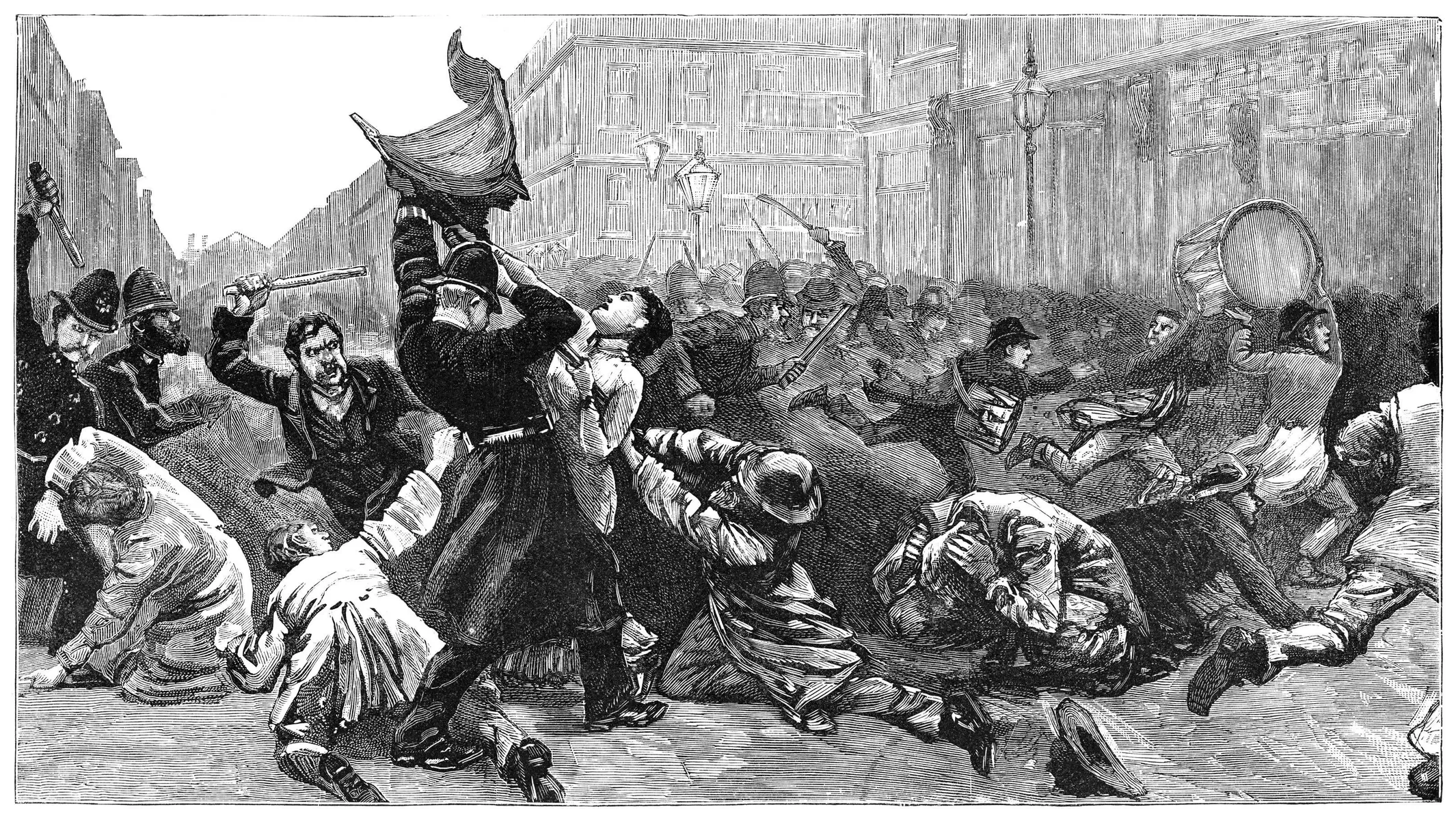
A depiction of the clash between police and protestors on Bloody Sunday 1887.
A showdown between London’s working class and the police
On 13 November 1887, tens of thousands of working-class people gathered in Trafalgar Square. They united to demonstrate against mass unemployment, particularly in London’s East End, and British rule over Ireland.
The demonstration was organised by the Social Democratic Federation (SDF), the Socialist League, the Irish National League and other radical groups. Prominent socialists like designer William Morris, playwright George Bernard Shaw, activist Annie Besant and Eleanor Marx, Karl Marx’s daughter, were there to provide support. These socialist organisations, which included many middle-class radical members, harnessed the growing belief among the working class that they could become a force for change.
A long period of economic downturn and recent clashes between the police and protesters had created a fevered atmosphere in London. The Metropolitan Police banned protests in Trafalgar Square. But the crowds still gathered.
A large police presence met the demonstration and things turned violent. The death of three protestors and the wounding of over two hundred more led the event to be called Bloody Sunday. During a second demonstration a week later, innocent bystander Alfred Linnell was killed, further inflaming tensions over police brutality.
The backdrop to Bloody Sunday 1887
The late 19th century was a turbulent time. The Long Depression, a global economic downturn that led to mass unemployment, began in 1873 and lasted for around two decades.
There had been significant working-class protests in the years before Bloody Sunday. The Chartist movement, which called for the right to vote to be extended to all men, saw three mass rallies take place in 1839, 1842 and 1848. There was unrest in London in 1866 over failed reform, with police and protestors clashing in Hyde Park.
The majority of working-class supporters who attended Bloody Sunday were from London’s East End. Many of these were Irish migrants who had settled in the area to work on the construction of London’s docks. There was also growing unrest over Britain’s repressive governance of Ireland at the time. Irish nationalist organisations were able to combine a protest about economic distress with anti-colonial solidarity.
Bloody Sunday, and later protests in the 1880s, represented the politicisation of London’s educated working class. Thanks to radical activists and socialist groups, they believed they could become a force for change by working together.
-
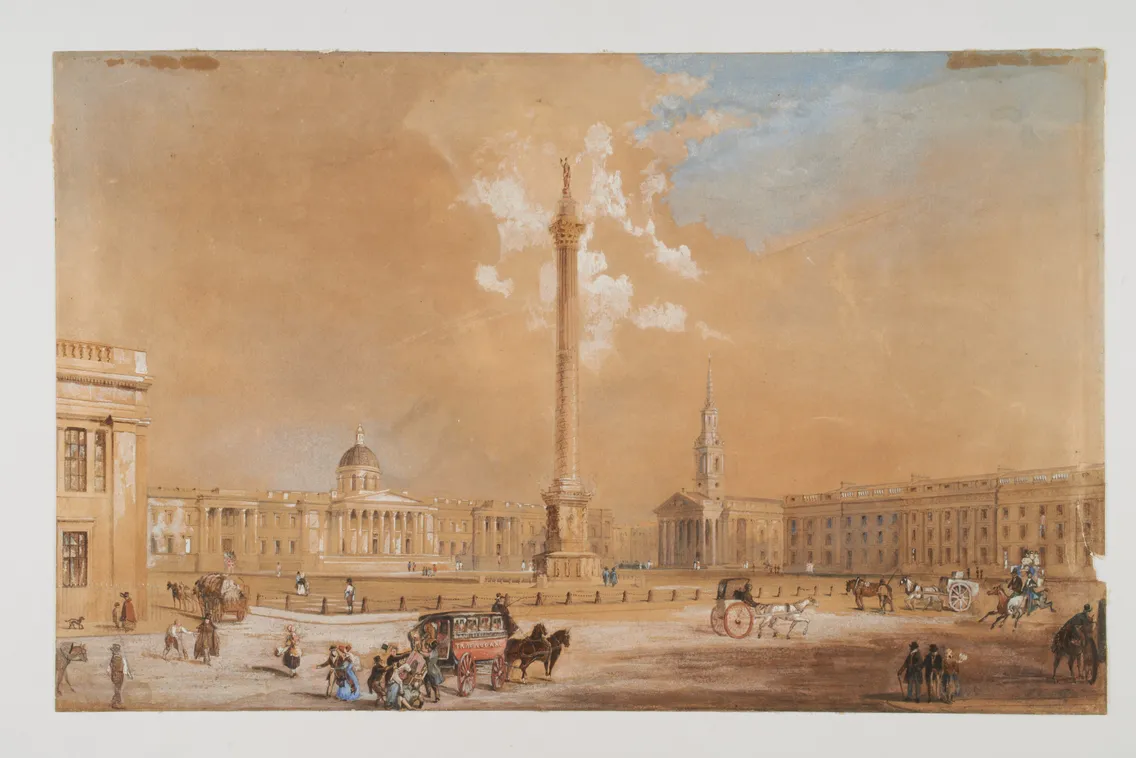
A watercolour of Trafalgar Square in the mid-19th century.
-
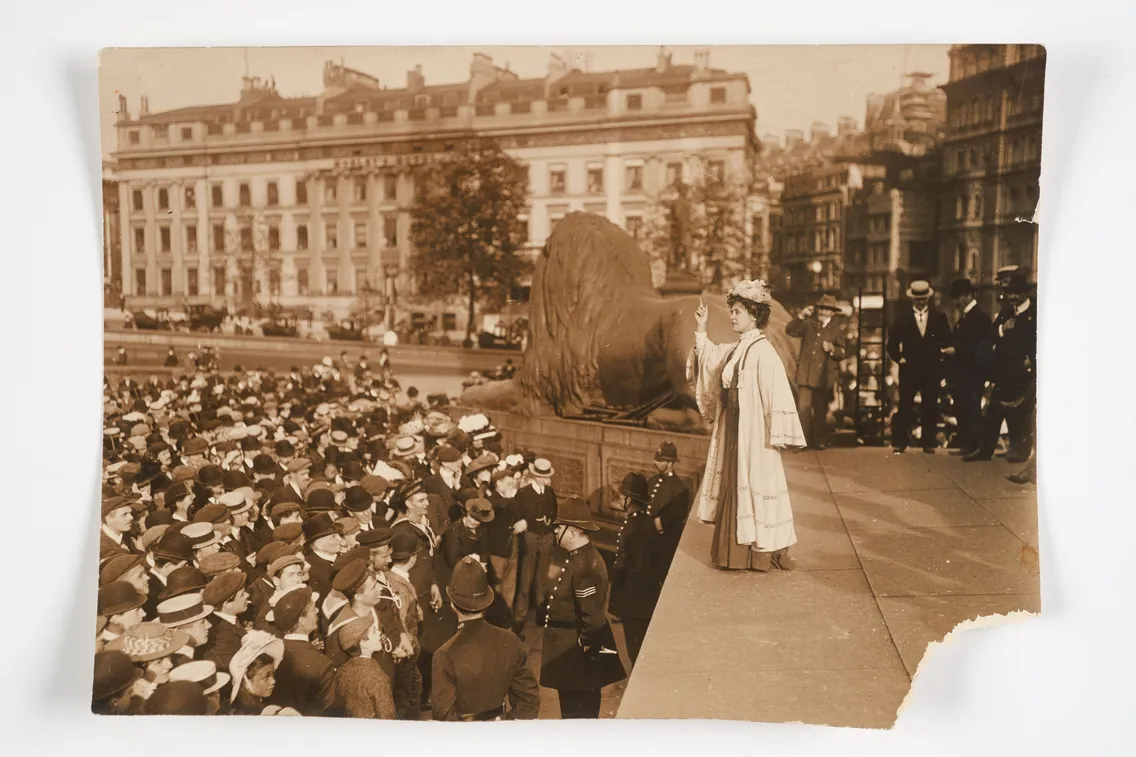
The Suffragette Emmeline Pankhurst addressing a crowd in Trafalgar Square in the early 20th century.
Trafalgar Square as a site of protest
From its opening in 1844, Trafalgar Square has been a significant site of protest. Its wide open space made it suitable for large gatherings. And its location, close to the heart of government, meant that protests couldn’t be ignored by those in power. The Chartists marched there in 1848, and it has since seen rallies by Suffragettes, the Campaign for Nuclear Disarmament and Stop the War.
The importance of Trafalgar Square to demonstrators led police to devise ways of observing the area unnoticed. One of these was the building of a small stone tower in the south-east corner, which could hold three policemen inside and had a telephone line to Scotland Yard. The tower, with a large lamp on top, is no longer used as an observation post but it remains on the Square.
Why protests had been banned in Trafalgar Square
On 8 February 1886, the SDF and the London United Workingmen’s Committee, a rival organisation, were involved in a demonstration in Trafalgar Square. What began as a peaceful event turned into looting and window smashing down Pall Mall, with police eventually dispersing the crowd. The event was called Black Monday.
The growing middle class was frightened about mass gatherings of unemployed people in central London. Those living in impoverished conditions in the East End were regarded as an ‘underclass’. There were fears that these Londoners could be mobilised by the new socialist movement, led by political groups like the SDF and activists like Annie Besant.
Metropolitan Police Commissioner Charles Warren wanted to keep this ‘underclass’ away from the political heart of the city. In response to recent unrest, Warren issued a notice on 8 November 1887 banning public meetings in Trafalgar Square.
You can see a copy of this notice below, which would have been pasted in areas around this famous London square.
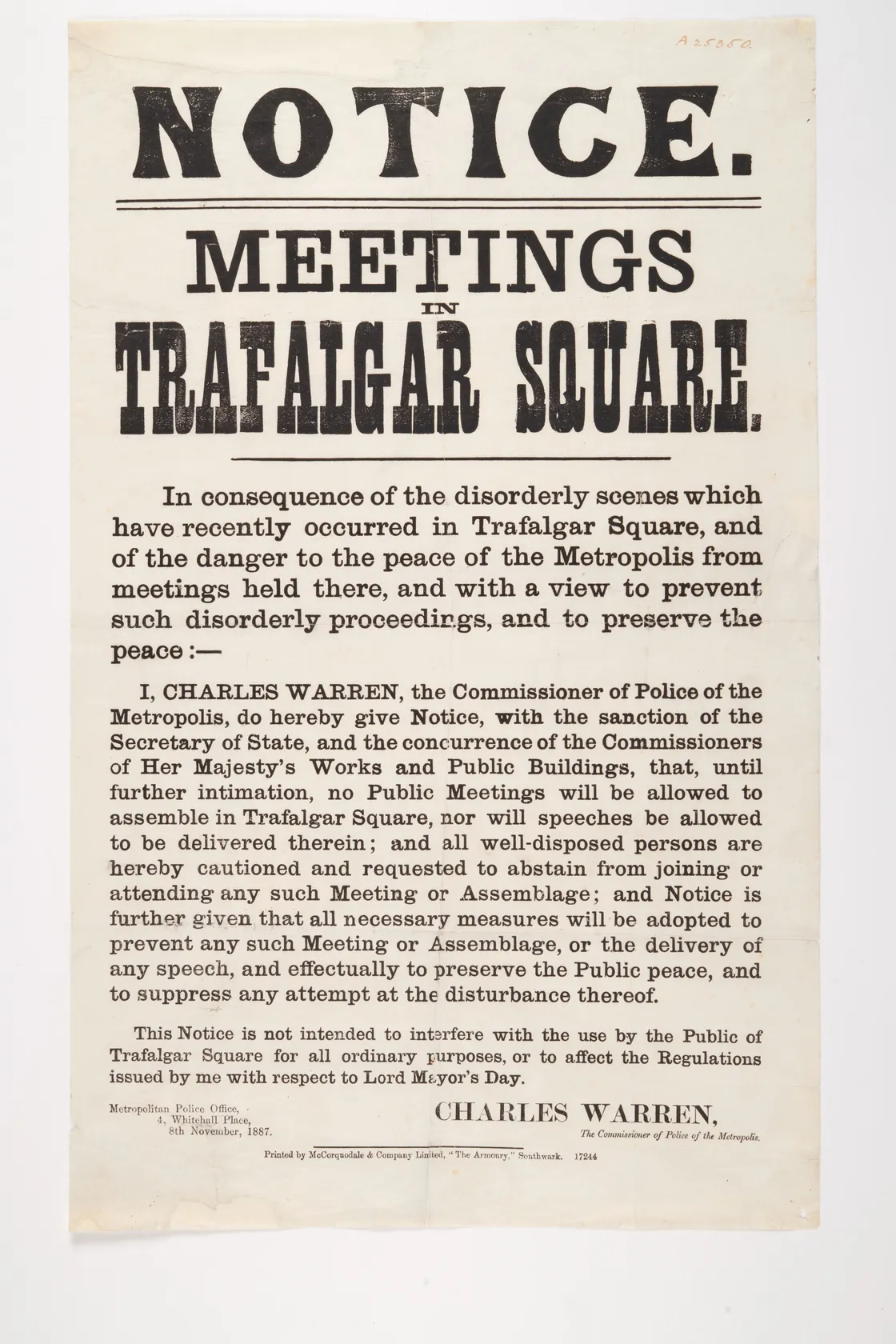
The public notice issued by Charles Warren banning all public meetings in Trafalgar Square.
What happened on 13 November 1887?
Warren’s banning of public meetings in the square was seen as an attack on free speech. The organisers of Bloody Sunday used this as an opportunity to protest against the repression in Ireland and mass unemployment.
Protestors gathered in a number of locations. William Morris, the designer and founder of the Socialist League, along with Annie Besant, addressed a crowd in Clerkenwell Green. The demonstrators then marched to Trafalgar Square.
Around 10,000 people demonstrated on the day. Warren amassed 2,000 policemen, four cavalry squadrons and 400 soldiers in the square. Conservative supporter James Compton Merryweather offered him a heavy-duty 1,500 litres-per-minute fire engine to use as a water cannon, but he declined.
The authorities charged the protestors, killing three and wounding over 200. They arrested 75 people, including notable socialists John Burns and MP Robert Cunninghame Graham.
“Mr Morris addressed the crowd, and advocated a holy war to prevent London from being turned into a huge prison”
Kerang Times and Swan Hill Gazette, 23 December 1887
The death of Alfred Linnell
A week after Bloody Sunday, there was another demonstration in protest of the police violence that occurred on 13 November. Innocent bystander Alfred Linnell, a clerk, was crushed beneath a police horse and killed.
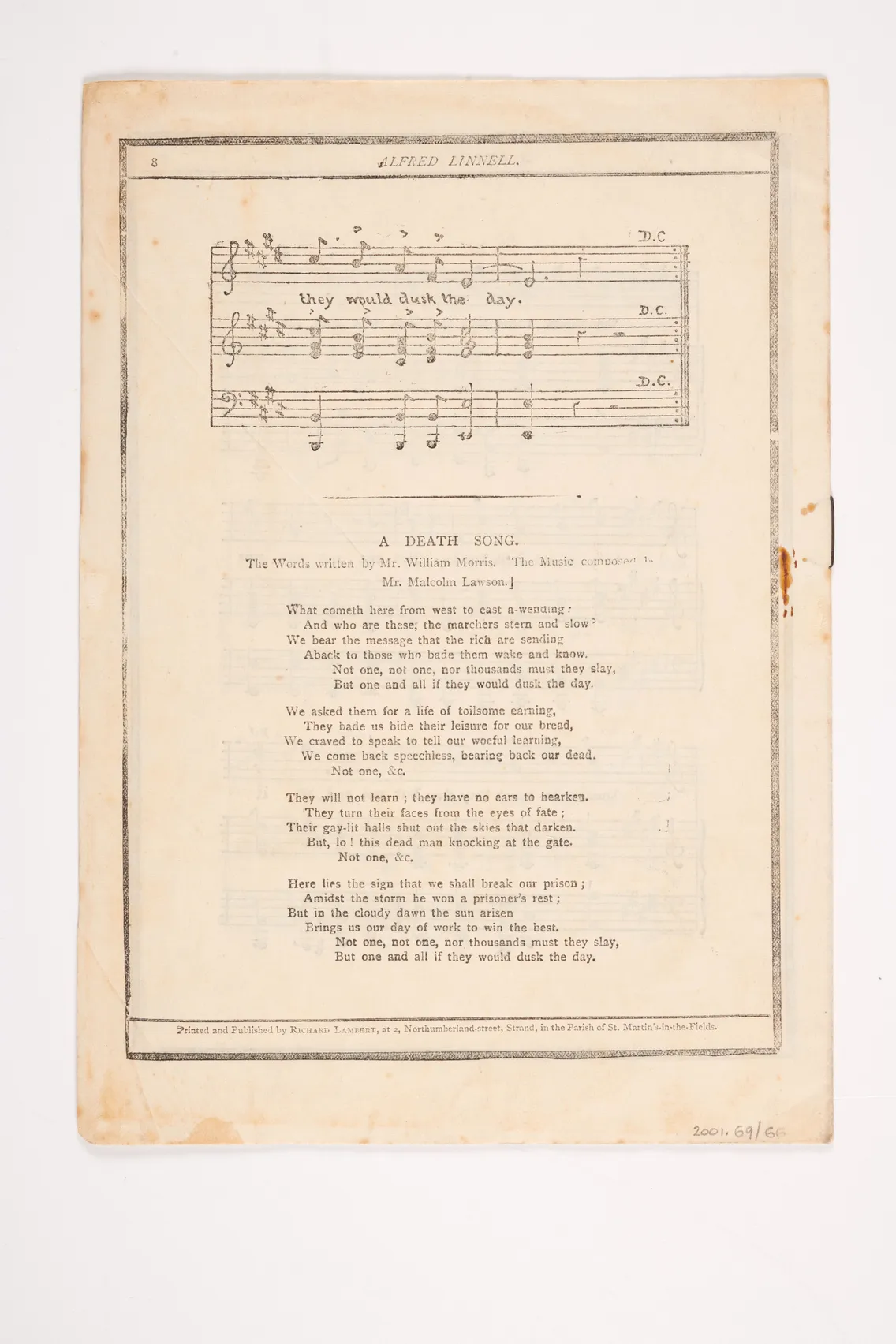
Morris wrote A Death Song in response, and we have a copy in our collection. The pamphlet, sold for a penny for the benefit of Linnell’s family, includes an account of his death and a condemnation of the police’s behaviour.
-
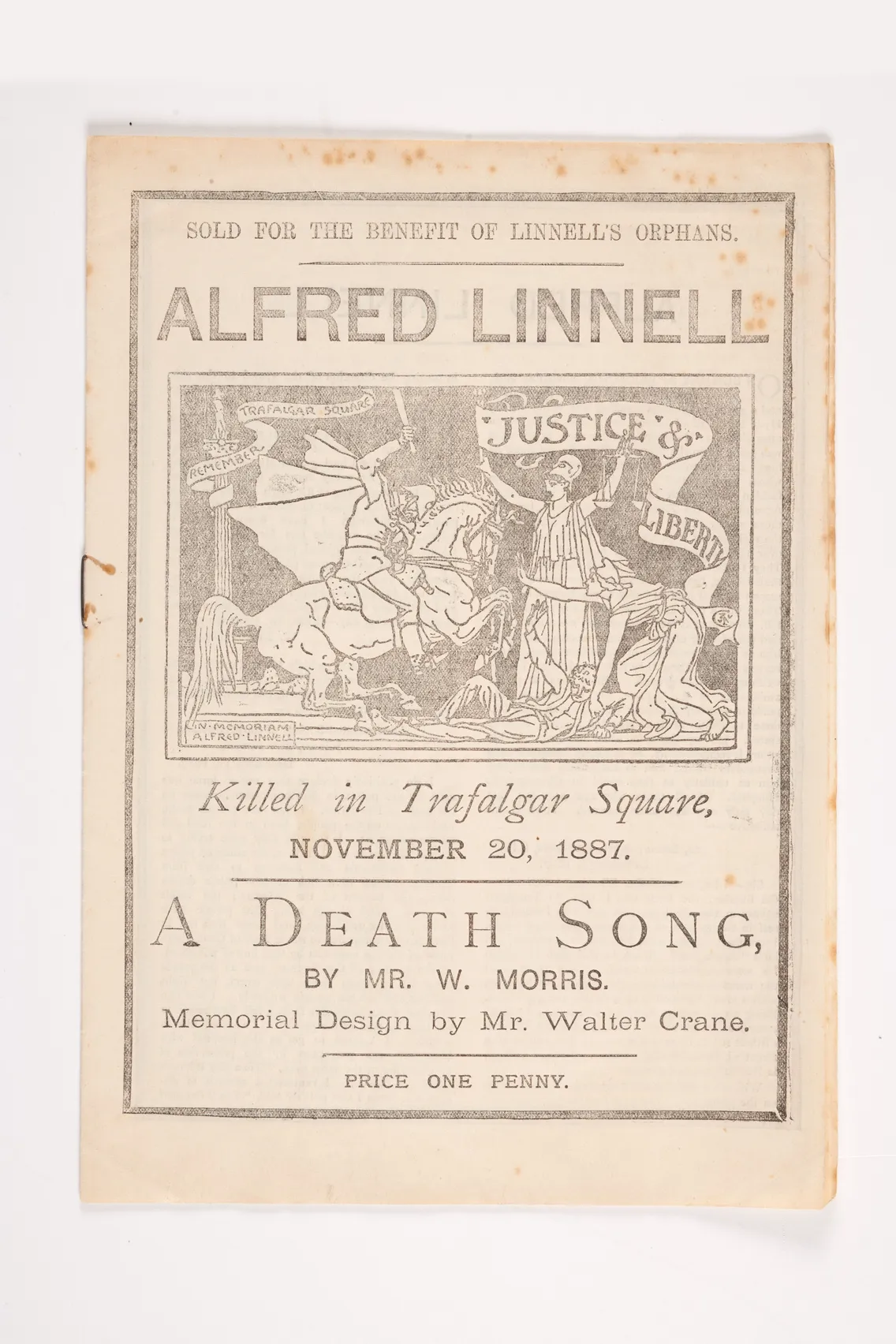
A copy of Wiliam Morris’ A Death Song composed for the funeral of Alfred Linnell.
-
Thousands of people attended Linnell’s funeral at Tower Hamlets Cemetery. The Kerang Times and Swan Hill Gazette reported: “Mr Morris addressed the crowd, and advocated a holy war to prevent London from being turned into a huge prison.”
“his bludgeon-men bashed in the heads of the Radicals, broke their arms, and flung them in gaol”
Pall Mall Budget, 8 December 1887
What did Bloody Sunday achieve?
The protest failed to achieve anything on the day, especially after things turned violent, but Bloody Sunday did have an impact.
There was some public backlash over the aggressive policing of the protest. One letter in the Pall Mall Gazette compared the event to the Peterloo Massacre in 1819, where armed cavalry charged a protest in Manchester and killed 18 people. The Pall Mall Budget wrote: “Every one now knows how Warren’s horsemen cantered gaily over the unfortunates…and how his bludgeon-men bashed in the heads of the Radicals, broke their arms, and flung them in gaol.”
There were notable strikes in the two years after Bloody Sunday, suggesting that the 1887 protest helped spur on the labour movement in Britain.
In 1888, the match girls’ strike achieved better working conditions and pay. In 1889, London dockers went on strike, with John Burns, who was arrested on Bloody Sunday, playing a leading role. That same year, the East End’s Jewish tailors went on strike too, with both groups achieving many of their demands.
Tags
-
-
Printed Ephemera
 Printed Ephemera
The Political Status of Women. (pamphlet)
Women's Rights Library, W. Stewart & Co., Besant, Annie, Mrs
1874
-
Paintings, Prints & Drawings
 Paintings, Prints & Drawings
Highgate Cemetery: East Cemetery-Grave of Karl Marx (screenprint)
Pendry, Richard
2013
-
Paintings, Prints & Drawings
 Paintings, Prints & Drawings
Procession attending the Great National Petition of 3,317,702, to the House of Commons, 1842 (engraving)
1842
-
Printed Ephemera
 Printed Ephemera
A Death Song (charity pamphlet)
Morris, William, Crane, Walter, Lambert, Richard
1887