Jacob’s Island: One of the worst slums in London
As the city’s population swelled during the first half of the 19th century, its poorest residents were pushed into slums. Jacob’s Island in Bermondsey was one of the worst.
Bermondsey
1800s–1860s
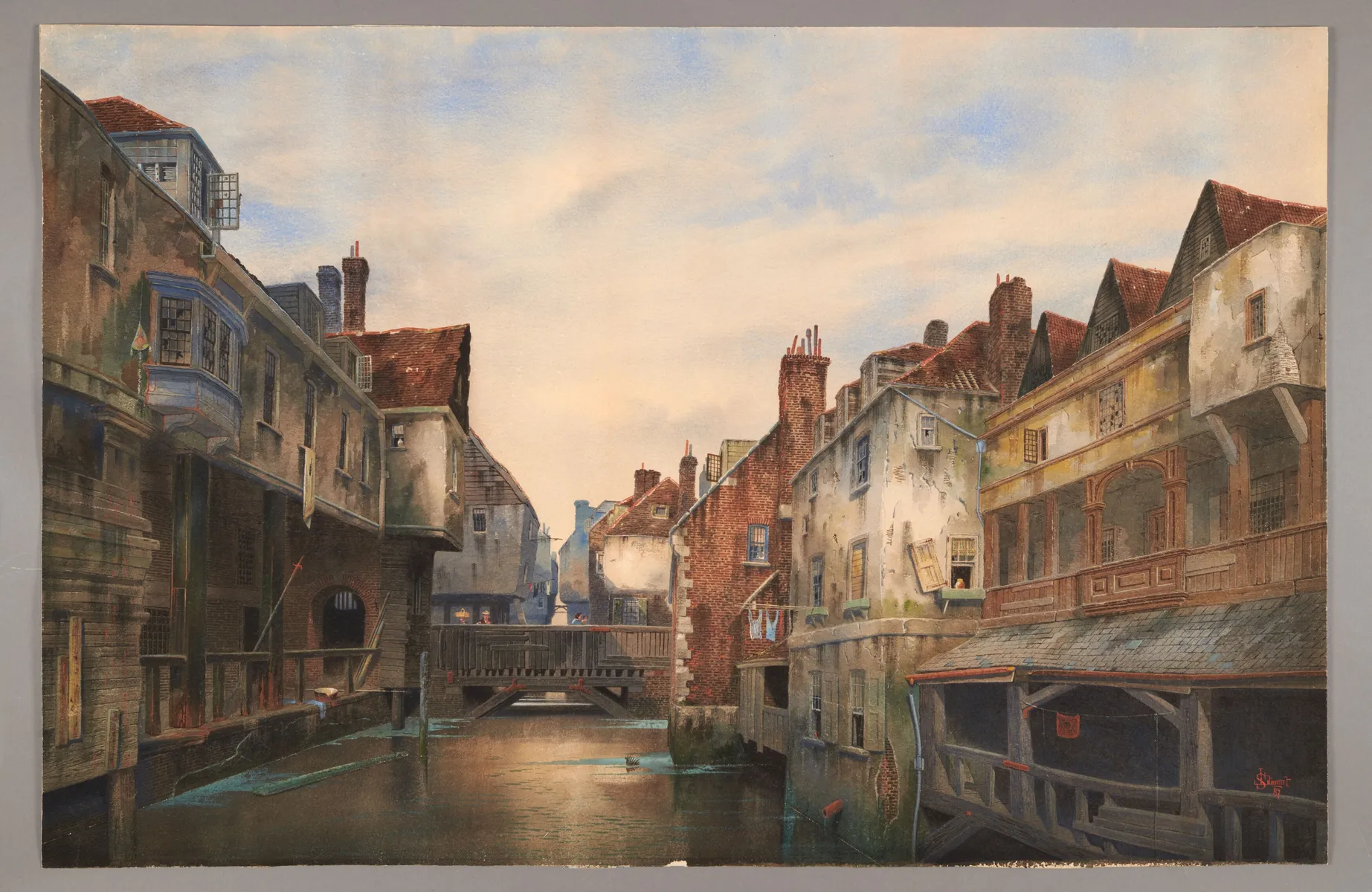
Jacob’s Island as painted by James Lawson Stewart.
A place of “filth, rot and garbage”
In Oliver Twist, the villain Bill Sikes meets his death in a slum filled with “filth, rot and garbage”. The setting was so horrid that many readers believed it was a work of fiction. Author Charles Dickens was actually – and accurately – describing a real place.
Jacob’s Island in Bermondsey was one of the most notorious slums in Victorian London. Tidal ditches made the riverfront area look like an island and also contributed to its extremely unsanitary conditions. The buildings were dilapidated, the air was thick and smelly, the water was filled with waste and disease was rife.
Once home to a mill, then a thriving dock trade, Jacob’s Island fell into massive decline in the 19th century. After being immortalised in literature, the slum was cleared from the 1850s and the area was reinvented several times over. Though the name Jacob’s Island is no longer in use, people live there again, only now in more luxurious conditions.
Where was Jacob’s Island?
Jacob’s Island was an area of the Bermondsey riverfront by St Saviour’s Dock. This is where the hidden-underground River Neckinger meets the River Thames. Tidal ditches surrounding the streets gave the impression of it being an island, hence the name.
In the 16th century, the Neckinger powered a mill owned by the monks of Bermondsey Abbey. The following century saw boat-building dominate the area. But as the dock trade moved eastward, Jacob’s Island fell into decline in the 19th century.
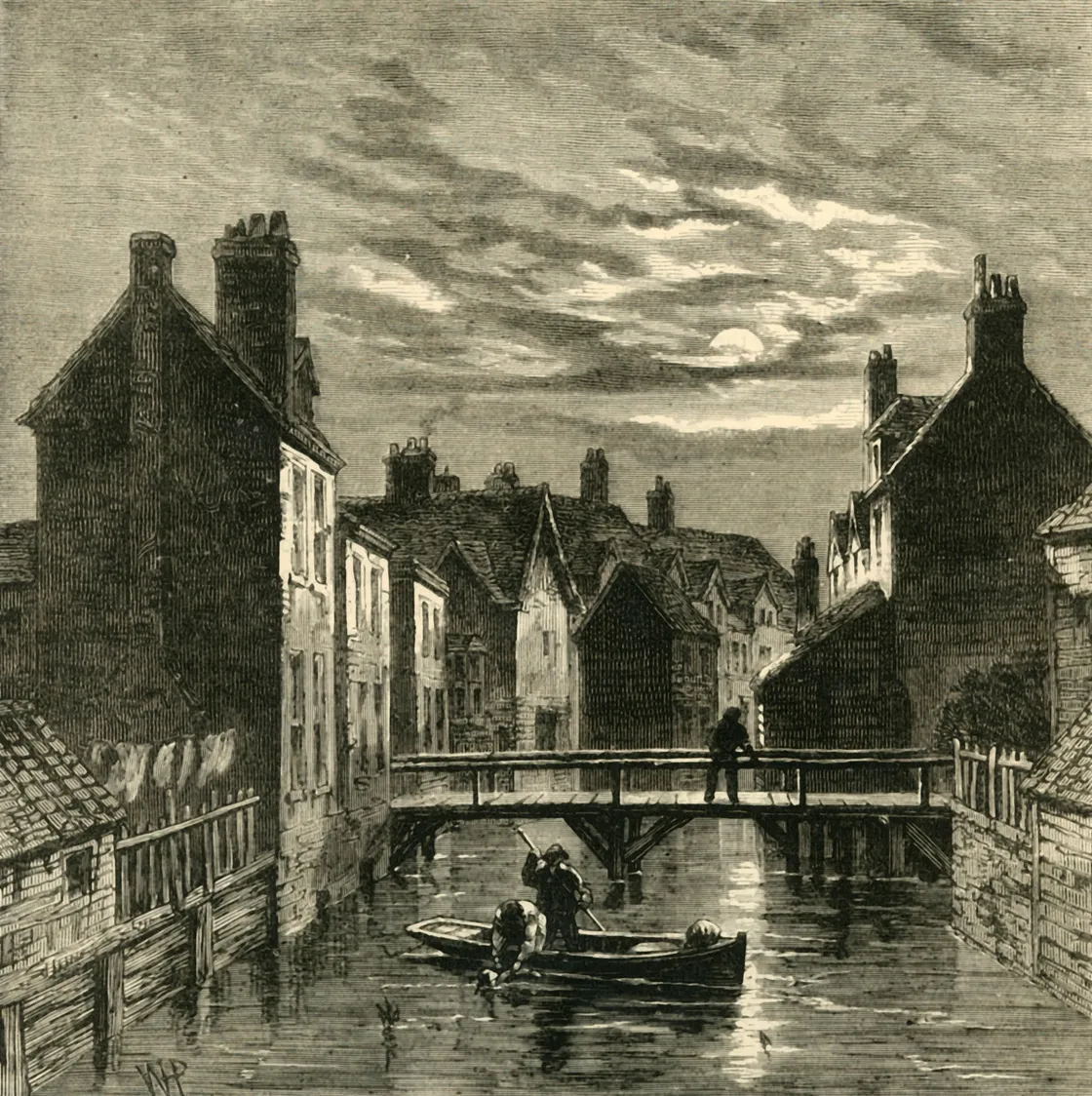
Folly Ditch in Jacob’s Island.
Slums in Victorian London
London’s population doubled between 1800 and 1850. People flocked to the capital from the countryside and abroad in search of work. This put a massive strain on the city’s housing and clean water supply.
Existing housing for the poor was often cleared to make way for new commercial spaces and railway stations. People were being pushed into ever more crowded and extremely unsanitary slums.
“The very capital of cholera”
Henry Mayhew, The Morning Chronicle, 1849
Living in Jacob’s Island
The area surrounding Jacob’s Island was the centre of London’s tanning and leather trade. The highly polluting and pungent industrial factories nearby made it an undesirable place to live.
For those who did live there, the conditions in Jacob’s Island were terrible. The ditches surrounding the streets were used for both waste and drinking water, so outbreaks of cholera were common.
The disease was so rife that journalist Henry Mayhew, who surveyed the conditions for the Morning Chronicle, dubbed Jacob’s Island “the very capital of cholera”. He reported rotting bridges, buildings black with pollution and decaying animal carcasses in the water. “On entering the precincts of the pest island, the air has literally the smell of a graveyard.”
James Lawson Stewart’s watercolours
Mayhew also described a peculiar quirk of Jacob’s Island. The slum’s ramshackle layout and the way that rooms would overhang the water made it reminiscent of European streets surrounded by canals. Except here the canals were really sewers, which is why he called it “the Venice of drains”.
This can be seen in watercolours by the artist James Lawson Stewart. He painted several locations featured in works by Dickens.
-
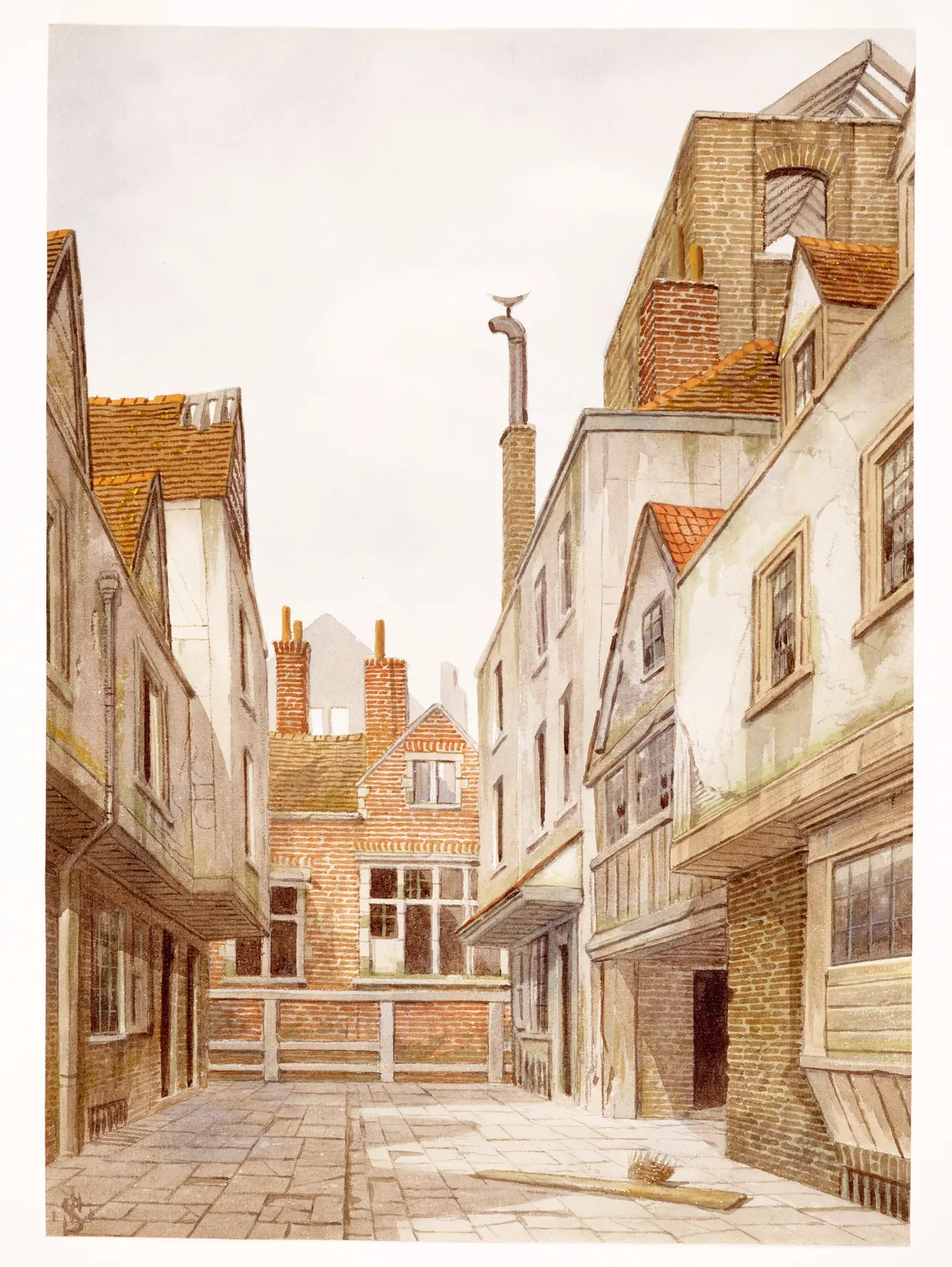
Farthing’s Alley, painted by James Lawson Stewart.
-
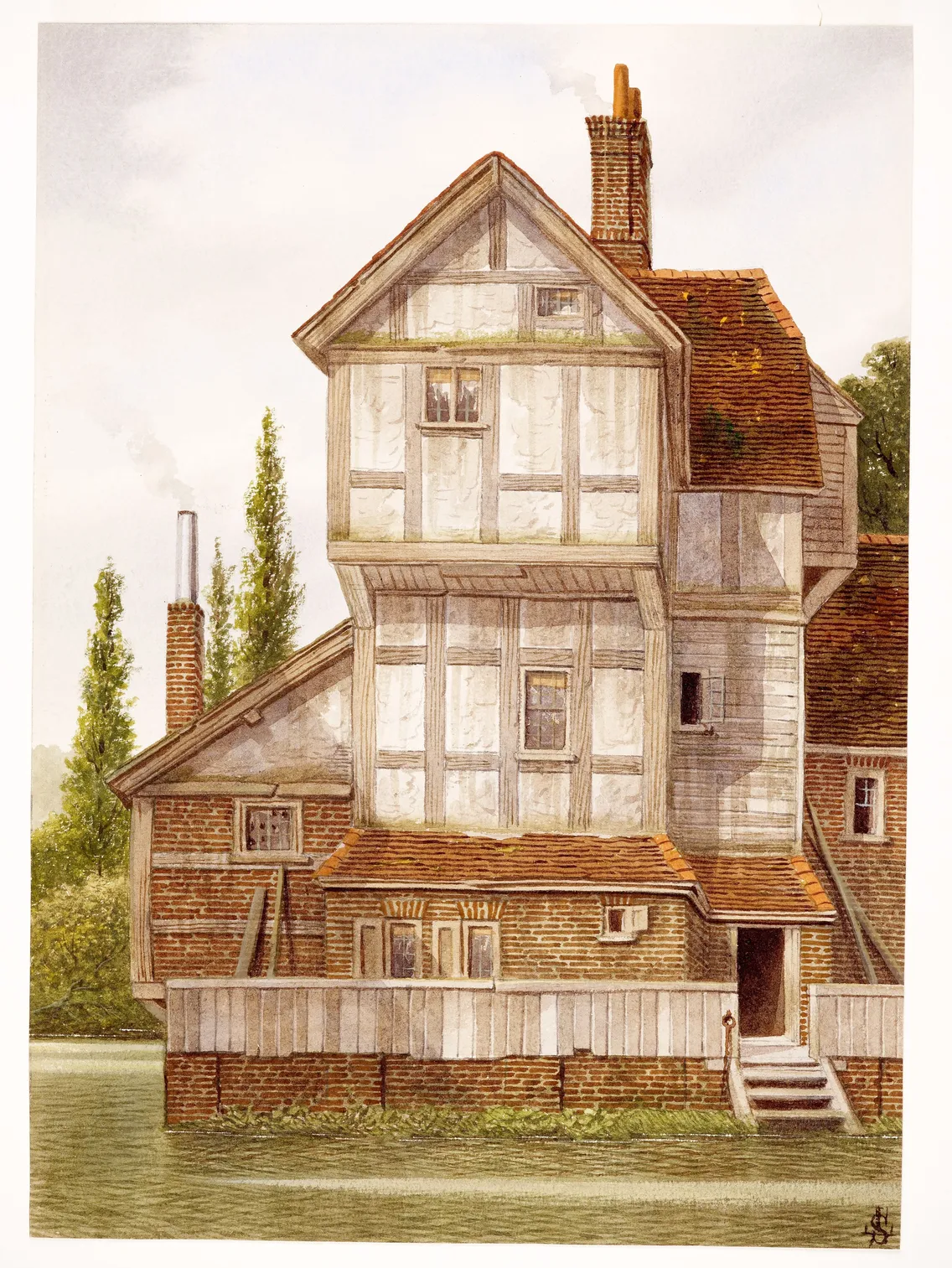
Hickman’s Folly, another street in Jacob’s Island, painted by James Lawson Stewart.
We have a number of his paintings in our collection, including two depicting parts of Jacob’s Island – Hickman’s Folly and Farthing Alley.
These locations were also dramatically described by author Charles Dickens.
Charles Dickens, Oliver Twist and Jacob’s Island
Jacob’s Island is a key setting in Dickens’ famous novel Oliver Twist, most notably where the villain Bill Sikes meets his death.
He described the slum as a place where the poor endured “every repulsive lineament of poverty, every loathsome indication of filth, rot and garbage”.
His depiction of the squalor and decay was so vivid that many believed he’d exaggerated the state of Jacob’s Island. Dickens passionately defended the accuracy of his portrayal, and his work was instrumental in raising awareness of the appalling conditions there.


What happened to Jacob’s Island?
The slum began to be cleared in the 1850s. A fire in 1861 helped to speed up the redevelopment. The ditches of Jacob’s Island were filled, and the crumbling houses were replaced with warehouses.
Across the late 19th and early 20th centuries, the area was home to spice and flour mills, tea warehouses and food manufacturing businesses. The leather and tanning industry was still prevalent in the area during this period, with the Alaska Factory, which processed furs, being one of the largest. After being rebuilt in the 1930s, the factory closed in the 1960s and has since been converted into luxury flats.
The Dickens connection was kept alive with the building of the Dickens Estate in 1929. Housing blocks were named after different Dickens characters, but not Bill Sikes.
Bermondsey’s factories were heavily bombed during the Blitz, so the riverfront underwent more waves of transformation after the Second World War (1939–1945). Jacob Street Studios produced films and TV shows in the eighties and nineties. Now the area is home to luxury riverside flats.
Tags
-
Paintings, Prints & Drawings
 Paintings, Prints & Drawings
Christmas! In the East; In the West (engraving)
Echoes from the Clubs
1868-12-23
-
-
 Trades & Workers
Henry Mayhew brings Victorian London to life
His spectacular survey preserved the experiences and voices of street workers in the 19th century
-
 Publishing & Media
Who was Charles Dickens?
19th-century London’s most celebrated writer gave us Oliver Twist and A Christmas Carol