How pantomime began in London
Pantomime’s history stretches back over 300 years, developing from mimed shows into the full-blown fairytales that dominate Christmas theatre today.
Since the 1700s
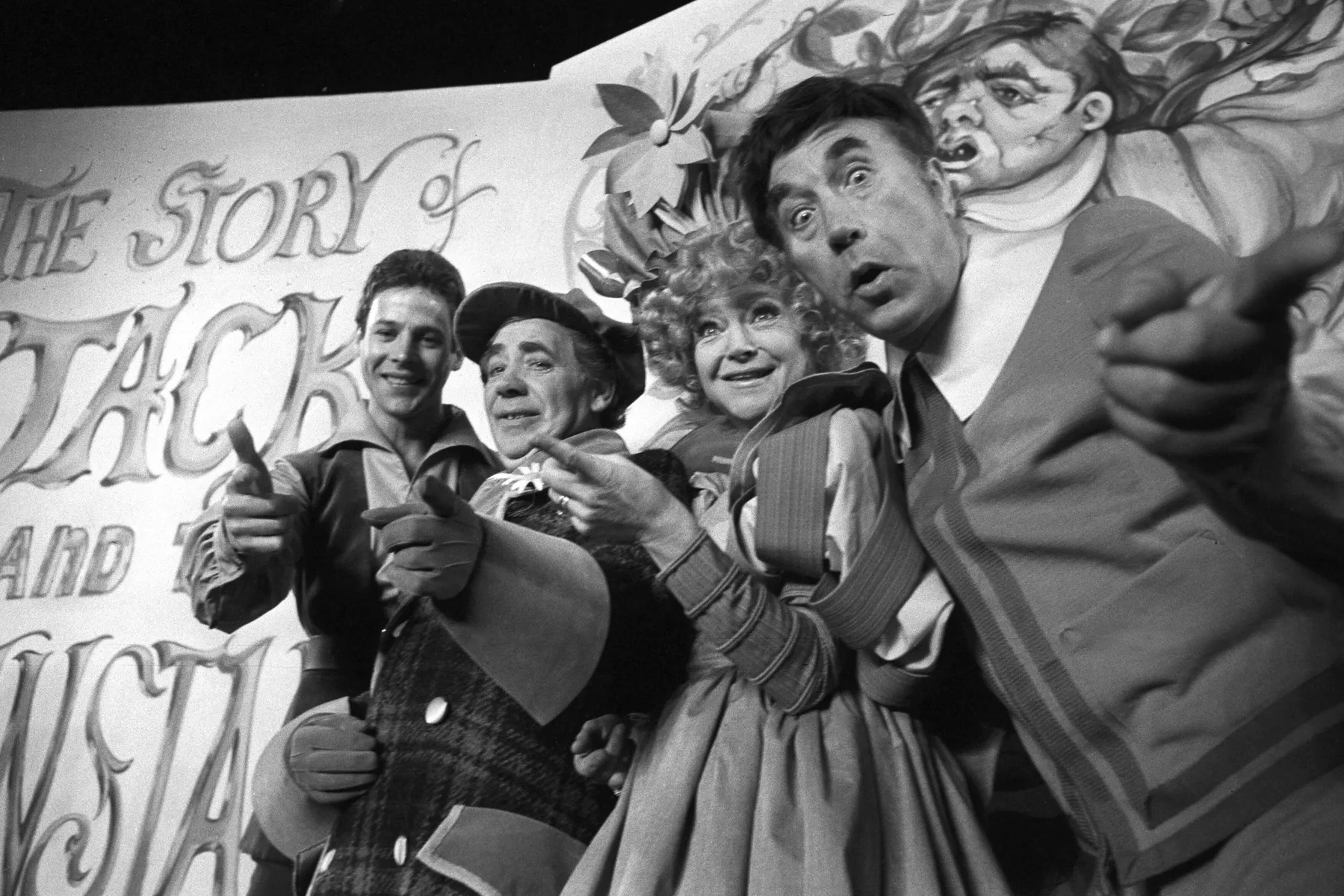
Stars rehearse at the London Palladium for Jack and the Beanstalk, 1973.
The city takes its seasonal silliness seriously
The Christmas pantomime is a British institution. Stacked with slapstick comedy, audience participation and cross-dressing characters, there’s no theatre experience quite like it.
Pantomime has roots in commedia dell’arte, a form of 16th-century Italian street entertainment which influenced London theatre shows in the 1700s. But much of what we’d recognise as panto today came from the Victorians who, over the course of the 1800s, transformed it into the seasonal spectacle we see today.
It’s popular all over the country, but pantomime is very much a product of London, evolving on the London stage over 300 years. It’s still a firm fixture on the city’s Christmas calendar.
Pantomime came from 16th-century commedia dell’arte
Many of panto’s key ingredients – such as stock characters, music and physical comedy – came from commedia dell’arte. This roaming street entertainment came from Italy but could be found all over Europe from the 1500s to 1700s.
Commedia dell’arte was mostly improvised and featured acrobatics, dancing, tumbling and music. But there was also a basic plot that was followed. Performers wore masks to represent their characters. These usually included young lovers (‘innamorati’), who are being broken apart by scheming elders (‘vecci’), but are eventually helped to a happy ending by comical servants (‘zanni’).
-
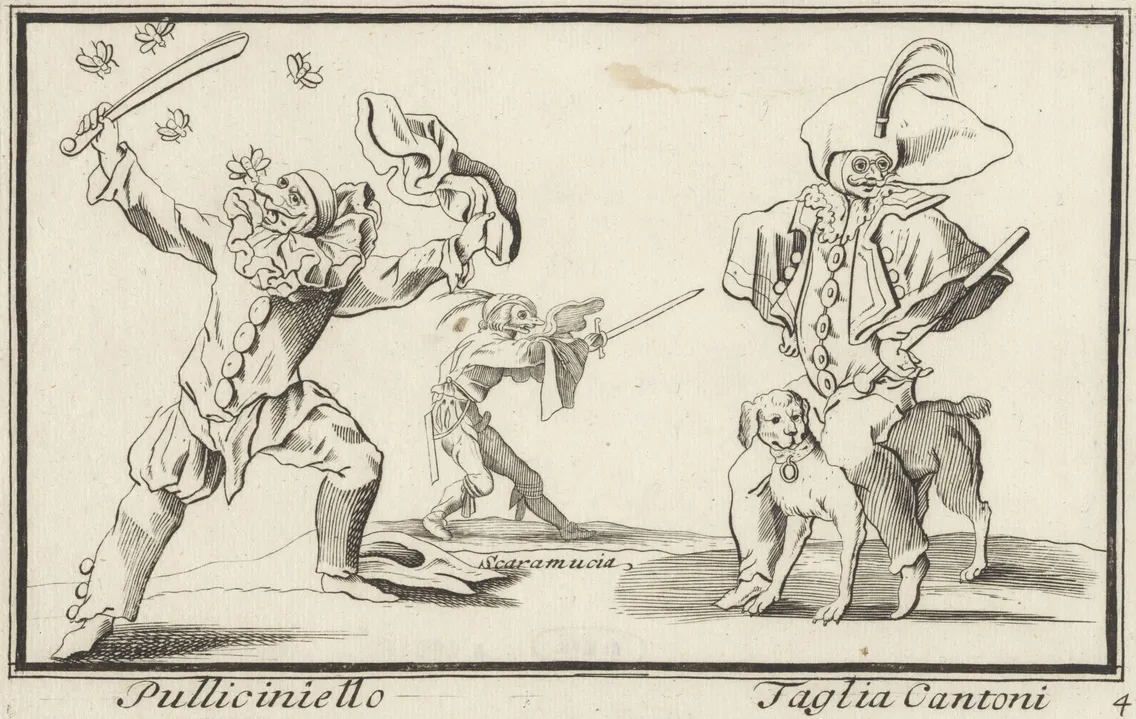
Commedia dell’arte characters Pulcinella, Scaramouche and Taglia Cantoni.
In the early 1700s, London theatregoers started to see commedia characters on the stage. These mimed productions, based on classical stories and set to music, became the early form of pantomimes. They were advertised as entertainment ‘in the Italian manner’.
Punch, the lawless star of Punch and Judy puppet shows, also has roots in the commedia character Pulcinella. He was brought over to London by Italian puppeteers as early as the 1660s.
Harlequin became the star of London’s 1700s pantomimes
Harlequin, or Arlecchino in Italian, is a witty, mischievous and wildly acrobatic comic servant who became London’s most popular panto character in the 18th century.
The dancer and choreographer John Weaver was one of the first to stage the clown-like Harlequin in the capital. Harlequin and other commedia characters like Scaramouche featured in a ballet at the Theatre Royal, Drury Lane in Covent Garden in 1702.
However, it was John Rich, the manager of Lincoln’s Inn Theatre, who made Harlequin a star. Often performing Harlequin himself, Rich pioneered early pantomimes in shows that featured music, spectacle and a hefty dose of slapstick and mime. His pantos were magical – and very popular.
Rich made enough money from staging pantomimes at Lincoln’s Inn that he was able to found the Covent Garden Theatre in 1732, now the Royal Opera House. The opening of the new theatre is satirised in this print from our collection, traditionally attributed to the artist William Hogarth.
-
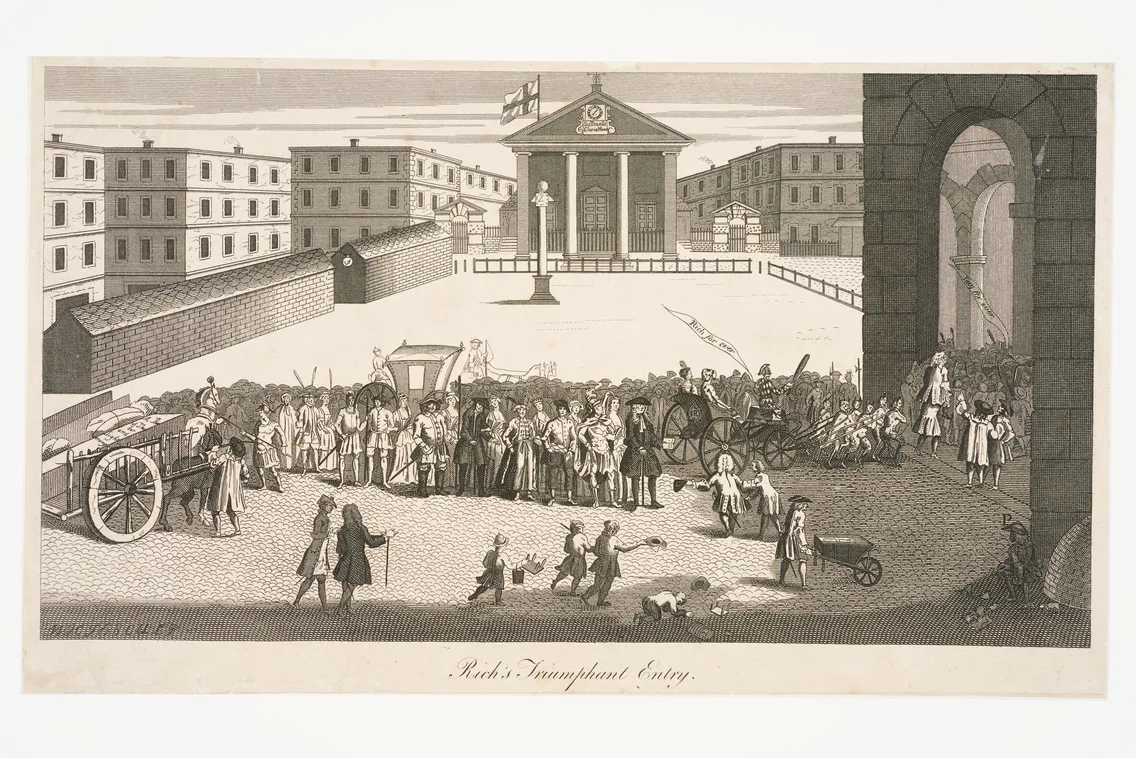
It’s thought William Hogarth made this image of John Rich driving a chariot in a procession to the new Covent Garden Theatre.
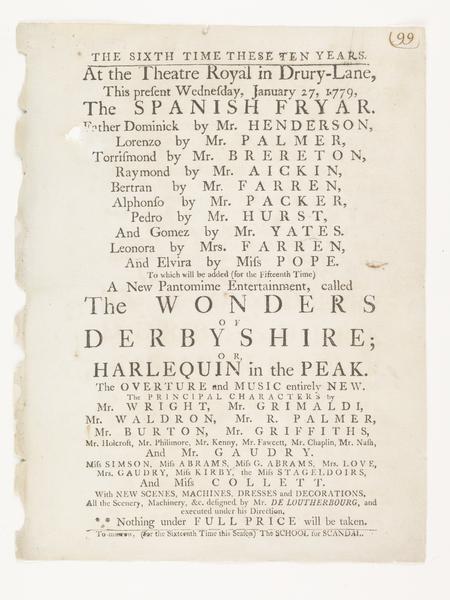
When the actor David Garrick became manager of the nearby Theatre Royal, Drury Lane in 1747, he also staged pantomimes. Garrick wasn’t the form’s biggest fan. He was much more into staging traditional plays by the likes of William Shakespeare. But he saw the financial appeal.
Still, Garrick limited panto’s supposed silliness to the Christmas season, laying the foundations of its festive associations.
Joseph Grimaldi was the king of the pantomime clowns
The performer Joseph Grimaldi was the star of the London stage in the early 1800s. He performed in many pantomimes at Sadler’s Wells and Covent Garden in his 30-year career.
Grimaldi’s first appearance as a pantomime clown was at Sadler’s Wells in Islington in 1800. He debuted his wicked and wild new take on the character. Where clowns previously wore tatty clothes and natural makeup, Gramaldi’s clowns dressed in colourful costumes and wore his distinct white and red facepaint.
-
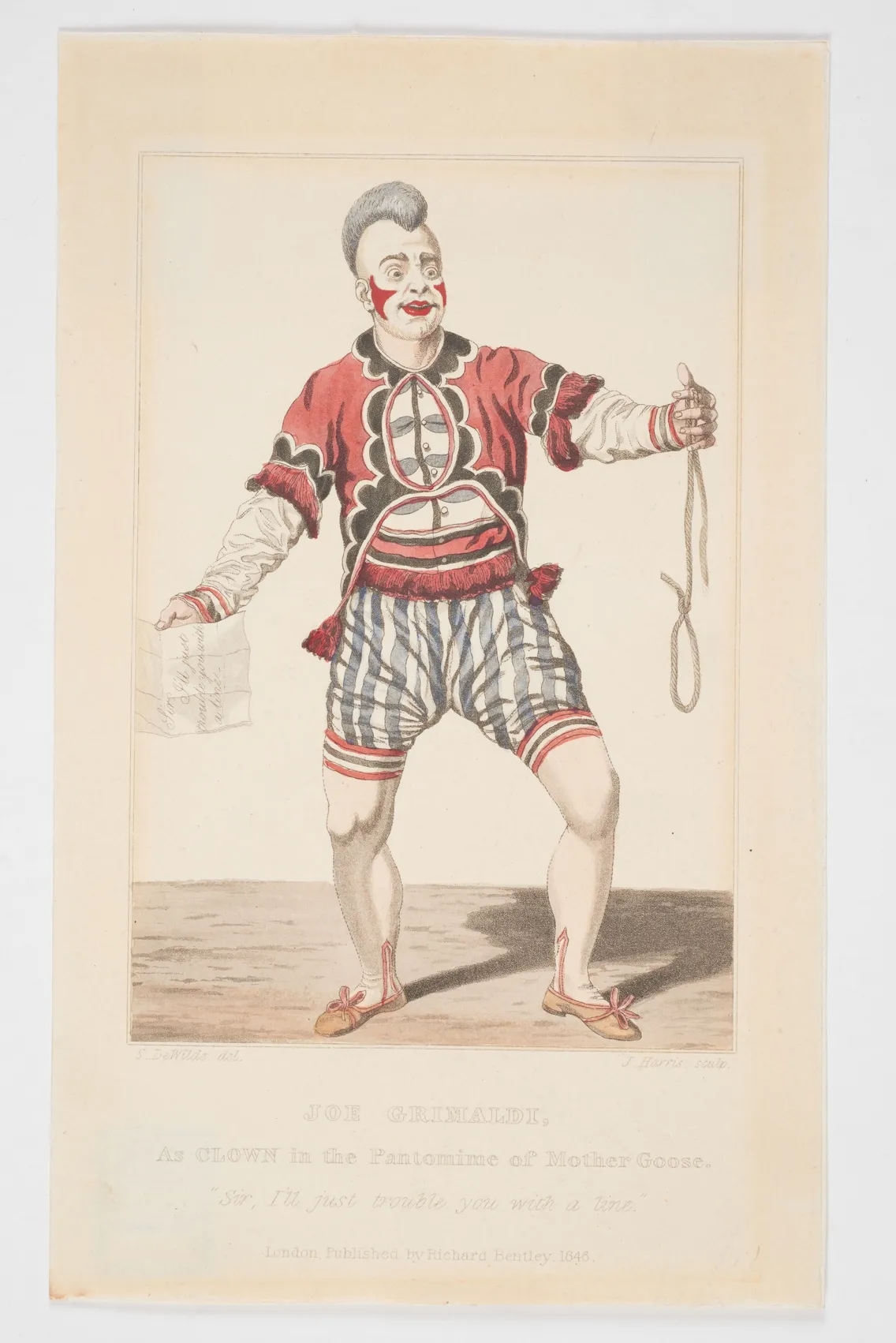
Joseph Grimaldi as the clown in Harlequin and Mother Goose.
-
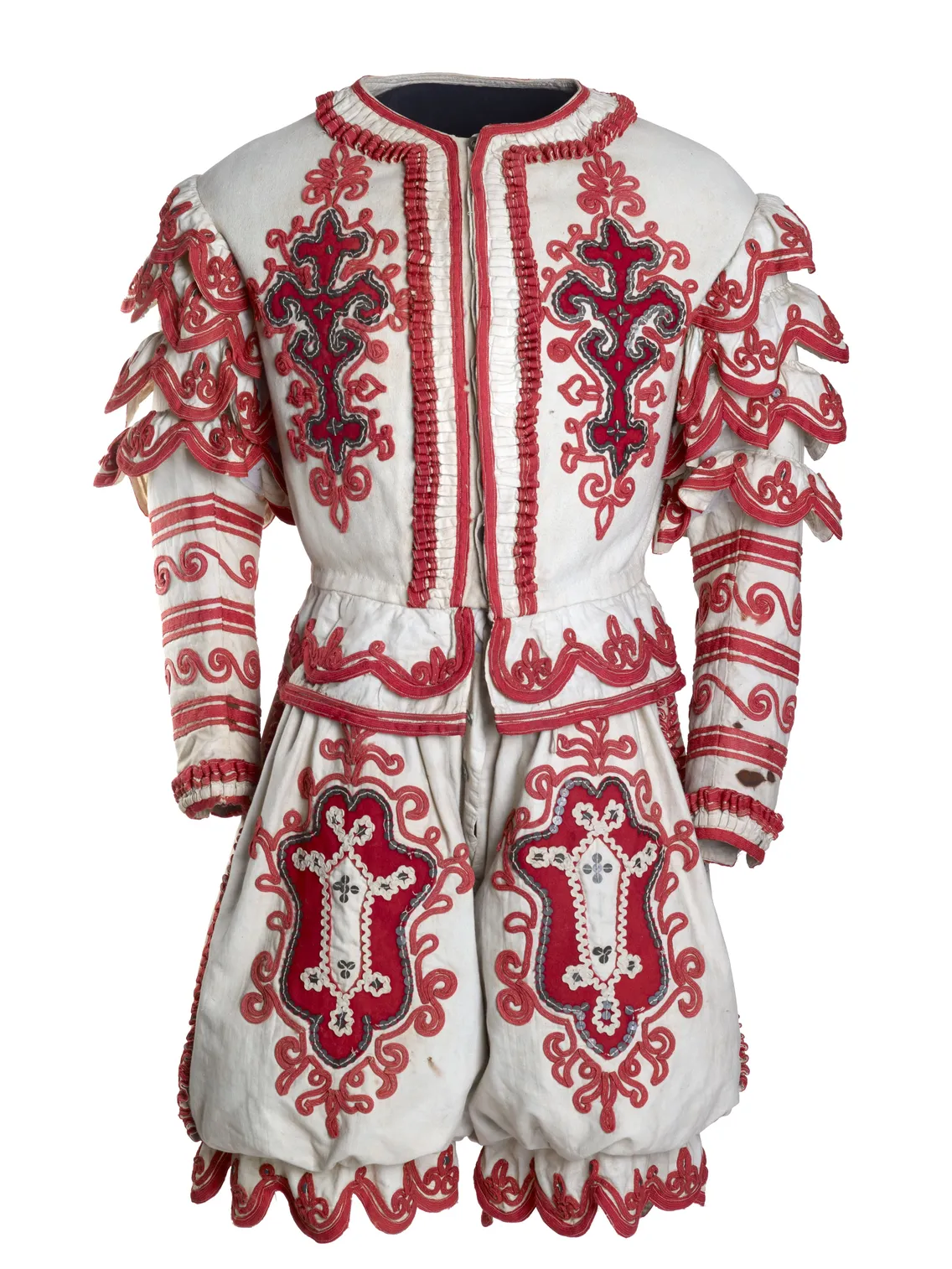
This costume was worn by Grimaldi when performing in London.
At that time, pantos still didn’t have dialogue, just songs and catchphrases. Spoken dialogue was only allowed in three London theatres. So pantomime relied on physical movement for entertainment.
Grimaldi took that to the next level. His clown act became the hottest ticket on London’s theatre scene. His 1806 performance in Harlequin and Mother Goose was the most successful pantomime Covent Garden ever staged.
However, Grimaldi paid for his successful physical comedy with his health. He died in 1837 in poverty, and was barely able to walk.
Modern pantomime has the Victorians to thank
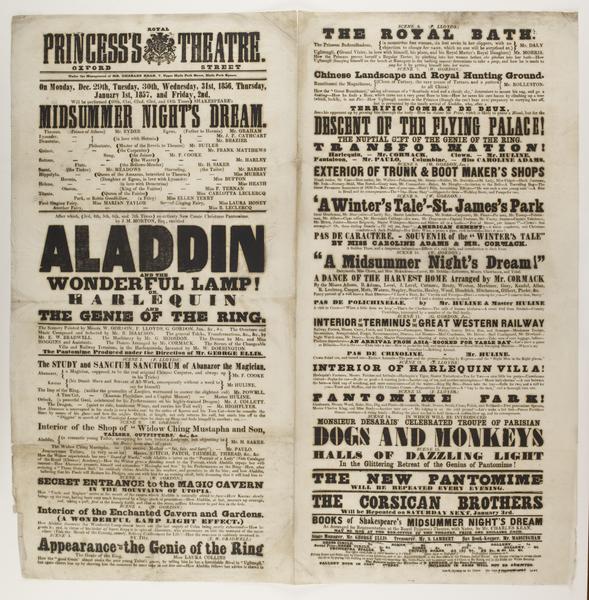
Pantomime went through radical change during the mid-to-late 1800s. Much of what we see in pantomime today comes from this period. The Christmas association also became set in stone then, with pantos typically opening on Boxing Day, the day after Christmas.
Shows were transformed into large-scale extravaganzas featuring stage trickery and many different types of entertainment. Plots were centred on fairy tales, in which conventional characters like the principal boys (often played by women) and dames (often played by men) also emerged.
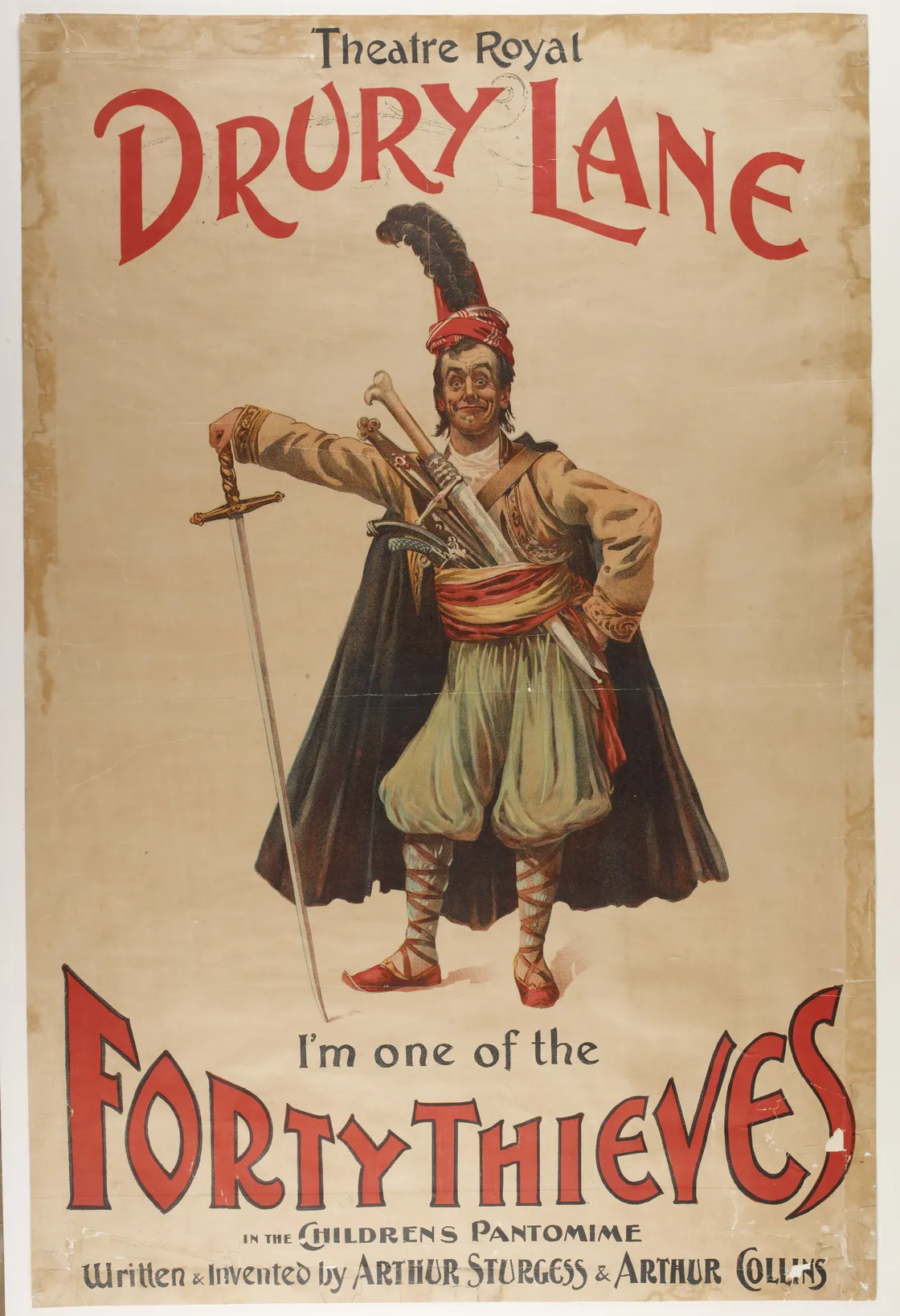
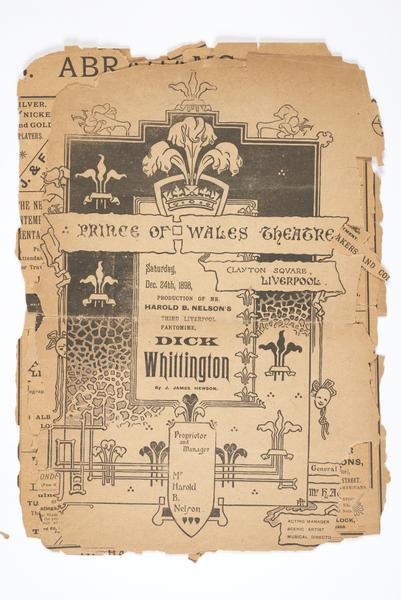
Music hall star Dan Leno stars in this Christmas panto advert from 1898.
The 1843 Theatres Act lifted the restrictions on spoken dialogue in shows. Now, panto could go wild with wordplay and double entendre – a wink to the adults in the audience in increasingly child-friendly shows.
The freedom for audience participation led to some of pantomime’s catchphrases catching on. Huge swathes of us know exactly what to say when we hear “oh no it isn’t…”
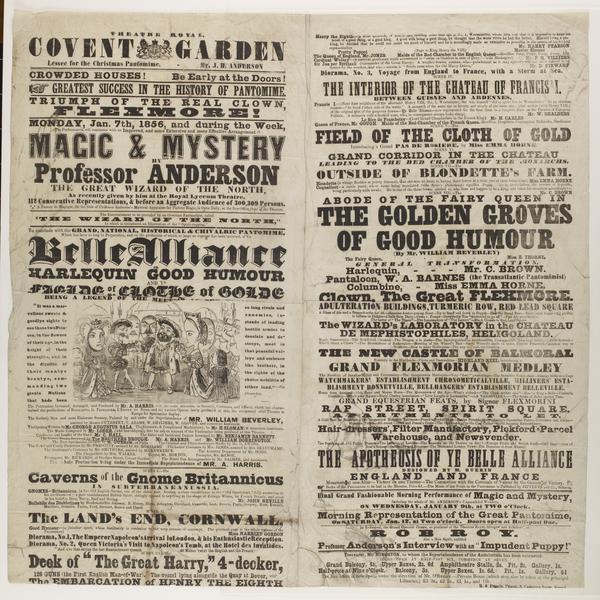
Pantos also started recruiting the stars of music hall, a mostly working-class variety theatre entertainment which was hugely popular in London from the mid-1800s. Famous performers like Vesta Tilley, Marie Lloyd and Dan Leno, one of Drury Lane’s great panto dames, got the crowds flocking in. Just like the soap stars and comedians do today.