Nonsuch Palace: Henry VIII’s lost pearl
This magnificent palace on the border of Sutton and Surrey was admired for its ornate decoration and exquisite craftsmanship. Yet only the foundations and fragments of the building remain.
Nonsuch Park, Sutton
1538–1683
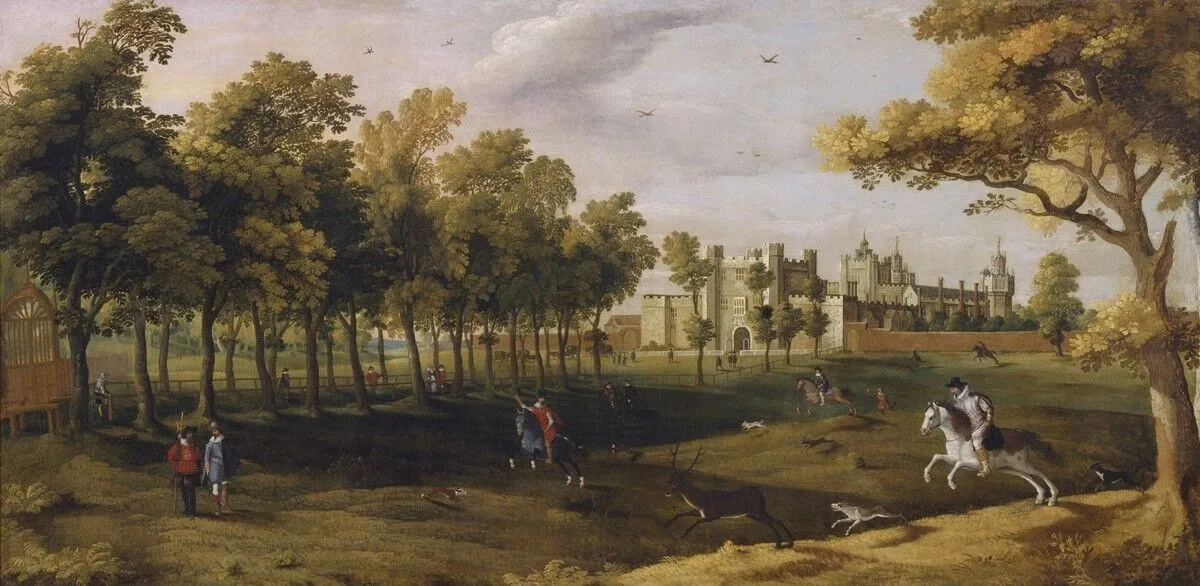
Painting of Nonsuch Palace done between 1620 and 1629.
None such place like it
Nonsuch Palace is a lost pearl of the Tudor period. It was named for its splendour and uniqueness, because there was ‘none such’ place like it.
Nonsuch Palace, set inside Nonsuch Park on the border of Surrey and Sutton, was commissioned by King Henry VIII in 1538. He built it to commemorate the 30th anniversary of becoming king and to celebrate the birth of his son, the future King Edward VI.
Intended as a hunting lodge, Nonsuch was constructed between 1538 and 1547 on the site of the village of Cuddington. The palace was incredibly ornate – and expensive – and featured a separate banqueting house, outbuildings and impressive gardens.
After Henry died, Nonsuch Palace passed through various royal and noble hands. Despite its grandeur, Nonsuch was demolished across 1682 and 1683 by Barbara Villiers, a noblewoman and mistress of King Charles II, to pay off her gambling debts.
An excavation in 1959 and 1960 uncovered the foundations of the palace, alongside building fragments and pieces of pottery, glass, pewter and bone. Only a few retaining walls of the banqueting house remain standing. We have a huge amount of this excavated material in our collection, including pieces of slate, carved stone, plasterwork, ivory, ceramics, wood, and a pewter plate.
The construction of Nonsuch Palace
The building of Nonsuch was a big undertaking. The village of Cuddington was completely cleared to make way for the palace. Stone from the nearby Merton Priory, demolished during the dissolution of the monasteries, was reused to build Nonsuch. Local carters were paid eight pence per ton to move over 3,600 tons of rubble to the palace site.
-
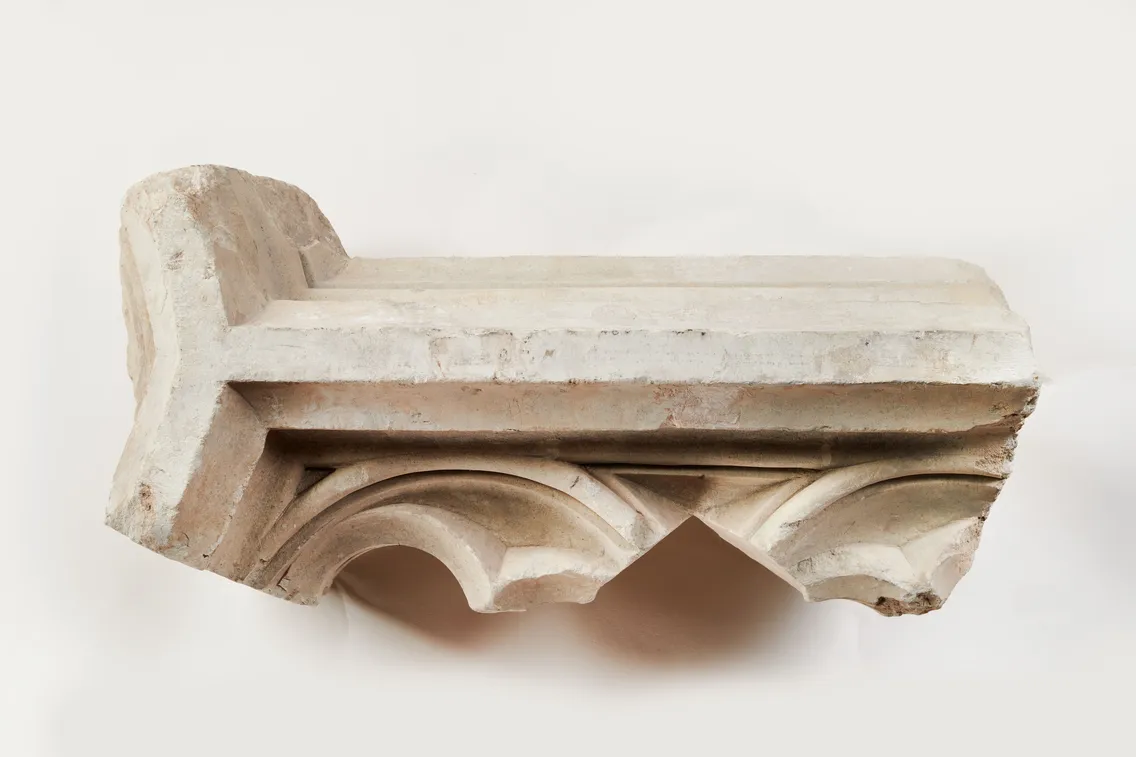
A piece of window stone from Merton Priory.
-
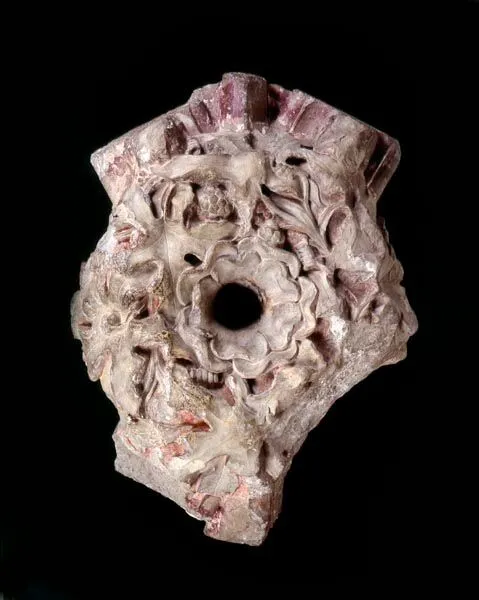
This decorative piece of stone from a ceiling in Merton Priory, rejected for reuse to build Nonsuch Palace, was found during the palace’s excavation.
The two-storey building was set around an outer and inner courtyard, with a gatehouse and an attached kitchen block. The rooms were arranged off central staircases in each courtyard.
Nonusch was surrounded by parkland. The palace, its outbuildings, banqueting house, gardens and maze were inside Little Park. The larger Great Park to the north was stocked with deer for hunting.
-
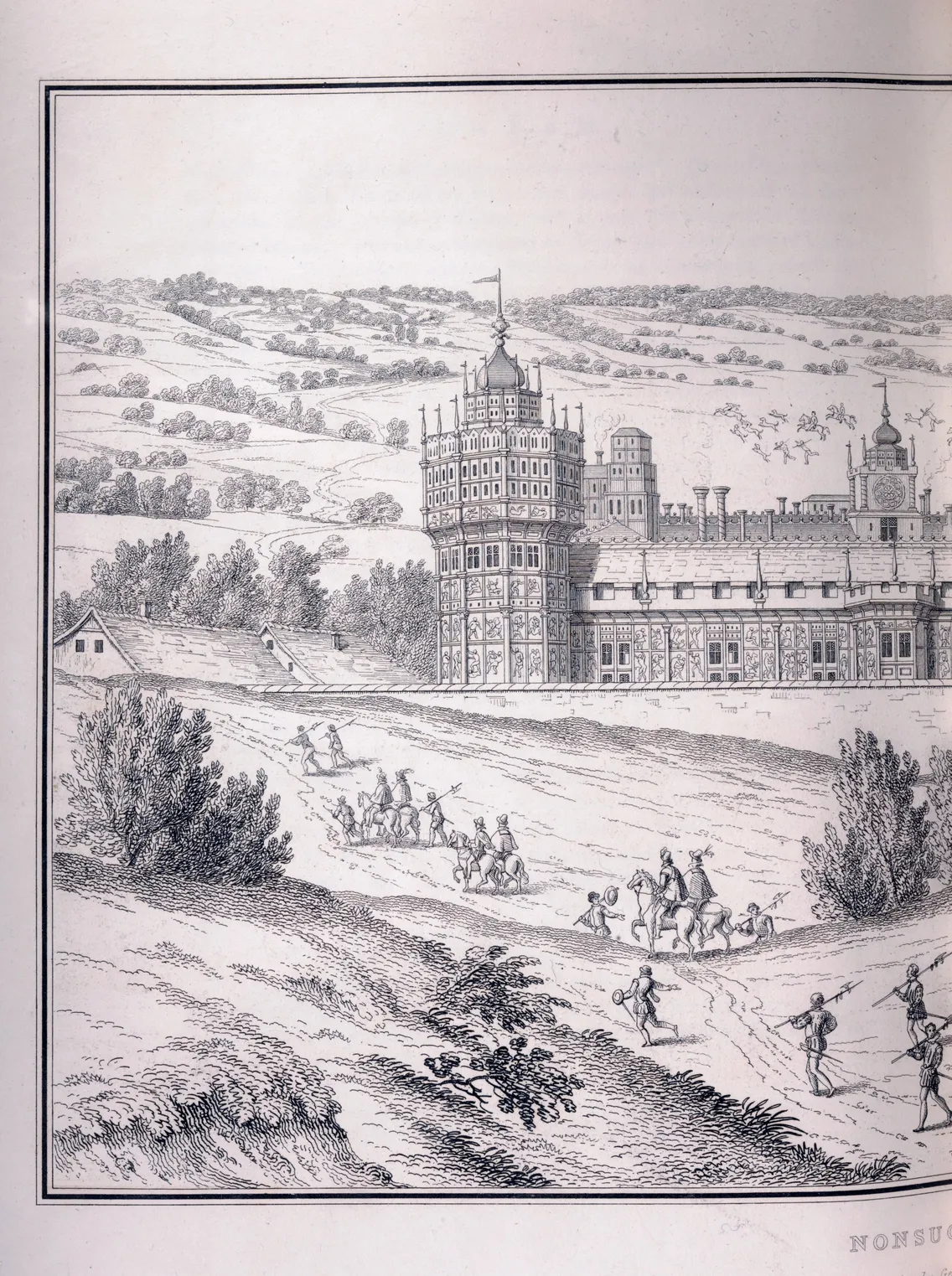
A print of Nonsuch Palace by Joris Hoefnagel and Frans Hogenburg.
-
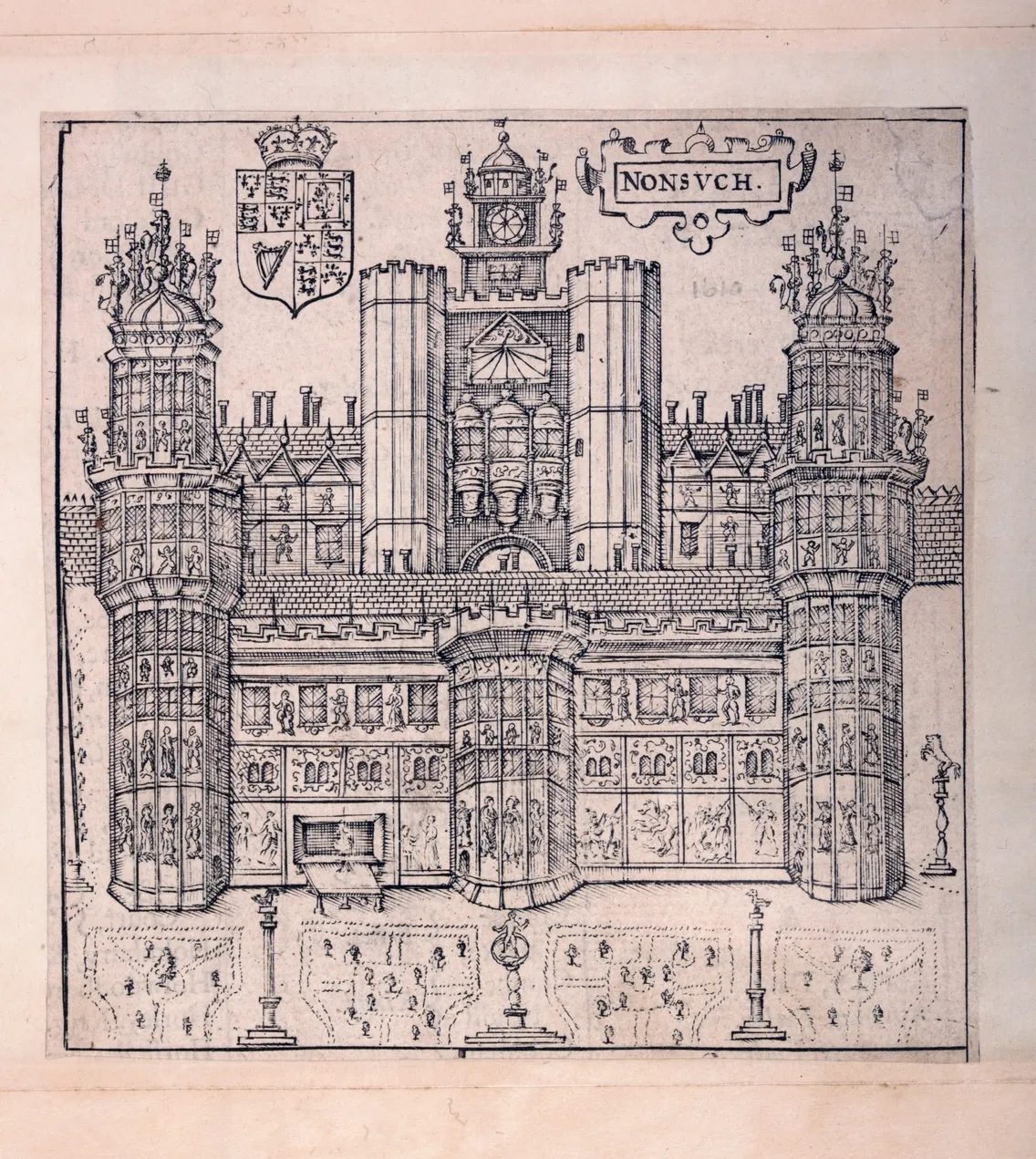
A view of Nonsuch Palace, originally from John Speed’s Map of Surrey.
What did Nonsuch Palace look like?
As its name suggests, Nonsuch Palace was designed to be grand. Henry wanted Nonsuch to outshine Château de Chambord, a hunting lodge of his rival King Francois I of France. And he splashed the cash to make it happen, spending £24,500 on the project – that’s over £20 million in today’s money.
Christopher Dickenson and William Clement, the pair behind Hampton Court Palace, designed Nonsuch Palace. Specialist craftsmen were brought in for the work. The Italian artist Nicholas Bellin of Modena, who worked on Francois I’s Fontainebleau palace, provided technical and artistic expertise.
“you would think the whole science of architecture exhausted on this building”
William Camden, Britannia, 1586
Nonsuch was one of the first Tudor buildings to feature design elements of the Renaissance, a period of ‘cultural rebirth’ that spread across Europe in the 15th and 16th centuries. Renaissance design favoured symmetry and decorative detail, and looked back to ancient Greece and Rome.
The south facade and inner courtyards were clad with carved and gilded slate. These framed decorative carved panels depicted Roman emperors, figures from classical mythology and representations of virtues, like justice and fortitude. There were over 2,000 metres of this ornate external decoration.
-
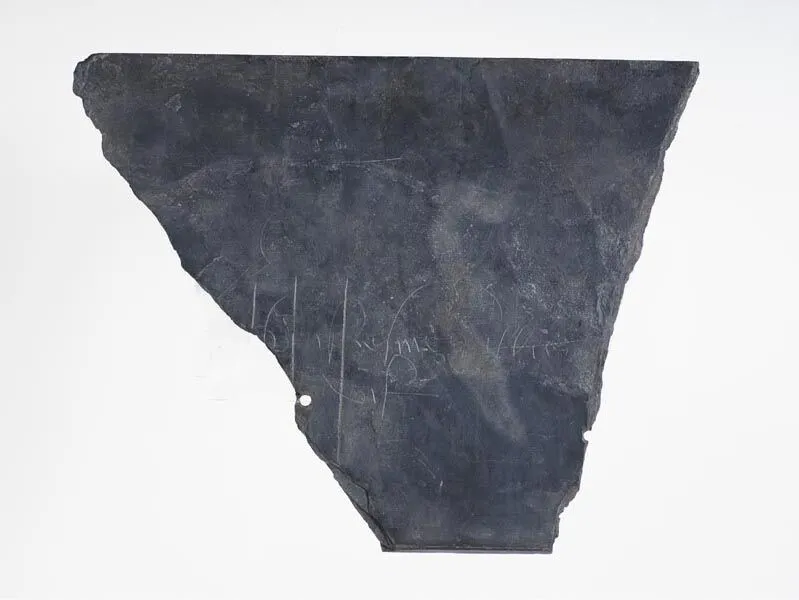
A fragment of slate excavated from Nonsuch Palace.
-
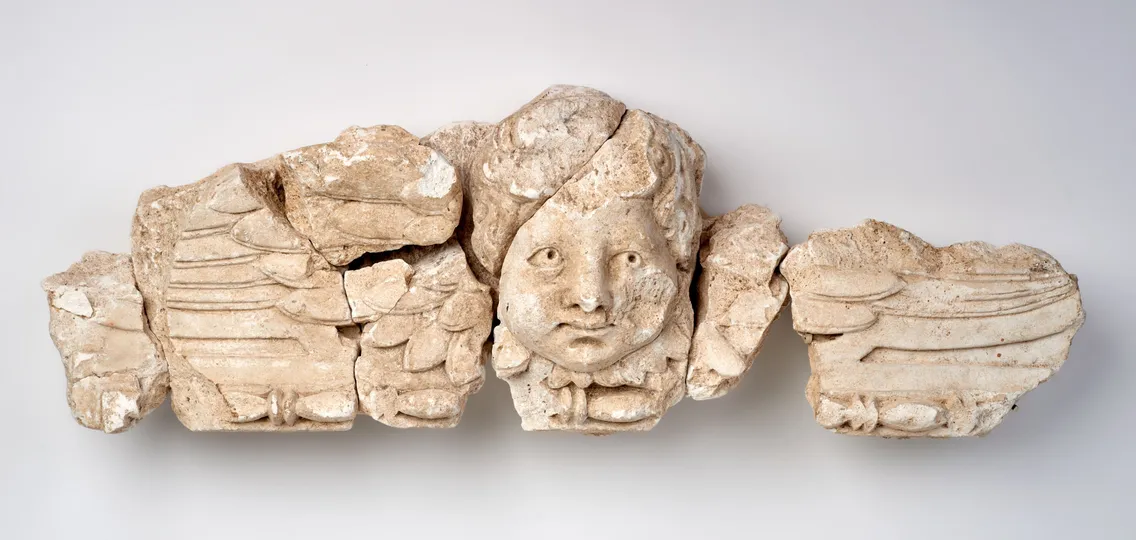
Decorative stucco depicting a cherub from Nonsuch Palace.
-
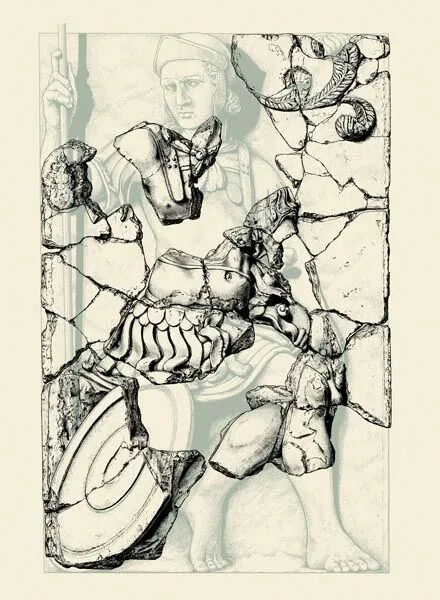
Stucco panel fragments alongside what they would have depicted.
-
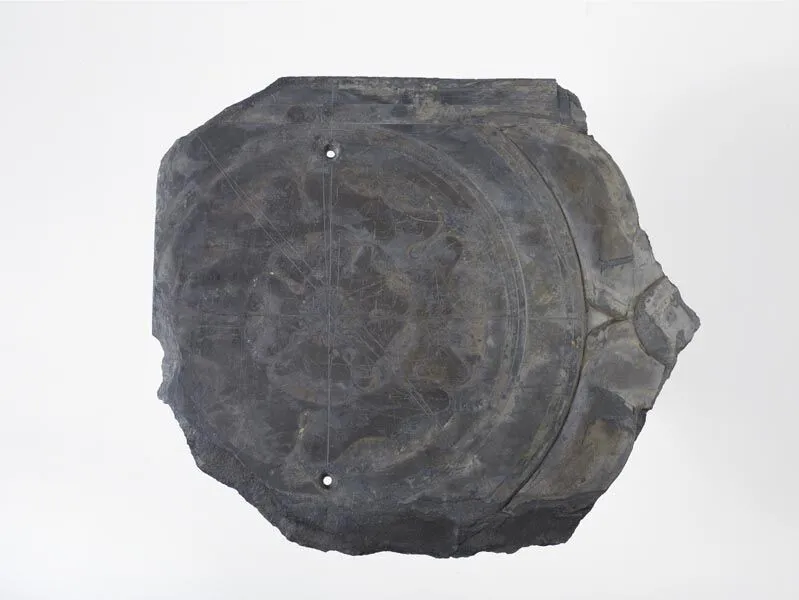
Carved slate from Nonsuch Palace featuring the Tudor rose.
Visitors came from all over Europe to marvel at the magnificence of Nonsuch. The historian William Camden describes the palace’s beauty in Britannia, his 1586 survey of Great Britain. He says Nonsuch was “built with so much splendour and elegance that it stands a monument of art… you would think the whole science of architecture exhausted on this building”.
Nonsuch Palace’s pewter plate
As well as architectural fragments, we also have a large pewter plate from Nonsuch Palace in our collection. The maker’s mark indicates that it could have been made between 1566 and 1586.
The plate was found in a well in what would have been the kitchen. It was likely used as a voider, a dish held by a servant while collecting scraps from the table.
There’s a large hole near the middle of the plate, which was caused by being left on a hot surface. The other dents and small holes suggest it was also used as target practice. No wonder it was eventually thrown away.
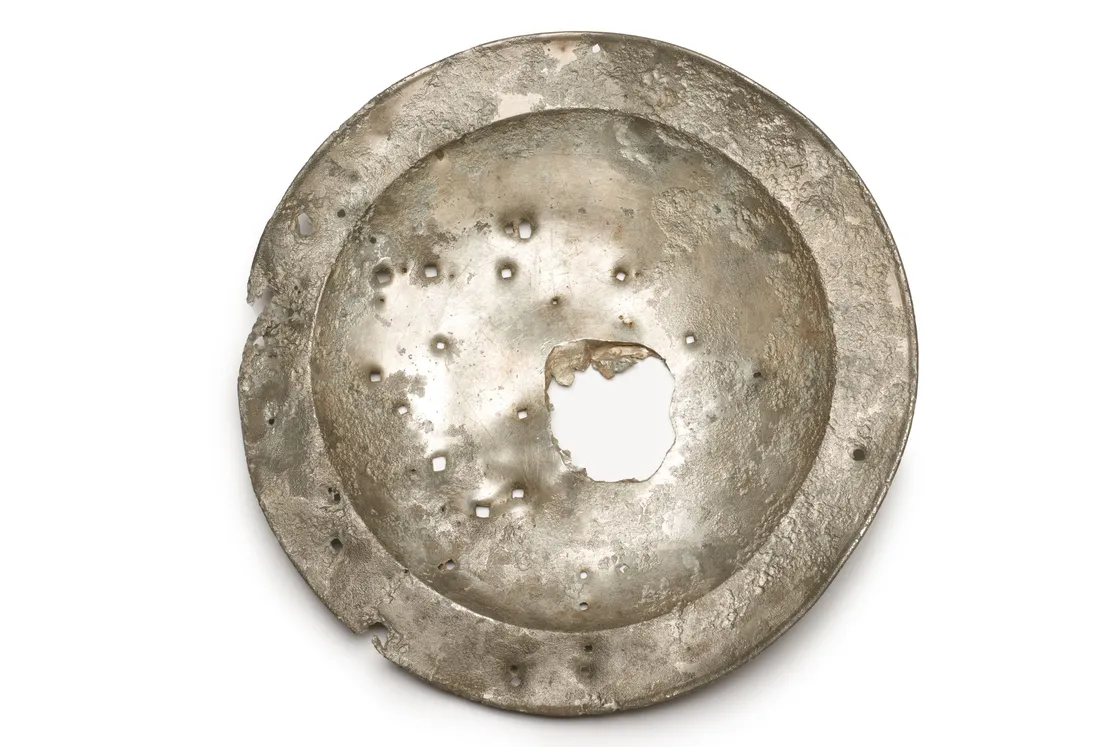
A pewter plate found in a well at Nonsuch Palace.
Nonsuch Palace after Henry VIII
Henry died in 1547, before Nonsuch was completed. He never lived there and only visited it a couple of times.
Henry’s son and first successor, Edward VI, cared little for the palace built in his honour. After Edward died in 1553, Nonsuch was inherited by his half-sister Queen Mary I. In 1556, Mary exchanged Nonsuch for other estates with Henry Fitzalan, the earl of Arundel and a prominent member of the Tudor court.
Queen Elizabeth I enjoyed visiting Nonsuch. She signed the Treaty of Nonsuch there in 1585, a pivotal international agreement to help Dutch rebels fight against Spanish rule.
The palace was returned to royal hands during King James I’s reign, which began in 1603.
Nonsuch survived the English Civil Wars (1642–1651). Many other royal buildings, including Richmond Palace, were seized or destroyed by Parliament, the governing body of England fighting to limit the monarch’s power.
What happened to Nonsuch Palace?
In 1670, Charles II gave the palace to his favourite mistress Barbara Villiers, an influential countess famous for her beauty, wealth – and extravagant spending. Having racked up gambling debts, Villiers had the palace dismantled to pay them off across 1682 and 1683.
Nonsuch Park today
Nonsuch Park is the last remaining section of the Little Park, with the Great Park having been covered by modern development.
No parts of Nonsuch Palace remain above ground today, though you can see some of its carved wood panelling at Loseley Park, a Tudor manor house in Guildford. There are just a few walls of the banqueting house left standing.
Nearby, you can still visit Nonsuch Mansion, a house inspired by illustrations of the palace. It was built in the early 1800s for the merchant Samuel Farmer, who acquired the park in 1799.
Tags
-
Photography
 Photography
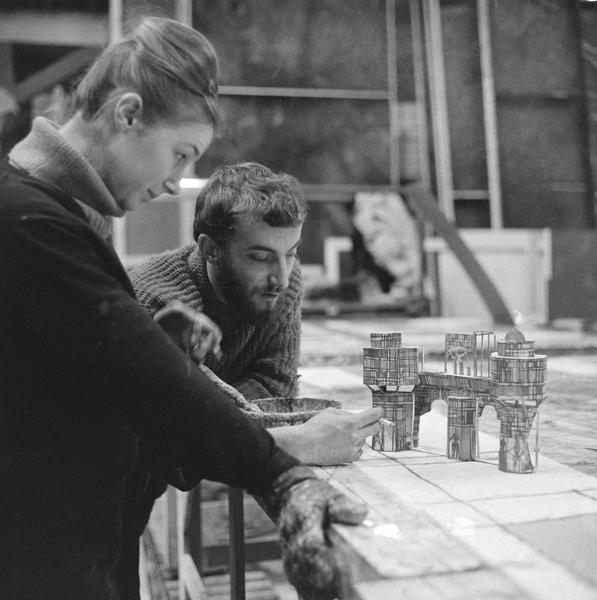
Model of Nonesuch Palace for the Shakespeare exhibition at Alexandra Palace (negative)
Grant, Henry
1964-01
-
-
 Royalty & Aristocracy
Richmond Palace: A long-lost Tudor showpiece
Transformed by Henry VII, loved by Elizabeth I, largely forgotten about today
-
 Royalty & Aristocracy
The Savoy Palace & Hospital
How a magnificent medieval manor became a Tudor hospital for the poor – and then fell into ruins