Mary I & the Smithfield martyrs
This Tudor queen burned tens of Protestants alive in Smithfield for their religious beliefs. The fires that consumed these ‘heretics’ came to symbolise the brutality of ‘Bloody Mary’.
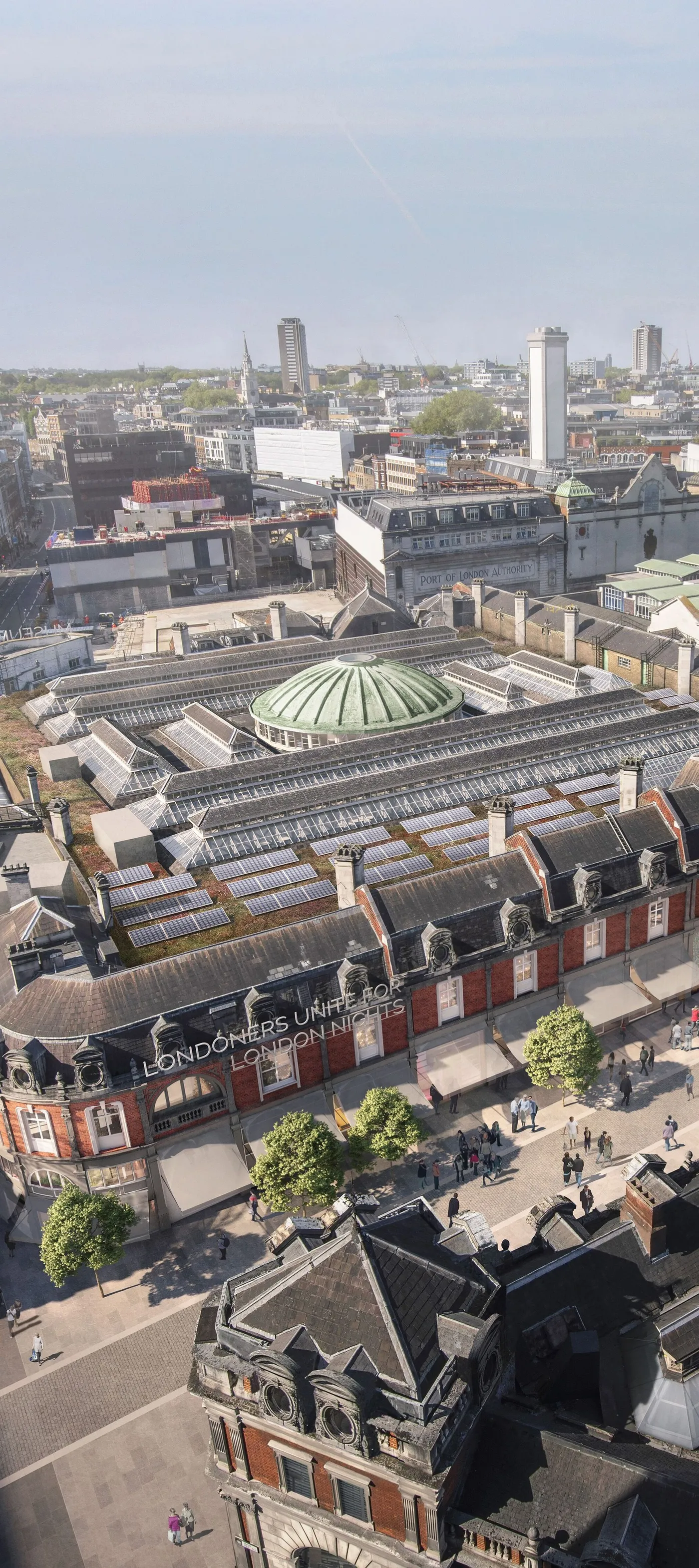
Smithfield, City of London
1555–1558
This page contains content some people may consider sensitive, or find offensive or disturbing. Understand more about how we manage sensitive content.
Smithfield stories of fire and flesh
Mary I burned around 280 Protestants at the stake for the crime of heresy during her five-year reign, between 1553 and 1558. The Catholic queen was determined to reverse the English Reformation and the country’s shift towards Protestantism. She believed using such hideous violence would get rid of religious heretics and scare others into falling in line with Catholic beliefs.
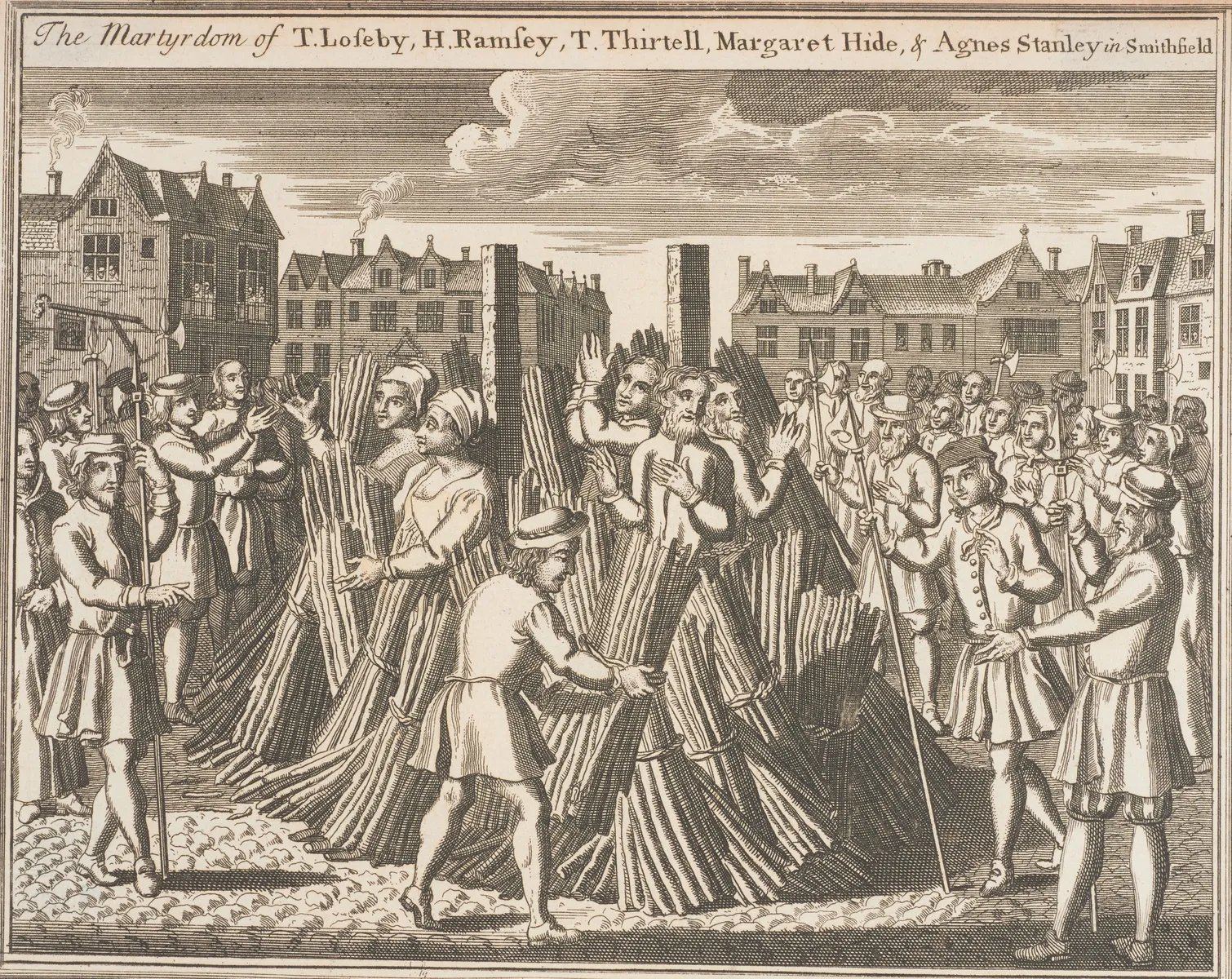
The open space of Smithfield, just outside of the City of London walls, was one of Mary’s main sites of execution. Those who were executed here have been called the Smithfield martyrs. And this heresy campaign has been known as the Smithfield fires.
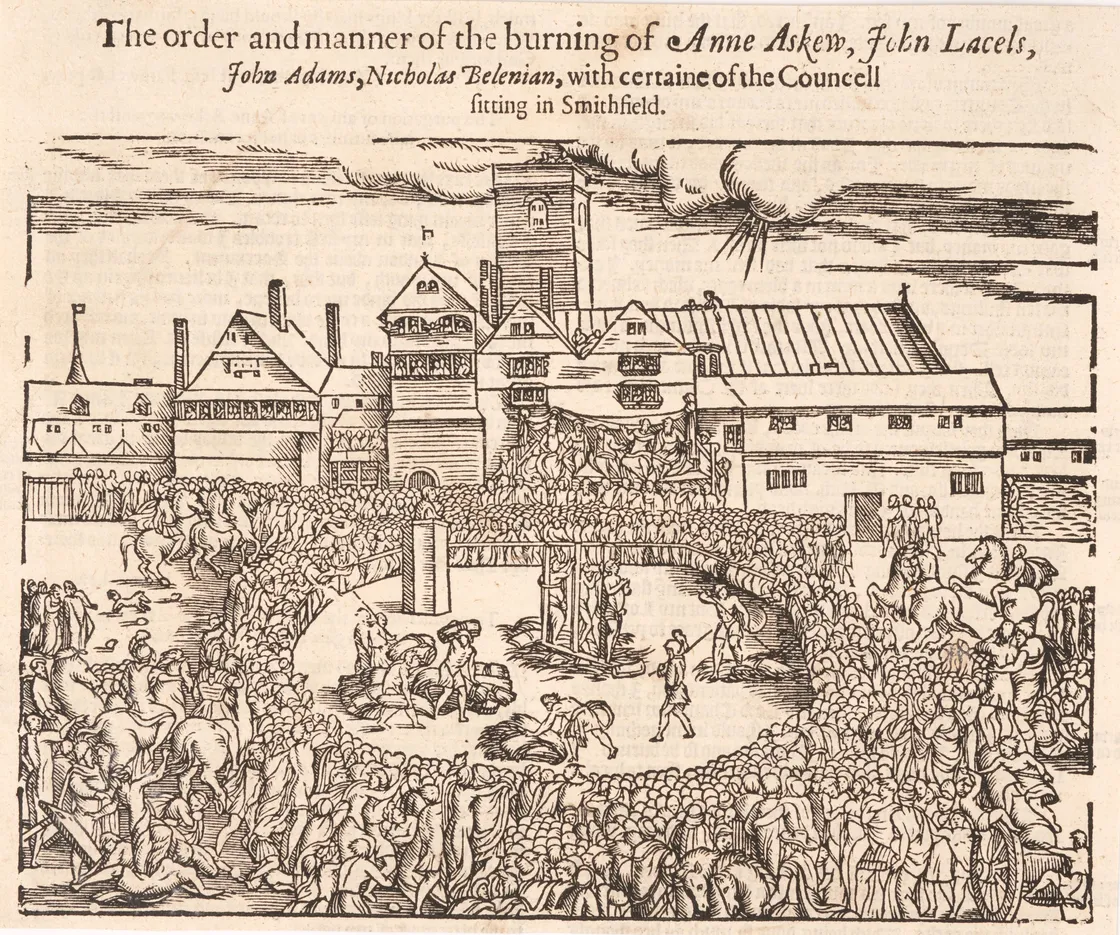
The stories of the ‘Marian persecution’ were captured in a history of Christian martyrs by Protestant preacher John Foxe called The Acts and Monuments of the Christian Church, first published in 1563. Better known as the Book of Martyrs, this anti-Catholic propaganda was one of the most influential books printed in the 16th and 17th centuries. Woodcut illustrations from the book are in our collection.
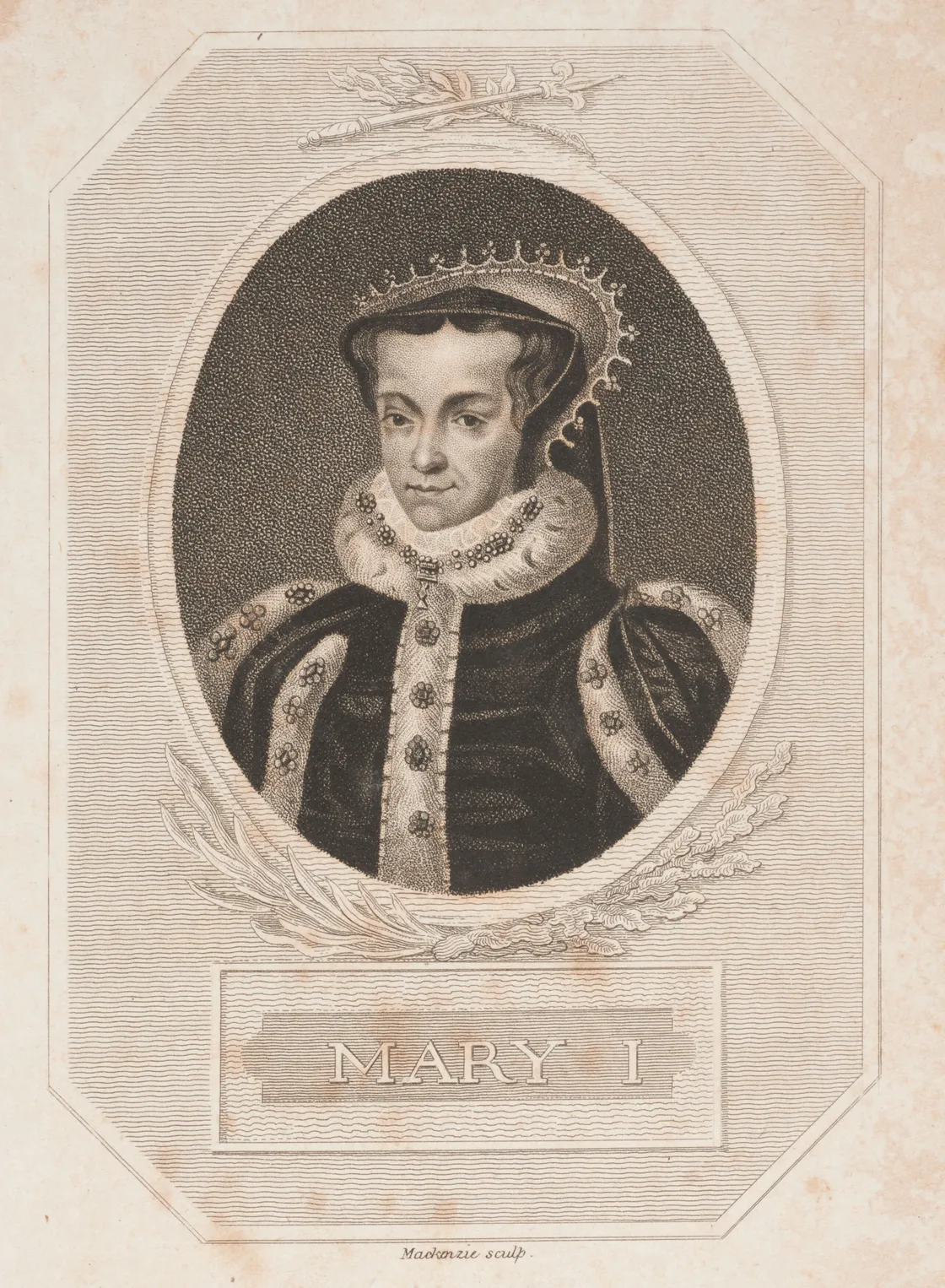
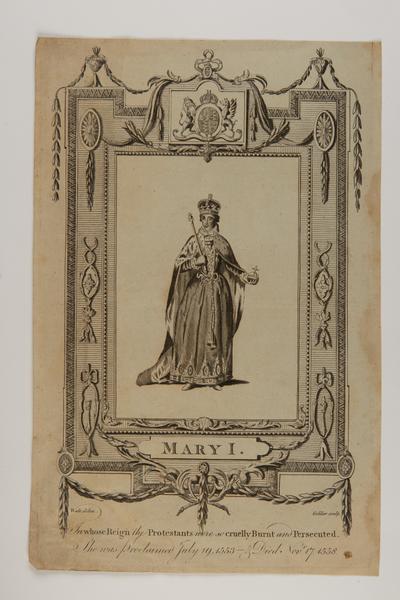
Engraving portrait of Mary I.
Why were heretics burned at the stake?
In the 16th century, those who disagreed with the Church were considered heretics. This word had come to mean taking the ‘wrong choice’ in terms of your religious beliefs.
England had been a Catholic country since the late 6th century, and religion completely shaped the way people lived their lives. Generally, you didn’t question religious authority or widespread belief systems.
Heresy was a serious crime, like treason, and so it was considered punishable by death. Across Europe, the widely accepted execution method was burning at the stake. The fire completely destroyed the body, leaving just ashes and bone. It was a horrific and extremely painful death.
The Church never actually carried out heresy executions. Religious leaders were judge and jury, but the state played the role of the executioner.
In 1401, a London priest called William Chatris, or Sawtry, was one of the first in England to be burned for heresy. He was a kind of Christian known as a Lollard who protested against the Catholic Church to worship in new ways. He was executed at Smithfield.
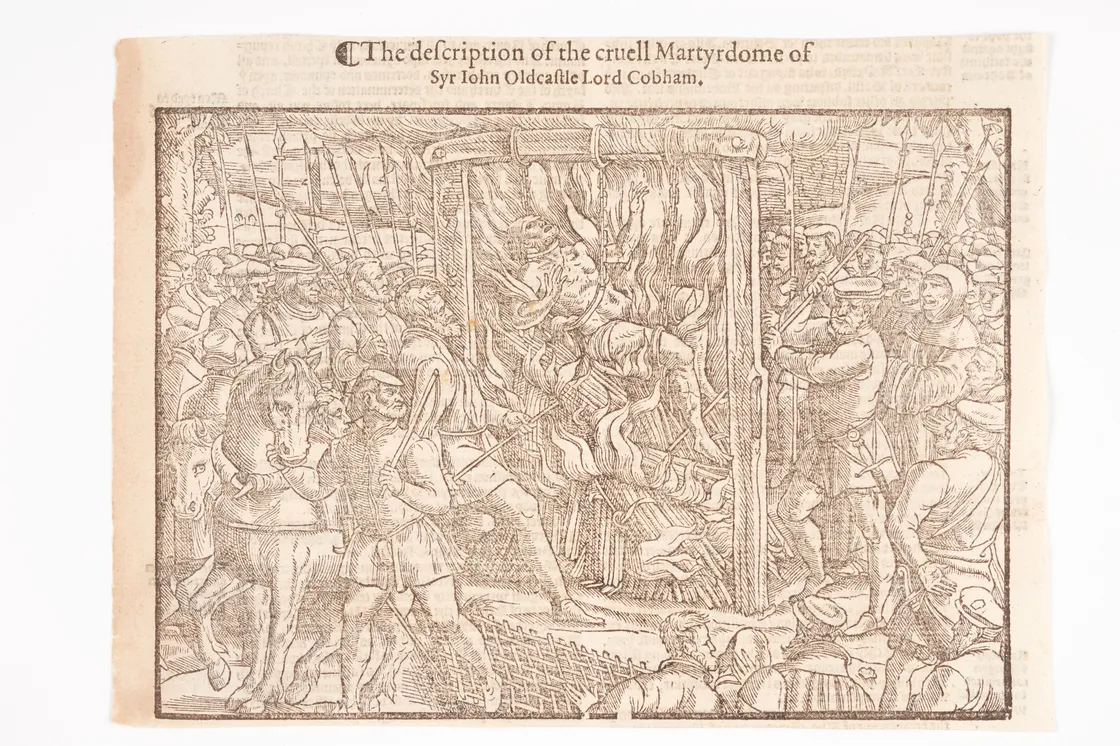
An illustration in the Book of Martyrs showing the “cruell martyrdom” of the Lollard leader John Oldcastle in London in 1417.
Why did Mary I execute Protestants?
Mary’s targeting of Protestants was part of her campaign to restore Catholicism as the country’s national religion. But why did she believe spilling blood would help her achieve this aim?
The idea of religious orthodoxy, and what made the ‘wrong choice’, had changed dramatically during the 1500s. Mary’s father, Henry VIII, was a Catholic. However, he also challenged the Church and the pope’s authority in Rome during his reign, from 1509 to 1547. This was known as the English Reformation. Henry executed tens of thousands of people while he was king, among them influential Catholics as well as Protestants.
In this illustration of an execution from 1546, bales of hay are stacked up beneath the victims tied to the stake, ready to be set alight.
Mary’s half-brother, Edward, became king in 1547. He accelerated Protestantism in the country through a number of laws and reforms. Catholic bishops were imprisoned for heresy, and Catholic shrines, images and decorations were removed from churches.
Edward VI died aged 15 in 1553. When Mary, a staunch Catholic, succeeded the throne, she saw it as her duty to carry out a counter-reformation. Protestant reformers had become a significant minority in the country, particularly in London.
The public spectacle of burning ‘heretics’, the Protestants who didn’t convert, was used as a deterrent to instil fear in the minds of those with similar ideas.
Why was Smithfield used for executions?
Smithfield had played an important role in London life since medieval times. Being just outside the city walls, the open area was an ideal spot for early football games, the summertime Bartholomew Fair and keeping livestock for the neighbouring meat market.
It had also been a place of public execution since at least the 1300s. There was enough space to build both the apparatus to kill someone and bring the crowds in to watch. Londoners were used to public executions happening all over the city. And the state killed people in awful ways, including by burning, hanging and boiling.
Smithfield was the main site for burning Protestants during Mary’s reign. Smaller numbers were sent to the stake in Stratford and Islington, or at other locations across mostly south and south-east England. But Smithfield came to symbolise the Marian persecution.
The executions attracted large and often sympathetic crowds. Many would shout prayers as words of encouragement. Victims would also hand out keepsakes to the crowd as they walked to their death.
“That which I have preached I will seal with my blood”
John Rogers, 1555
Who was burned at Smithfield for heresy?
Foxe’s Book of Martyrs gives us a detailed insight into who was executed in Smithfield during Mary’s reign, often providing the victim’s age, education and occupation. Some held religious roles as clergymen or vicars. Others worked as weavers, lawyers or merchants. Many were in their teens and 20s. It’s thought 48 were killed here over just three years.
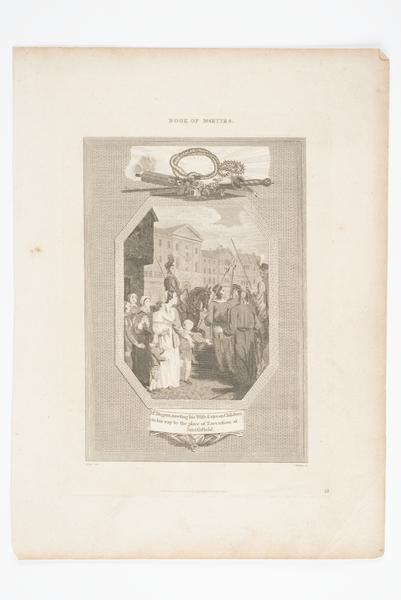
On 4 February 1555, the clergyman and Bible editor John Rogers was the first person burned at the stake under Mary’s rule. Foxe quotes his last words: “That which I have preached I will seal with my blood.”
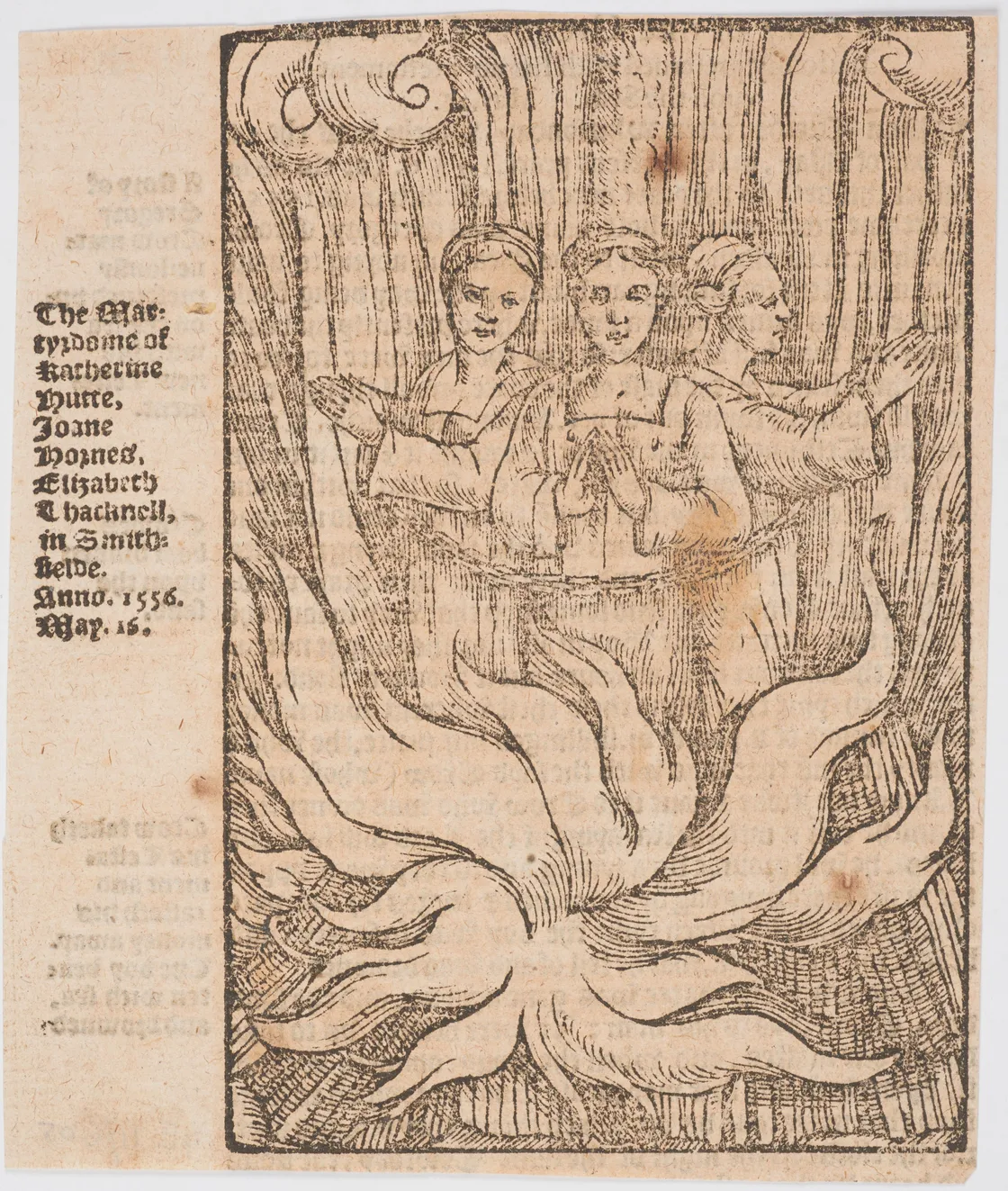
The flames surround Katharine Hut, Joane Hornes and Elizabeth Thacknell in this Book of Martyrs illustration.
Most of those executed at Smithfield were men. But some women were also recorded to have been killed during the Smithfield fires. Katharine Hut, Joane Hornes and Elizabeth Thacknell – shown praying in the print above – were burned at the stake on 16 May 1556.
Senior clergymen like John Philpot, the archdeacon of Winchester, and the former royal chaplain John Bradford were also killed.
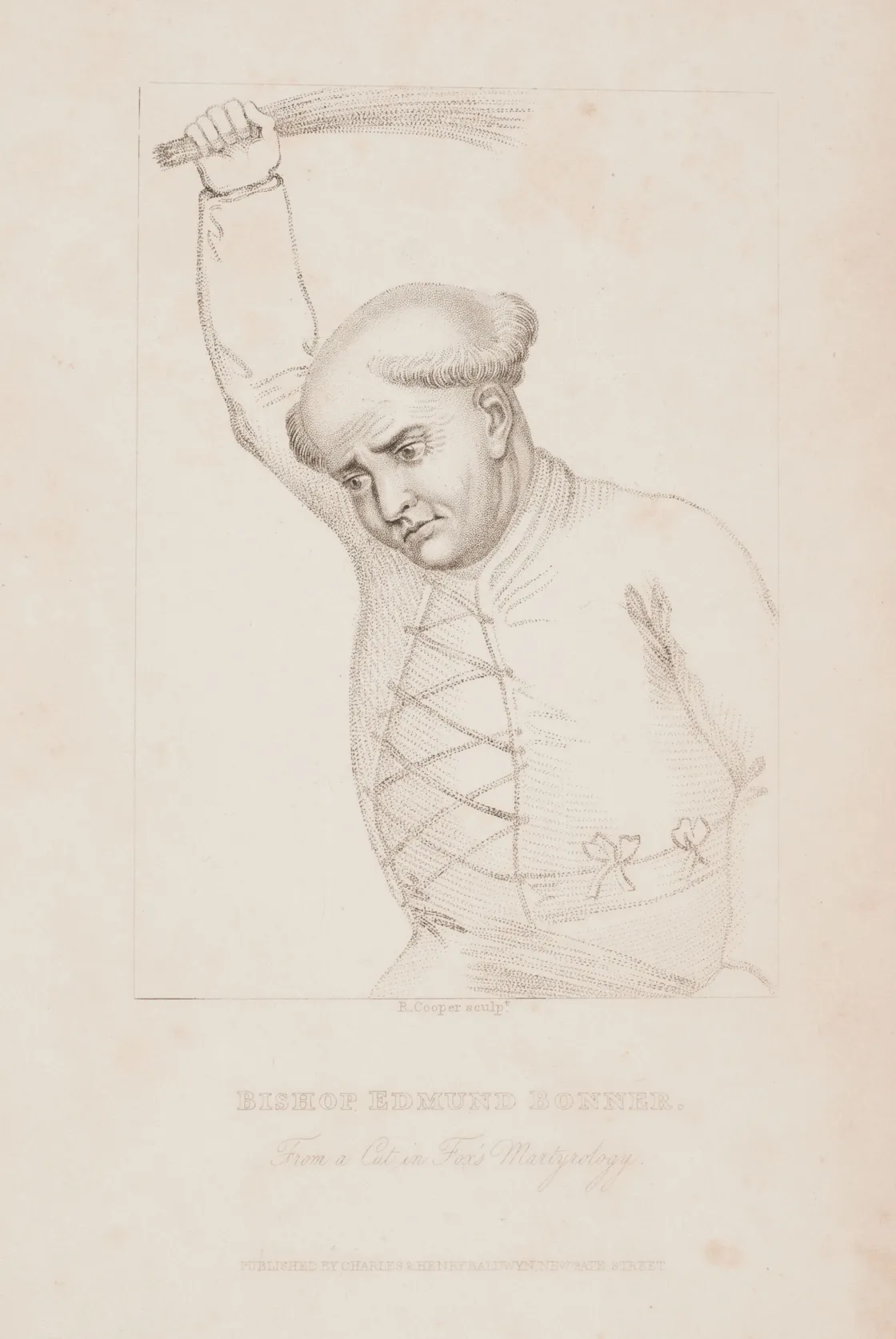
The vast majority were condemned to death by the bishop of London, Edmund Bonner. He would interrogate and torture Protestants from his palace in Fulham, and sometimes in Fulham Church. Bonner has been widely depicted as cruel and monstrous. This illustration from Foxe’s book shows him with a flail raised above his head.
What was the impact of the Smithfield fires?
The appalling violence of Mary’s mass burning earned her the nickname ‘Bloody Mary’, one that still follows this Tudor queen almost 500 years later.
Foxe wrote his attacking account of Christian martyrs throughout history as a piece of Protestant propaganda. It was a response to what he saw as the brutality of the Marian persecutions.
Mary died in 1558. Her half-sister Elizabeth took the throne, bringing the country back to Protestantism. The campaign of mass burnings ended with Mary, but Elizabeth still executed around 180 Catholics during her reign. They were charged with treason, rather than heresy.
The last person in England to be burned at the stake for heresy was Edward Wightman on 11 April 1612.
Further reading: Virginia Rounding, The Burning Time: The Story of the Smithfield Martyrs
Tags
-
Paintings, Prints & Drawings
-
Paintings, Prints & Drawings
 Paintings, Prints & Drawings
Mary I, In whose Reign the Protestants were cruelly Burnt and Persecuted. She was Proclaimed July 18 1553 & Died Nov.r 17 1558 (copper engraving)
Goldar, John
1800
-
Paintings, Prints & Drawings
 Paintings, Prints & Drawings
Mr Rogers, meeting his Wife and eleven Children in his way to the place of Execution at Smithfield (engraving)
Walker, G., Jordan, J.S., Dayes, Edward
1790; 1555
-
Paintings, Prints & Drawings
 Paintings, Prints & Drawings
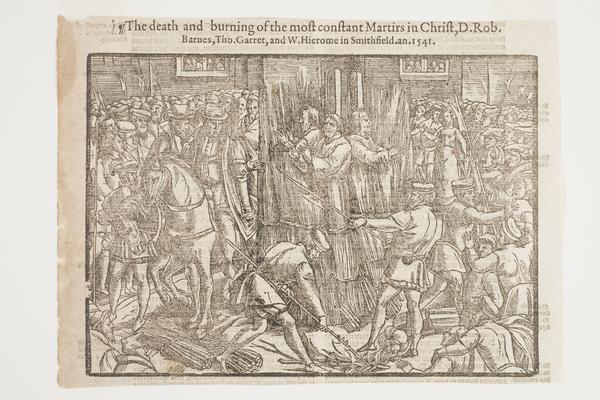
The death and burning of the most constant Martirs in Christ, D. Rob. Barnes, Tho. Garret, and W. Hierome in Smithfield. an. 1541. (woodcut)
1576; 1541
-
Paintings, Prints & Drawings
 Paintings, Prints & Drawings
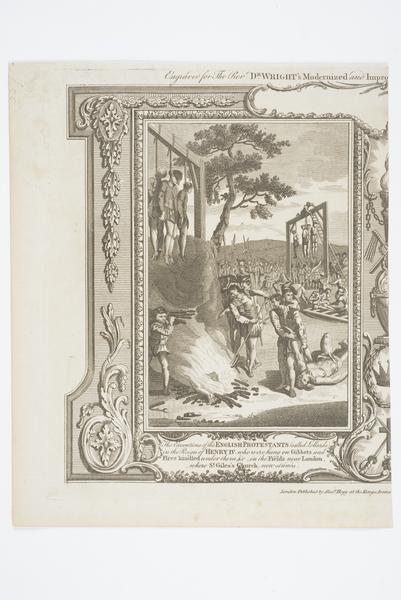
The execution of the English Protestants (engraving)
Hogg, Alexander, Lodge, John
1781-1800