Hyde Park: Where London gathers to celebrate & protest
London’s Hyde Park is where you’ll find Speakers’ Corner and the Serpentine. It’s been the setting for some of the city’s landmark events, including the Great Exhibition, vast Suffragette protests and the first London Pride march.
Westminster
Since 1637
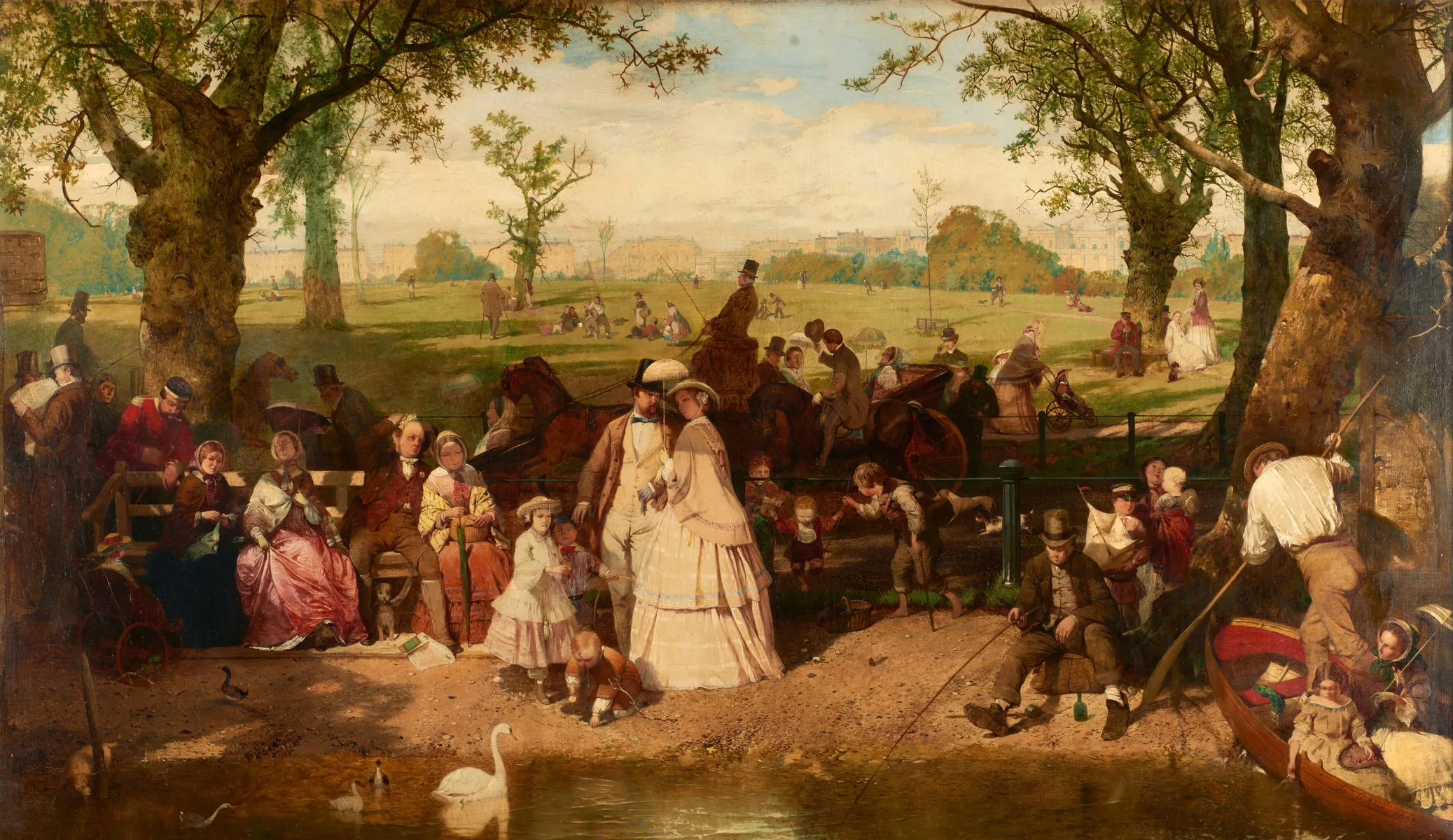
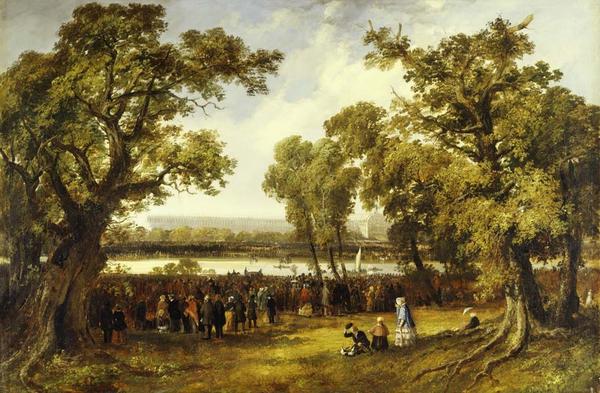
John Ritchie’s A Summer Day in Hyde Park, from 1852, shows the north-east corner of the Serpentine.
History in every blade of grass
Known as the ‘People’s Park’, Hyde Park has been part of London life and politics for nearly 400 years. Once King Henry VIII’s private hunting ground, it opened to the public in 1637.
Since then, every inch of the park has become dotted with famous features, each with their own stories. To name just a few, there’s Rotten Row, the Serpentine lake created by Queen Caroline, and Speakers’ Corner, a crucible of free speech since 1872.
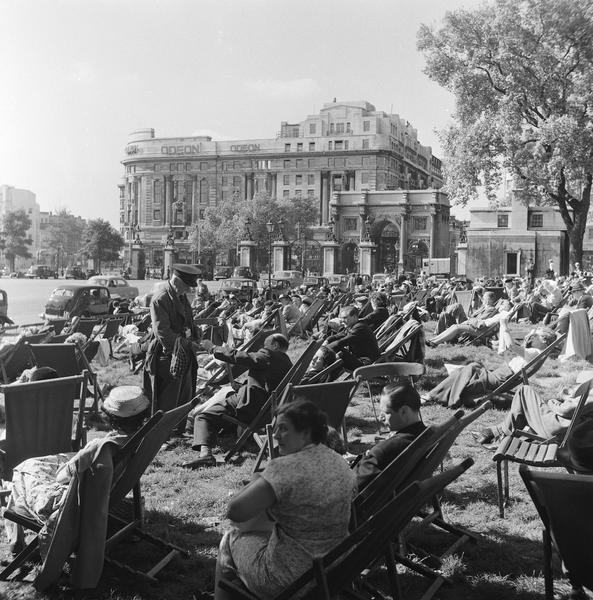
The park’s 350-acre expanse has proven to be a valuable setting for everyday leisure, concerts, festivals and major protests. It played host to both the Great Exhibition of 1851 and a vast Suffragette rally in 1908.
When was Hyde Park created?
King Henry VIII acquired the area that is now Hyde Park in 1536 from the monks in Westminster Abbey. Henry was a keen hunter, and used the area to hunt deer.
It remained a private park until King Charles I opened it to the general public in 1637. After Oliver Cromwell took charge from the executed king, Hyde Park was sold for £17,000, worth a little more than £3 million today. It returned to the Crown after the restoration of the monarchy in 1660.
In 1689 King William III and Queen Mary built Kensington Palace, taking the western chunk of Hyde Park to form Kensington Gardens. The border between the two was cemented in the 1700s with the construction of a ditch.
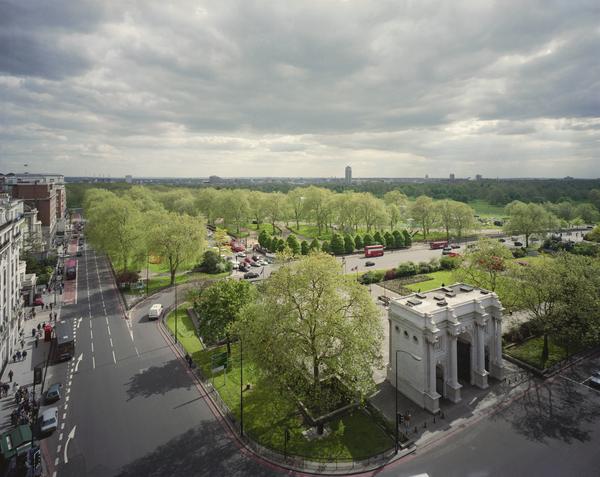
Hyde Park’s northern border is Bayswater Road and Hyde Park Place. To the south is Knightsbridge, and to the east, Park Lane.
What is Rotten Row?
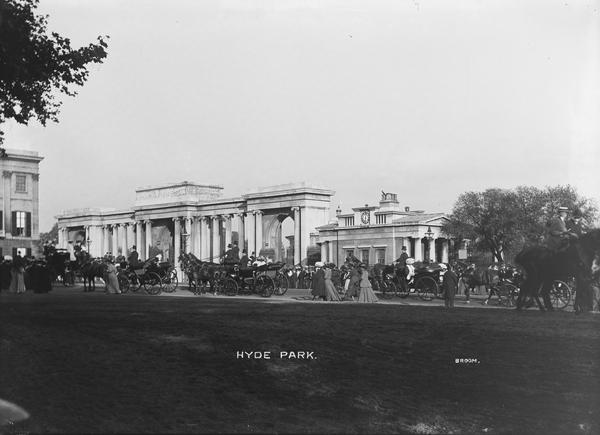
The sandy path that runs along the south side of Hyde Park has its origins as a route between Kensington Palace and Whitehall Palace. The name Rotten Row probably derives from the French ‘Route de Roi’, meaning ‘King’s Road’.
In 1690, it became one of the first lit highways in England when King William III ordered 300 oil lamps to be hung from trees to make the road safer. Highway robberies were common in the park, and despite the king’s efforts, the lights did little to stop this.
The route is the last remnant of a long tradition of horse riding in the park. King Charles I, who ruled between 1600 and 1649, created The Ring, a circular track for racing.
From there, Hyde Park and especially Rotten Row evolved into a fashionable place to ride, socialise, see and be seen. In 1872, the writer William Blanchard Jerrold described what he saw: “here are only the gently born and gently nurtured, driving the heat and faintness of the ball-room out, by spirited canters through a grove of such green leaves as only our well-abused English climate can produce".
Today, the bridleway is still regularly used for exercise by the Household Cavalry stationed at Hyde Park barracks.
-
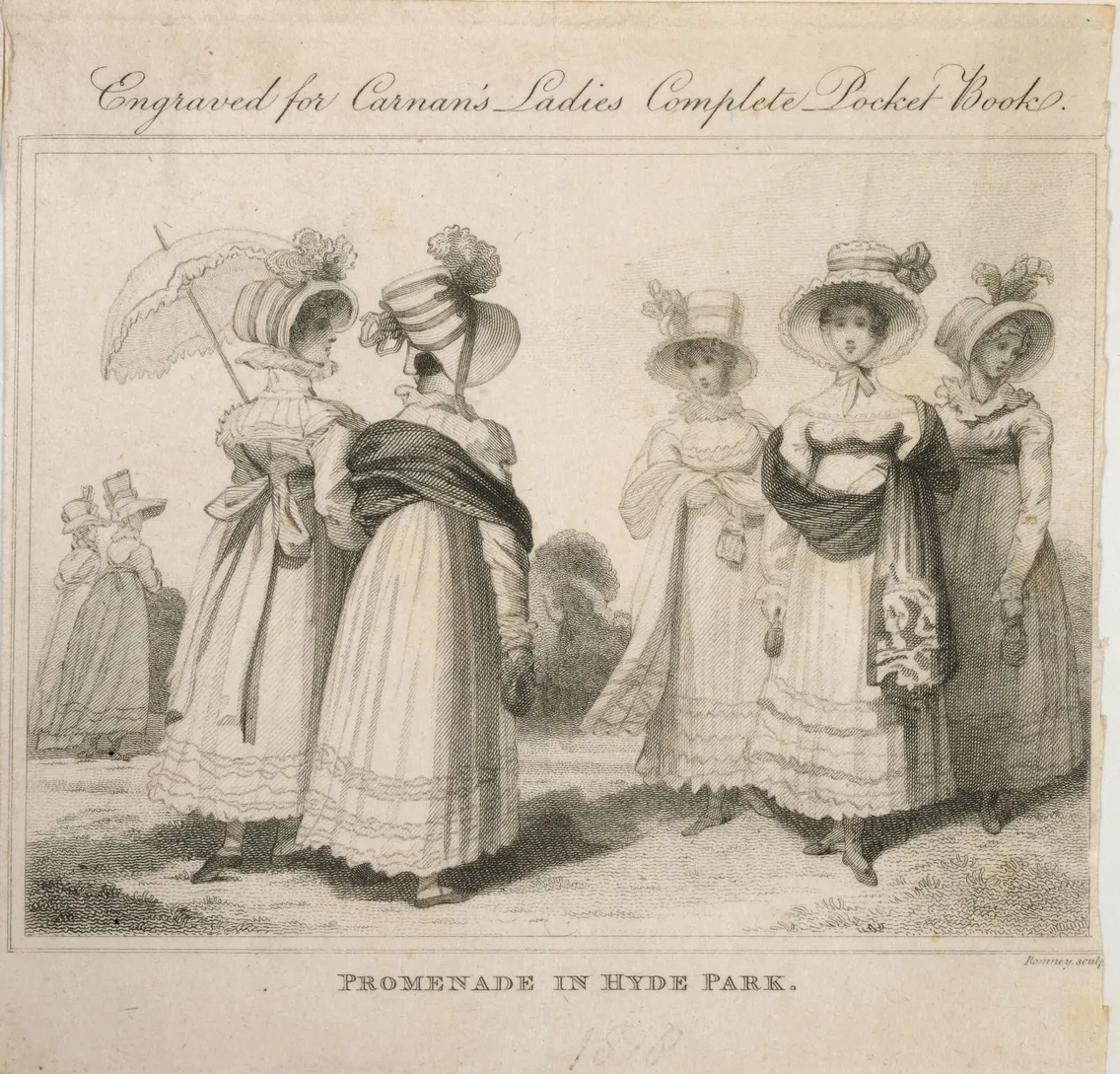
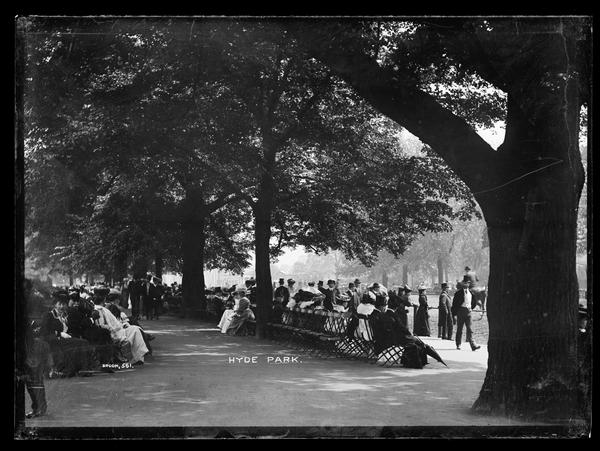
Promenade in Hyde Park.
-
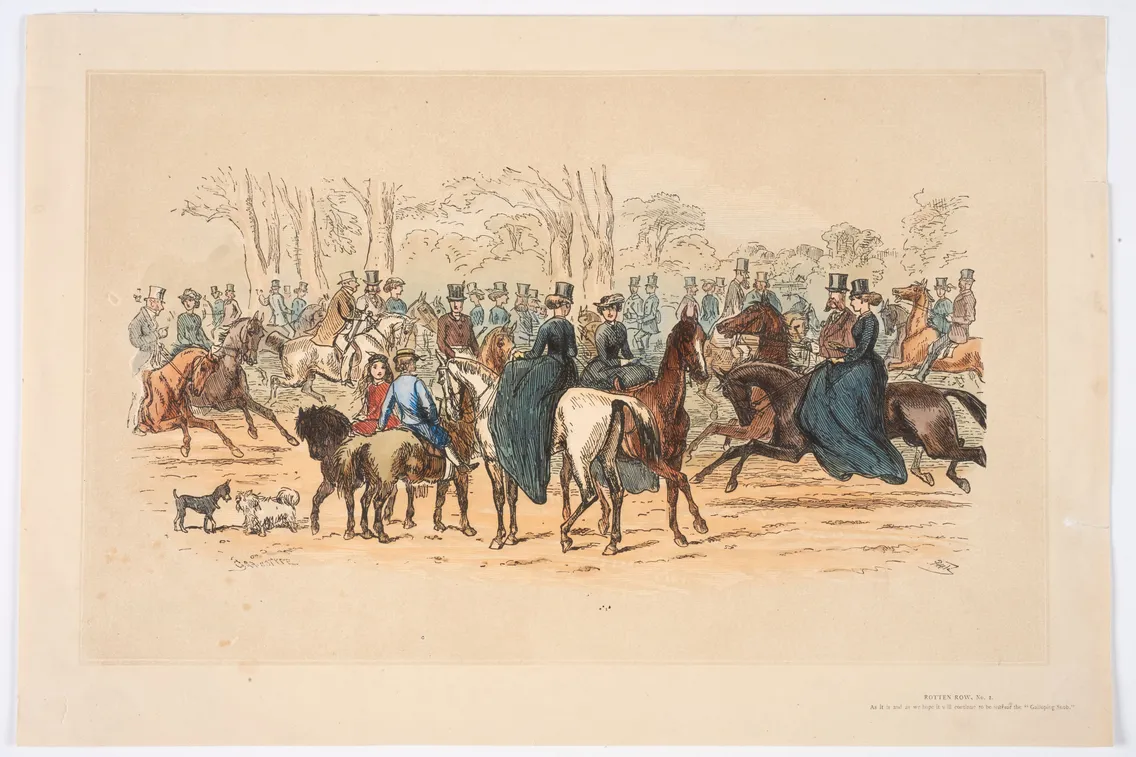
Rotten Row.
The Serpentine
Hyde Park’s modern appearance has much to do with Queen Caroline, the wife of King George II and a keen gardener. In the 1700s, she installed a long ditch, known as a ‘ha-ha’, that separated Kensington Gardens from Hyde Park. An innovative feature at the time, it’s been mostly filled in.
She also created the park’s iconic Serpentine lake by damming the Westbourne stream. Unlike artificial lakes of the time, the Serpentine was designed to appear natural. This started a trend that spread across the country.
In 1814, the Battle of Trafalgar was spectacularly re-enacted on the lake. Nowadays, the lake’s fiercest contest is the annual race held by its resident swimming club, the oldest group of its kind in Britain.
The Great Exhibition
People have made use of the park’s green and open space for many purposes, in addition to hunting, horse-riding, sun-bathing and picnicking.
Duels were often staged here in the 1700s. But the Great Exhibition of 1851 was probably the most sensational event to ever grace Hyde Park.
The exhibition was organised to celebrate modern design and promote Britain as an industrial and imperial power. Inventions and cultural artefacts from across the globe were housed in the gargantuan Crystal Palace, a structure built just for the exhibition. Six million people came to see it, equivalent to a third of the British population at the time.
-
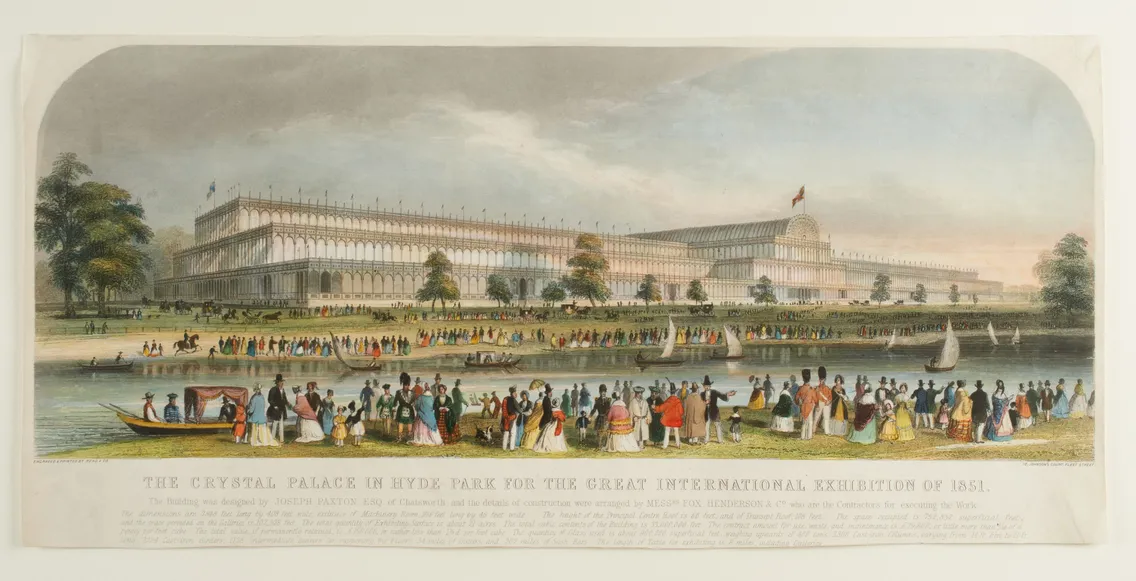
The Crystal Palace built in Hyde Park for the Great Exhibition of 1851.
Fertile ground for protests
The park’s proximity to Westminster has also made it a common gathering place for protests. In the 19th century, the Reformers’ Tree, now replaced with a mosaic, was a focal point for rallies demanding the vote for all men.
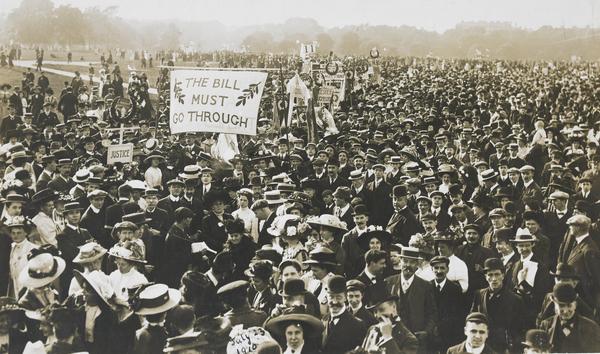
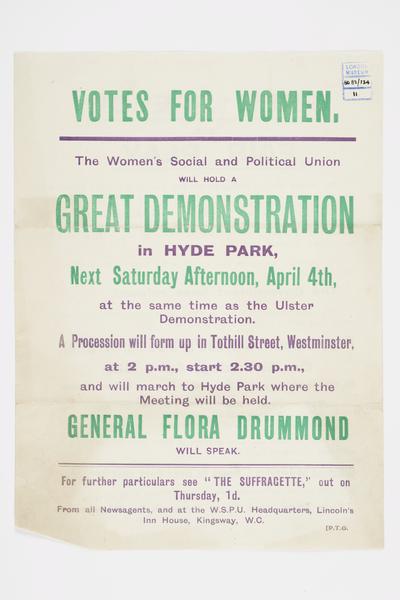
Similarly, between 1906 and 1914, the Suffragettes could often be found at Hyde Park as part of their campaign for women’s right to vote. Their 1908 Women's Sunday march drew a crowd of up to 300,000 people.
On 1 July 1972, the UK's first Pride march culminated in Hyde Park. It was also the end point for the 2003 Stop the War march, when over a million people protested the invasion of Iraq.
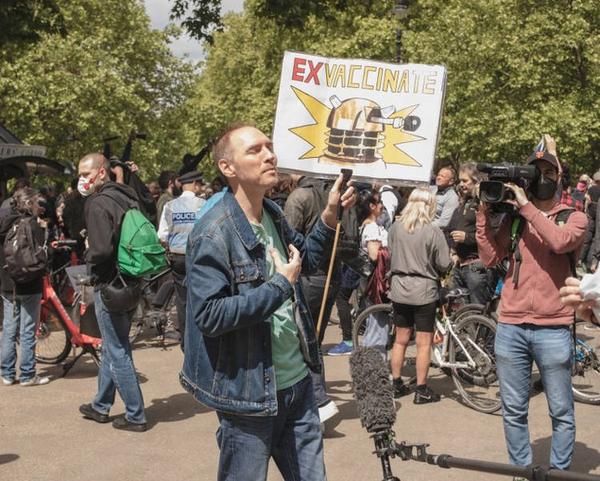
More recently, on 16 May 2020, a group congregated in opposition to the Covid-19 lockdown. And on 3 June the same year, thousands gathered to support the Black Lives Matter movement.
-
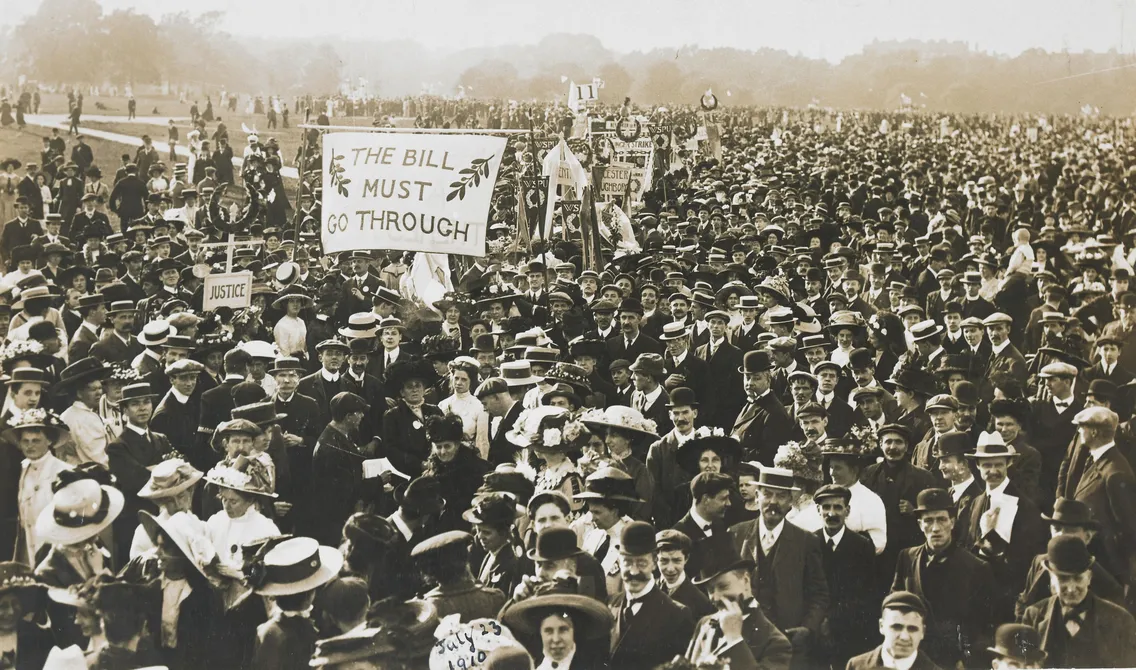
A Suffragettes demonstration.
-

Protestors against the invasion of Iraq.
-

Protest for the Black Lives Matter movement.
-
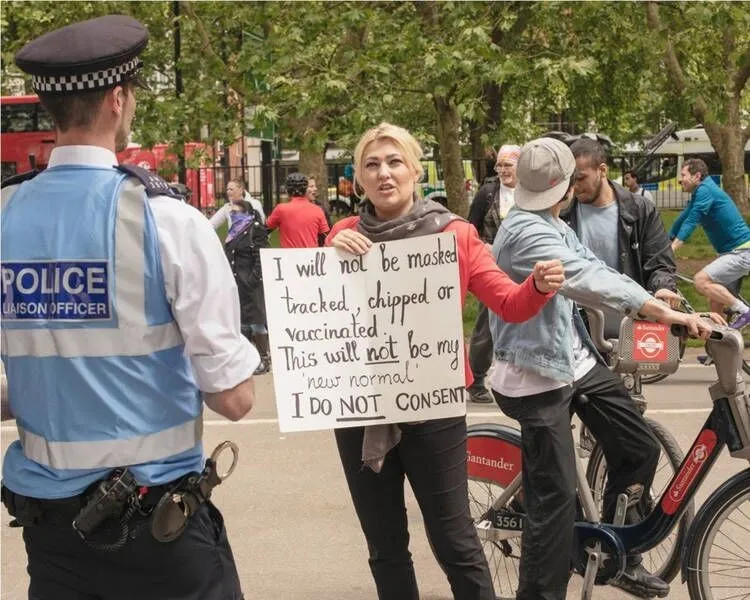
Anti-lockdown protest.
Where is Speakers’ Corner and why is it famous?
At the northeastern corner of Hyde Park, near Marble Arch, is the famous Speakers’ Corner. Since 1872, the area has been reserved for people to meet and speak freely, making it a unique platform for public discourse.
Its origins trace back to when public executions took place at nearby Tyburn, where the condemned had the right to address the crowd before being hanged.
Famous speakers have included the activists William Morris and Marcus Garvey, Suffragettes Emmeline and Christabel Pankhurst, economist Karl Marx and revolutionary Vladimir Lenin. Today, anyone can turn up on Sundays to share their thoughts.
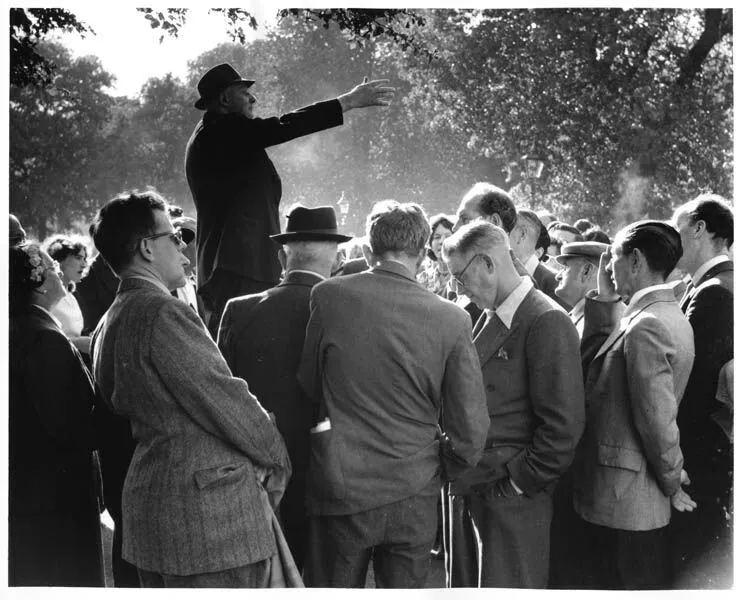
A man addresses a crowd at Speakers’ Corner in the 1950s.
What monuments can you see?
The 5.5m-tall Achilles statue near Hyde Park Corner honours the Duke of Wellington, victor of the Battle of Waterloo. Installed in 1822, it was the park’s first statue.
Many monuments have followed. The Diana Memorial Fountain, opened in 2004, reflects Princess Diana's life through flowing water that cascades and swirls before settling in a calm pool.
The Holocaust Memorial, built in 1983, was Britain's first memorial to Holocaust victims, and consists of boulders surrounded by silver birch trees. The 7 July Memorial commemorates the 52 victims of the 2005 London bombings with 52 stainless steel pillars.
Gardens and wildlife
Hyde Park is one of the lungs of London. It boasts over over 3,000 trees, while the stunning Rose Garden bursts with colour in summer. Near the Serpentine, the Dell is a secluded garden within a garden, home to a cascading waterfall.
The deer King Henry VIII hunted are gone, but wildlife thrives here. You can spot grey herons nesting on Serpentine Island, great crested grebes courting with their so-called ‘weed pattering dance’, and tiny goldcrests flitting among trees. In summer, electric-blue damselflies and dragonflies hover above the reedbeds.
Tags
-
-
-
-
-
Paintings, Prints & Drawings
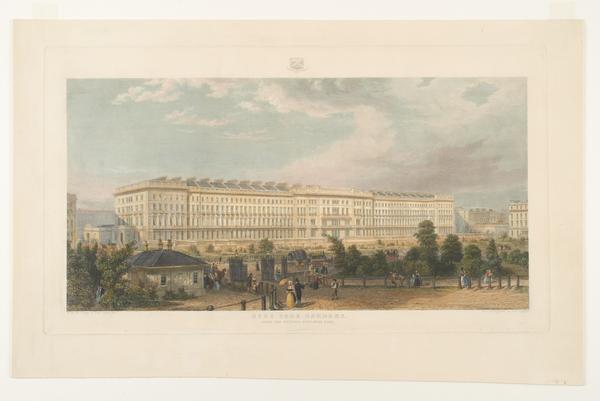 Paintings, Prints & Drawings
Hyde Park Gardens, from the Victoria Gate, Hyde Park (coloured engraving)
Higham, Thomas, Stationers Almanac
C. 1839
-
-
-
Paintings, Prints & Drawings
-
Printed Ephemera
 Printed Ephemera
Votes for Women, Great Demonstration in Hyde Park. (notice)
Women's Social and Political Union
1914-04-04
-