
The Thames Set by James McNeill Whistler
The American artist James McNeill Whistler spent 40 years based in London. With this series of detailed etchings, he captured the city’s rugged docklands, thick with masts, sails and rigging.
Docklands
1859–1861
Who was James McNeill Whistler?
Whistler is one of the most celebrated artists of the 19th century, famous for painted portraits and night-time scenes of London. Born in the US in 1834, he moved to London around 1859 and died here in 1903. Among many London subjects, he painted Battersea Bridge and Cremorne Gardens, a pleasure garden in Chelsea.
The Thames Set
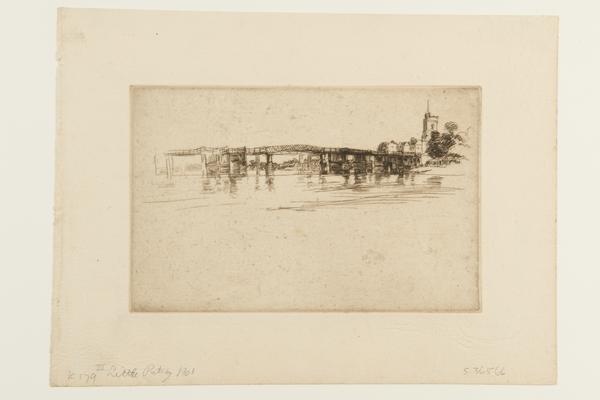
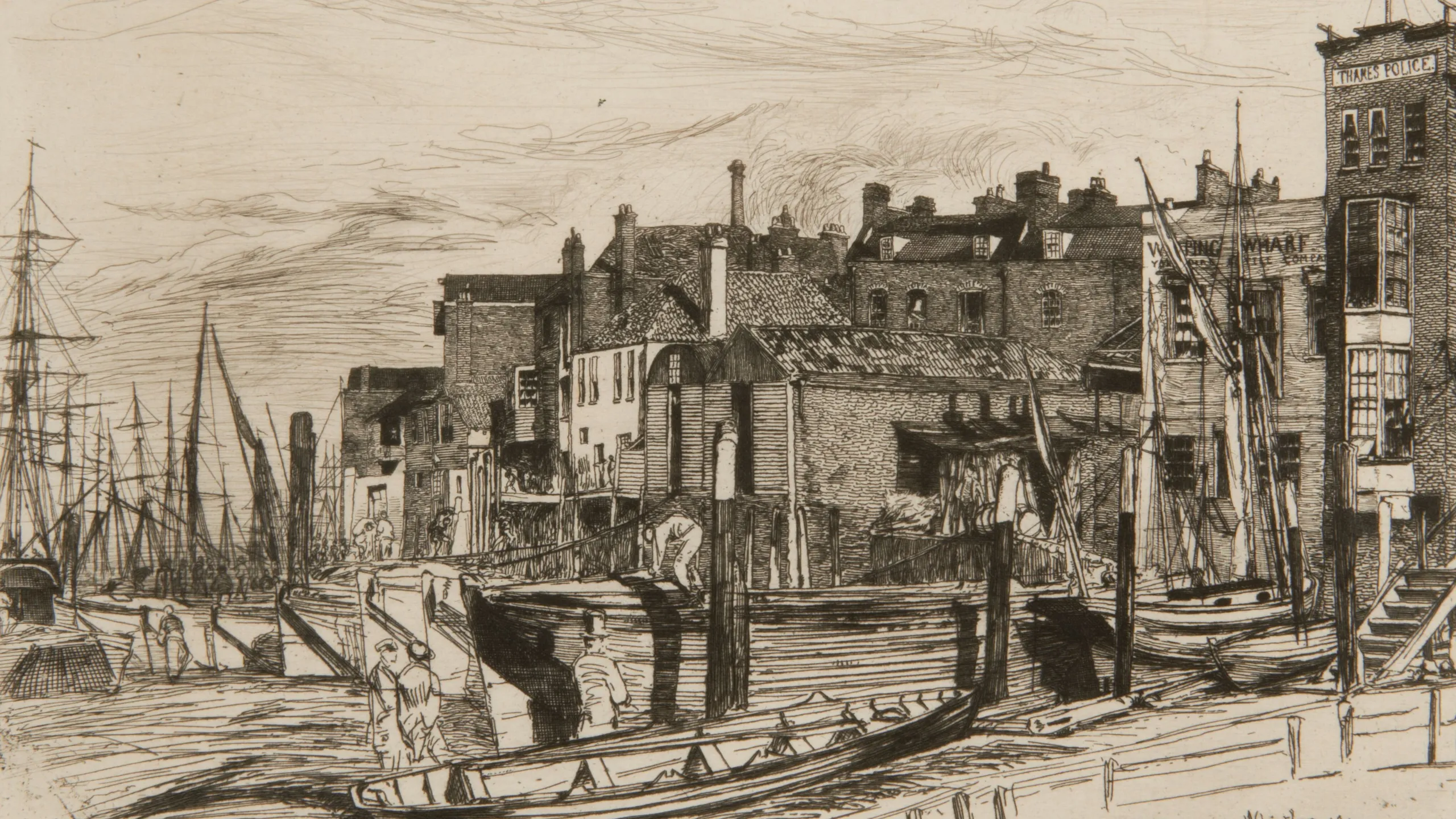
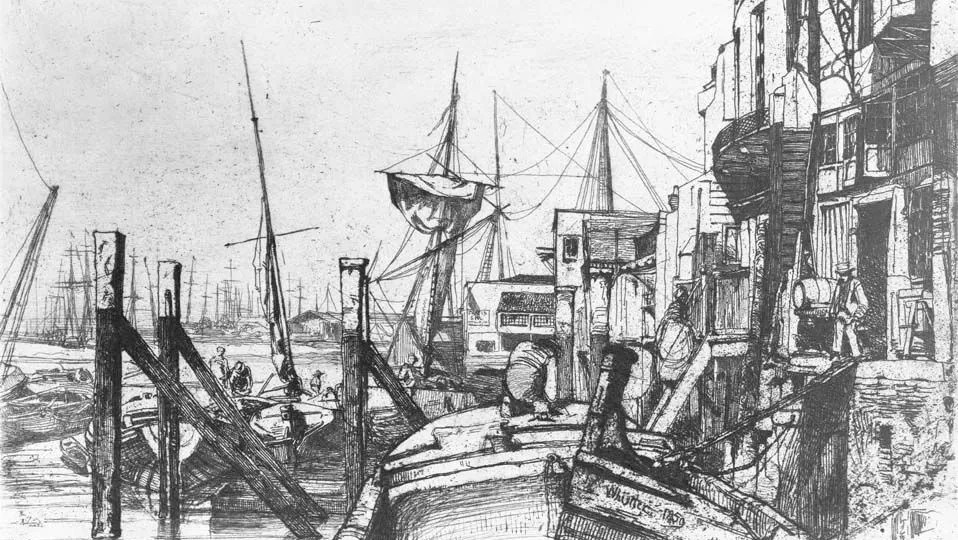
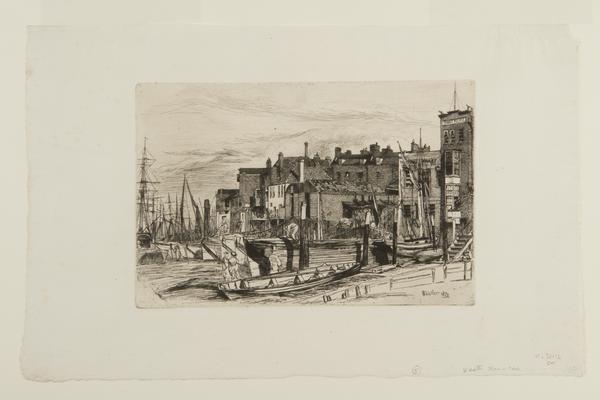
Our collection includes etchings from Whistler’s ‘Thames Set’, 16 prints showing London’s docklands made between 1859 and 1861. Produced before his most famous paintings, these etchings made Whistler’s name as an artist in Britain, France and the US.
How are etchings made?
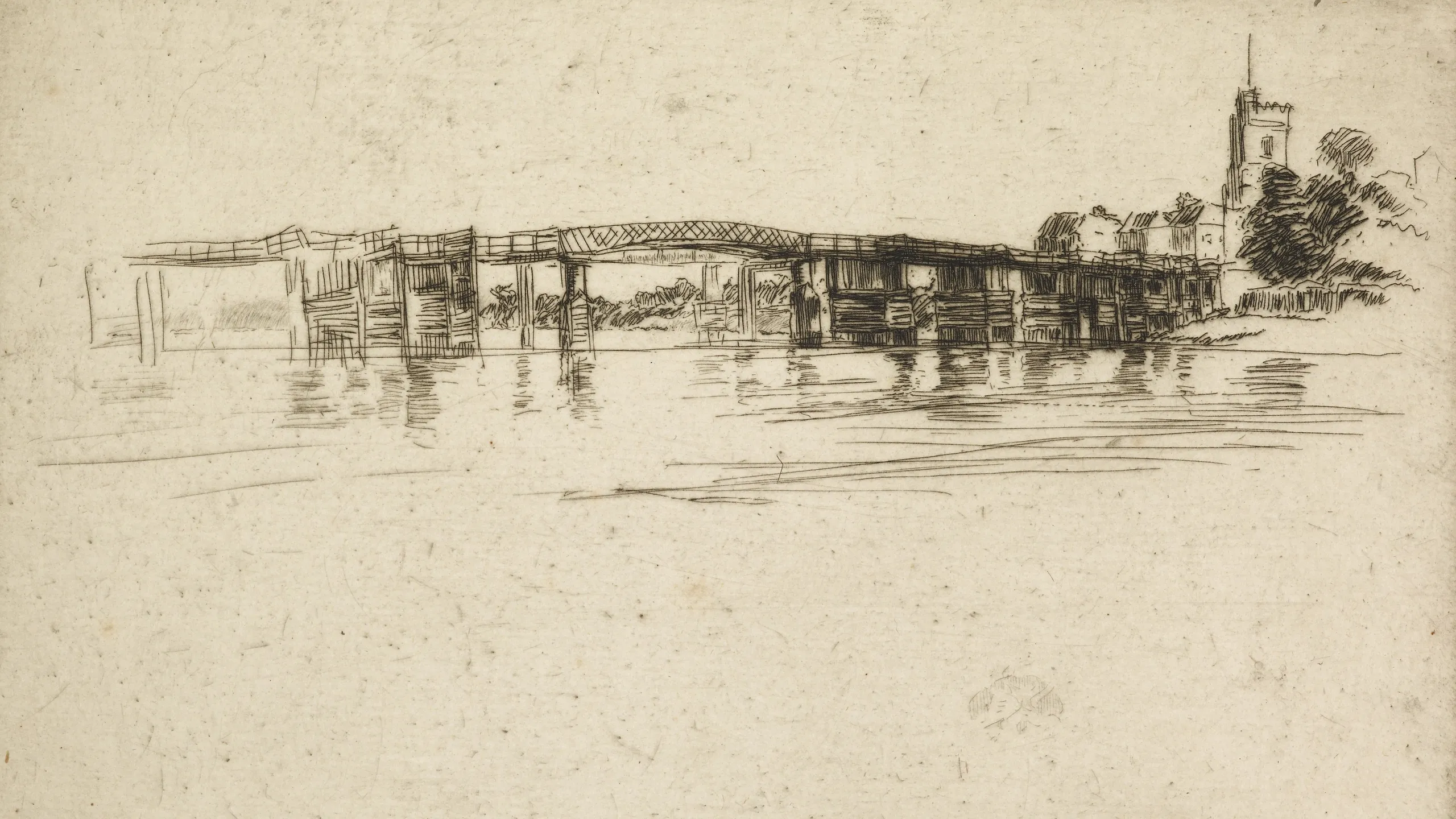
An artist scratches the image onto a metal plate coated with an acid-resistant resin. The plate is submerged in an acid bath so the acid bites the exposed metal, creating grooves. It can be reworked and re-dipped several times. After the resin is removed and the plate is cleaned, ink is applied and then wiped off, so it stays in the grooves. The plate is covered with paper and sent through a press, forcing the paper into the grooves and transferring the ink.
A pub with a view
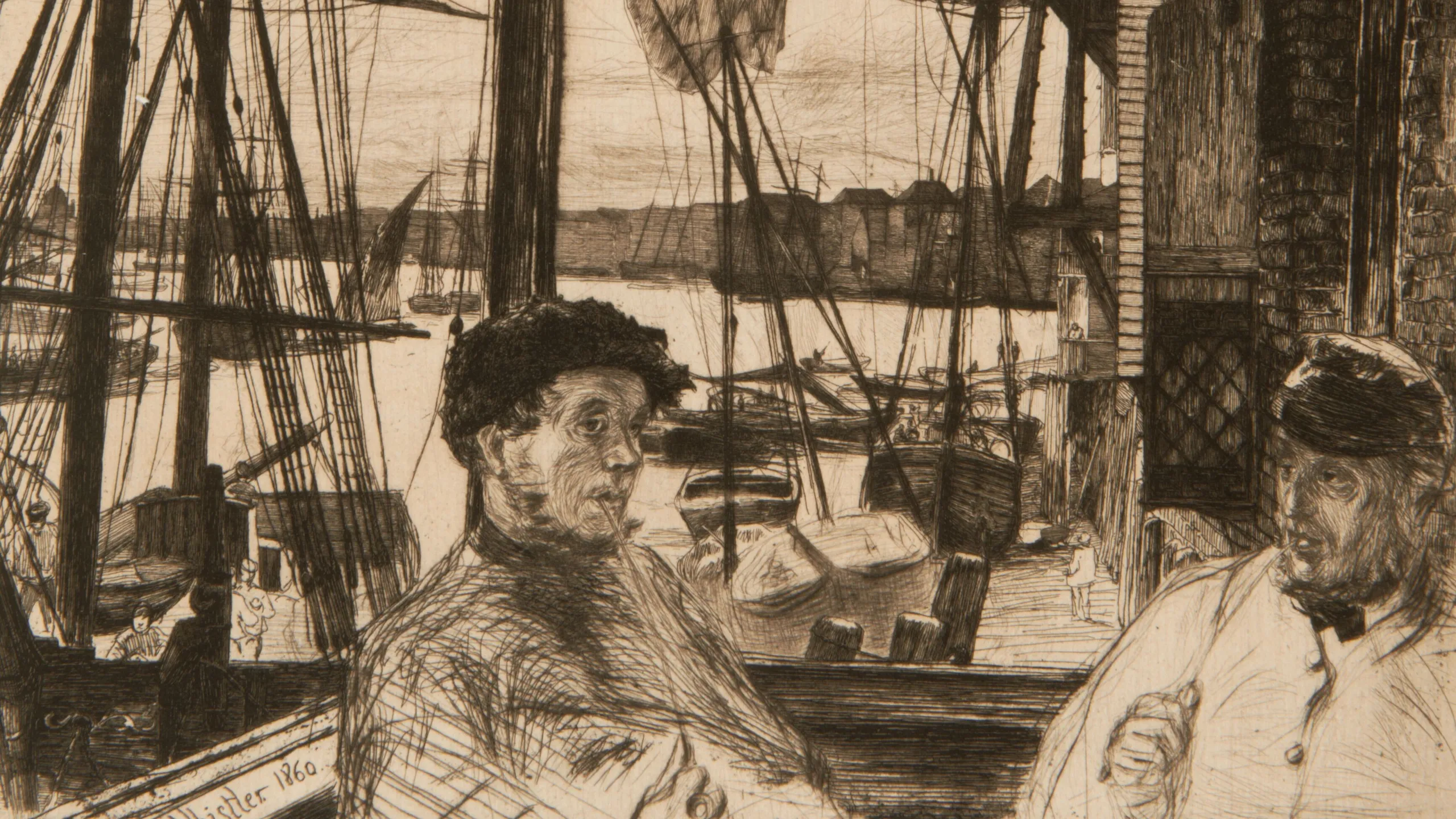
For easy access to the bustling riverside docks of the East End, Whistler stayed in a pub in Wapping, far from London’s fashionable galleries. "I assure you that I have never attempted such a difficult subject,” Whistler said in an 1861 letter. This print of two men smoking long pipes is from another pub, the Angel in Rotherhithe, which is still there today.
What did people think of The Thames Set?
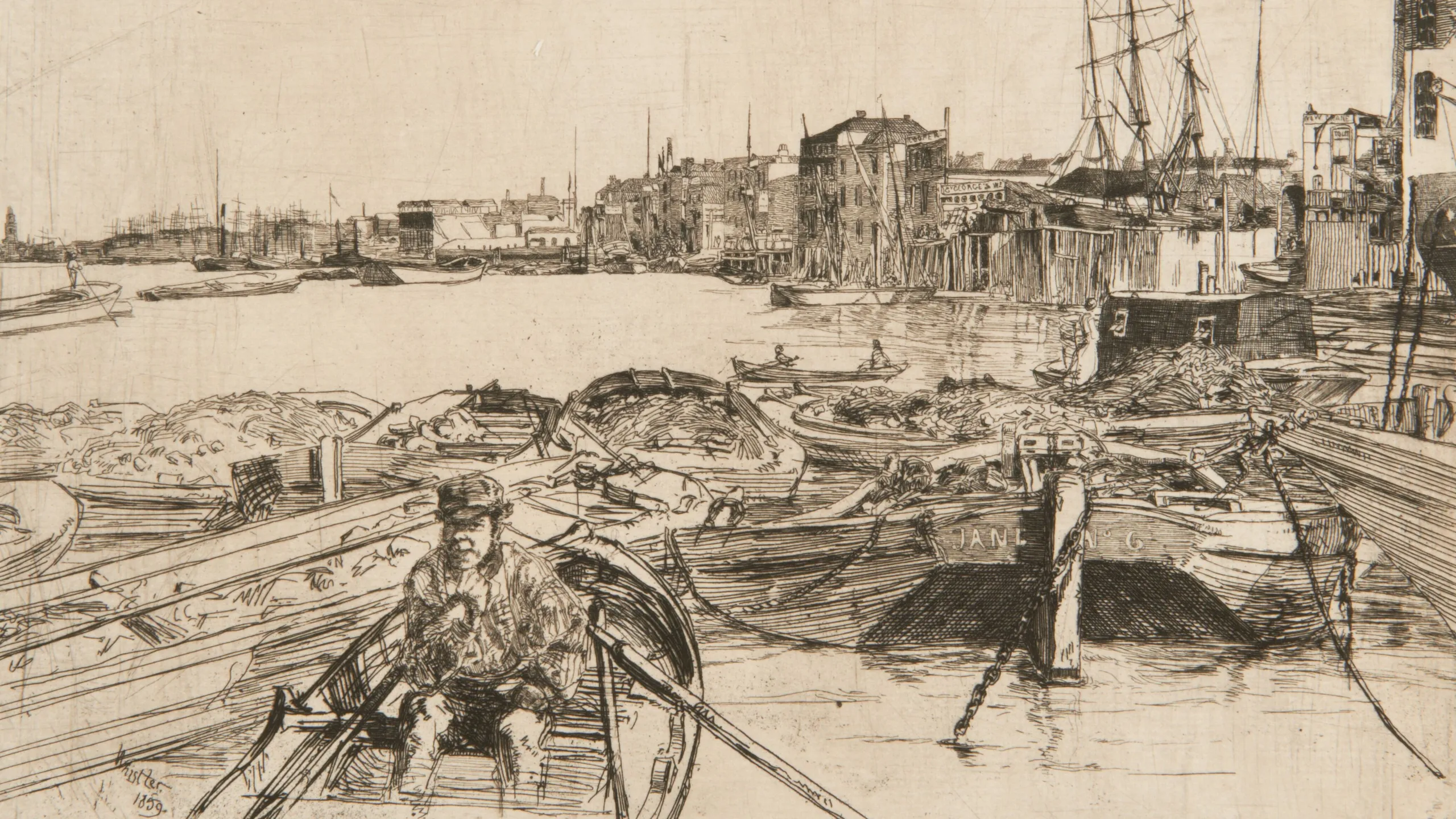
The etchings were exhibited at the Royal Academy in 1862 and were shown in Paris the same year. The French poet Charles Baudelaire saw them and praised their “wonderful tangles of rigging, yardarms and rope, a hotchpotch of fog, furnaces and corkscrews of smoke: the profound and intricate poetry of a vast capital”.
A vanishing riverfront
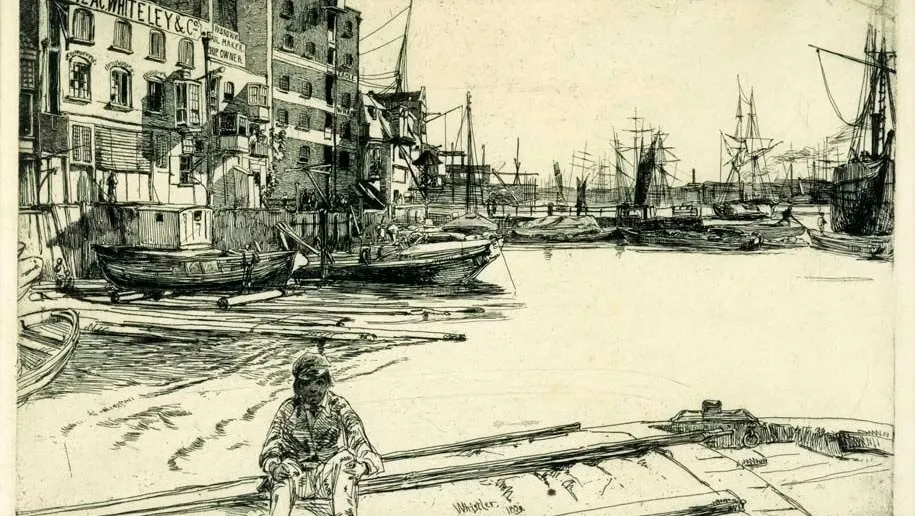
Whistler deliberately chose to capture sites at risk from the building of the Thames embankments in the second half of the 19th century. These embankments transformed the riverfront, narrowing the river between high granite walls, some of which contained sewers and rail tunnels.
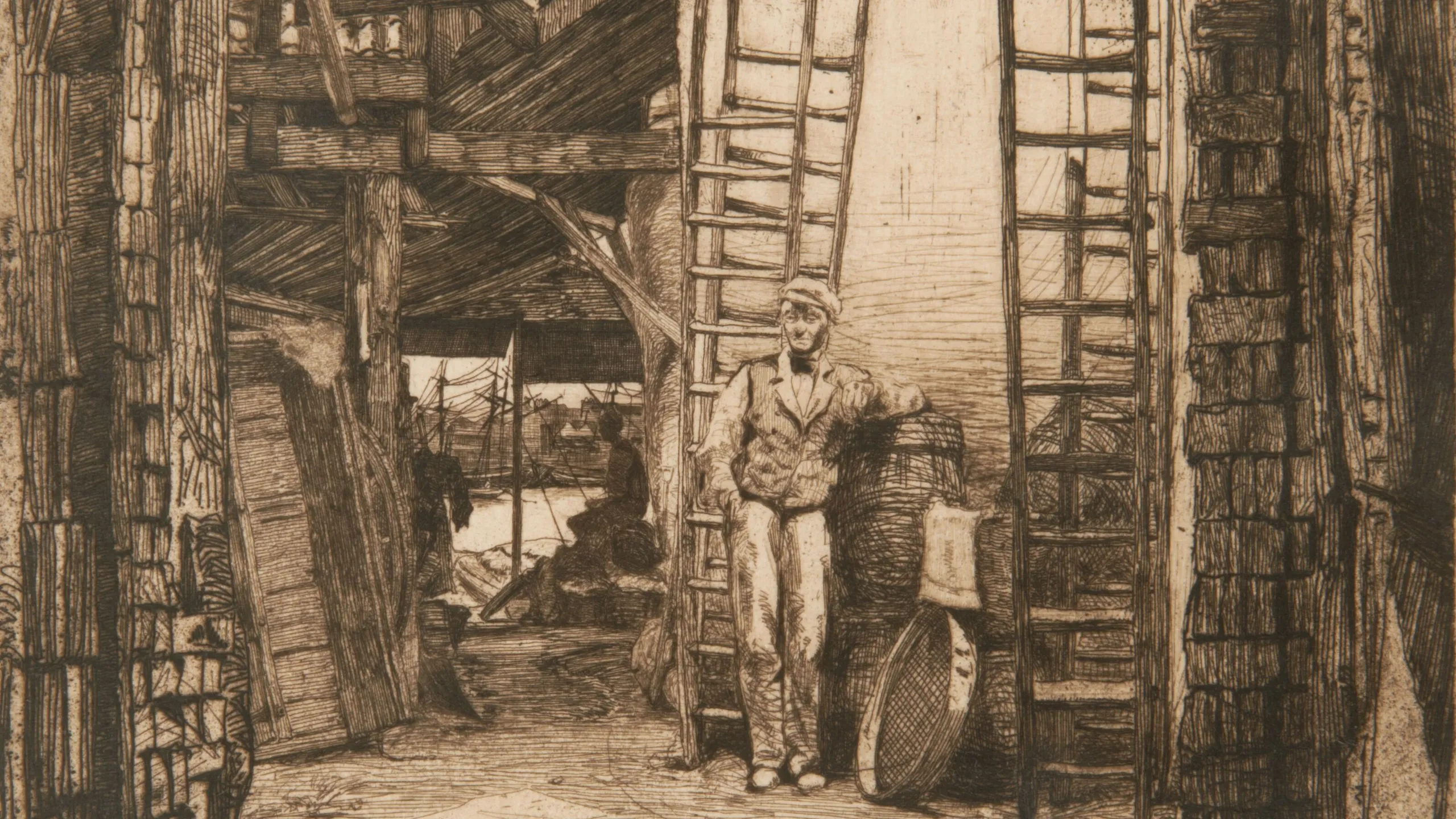
The Lime Burner
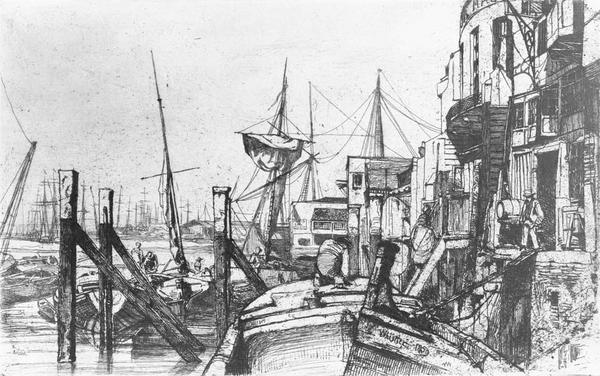
This etching shows William Jones at Lime Wharf in Wapping. Jones burned limestone in kilns to produce lime, a material used to make cement. Polluting industries choked the docklands in this period, while the river itself was clogged with the city’s sewage. There’s romance to Whistler’s images of this disappearing world, but it might be best enjoyed while holding your nose.
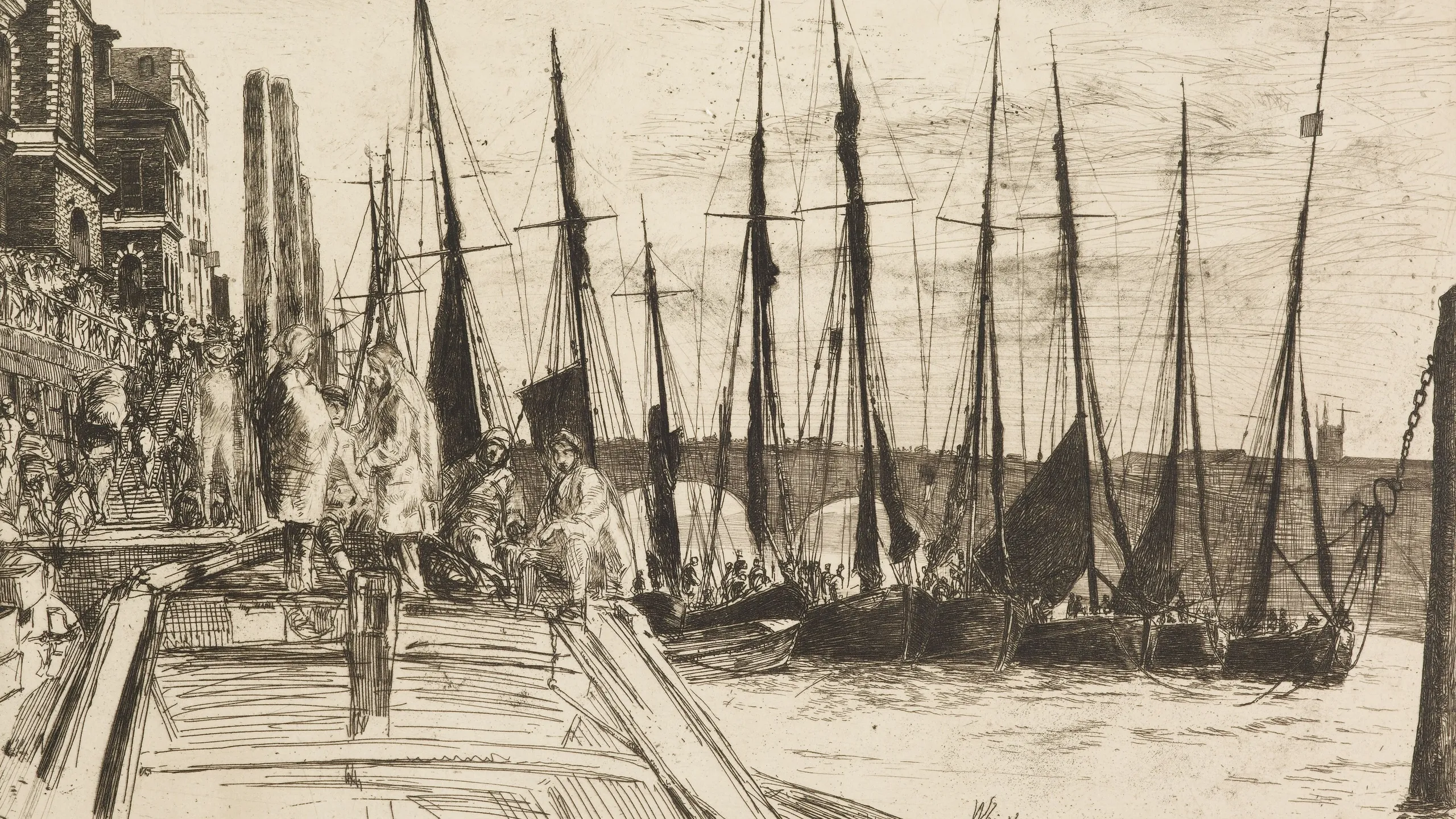
Billingsgate Market
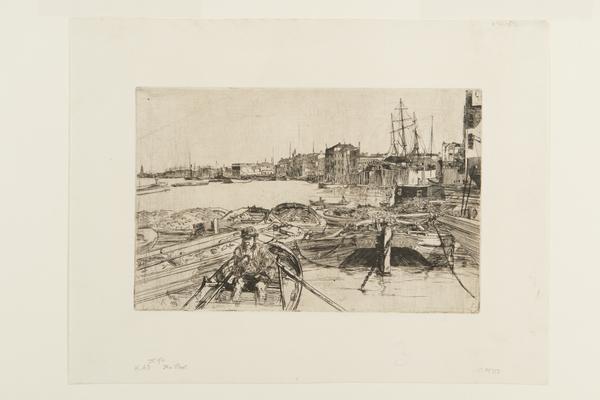
Whistler shows the riverfront of London’s main fish market, Billingsgate. At that time, Billingsgate was situated on the north bank of the Thames, just east of London Bridge. The scene is crowded with boats and people. You can see the Southwark Cathedral tower on the right and London Bridge in the background. Because Whistler drew directly onto the etching plate, the printed image is reversed. His true view would have had the cathedral on the left.
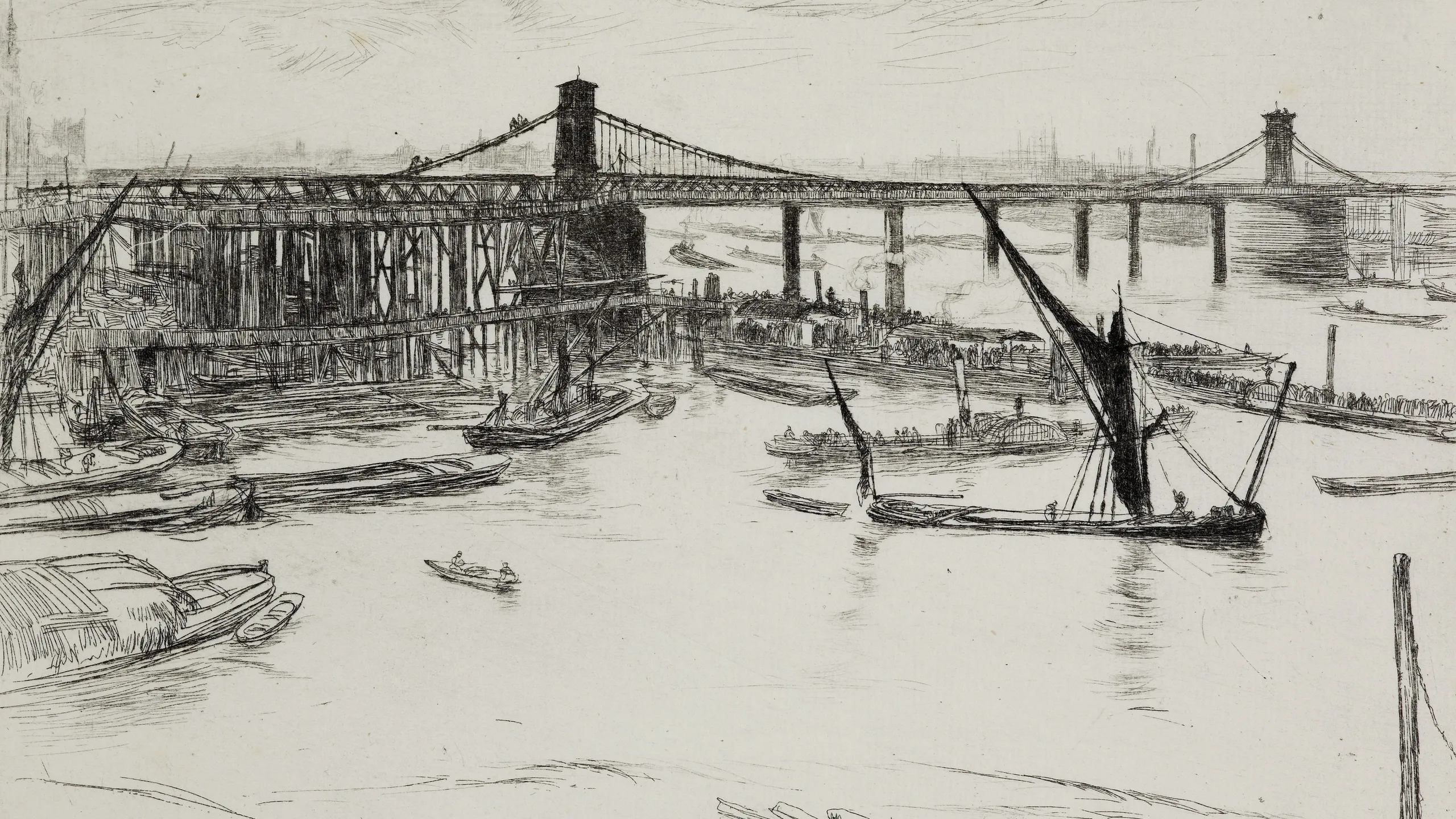
Old Hungerford Bridge
In this etching, work is being done on the Hungerford Bridge. Isambard Kingdom Brunel designed the original footbridge, which opened in 1845. Within 15 years, the Old Hungerford Bridge was replaced by the Charing Cross railway bridge, which still stands today. The mix of sailboats and paddle steamers shown here hints at the technological revolutions of the time.
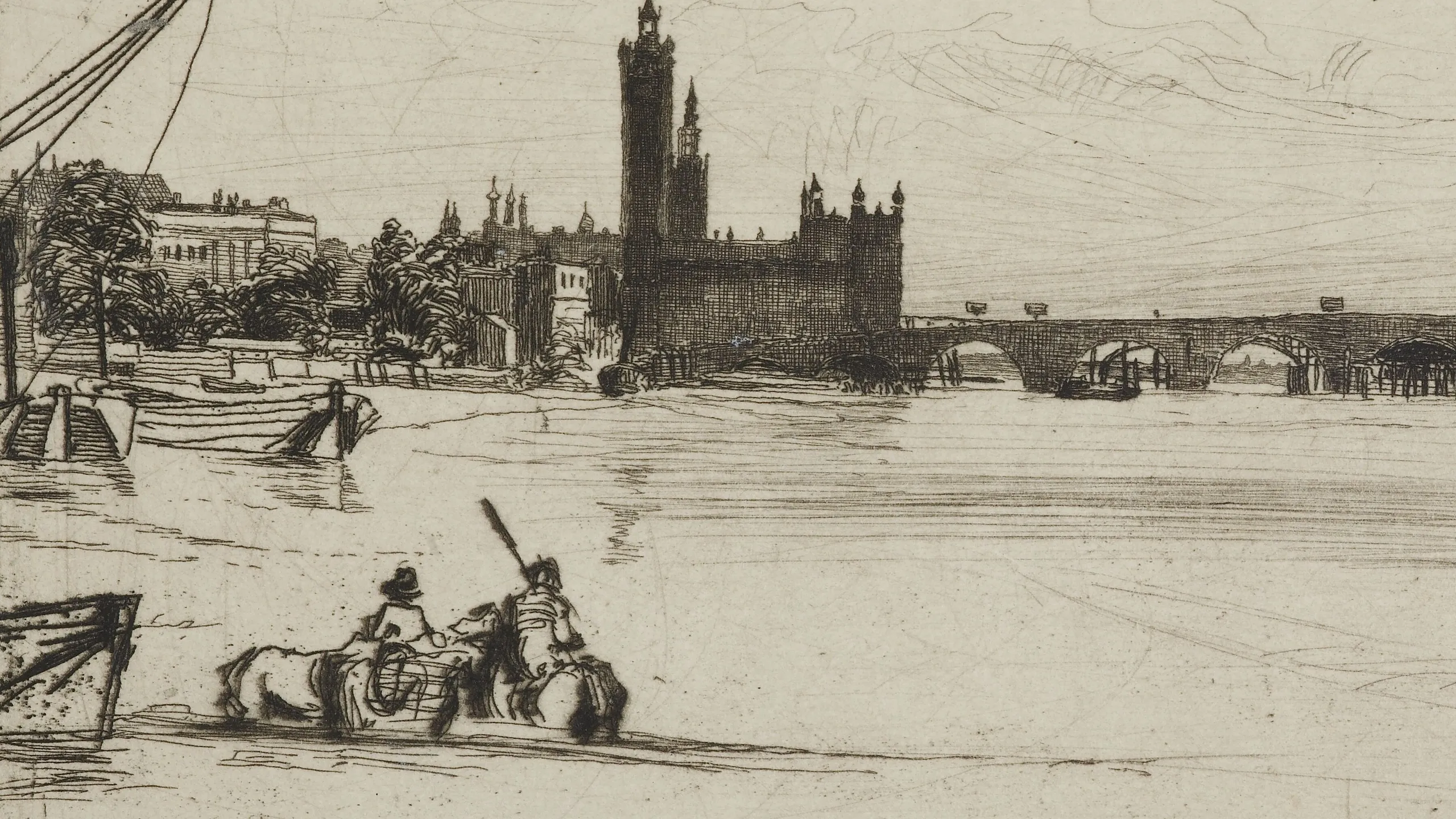
Old Westminster Bridge
The 19th century was a great age of bridge-building in London. Whistler also captured Westminster Bridge being replaced, which happened between 1854 and 1862.
Tags
-
Paintings, Prints & Drawings
-
Paintings, Prints & Drawings
-
Paintings, Prints & Drawings
-
Paintings, Prints & Drawings