The shadowy dock scenes of Gustave Doré
Among his illustrations of 19th-century London, the French artist Gustave Doré devoted space to the hubbub of London’s riverside docks, streets, markets and warehouses. In his sensationalised vision of the city, these are tough places smothered in darkness, where the water sloshes, men shout and rigging creaks.
London Docklands
1872
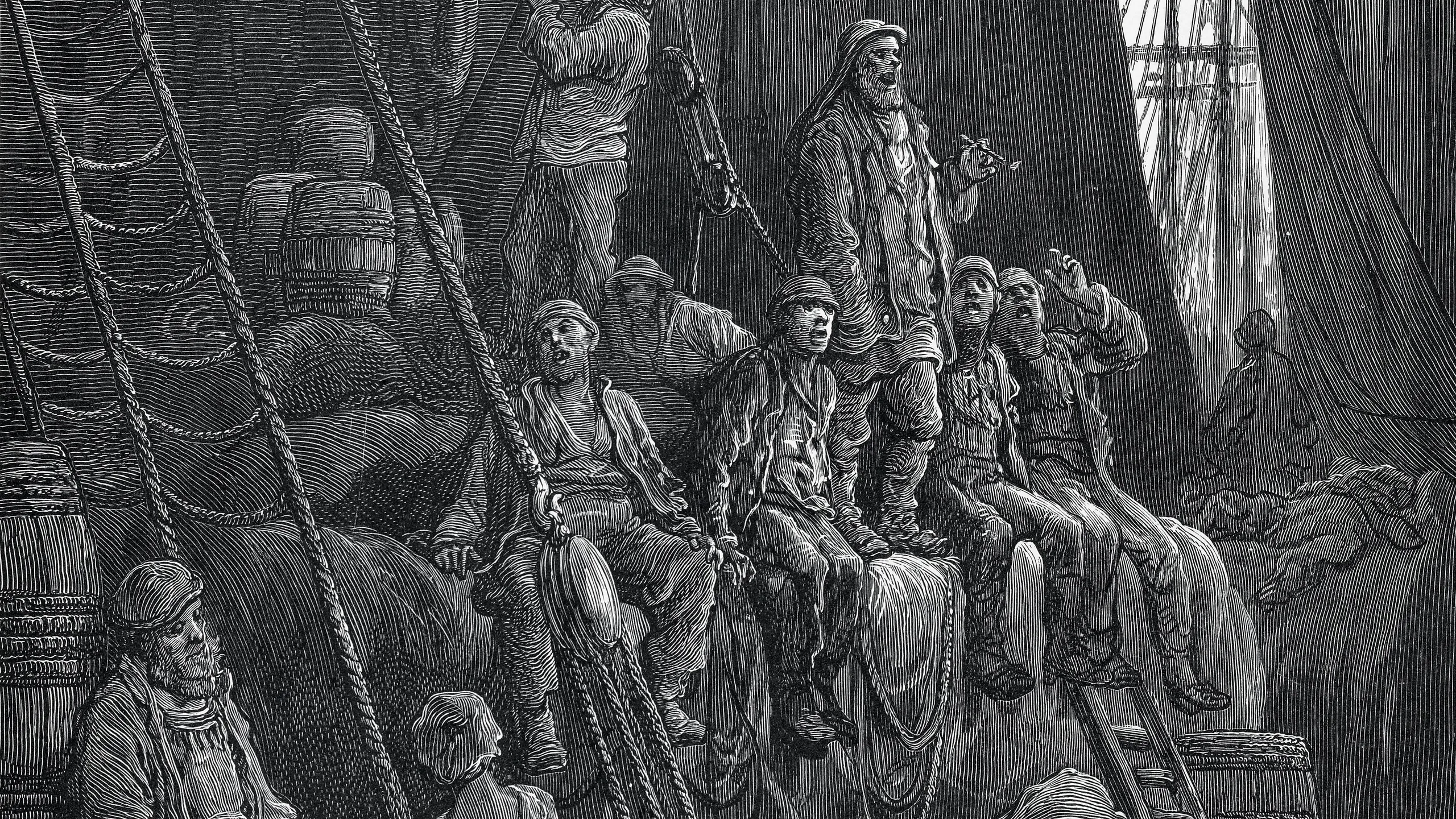
London: A Pilgrimage
Doré’s illustrations were based on research trips to the city over a number of years, starting in 1869. They were published in the book London: A Pilgrimage in 1872. Doré’s images appeared with commentary by the journalist Blanchard Jerrold, who joined Doré on his wanderings. Unusually, Doré drew his designs directly onto wooden blocks, which were then carved for printing by a team of engravers.
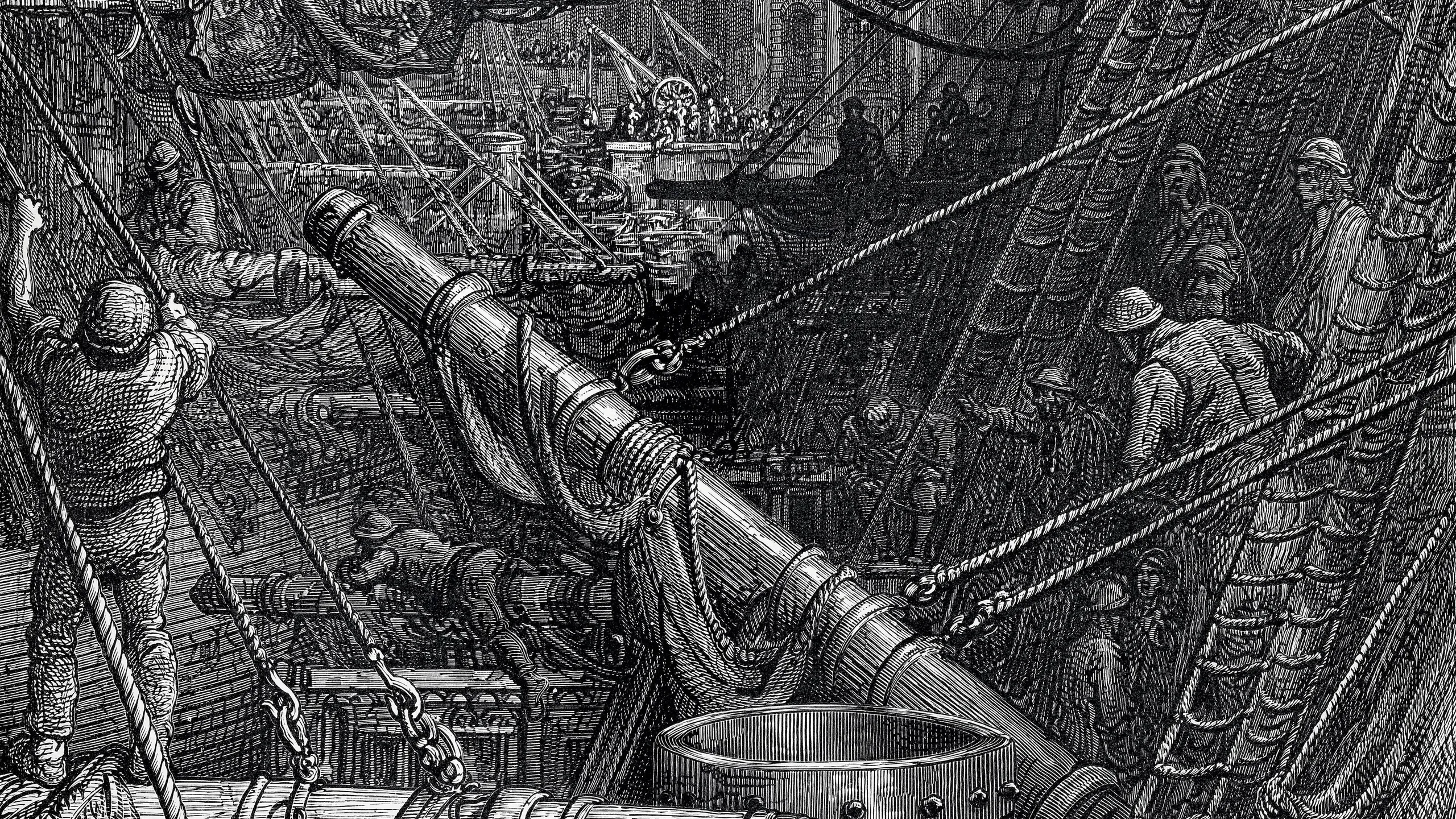
Why draw the docks?
Doré selected his subjects carefully. These were deliberately emotive, exaggerated images that played on stereotypes of the city for maximum impact. London’s port was its connection to the British empire and a giant engine for trade and profit. The docks gave lively, crowded scenes to capture. They also mixed the elements of London’s metropolis that intrigued readers – industry, technology and people struggling to survive in the shadow of phenomenal wealth.
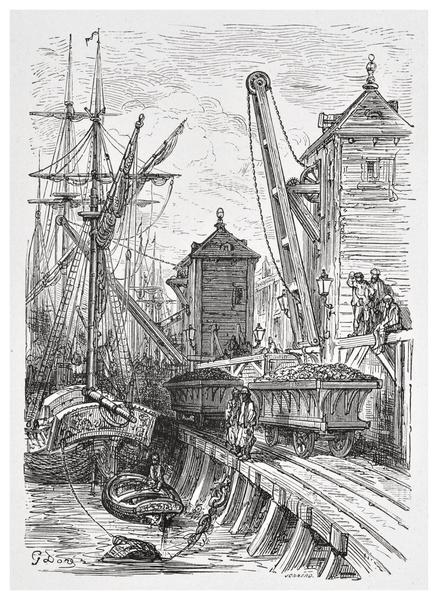
![Illustration of Limehouse Dock from 'London: a pilgrimage' by Blanchard Jerrold and Gustave Doré, 1872. Jerrold writes: 'At Limehouse the activity in the coal trade was the striking feature' with the 'rows of black ships [and] dusty workmen and quays'.](https://media.londonmuseum.org.uk/images/WagtailSource-Limeh.b1443b5e.fill-2560x1440.format-webp.webp)
Limehouse Dock
This illustration shows cranes at Limehouse Dock, usually called the Regent’s Canal Dock because it served as the canal entrance. This body of water on the north bank of the Thames is now known as Limehouse Basin. Jerrold says “the activity in the coal trade was the striking feature” with “rows of black ships [and] dusty workmen and quays”.
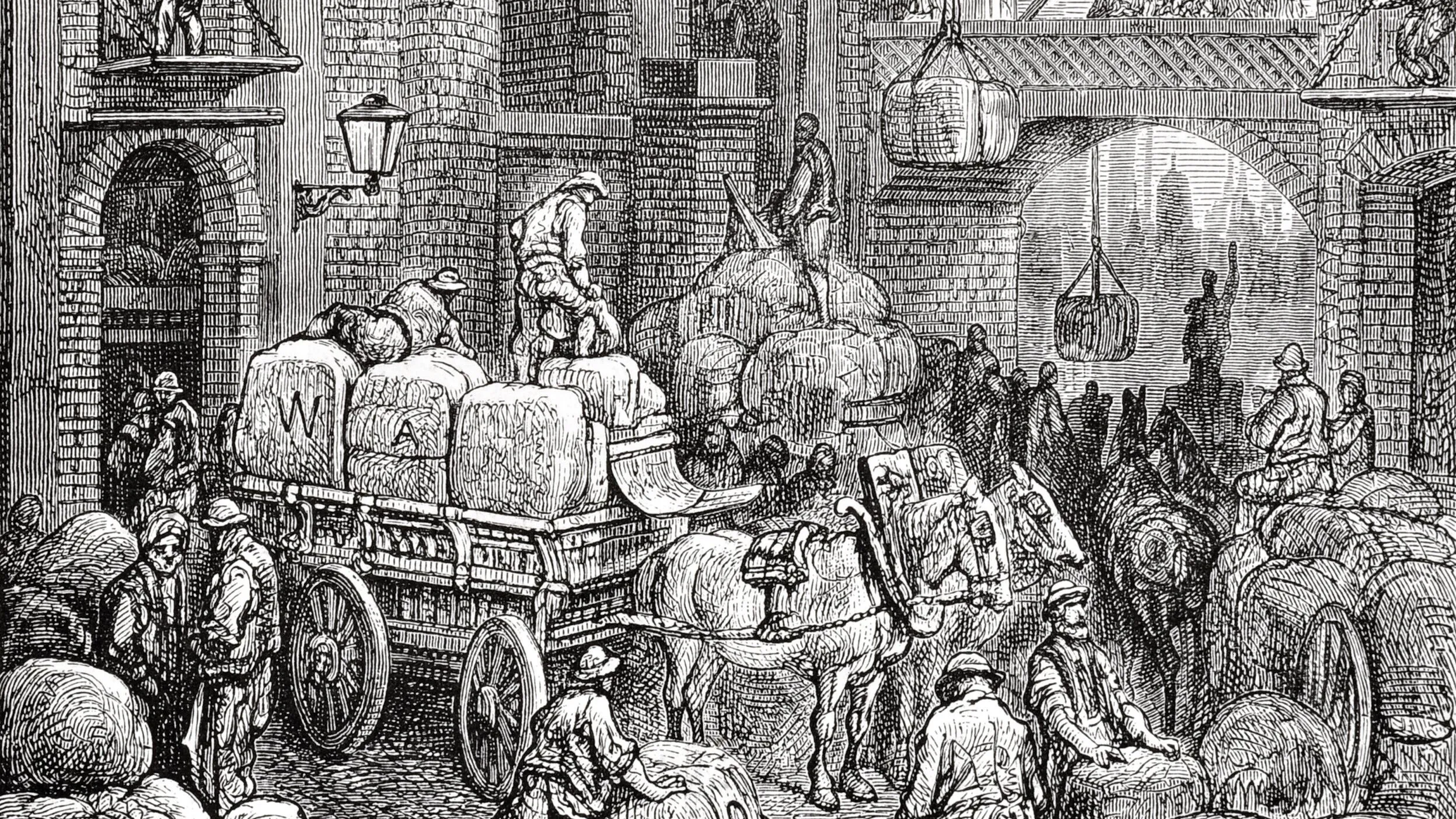
Pickle Herring Street
This street, lined with warehouses, once ran on the south side of the Thames, just west of Tower Bridge. Jerrold wrote: “The hard-visaged men, breathlessly competing for ‘dear life,’ glance, mostly with an eye of wondering pity, at the sketcher, and at his companion with the note-book. What, in the name of common sense, can we want with old Pickle Herring Street that has been just the same as it is, time out of mind?”
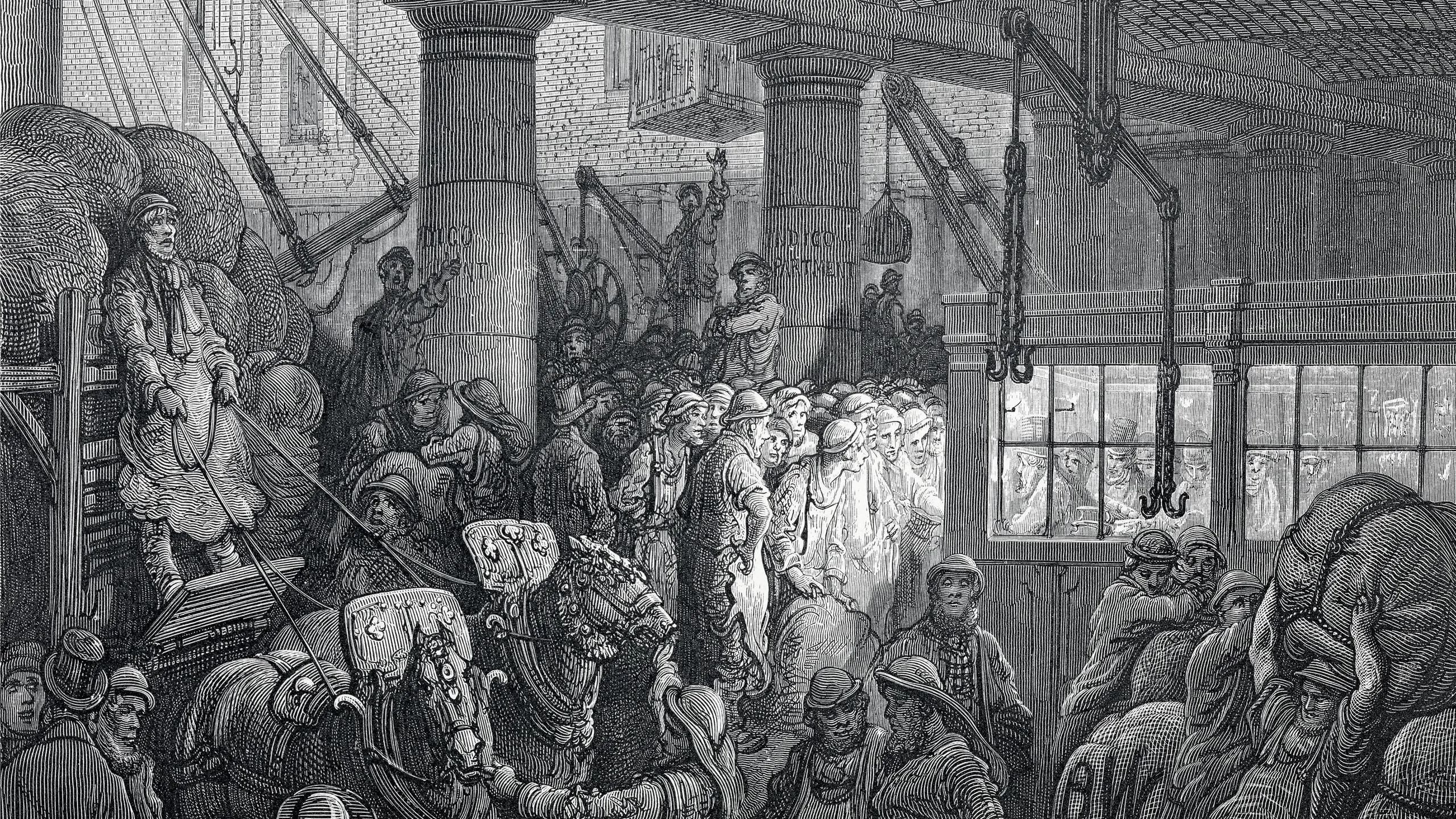
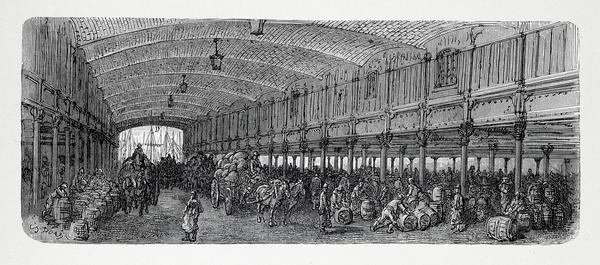
St Katharine's Dock warehouse
Construction started on this dock, which mainly traded in tea and wool, in 1827. The enormous warehouses had six floors and were each 143 metres long. London’s riverside was transformed by the building of docks and embankments during the 19th century. Trade moved away from the city centre, beginning with the opening of the West India Dock on the Isle of Dogs, in east London, in 1803.
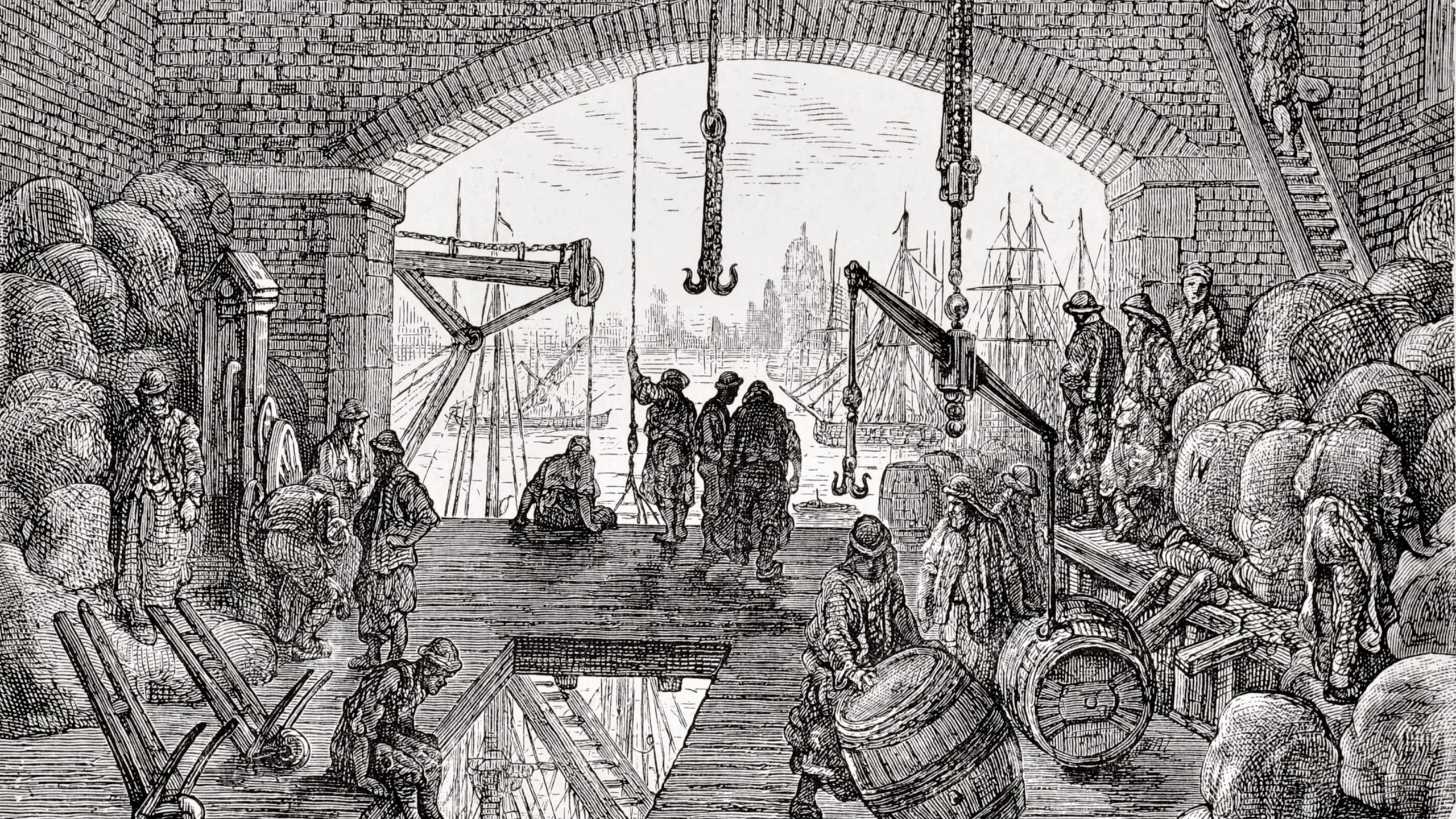
Riverside warehouses
This illustration shows various pulleys, cranes and winches used to raise cargo from the riverside into the surrounding warehouses.
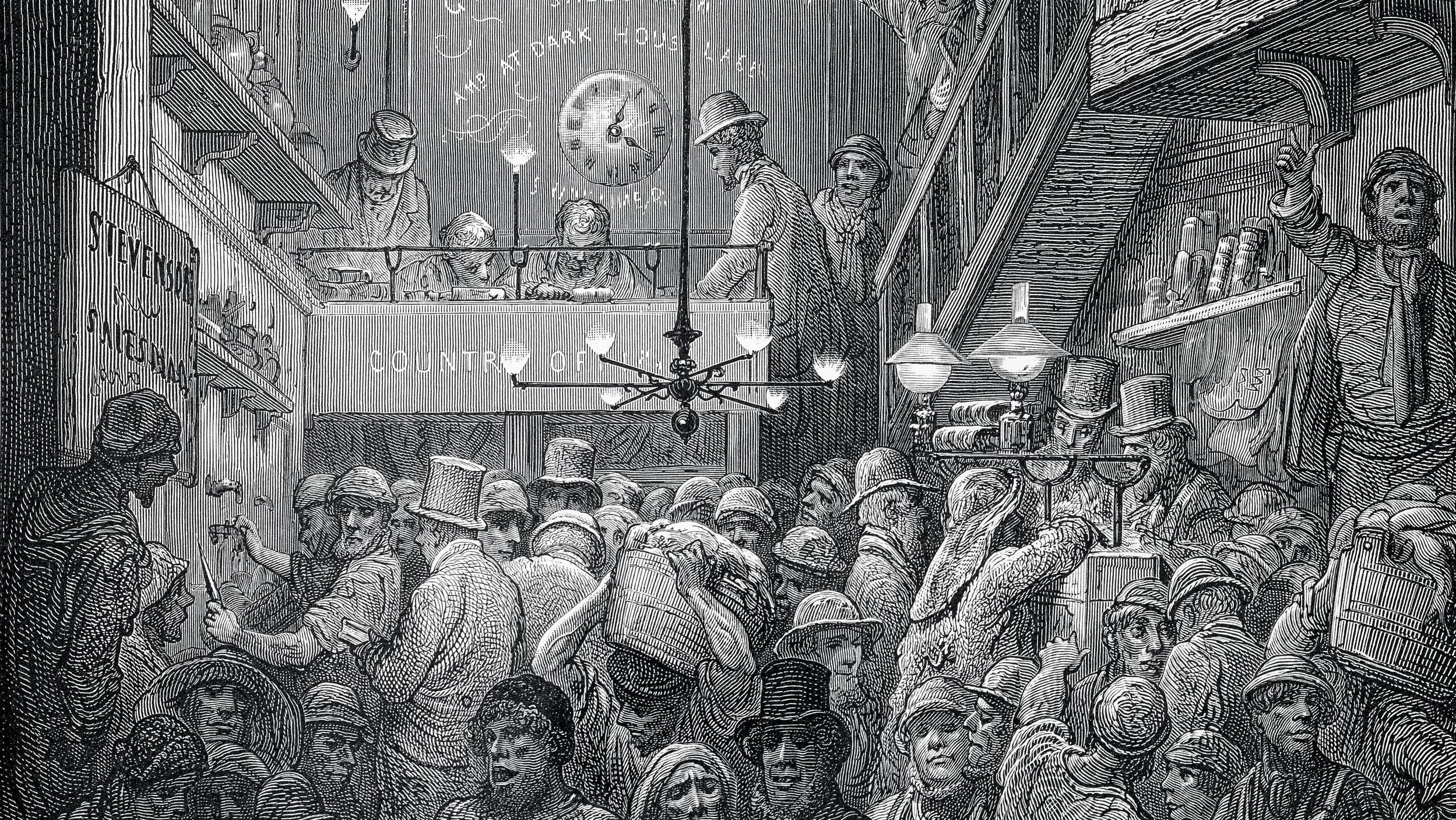
Billingsgate
This scene shows a crowd at Billingsgate Market in the early morning. Billingsgate, on Lower Thames Street in central London, was London’s major fish market in the 19th century. In the 1980s, it was moved to the Isle of Dogs.
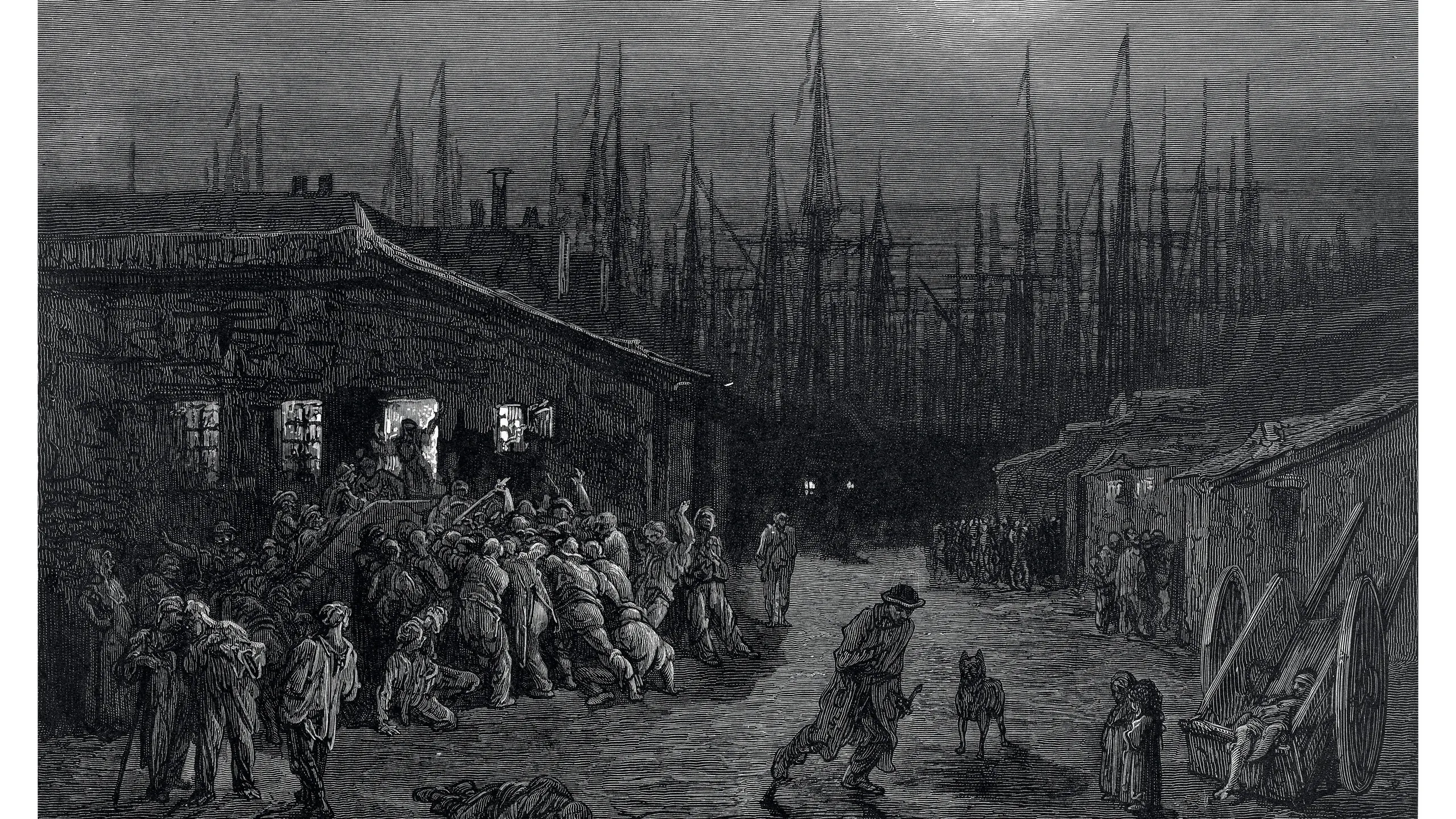
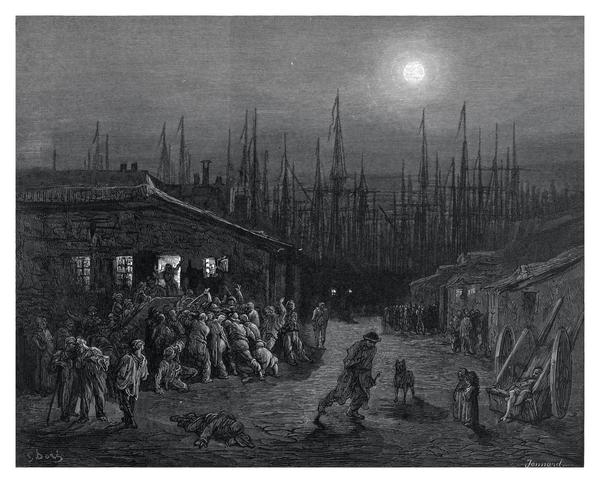
A riverside community
Here, a fight has broken out outside a pub serving local sailors and dock workers. As you’d expect in a book framing London as a city of extremes, poverty and crime were frequent themes. Jerrold writes about “streets of poverty-marked tenements, gaudy public-houses and beer-shops”. A police officer often joined the pair as they explored. Jerrold reckoned an “after-dark journey by the river side is an expedition to be undertaken cautiously, and in safe company”.
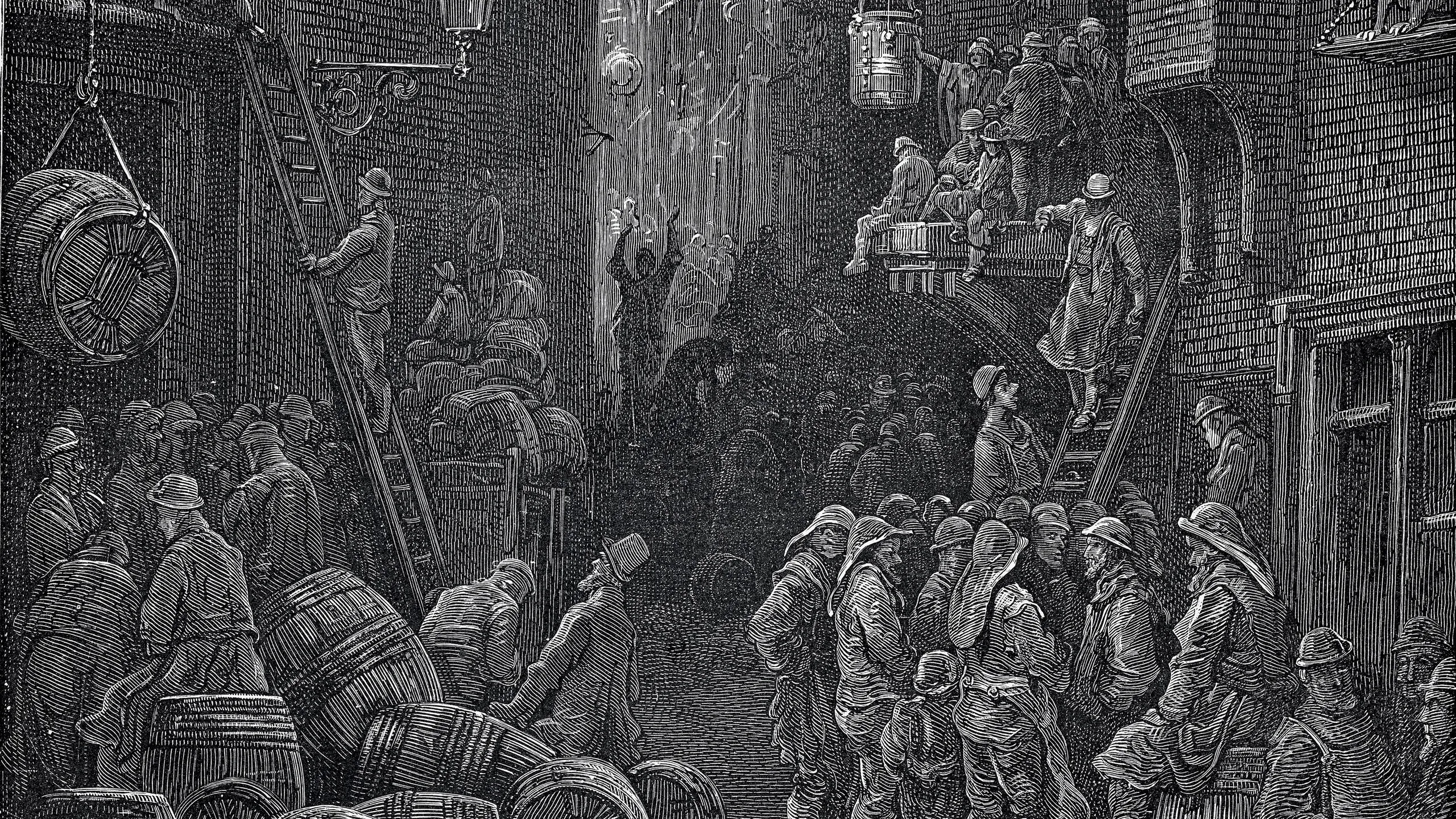
A riverside street
“Glimpses of the Thames to the left, through tangles of chains, and shafts, and ropes and cranes; and to the right crowded lanes, with bales and boxes swinging at every height in the air, and waggon-loads of merchandise waiting to be warehoused.”
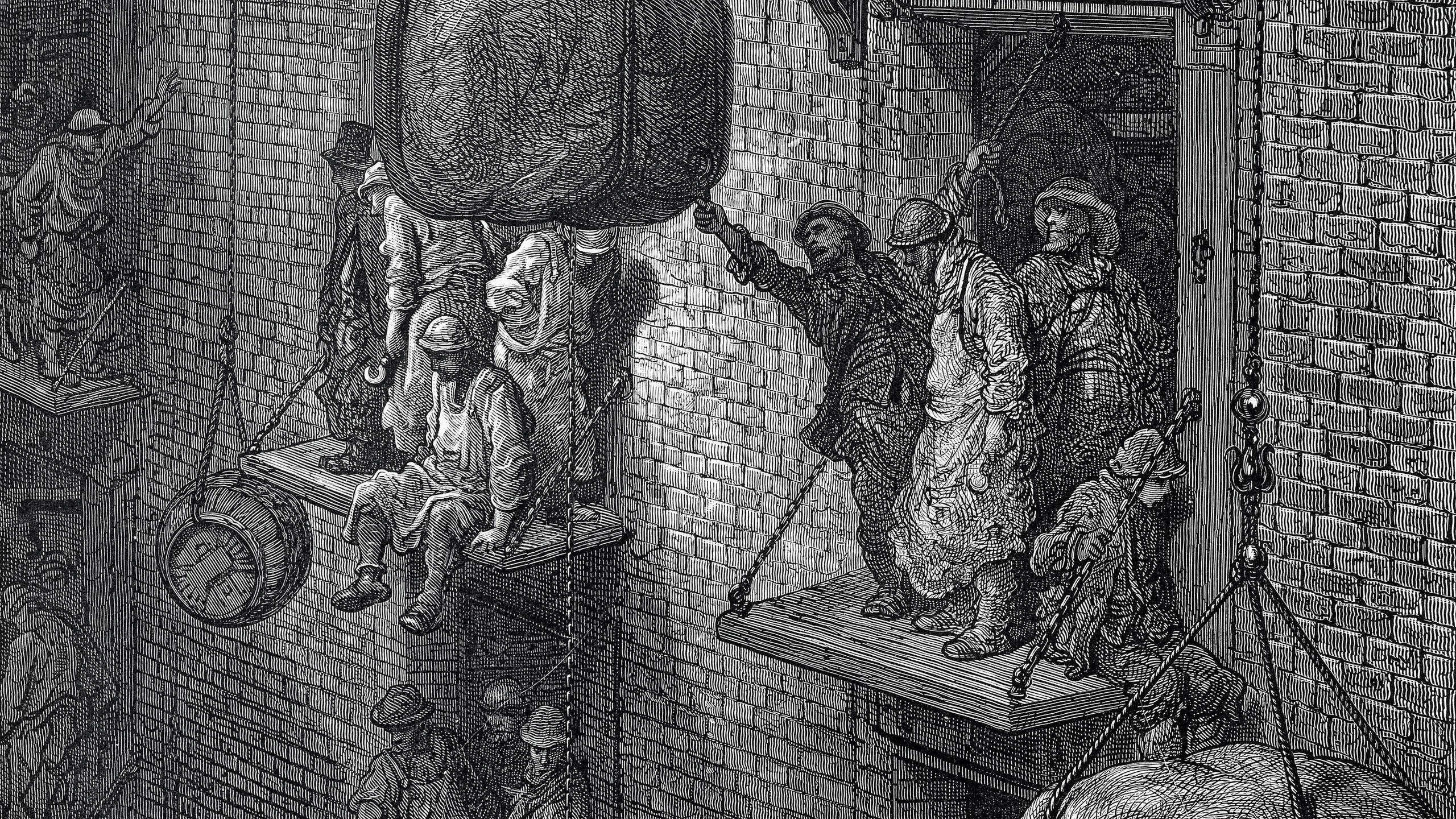
Winches to warehouses
Goods were winched to the upper floors of warehouses where workers waited on platforms, leaning out to pull the goods in.
Tags
-
-
-
-
Library
 Library
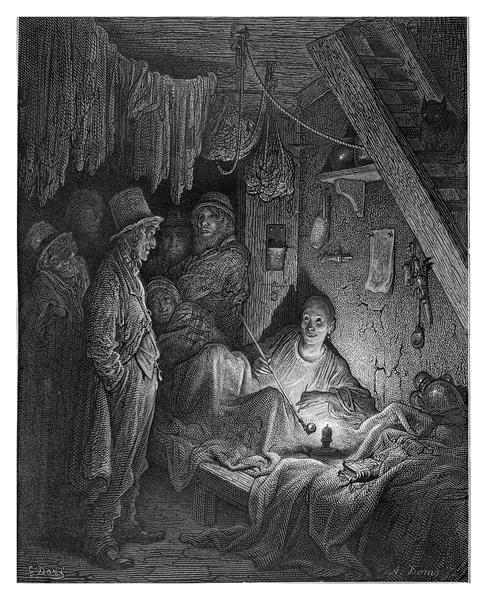
Opium smoking - the lascar's room in 'Edwin Drood' (wood engraving)
Doré, Gustave, Doms, A.
1872
-