The London Eye was one big skyline revolution
Since it opened for the new millennium, the London Eye has been an integral part of the city’s skyline. Whether you’re looking at it, or from it, this giant riverside ferris wheel offers dramatic and wildly popular London views.
South Bank, Lambeth
Since 2000
When did the London Eye open?
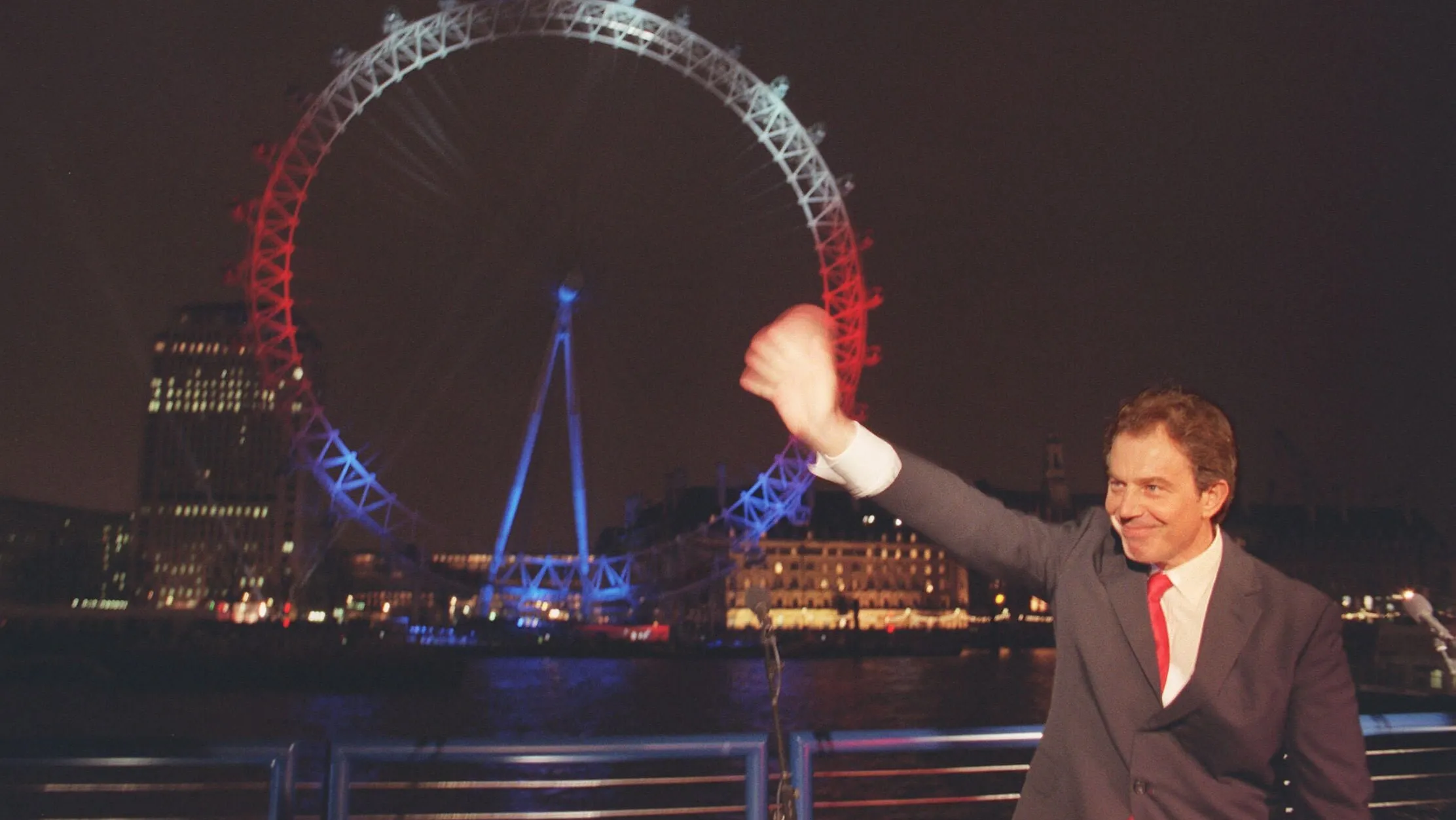
It was officially opened by Prime Minister Tony Blair on 31 December 1999 to celebrate the year 2000, the start of a new millennium. The ceremony included lasers and fireworks, set to the music of Gustav Holst. But despite the fanfare, paying customers didn’t get to ride the wheel until a few months later, on 9 March 2000.
Who designed the London Eye?
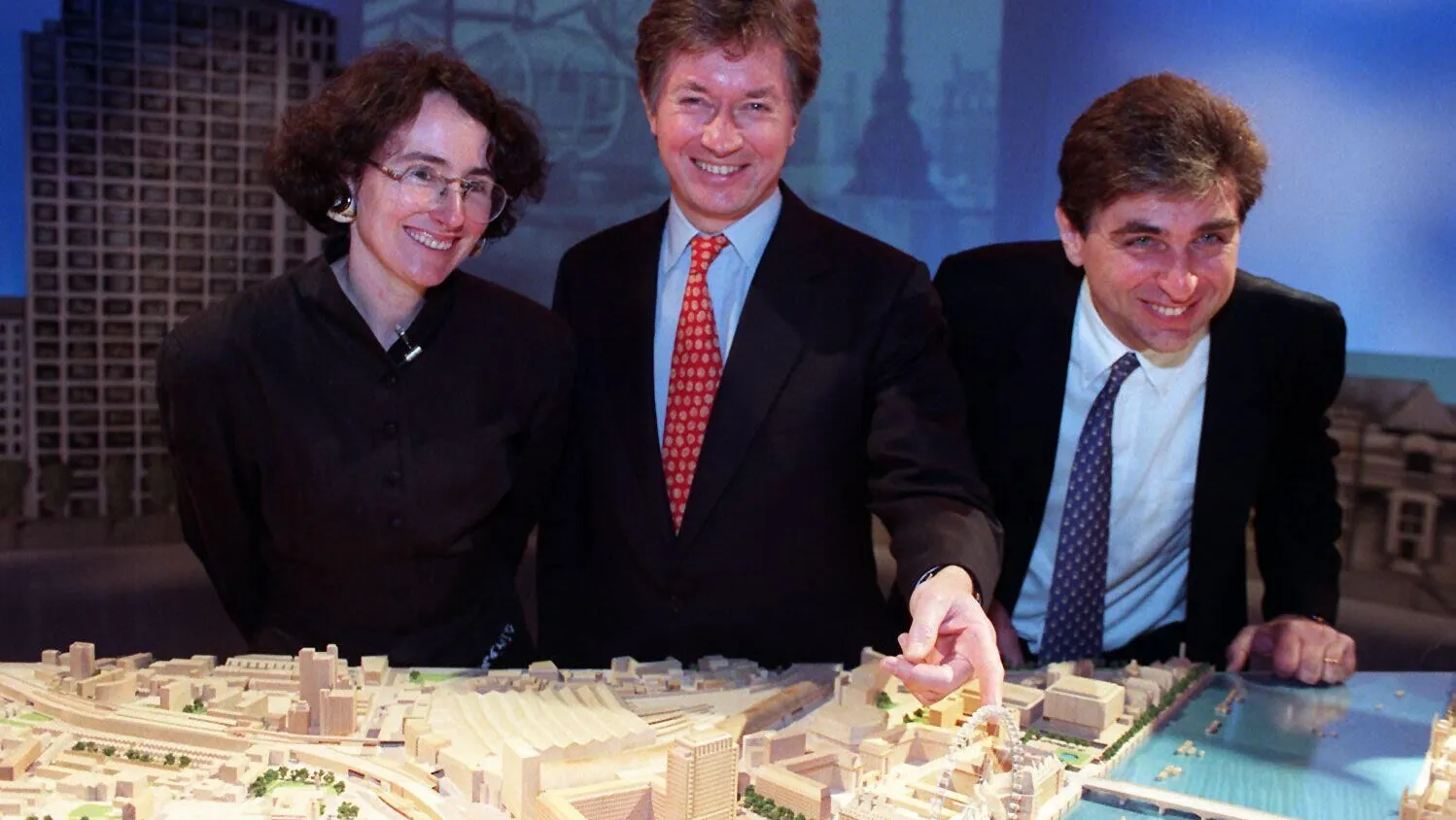
The wheel began as the idea of the architects David Marks and Julia Barfield. They’d responded to a competition that called for a temporary structure to mark the new millennium. The pair didn’t win, but their idea for a daring new South Bank attraction gained increasing support. Then came crucial funding from British Airways, the Eye’s first sponsor.
How was the London Eye built?
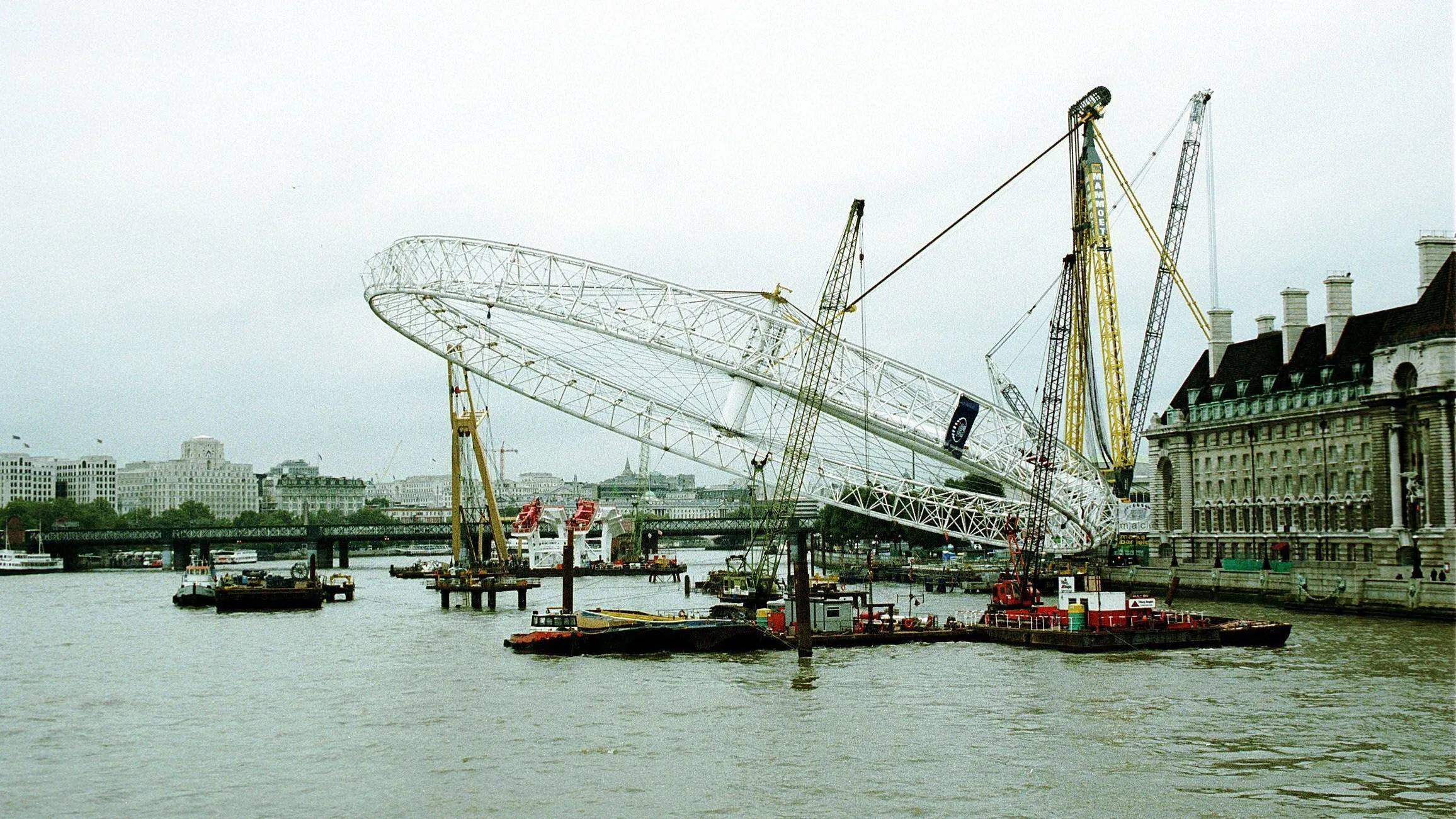
The capsules, built in France, were floated up the River Thames. The wheel was assembled on the river while lying horizontally. Over several days, it was slowly lifted until it stood vertically.
How tall is the London Eye?
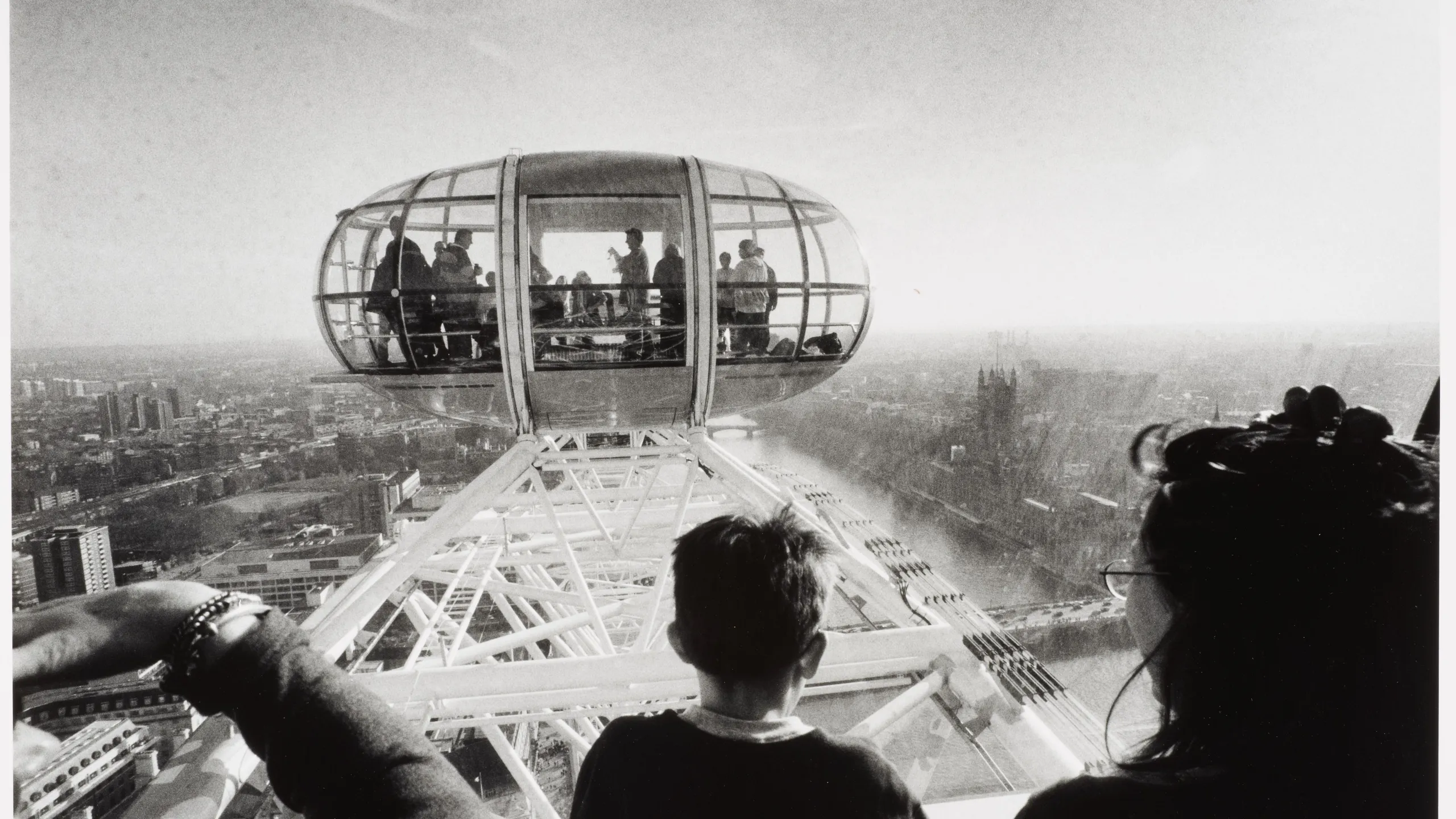
The wheel is 135 metres tall (433 feet). It was the tallest ferris wheel in the world when it opened, a record it held until 2006. The wheel has 32 air-conditioned capsules, representing London’s 32 boroughs. Once you step inside, a full rotation of the wheel takes about 30 minutes.
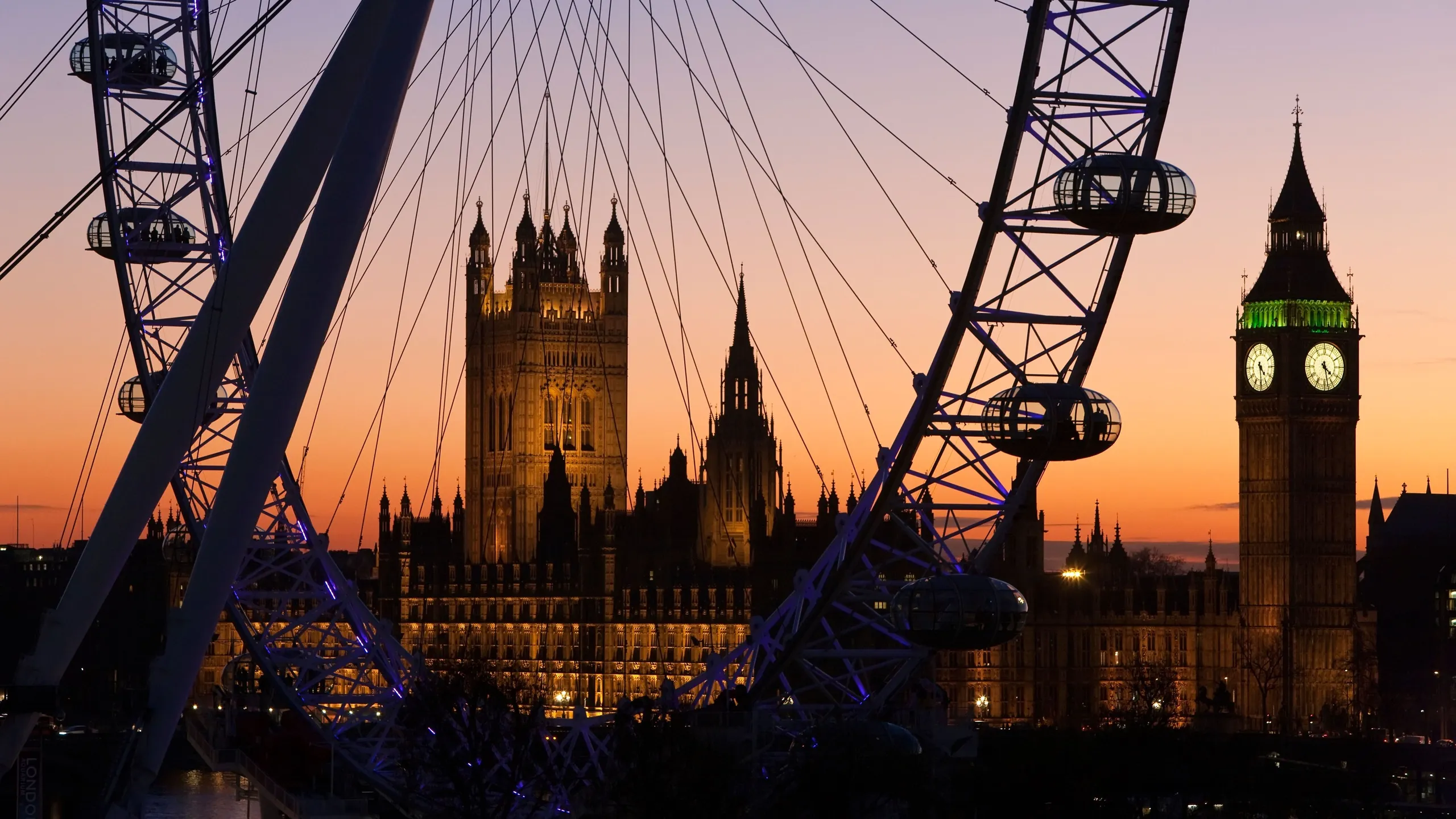
The Eye has been an enormous success
Over 3.5 million people ride the London Eye every year, cherishing the chance to appreciate London’s scale, layout and landmarks from above. It’s one of the city’s top tourist attractions and a structure recognised around the world. It’s even hosted marriages and raves.
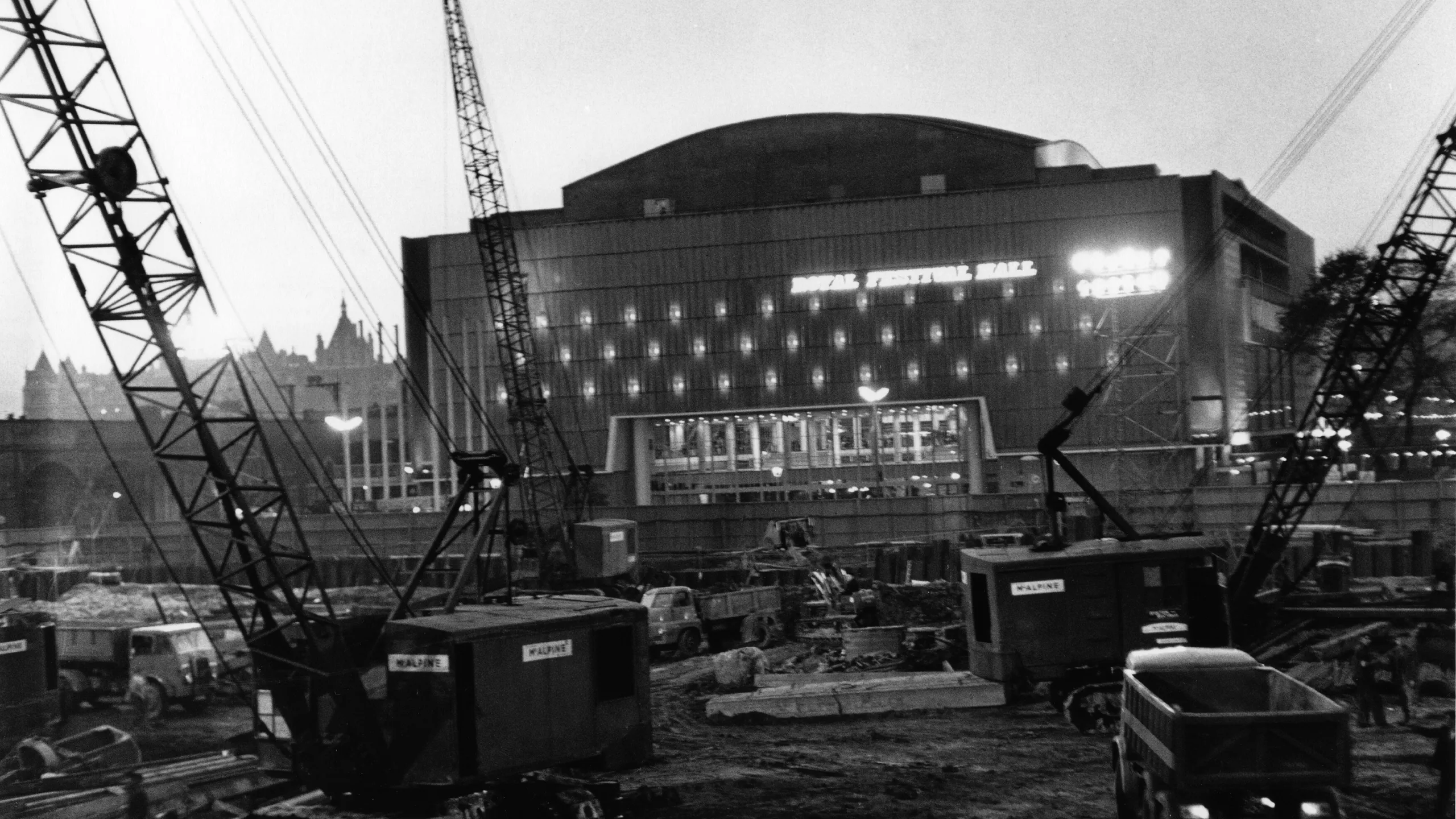
The South Bank’s transformation
The London Eye’s construction was part of a long regeneration of the South Bank, an area devastated by bombing during the Second World War (1939–1945). In 1951, the Royal Festival Hall opened for the Festival of Britain. The Queen Elizabeth Hall, Hayward Gallery and National Theatre – all built in a brutalist style – followed in the 1960s and 1970s.
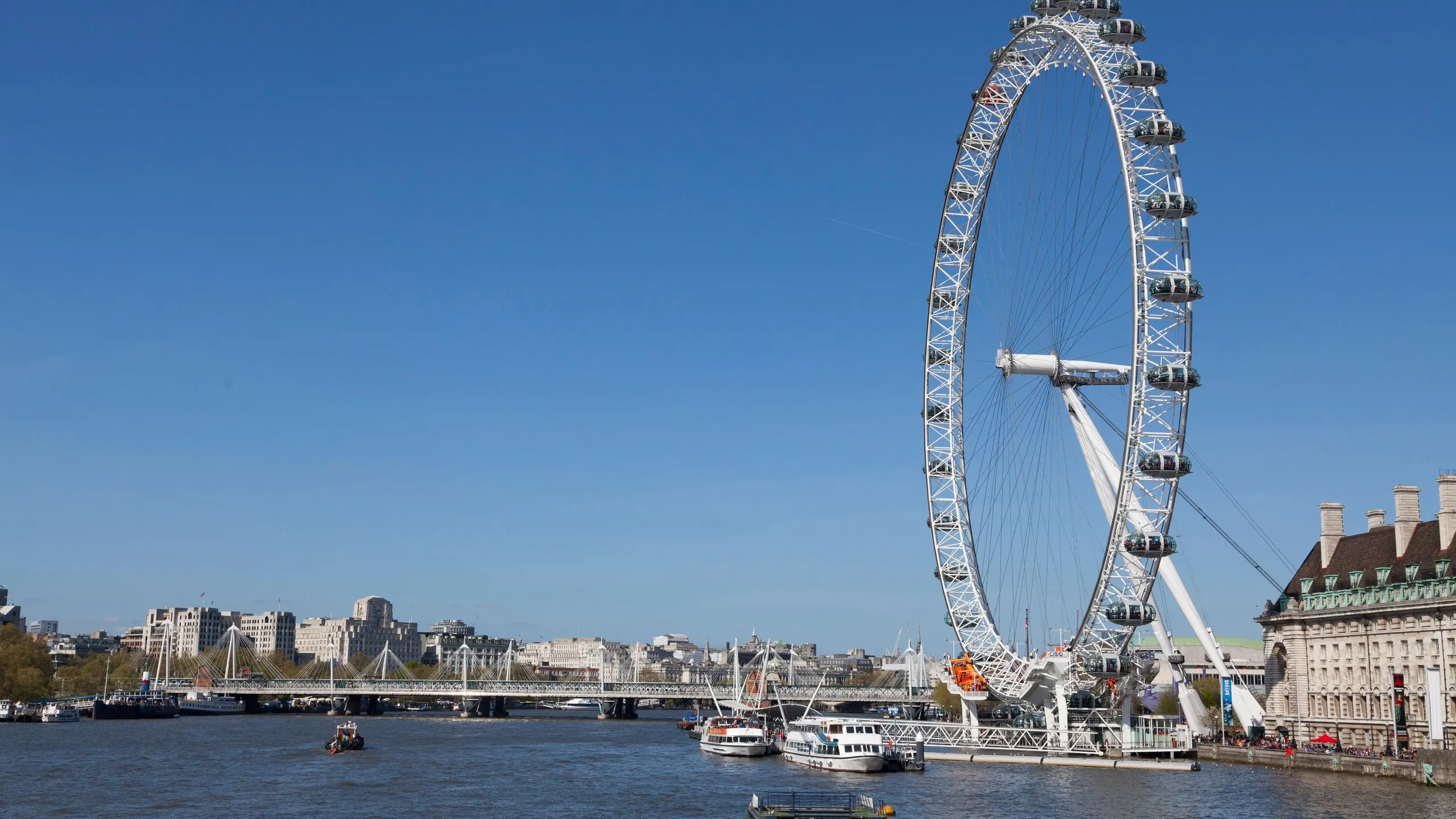
The London Eye could have been temporary
The Eye was originally planned to be taken down after five years. Its success saw its lifespan extended to 2028. Then, in 2024, Lambeth Council decided to make the London Eye a permanent landmark. As part of this agreement, 1% of the Eye’s ticket sales will continue to be invested in the local area.
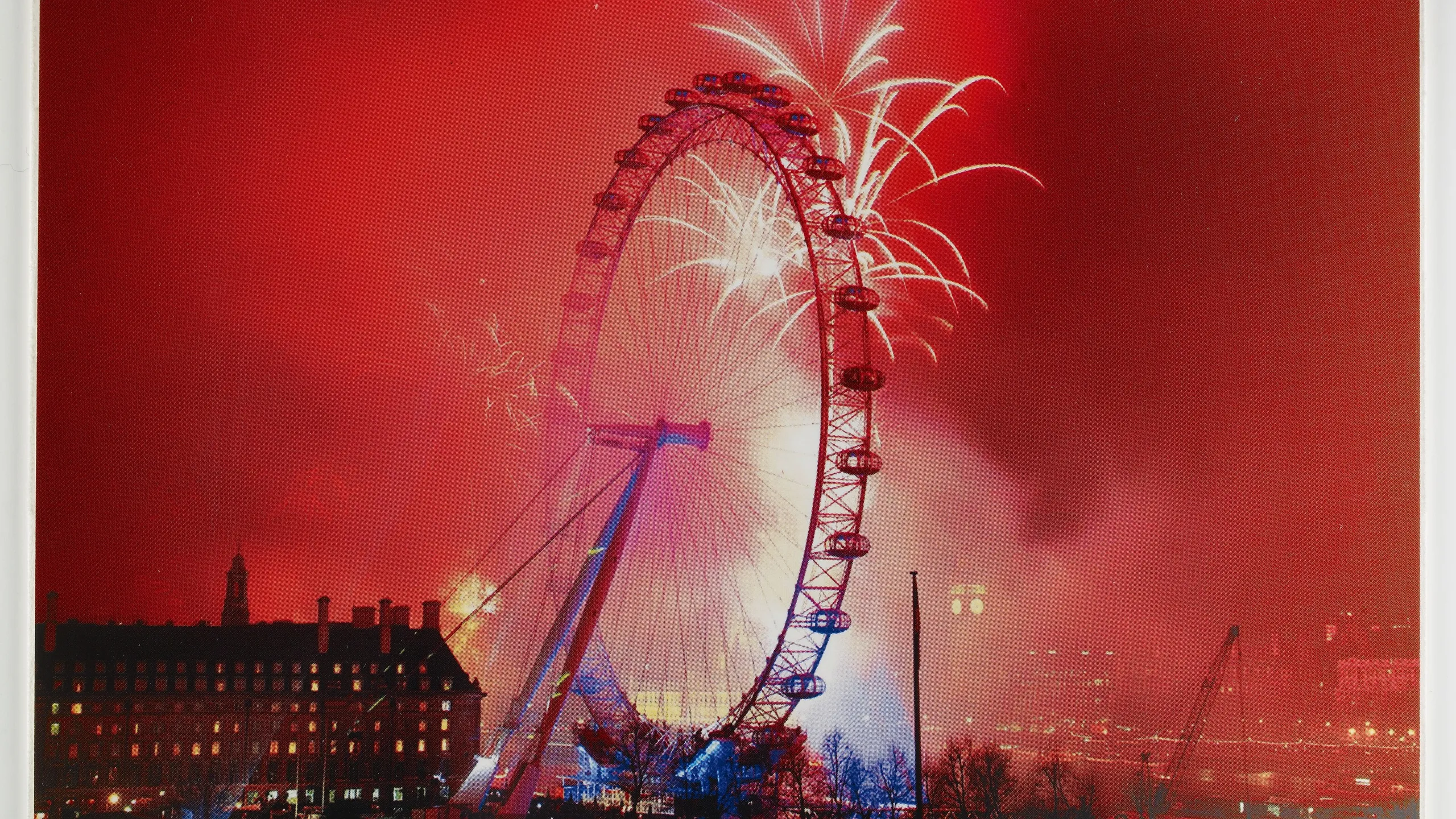
An famous backdrop for fireworks
The London Eye’s iconic status is renewed every year when it’s used in the capital’s New Year’s Eve firework and lights display. Images of the wheel, lit up for the event with rockets bursting all around, are broadcast around the world.
Tags
-
Printed Ephemera
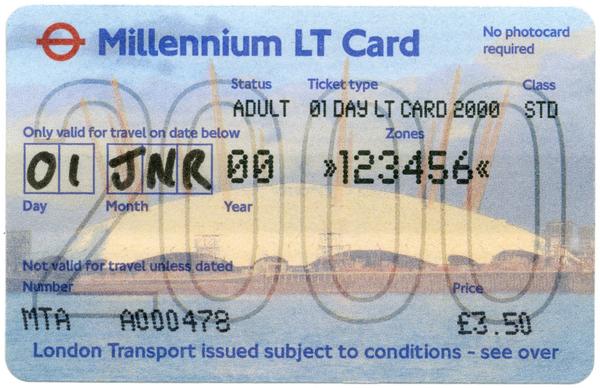 Printed Ephemera
Millennium London Transport travel card (transport ticket)
London Transport
2000-01-01
-
-
Printed Ephemera
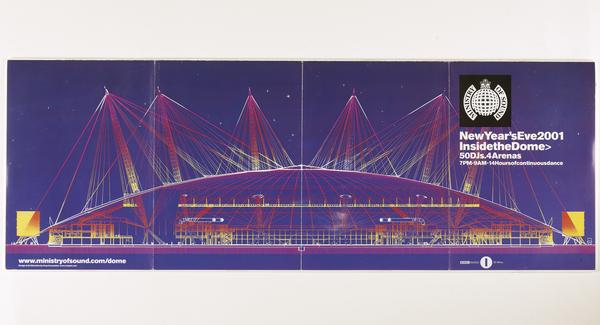
-
Photography
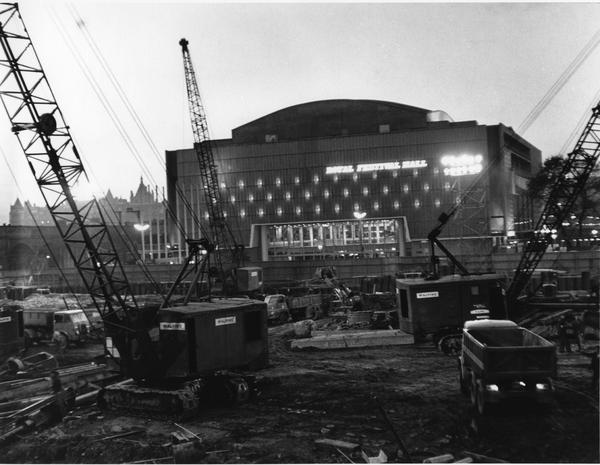 Photography
Construction work on the South Bank near the Royal Festival Hall (silver gelatin print)
Mayne, Roger
1957
-
Photography
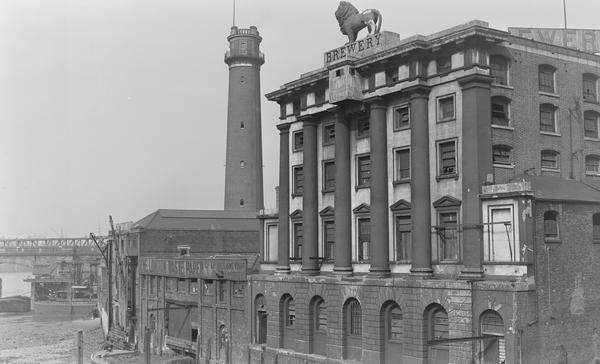 Photography
Miscellaneous views: The Red Lion Brewery and Shot Tower on the south bank near Waterloo, in June, 1932. (cellulose acetate)
Linney, Albert Gravely
1932
-