A history of the London Marathon
Since 1981, thousands of athletes – elites and amateurs alike – have been put through their paces on the snaking, landmark-peppered course of the London Marathon.
1981
How the London Marathon hit the ground running
The London Marathon was founded in 1981 by two former Olympians, who were inspired by the collective spirit of other big road running events. While it wasn’t the city’s first or only marathon at the time, this one quickly became its biggest. And it’s attracted the world’s elite athletes from the off.
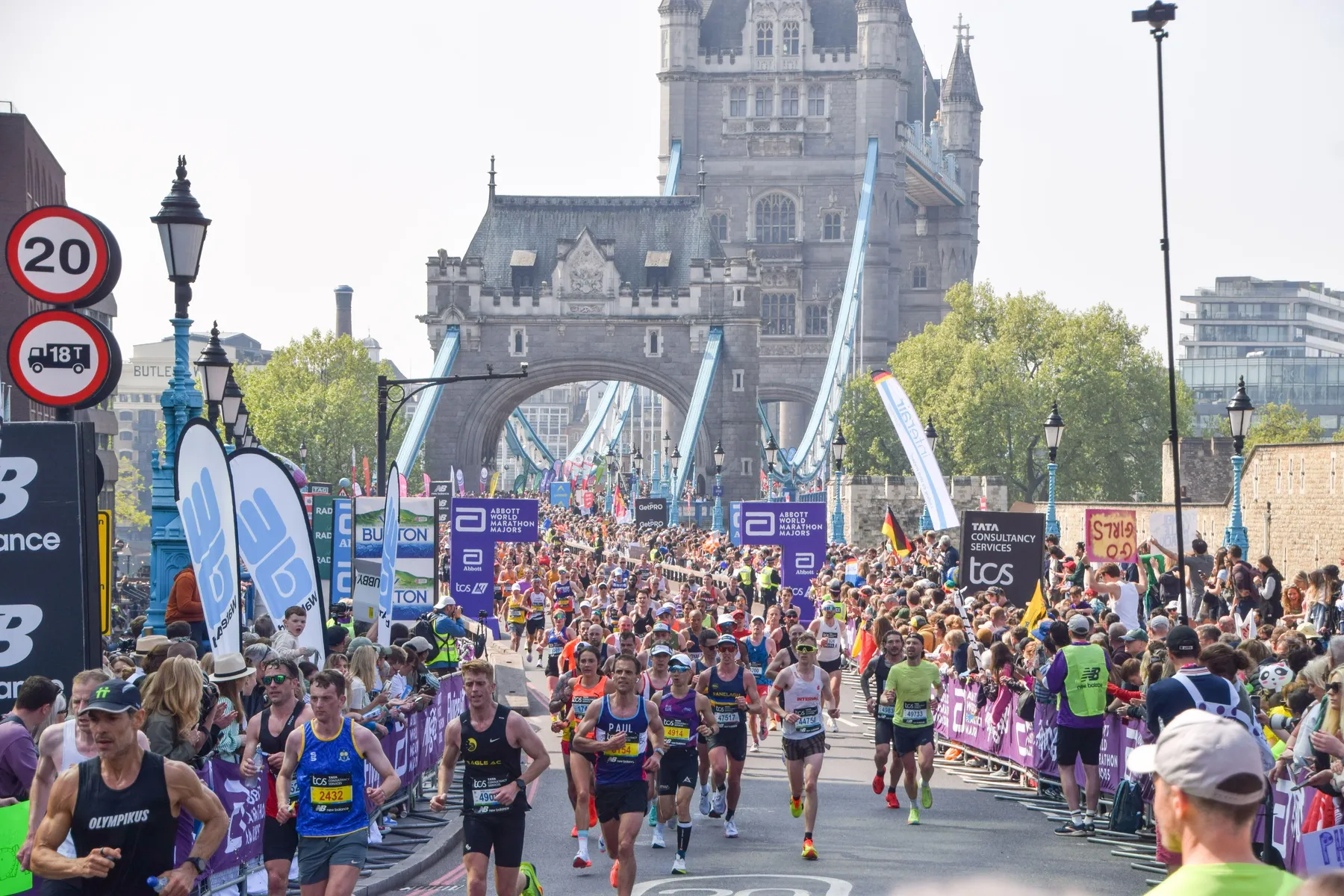
Today, over one million amateurs and enthusiasts apply to be among the just tens of thousands given a spot to race. Some brave folk even take part in cumbersome-looking costumes. In 2025, 56,640 crossed the finish line – the most ever in any marathon event.
The London Marathon has grown into a proper spectator sport with a proper festival atmosphere. Hundreds of thousands of people crowd around the course as it sweeps past palaces, parks, docklands, suburbs, medieval landmarks and the River Thames.
It’s one of the seven World Marathon Majors, a series of the largest and most celebrated marathon events. And it’s a huge charity fundraiser. Over £1 billion has been raised for different causes since the first event.
How long is the London Marathon?
The London Marathon is the official marathon distance: 26.2 miles, or 42.2km. But why’s it such a specific number – where did that 0.2 come from?
The marathon was first included in the modern Olympics in Athens in 1896. These early Olympic marathon distances varied between 24 and 25 miles.
At the 1908 London Olympic Games, a London athletics club called the Polytechnic Harriers was tasked with organising the marathon event. They plotted a 26-mile route from Windsor Castle to the entrance of the new White City Stadium in west London.
But to finish in front of the king and queen’s royal box inside the stadium, the route ended up clocking in at 26.2 miles long. The distance stuck. It was eventually made the official marathon length.
It wasn’t London’s first marathon event
Between 1909 and 1996, the capital hosted the Polytechnic Marathon, Europe’s first regular marathon event. The ‘Poly’, as it was known, was organised by members of the Polytechnic Harriers after their success at the London Olympics. It followed a similar 26.2 mile route from Windsor Castle to west London.
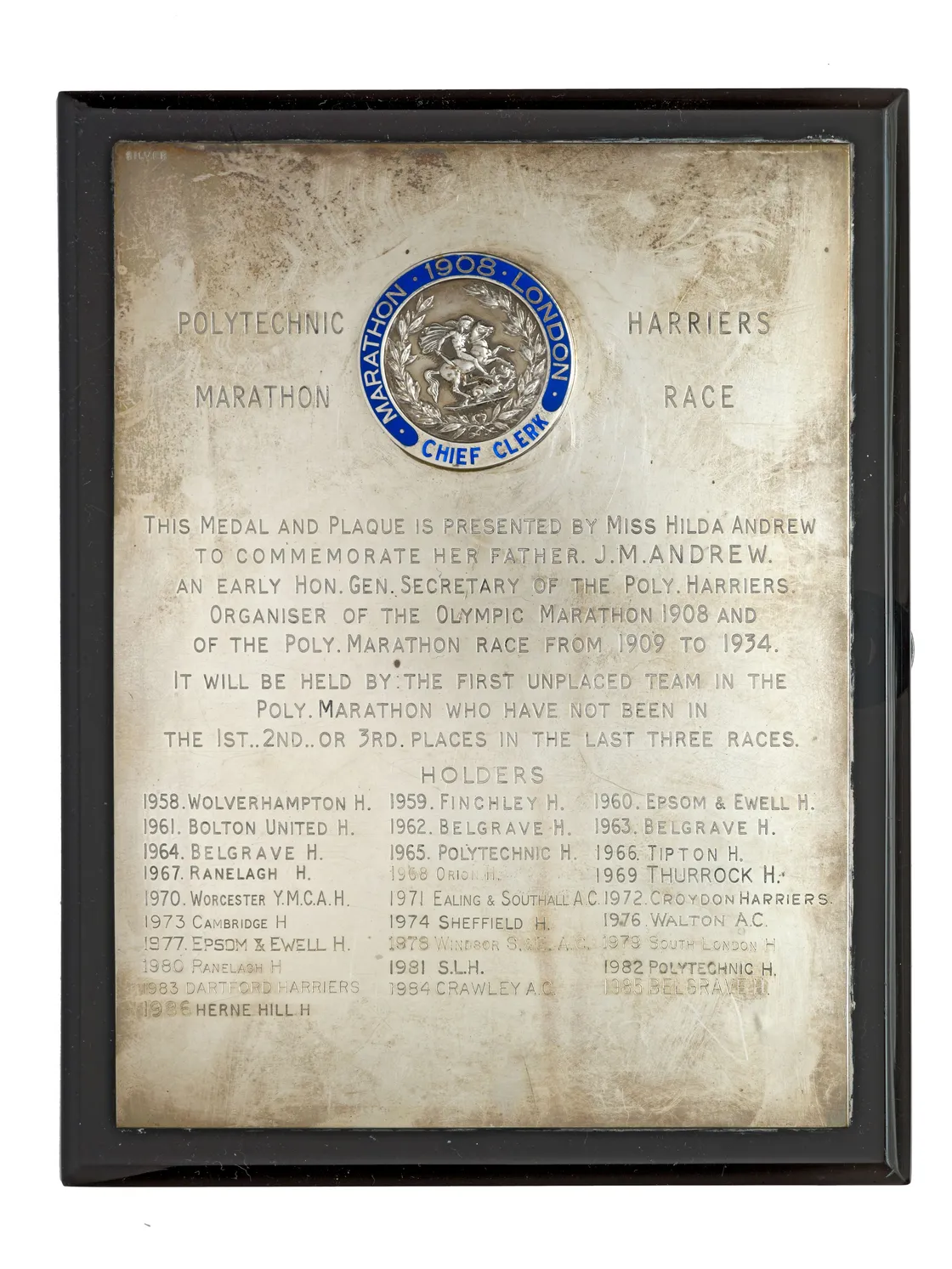
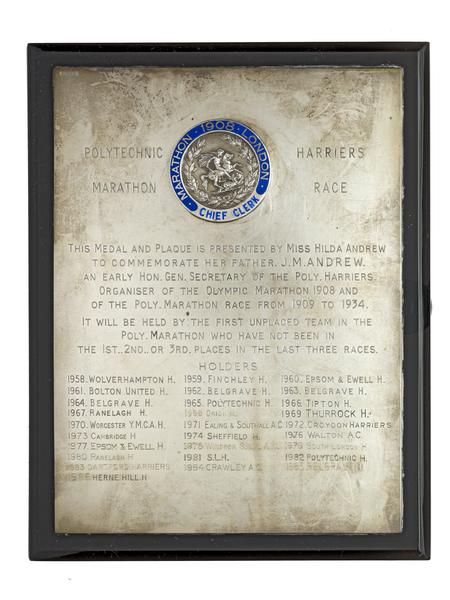
This silver plaque was presented to one of the losing teams in the Polytechnic Marathon between 1958 and 1986.
The marathon attracted the world’s elite runners, with eight world records achieved on the course over the years. But women weren’t allowed to compete in the Poly until 1978. This was only three years after the Women’s Amateur Athletic Association had finally lifted its rule that women couldn’t race distances further than 6km. That’s less than 15% of a marathon.
“do we have the heart and hospitality to welcome the world?”
Chris Brasher, The Observer, 1979
The first London Marathon
The London Marathon was created by two friends and former Olympic athletes, John Disley and Chris Brasher.
Brasher had run the 1979 New York Marathon and came home inspired, calling the event in a report in The Observer report “the greatest folk festival the world has seen”. He wanted to bring back to London the sense of wonder he’d found pounding the pavement across the Atlantic. “I wonder whether London could stage such a festival? We have the course, a magnificent course… but do we have the heart and hospitality to welcome the world?”
The shaving company Gillette provided the funds to get the event off the ground, and the first London Marathon kicked off on a drizzly day on 29 March 1981. While more than 22,000 people applied to run, only around 7,500 were allowed on the start line.
British runner Joyce Smith was the first woman to cross the finish line in 2 hours, 29 minutes and 56 seconds. The American Dick Beardsley and Norwegian Inge Simonson won the race together, crossing the tape hand in hand after 2 hours, 11 minutes and 48 seconds.
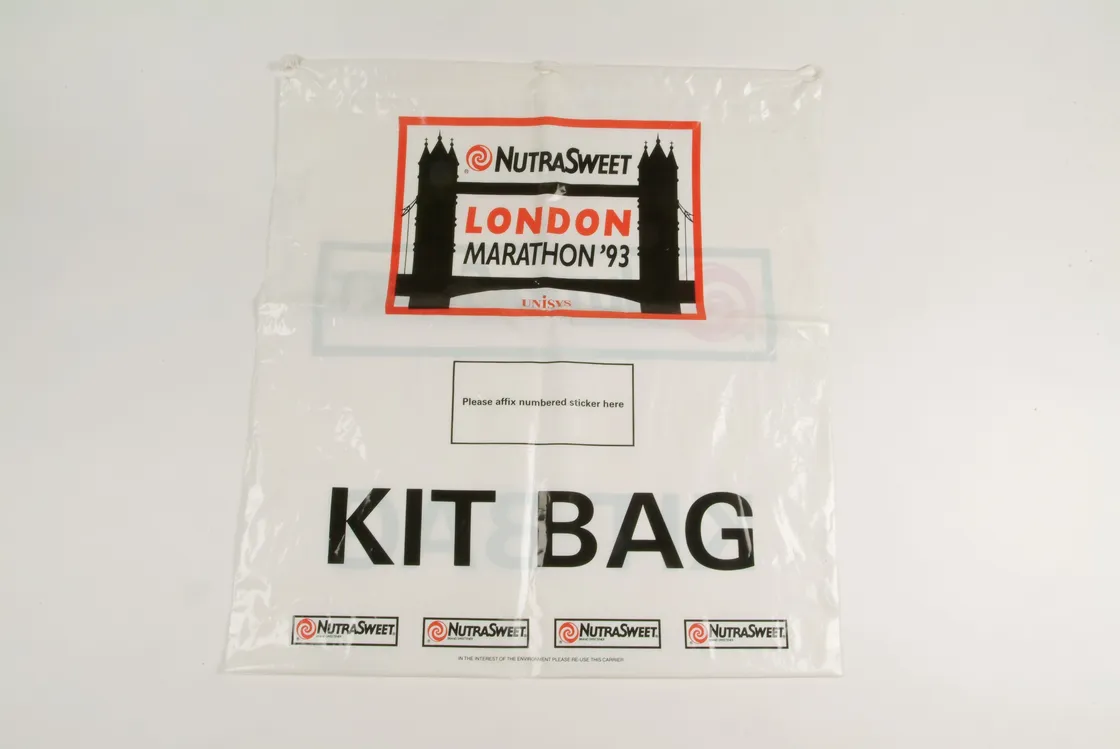
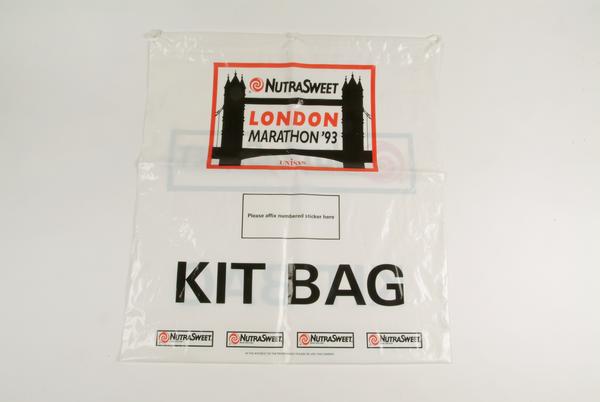
A runner’s kit bag from the 1993 marathon.
Wheelchair athletes had to fight for inclusion
While wheelchair users could race at other major marathons, like Chicago and Boston, they were initially banned from the London Marathon. In 1982, an athlete called Bill Thornton completed the London Marathon in a wheelchair. But he had to apply to race via the normal ballot route, not mentioning he was a wheelchair user, to swerve the ban.
Over the following year, the British Sports Association for the Disabled and a wheelchair athlete named Tim Marshall campaigned for the inclusion of an official wheelchair race at the next event. The Greater London Council piled on the pressure by threatening to withdraw its application to close roads for future London Marathons.
The first London Marathon wheelchair race was confirmed for 1983. Just 10 days before the event actually started. Gordon Perry beat the 16 other wheelchair athletes who completed the course with a time of 3 hours, 20 minutes and 7 seconds. Denise Smith was the fastest woman, crossing the finish line in 4 hours, 29 minutes and 3 seconds.
The London Marathon route
The London Marathon begins across three start lines in Greenwich and Blackheath, and it finishes on The Mall, in front of Buckingham Palace. This sounds long enough as it is. But just note the course also snakes through the city centre.
Marathoners pass by the Cutty Sark, through Rotherhithe and Bermondsey and then across Tower Bridge. From there, they loop back east around the Isle of Dogs, passing Canary Wharf and the Tower of London. Then the route cuts back west along the river, passing the London Eye and Big Ben to, finally, hit that painful last stretch down The Mall.
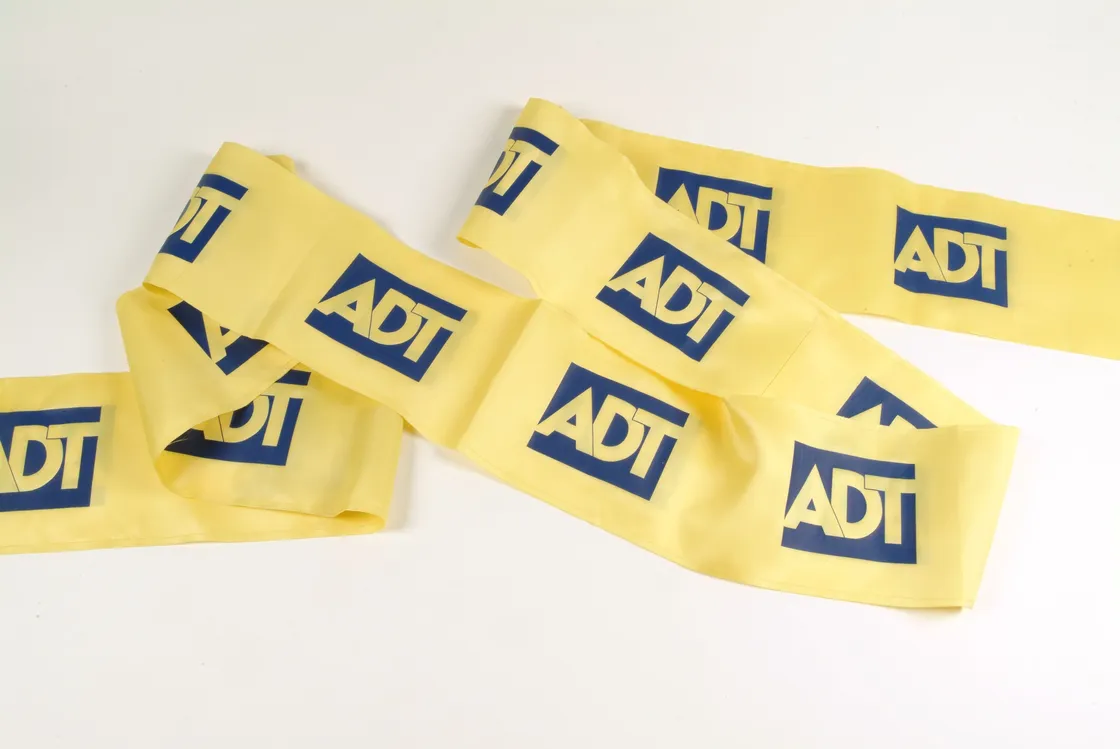
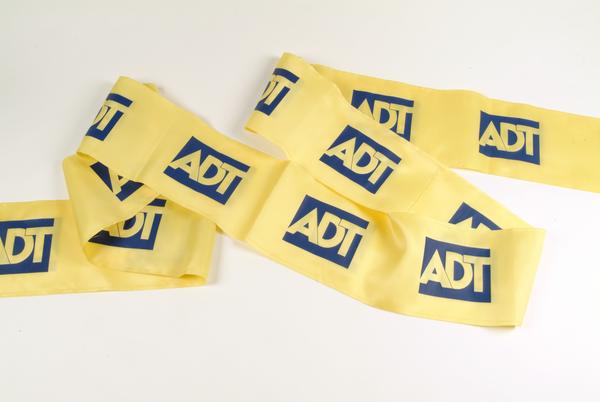
The finishing tape from the 1992 London Marathon.
This mostly flat course hasn’t changed much over the years. The finish line was on Constitution Hill in 1981, then it was on Westminster Bridge until 1994, when it was changed to Buckingham Palace. The marathon also used to twist around the cobbled streets of St Katharine Docks, near the Tower of London. In 2005, the route was changed to avoid this narrow, sometimes slippery section.
A record-breaking event
Think of the London Marathon, and some names probably come to mind. Paralympic wheelchair athlete David Weir, for example, has won a record-breaking eight London Marathon titles.
Paula Radcliffe, a three-time London Marathon winner, set the women’s world record of 2 hours, 15 minutes and 25 seconds at the 2003 event, which she held for 16 years. Other women’s world records have been broken on the course by Grete Waitz in 1983, Ingrid Kristiansen in 1985, Mary Keitany in 2017, Peres Jepchirchir in 2024 and Tigst Assefa in 2025.
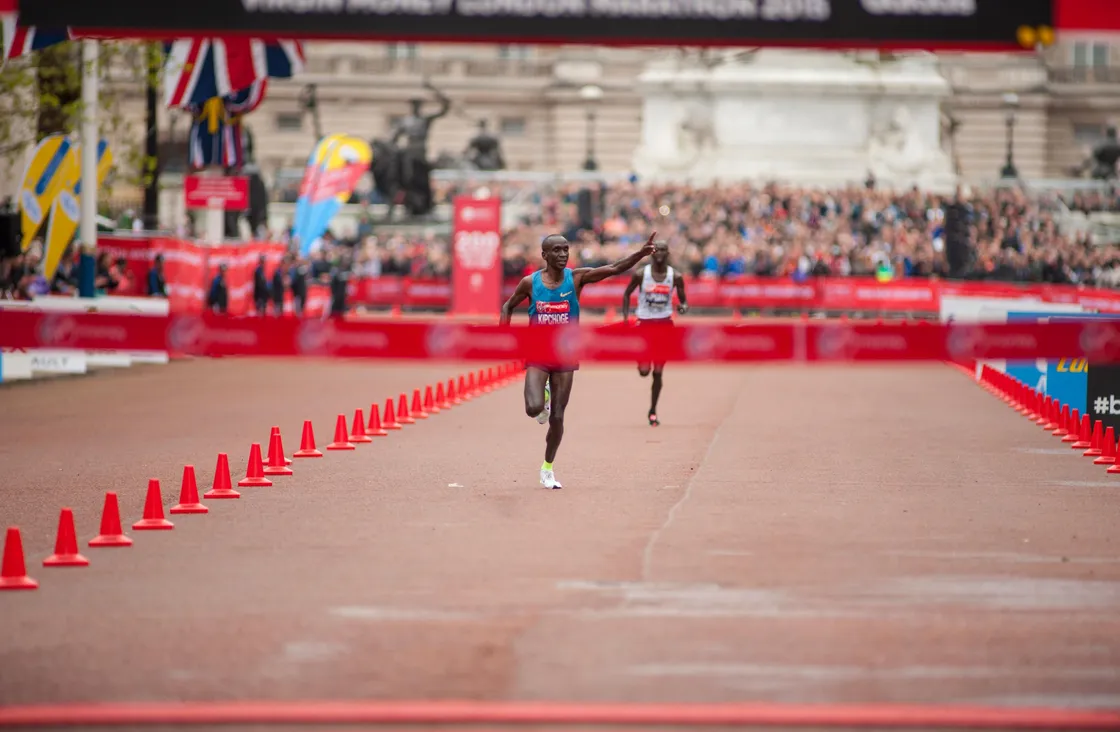
Eliud Kipchoge approaches the finish line at the 2015 London Marathon.
Khalid Khannouchi is the only man to have set a world record on the course with his 2 hour, 5 minute and 38 second run in 2002. Eliud Kipchoge, widely considered history’s greatest marathoner, has won the event four times, the most ever in the elite men’s category.
The feats don’t stop with the elites. In 2025, Guinness World Records clocked best-ever results for “the fastest marathon in a suit (male)”, “fastest marathon by a mascot (female)” and “fastest marathon in a ten-person costume”.
Tags
-
-
Photography
 Photography
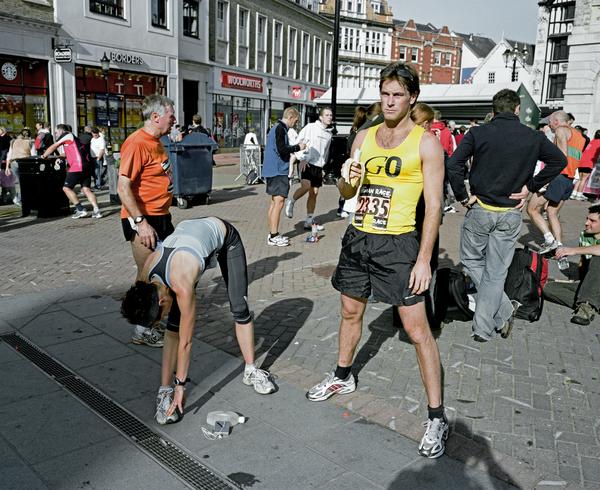
The Kingston-Upon-Thames Marathon at the market place finish (pigment print)
Baldesare, Paul
2005
-
-