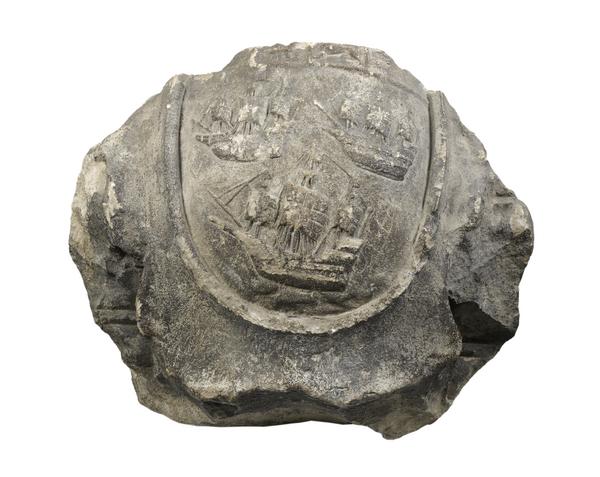
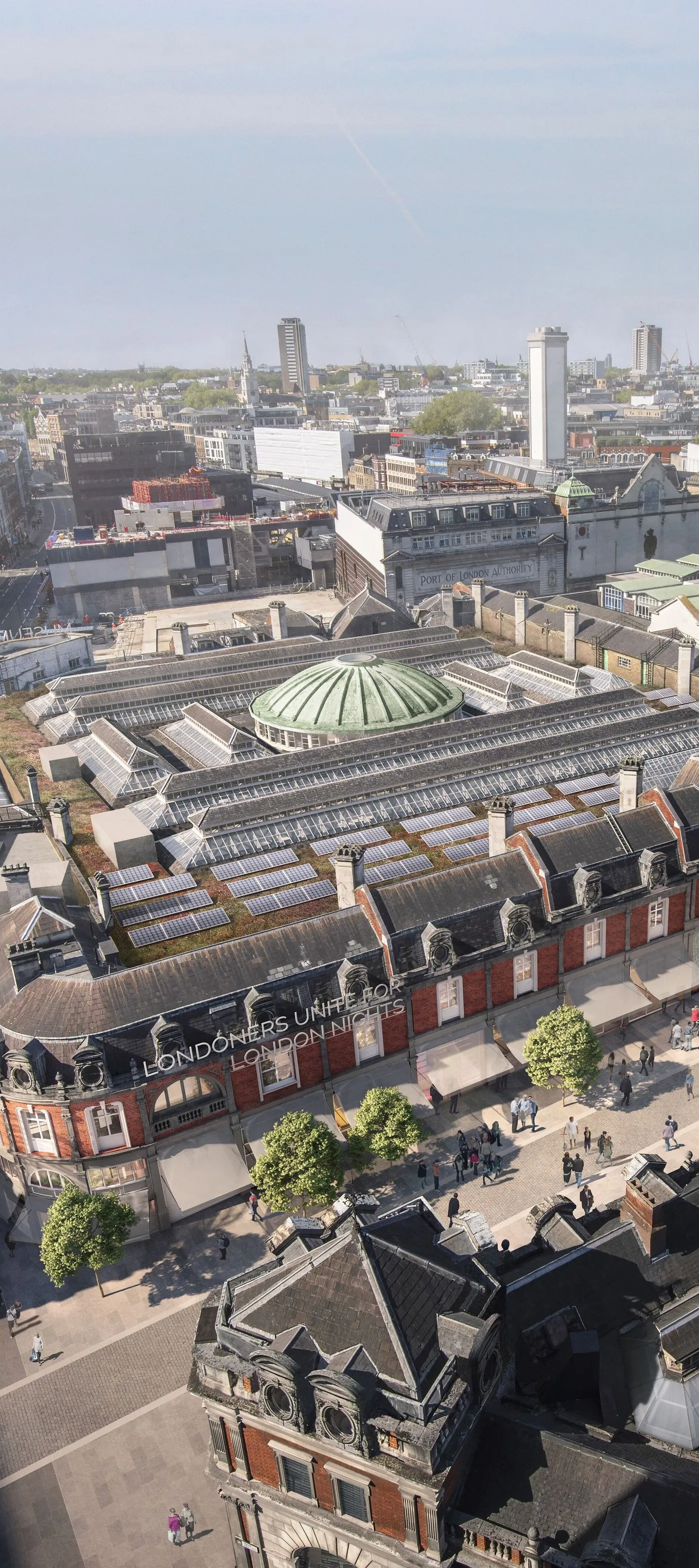
The East India Company was the world’s most powerful corporation
The East India Company was a commercial enterprise established in London to control trade between Europe and Asia. It imported spices, tea, textiles and more into the capital. It also plundered and colonised the Indian subcontinent.
1600–1874
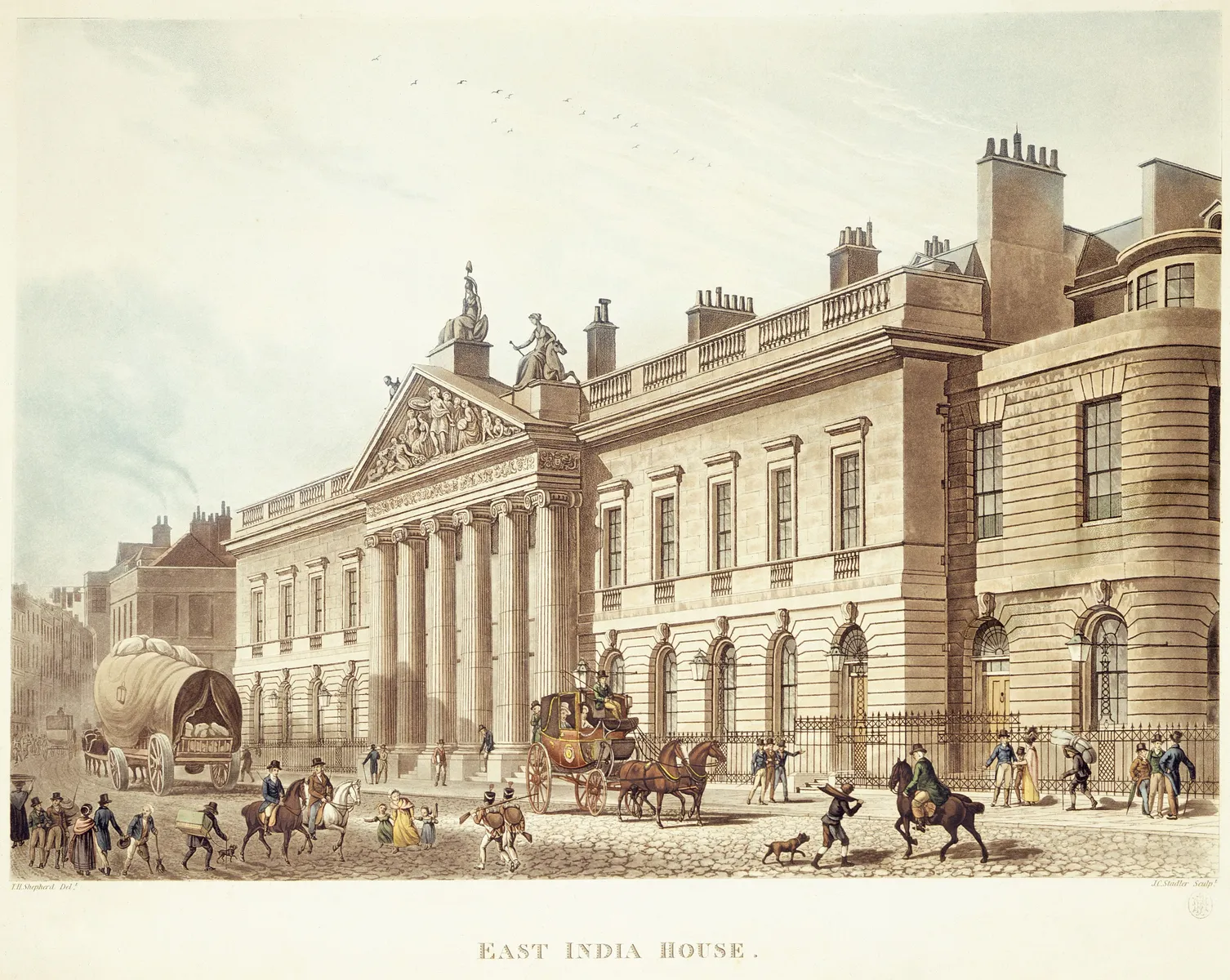
A Thomas Hosmer Shepherd print of East India House.
A commercial giant becomes a colonial force
Think of a company with huge financial resources and political influence. Perhaps you’re picturing a tech platform or a retail giant. They pale in comparison to the East India Company, which is thought to have been the most powerful and exploitative corporation in the world.
Established in 1600, over the next 250 years, the company would go on to dominate trade between Europe and Asia. Things like spices, textiles and tea were brought back to London and became popular across Britain, generating huge wealth for its shareholders.
The East India Company turned its commercial dominance in India into political control. Using power and violence, it colonised the Indian subcontinent and drained it of its wealth. Its policies contributed to a huge loss of life across South Asia.
Who founded the East India Company?
The East India Company was established by a group of merchants, traders and investors. In 1600, Queen Elizabeth I granted a royal charter to this group, then called the Governor and Company of Merchants of London trading to the East Indies. The charter turned this group into a self-governing body, allowing it to operate independently.
It also gave the East India Company a monopoly on all English trade with Asia and the right ‘to wage war’ where necessary. The aim was to compete with the Spanish, Portuguese and Dutch, who controlled lucrative trade routes. It was one of the world’s earliest joint-stock companies, allowing the public to buy shares.
-
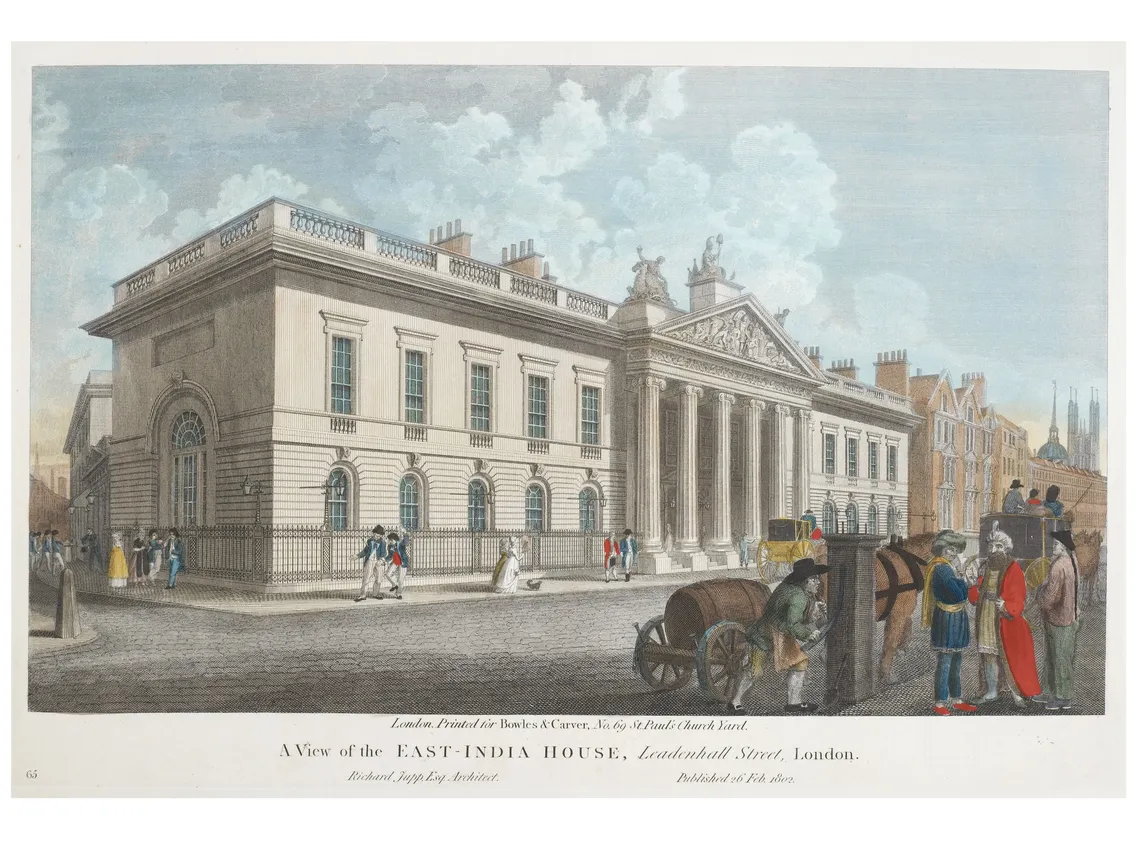
The exterior view of East India House.
-
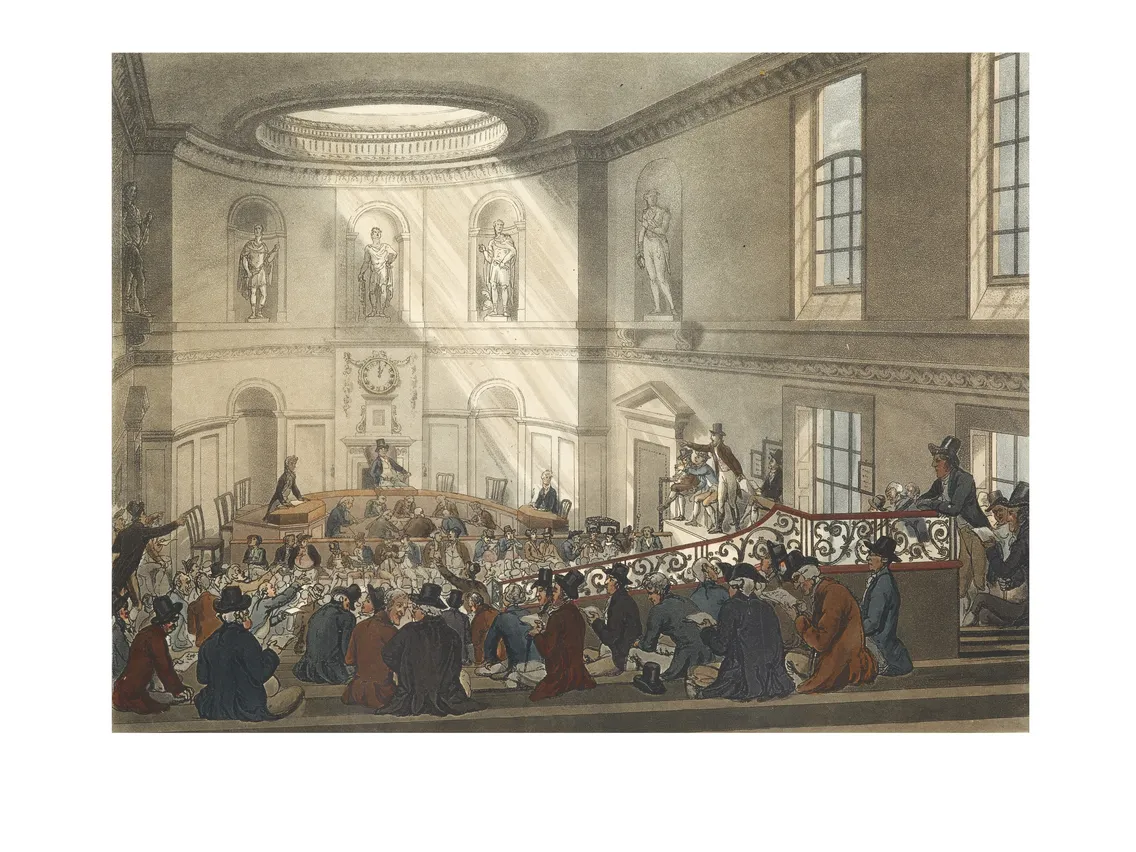
The sale room inside East India House.
Its headquarters were established at the former mansion house of William Craven, a former lord mayor of London, in 1648. East India House stood on Leadenhall Street in the City of London until it was demolished between 1861 and 1862. Insurance marketplace Lloyd’s of London now occupies that site.
The trade in spices and textiles
The East India Company initially tried to break into the spice trade. Spices like cinnamon, pepper and cloves were extremely valuable and handsome profits could be made by bringing this precious cargo back to England.
Though there were successful early voyages to Indonesia, it was the Dutch East India Company, the equivalent enterprise from the Netherlands, that took control over the spice trade. This led the East India Company to change tack, focusing on textiles in India instead. It set up commercial hubs in Madras (now Chennai), Calcutta (now Kolkata) and Bombay (now Mumbai) across the mid- to late-17th century.
There was high demand in England for expertly produced fabrics like muslin and chintz. The East India Company exploited indigenous workers, enforcing lower wages and using intimidation and violence to maintain production. By the early 1700s, the company was generating millions of pounds a year.
-

Loose cinnamon like this would have come through East India Docks.
-
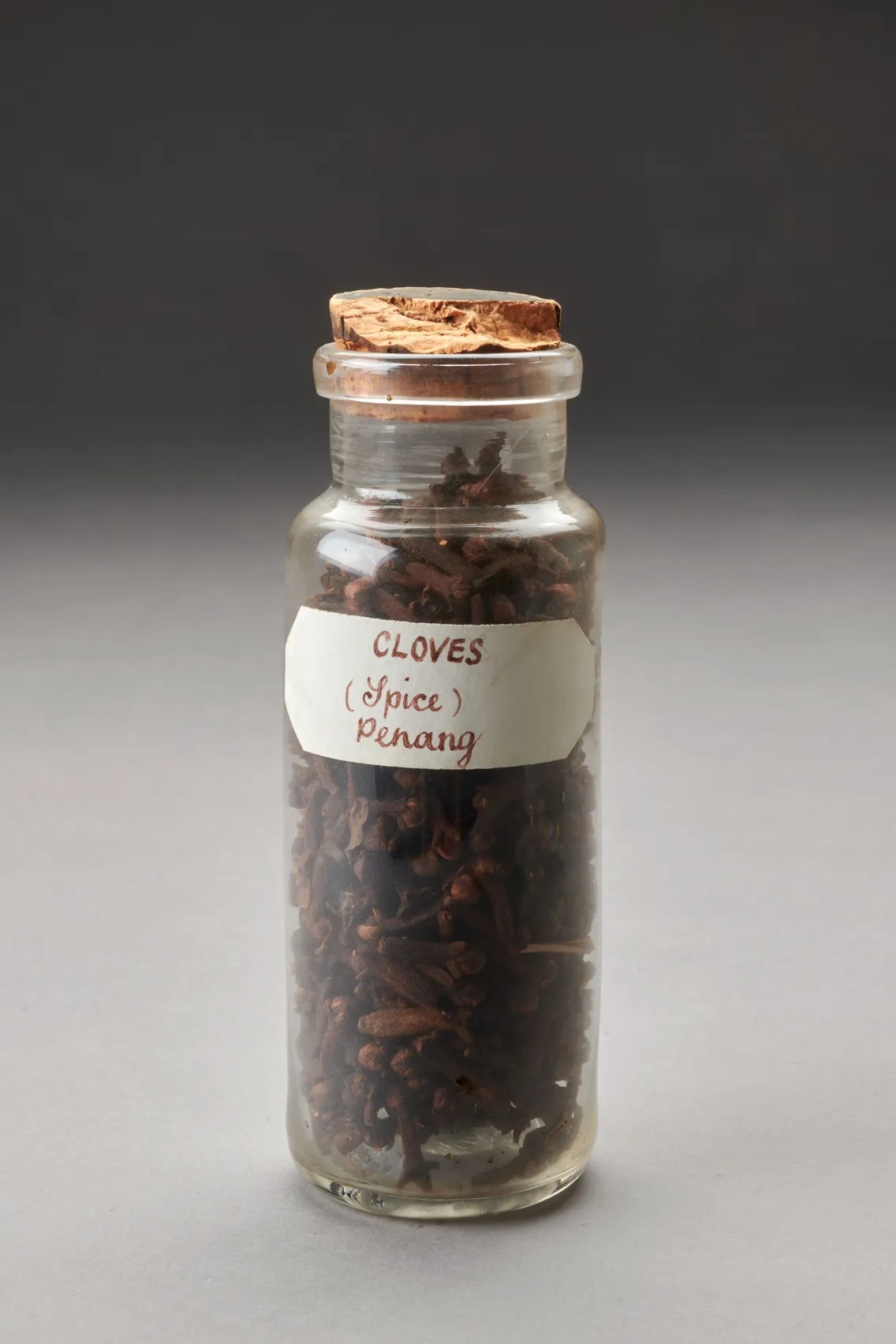
A sample of cloves imported from Penang.
-
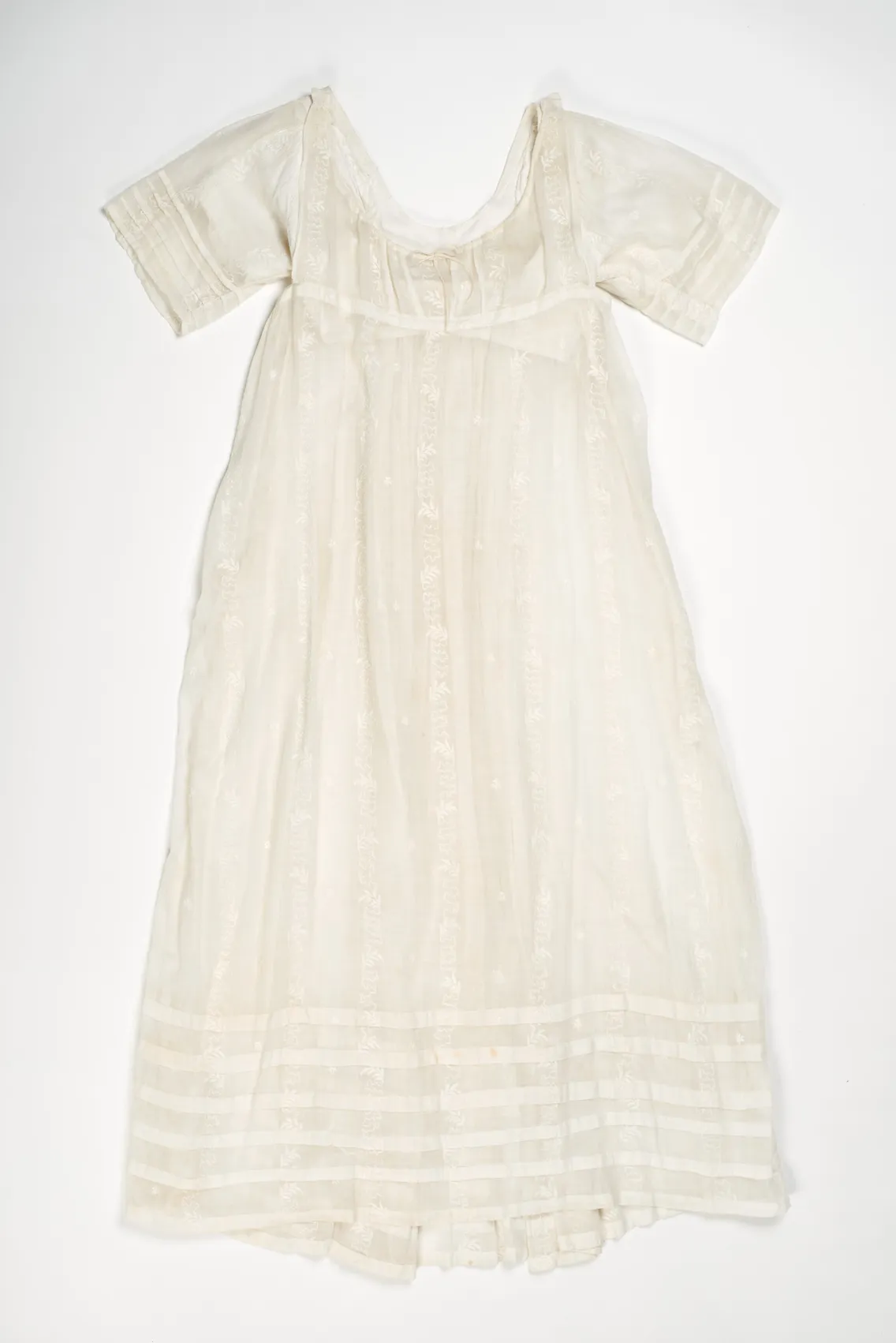
A dress made with muslin imported from India.
-
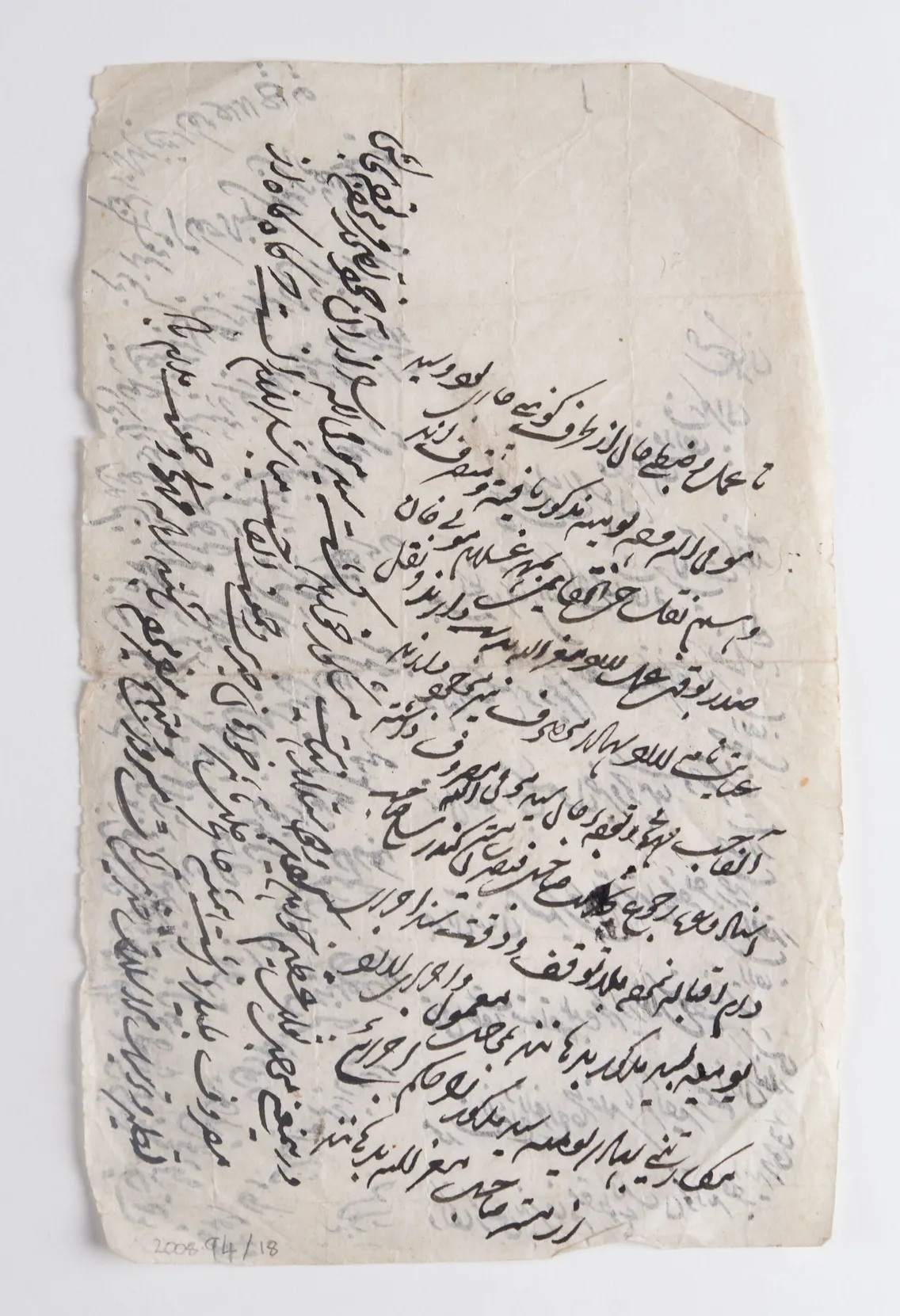
A document written in Farsi that recorded East India Company trade.
The use of enslaved labour
The East India Company pioneered generous policies to encourage the voluntary immigration of South Asian weavers to Bombay and Chinese planters to Bencoolen, in Indonesia. These included food allowances and supplies of raw materials. However, it also exploited existing slave-trading networks and used enslaved labour to sustain the trading posts it established across Southeast Asia.
It transported enslaved people, primarily from East Africa, to India, Indonesia and St Helena, a strategic island outpost in the South Atlantic Ocean.
This trade in enslaved people happened across the 17th and 18th centuries, and likely continued illegally after it was outlawed in the British empire in 1807.
The tea trade with China
Dutch traders were the first to bring tea to England in the 1650s, though it remained an expensive novelty for another 50 years.
When the East India Company began importing tea – over 90,000 kilos from 1700 to 1704 – consumption skyrocketed. The demand for sugar, produced using enslaved African labour on Caribbean plantations, also increased dramatically.
Tea trade cards advertising the different tea dealers became collectables. Tea ceremonies made Chinese porcelain popular – the East India Company imported over a million items of Chinese porcelain in 1734 alone.
Chinese tea imports were funded by opium smuggling from India into China. By 1839, opium profits played a significant role in financing Britain’s tea trade with China.
-
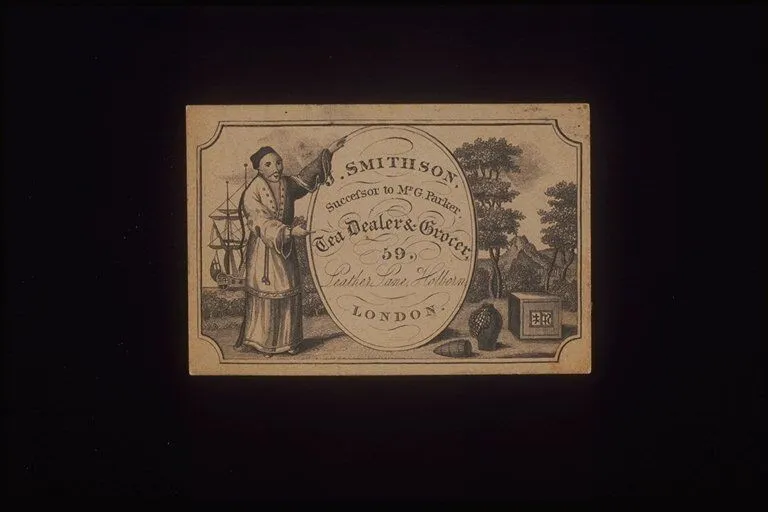
A trade card from the period when the East India Company imported tea from China.
-
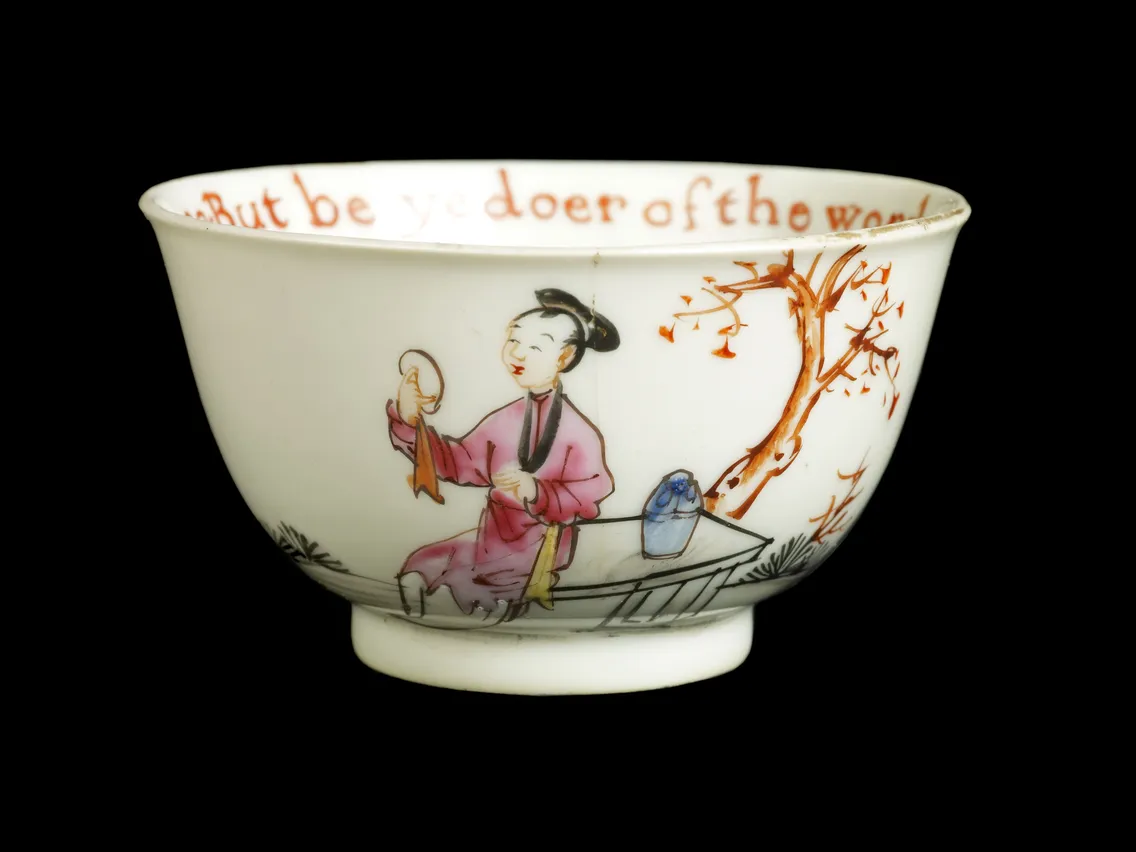
A tea bowl featuring Chinese figurative designs popular in the Georgian era.
East India Docks and Cutler Street Warehouses
East Indiamen, the ships used by the company to move goods around the world, were the largest of their time. They were described as ‘the aristocrats of the navy’ and would sail in and out of Blackwall Docks in Poplar.
In order to increase capacity and protect imports from theft, the East India Company built its own dedicated docks from 1804 to 1806. It followed the model of West India Docks (now Canary Wharf), which was constructed from 1800 to 1806 for imported Caribbean commodities.
East India Docks was solely used by the company until 1833, when it was opened to all trades. The docks closed in 1967, and the area is now a nature reserve.
Once the cargo had been unloaded at the docks, it was sent down the river to East India Company warehouses. Cutler Street Warehouses in Houndsditch, in the City of London, processed everything from spices and tea to ostrich feathers and elephant tusks.
-
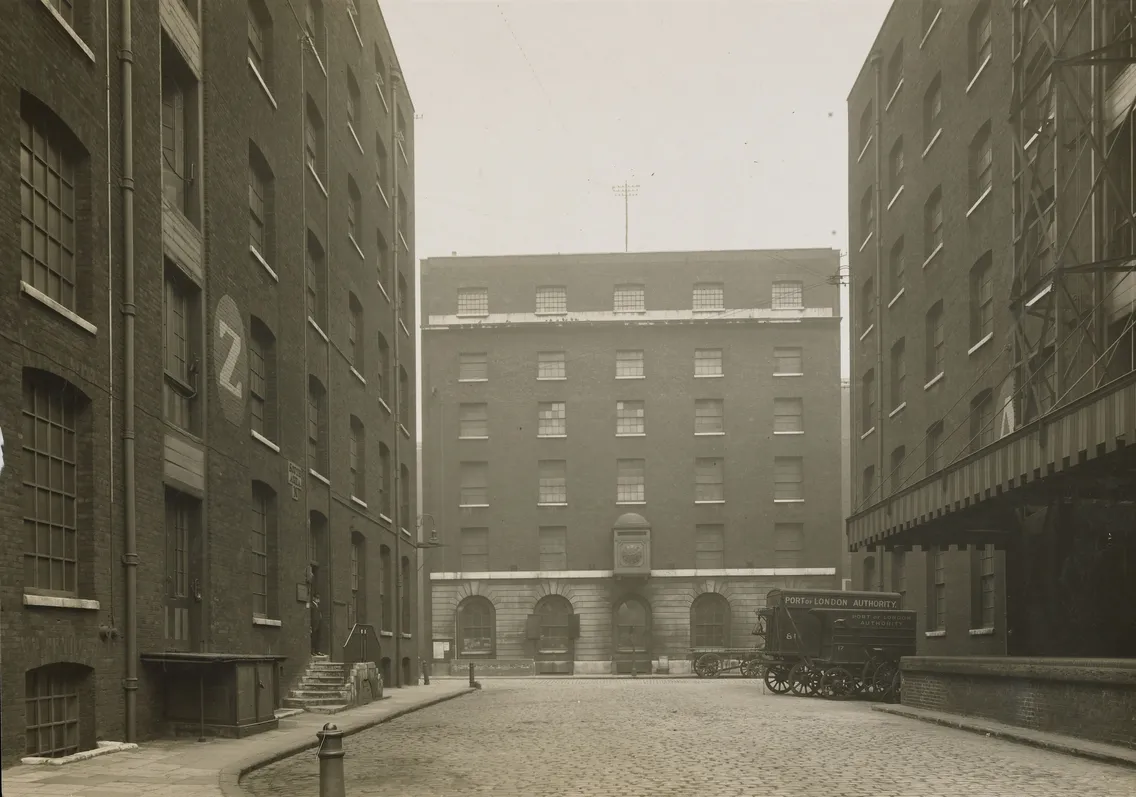
The exterior of Cutler Street Warehouses.
-
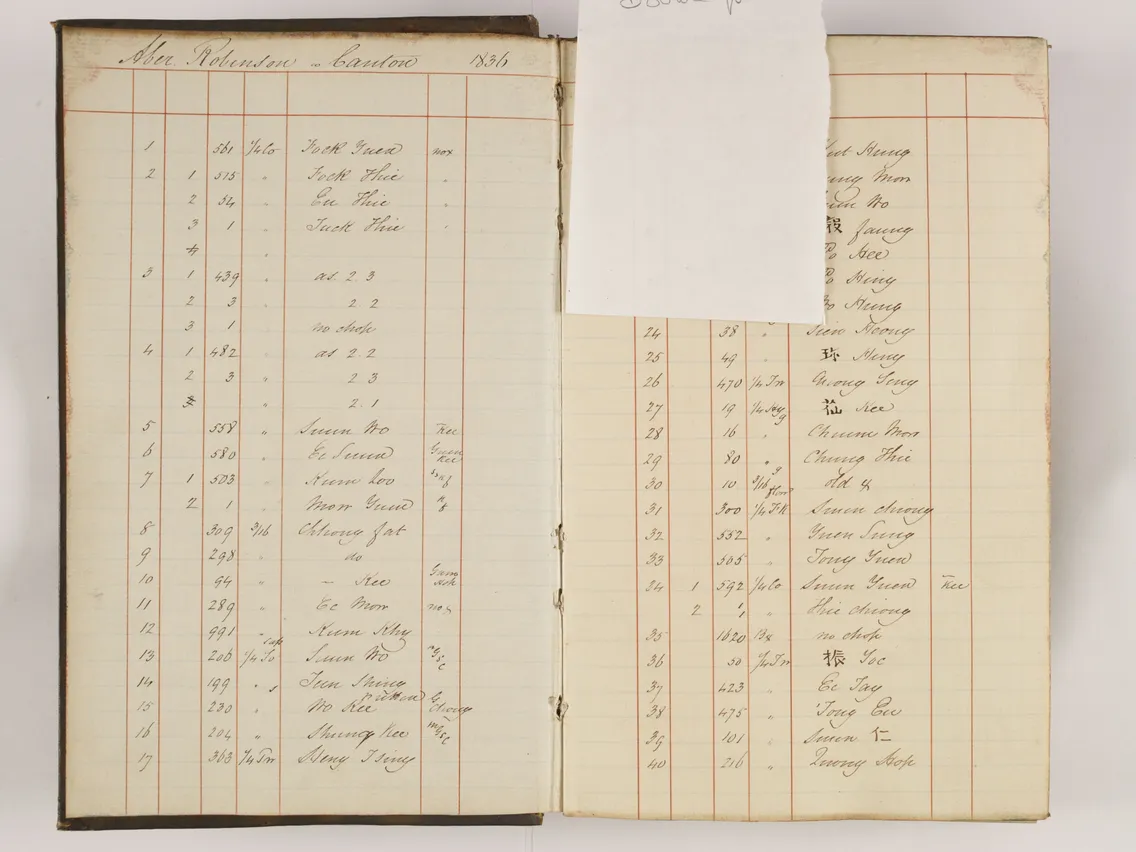
A manuscript detailing tea cargoes and the ships that imported them.
The start of British rule in India
When the East India Company first established a commercial presence in India, it was under the control of the Mughal empire. In the 1700s, the empire, which covered modern-day India, Pakistan and Afghanistan, started to disintegrate.
The company took advantage of the resulting political chaos. It manoeuvred to take greater control over India, often collaborating with Indian leaders, merchants, bankers and soldiers. Following a victory in 1757, the commander Robert Clive became the effective ruler of Bengal, a historic region now split across east India and Bangladesh. Clive imposed hefty taxes on the population, and British control over India had begun.
“What is England now? – A sink of Indian wealth.”
Horace Walpole, 1773
The plunder of India
The East India Company extracted wealth and resources from India. The looting of Bengal that followed in 1757 put £234,000 in Clive’s pocket and more than £2.5 million into the company’s treasury. In today’s money, that’s more than £37 million for Clive and over £400 million for the East India Company.
Crop failures in Bengal in 1770 led to widespread famine. The East India Company ruthlessly continued to impose heavy taxes on the population while they were starving, exacerbating the disaster. This is estimated to have led to the loss of at least a million lives, perhaps many more.
Charges of corruption and greed were levelled at the company back home. Nearly a quarter of all British MPs held stock in the East India Company. In 1773, politician Horace Walpole lamented: “What is England now?–A sink of Indian wealth.”
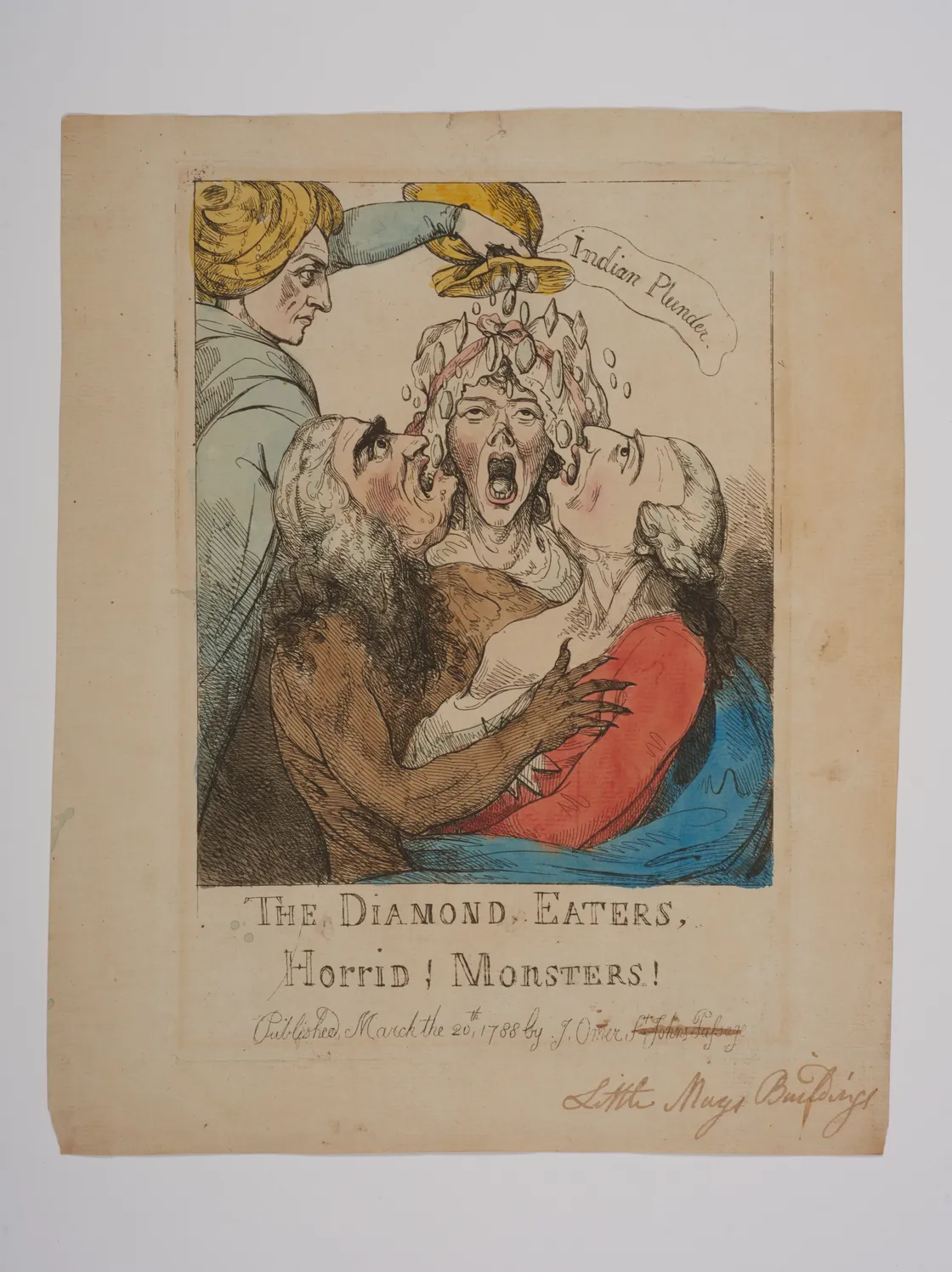
The Diamond Eaters, Horrid! Monsters! print satirising the British attitude towards India.
Warren Hastings, who became governor-general of Bengal in 1773, consolidated the company’s dominance in India. This print depicts him pouring diamonds from a bag marked ‘Indian Plunder’ into the mouths of King George III, Queen Charlotte and the lord chancellor. The message was clear – greedy politicians and royals were reaping the rewards of the exploitative system.
The East India Company replicated the way it took control of Bengal across more Indian regions, becoming a brutal colonial power in less than 50 years. It essentially ruled over an entire subcontinent and millions of people from an office in London. By 1803, the company had a private army of around 200,000, double the size of the British army.
The end of the East India Company
As its control of India expanded, the East India Company implemented more British political and judicial systems, disregarding local laws, culture and traditions. Discontent rose among Indians.
By the early 1800s, the British government had become increasingly concerned with the company and sought to regulate both its commercial and political power. In 1813, the government ended the company’s monopoly on trade in India by allowing other British merchants to trade. From 1834, it ceased trading, becoming simply an administrative body operating for the government in India.
In 1857, Indian troops working for the East India Company rebelled, leading to the First War of Indian Independence. This rebellion was crushed by the British, and thousands of Indians were killed. The British government officially took over control of India from the East India Company in 1858, beginning the British Raj.
The East India Company was formally dissolved in 1874. It would be another 73 years until India finally achieved independence from the British empire. This came with the partition of British India into the separate states of India and Pakistan.
Tags
-
Printed Ephemera

-
-
London Museum Docklands Archive
 London Museum Docklands Archive
PT Investments 1829 to (manuscript volume(s))
East India Dock Company
1829-1831