Big Topshop was Oxford Street’s fashion fortress
Topshop’s Oxford Street flagship, affectionately known as Big Topshop, played a formative role in many of our fashion upbringings. The three-storey beast became something of a tourist destination – and was a day out in itself.
214 Oxford Street
1994–2021
The shop and hangout spot that defined the 2000s
London has a long history as a destination for department stores and flagships. Different generations of Londoners could pick out that one shop that shaped them. For those of us who were teenagers and young adults in recent decades, one probably stood a cut above the rest: Big Topshop.
Situated on 214 Oxford Street, Big Topshop was a cultural institution, a wonderland of aspirational but accessible fashion spanning three absolutely massive floors. A trip to Big Topshop was seen as a rite of passage, and it reeled in the fashion-conscious from far beyond London.
At the height of Topshop’s powers in the 2000s and 2010s, the brand drew on a particularly London list of collaborators, such as the model Kate Moss and designer Christopher Kane. Big Topshop, the jewel in its crown, was positioned at the centre of it all.
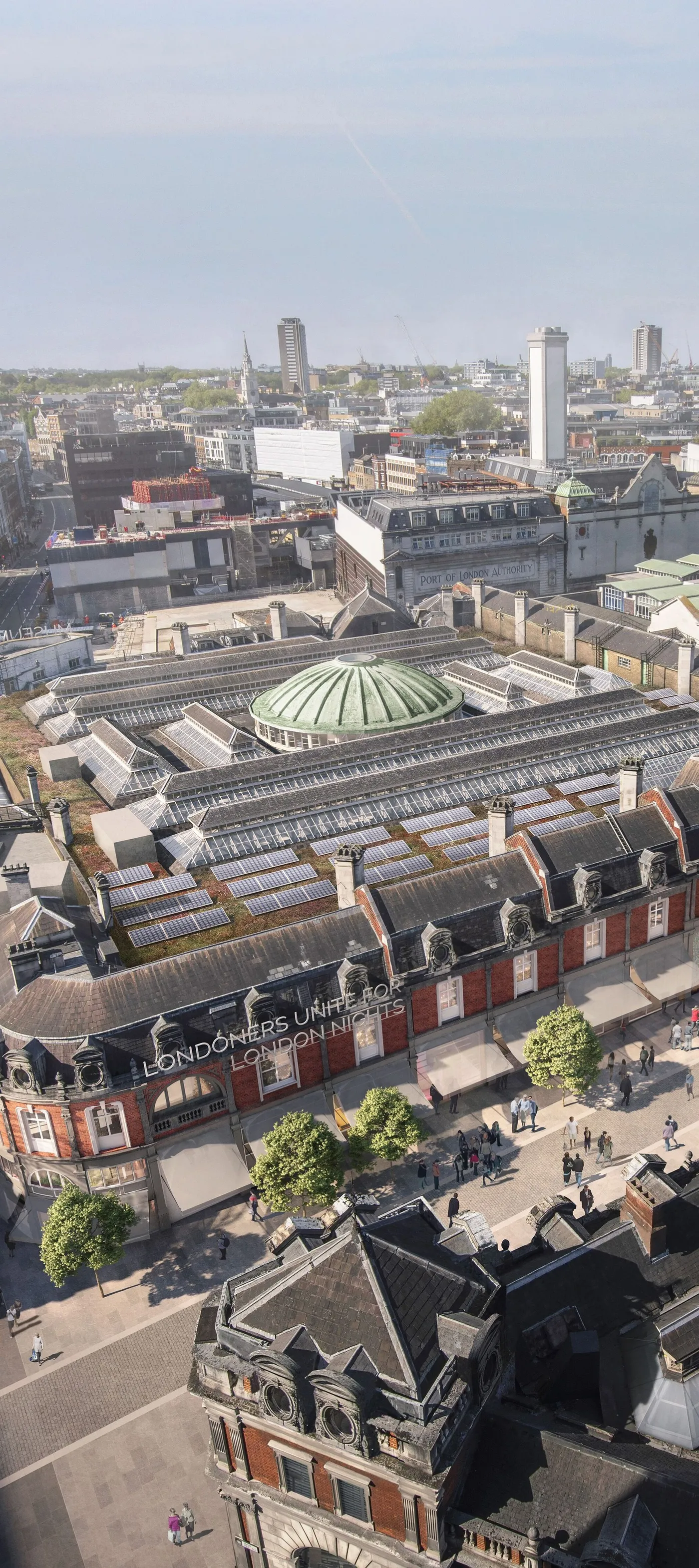
But in early 2021, following the collapse of the brand’s parent group Arcadia, Big Topshop, among all other Topshops nationwide, closed for good. The hallowed halls of many Londoners’ formative fashion years have become an IKEA.
Topshop’s Oxford Street origins
In 1964, Topshop was launched in Sheffield as Top Shop, a small youth-focused section of a branch of a Peter Robinson department store. The following year, Top Shop came to their London flagship store at 214-234 Oxford Street. It sold fashion for the “young and different generation”, according to a report in The Times. Clothes by London designers could be bought there, such as Mary Quant’s lower-priced ready-to-wear line, Ginger Group.
Peter Robinson stores were born just down the road. In 1833, the man Peter Robinson set up a linen draper’s store at number 103 Oxford Street. This grew into a successful department store focused on women’s fashion.
-
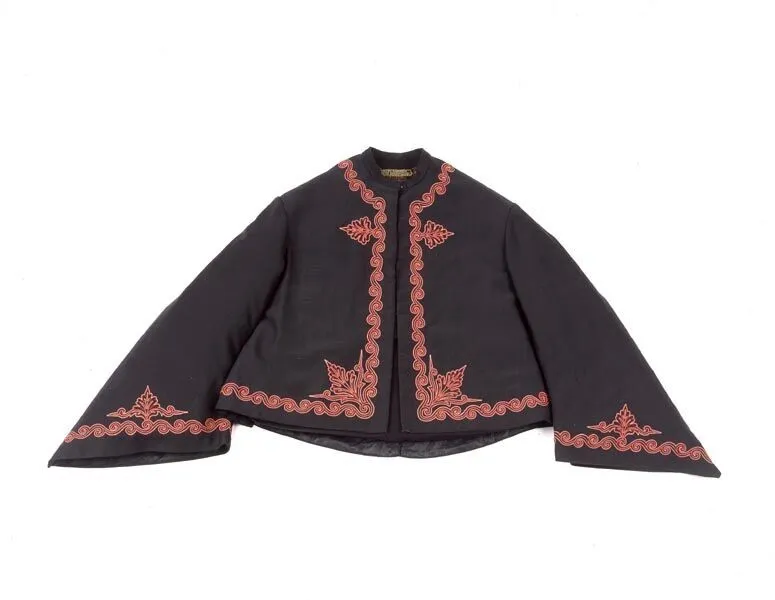
Zouave jackets, like this one retailed by Peter Robinson, were fashionable in the mid-19th century.
-
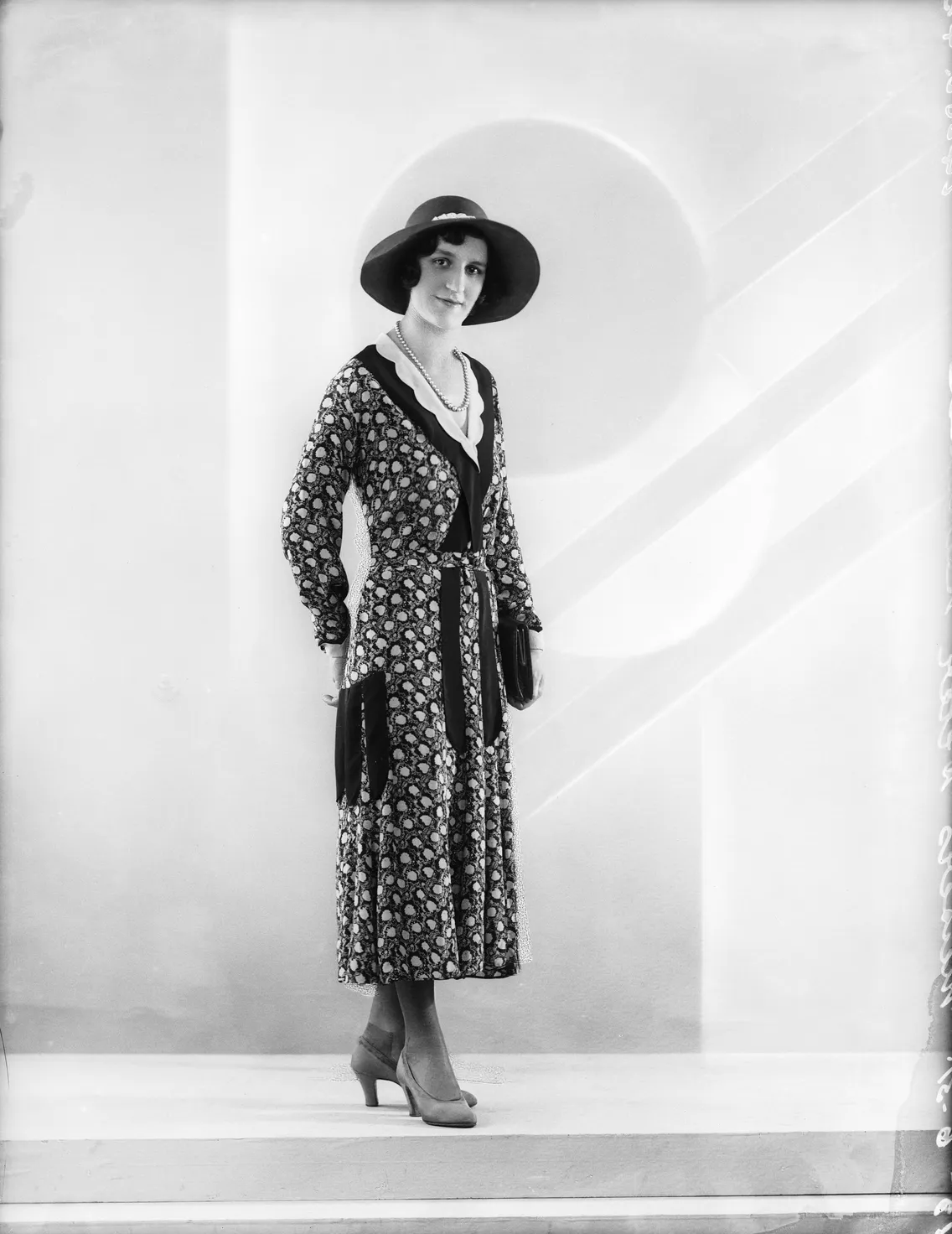
This woman is modelling daywear from Peter Robinson in 1931.
In 1973, Top Shop was separated from Peter Robinson and became its own thing, continuing to focus on young customers. Within a few years, it had 55 branches, and the name had evolved into ‘Topshop’. It also opened the men’s store, Topman, in 1978.
The launch of Big Topshop
The flagship store, which became known as Big Topshop, opened at number 214 Oxford Street in 1994. There were hundreds of Topshops on high streets across the country. Many were small and unassuming outlets, with some tucked away in department stores. None of them really compared to Big Topshop.
It was situated in prime London retail estate – slap bang in the middle of the West End, close to other famous flagships like Selfridges and Liberty.
“It was just the place to be”
Former Topshop Oxford Street employee
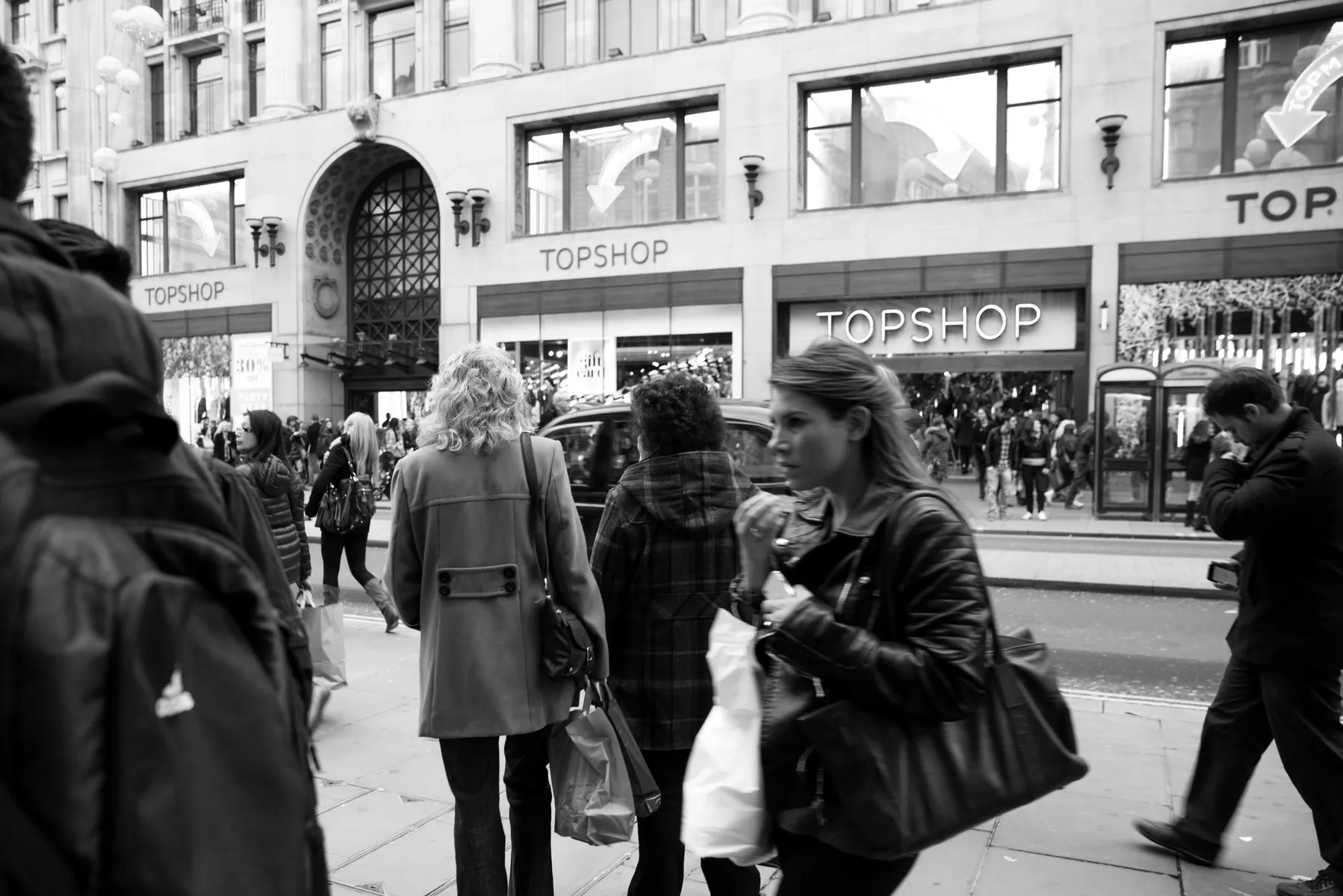
Crowds pouring out of Oxford Street station were immediately faced with its wide and open storefront. Elevators at the entrance would pull you into the belly of this fashion beast. Shoppers could sift through hundreds of Topshop items, alongside boutique brands and vintage garments.
The store was also an aspirational place for those looking to get their foot in the door of the fashion world. “It was just the place to be,” said one interviewee in a BBC article, “I would brag about working there and people would be amazed.”
Shopping as an experience
Big Topshop was a big day out. You could also get your nails and hair done there, dash into the toilets, or grab a panini and a coffee from the cafe. There was also often a DJ blasting tunes around the store. As a gathering place for many friends, who knows how many digital cameras snapped group selfies in the changing room mirrors?
-
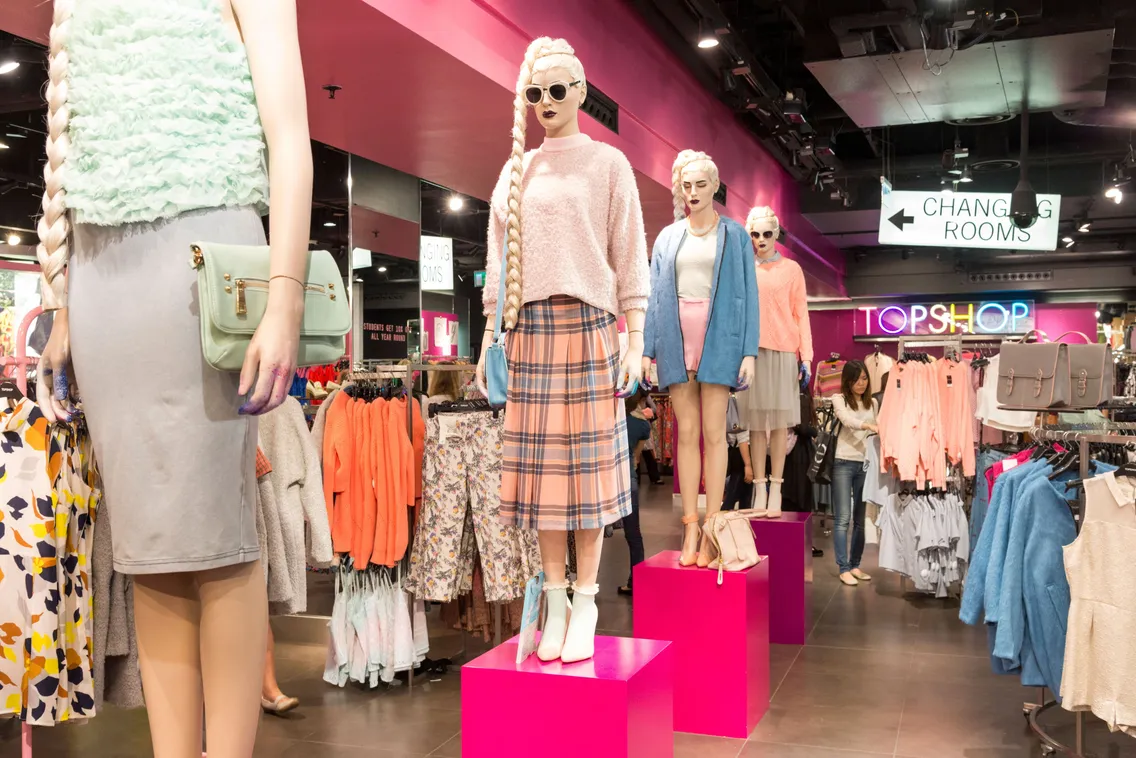
Pastels and prints were all the rage in 2013.
This idea of shopping as an experience is part of London’s long department store history. When Selfridges opened in 1909, it was the first to offer shoppers opportunities for leisure and socialising alongside browsing.
Then there was the early 1970s sensation Big Biba, the Kensington High Street department store for Barbara Hulanicki’s fashion label Biba. You could eat at its restaurant or sip cocktails on the roof garden among its resident flamingos. Years later, in 2009, Hulanicki made a capsule collection for Topshop.
Big Topshop was something of a London landmark. People travelled to it from all over, adding it to their itinerary alongside, let’s say, Big Ben and the Tower of London.
How Topshop became cool
The success of Topshop and its star Oxford Street store can be attributed to Jane Shepherdson, who became the brand director in the late 1990s. She turned the brand into a global trendsetter.
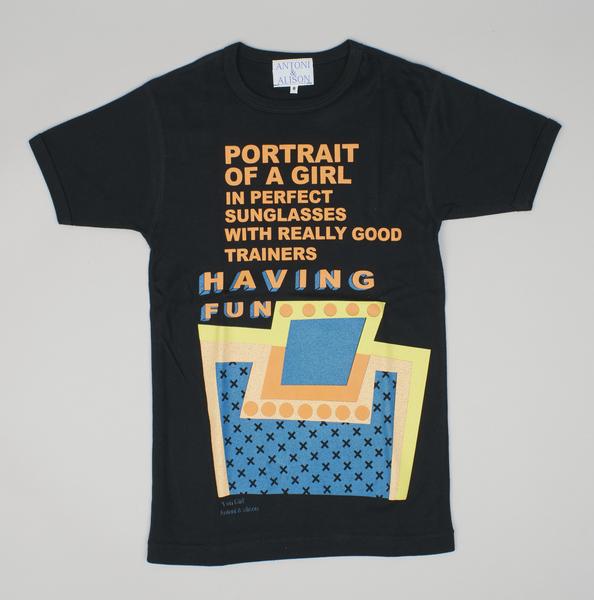
Topshop clothes were modelled in the pages of Vogue magazine, and on the brand’s London Fashion Week catwalks between 2005 and 2017. There were also collaborations with city’s fashion designers, such as JW Anderson, Christopher Kane and Zandra Rhodes, whose 2003 chiffon dress we have in our collection.
When model Kate Moss launched her first of 14 collections at Big Topshop in 2007, the crowds waiting to catch a glimpse practically shut down the road.
-
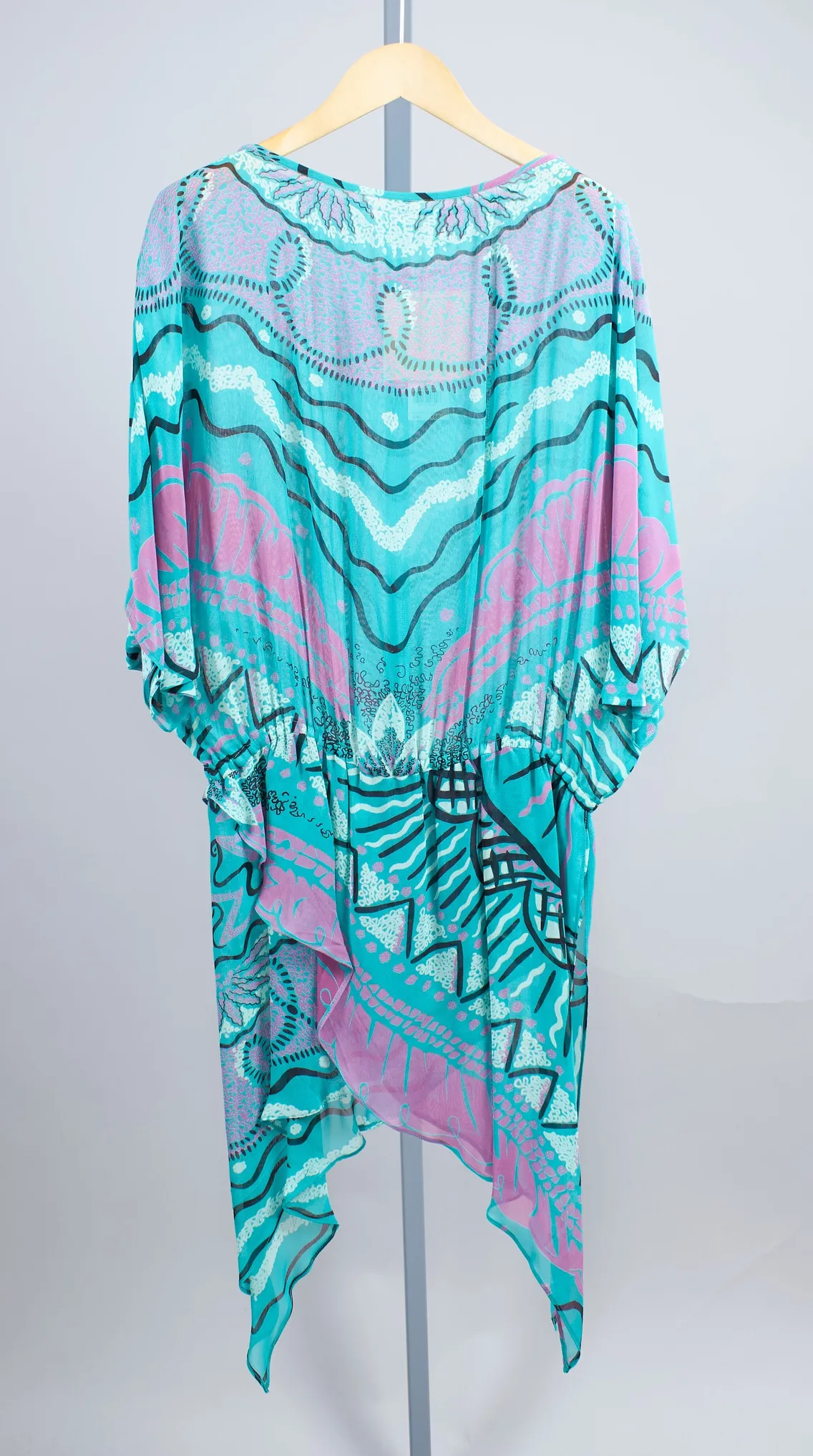
Zandra Rhodes’ batwick chiffon dress for Topshop.
-
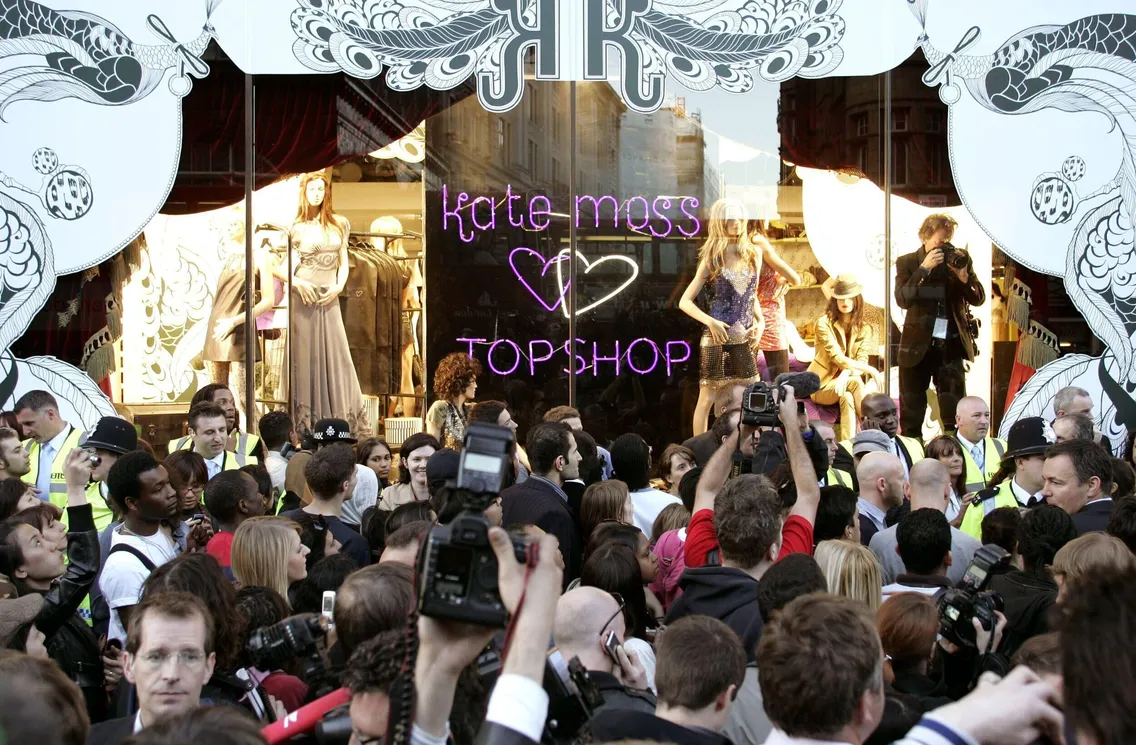
Kate Moss’ 2007 Topshop collab caused a roadblock.
Topshop’s largely affordable prices meant trend items like peplum tops, polka dot dresses and the brand’s cult denim double act – Jamie jeans and Joni jeans – filled Britain’s wardrobes.
“A landmark of girlhood”
Vice magazine
What happened to Big Topshop?
In November 2020, the brand’s owner Arcadia collapsed into administration, citing financial stresses from Covid-19 lockdowns. All the physical shops – including Big Topshop – were soon closed for good. The brand was sold to online retailer ASOS. And in May 2025, IKEA opened its first central London location on the Oxford Street site.
Big Topshop had spent nearly 30 years as an Oxford Street institution. The media reflected on what a gaping hole the shop had left behind. It was “a landmark of girlhood”, according to Vice. For a writer in Dazed, “making a pilgrimage to the fashion mecca was basically a rite of passage.”
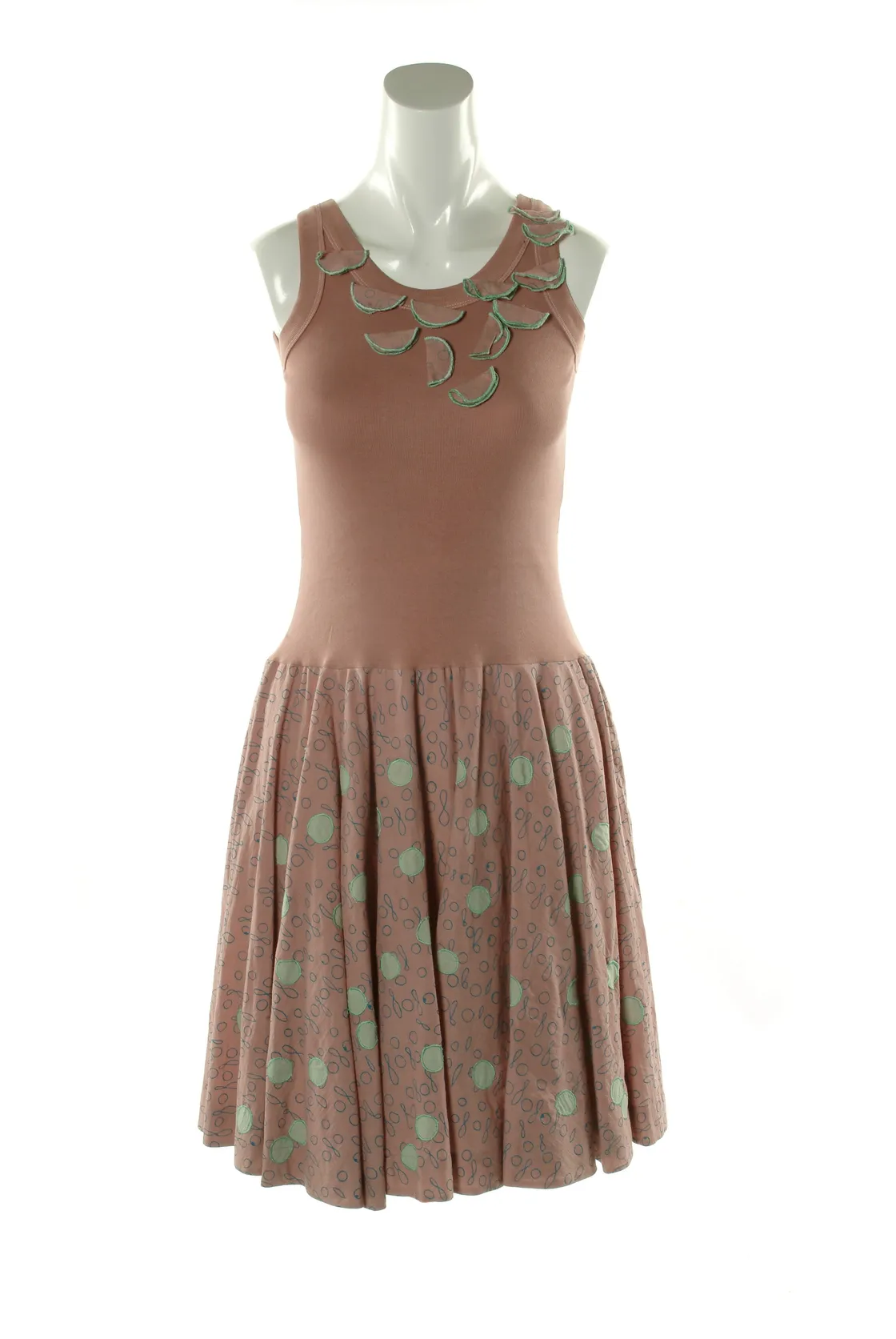
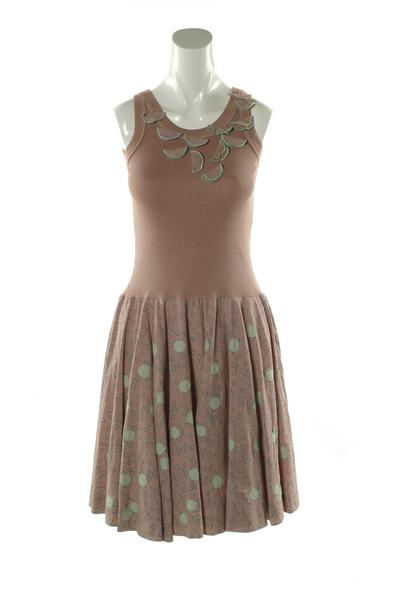
This Toba Tek Singh dress from 2003 was sold in the boutique section of Topshop.
Much of this was nostalgia for a Topshop long-gone. Shepherdson had left in 2006, and Topshop had lost its cool, with sales slowing as a result. Over the 2010s, the brand faced increased competition from fast fashion giants both on the high street and online, such as Boohoo and Missguided.
Big Topshop was the site of numerous protests against, for example, Arcadia head Philip Green’s tax avoidance, or the Topshop cleaners being paid below the living wage. There were also allegations against Green of bullying and racial and sexual abuse.
Is Topshop ever coming back? In 2026, Topshop and Topman made a high street comeback when 32 retail spaces opened in John Lewis stores. Who knows if another Big Topshop will ever be on the horizon again?
Tags
-
-
-
Photography
-
Photography
-