
The Ronan Point disaster: Tower blocks’ demise
In 1968, a large section of the Ronan Point tower block collapsed after a gas explosion in one of its 18th-floor flats. Five people died and the vision of a high-rise future was left in rubble.
Canning Town, Newham
16 May 1968
Built to fail
Building upwards once meant building the future. High-rise blocks of flats were presented as the revolutionary solution to a housing shortage in the 1950s and 1960s.
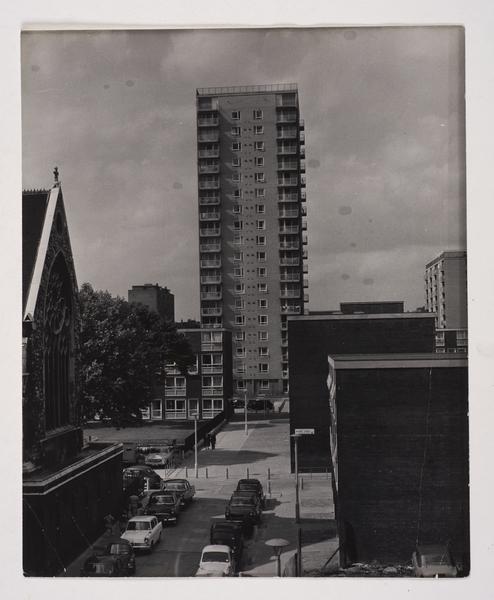
But in 1968, the public image of these ‘streets in the sky’ was shredded by a disaster at Ronan Point, a 22-storey, 64 metre-tall residential tower block owned by Newham Council.
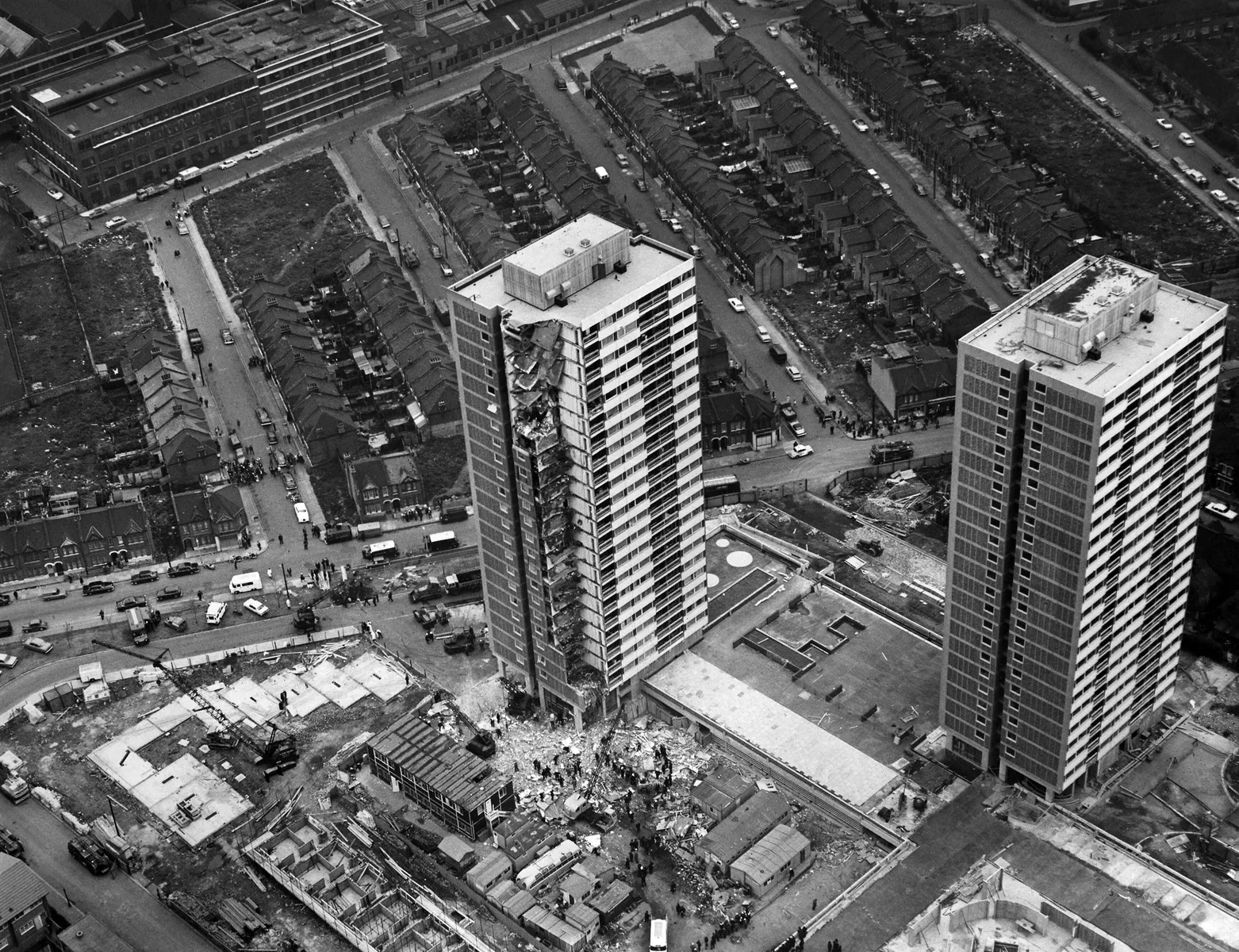
On the morning of 16 May 1968, there was a gas explosion on the 18th floor. Despite being a relatively minor blast, it caused the corner of the tower to collapse. Five people died.
The building was barely two months old, but its design was vulnerable, and shortcuts had been taken in its construction. Just like the Grenfell Tower fire in 2017, Ronan Point exposed a safety flaw that endangered social housing tenants.
Many Londoners still live in tower blocks built 60 years ago, and old questions about their safety linger. Meanwhile, a new generation of high-rises is being built in London.
When was Ronan Point built?
Newham Council completed Ronan Point on 11 March 1968. It was the second of nine towers on the Freemasons Estate in Canning Town. The area is part of London’s docklands, in east London.
What caused the disaster at Ronan Point?
Around 6am on 16 May 1968, Ivy Hodge was about to put on the kettle in her 18th-floor flat. Not knowing there’d been a gas leak in the night, she struck a match. The flame triggered a gas explosion that blew out the room’s load-bearing concrete walls.
The living rooms of the four apartments stacked above hers collapsed. The falling rubble crashed onto the floors below, cascading down until one entire corner of the tower had collapsed. Witnesses described the section of tower falling like “a house of cards”.
Five people died – four immediately, one later in hospital. A further 17 were injured. Ivy Hodge was knocked out by the explosion, but survived.
The death toll could have been much higher. Most residents were still asleep in their bedrooms, away from their destroyed lounges.
Dockers from the nearby Royal Victoria Dock were some of the first on the scene to rescue survivors.
-
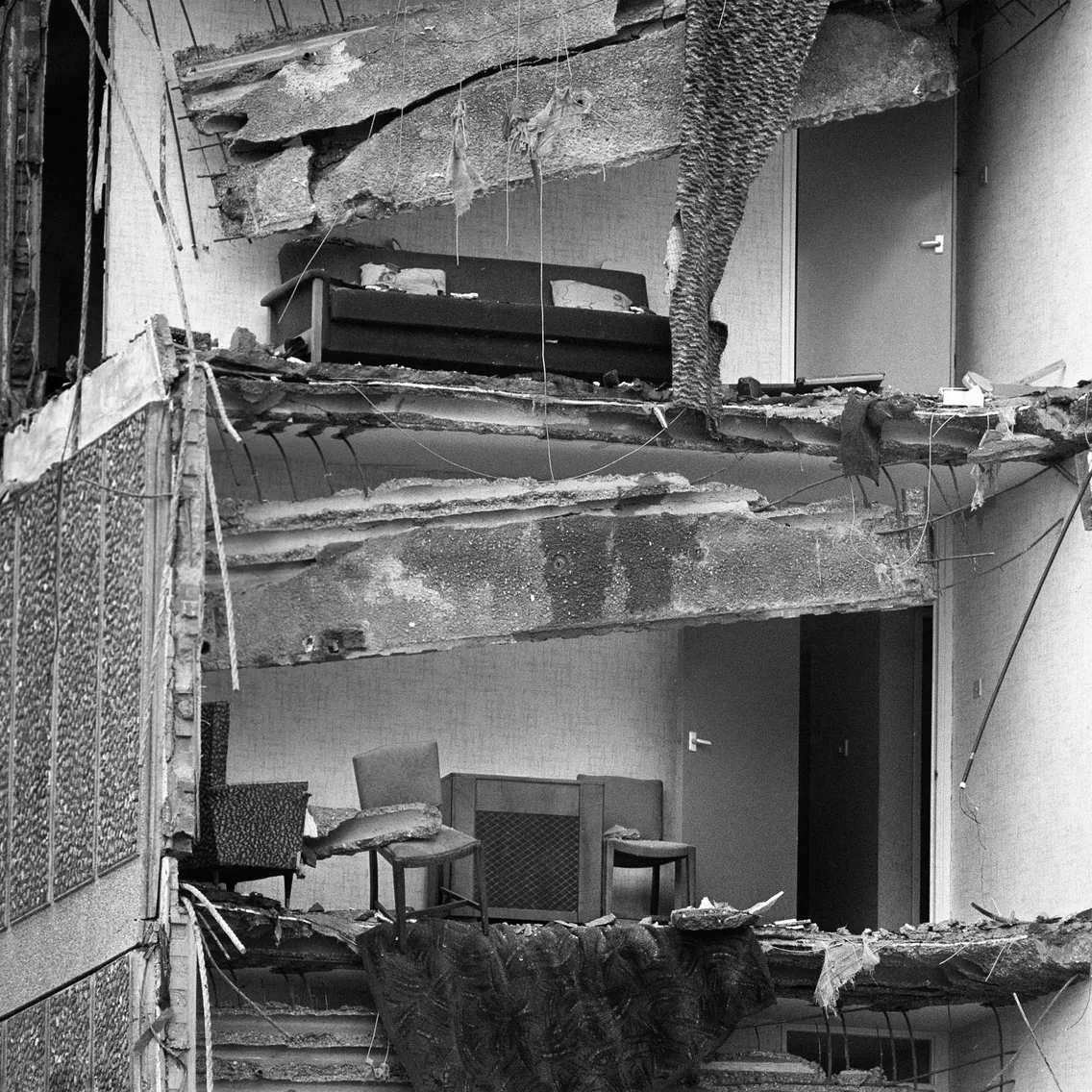
Living rooms shredded by the collapse.
-
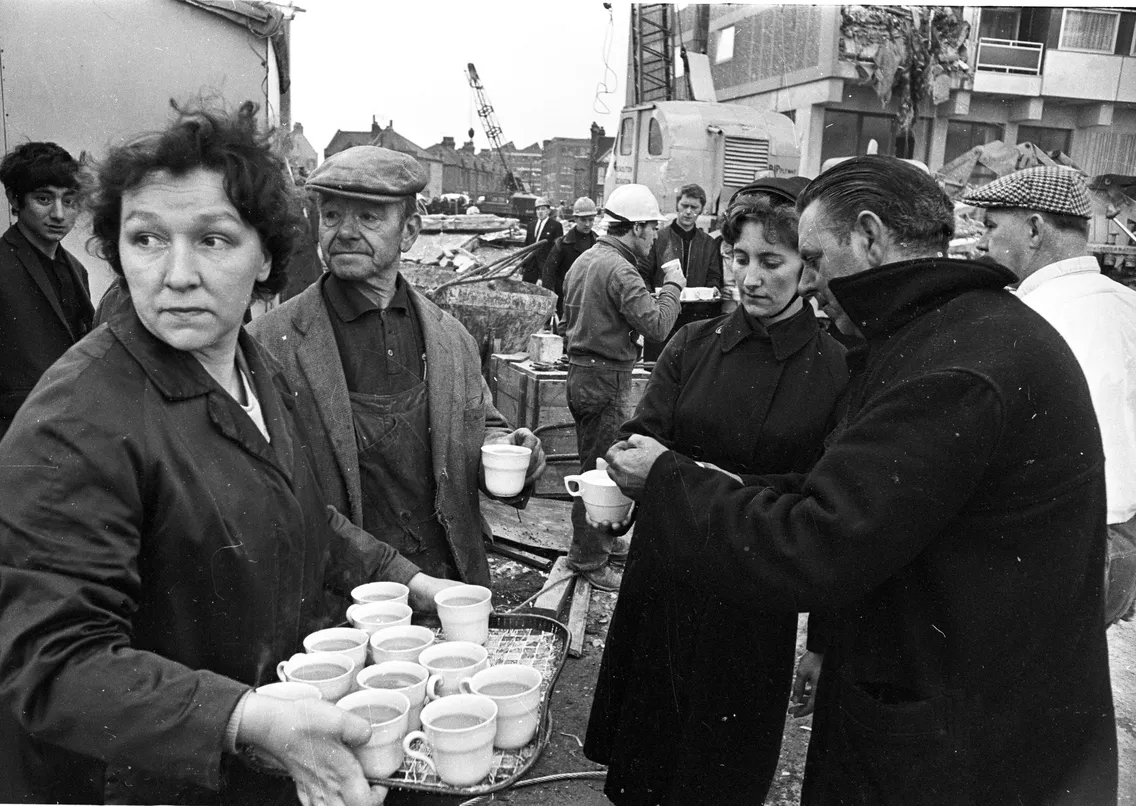
Members of the Salvation Army handing out tea to rescue workers.
How did the tower block collapse so easily?
Ronan Point was constructed using a system that was fast and required little skill.
The Large Panel System relied on stacking concrete slabs to form rooms, rather than having any supporting frame. The slabs were meant to be bolted to one another, with the joints secured using more concrete. This was a system originally designed for much shorter buildings.
At Ronan Point, poor construction was a major issue. Components were sometimes substandard. Bolts were missing and many had been insufficiently tightened. Builders were often unskilled. Piecework, the way the builders were paid, encouraged them to work faster and cut corners.
What happened to Ronan Point?
The inquiry into the disaster recommended checking the safety of all towers built using the same method. Gas cookers were removed from those towers, and the inquiry ordered that the buildings should be strengthened.
The destroyed section of Ronan Point was rebuilt and new tenants moved in.
In 1986, after campaigning by a local group of tower-block residents over continued safety concerns, the decision was taken to demolish Ronan Point. This was done slowly, so that investigators could understand how it had been constructed. Where concrete was meant to have been used in the joints between slabs, they instead found rubbish and newspaper.
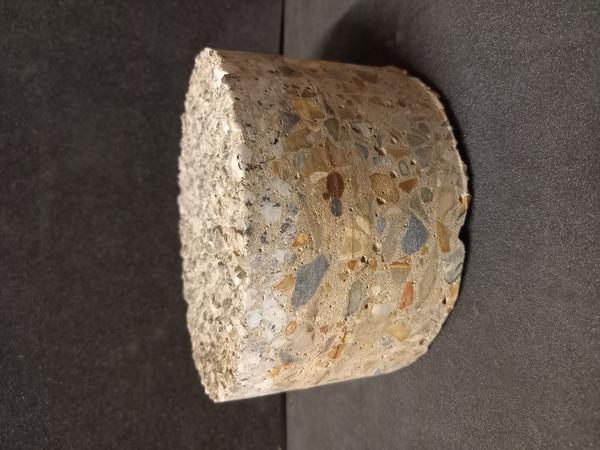
The rubble was sold back to Taylor Woodrow-Anglian, the firm who built the tower. Some of it was used to construct the runway at London City Airport. One piece of concrete from the tower can be found in our collection.
Between 1991 and 1993, the remainder of the Freemasons Estate was fully demolished and replaced with low-rise buildings.
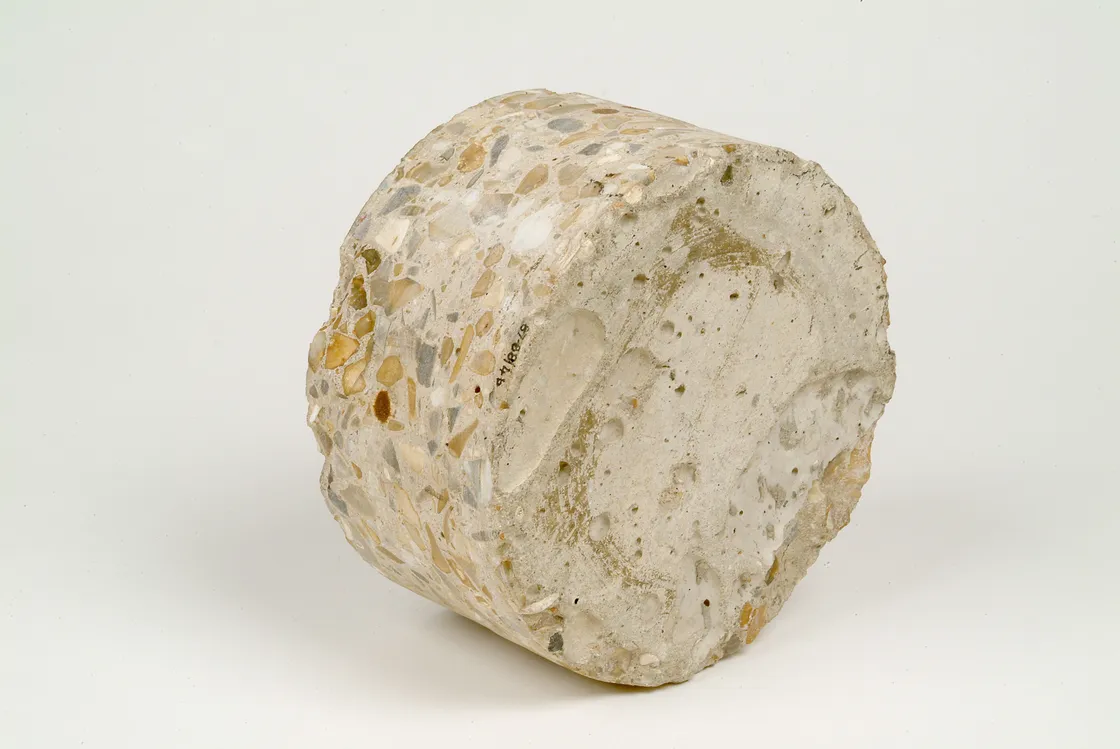
A sample of concrete recovered from Ronan Point after it was demolished in 1986.
Why was Ronan Point built?
After the Second World War ended in 1945, hundreds of thousands of new homes were needed to replace those destroyed and damaged by German air raids. An increase in babies being born in the decades after the war added to the pressure for more housing.
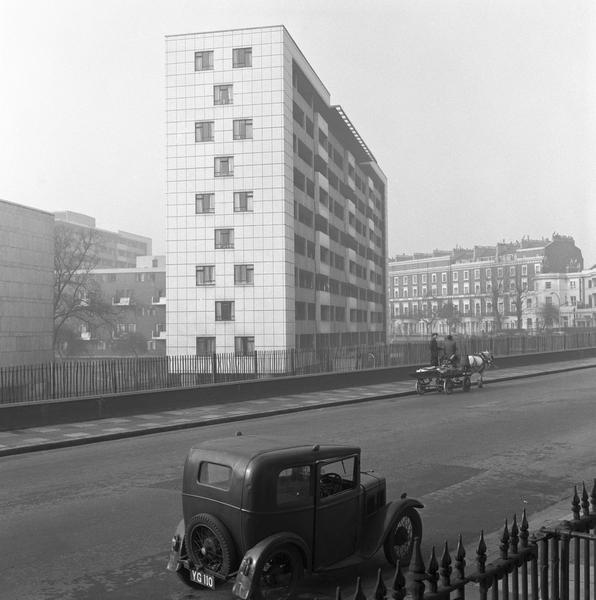
Tower blocks were championed as a futuristic alternative to the city’s aging terraces and tenements. They could be built quickly and offered a way for councils to house many people in a small area. Between 1958 and 1968, there was a government-backed boom in the construction of high-rise buildings, ranging from five floors to over 30.
How were tower blocks viewed?
Tower blocks split opinion. Some found them ugly, or worried that they isolated residents.
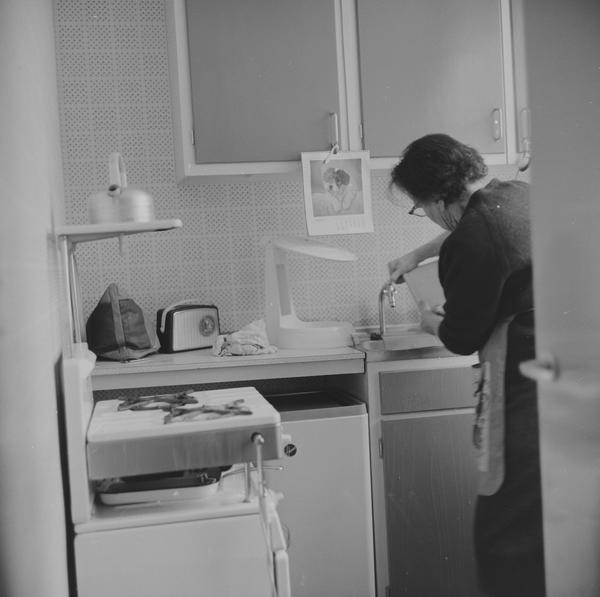
But many Londoners were excited to move in. The flats were brand new, fitted with modern appliances and central heating. People were emotionally attached to their homes, in spite of their problems.
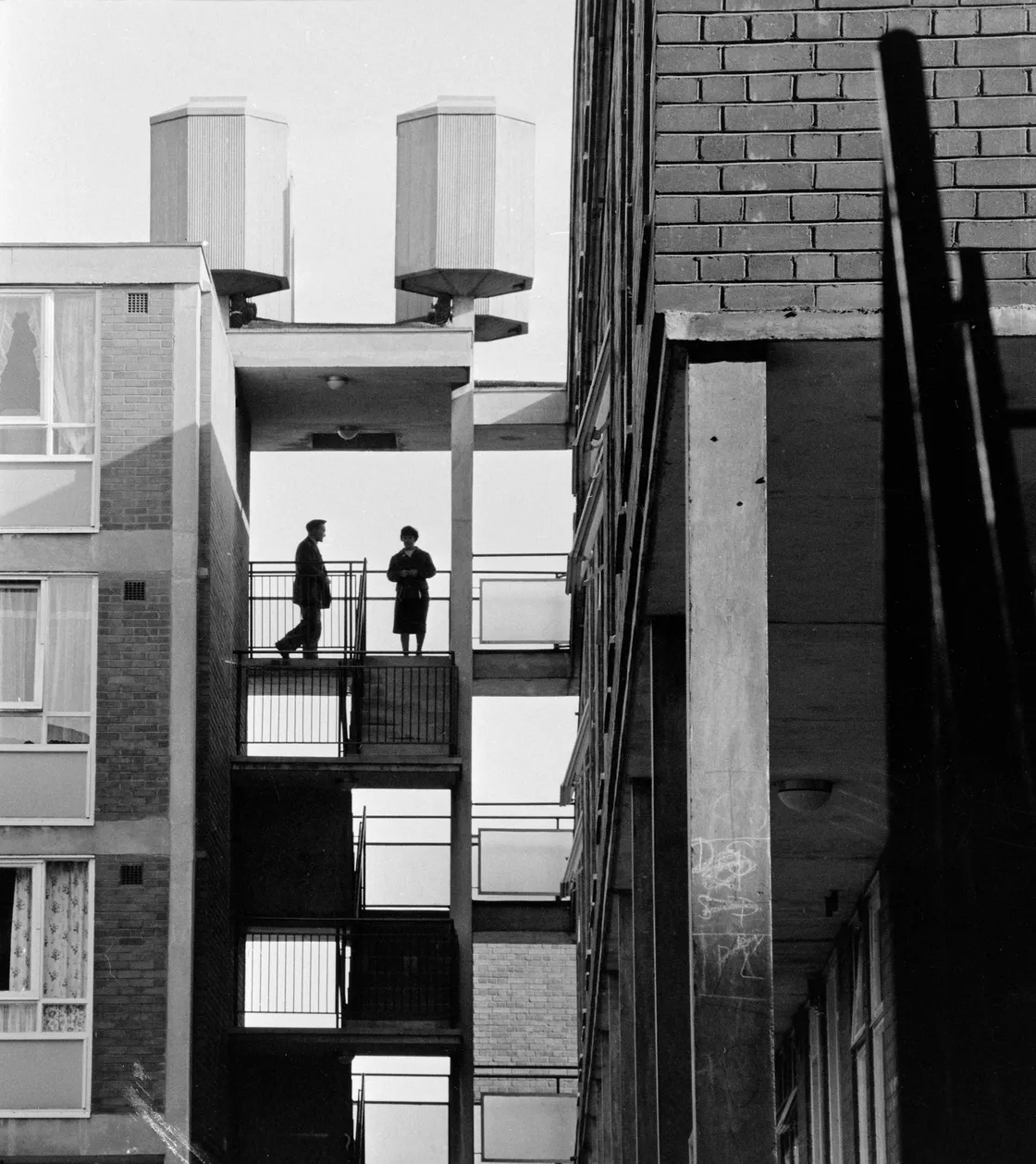
Tower blocks still divide opinion over their effects on society.
The disaster at Ronan Point helped turn town planners back towards low-rise buildings for the rest of the 20th century. Meanwhile, the higher cost of maintaining high-rises meant they were often left to deteriorate. As the years passed, they became associated with anti-social behaviour and crime.
That was the story at the Holly Street Estate in Hackney. Our collection includes a model of one of the estate’s four towers, which was demolished in the 1990s. The model was made by the artist Tom Hunter to preserve a place which, despite its neglect and bad reputation, was also a beloved home.
Echoes of Ronan Point
In 2017, a fire at Grenfell Tower in North Kensington killed 72 people. It spread due to flammable cladding attached to the outside of the building, which the manufacturer knew was unsafe. The disaster quickly drew comparisons to Ronan Point.
In light of the fire at Grenfell, safety checks were carried out at Ledbury Estate in Peckham. Its towers were built using the same method as Ronan Point. But investigators found that they’d never been strengthened and still had their gas supply. Further research showed that hundreds of buildings in England were potentially in the same situation.
The Ledbury Estate residents voted to have the towers demolished and be given alternative homes.
Tags
-
-
Photography
 Photography
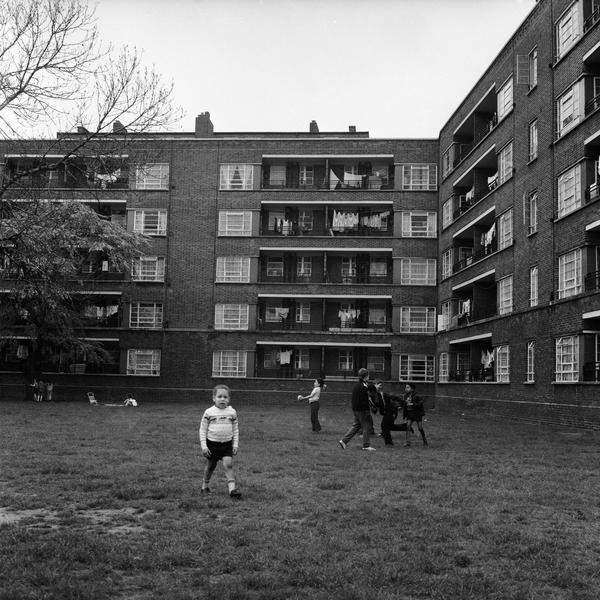
Children playing on the grass outside newly built flats in Peckham (negative)
Grant, Henry
C. 1970
-
-
Paintings, Prints & Drawings
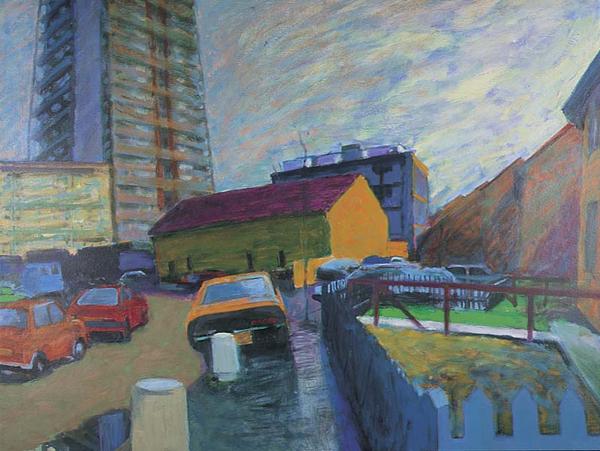
-
Paintings, Prints & Drawings
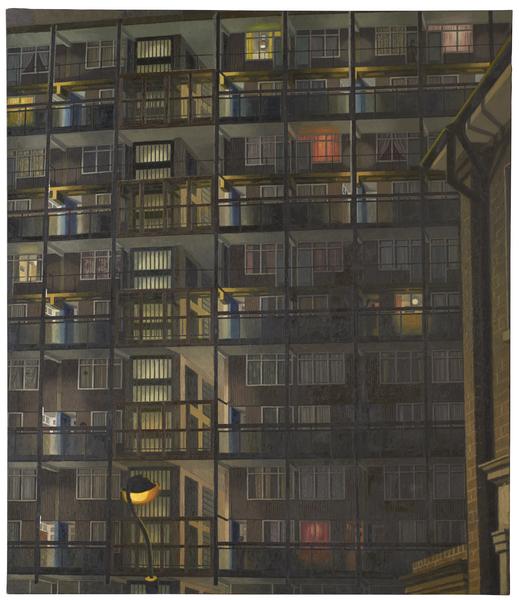
-
-
-
Paintings, Prints & Drawings
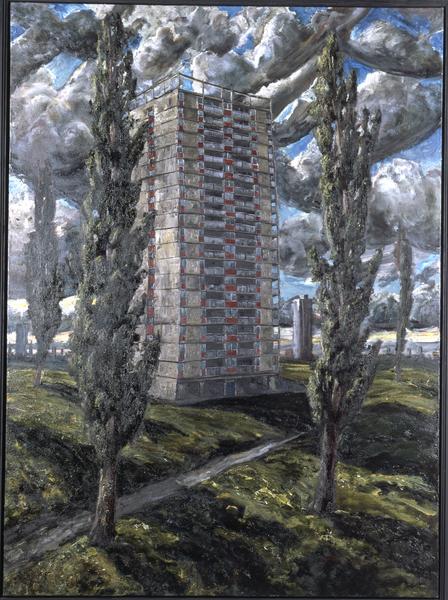
-
-
Photography
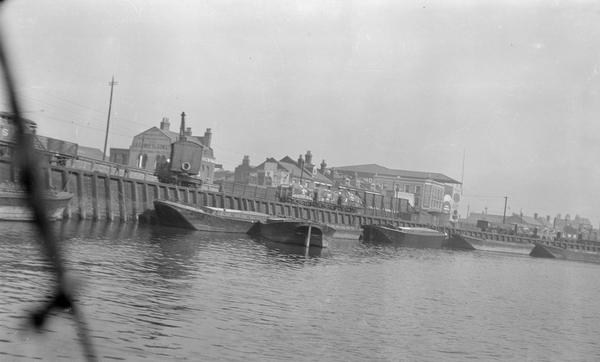 Photography
Creeks: Canning Town Wharf, Bow Creek, in September, 1926. (cellulose acetate)
Linney, Albert Gravely
1926