A history of the Tower of London
Built by the Normans nearly a thousand years ago, the Tower of London is one of the capital’s iconic landmarks. Once an imposing fortress and prison, it’s now a popular tourist attraction.
Tower Hill, Tower Hamlets
Since 1078
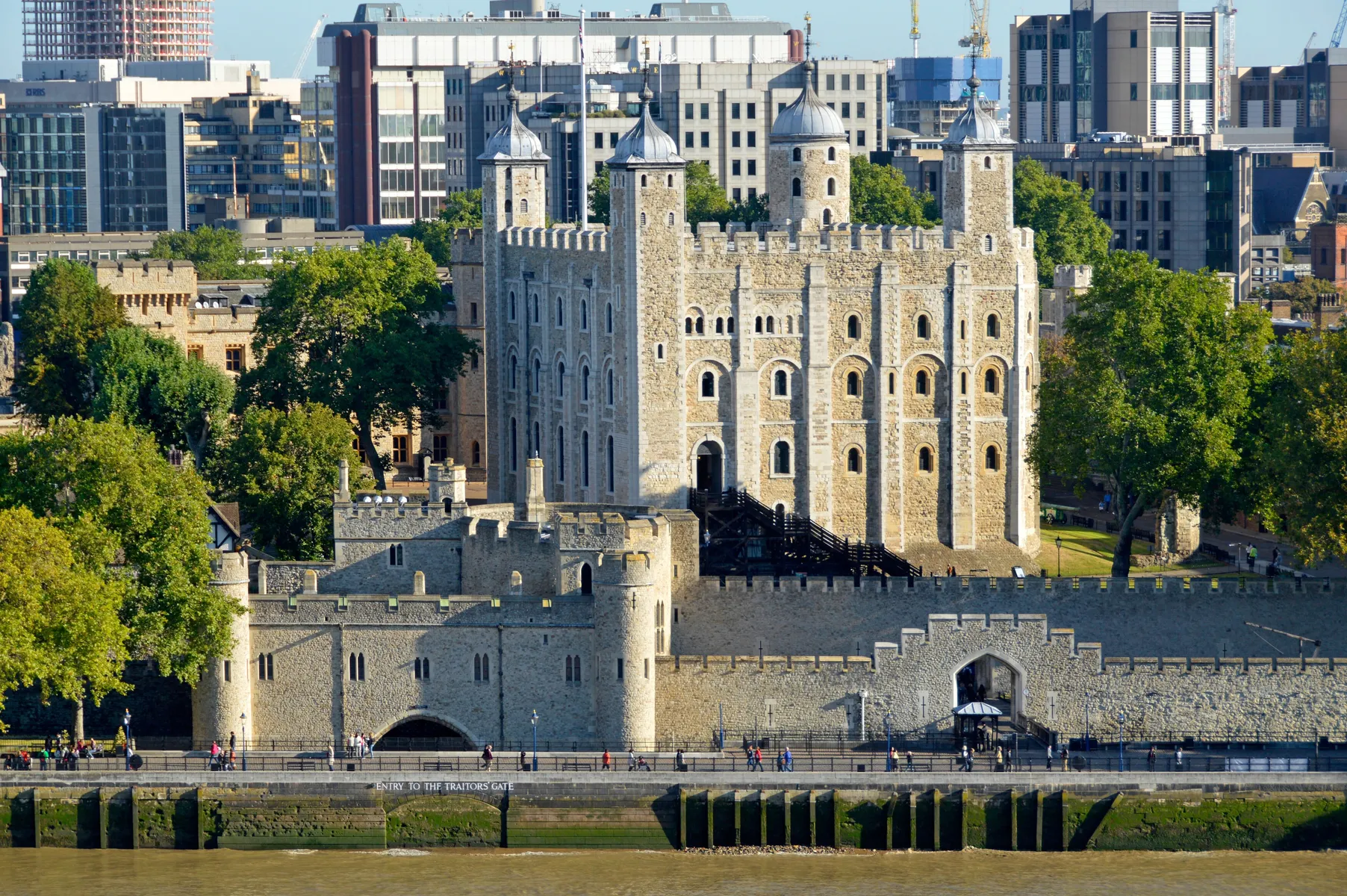
The Tower of London as seen from the River Thames.
An enduring symbol of power and strength
Modern skyscrapers may dwarf it in terms of size, but when it comes to history, the Tower of London has most other London buildings beat.
Constructed on the north bank of the River Thames by the Normans in the 11th century, the Tower has lived many lives over the centuries. Originally designed as a fortress, it’s also been a palace, a prison, an execution site, an armoury, a mint and even a zoo.
The Tower has survived the Great Fire of London and the Blitz. Now it’s one of the most popular tourist attractions in the capital.
-
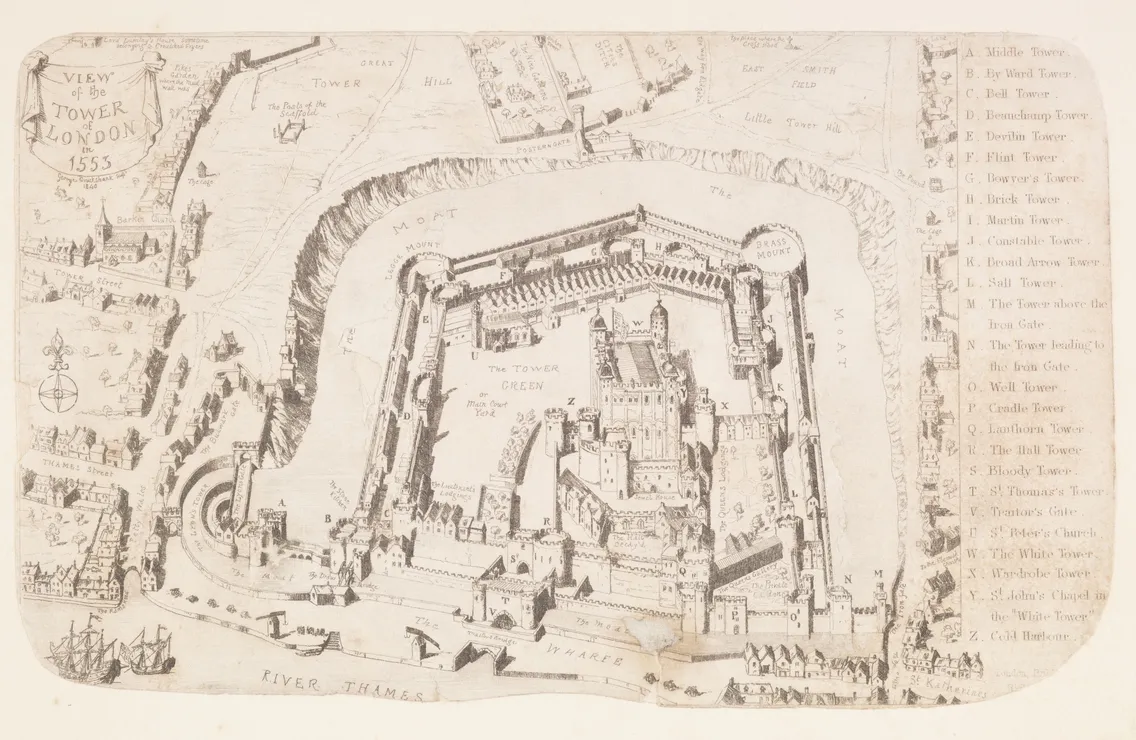
This illustrated map by George Cruikshank shows the layout of the Tower buildings.
Who built the Tower of London?
Following the success of William the Conqueror and the Norman invaders in 1066, the Normans built castles across the country to cement their power. The only one still standing in London is the White Tower, at the heart of the Tower of London.
William the Conqueror, who was also known as William I after he was crowned king of England, built the White Tower between 1078 and 1100. It was designed to inspire awe amongst Londoners and fear amongst foreign invaders. Now the Tower of London is surrounded by skyscrapers, but then it would have easily been the most imposing building in the city’s skyline.
King Henry III and King Edward I added defensive walls and a series of smaller towers in the 13th century. This turned the White Tower into a castle within a castle, making it even stronger than before. The kings also built a magnificent palace inside, where they lived with their queens.
The only time the Tower was ever breached was during the Peasants’ Revolt of 1381, when people rebelling against a new tax attacked London.
What was the Tower of London used for?
Though it was built as a fortress, the Tower of London has had several other functions throughout its history.
From 1279 to 1812, the Royal Mint was based at the Tower, meaning that most of the country’s coins were made there.
-
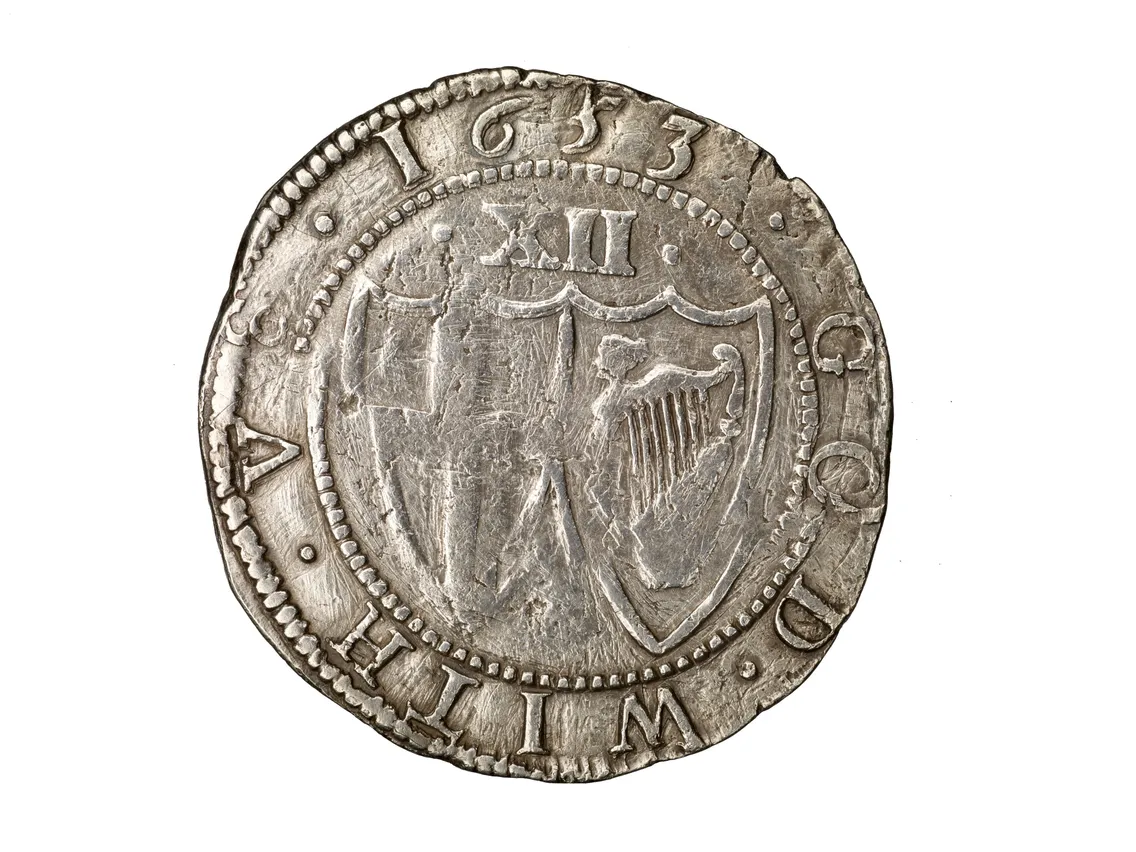
A commonwealth shilling from Tower Mint, dated 1653.
-
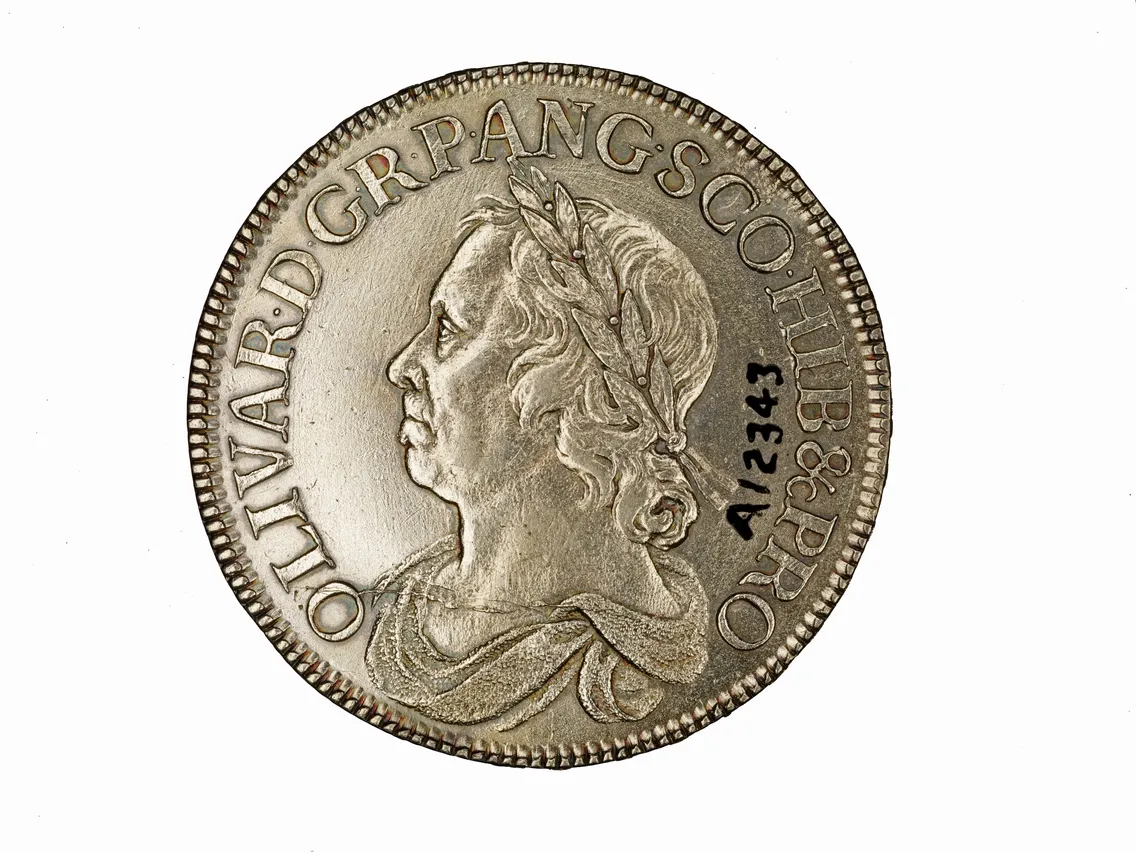
A coin stamped with Oliver Cromwell’s portrait, minted at the Tower.
-
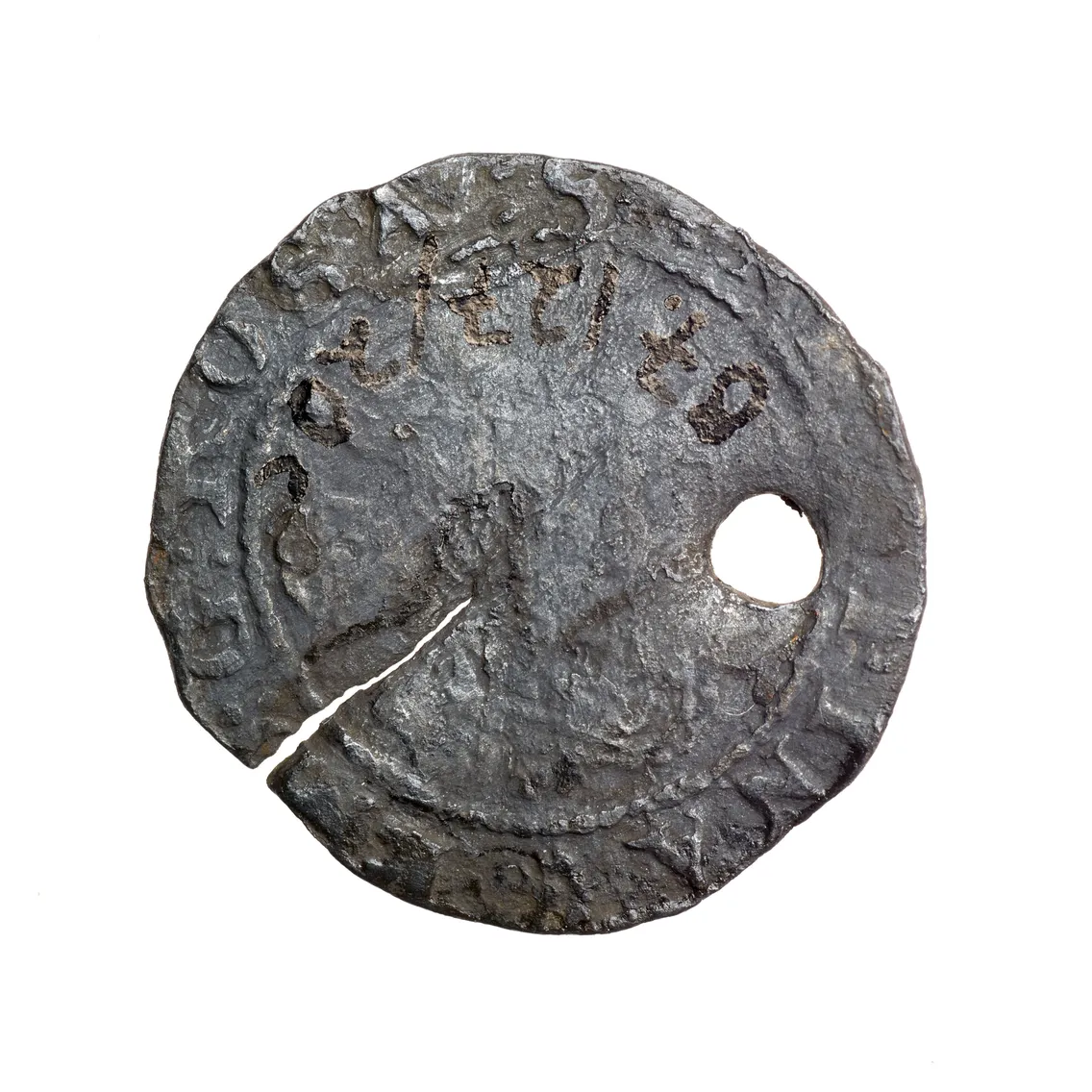
An Elizabethan three-half penny piece issued from the Tower Mint.
For over 600 years, the Tower was home to the Royal Menagerie, the first zoo in London. It was made up of exotic animals – including lions, an elephant and even a polar bear – that were given to monarchs as gifts.
The polar bear used to swim and fish in the Thames tethered to a rope. The elephant, which arrived in 1255, was the first elephant ever seen in medieval London. Sadly, it only survived for two years. When the menagerie closed in 1835, many of the animals were moved to what’s now London Zoo in Regent’s Park.
Weapons had been stored at the Tower since it was built, but it became the city’s main armoury in the 14th century. When King Charles II took the throne in 1660, he opened the Royal Armoury to the public, and they could pay to see exhibits of weapons and armour. Some of this armour worn by former kings is still on show today.
The Crown Jewels, including regalia used in royal coronations, have also been stored and displayed at the Tower since 1661.
Medieval Jews at the Tower of London
The Tower of London played a prominent role in the lives of London’s medieval Jews. At the time, Jews were only allowed to stay in England with the king’s permission, which meant they were often exploited and heavily taxed. This tax money helped fund the construction of the Tower’s outer walls.
The constable of the Tower was an official who had authority over Jews in London. The tax revenue that Jewish communities provided gave the authorities a reason to protect them. But at times, they were also subject to mass imprisonment inside the Tower.
Following rising anti-Jewish prejudice, King Edward I expelled all Jews in England in 1290. The Tower was one of the main points from which they left, after having to pay a fee to the constable of the Tower.
Imprisonment and execution at the Tower of London
The most infamous use of the Tower of London was as a prison and execution site. The bishop of Durham Ranulf Flambard was the first recorded prisoner, held there in 1101, when only the White Tower building existed. He was also the first person to escape. By the 15th century, other parts of the Tower of London were used to detain people.
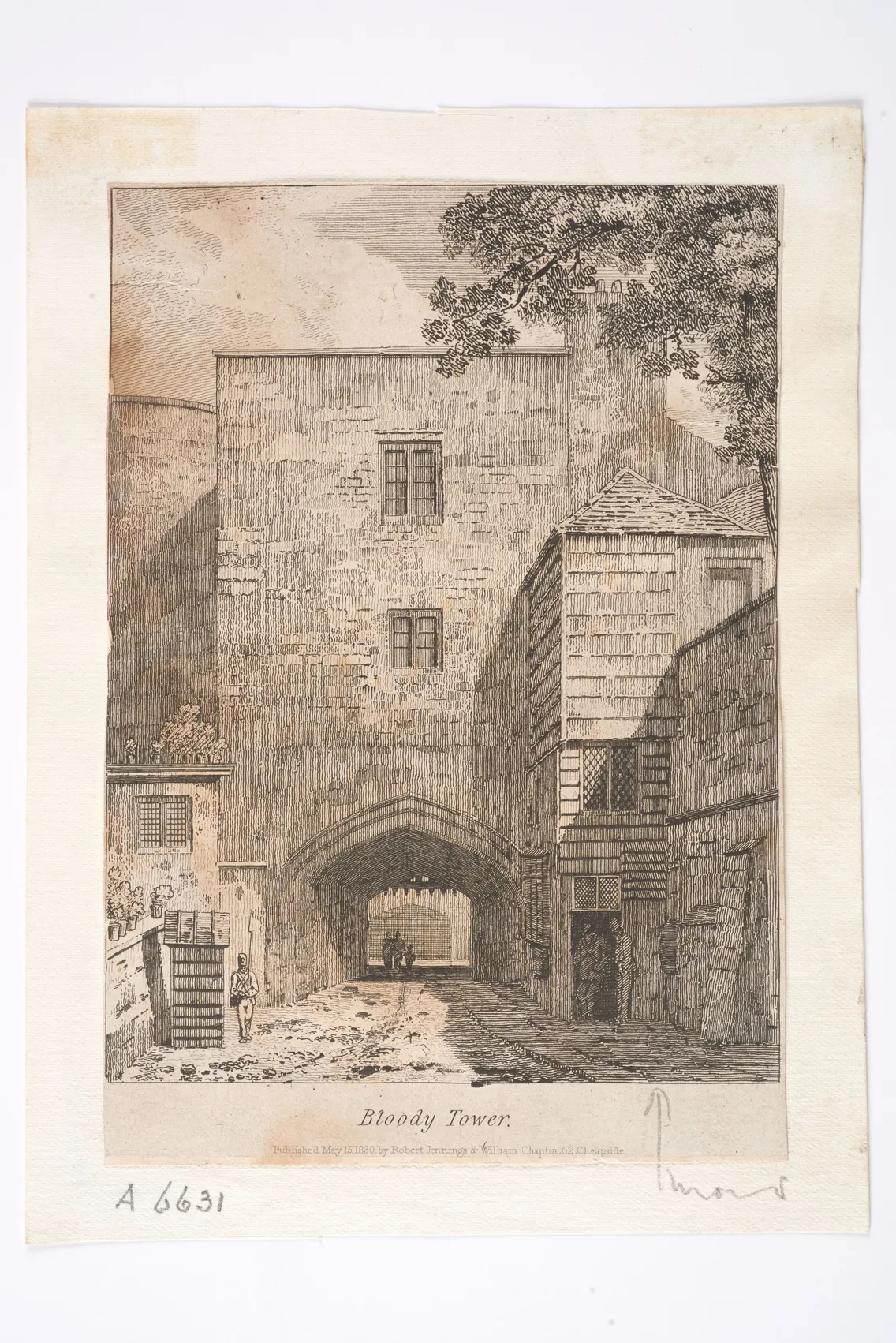
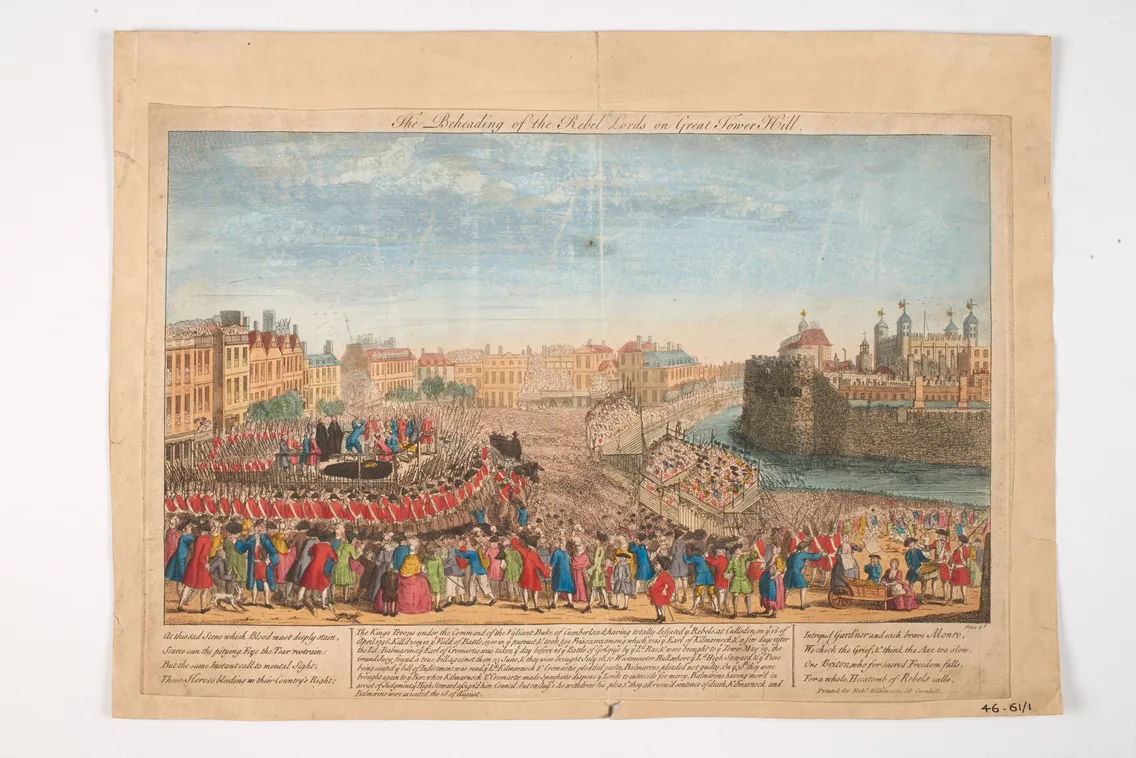
The Garden Tower became known as the Bloody Tower following the imprisonment and supposed murder of Prince Edward V and his brother Richard. The children, aged twelve and nine, were held there for their protection in 1483. They vanished and were never seen again. The bones of children of similar ages were found beneath a staircase in 1674. What happened to them remains a mystery to this day.
Most public executions took place on Tower Hill, just outside the Tower, and they attracted huge crowds. Executions of people with high status or widespread popular support happened within the grounds, on or near Tower Green, with only invited witnesses present.
Who was sent to the Tower?
Anne Boleyn and Catherine Howard, two wives of the Tudor king Henry VIII, were beheaded inside the Tower in 1536 and 1542. Lady Jane Grey, who was monarch for just nine days in July 1553, was also executed on Tower Green by her successor, Mary I, in 1554.
Many more prominent Tudor figures from this time were imprisoned at the Tower. Princess Elizabeth (later Queen Elizabeth I) was held there by her half-sister Mary I, who feared Elizabeth was plotting against her. The explorer Walter Raleigh was imprisoned for allegedly scheming to overthrow King James I.
After trying to blow up Parliament in 1605, Guy Fawkes was sent to the Tower. He was tortured before a grisly execution – he was dragged behind a horse, then hanged and cut into quarters.
Prisoners were also held there during both the First and Second World Wars. After being found guilty of spying for Germany, Josef Jakobs was the last person to be executed there in 1941.
Notorious gangsters, the Kray Twins, were the Tower’s last prisoners, spending a night in custody there in 1952 after failing to report for military duty.
-
Paintings, Prints & Drawings
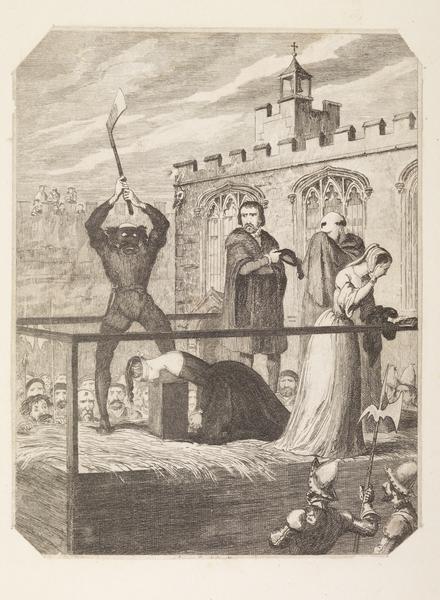 Paintings, Prints & Drawings
The Tower of London: 1/41, The Execution of Lady Jane Grey (etching)
Cruikshank, George
1840
-
Paintings, Prints & Drawings
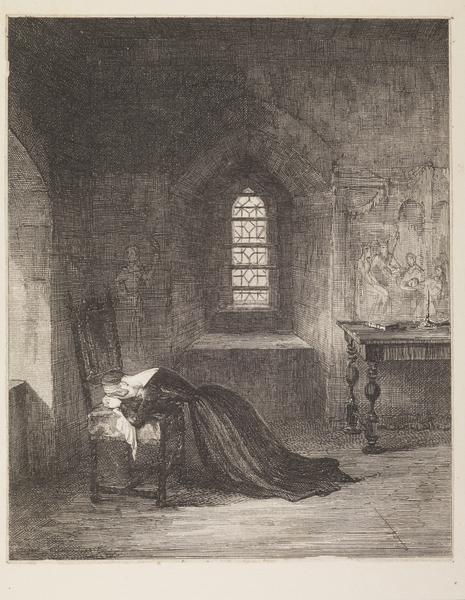 Paintings, Prints & Drawings
The Tower of London: 12/41, Jane imprisoned in the Brick Tower (etching)
Cruikshank, George
1840
-
Paintings, Prints & Drawings
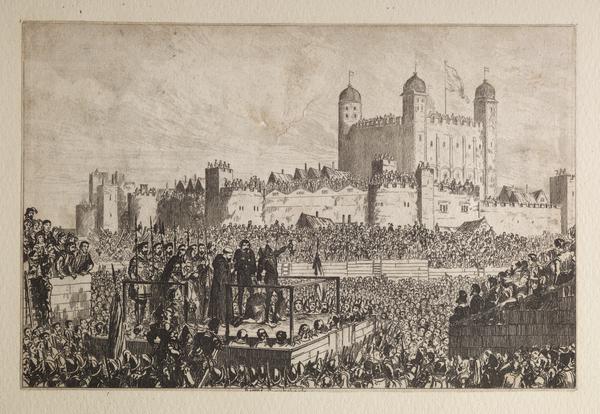 Paintings, Prints & Drawings
The Tower of London: 17/41, Execution of the Duke of Northumberland on Tower Hill (etching)
Cruikshank, George
1840
-
Paintings, Prints & Drawings
 Paintings, Prints & Drawings
The Tower of London: 24/41, Courtenay's escape from the Tower (etching)
Cruikshank, George
1840
-
Paintings, Prints & Drawings
 Paintings, Prints & Drawings
The Tower of London: 34/41, Elizabeth brought Prisoner to the Tower (etching)
Cruikshank, George
1840
The Beefeaters and the ravens
Two of the Tower of London’s most recognisable symbols are the Beefeaters – officially known as yeoman warders – and the ravens.
The Beefeaters began as personal bodyguards to Henry VIII, who commanded them to stay and guard the Tower permanently. The king trusted them so much that he allowed them to eat as much beef as they wanted from his table, hence the nickname.
-
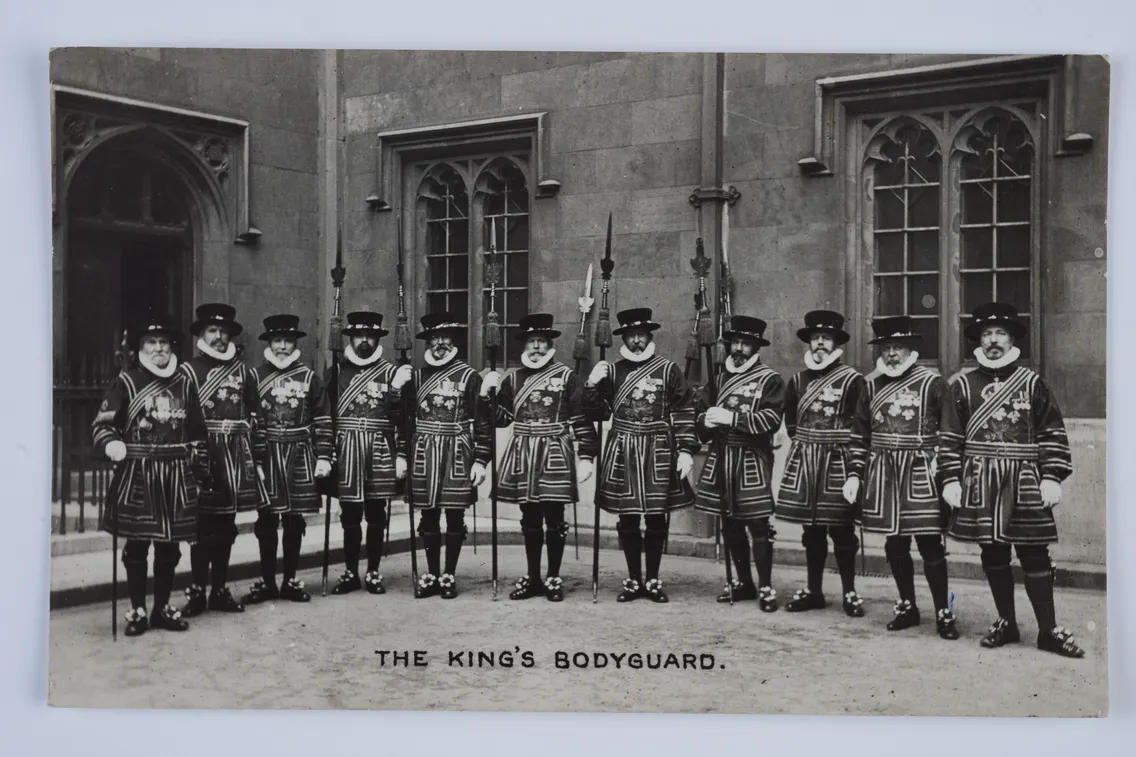
Beefeaters in their uniforms.
-
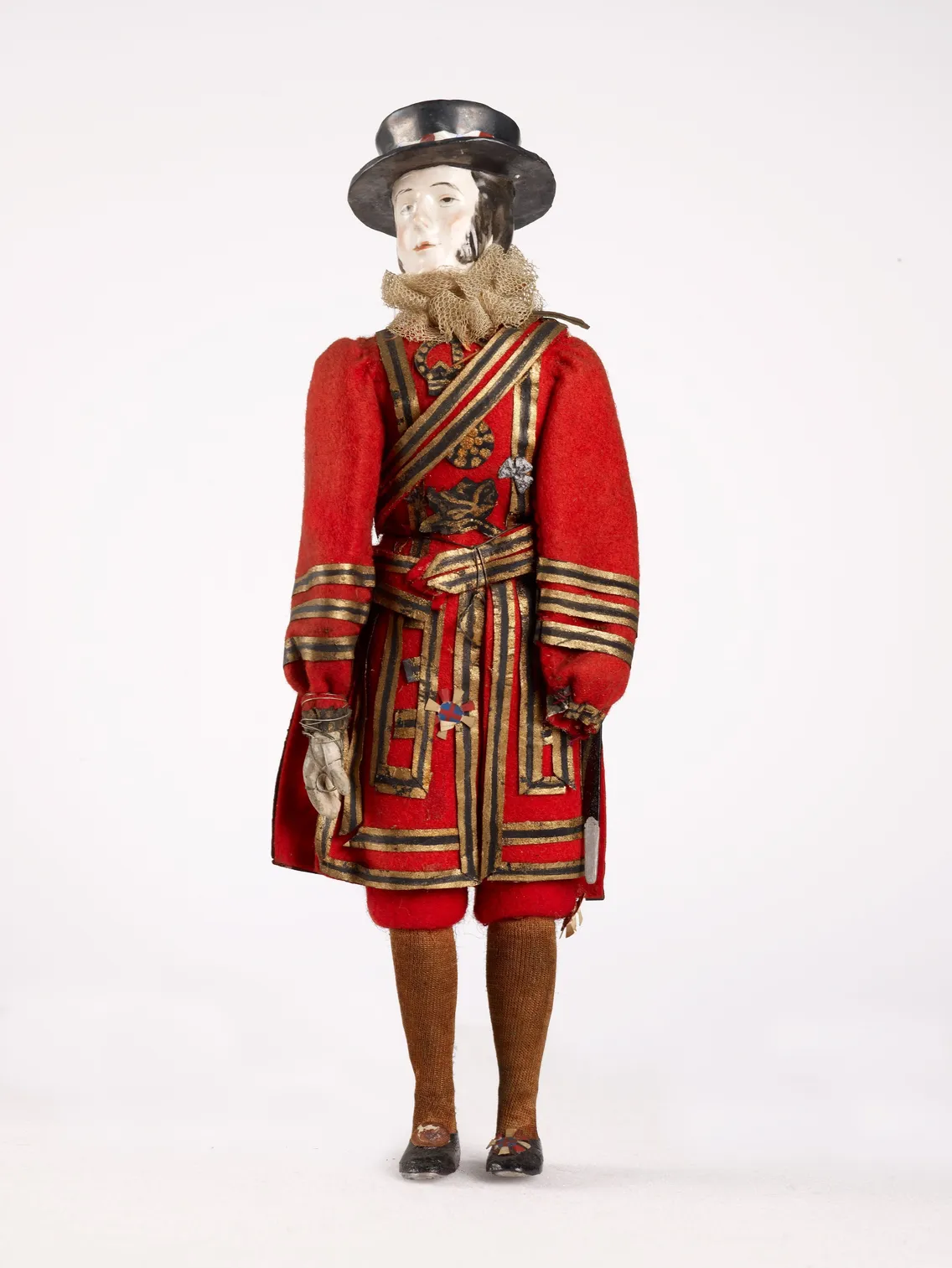
A figurine made for the 1951 Festival of Britain showing those iconic uniforms.
Today, Beefeaters are former long-serving members of the armed forces who provide tours of the Tower and carry out ceremonial duties. One of the most famous of these is the Ceremony of the Keys. This locking and unlocking of the Tower gates has been done for seven hundred years.
One of the Beefeaters is also in charge of the Tower’s ravens. Legend has it that if the birds ever leave the Tower, both it and the kingdom will fall.
The Tower of London as a tourist attraction
The Tower of London started to become popular as a tourist attraction in the 19th century. Victorian crowds, intrigued by tales of torture and ghosts, came to explore the fortress and its dungeons.
After the Tower stopped being used as a prison, it became the attraction we know today. It was designated a UNESCO World Heritage Site in 1988, and around three million people visit it each year.
-
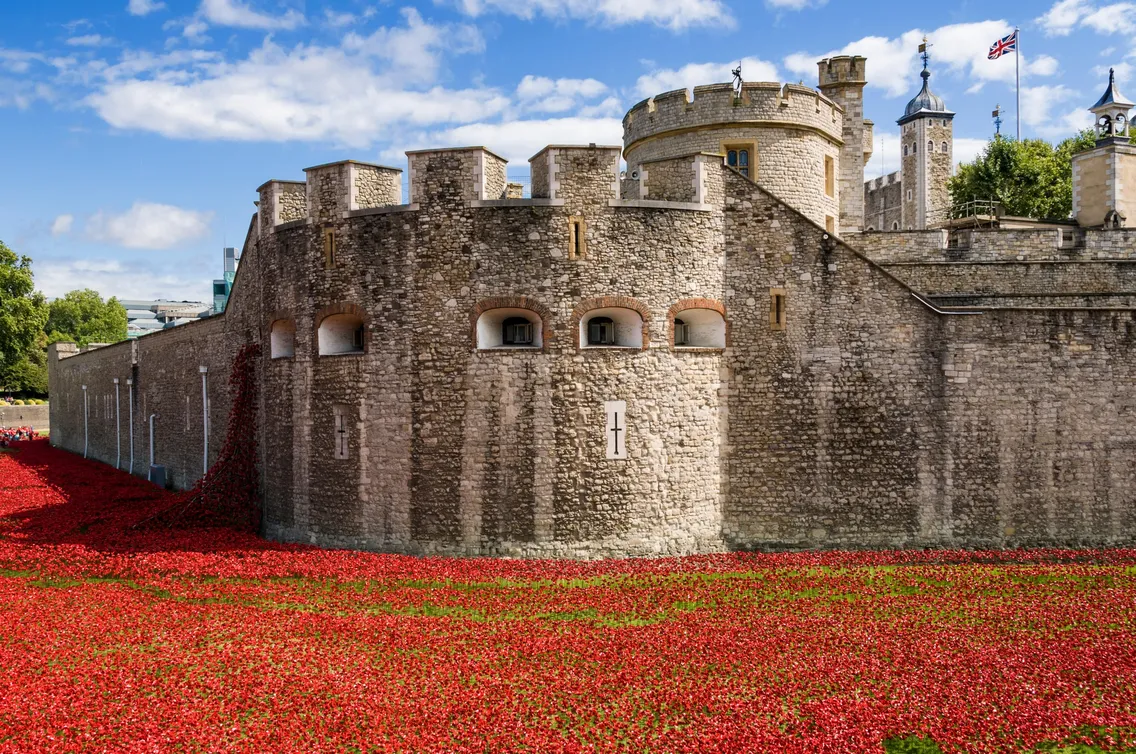
Ceramic poppies in the Tower of London moat.
In 2014, the Tower’s moat was filled with 888,246 ceramic poppies as part of the Blood Swept Lands and Seas of Red art installation. The striking display commemorated the centenary of Britain’s involvement in the First World War (1914–1918), with each poppy representing a British fatality during the conflict.
Most recently, the moat has been transformed into a wildflower meadow, originally planted to celebrate Queen Elizabeth II’s Platinum Jubilee in 2022.
Tags
-

-
 Royalty & Aristocracy
The execution of Lady Jane Grey, 1554
How the ‘nine-day queen’ met a bitter and bloody end
-
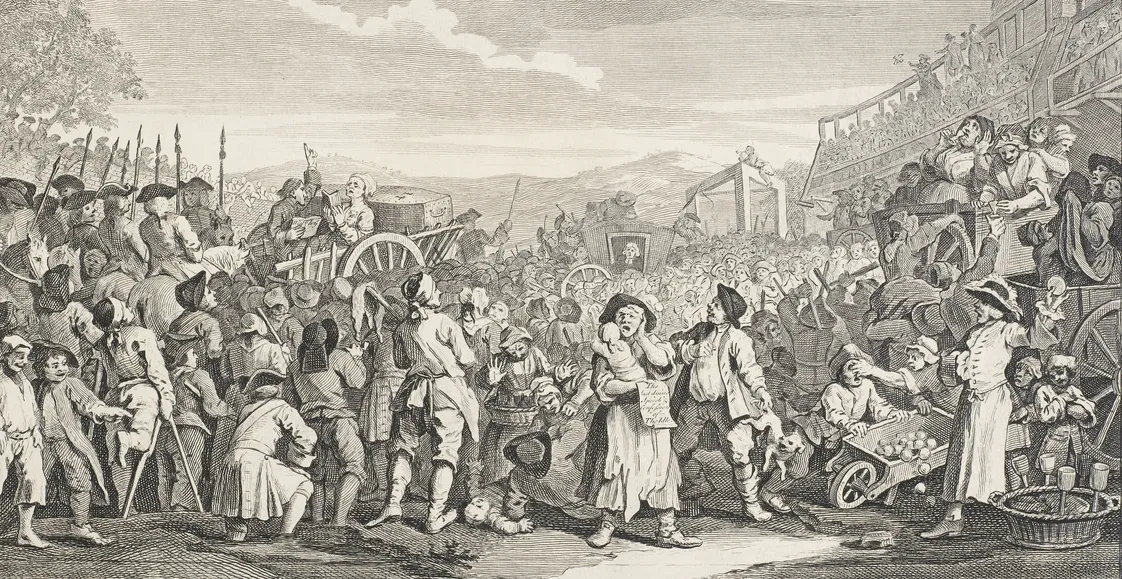 Crime & Legislation
London’s public executions
Hung, drawn and quartered. Beheaded, boiled or burned
-
 War & Weapons
How the Norman conquest changed London
The rule of William the Conqueror and his descendants brought more than castles