Henry Mayhew brings Victorian London to life
Henry Mayhew interviewed street workers for a pioneering social study in the mid-19th century, allowing us to read about Londoners’ lives in their own voice.
Across London
1851–1865
Conversations with lost London
In the middle of the 19th century, the writer and journalist Henry Mayhew interviewed people working on London’s streets.
It was a pioneering piece of research, published in four volumes with the title London Labour and the London Poor: The condition of those that will work, cannot work, and will not work.
His books provide a cascade of microscopic details, enlightening anecdotes and vivid illustrations. The wealth of information even inspired the most famous chronicler of the Victorian city, the author Charles Dickens.
Mayhew called his work “the history of a people, from the lips of the people themselves… in their own ‘unvarnished language”. Thanks to him, we meet people we might never have known about.
Street workers in Victorian London
Between 1800 and 1900, London’s population increased by almost 700%. People were drawn here from across the country and around the world. By 1860, London was home to around 3 million people.
Poverty was rife in the city’s ever-spreading sprawl, and many people fell through the gaps. London’s streets thronged with Londoners living a fragile existence, with no fixed home and an unstable income.
As always, London’s public spaces offered a chance to make money and Londoners found every way to earn what they could. Many were born into their family’s trade. Others, being disabled, orphaned, or falling on hard times, had few options available.
Migrants who arrived in the city also struggled to get by in their new home. Mayhew encountered many people in this situation who’d come from other parts of Britain, Ireland, India and elsewhere.
-
Printed Ephemera
 Printed Ephemera
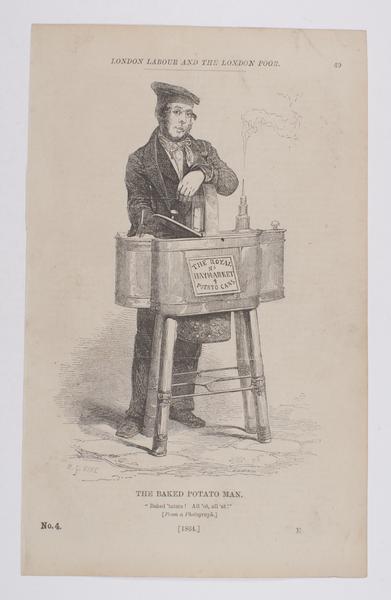
The Baked Potato Man. "Baked 'taturs! All 'ot, all 'ot!" (illustration)
Hine, Henry George
1864
-
Printed Ephemera
 Printed Ephemera
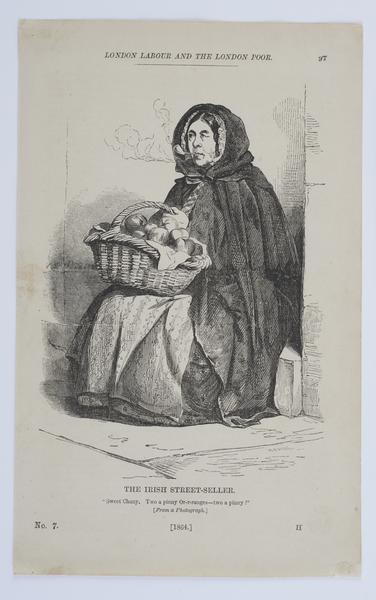
The Irish Street-Seller. "Sweet Chany. Two a pinny Or-r-ranges-two a pinny!" (illustration)
Hine, Henry George
1864
-
-
Printed Ephemera
 Printed Ephemera
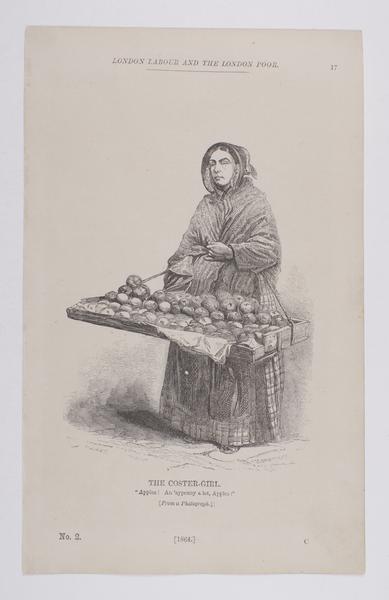
The Coster-Girl. "Apples! An 'aypenny a lot, Apples!" (illustration)
Hine, Henry George
1864
-
Victorian street food
Hungry Londoners were spoiled for choice. Mayhew found traders selling pea soup, hot eels, pickled whelks, fried fish and boiled sheep trotters.
For a sugar hit, there were boiled puddings, plum duff, hot-cross buns, chelsea buns, muffins, crumpets and ice-cream.
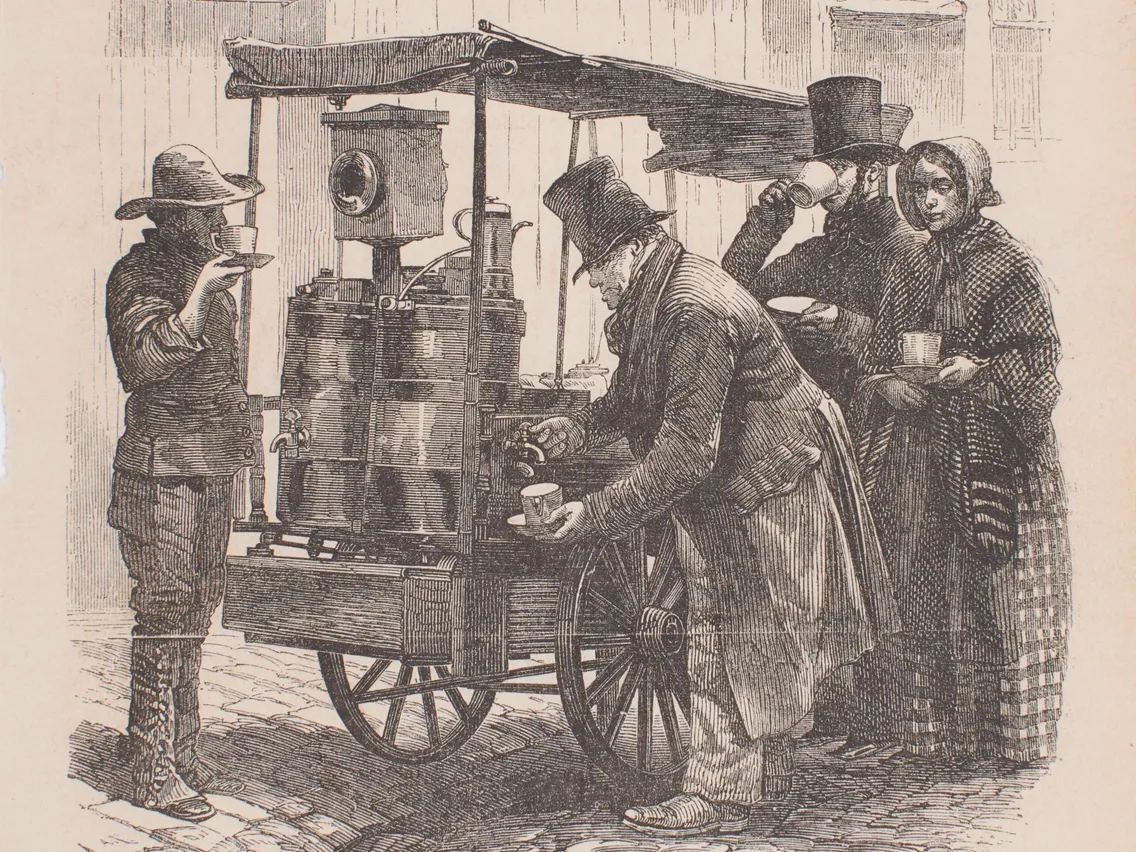
Coffee was popular. One trader reckoned there were so many stalls competing for trade that “Two of us are eating one man’s bread.”
Baked potatoes, served with butter and salt, were kept hot by traders in a portable coal-heated tray. “Bake ‘taturs! All ‘ot, all ‘ot!” was the seller’s cry. In the winter, some customers bought them to warm their hands as much as fill their belly.
“We see a deal of the world, sir – yes, a deal”
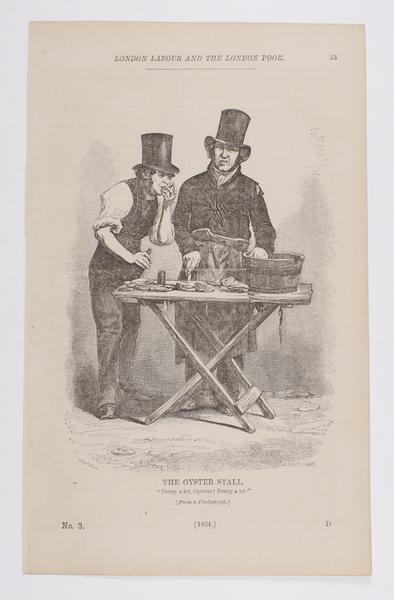
Oyster-seller
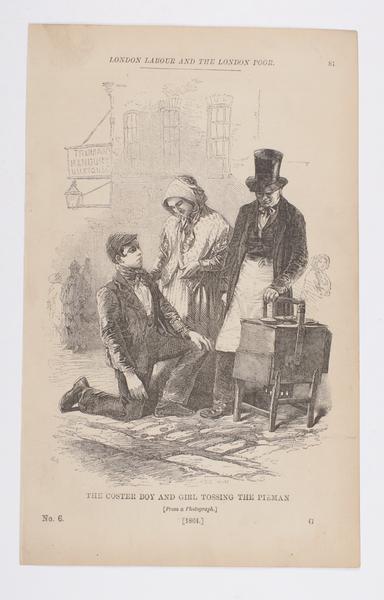
Around 20 ‘hot-piemen’ flogged their meat pies on London’s streets. If you couldn’t pay or didn’t want to, you might “toss the pieman”, betting a penny on the toss of a coin for the chance of a free pie.
A woman who’d “seen better times” was one of many who sold oysters. Her customers were “all sorts”, from “gentlemen” to the “vulgar poor”. She reckoned she had a pretty good perspective on London: “We see a deal of the world, sir – yes, a deal.”
The costers
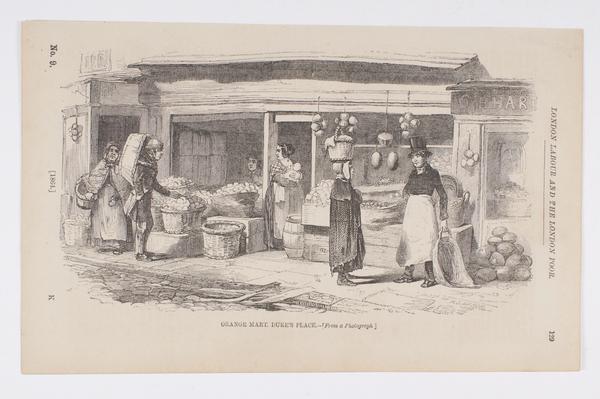
Traders known as costermongers or costers sold fruit, vegetables and fish that they bought from markets like Billingsgate, Covent Garden or Borough. They sold from stationary stalls or while moving along established ‘rounds’.
Mayhew estimated there were 30,000 men, women and children working as costers in London. About 2,500 of them went to Covent Garden market every day in the summer months.
There were tricks of the trade. Oranges were boiled to make them appear larger and finer. Bad-quality fruit was hidden in the mix, “topping-up” the good stuff.
Costers left home at 4am to buy their stock from the markets, then sold until 9pm. Despite the long hours, a girl who sold apples told Mayhew: “The gals begins working very early… the parents makes them go out when a’most babies.”
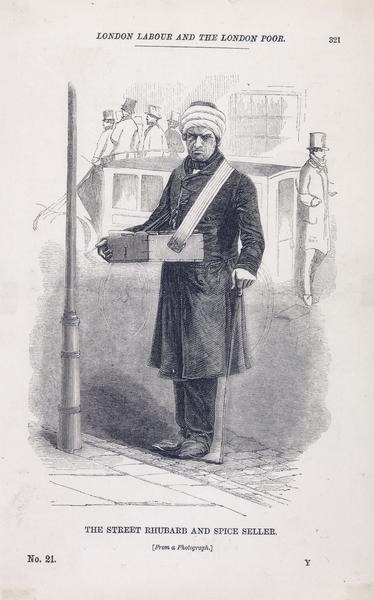
Mayhew met a Jewish man originating from Morocco who sold rhubarb. “What led me to come away, you say? Like good many I was young and foolish.”
-
Printed Ephemera
-
Printed Ephemera
 Printed Ephemera
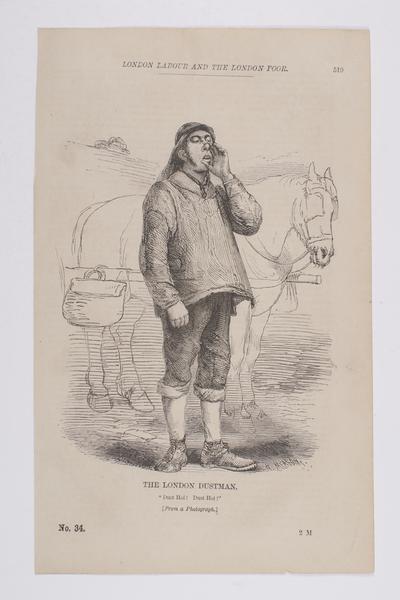
The London Dustman. "Dust Hoi! Dust Hoi!" (cutting; illustration)
Measom, William Frederick
1861-1864
-
-
Printed Ephemera
-
Money for nothing
The city’s waste provided opportunities. Food scraps were bought from “eating houses”, workhouses and “great houses”, and sold on as “hogs’-wash”, feed for pigs.
Dustmen gathered ashes from fireplaces, selling them as fertiliser for gardens and farms. Mayhew spoke to a dustman in the East End who, in the Cockney accent of the time, often pronounced ‘w’ as ‘v’. “I only knows how to vork at the dust ’cause I’m used to it,” he said, “and so vos father afore me, and I’ll stick to it as long as I can.”
Others paid nothing for the waste they gathered and sold. Mayhew classed these people as “street-finders”.
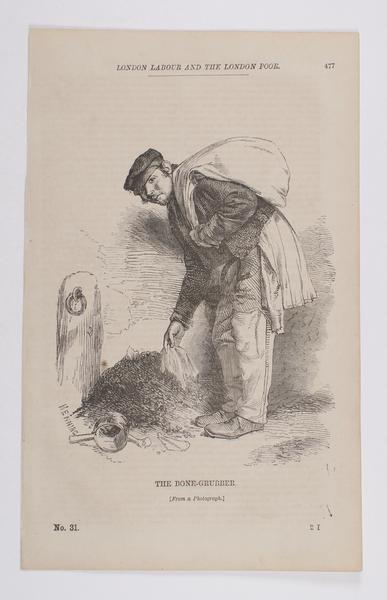
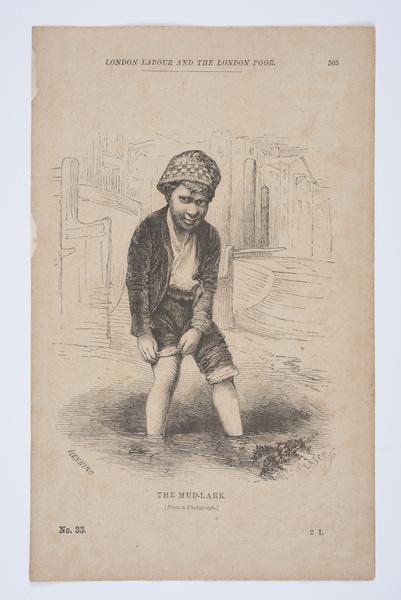
“Mudlarks” scavenged the filthy foreshore of the River Thames. “Bone grubbers” and “cigar-end finders” scoured the streets. There were also “sewer-hunters”.
Mayhew spoke to a bone-grubber from Liverpool, whose father had died when he was 14: “I’ve lost my health since I took to bone-picking, through the wet and cold in the winter, for I’ve scarcely any clothes, and the wet gets to my feet through the old shoes; this caused me last winter to be nine weeks in the hospital of the Whitechapel workhouse.”
-
Printed Ephemera

-
-
Printed Ephemera
 Printed Ephemera
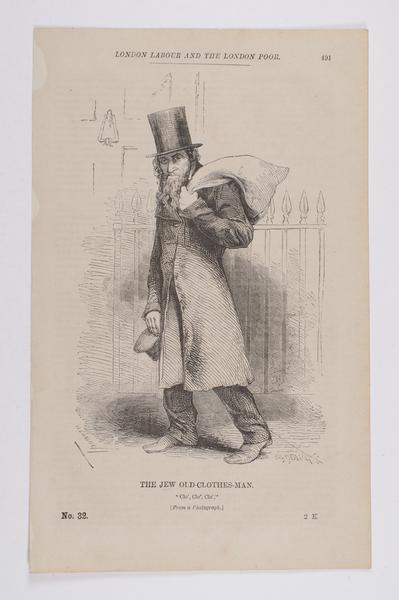
The Jew Old-Clothes-Man. "Clo', Clo', Clo'." (illustration)
Henning, Archibald Samuel
1861-1864
-
Printed Ephemera
 Printed Ephemera
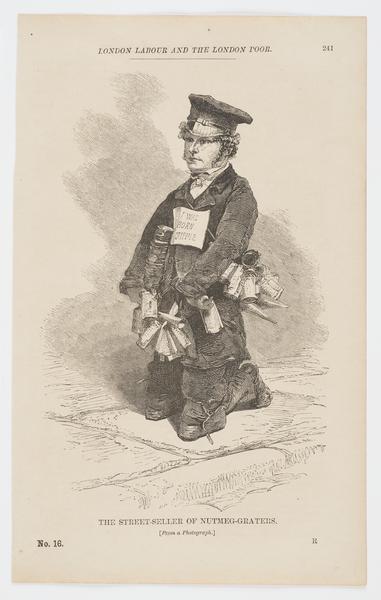
Street-Seller of Nutmeg-Graters (illustration)
Anelay, Henry, Mason, Walter George
1861-1864
-
Printed Ephemera
 Printed Ephemera
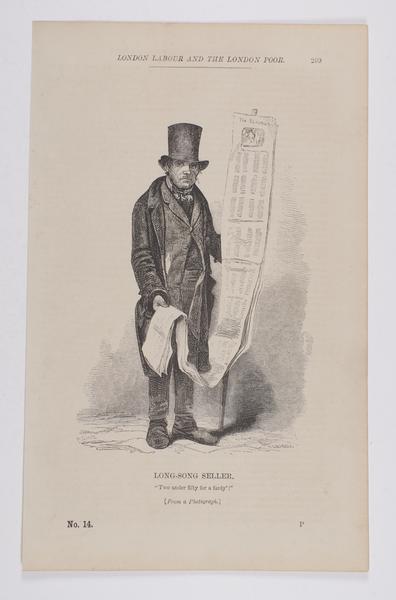
Long-Song Seller. "Two under fifty for a fardy'!" (illustration)
Hine, Henry George
1864
Keeping the city clean
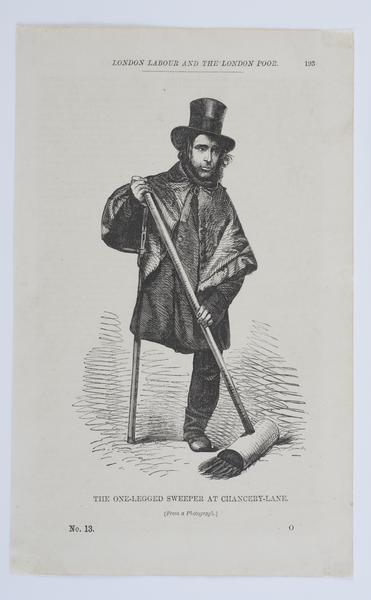
Street sweepers cleaned ahead of people as they walked, hoping for a tip. Many were elderly or disabled, or as Mayhew put it, “prevented from a more laborious mode of obtaining their living”.
He judged their work as “an excuse for begging”. A “one-legged sweeper” who worked on Chancery Lane told Mayhew, “I did not like the idea of crossing-sweeping at first, till I reasoned with myself, Why should I mind? I’m not doing any hurt to anybody.”
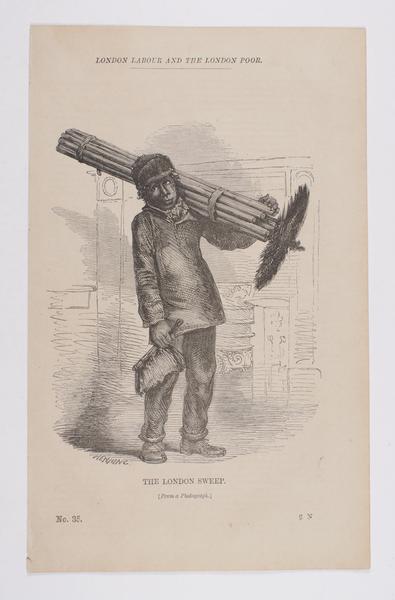
Chimney sweeps, meanwhile, had a reputation for cruelty. Masters illegally used child apprentices to climb inside chimneys to clean away the soot, an extremely dangerous job. “They were often ill-lodged, ill-fed, barely-clad, forced to ascend hot and narrow flues, and subject to diseases – such as the chimney-sweep’s cancer,” said Mayhew. “The child hated his trade, and was easily tempted to be a thief, for prison was an asylum.”
Reading material
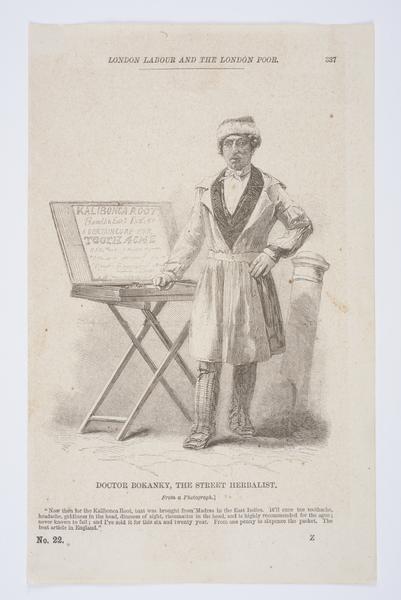
Mayhew reckoned there were about 50 people selling religious pamphlets, known as tracts, across London. He found many to be “foreigners”, and one was described as a “Hindoo”. Mayhew couldn’t interview him as he was “unable to speak a word of English”.
“Long-song sellers” sold popular songs printed on lengthy strips of paper. The dangling sheets were hung on poles by the sellers, who’d cry: “Three yards a penny!” Rain or fog would damage the paper, so this was a summer trade.
Just the thing
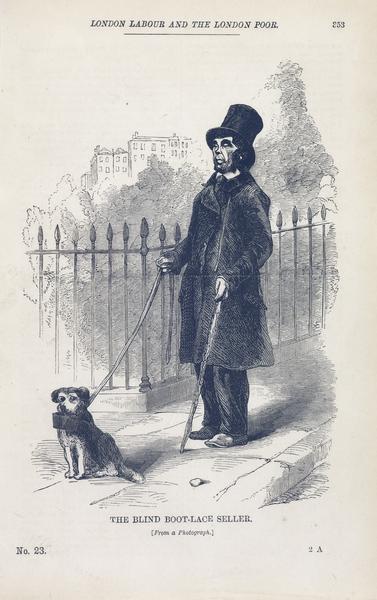
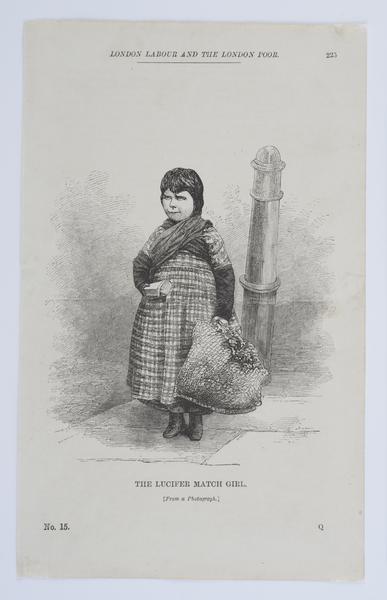
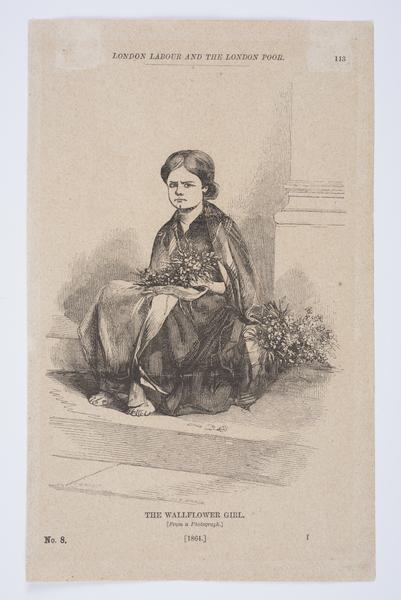
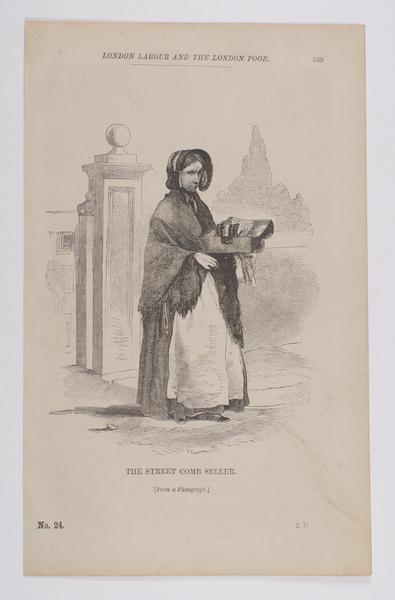
Matches, boot laces, combs. Mayhew’s survey showed you really could get nearly anything on the street.
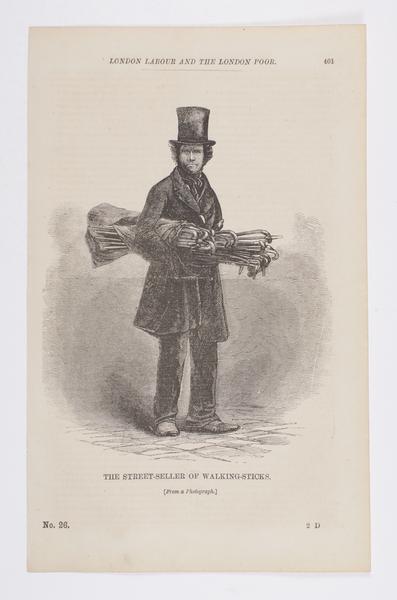
Sellers of walking sticks did their best trade at parks. But one reckoned few things were “so tiresome as the walking-stick trade. There is nothing in which people are so particular. The stick’s sure to be either too short or too long, or too thick or too thin, or too limp or too stiff.”
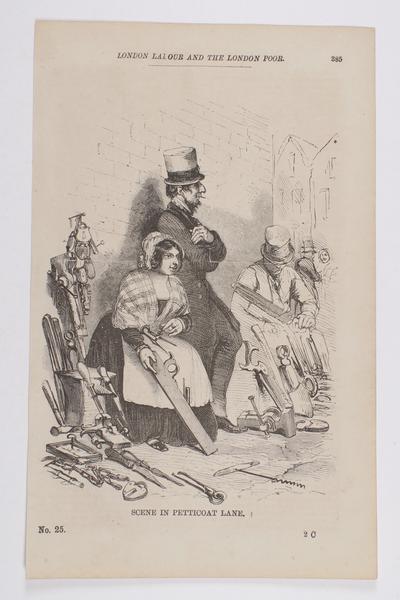
London had a thriving trade in second-hand goods. You could find clothes, tools and crockery in Petticoat Lane and Rosemary Lane in the East End, and there was an Old Clothes Exchange off the nearby Cutler Street. Mayhew found that many second-hand clothes sellers were from the East End’s Jewish community.
A seller of nutmeg graters, born with limited use of his arms and legs, told Mayhew “the Almighty has made me a cripple. I can, indeed, solemnly say, that there is nothing else against me, and that I strive hard and crawl about till my limbs ache enough to drive me mad, to get an honest livelihood.”
-
Printed Ephemera
-
Printed Ephemera
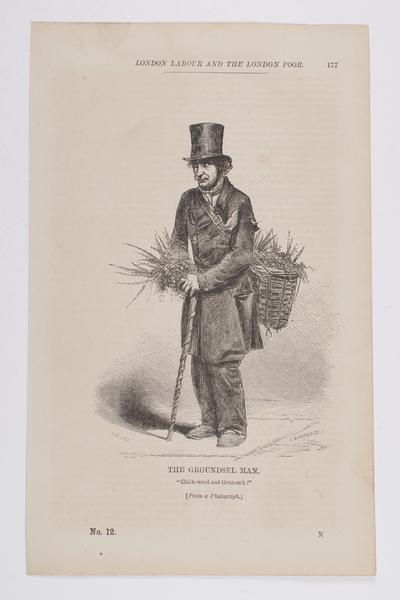 Printed Ephemera
The Groundsel Man. "Chick-weed and Grun-sell!" (illustration)
Hine, Henry George
1864
-
-
-
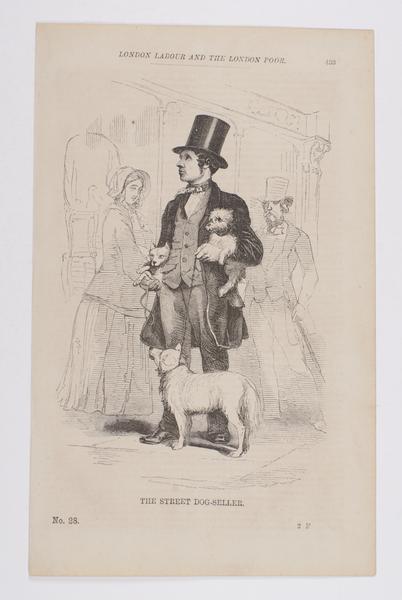
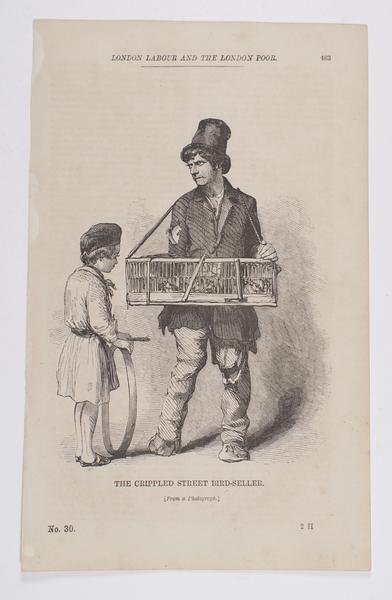
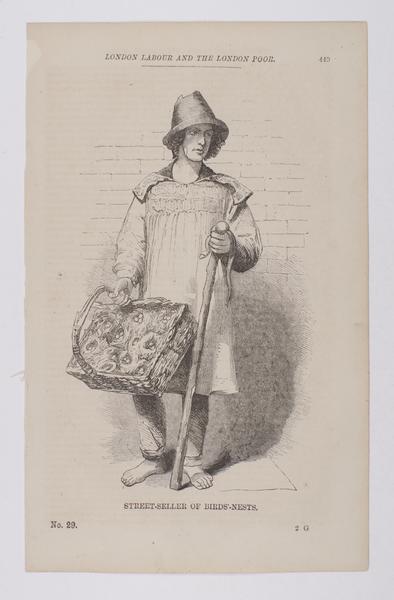
Cats and dogs
If you could find everything a human might need in the street, you could also find everything to keep an animal, as well as the animals themselves.
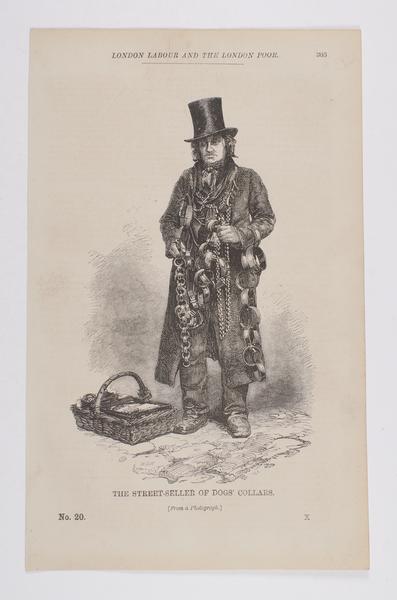
Traders sold meat to feed dogs and cats, or groundsell and chickweed for birds. A dog collar-seller told Mayhew: “People has said to me… ‘Dogs! pooh, I’ve hardly grub enough for the kids.’ For all that, sir, some poor people has dogs, and is very fond of them too… I think it’s them as has no children has dogs.”
Dogs could be bought on the street in many places. Small terriers and spaniels were the most popular.
Another seller provided “lizards, snakes, slow-worms, adders, ‘effets’ – lizards is their common name – hedgehogs (for killing black beetles); frogs (for the French – they eats ’em); snails (for birds).”
Tags
-
Printed Ephemera
 Printed Ephemera
The Oyster Stall. "Penny a lot, Oysters! Penny a lot." (illustration)
Hine, Henry George
1864
-
Printed Ephemera
-
Printed Ephemera
-