The Foundling Hospital
The UK’s first children’s charity was a home for abandoned children in Bloomsbury. Founded by Thomas Coram, the Foundling Hospital housed and educated children on the same site for nearly 200 years.
Coram’s Field, Bloomsbury
1741–1926
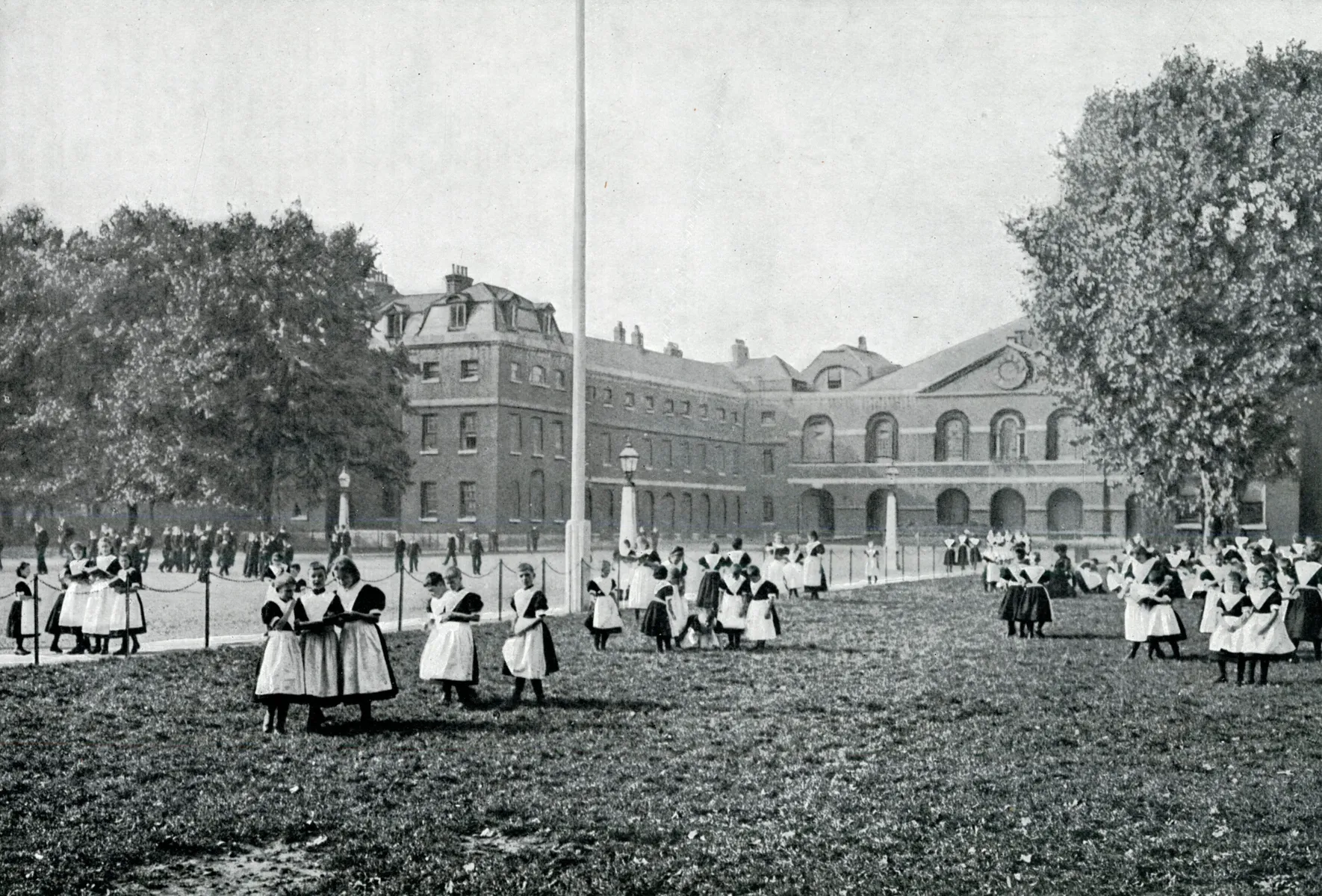
Children outside the Foundling Hospital, 1900.
Charity, care and another chance for the abandoned
The Foundling Hospital wasn’t the kind of hospital we think of today. It was a home for children who were at risk of being abandoned by their mothers. This was usually because of the fear of being unable to afford to care for their children, as well as the stigma around sex outside of marriage.
The home’s main purpose was to give children an education that would lead to work. This was more than many children received in the 18th and 19th centuries. But it was a tough bargain. The children were given new identities, preventing them from tracing their families.
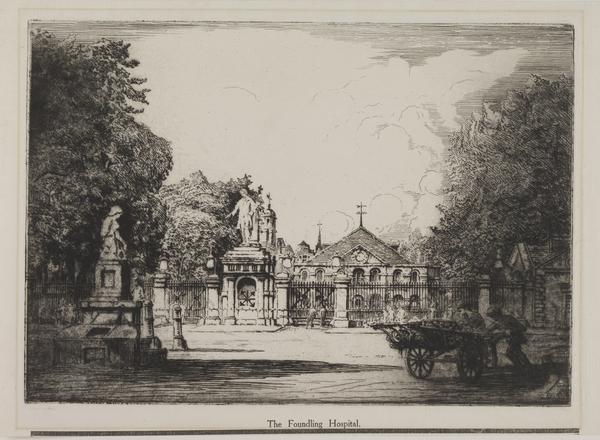
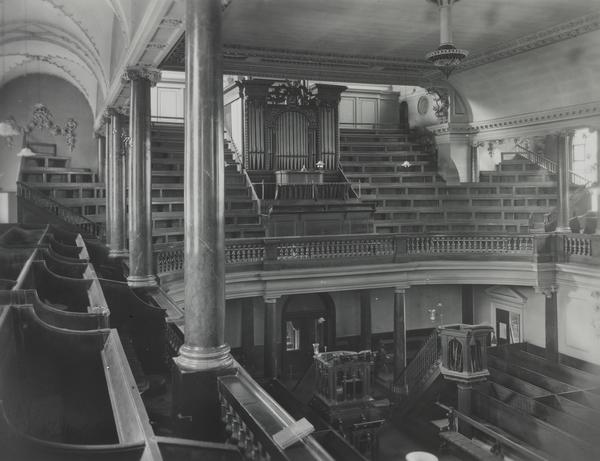
The Foundling Hospital was set up by Thomas Coram, a campaigning sea captain troubled by the number of children he saw struggling and dying alone in the capital. It was built near Bloomsbury in the 1740s and accepted children until 1926, when it moved to a new location outside London.
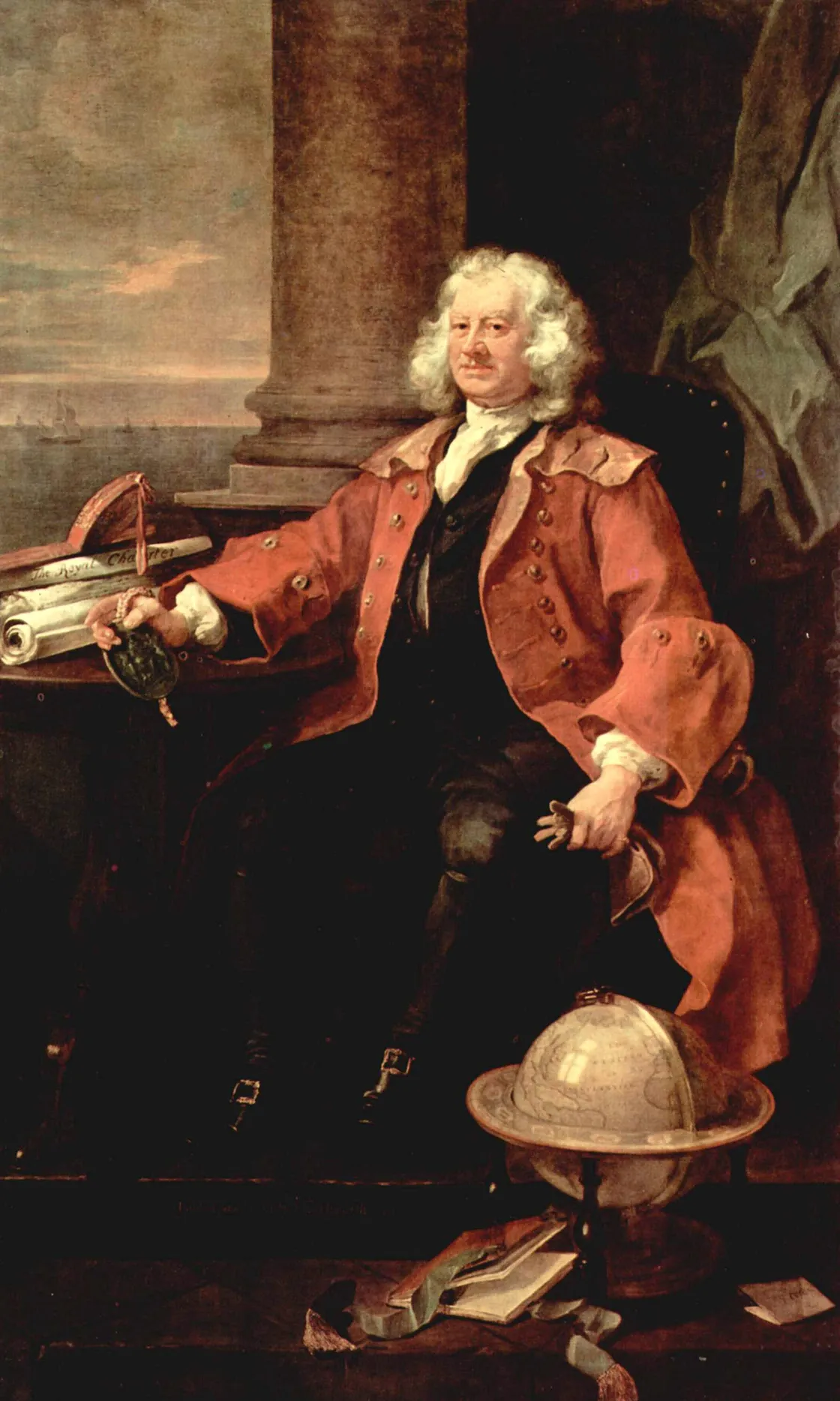
Thomas Coram, the hospital’s founder, painted by William Hogarth.
How was the Foundling Hospital created?
The hospital was the result of 17 years of campaigning by Thomas Coram, a captain of merchant ships who had ties to Britain’s colonies in North America.
In the early 1700s, he was living in Rotherhithe. On his travels into London, he was disturbed to see so many abandoned children – some alive, some dead.
Unmarried mothers in poor economic circumstances struggled to support their children. Combined with the social stigma of becoming pregnant outside of marriage, many women felt they had little choice but to give up their babies. It was a time before effective contraception, before abortion was safe or legal. Struggling mothers, including the many domestic servants sexually assaulted by their masters, had little support.
-
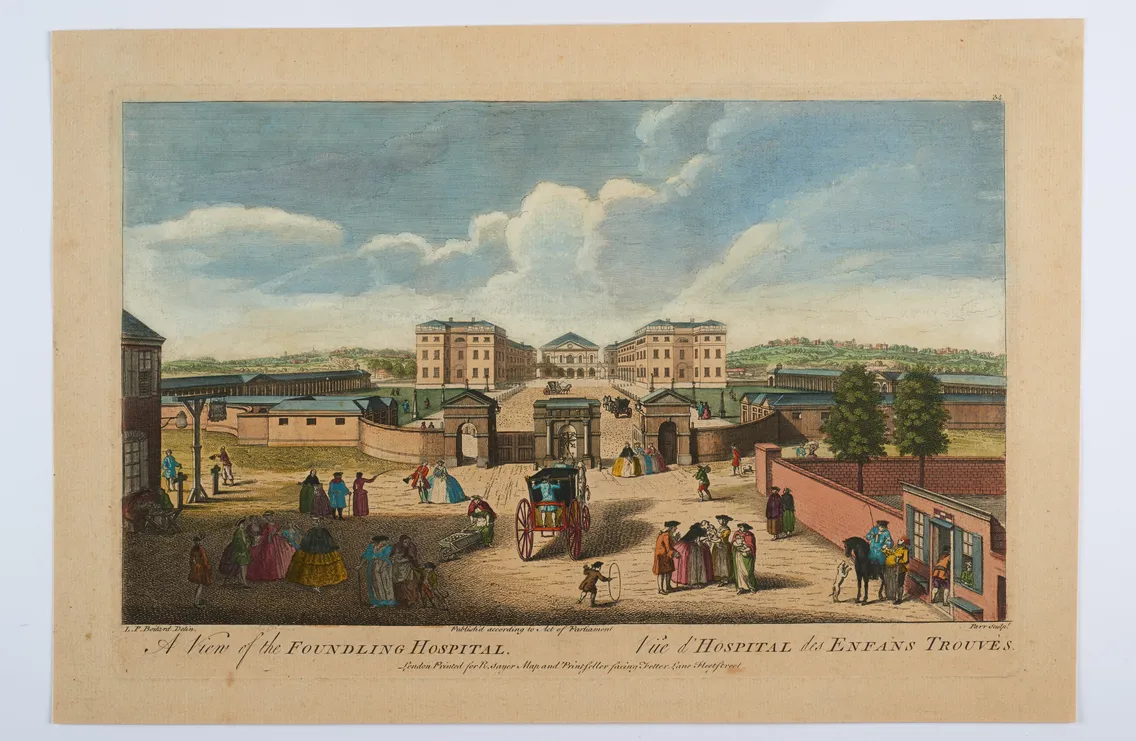
A view of the Foundling Hospital, 1753.
Inspired by similar hospitals in Europe, in 1722, Coram decided to set up a refuge for abandoned children in London. He convinced a group of rich and influential women to help him, and in 1739, King George II gave the project his backing.
The hospital had some famous supporters. William Hogarth and several other artists donated their work, and there were regular exhibitions to raise funds, making the hospital the country’s first public art gallery. The composer George Frideric Handel also played fundraising concerts in the chapel.
Where was the Foundling Hospital?
At first, the women Coram brought onto his campaign paid for some rooms in Hatton Garden. In 1741, they accepted their first 30 children there.
The women’s search for a new site led them to buy land at Lamb’s Conduit Fields. Construction of the hospital buildings began in September 1742, and in 1745, the first boys were moved in.
Today, that site is in the borough of Camden, between Bloomsbury and Clerkenwell. Coram’s Field, a park and garden partly reserved for children, covers some of the area.
-
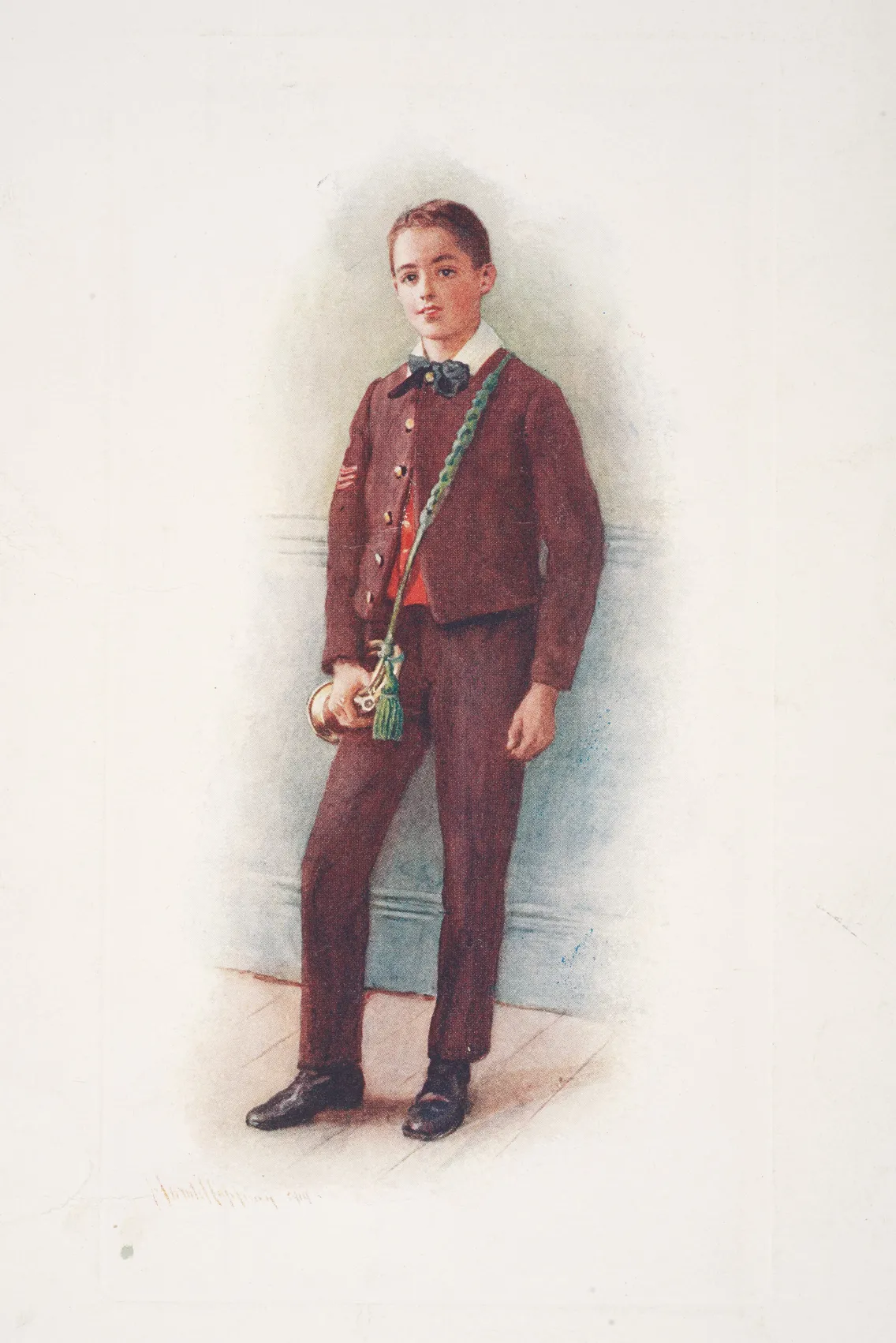
A boy in the Foundling Hospital uniform.
-
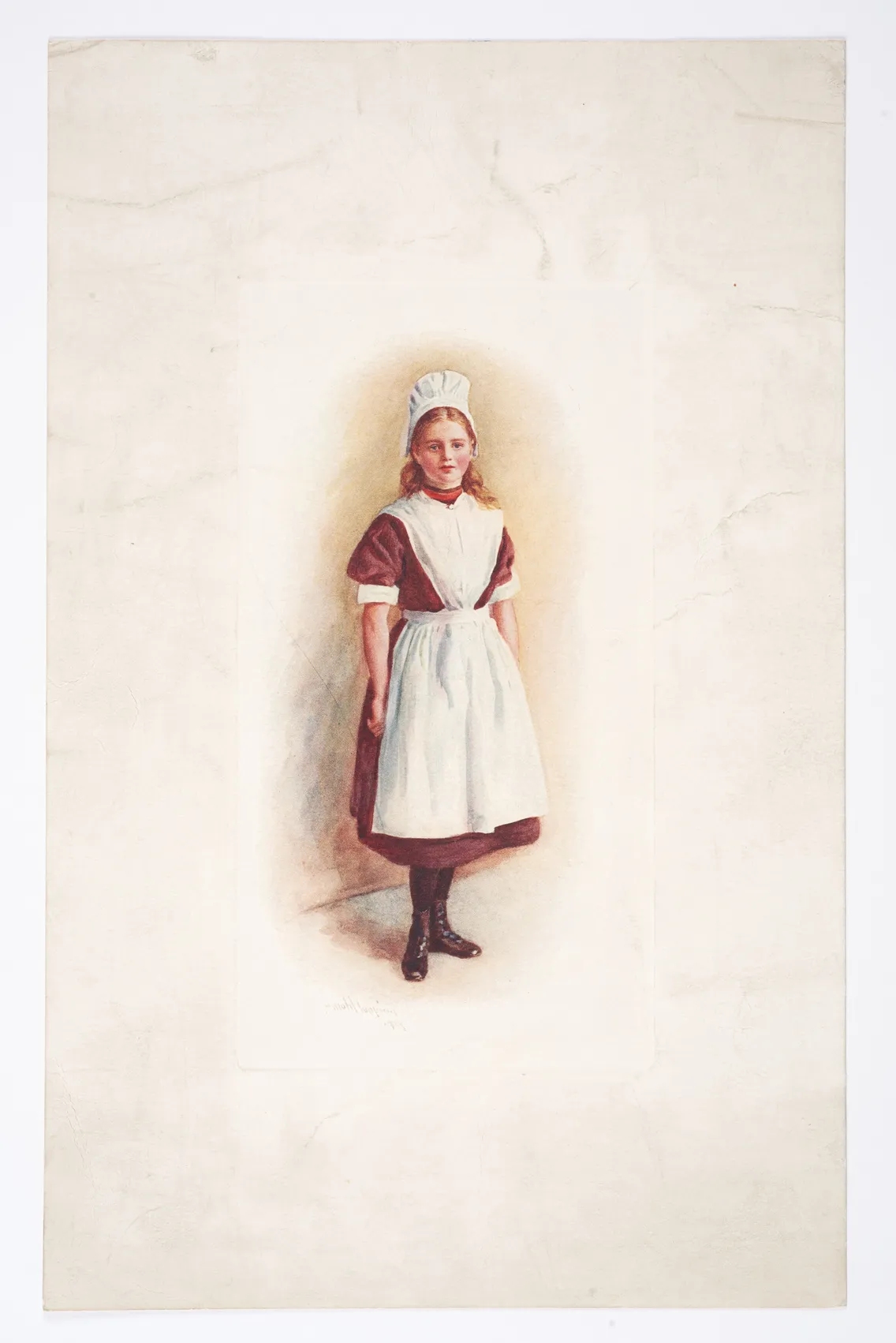
A girl wearing the hospital’s uniform.
Who did the hospital care for?
Despite its name, for the majority of its history, the hospital only accepted children if they were handed over by their mothers. The true ‘foundlings’, babies discovered alone and already deserted, weren’t usually taken.
The hospital was popular. It couldn’t accept all the children brought to its doors, so it had criteria to decide who to let in. Between 1742 and 1756, the decision was based on a lottery. Mothers pulled coloured balls from a bag. So long as the child was free from disease, a white ball meant yes, a black ball meant no, and a red ball meant a place on the waiting list.
Once a child was left at the hospital, they were given a new name. This new identity was kept secret from the mothers, preventing them from being linked with their ‘illegitimate’ child.
In the early years, children were left with a token, which the parents would have to describe if they ever returned to claim their child.
-
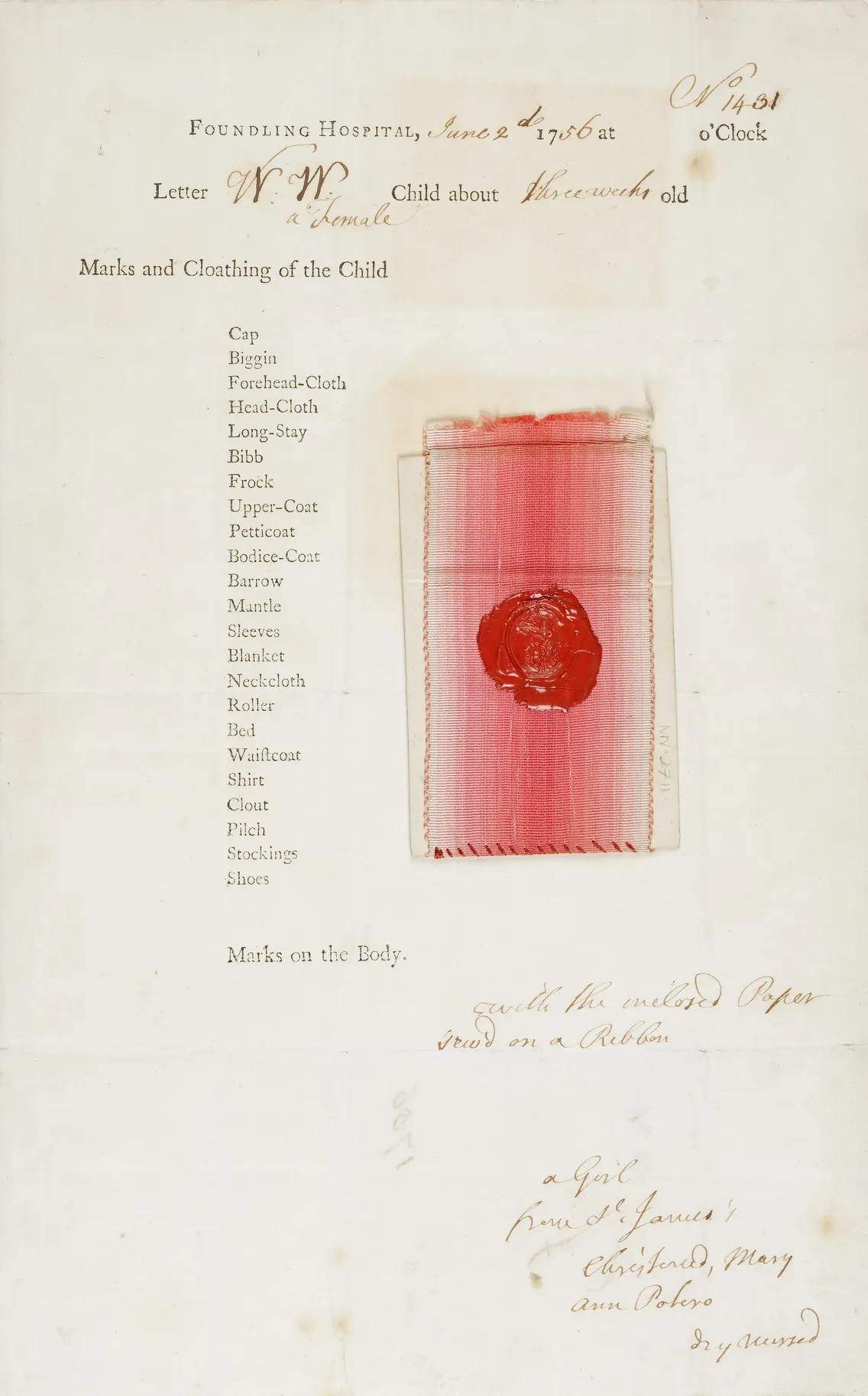
A record of a child, Mary Ann Potero, who was left at the hospital in 1756, listing their clothing and physical features.
-
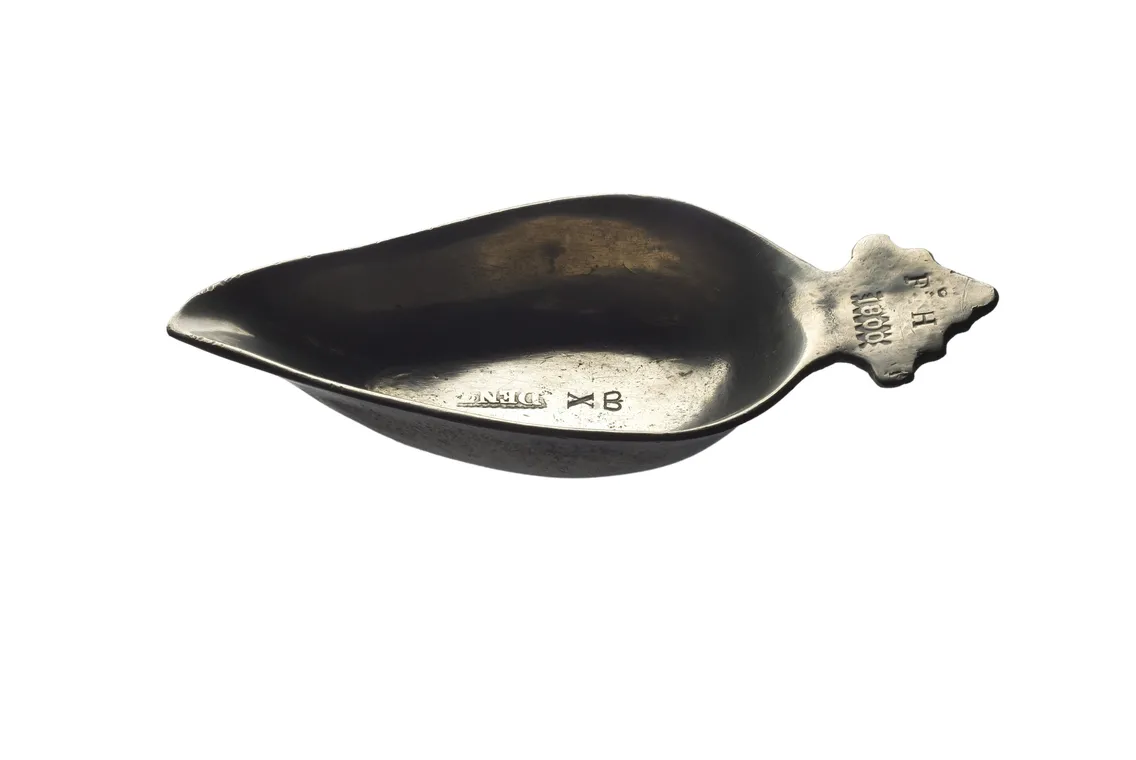
This silver ‘pap boat’ was used to feed small children at the hospital. Pap is a soft mixture of bread and water.
What was life like in the hospital?
Babies left at the hospital were sent to foster families living outside of London. When they were aged between three and five, they returned to live at the hospital.
There was an east wing for boys and a west wing for girls, and they were only brought together on Christmas Day.
The children wore a uniform. They went to chapel, said their prayers and were given chores. They might have worked in the garden, or helped with cooking and cleaning.
They were also given lessons to prepare them for life after the hospital. Boys were taught to read and write, and from 1800, girls received the same. There were also lessons in maths and music.
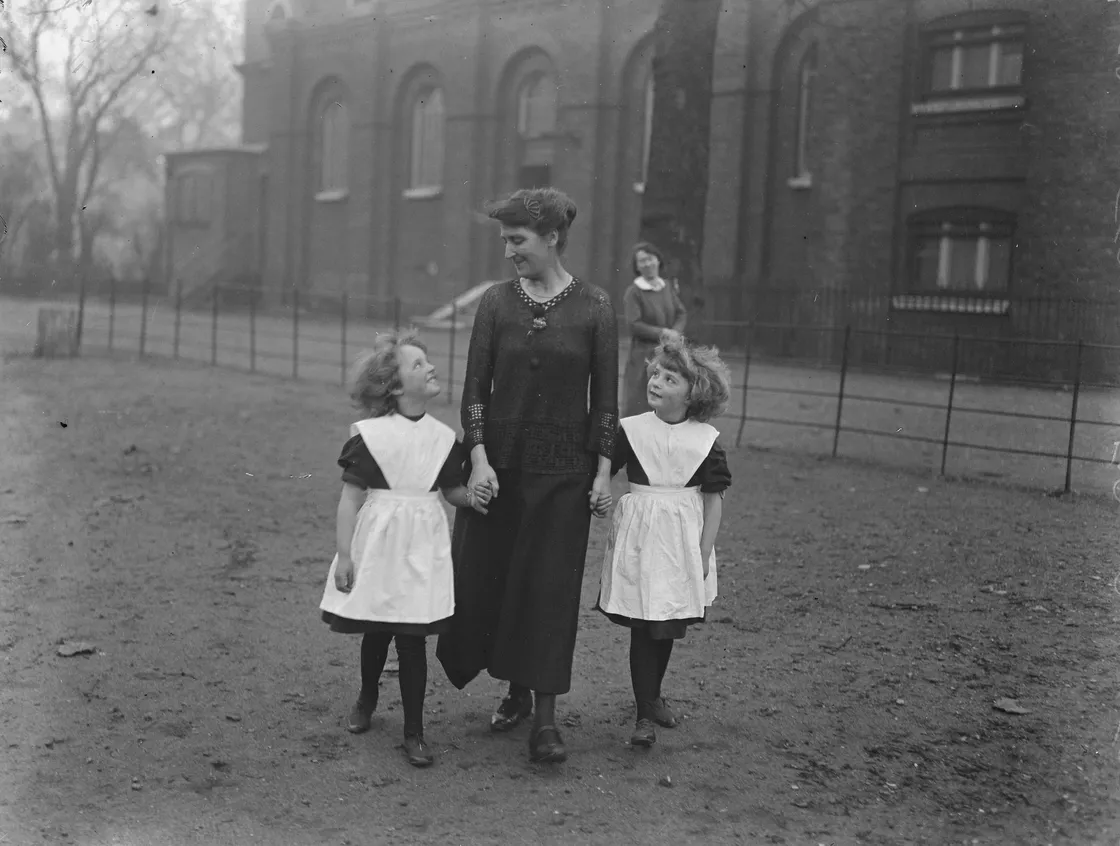
The headmistress of the Foundling Hospital with two children, 1921.
Where did the children go afterwards?
When they turned 14, most children were sent away to become apprentices in a trade. Many boys joined the Navy. Girls often trained as ladies’ maids.
Some disabled children who were unable to work remained at the hospital, and others stayed on as servants.
On rare occasions, parents might also return to claim their child, but they had to pay for the care their child had received.
What happened to the Foundling Hospital?
In 1926, the hospital was moved from its original location to Redhill, in Surrey. In 1936, it moved again to Berkhamsted, in Hampshire.
As attitudes to care changed, large children’s homes dwindled. The last child left the Foundling Hospital in 1954, but the children’s charity Coram continues today.
After the children moved out in 1926, the original buildings were demolished. Today, the Foundling Museum, which focuses on the hospital’s past, sits near the original site at 40 Brunswick Square.
Tags
-
Paintings, Prints & Drawings
-
Photography
-
-
Photography
 Photography
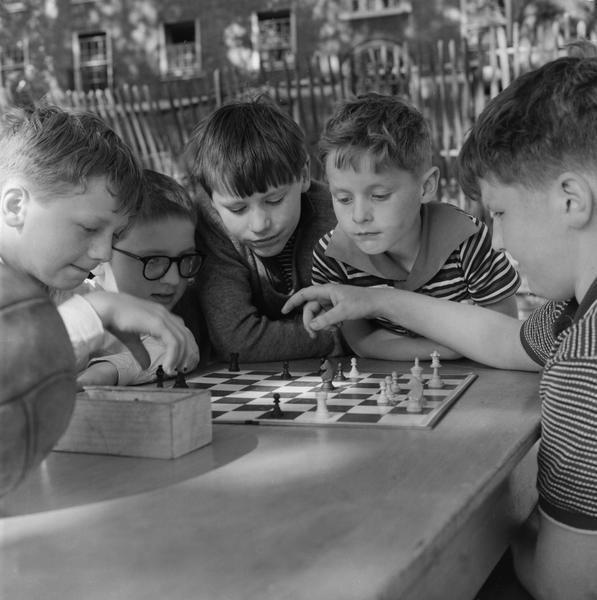
A game of chess at the Coram's Fields Holiday Play Centre (negative)
Grant, Henry
C. 1965
-
Paintings, Prints & Drawings