
Who are the Chelsea Pensioners?
Chelsea Pensioners are the 300-or-so British Army veterans who live in the Royal Hospital Chelsea, a soldiers’ retirement home founded by King Charles II in 1682.
Chelsea, west London
Since 1682
Chelsea Hospital is a historic retirement home
The Royal Hospital Chelsea was founded by King Charles II in 1682 for “the succour and relief of veterans broken by age and war”. In 1692, the first Chelsea Pensioners moved into their individual ‘berths’. Once known as in-pensioners, these veterans give up their army pension to stay there, attracted by the home’s unique community and traditions.
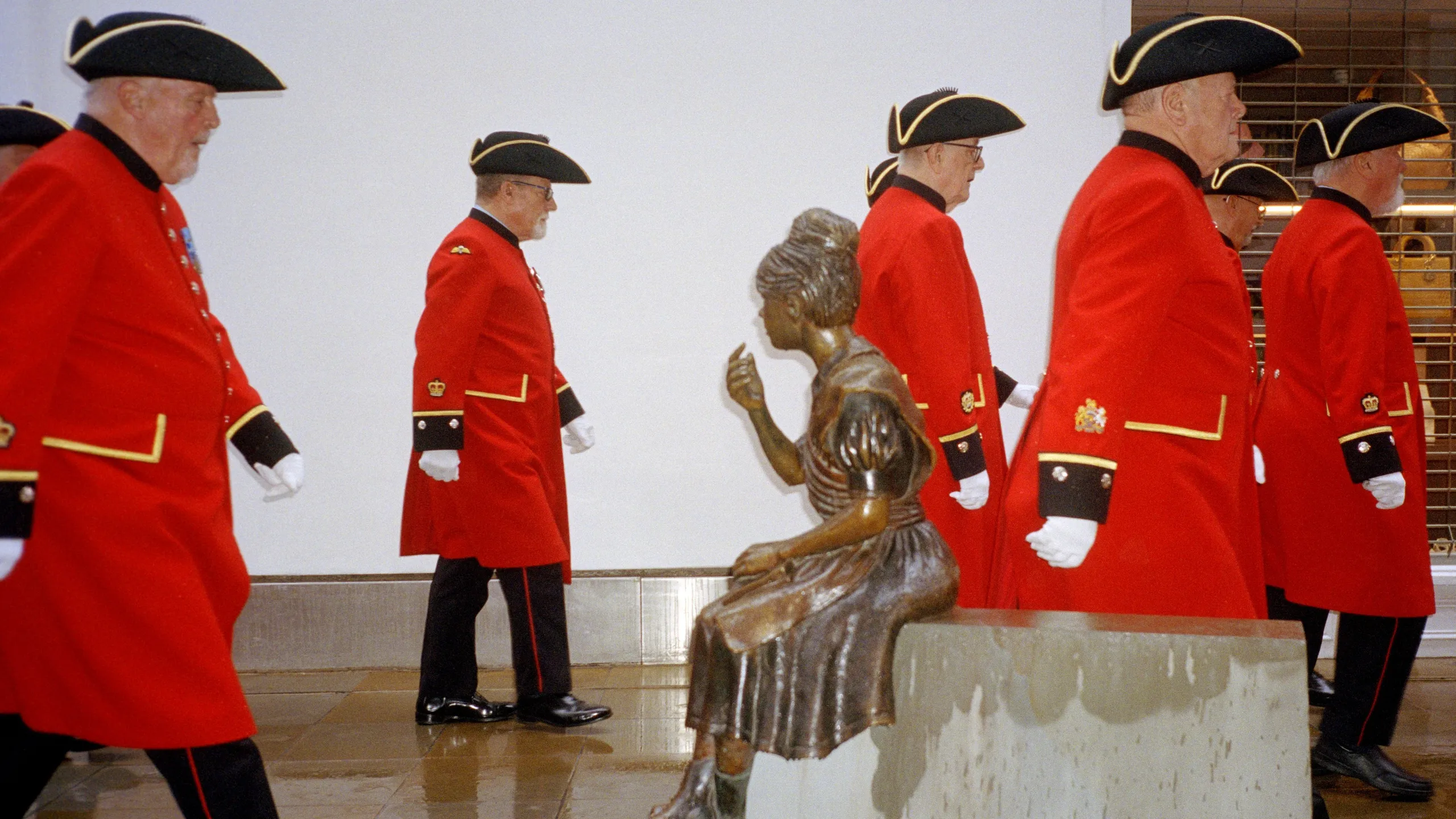
Who can become a Chelsea Pensioner?
Chelsea Pensioners are British Army veterans who are old enough to receive their state pension. Veterans can only qualify for a place if they aren’t married or in a civil partnership, and don’t have children under the age of 18. Since 2009, women have also been allowed to become Chelsea Pensioners.
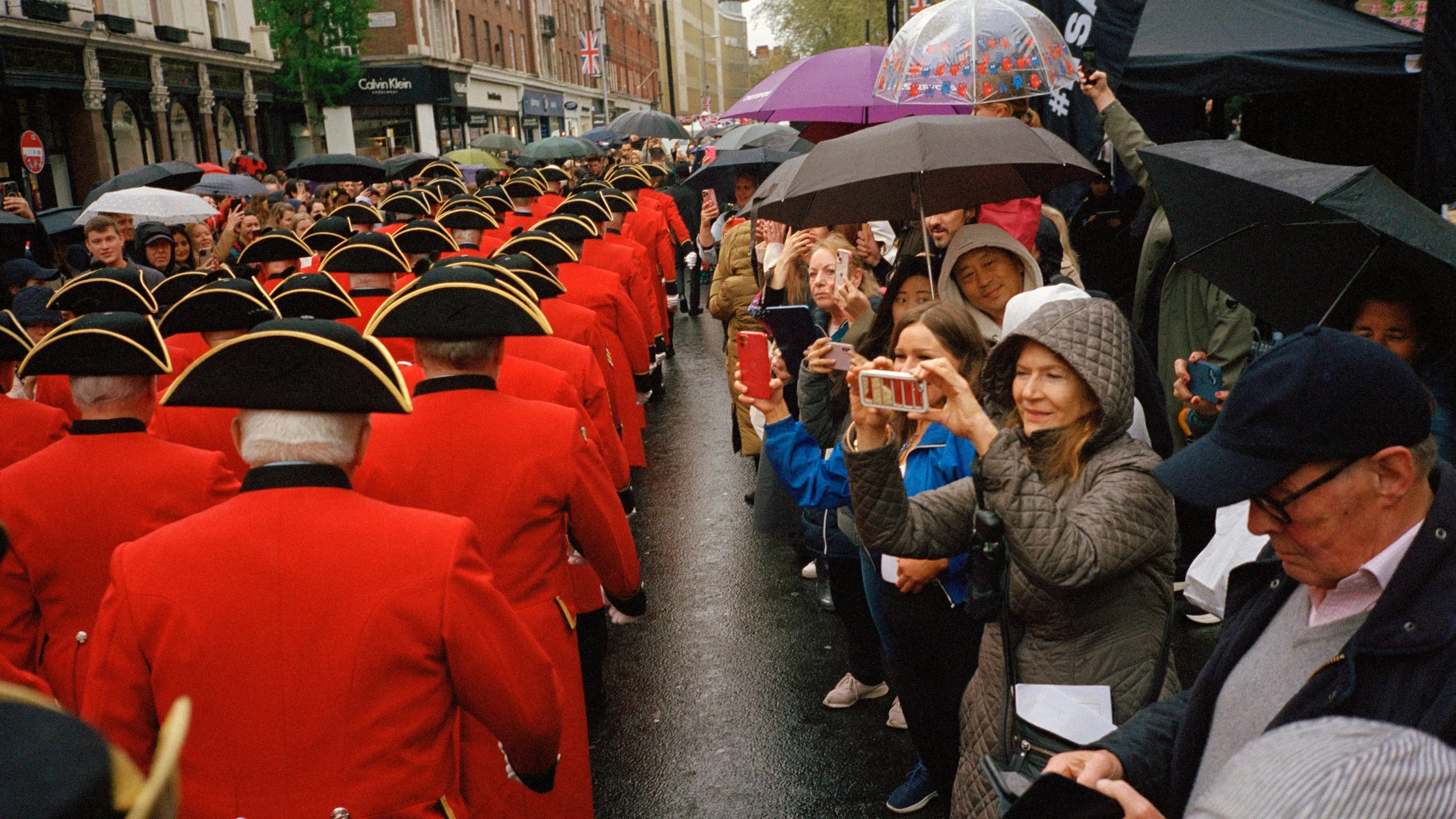
The Chelsea Pensioner uniform
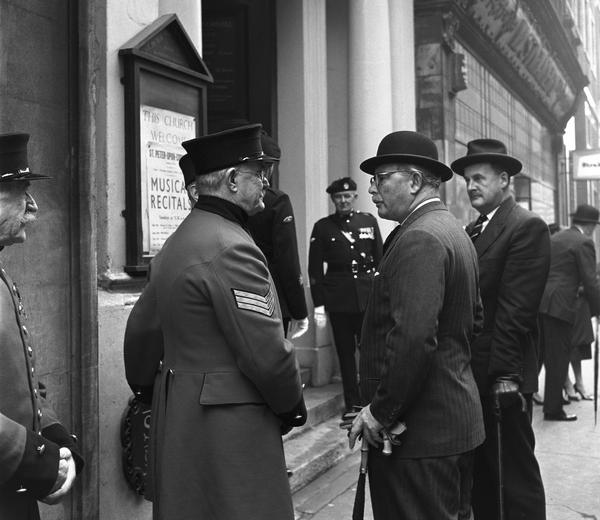
Chelsea Pensioners can be recognised by the long red coats that they wear when representing the hospital in public, raising funds for charity or appearing in parades. On special occasions, like the coronation parade pictured here, they wear a traditional tricorn hat. Otherwise, they wear dark caps with ‘RH’ for Royal Hospital embroidered in gold.
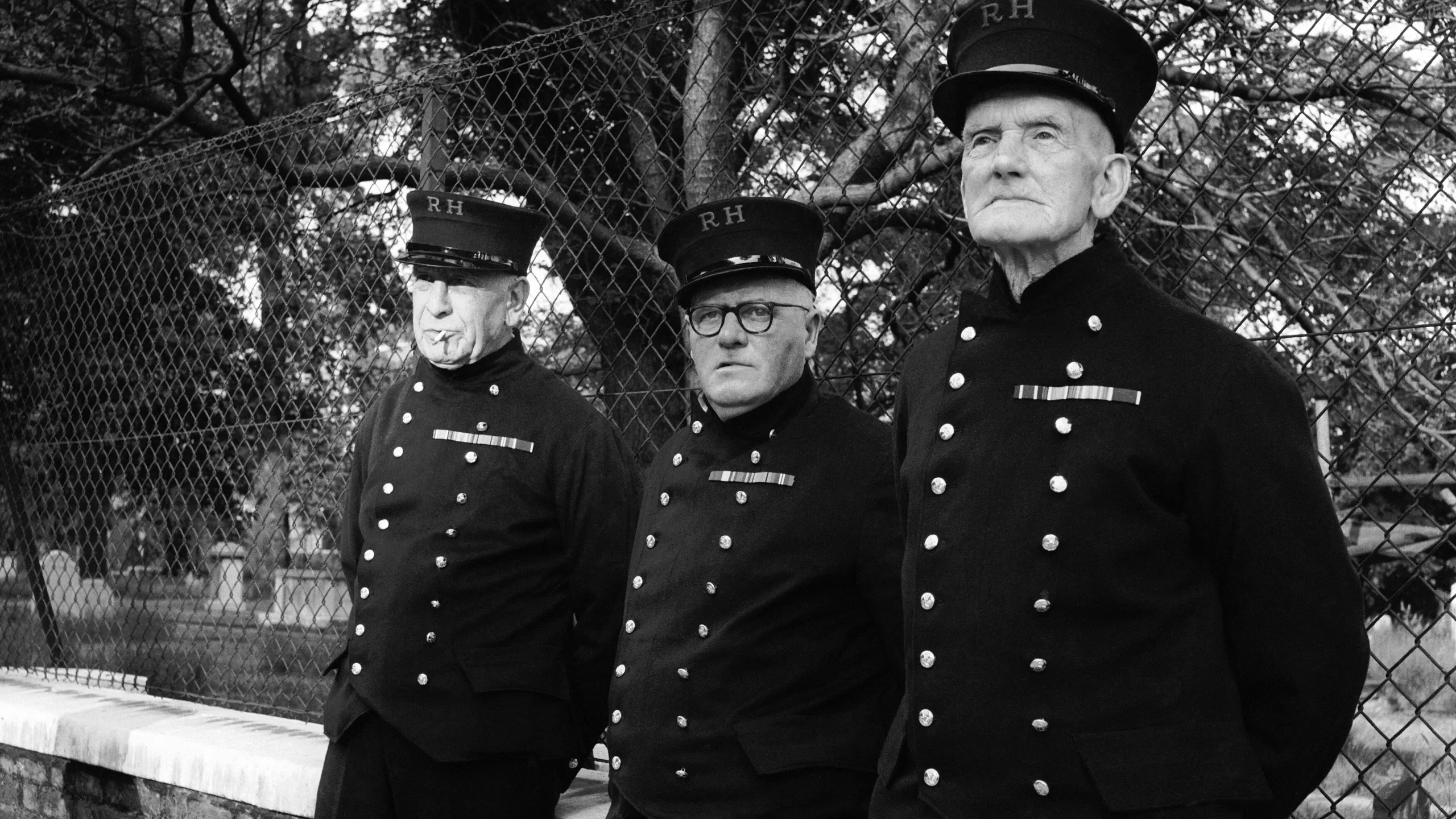
Outfit change
Within the grounds, Chelsea Pensioners usually wear their everyday ‘blues’ – navy blue coats or jumpers and a light blue shirt.
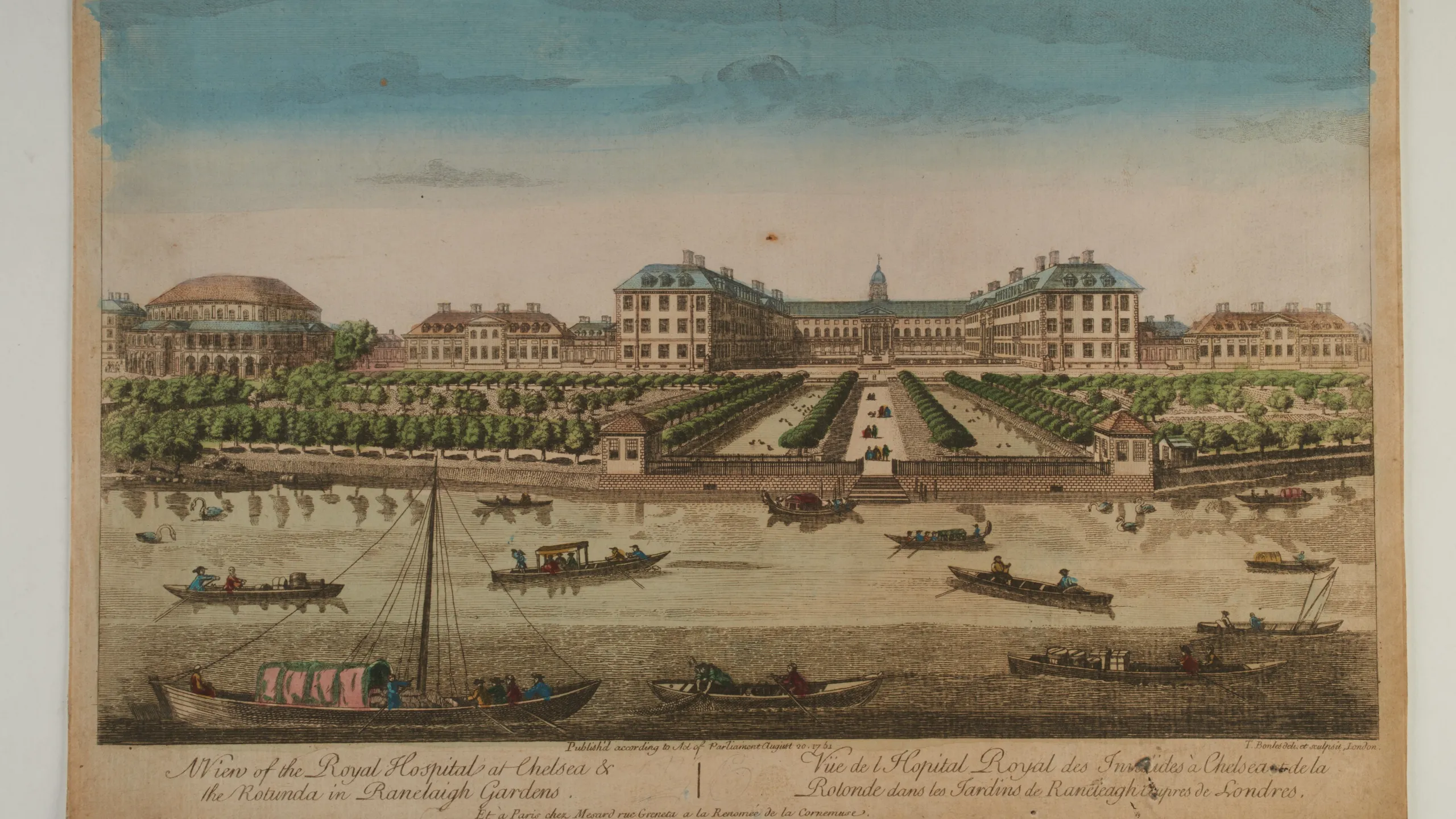
The hospital was designed by Christopher Wren
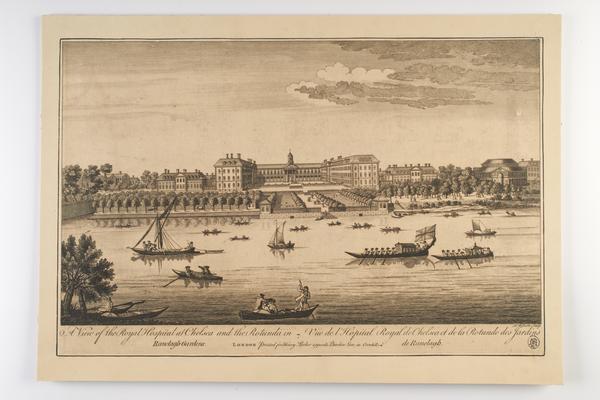
Charles II appointed Wren as the architect in 1682, a time when Wren’s most famous building, St Paul’s Cathedral, was still under construction. The Chelsea hospital has been adapted and added to, but Wren’s original structure largely still stands, including the great hall. The hospital is located by the River Thames, opposite Battersea Park. The Chelsea Flower Show is held in its grounds.
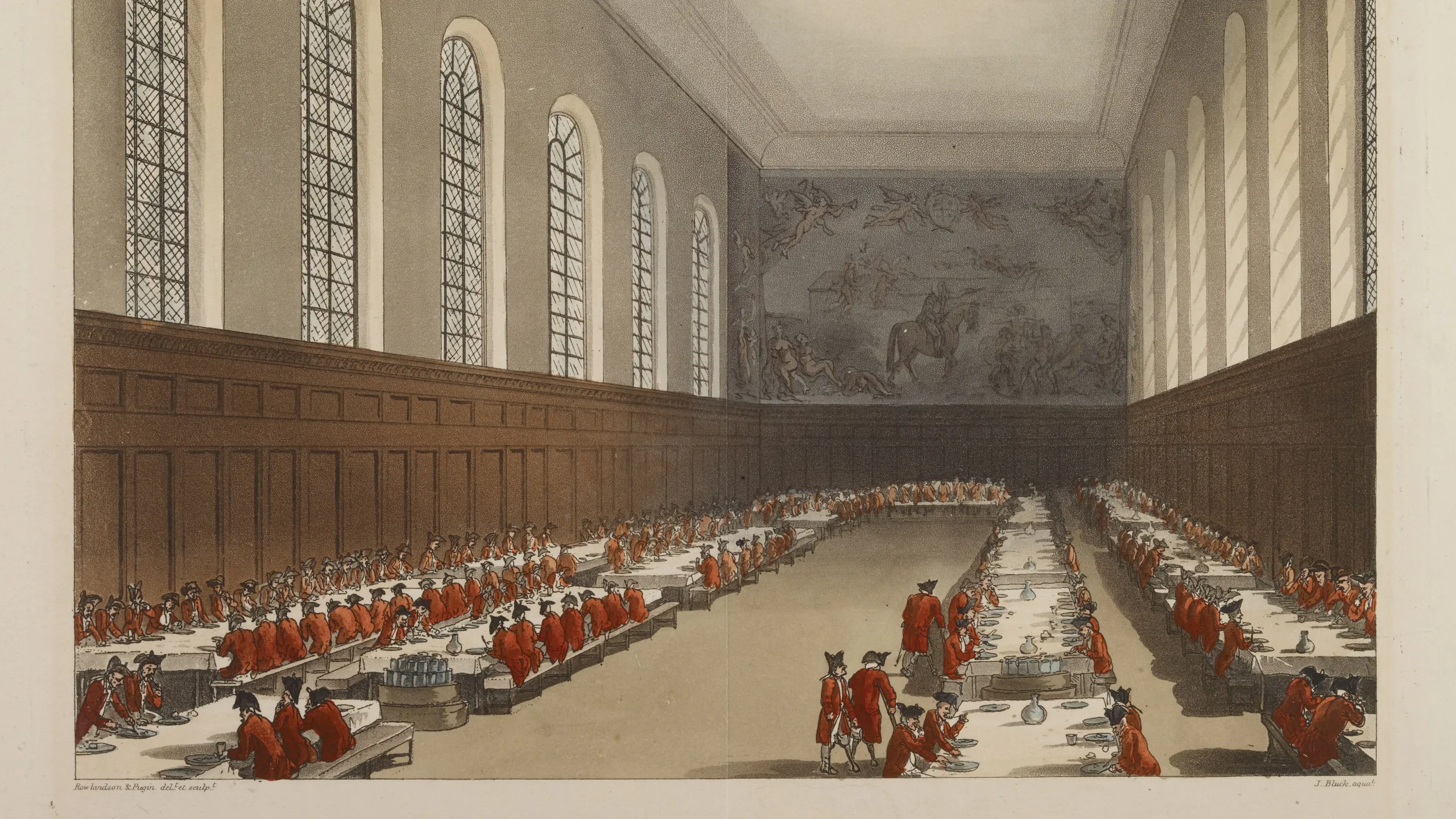
The great hall
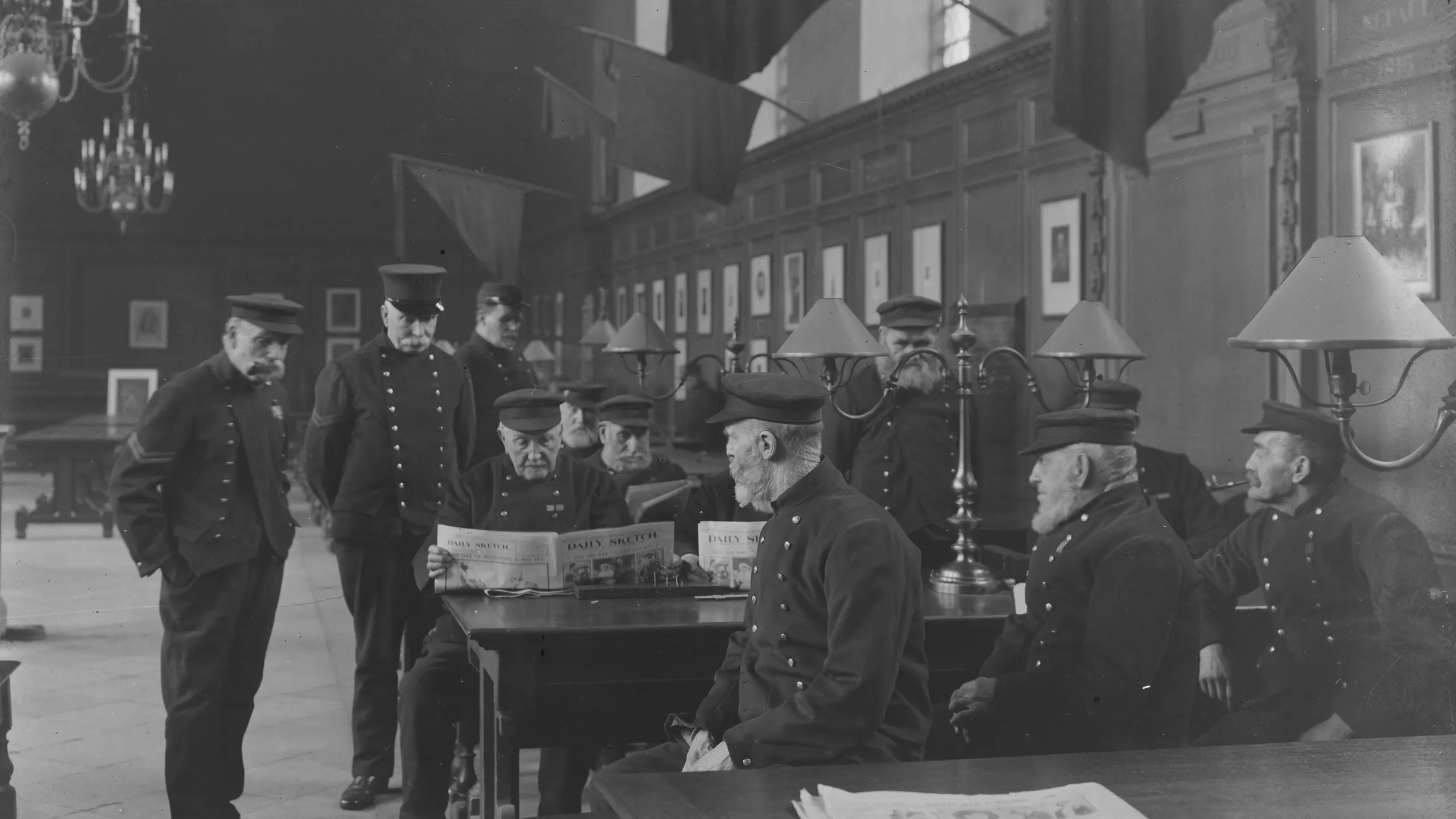
Food is still served in the hospital’s great hall, drawn here in the early 19th century.

The Pensioners
Chelsea Football Club were once nicknamed ‘The Pensioners’ for the nearby hospital, before becoming ‘The Blues’ for their blue kit.
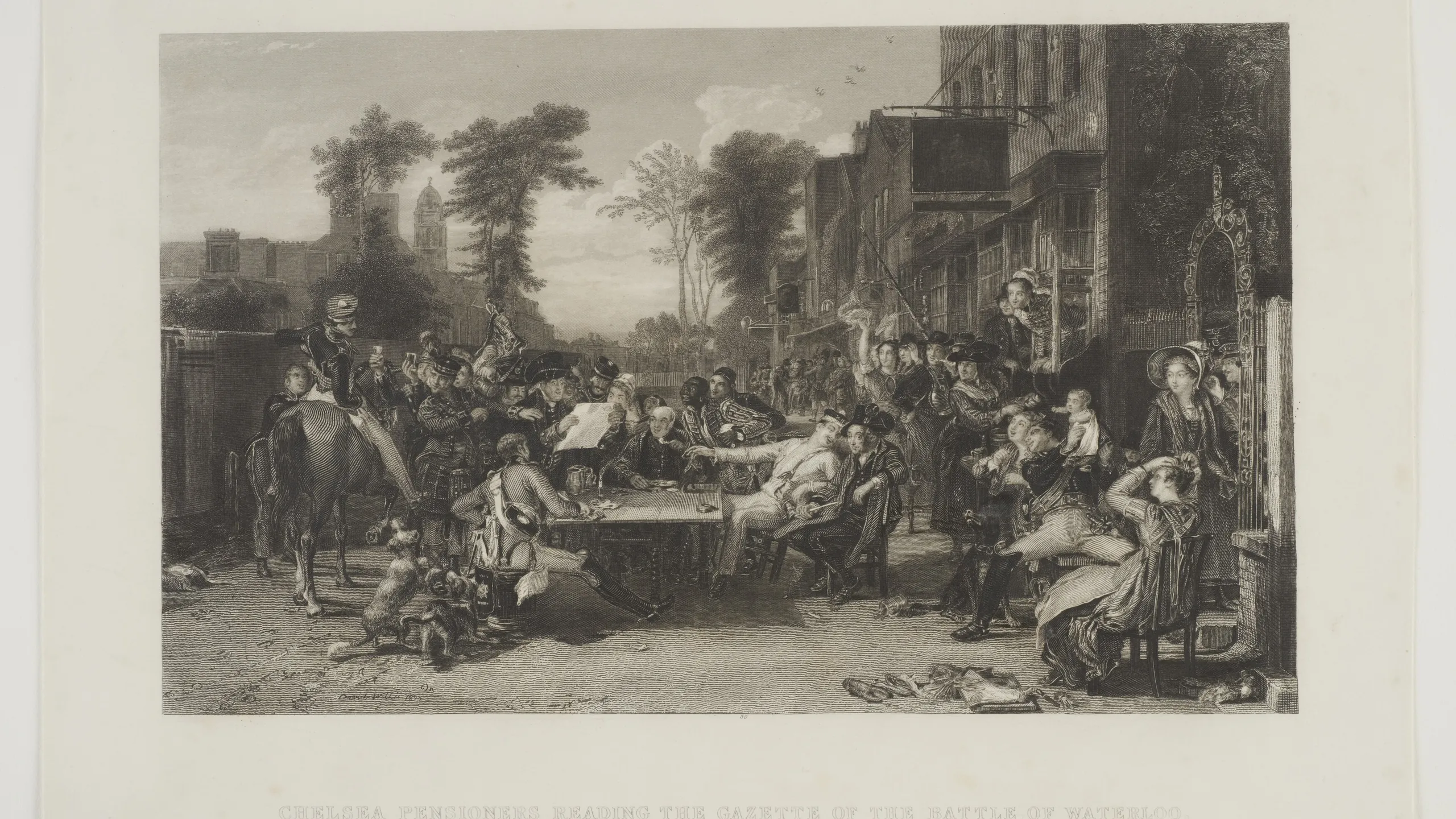
Painted famous
This print from our collection is of a famous painting by David Wilkie from 1822. It shows Chelsea Pensioners reading the news of the British Army’s victory at the Battle of Waterloo in 1815. The coffin containing the body of the Duke of Wellington, commander of the British forces at Waterloo, was displayed at Chelsea Hospital in 1852. It attracted such a large crowd that two people died in the crush.

Founder’s Day
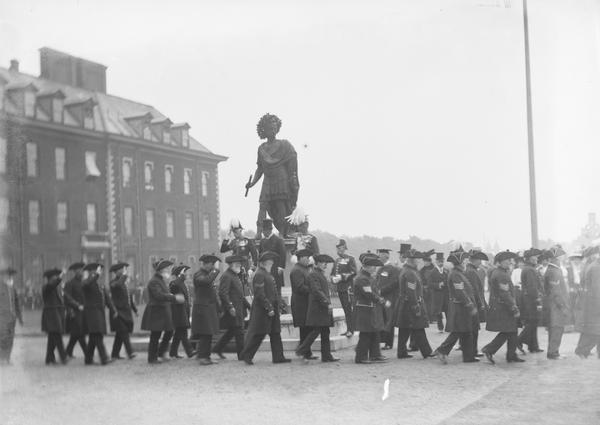
One centuries-old Chelsea Pensioner tradition is the annual celebration of Charles II, whose statue stands in a courtyard of the hospital. It’s also known as Oak Apple Day because, after a battle in 1651, the king is said to have hidden in an oak tree. On Founder’s Day, the pensioners wear oak leaves and the statue is decorated with them. In this photo from between 1903 and 1910, the statue wears an oak-leaf headpiece.
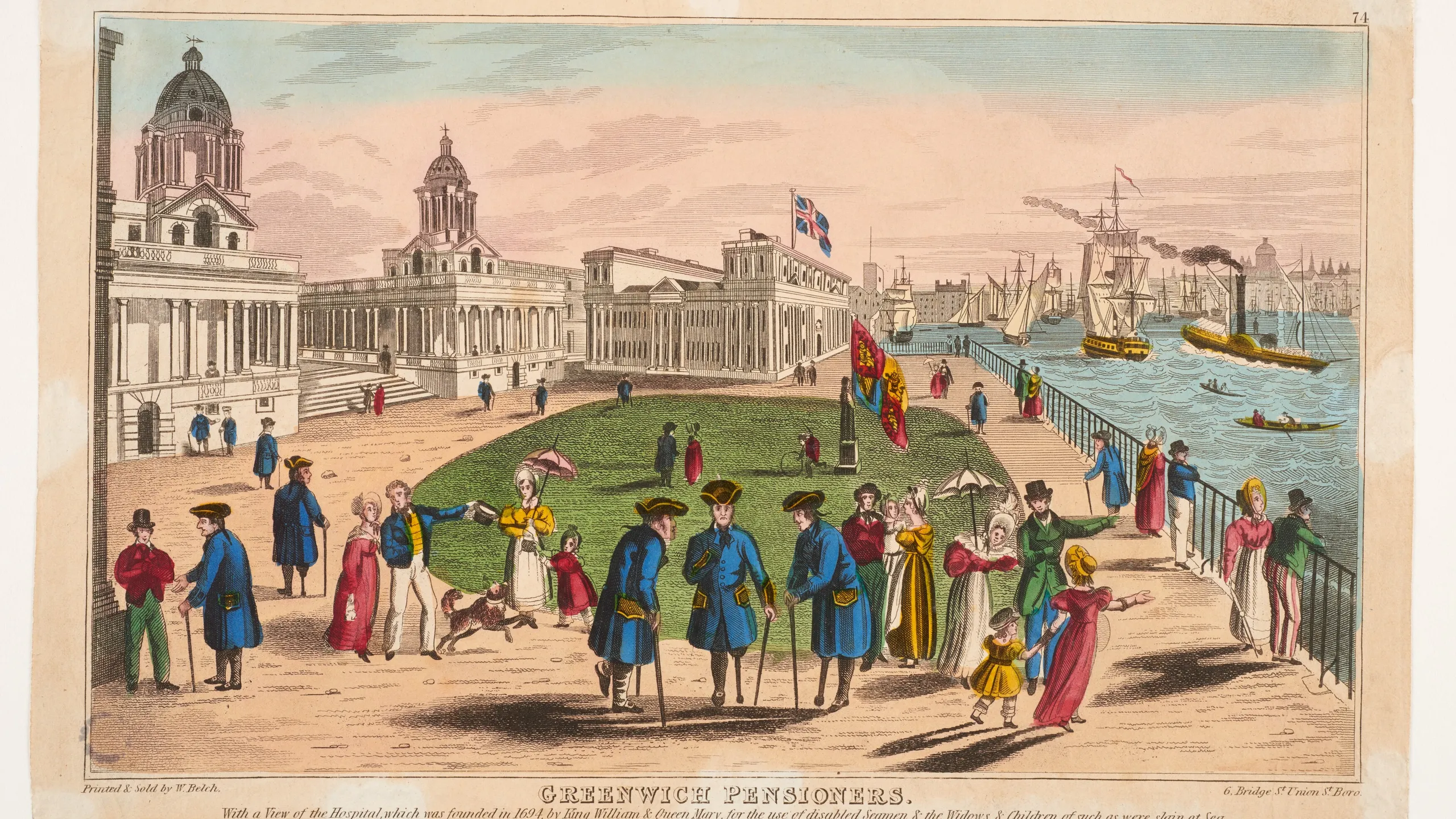
Greenwich Pensioners
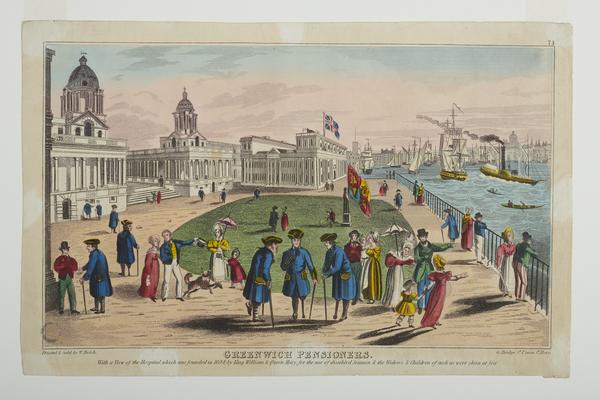
In the same way that the Chelsea hospital houses retired soldiers, London’s Greenwich hospital once accommodated disabled sailors, and the widows and children of sailors killed at sea. Locals called the pensioners ‘Greenwich geese’. Their uniform was originally grey, then brown, then blue, as worn here by the pensioners, many of whom are shown missing arms and legs. The hospital was founded in 1695 by King William and Queen Mary, and closed in 1869.
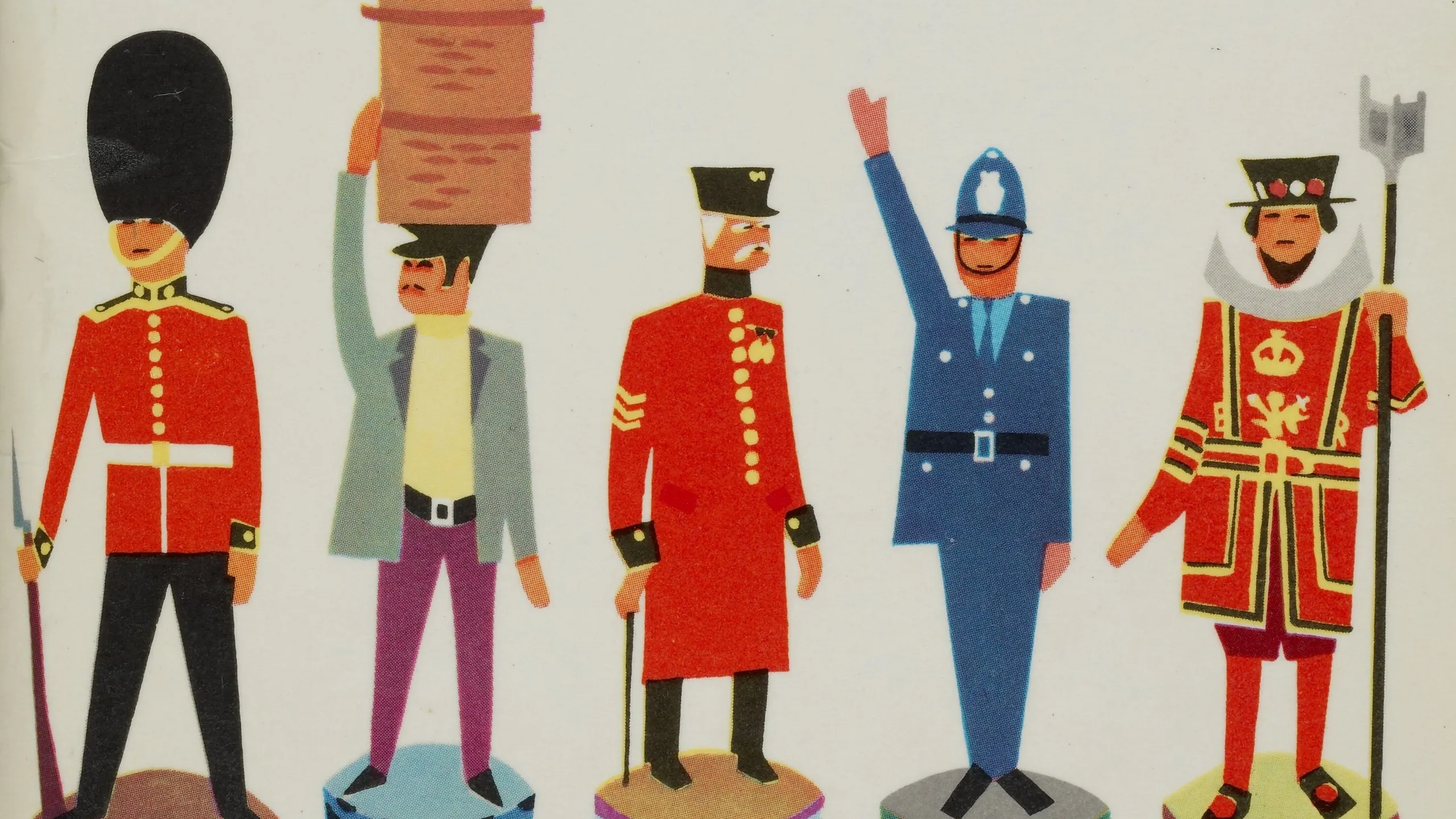
A figure of the London landscape
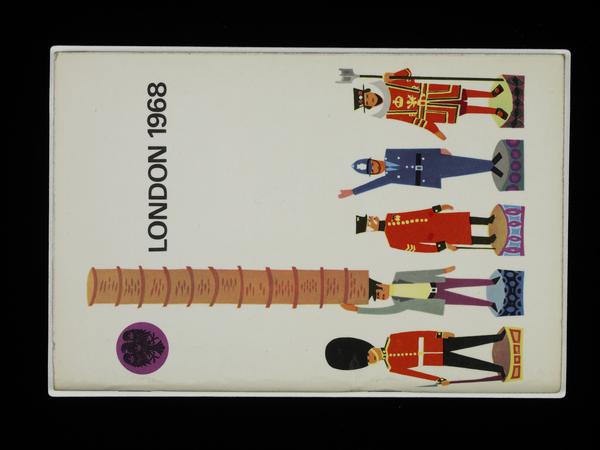
For their distinctive uniform and long history, Chelsea Pensioners have become part of the picture of our city. This guidebook published by Barclay’s Bank in 1968 arranged them alongside other recognisable characters: a King’s Guard, a costermonger, a Beefeater and a police officer.
Tags
-
-
Paintings, Prints & Drawings
 Paintings, Prints & Drawings
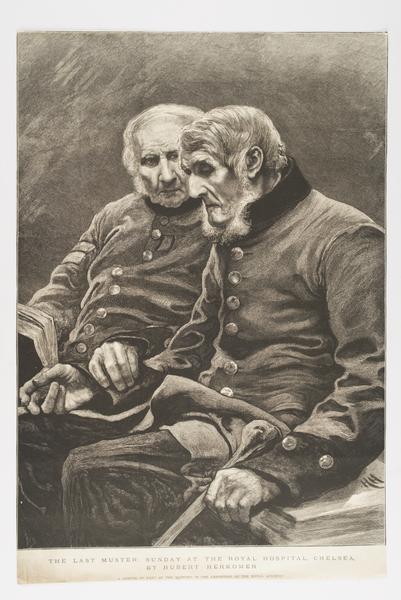
The Last Muster: Sunday at the Royal Hospital, Chelsea (wood engraving)
Herkomer, Hubert
1875
-
Paintings, Prints & Drawings
 Paintings, Prints & Drawings
A View of the Royal Hospital at Chelsea and the Rotunda in Ranelagh Gardens. (engraving)
Roberts, Henry, Parker, Henry
1742-1800
-
Printed Ephemera
 Printed Ephemera
London 1968 (guidebook)
The Barclays group, Fenton, E.W., Davenport, Askew & Co Ltd
1968
-
Paintings, Prints & Drawings
-
-
Paintings, Prints & Drawings
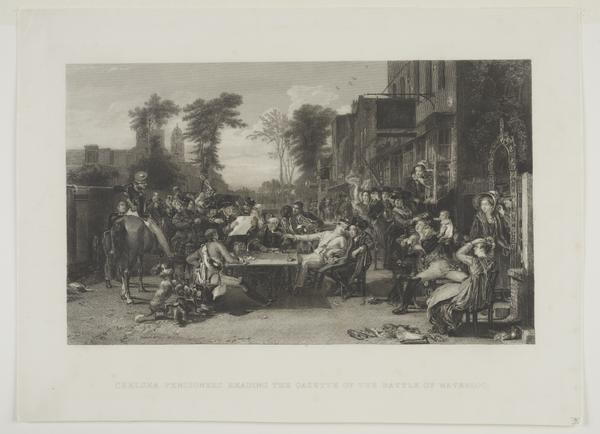 Paintings, Prints & Drawings
Chelsea Pensioners reading the gazette of the Battle of Waterloo (engraving)
Wilkie, David
1823