Anna Maria Garthwaite: Spitalfields silk designer
Anna Maria Garthwaite was one of the top silk designers of the 18th century. Living and working in Spitalfields, east London, she produced elegant floral patterns that have been found in luxury garments in Britain and abroad.
Spitalfields, Tower Hamlets
1688 – around 1763
-
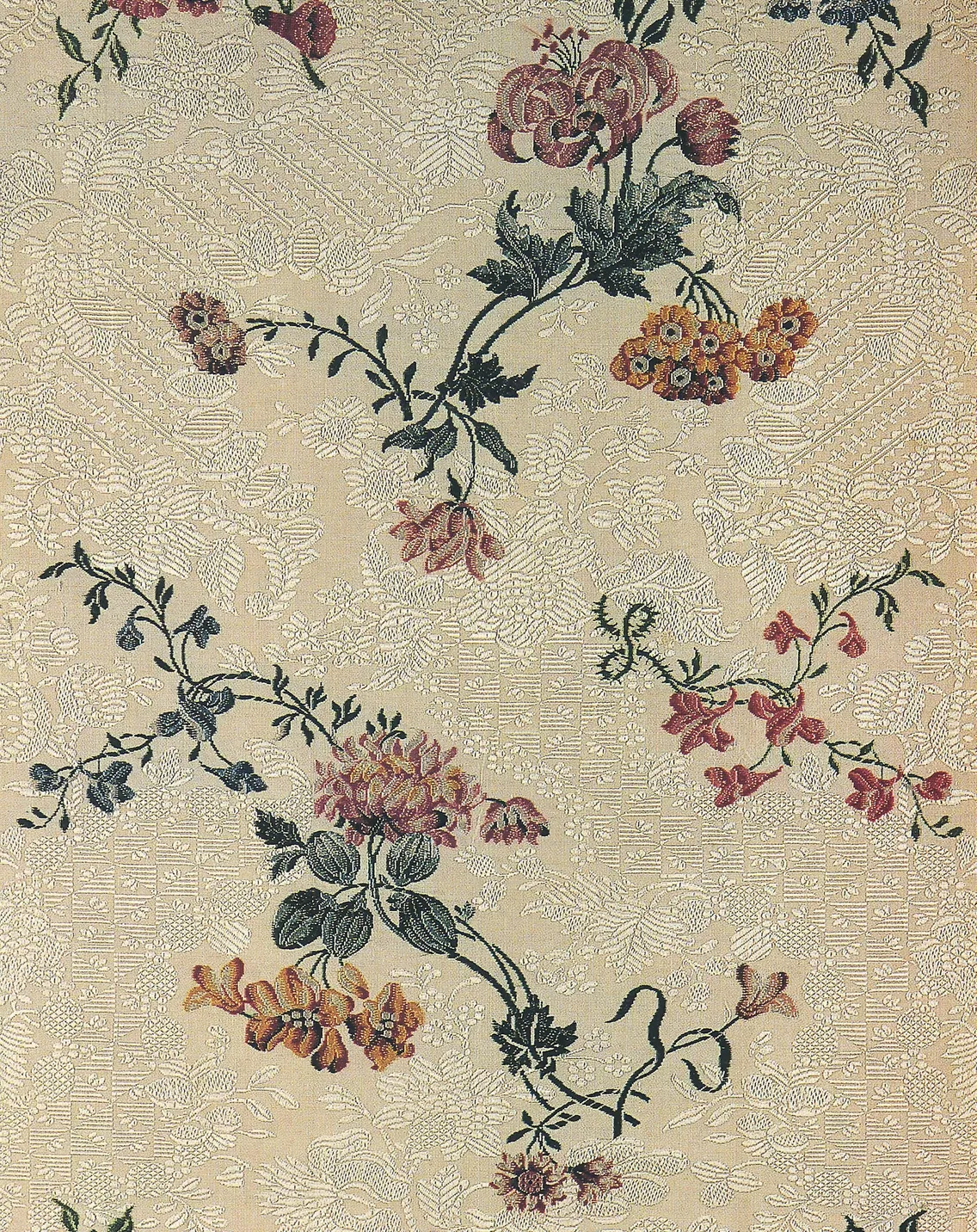
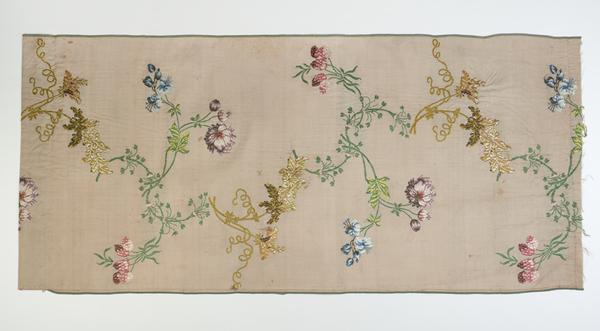
Silk panel designed by Anna Maria Garthwaite.
A flair for flowers and natural forms
Anna Maria Garthwaite’s intricate silk patterns were hugely popular in the 1700s. She created over 1,000 designs for woven silks, which she sold to master weavers. And she built her business in Britain’s silk capital: Spitalfields, east of the City of London.
Garthwaite made her name with naturalistic designs depicting flowers, leaves and fruit. The finished fabrics featuring her designs were turned into luxurious garments. Examples have been found across Europe and North America.
As a successful woman in this industry, Garthwaite went against the grain, defying society’s expectations for people of her age and gender. Her career is all the more impressive considering she had no training in weaving, no family in the trade, and only got into the work in her 40s.
Garthwaite made a life for herself in London
Garthwaite and her sister Mary moved from York to Spitalfields in 1728. She was in her early 40s. They settled in a newly built Georgian townhouse on Princes Street (now Princelet Street), a stone’s throw from Christ Church Spitalfields.
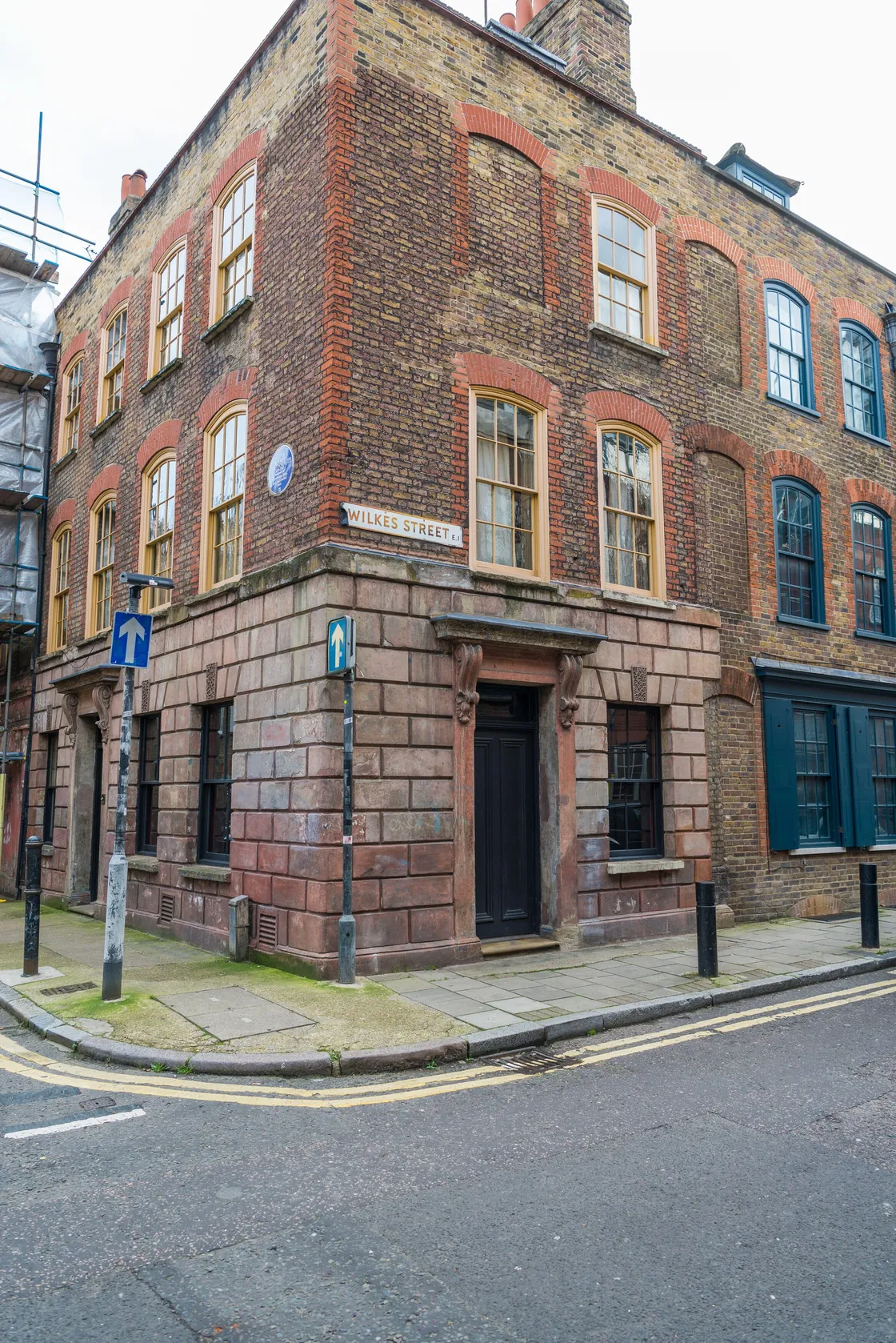
The former home of Anna Maria Garthwaite on the corner of Wilkes Street and Princelet Street.
By the time Garthwaite had moved down south, she’d already shown an interest in textile design. She made her first known drawing in York. And she’d also collected and studied silk designs by pulling together what she called “Patterns by Different hands” into reference books.
Spitalfields was the centre of the English silk industry
Spitalfields was undergoing a silk boom in the 1720s. Since the 1680s, thousands of Protestant Huguenot refugees fleeing persecution in Catholic-ruled France had settled in the area. They brought with them their skills in textile work and developed the silk weaving industry here.
London became well known for producing silk for clothing, such as dresses and waistcoats. This print by artist William Hogarth shows us what an 18th-century weaving workshop in Spitalfields looked like.
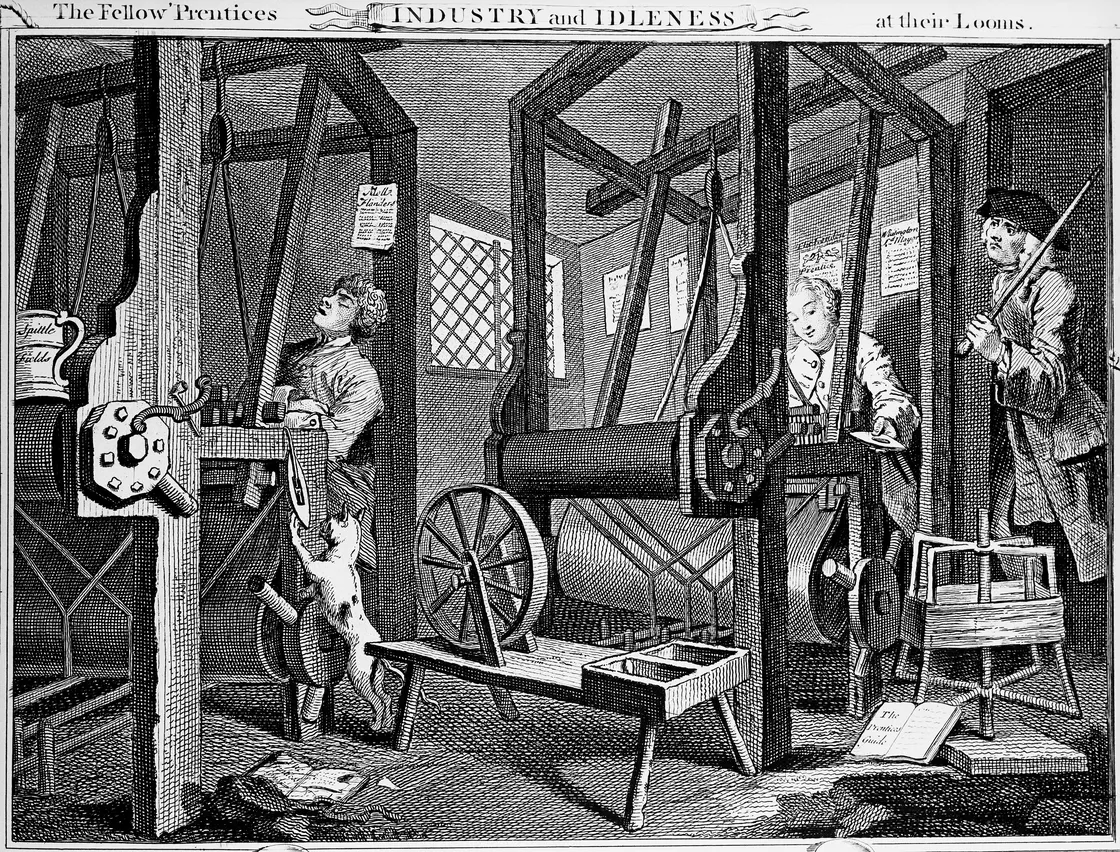
This print by the artist William Hogarth shows what an 18th-century weaving workshop in Spitalfields looked like.
There were women in the silk trade. However, they were mostly limited to lower-status roles, such as ‘throwsters’, who spun and twisted silk. Few worked as designers.
We don’t know exactly how Garthwaite got involved in the silk industry. There’s no evidence she had any formal training, and none of her family were involved in the weaving trade.
But many of her neighbours, or those who attended Christ Church Spitalfields, were involved in the weaving industry. Some master weavers who lived on her road even commissioned designs from her.
Garthwaite’s floral style
Garthwaite was best known for her floral designs, which fitted the fashion for botanical illustration in England at the time. Her skill in shading and colour made work that was vividly realistic – almost three-dimensional.
This dress fabric in our collection shows a typical naturalistic Garthwaite design. The flowers are scattered across the fabric in asymmetrical clumps. They also have serpentine ‘s’ and ‘c’ shaped stems, which Hogarth called “line[s] of beauty”.
-
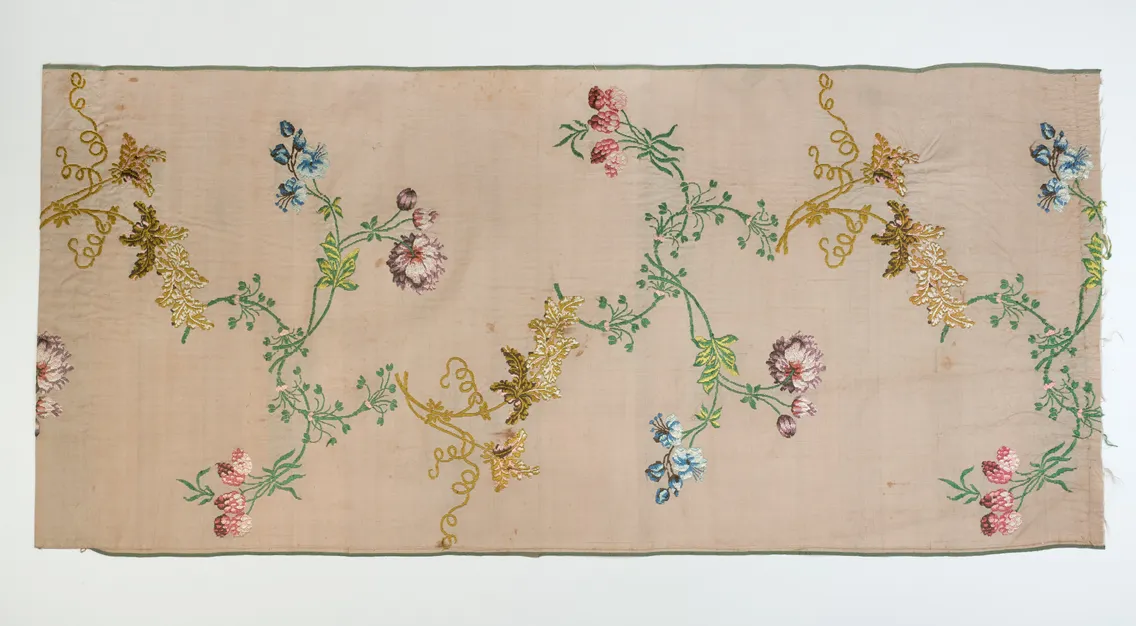
Silk dress fabric designed by Anna Maria Garthwaite.
Garthwaite probably found inspiration in London’s gardens for the wide range of plants she drew. The brother of her sister’s husband was a botanist, and he gave her access to Chelsea Physic Garden. There, she studied and sketched native English plants taken from across the British empire, such as aloes.
Silk design was a highly skilled job
Silk design isn’t just about putting what looks good onto a page. Garthwaite’s watercolour designs had to instruct the weavers working their looms, so that they knew what pattern to follow. Giving precise directions for creating a length of silk required Garthwaite to have a strong grasp of the weaving process.
Garthwaite often dated her designs. She also noted which weavers she’d sold them to. We can see she worked with the best in the textile trade. Her patterns would have been time-consuming to weave and costly to make.
Most of what we know about Garthwaite comes from her watercolours. She didn’t keep a diary or letters, unlike other educated women in her time. Instead, we get fragments of her voice from her annotations.
-
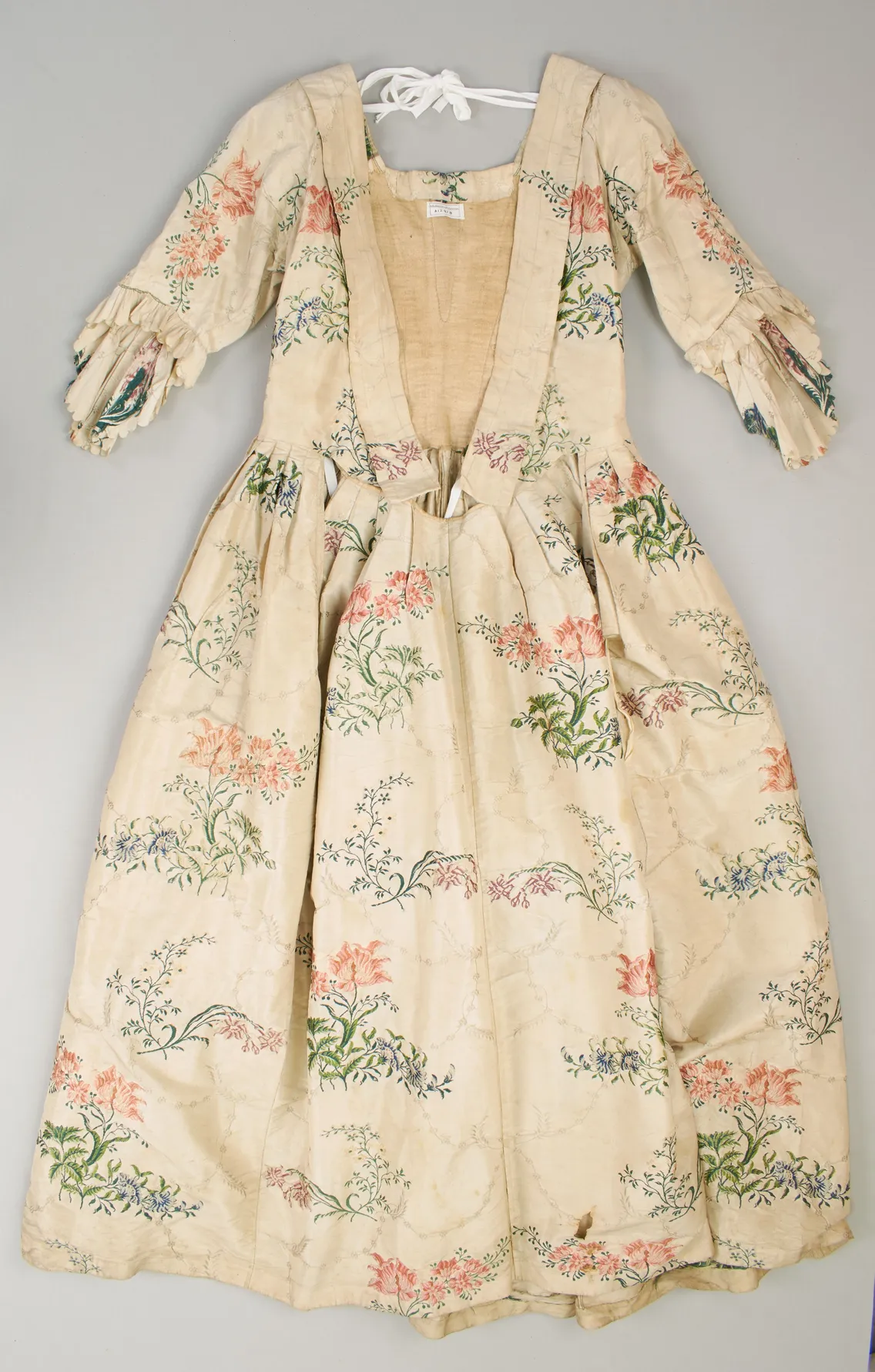
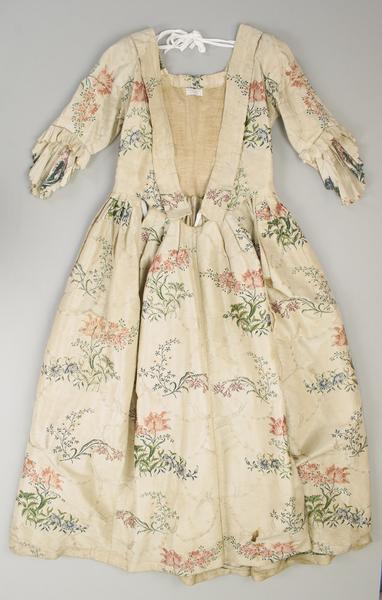
Silk dress designed in the style of Anna Maria Garthwaite.
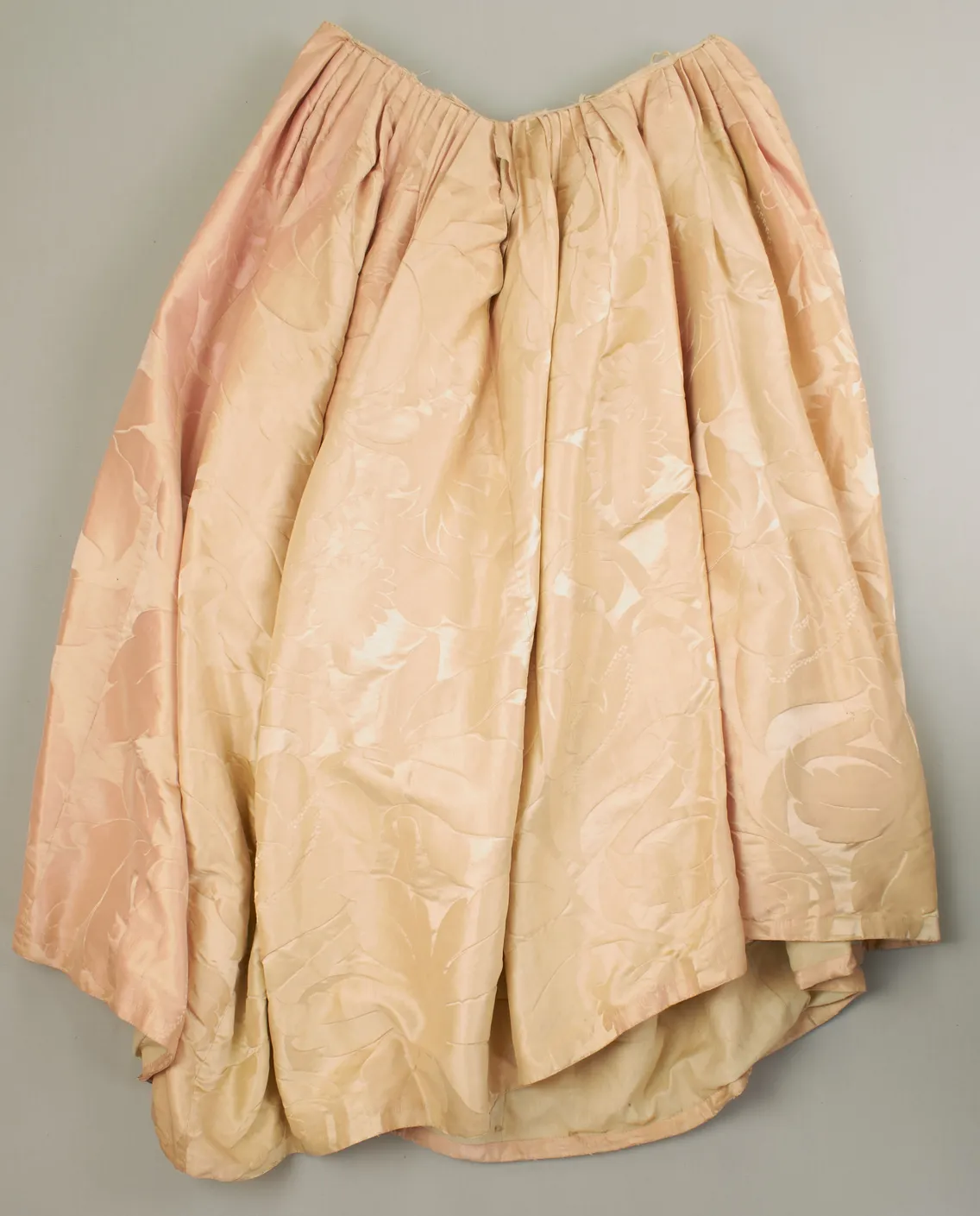
Garthwaite’s influence on silk
Garthwaite’s silks were well travelled. As Spitalfields silks were widely exported, her designs have popped up in portraits and costume collections across Europe and North America.
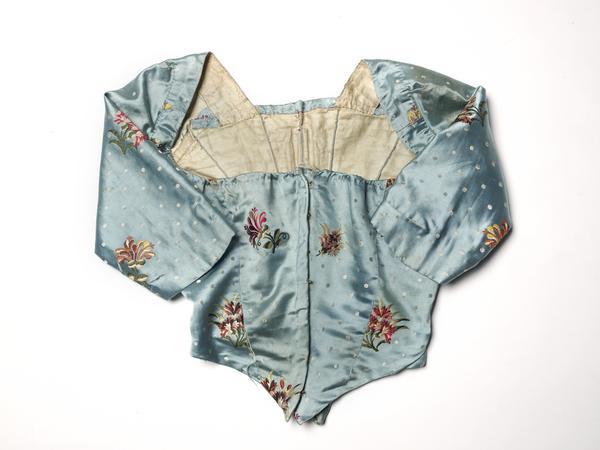
Other garments in our collection are also in Garthwaite’s style, like the silk petticoat and dress above.
We won’t know for sure whether they were her designs. But even if they aren’t, their floral design shows her influence on Spitalfields silk from that time.