11 May 2026 — By Alex Werner
Sherlock Holmes’ London: The city behind the stories
221B Baker Street is fictional, but Sherlock Holmes’ London was very real. This is the city that inspired Arthur Conan Doyle to create the world’s greatest detective.
-
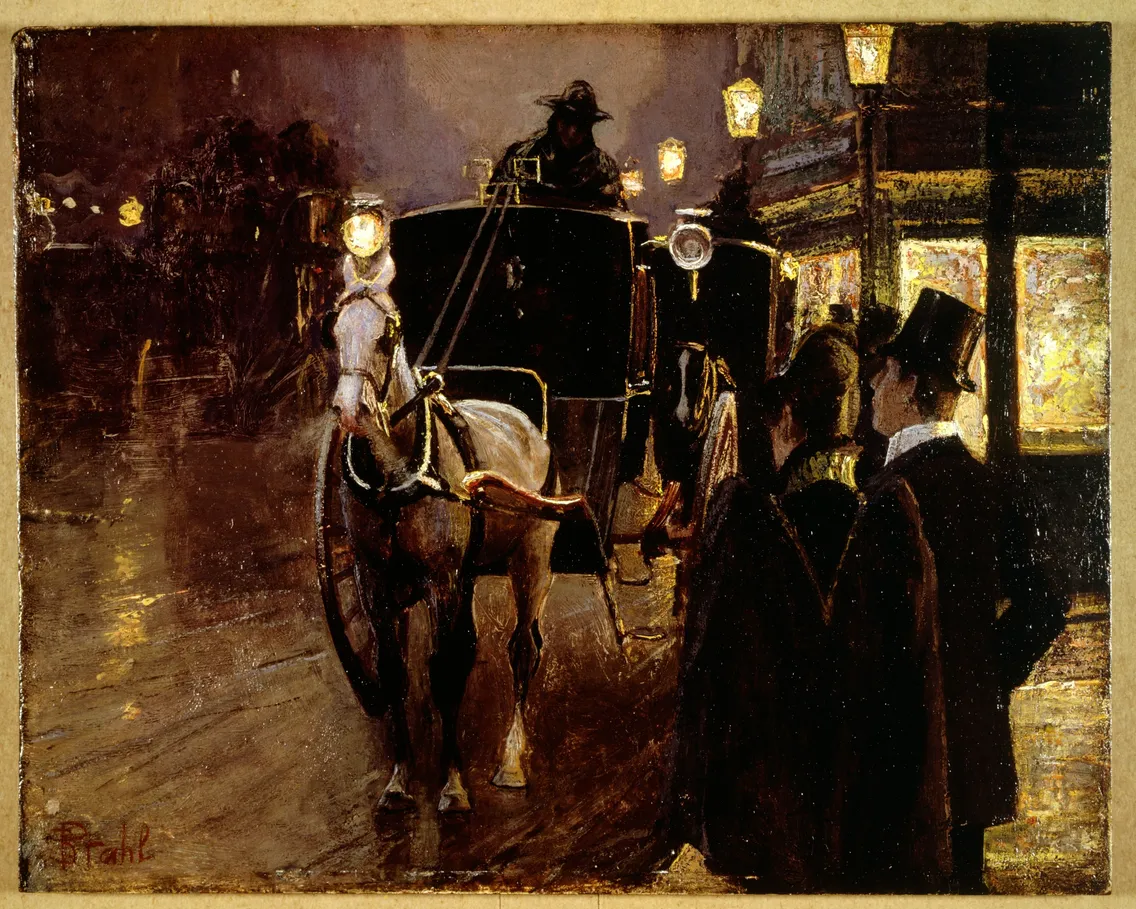
The books often had such Hansom cabs, which first appeared on the London streets in 1835, carrying Sherlock Holmes and Dr Watson around the city.
Sherlock Holmes’ London is both real and imaginary. His world radiates out from 221B Baker Street – a fictional address on a real road – and takes in the West End, where many of his clients reside, extending further out to the suburban fringes of the metropolis. Hansom cabs carry Holmes and Dr Watson around the capital and out to the mainline railway stations, from where they travel to distant parts of 19th-century England while solving their many cases.
A changing London
London was a city in transition when the Sherlock Holmes stories were first published. Old buildings were being pulled down and streets widened. Nowhere was this more marked than in Westminster, where imposing government offices fit for ruling Britain’s enormous empire were springing up on either side of Whitehall. Nearby, around Trafalgar Square and along the Embankment, palatial hotels were accommodating visitors to the imperial capital.
These new city quarters promised dramatic possibilities – lost government documents, foreign dignitaries caught in awkward personal situations. Such circumstances required the services of Sherlock Holmes, the world’s only consulting detective.
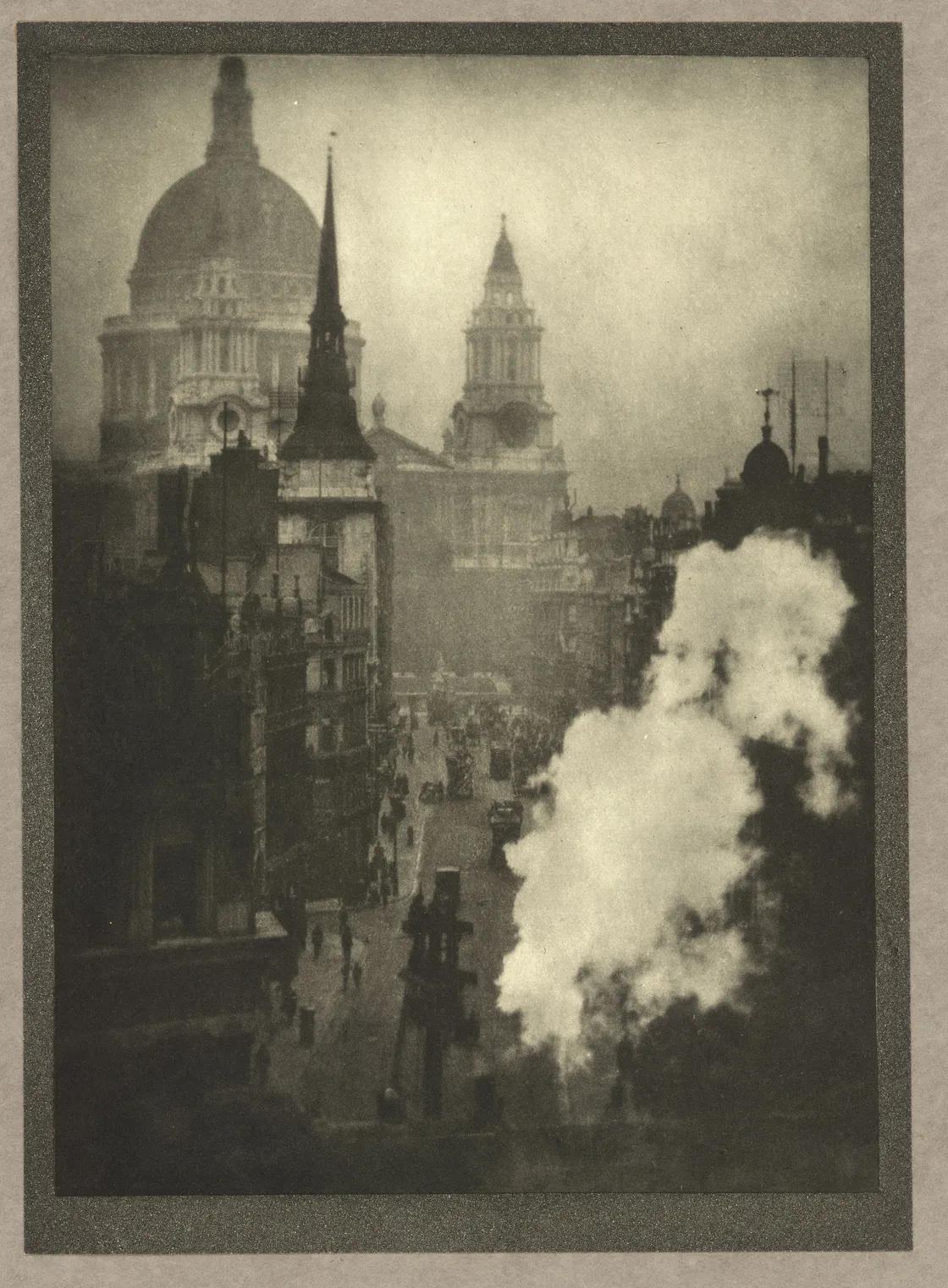
An impressionistic view looking across Ludgate Circus and towards St Paul's Cathedral, about 1909.
Fog, gas-lit streets and danger
Late 19th-century London had a strong visual character of its own. Photographers recorded all the prominent landmarks, as well as the detail of its street life. Artists struggled to capture the capital’s unique atmospheric mood, colour and light. The fog and smoke that so often shrouded the streets added an edge of threat and ambiguity to London’s visual mood. That atmospheric pollution, combined with the city’s eerie nights, made its gas-lit, cobbled streets invited the danger of a midnight stroll.
Life and art compounded this intimidating atmosphere in equal measure. Just as Arthur Conan Doyle was writing his first Sherlock Holmes stories, the horrific Jack the Ripper murders were taking place in Whitechapel, east London. And each evening in the West End, Robert Louis Stevenson’s Dr Jekyll and Mr Hyde was shocking London audiences on stage.
“The London that shaped Holmes was a city becoming more complex and fast-moving by the year”
The city on the page
Conan Doyle’s London comes alive in the stories themselves. In The Final Problem (1873), Holmes instructed a companion: “Have your fare ready, and the instant that your cab stops, dash through the Arcade, timing yourself to reach the other side at a quarter-past nine. You will find a small brougham waiting close to the curb...”
In The Sign of Four (1890), a chase down the Thames captured the river as no less crowded than the streets: “thronged with tugs, steamships, barges and lighters”, the frail vessel vibrating as “it shot through the Pool, past the West India Docks, down the long Deptford Reach, and up again after rounding the Isle of Dogs”.
Large hotels, a new element of the city, also feature prominently in the stories. In The Sign of Four, a character arrives in London and drives straight to the Langham Hotel, one of the grand new establishments that had become landmarks of the imperial capital.
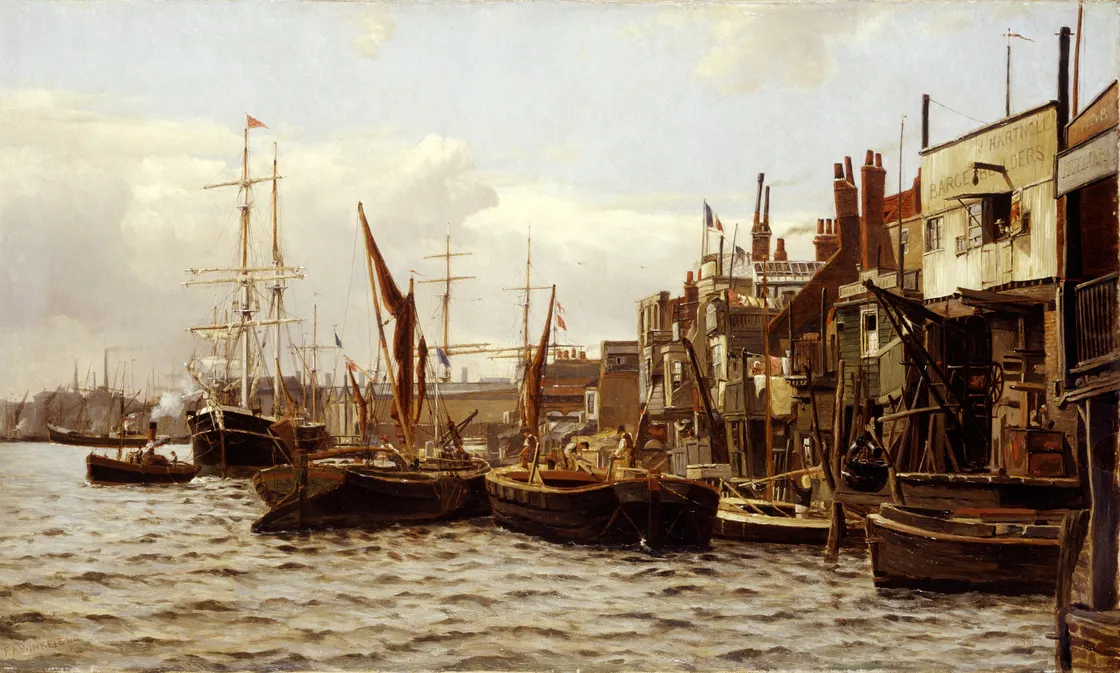
The Thames riverside at Limehouse, about 1890.
How London shaped Sherlock Holmes
The London that shaped Holmes was a city becoming more complex and fast-moving by the year. Conan Doyle presented Holmes as the one person who could make sense of it all. Described at times as a magician, he solved complex problems through the power of his intellect, exceptional observational skills and forensic methods – often where everyone else had failed.
His bohemian streak, dark moods and restlessness make sense against this backdrop. Holmes is a master of disguise who goes undercover in the city. He is not afraid to break the law. He knows its obscure corners – its cyphers, its criminal networks, its fog-wrapped streets – better than anyone.
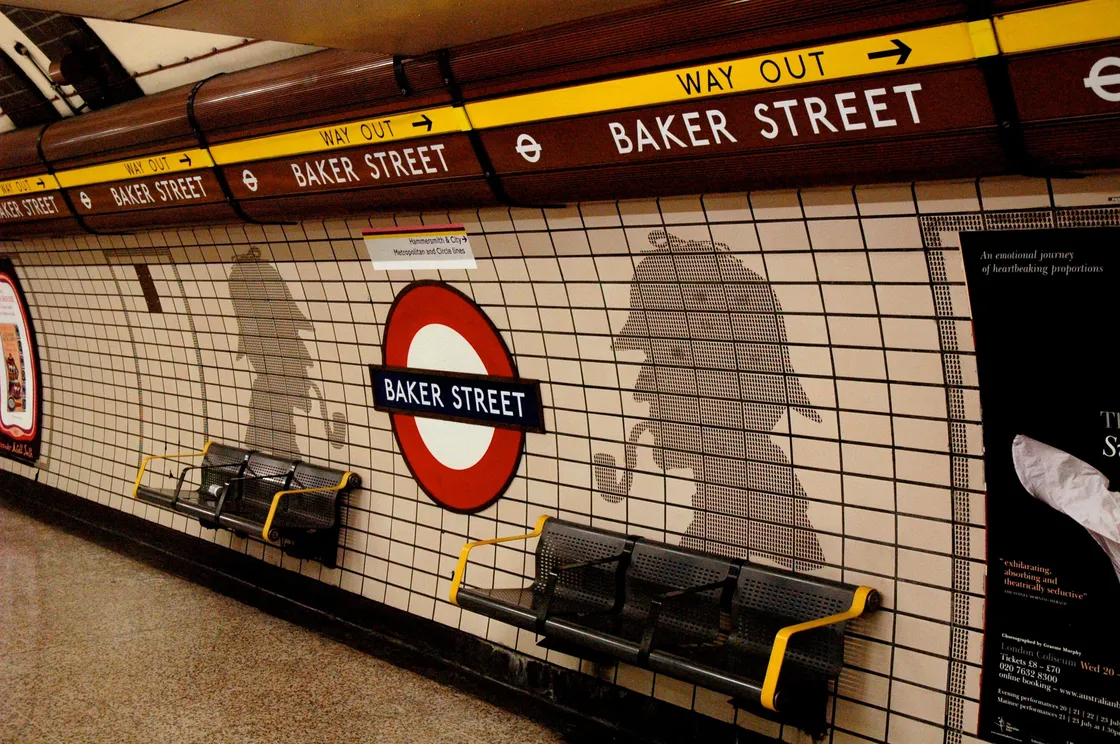
The Sherlock Holmes tile work at the Baker Street Underground station.
Why Sherlock’s London still matters
What makes Sherlock Holmes endure is inseparable from what makes London endure. It is a city that was, and remains, full of extremes – wealth and poverty, order and chaos, the known and the deeply strange. Holmes navigates all these extremes, and readers have never tired of following his journey.
The stories have been reworked continuously for new adaptations, whether set in a Victorian past or a contemporary locale. Fresh audiences are constantly drawn in. But the London at the heart of those original tales – muddy, fog-bound, chaotic, alive – remains the world Holmes was built for.
This is an edited excerpt from Sherlock Holmes: The Man Who Never Lived and Will Never Die (2014), compiled by Alex Werner, Head of Collections at London Museum.
Tags
-
 From our experts
Tiles of London, from Londinium to today
As we walk the streets of London, look up and around to enjoy this city of tiles
-
 From our experts
London Stone in seven strange myths
We examine the myths surrounding London Stone and the colourful cast of characters who created them