Photography — 1973-03
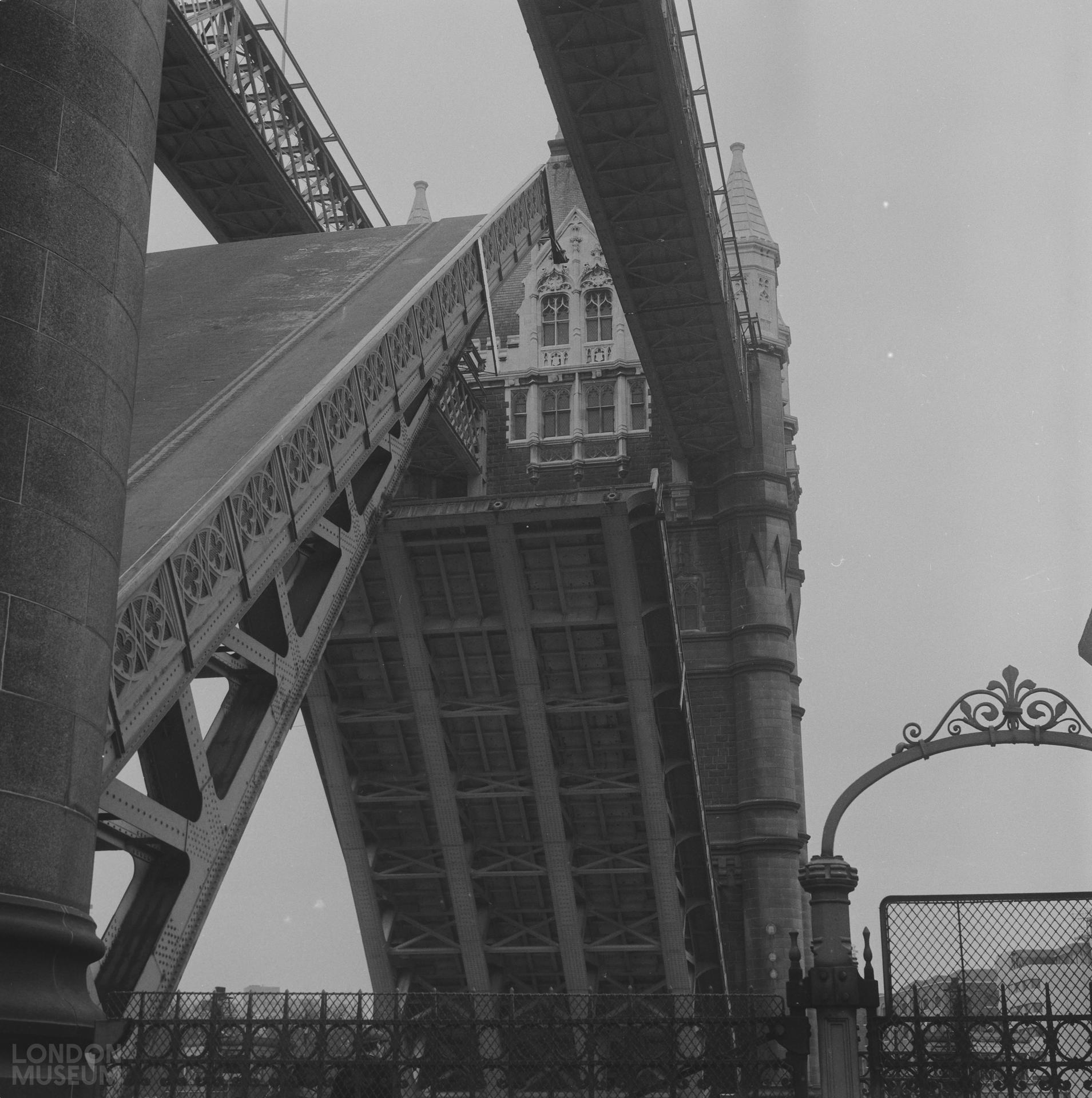
Tower Bridge, raised to allow ships to pass
Tower Bridge is the most easterly of the bridges crossing the River Thames in central London. It was designed by Horace Jones, the City architect, and John Wolfe-Barry, the son of Sir Charles Barry, architect of the Houses of Parliament.
The drawbridge structures of are known as bascules, which comes from the French for see-saw. When the bridge opened in 1894 it was the largest of its type in the world. The bascules perform a crucial function in allowing large ships into the Upper Pool, the area of river adjacent to London Bridge. In the late-19th and early-20th centuries, the river was still the major entry point for goods traffic, with many wharves and Billingsgate Fish Market located between Tower and London Bridges. It was operated by hydraulics, using steam to power the pumping engines. Steam was replaced by electricity in 1976.
- Category:
- Photography
- Object ID:
- HG2375/69
- Object name:
- Tower Bridge, raised to allow ships to pass
- Object type:
- Artist/Maker:
- Grant, Henry
- Related people:
- Related events:
- Related places:
- Production date:
- 1973-03
- Material:
cellulose acetate
- Measurements/duration:
- 6x6
- Part of:
- —
- On display:
- —
- Record quality:
- 100%
- Part of this object:
- —
- Owner Status & Credit:
Permanent collection
Purchased with V&A Purchase Grant Fund support.
- Copyright holder:
London Museum
- Image credit:
© Henry Grant Collection/London Museum
- Creative commons usage:
- CC BY-NC 4.0
- License this image:
To license this image for commercial use, please contact the London Museum Picture Library.
Download image file
You are welcome to download and use this image for free under Creative Commons Licence CC BY-NC 4.0.
Credit: London Museum
To licence this image for commercial use please contact the London Museum Picture Library