
Ridley Road Market: Fighting fascism & gentrification
Dalston’s Ridley Road Market has fought off fascists and gentrification to remain one of London's most culturally diverse community street markets.
Dalston, Hackney
Since 1800s
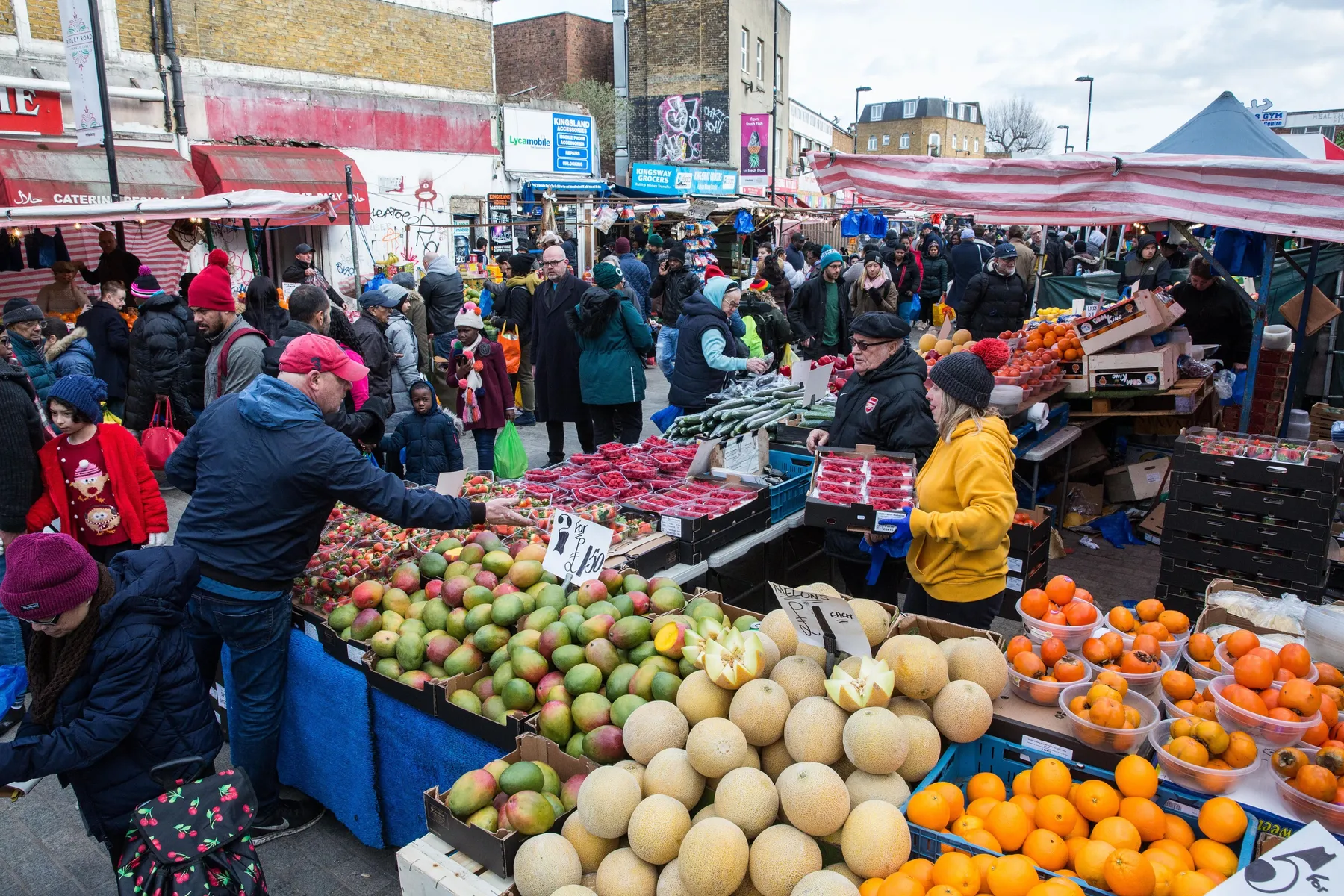
Ridley Road in 2019.
A community’s front line
Ridley Road Market can be found in the heart of Dalston, just off Kingsland High Street in the east London borough of Hackney.
The area has long been culturally diverse. After mainly serving Jewish locals in the early 1900s, Ridley Road has shape-shifted to embrace incoming African, Caribbean, Greek, Turkish, South Asian and Polish communities.
At its start in the 1880s, the market had around 20 stalls. Now there are more than 150, and the market runs Monday to Saturday. Before the traders pack up, your bag might strain to hold ten types of tropical fruit, Turkish bread, a goat’s head and a ‘Versache’ handbag. And all at a price that keeps working-class locals coming back.
Ridley Road has faced battles for its soul. Between the 1930s and 1960s, activists fought off fascist and neo-Nazi groups who held meetings there to stoke division. And in the 21st century, campaigners have rallied to combat the controversial plans of private developers.
How did Ridley Road Market start?
Ridley Road Market’s story begins in the 1880s. The small fruit and vegetable market started on Kingsland High Street, once a Roman road, and now part of the A10. Traders had to claim their spots in the morning, waiting for a policeman’s whistle before racing to set up their stall.
In the 80 years before this, Dalston had transformed from a village surrounded by farmland to a connected part of London’s sprawl.
The railways came in the early 1860s. And as trams and cars arrived in the early 1900s, the street market had to be regulated. This saw it shift around the corner onto Ridley Road.
-
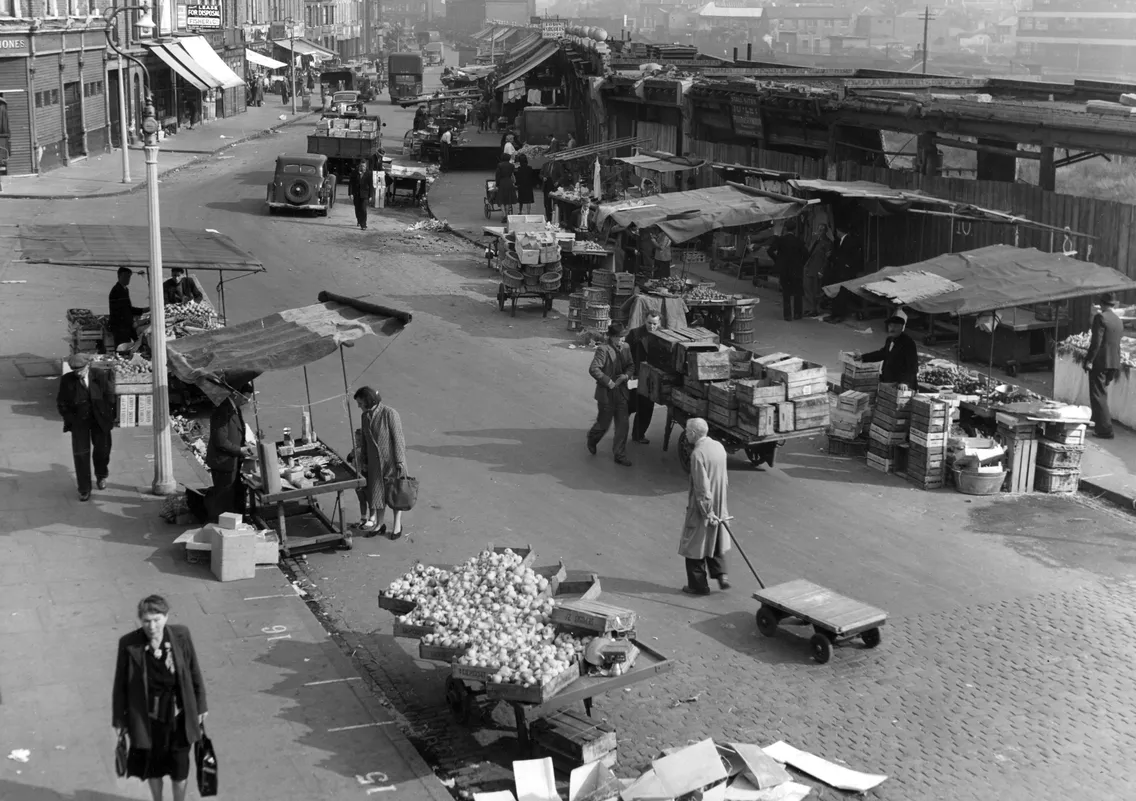
Ridley Road Market in 1947.
-
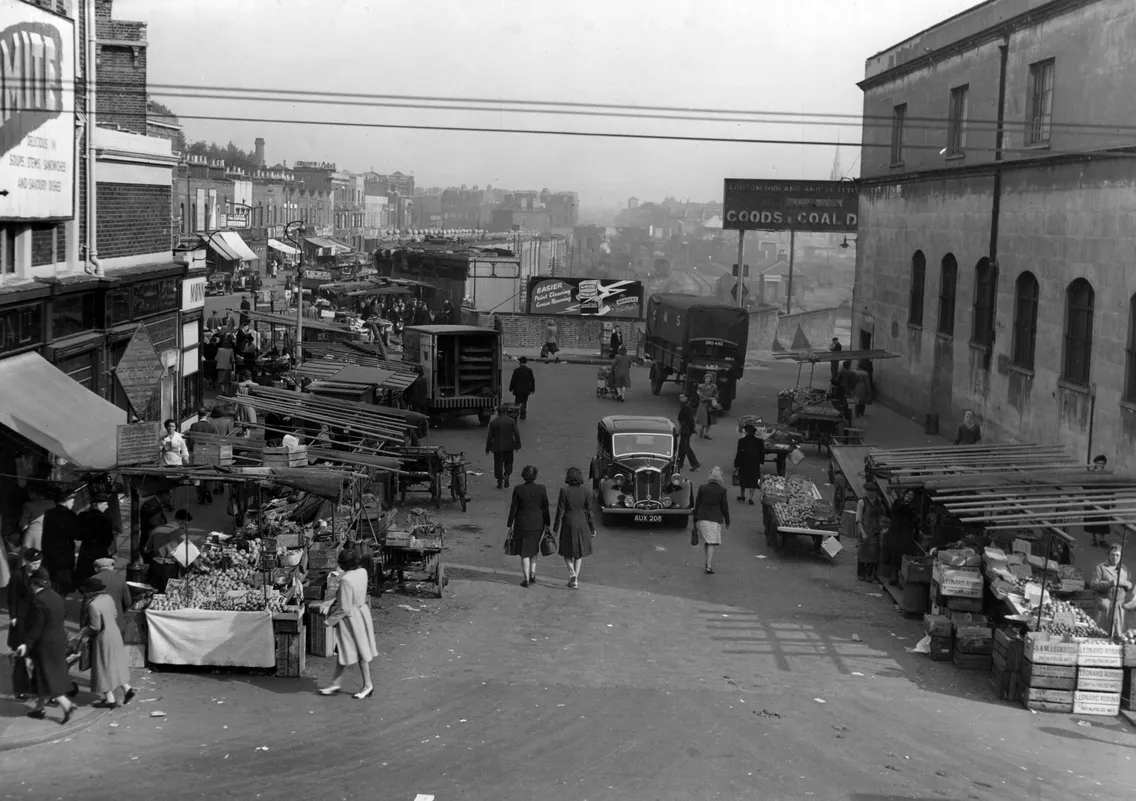
The market viewed from the western end in 1947.
Oswald Mosley, fascism and the 43 Group
In the 1920s and 1930s, Ridley Road was a bustling Jewish market catering to the sizeable Jewish population centred in the East End.
Because of this, the area was targeted by the antisemitic British Union of Fascists, led by Oswald Mosley, who blamed Jewish people for Britain’s economic problems.
Support for fascism in London shrank out of sight during the Second World War (1939–1945). But new fascist movements emerged afterwards, driven by anti-immigrant rhetoric and discontent with post-war social changes. Fascists like Oswald Mosley held provocative rallies in Ridley Road in the 1940s, and the market became a political flashpoint.
The marches were opposed, sometimes violently, by the 43 Group. Formed by Jewish veterans and allies in 1946, they took their name from the number of people attending the first meeting.
The 62 Group
The 62 Group was another movement formed in the 1960s to fight a resurgence of Nazi-inspired ideology. Mosley marched on Ridley Road again in 1962, and again met an angry response.
The 62 Group’s members included Ridley Road Market traders and locals. Among them were Caribbean people who’d experienced terrible discrimination and racist violence after arriving in the area in the 1950s and 1960s.
On 12 September 1962, 400 young people marched in silence from Ridley Road to Whitehall, demanding that hate speech should be criminalised. They carried banners reading “Black and White Unite” and “Free Speech Yes, Fascism No”.
-
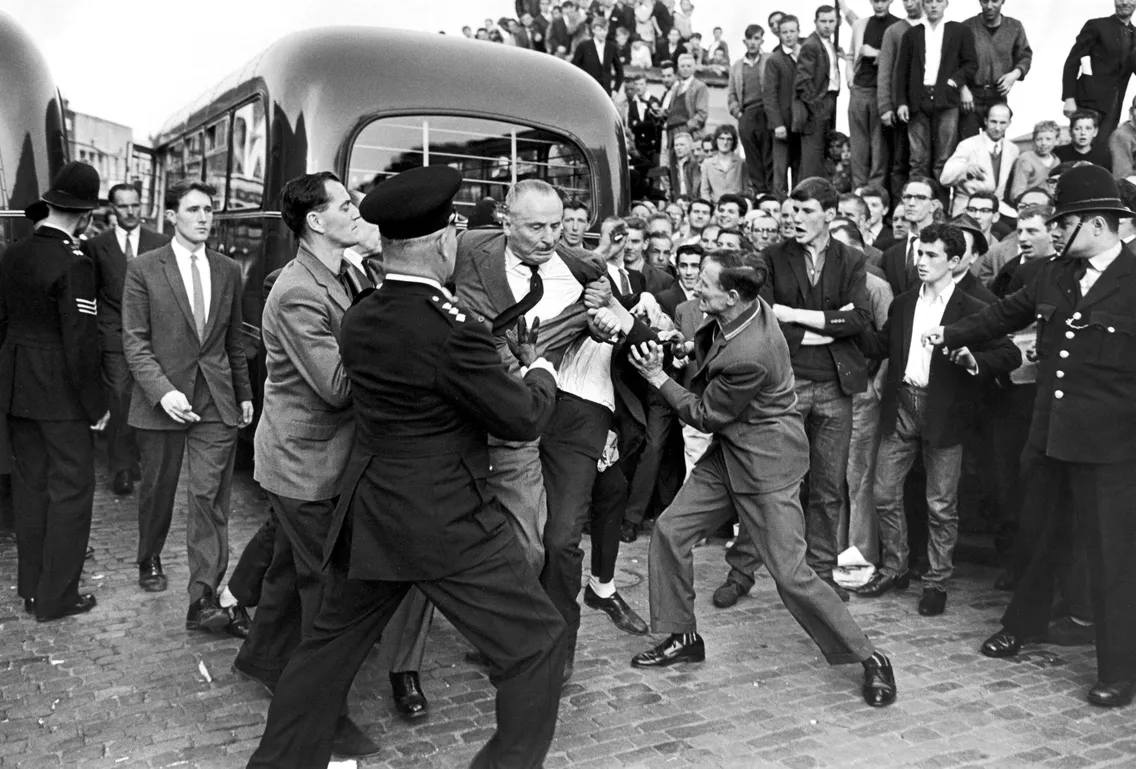
Oswald Mosley at Ridley Road in 1962.
-
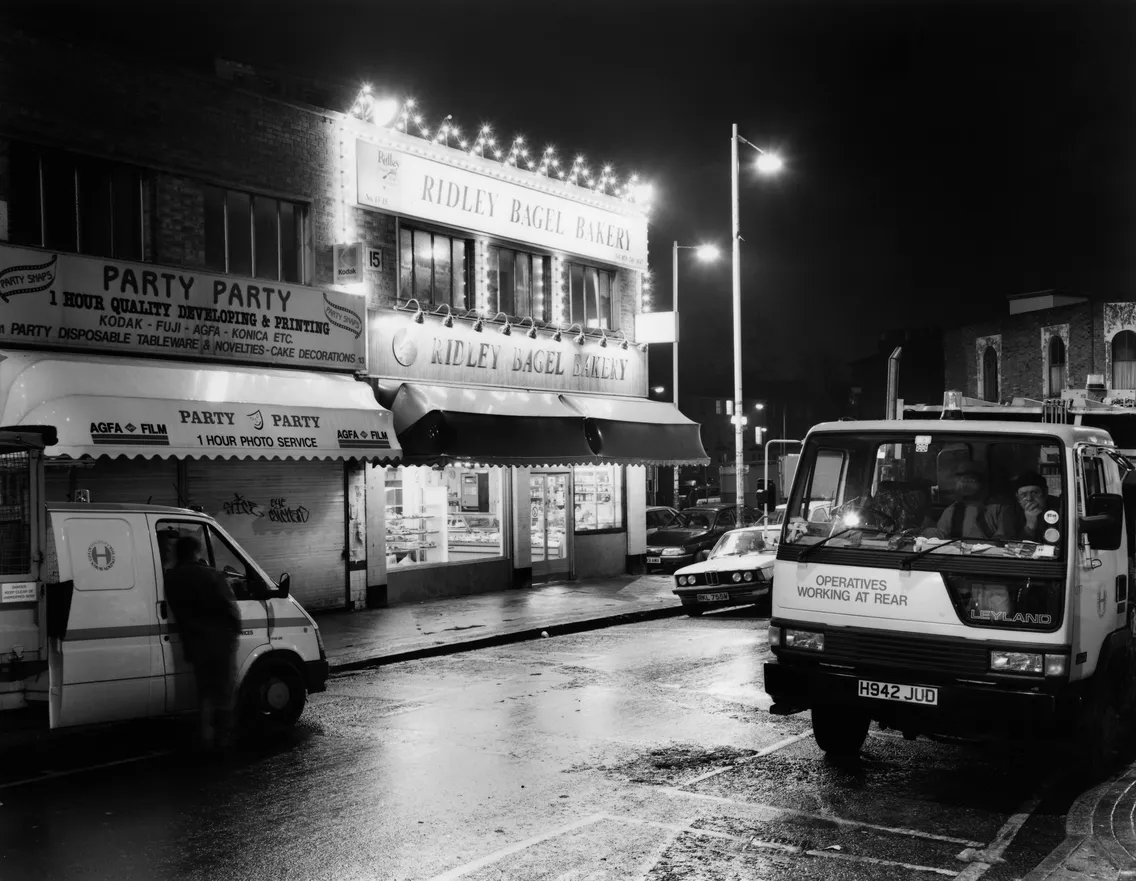
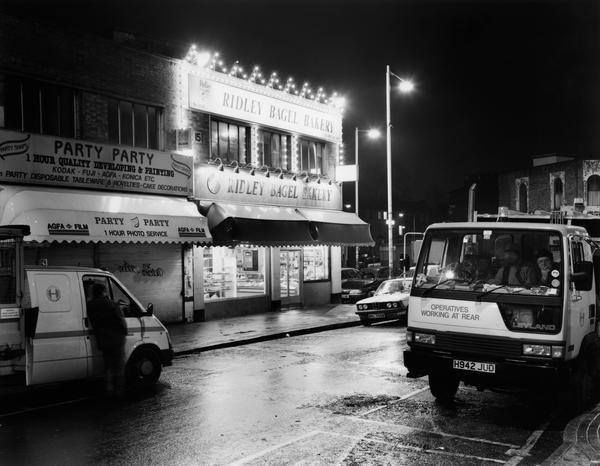
Ridley Road Bagel Bakery in 1994.
Understanding Ridley Road
The market and its traders continued through this upheaval. New people settled in the area, coming to Ridley Road to buy and sell products they knew. Along with African and Caribbean people, Hackney gained Turkish people from the 1970s, and Kurdish people from a range of countries in the 1980s and 1990s. South Asian traders also joined the mix.
Ridley Road’s energy didn’t go unnoticed. In the 1980s, the makers of EastEnders, now a long-running BBC soap, came to Ridley Road for the inspiration behind their fictional Walford Market.
Until 2020, traders could get a stall for just £8 a day. Working-class locals come for bargains, and for products unique to the market. Cash changes hands fast, for bowls of fruit and veg, for brain, saltfish, household goods, hardware, bric-a-brac and budget fashion.
Prices often seem stuck in time, while several families have run fresh fruit and vegetable stalls there for generations. Established butchers and fishmongers line the street.
Gentrification and the fight to stay authentic
In recent years, Ridley Road has faced the spectre of gentrification that’s reshaped other London markets into multi-brand boutiques.
House prices have risen significantly in Hackney in the past 20 years, and the area has become home to wealthier residents. Some traders complain that these new residents are not shopping at the local market, reducing community engagement.
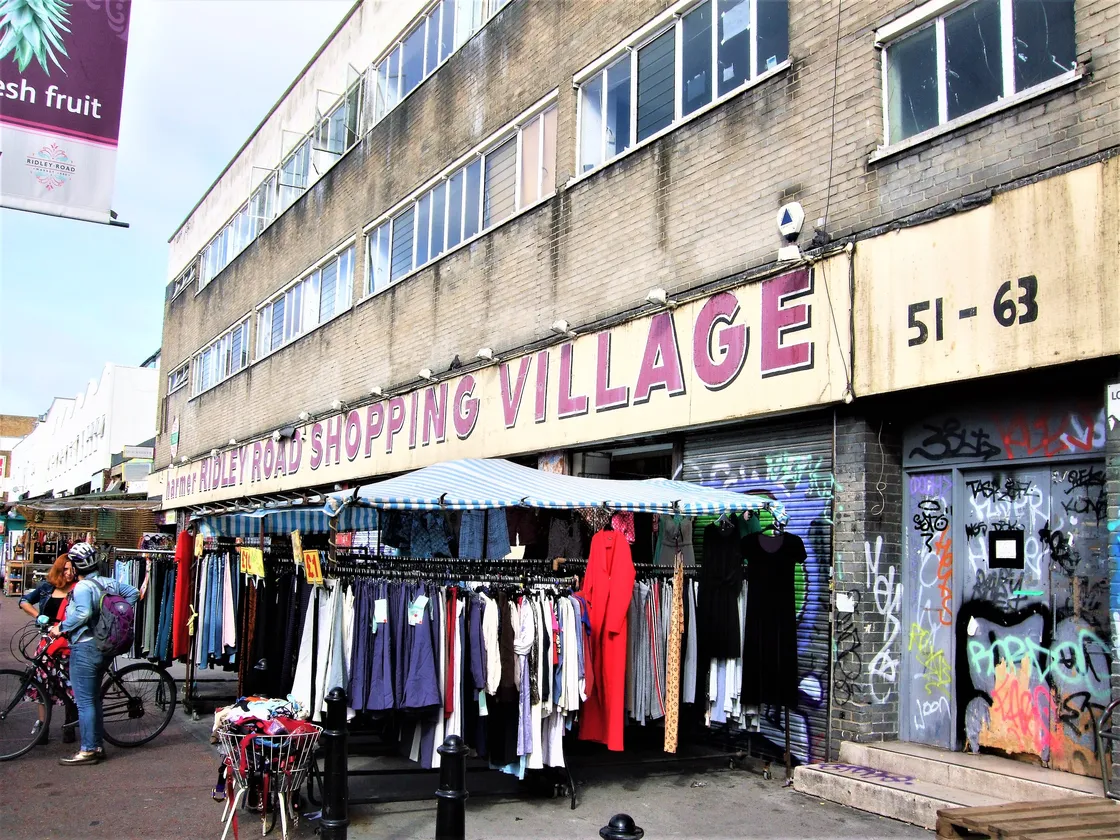
Ridley Road Shopping Village in 2021.
In 2016, private developers bought the Shopping Village building that stands on one side of Ridley Road. At the time, it housed about 20 stalls and 60 artist studios on the upper floors.
Repeated attempts have been made to develop the Shopping Village building into luxury flats.
When the traders were served eviction notices in 2018, it triggered protests from anti-gentrification campaigners. The strong Save Ridley Road campaign resulted in the plan being abandoned. The Ridley Road Shopping Village building was listed as an Asset of Community Value and in 2022, Hackney Council took over the lease.
Following this victory, the council and London mayor Sadiq Khan invested over £1.5 million to protect the market’s legacy traders, while providing modern improvements. This included card machines, new stalls and free wi-fi.
Tags
-
Photography
-
Photography
-
Photography
-
Photography
-
Photography
 Photography
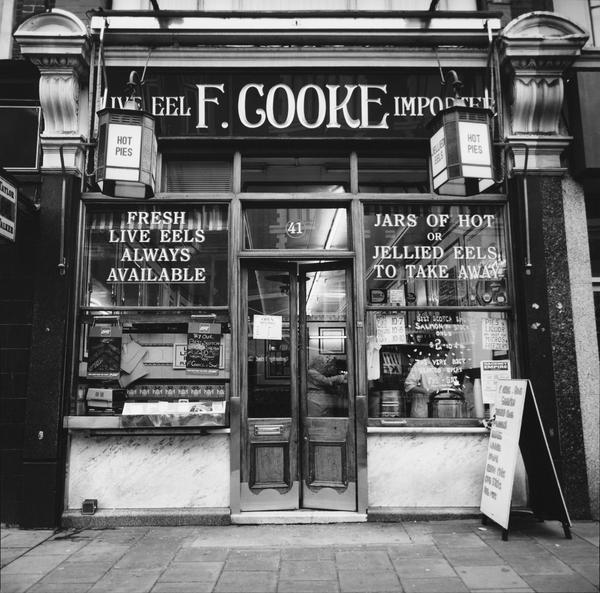
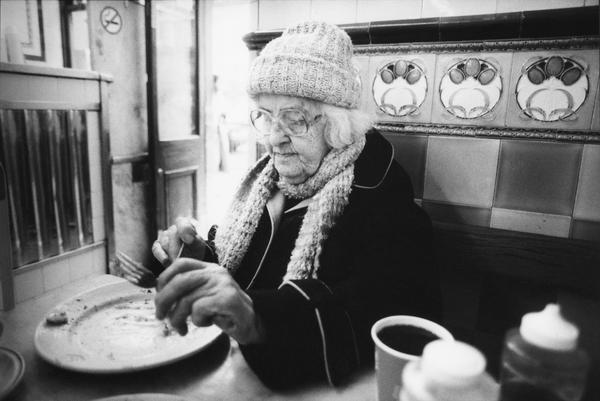
Emily Jupp at F. Cooke's eel and pie shop, Dalston (silver gelatin print)
Clunn, Chris
1992
-
Photography
 Photography
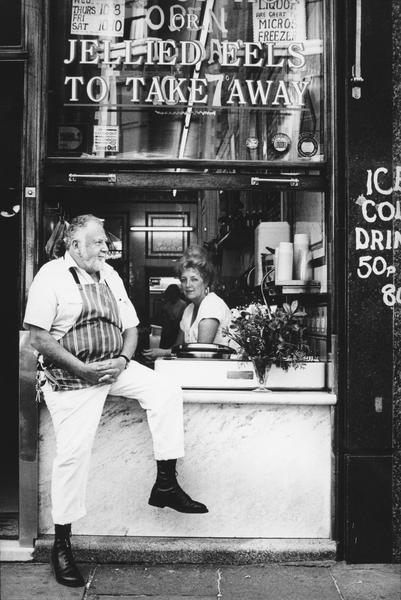
Fred and Brenda Cooke outside F. Cooke's eel and pie shop, Dalston (silver gelatin print)
Clunn, Chris
1994
-