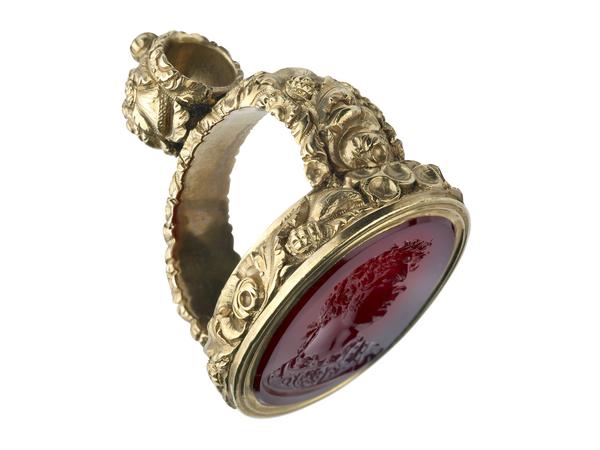
Queen Caroline: A royal drama staged in London
After marrying the future King George IV, Queen Caroline was pushed aside, put on trial and barred from his coronation. The harsh treatment won her sympathy, which Londoners made clear with large demonstrations.
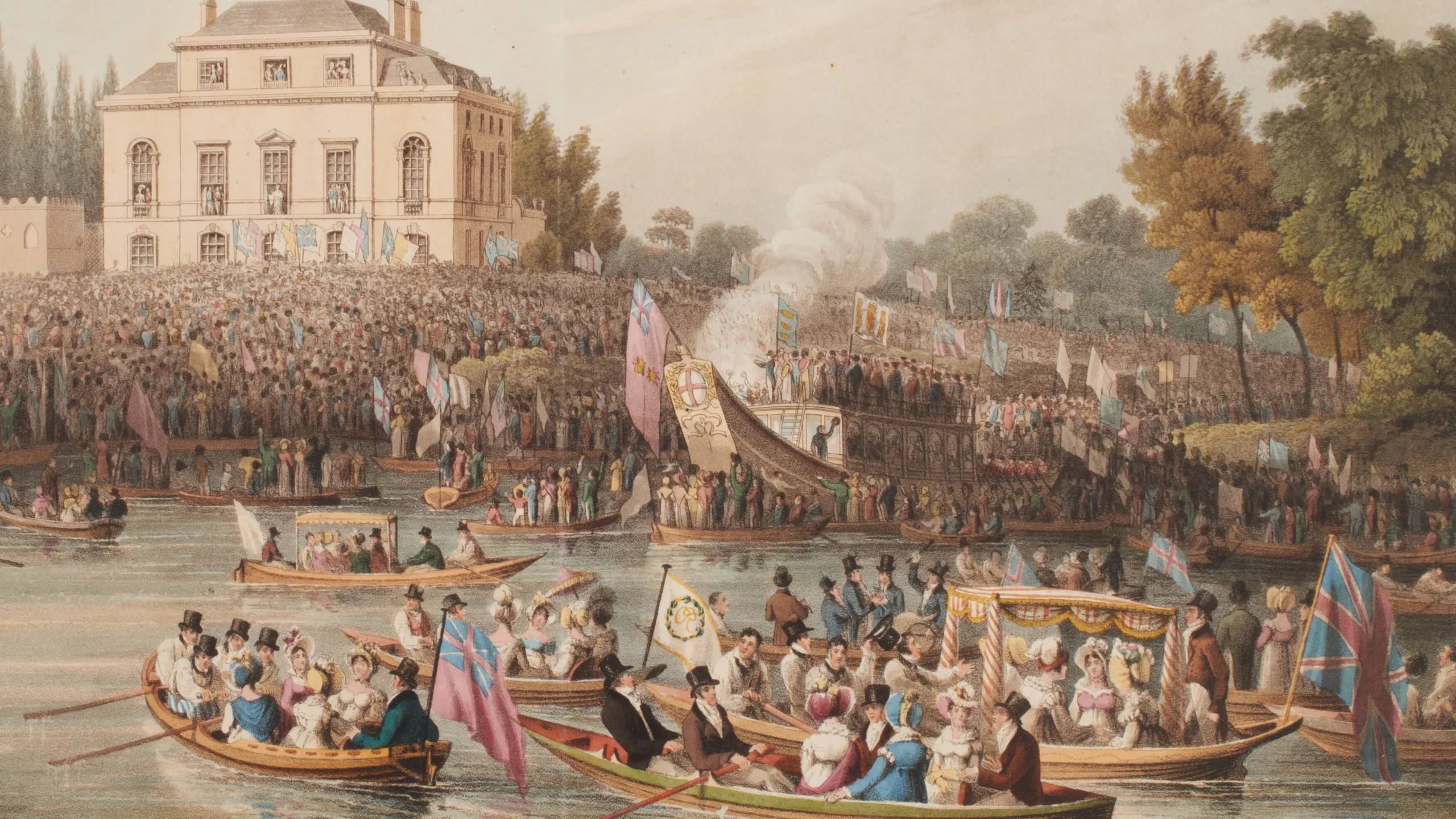
Brandenburgh House, Hammersmith
1768–1821
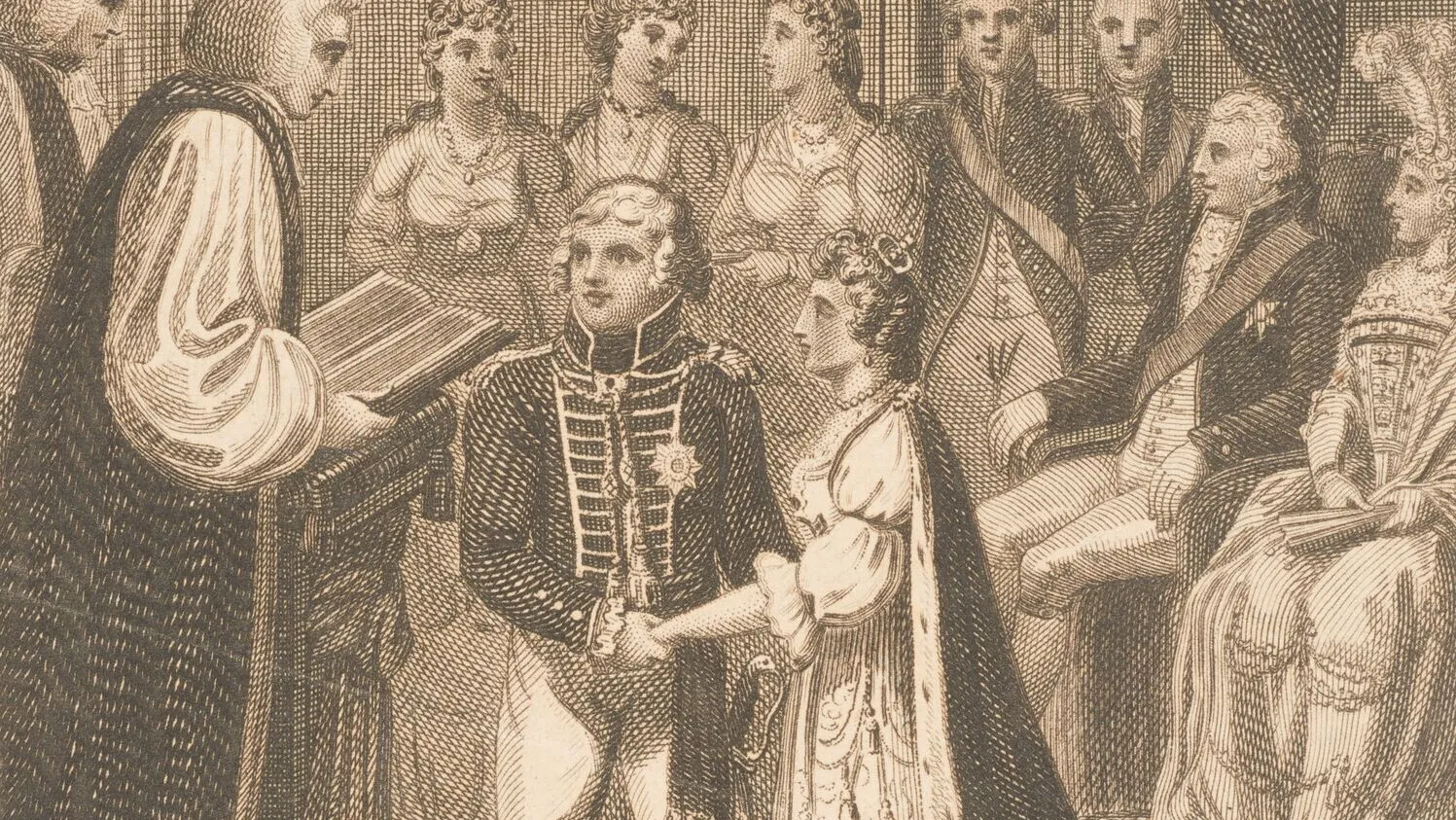
Caroline married George in 1795
The marriage was a strategic pairing and a mess from the start. Caroline was a German princess and George’s first cousin. They’d never met, and George had already married someone in secret. George was apparently drunk during the ceremony. He also invited his alleged mistress, Lady Jersey, to the honeymoon. Love didn’t blossom.
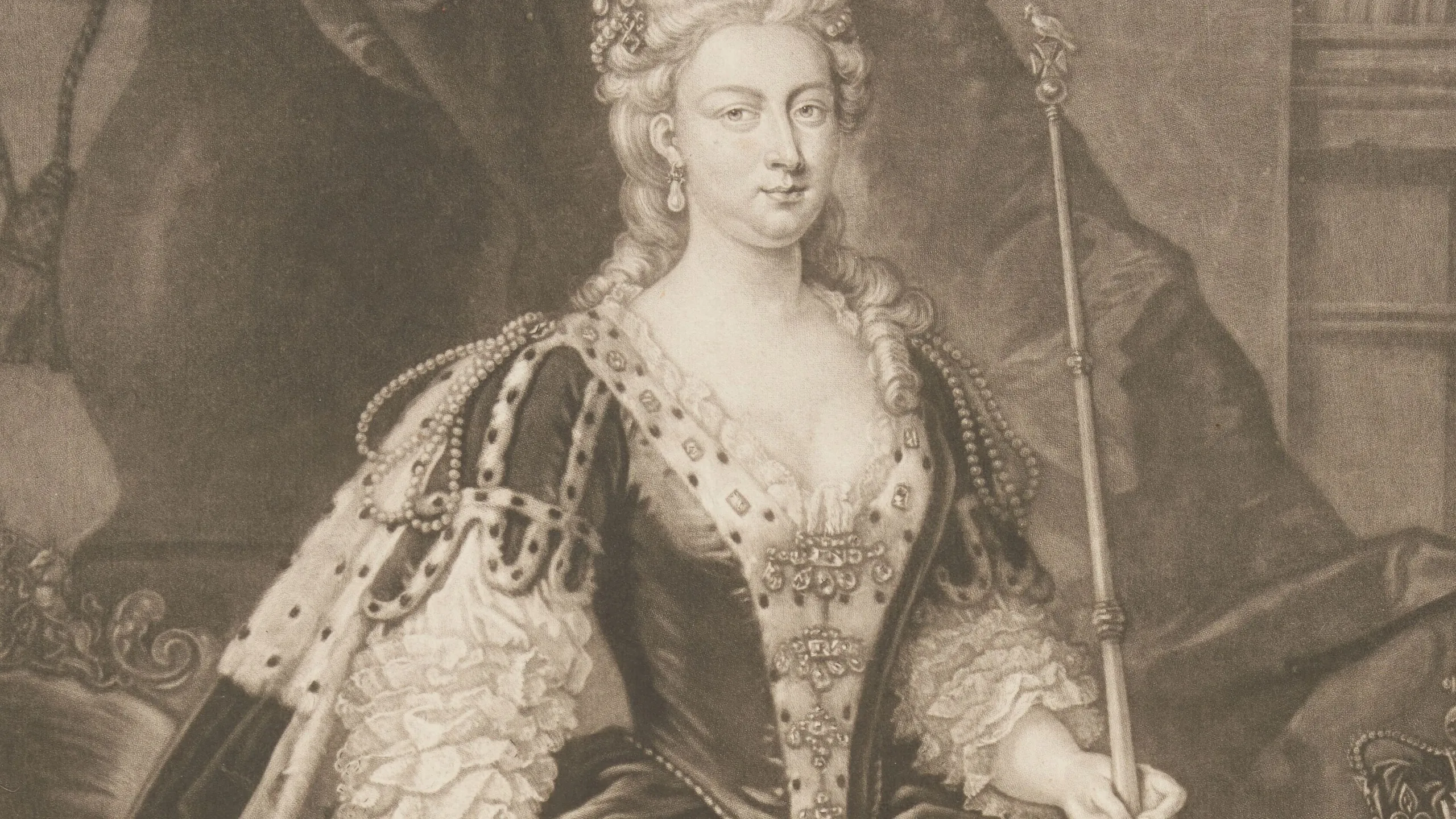
The couple separated in 1796
The separation came despite Caroline giving birth to a daughter. Caroline moved to Montague House in Greenwich, where she continued to have a busy social life. But rumours spread about her behaviour. One claimed she’d given birth to an illegitimate son. George, now ruling the country as prince regent, barred Caroline from his court and made it difficult for her to visit her daughter.
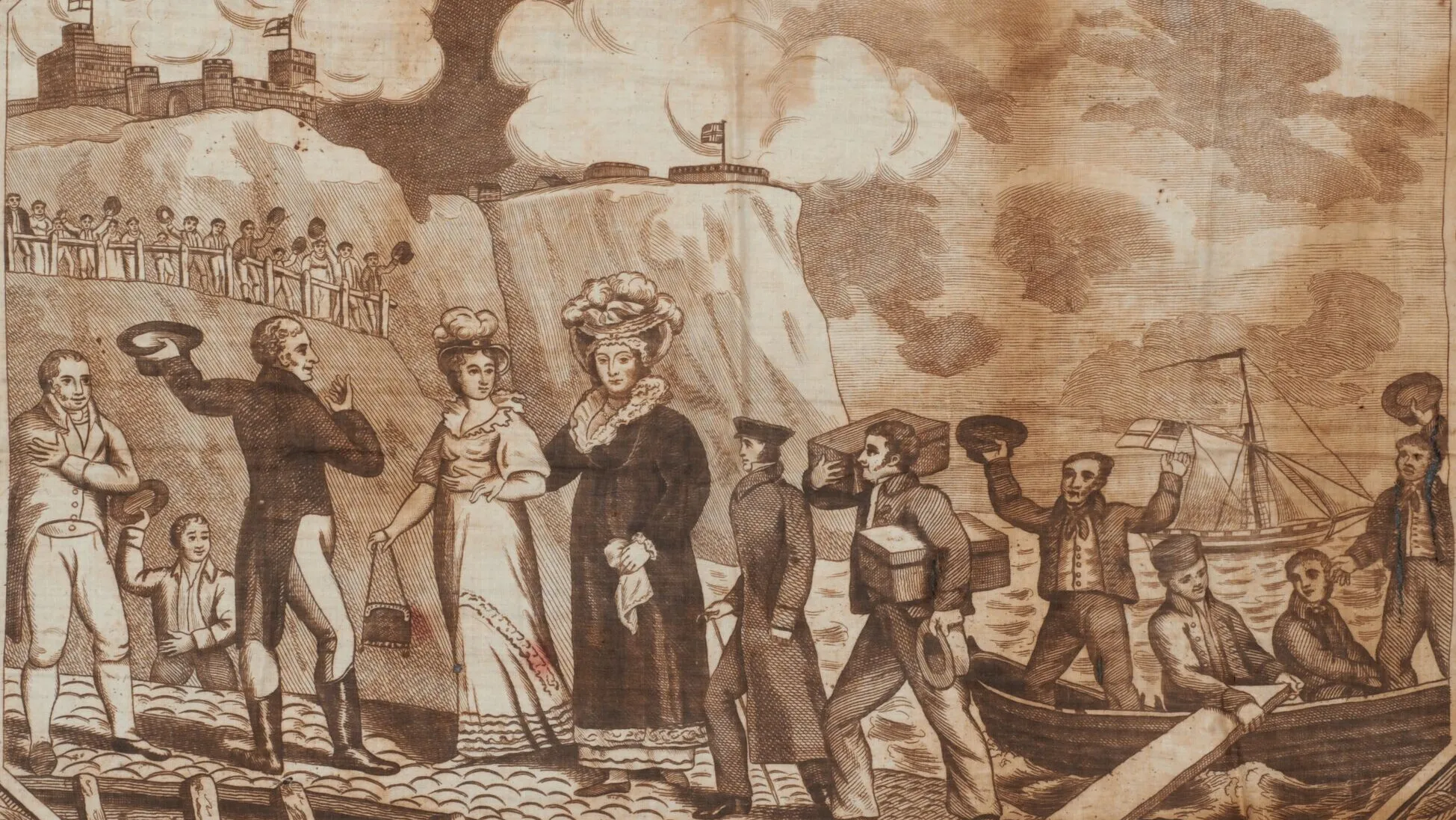
Caroline spent years in Europe
In 1814, Caroline escaped abroad. George’s spies were close behind. While she was away, George’s father died, putting him on the throne. George pushed to divorce Caroline. But in 1820, she returned to England to claim her role as George’s queen. The warm welcome she received is shown on this handkerchief, a popular souvenir among her supporters.
A queen of the people
As this royal ordeal unfolded, Caroline was cheered on by the public. George was an unpopular king at the head of an unpopular government, and there were calls for radical change to society. Caroline became an anti-monarchy, anti-corruption symbol, despite not being politically active. On her return to London, she rented Brandenburgh House in Hammersmith. People flocked there to express their support.
George put Caroline on trial to secure a divorce
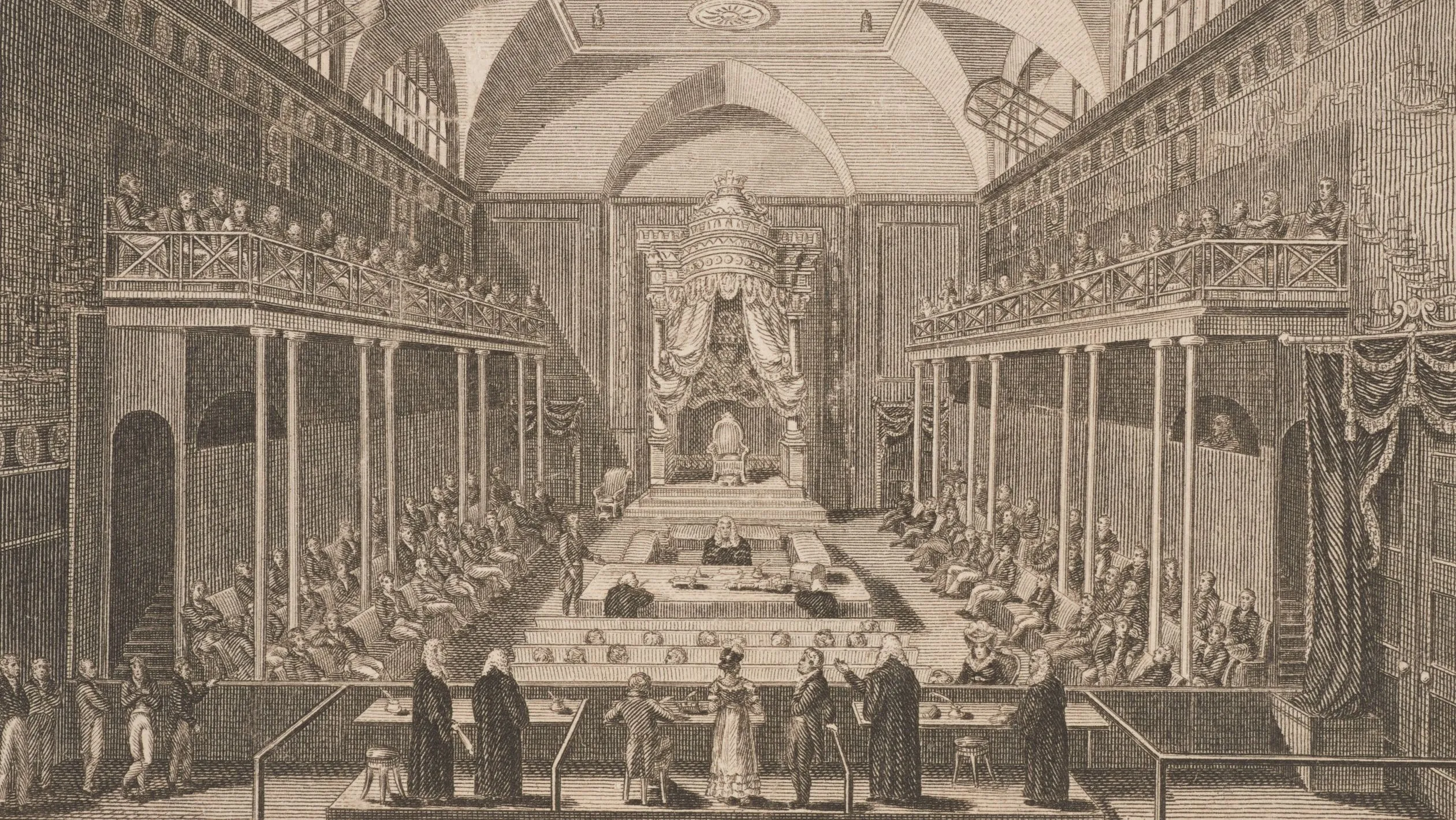
George convinced Parliament to investigate Caroline, accusing her of having an affair with a man in Italy named Pergami. A new law which was proposed stated it would “deprive Caroline of the rights and title Queen Consort and to dissolve her marriage to George”. From 17 August 1820, the House of Lords put Caroline on trial. This was a supreme royal drama – and it gripped the city.
The trial was a public spectacle
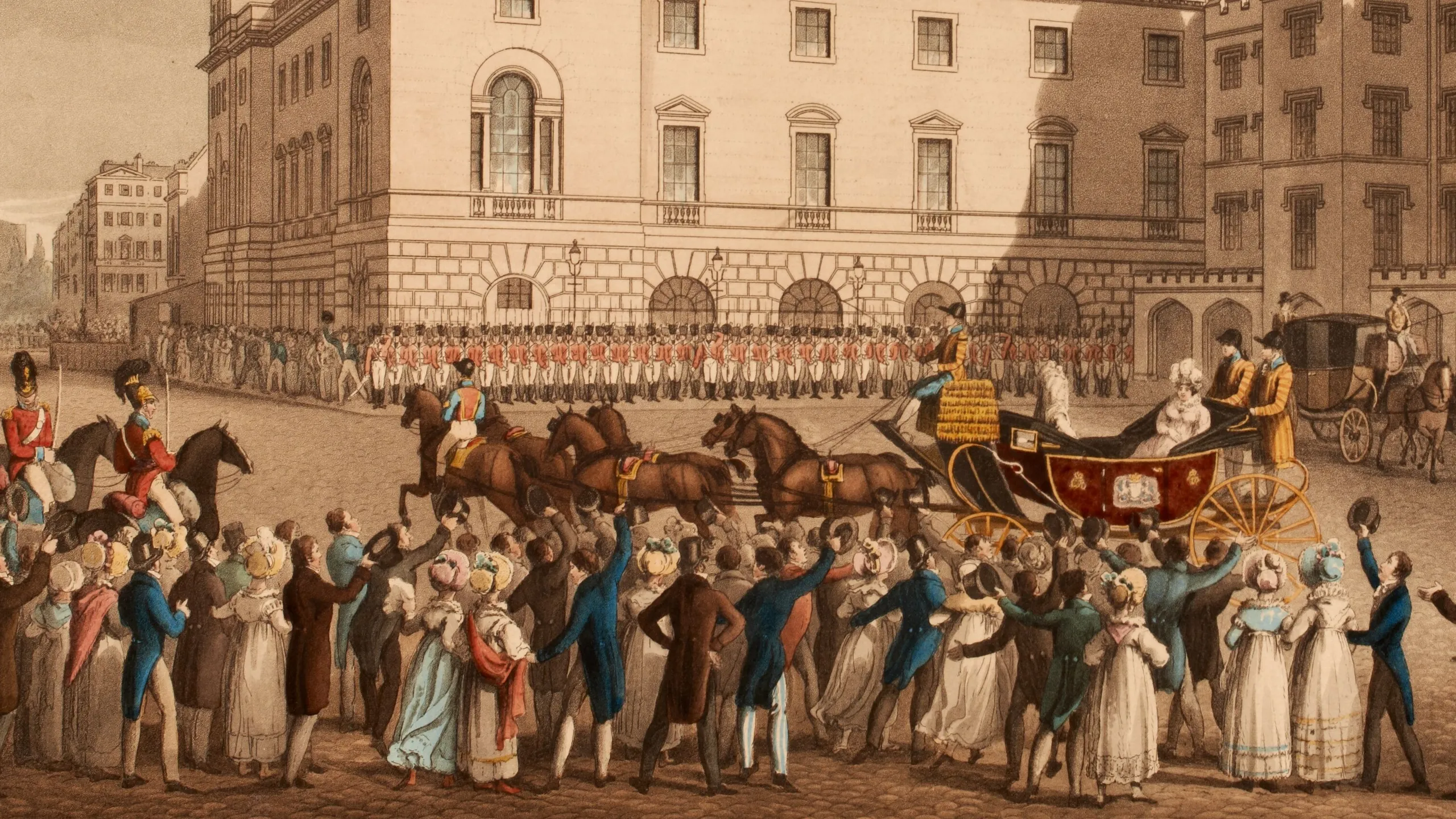
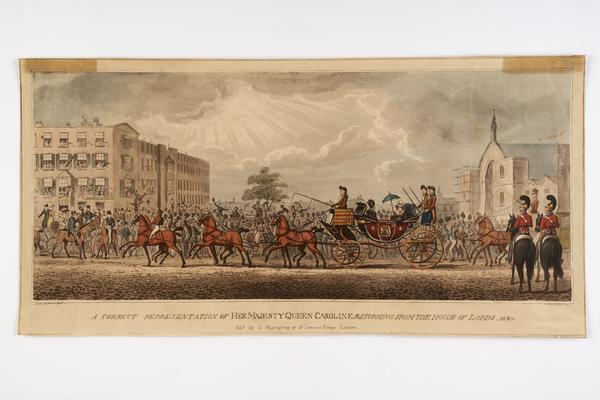
The queen was allowed to attend the trial in Westminster, but was not allowed to speak. On the days when she travelled from Hammersmith to her trial at the House of Lords, crowds came out to cheer her. Many women recognised that she was suffering the same sexism that they did. George’s relationships with other women weren’t being scrutinised, whereas Caroline’s alleged relationships were the basis for divorce.
Not everyone supported the queen
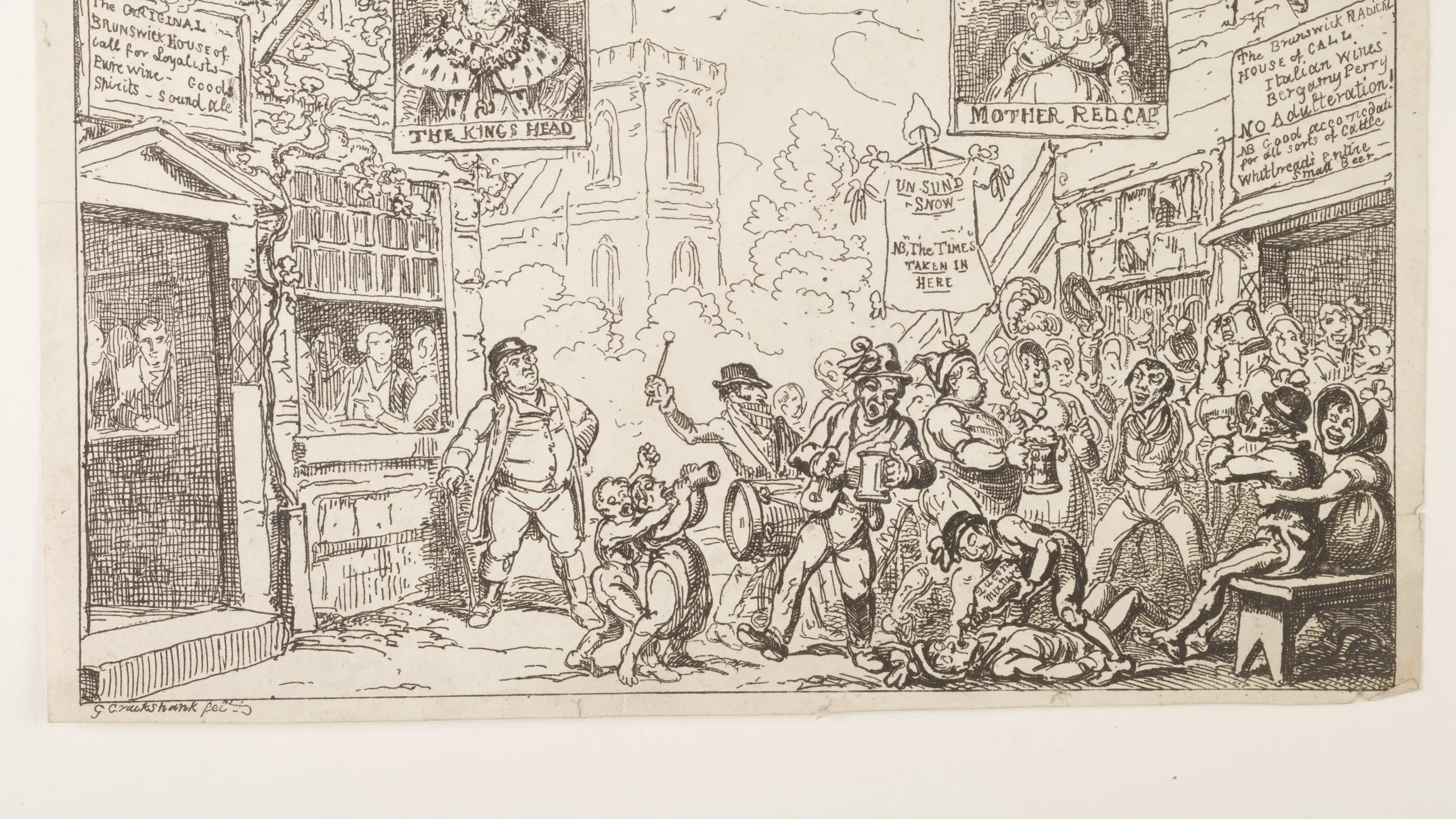
In political cartoons, Caroline’s tussle with the king was framed as a struggle between loyalists and radicals. This satirical print uses pubs as a metaphor. The King’s Head is orderly. The Mother Red Cap, symbolising the queen, is a rowdy, disreputable tavern.
George’s plans for a divorce failed
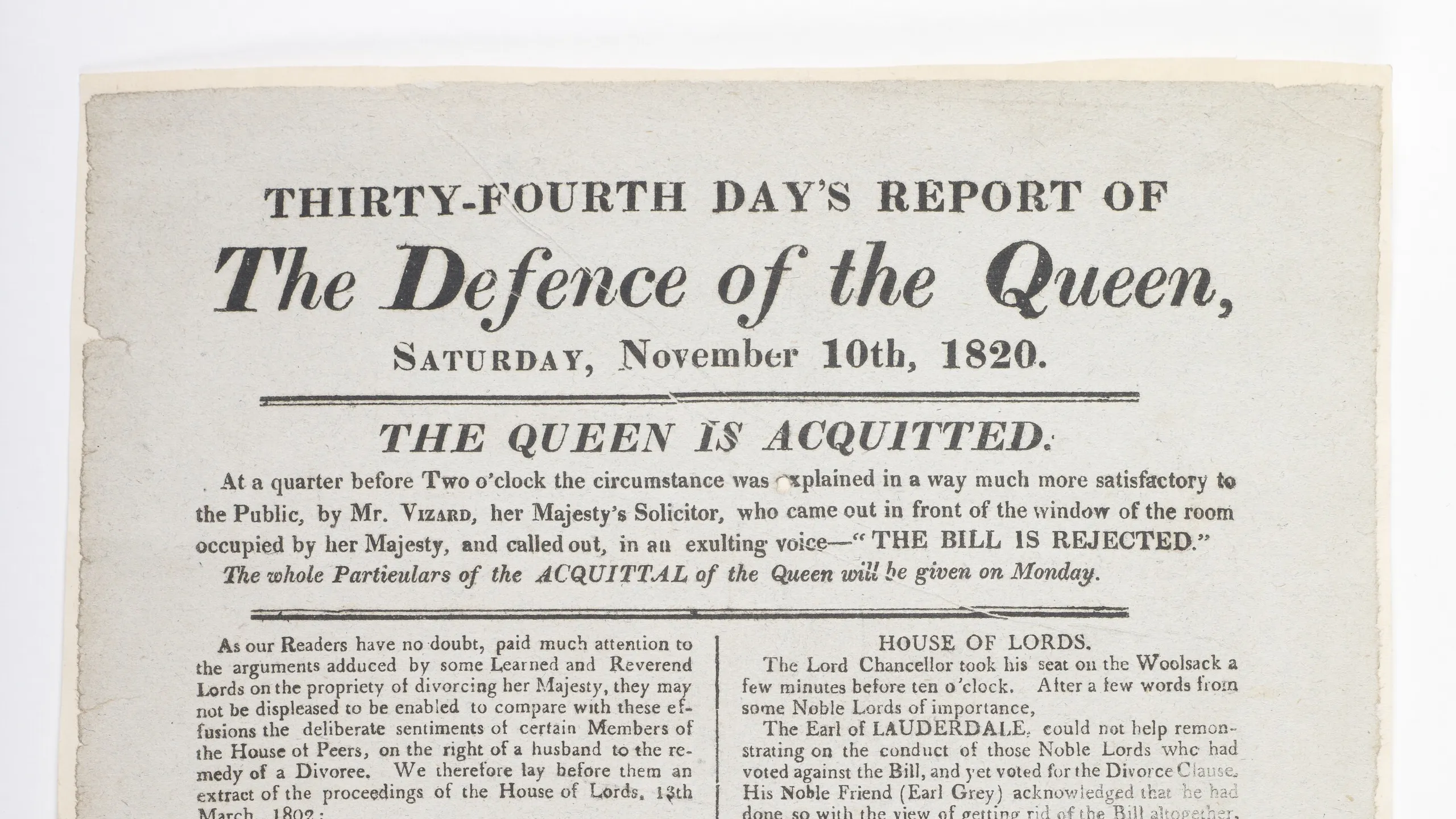
Fearful of rioting, Parliament’s support for the king and his divorce seeped away. On 10 November, the prime minister announced that the trial would stop. In the eyes of the public, the queen was found not guilty. This broadside, a simple type of newspaper, announces the decision. Every day of the trial was covered by the press, with the public lapping up the news.
The queen’s humiliation continued at George’s coronation
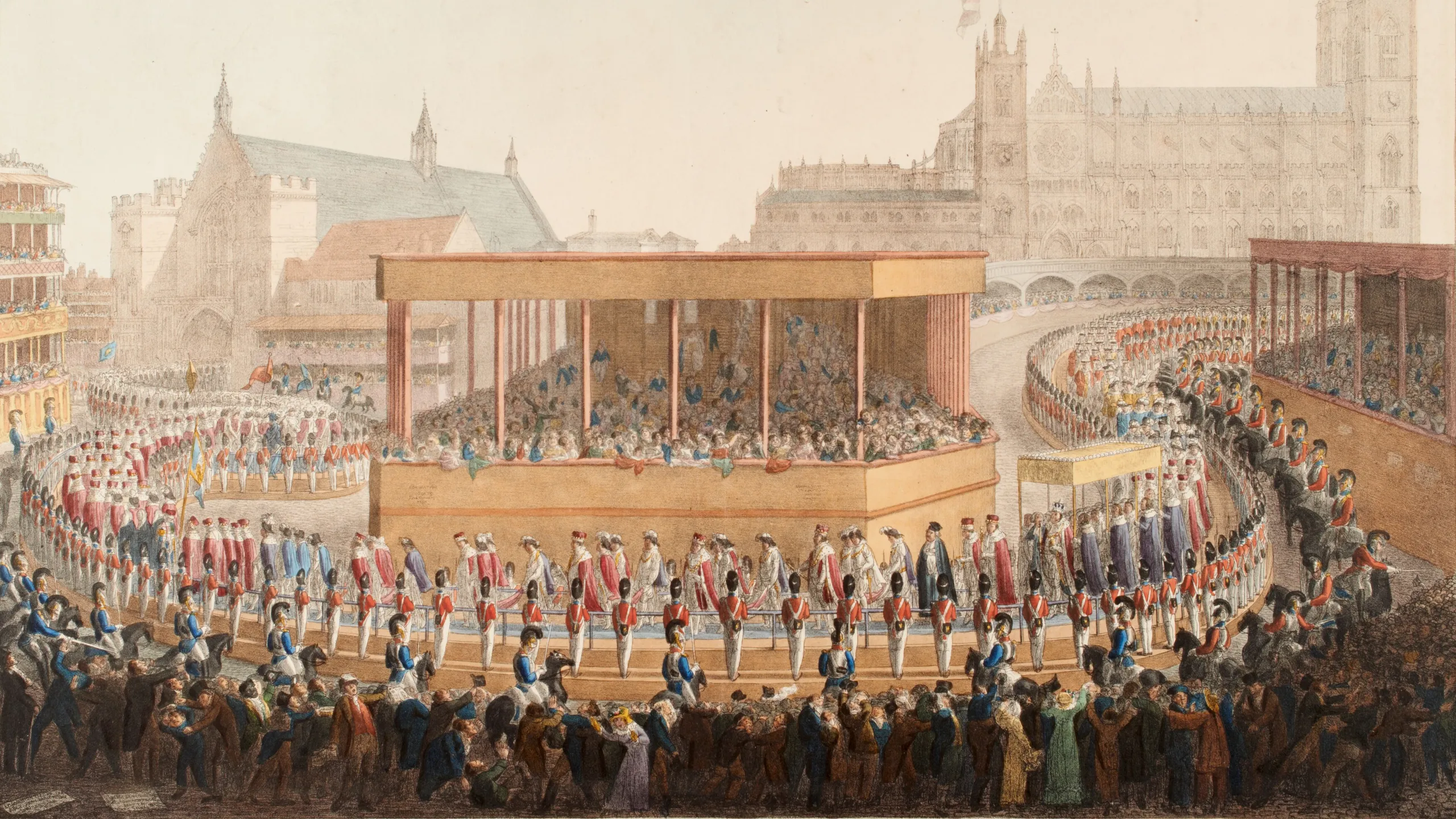
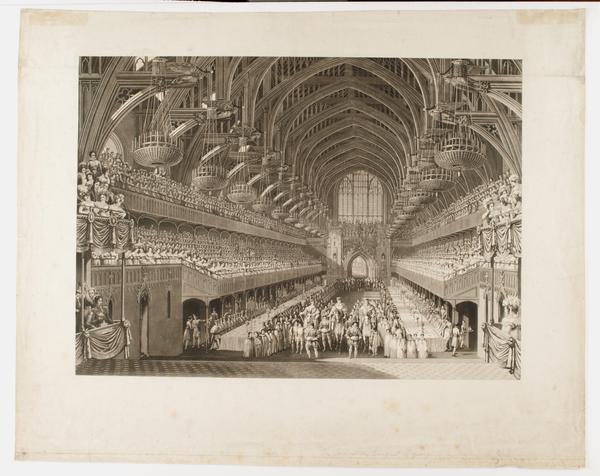
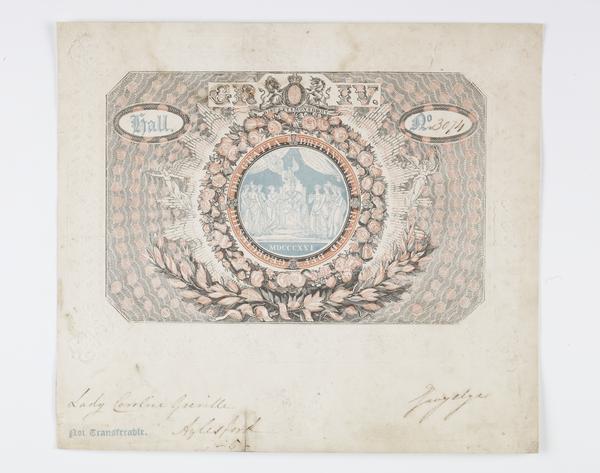
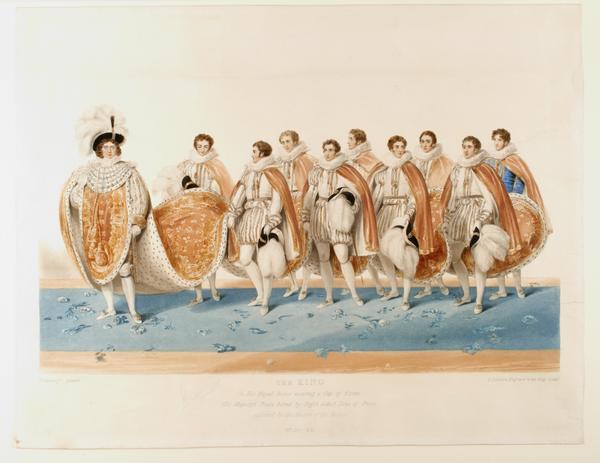
On 19 July 1821, George was officially crowned King George IV at Westminster Abbey. It was an extraordinarily lavish event, but Caroline was not invited to his coronation. She turned up to the abbey anyway, but was barred from entering.
Caroline’s death and funeral
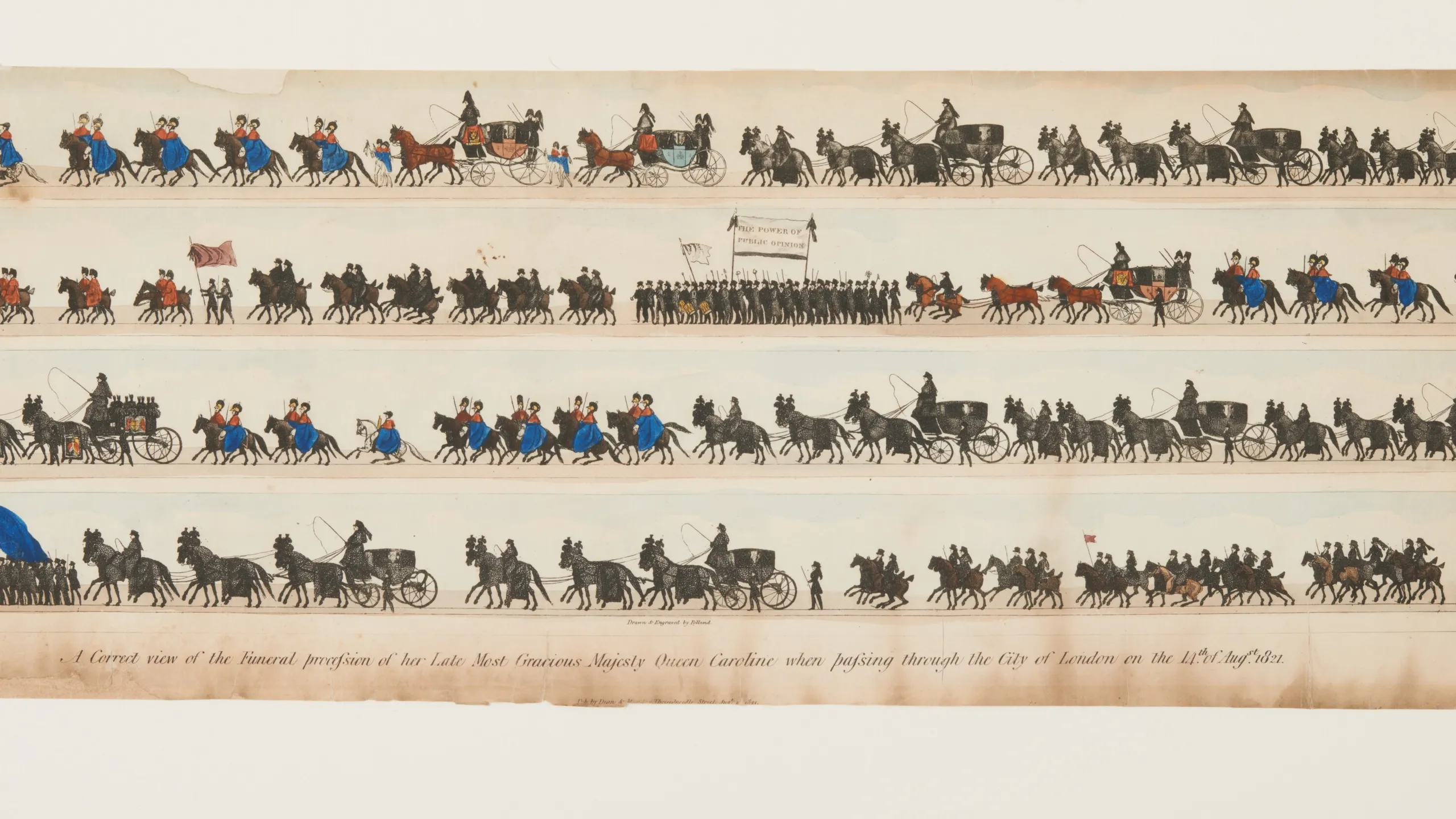
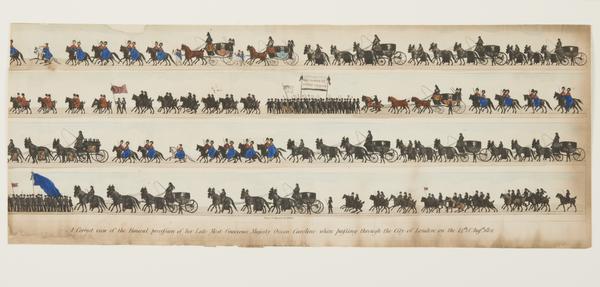
The night after the coronation, Caroline became ill, and she died three weeks later. To avoid disorder, the funeral procession was planned to bypass the City of London. But a crowd who’d gathered at Hyde Park Corner forced the procession into the City. Two people died in clashes with soldiers. Caroline had asked for an inscription to mark her coffin: “Caroline, the injured Queen of England”.
Tags
-
Paintings, Prints & Drawings
 Paintings, Prints & Drawings
A Correct Representation of Her Majesty Queen Caroline returning from the House of Lords, 1820. (coloured aquatint)
Cruikshank, Isaac Robert, Williams, Richard, Humphrey, George
1820
-
Paintings, Prints & Drawings
 Paintings, Prints & Drawings
A correct view of the procession of her late most gracious majesty Queen Caroline when passing through the city of London on the 14th of Augst 1812. (coloured aquatint)
Polland
1821
-
Paintings, Prints & Drawings
 Paintings, Prints & Drawings
The Coronation Banquet of George IV in Westminster Hall (aquatint)
1821
-
Printed Ephemera
 Printed Ephemera
Admission Ticket to the Coronation Banquet of George IV (admission ticket)
Dobbs
1821
-
Paintings, Prints & Drawings
 Paintings, Prints & Drawings
The King In His Royal Robes wearing a Cap of Estate, His Majesty's Train borne by Eight eldest Sons of Peers assisted by the Master of the Robes 19th July 1821 (coloured aquatint)
Stephanoff, J.P., Scriven, Edward
1821-07-19
-