The Penny Post sparked a letter-writing revolution
Introduced in 1840, the Penny Post transformed the postal system. For the cost of just one penny, you could send a letter anywhere in Britain. Send it within London and it could arrive by lunchtime.
Across London
1840
-

A postman hands over a letter in this print by Thomas Rowlandson.
When one-penny postage got the stamp of approval
Before the 19th century, Britain’s postal service was expensive, complicated and easily abused. Often, the person receiving a letter would be the one to pay. That price depended on the distance the post travelled and how many sheets of paper it contained.
In the 1830s, a man named Rowland Hill campaigned for post office reform. His solution to the mess? A cheaper uniform system that became known as the Penny Post. All items would be posted for – you guessed it – a penny. Hill’s reforms even led to the introduction of the world’s first adhesive postal stamp, the Penny Black.
This new postage system, together with new railways and a more integrated transport system, transformed Victorian London into a communications hub and the centre of Britain’s postal service. Letter-writing soared in popularity. For the first time, post became truly part of everyday life in London.
A Penny Post existed in London in the 1600s
Britain’s postal service originates in a private network set up by King Henry VIII in 1516 to communicate with the government and other royals. King Charles I opened up this small-scale service to the public in 1635, and in 1660, King Charles II set up the state-run General Post Office (GPO).
You could send letters from London to different towns, but not within London itself. So in 1680, one enterprising merchant named William Dockwra created a private postal service called the London Penny Post. You could send letters and packets weighing one pound (around 450g) around the capital for one penny.
Dockwra’s service was very efficient. There were between six and eight deliveries a day in the capital’s busy business centres. And you could have your post delivered within four hours – guaranteed.
However, the GPO heard about Dockwra’s business and claimed it encroached on their monopoly of Britain's mail service. They shut it down in 1682, then set it back up again immediately as their own government business.
What was wrong with Britain’s post service?
By the early 1800s, postage in Britain had become increasingly expensive and complicated. How much you’d pay depended on two factors: the distance your post travelled, and the number of sheets of paper within it. Post sent within London cost a penny until 1801, when the rate was doubled.
Either the sender or receiver could pay for the post. But usually the person getting the post paid for it. Costly postage made it difficult for people to communicate with each other, and impacted the productivity of companies whose success relied on letters.
-
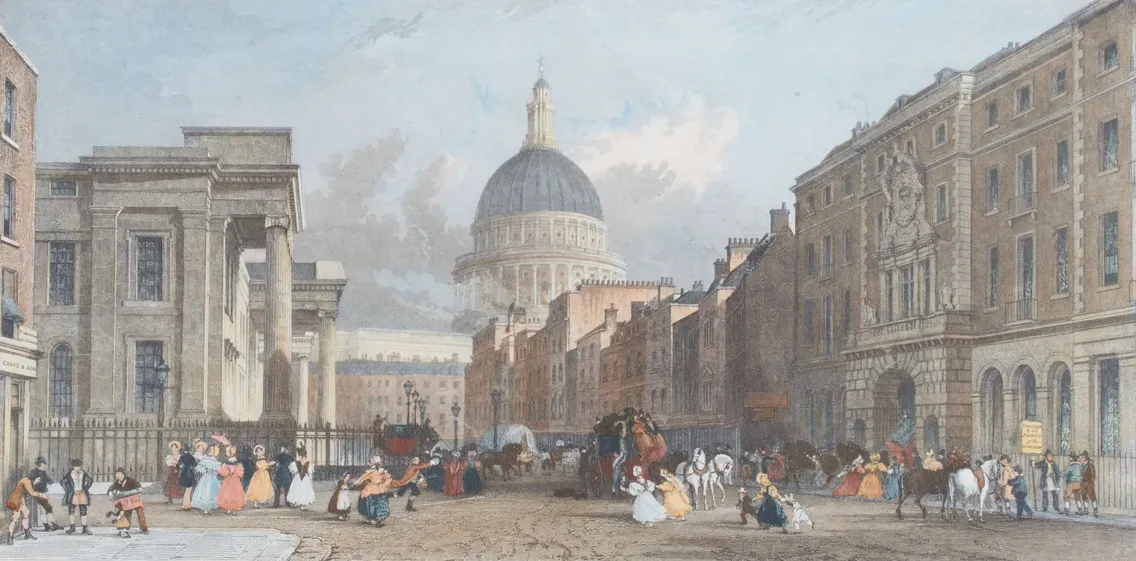
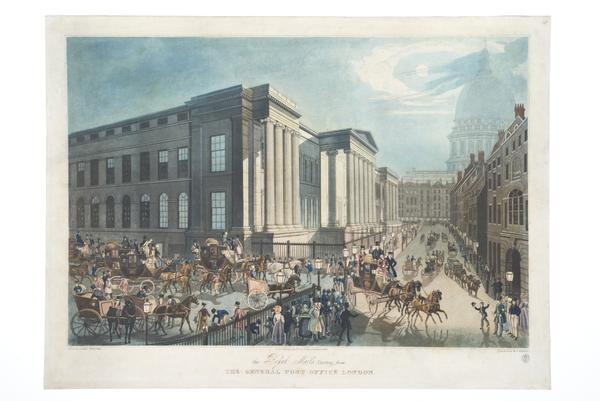
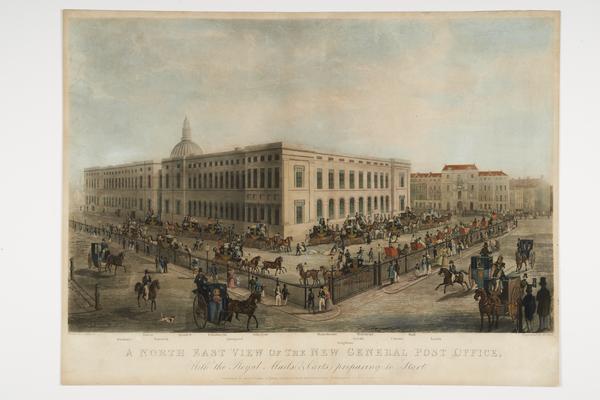
The Post Office in St Martin’s Le Grand, on the left, opened in 1829 as the first purpose-built post office in England.
Some items, like newspapers, could be delivered for free. It also didn’t cost Members of Parliament (MPs) and peers to send and receive official mail, a system known as ‘franking’. But this was widely abused as those with the privilege could ‘frank’ post for friends and family.
Rowland Hill’s ideas led to postal reform
A teacher called Rowland Hill had ideas for reforming Britain’s broken postal service, informed by his own poor experiences. He pulled these ideas together into a pamphlet published in 1837.
Hill claimed the current system was an unfair cost on the public and prevented the expansion of trade and ideas between people. He argued the cost of postage should be cheap and uniform around the country. This would generate more letter sending, he reckoned, so that the General Post Office wouldn’t see their profits drop.
Many people agreed with him. His ideas inspired a wider successful campaign of postal reform in newspapers and petitions to the government.
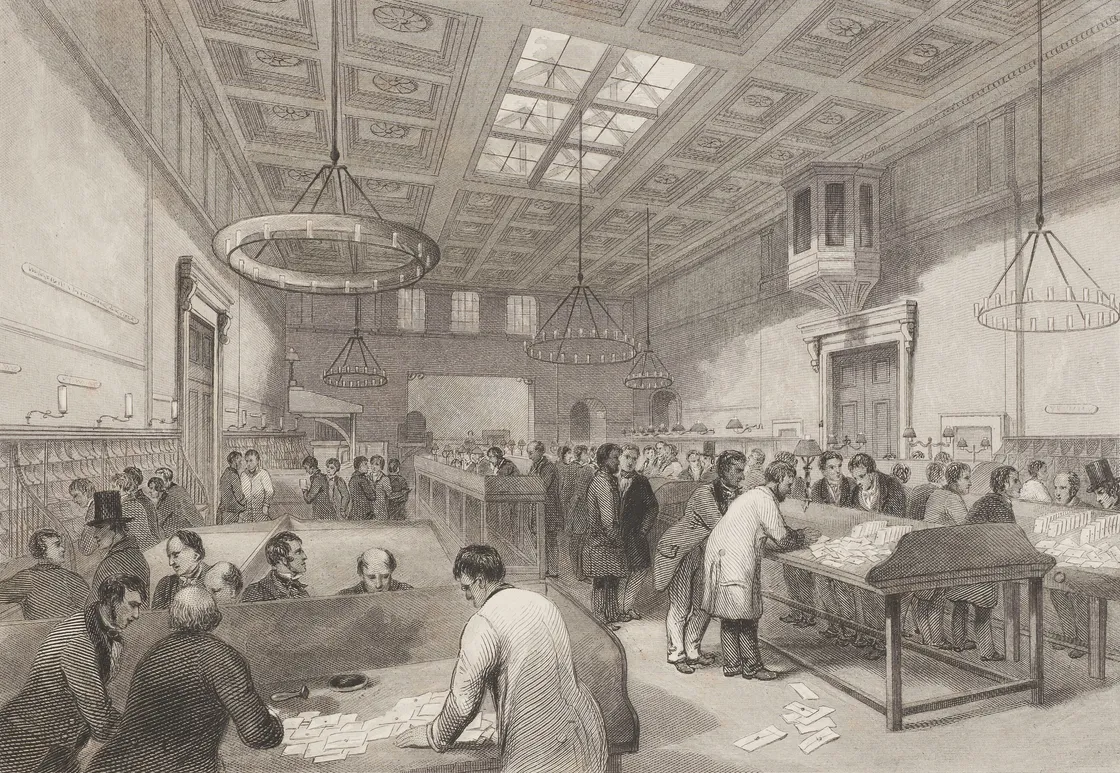
Royal Mail clerks sort letters at the General Post Office in this print from 1841.
The new Penny Post launched in 1840
In 1840, some of Hill’s ideas became reality in the form of the new Penny Post. This system gave the country one single postal rate: one penny, no matter the distance. Franking was also abolished, so MPs, peers and even the recently-crowned Queen Victoria could no longer send letters for free.
In London, there were up to 12 postal deliveries a day. You could send your letter in the morning and it would arrive by lunchtime. Letters posted in the capital for elsewhere were sorted and then speedily carried across the country by railways and mail coaches.
The Penny Black and Penny Red postage stamps
With the Penny Post, you had to pay for postage before sending the letter. This led to the invention of the world’s first sticky postage stamp, known as a Penny Black. These were printed in London and sold from May that year. The design was based on a portrait of a teenage Queen Victoria, as it was considered hard to fake.
Once a stamped letter had been sent, it was marked with red ink to prevent the stamp being reused. But it quickly proved possible to remove the ink mark without damaging the stamp.
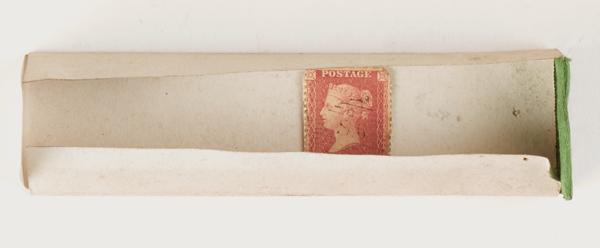
From 1841, a red stamp, known as the Penny Red, and a black ink mark were used instead. We’ve got examples of both stamps in our collection.
-

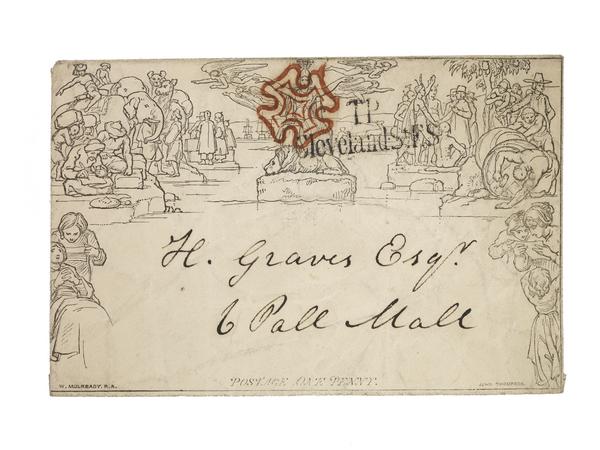
This letter was sent using a Penny Black in November 1840.
-
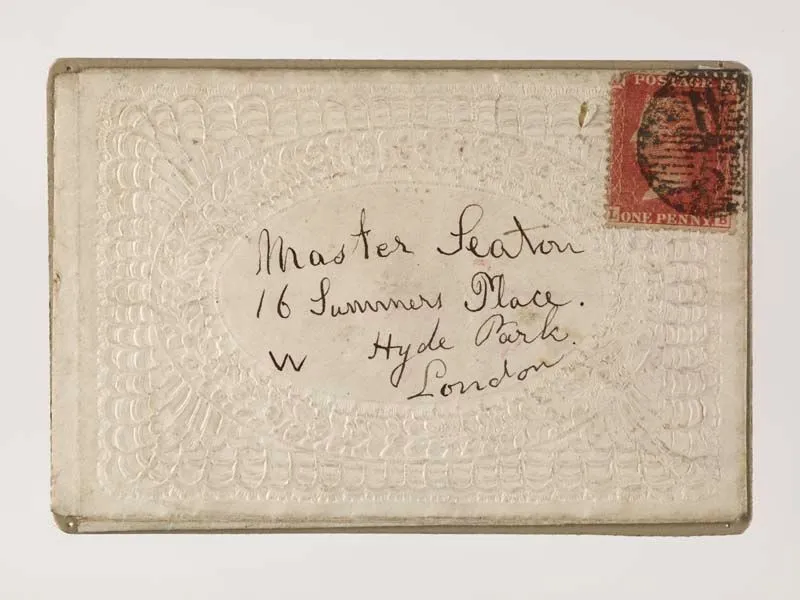
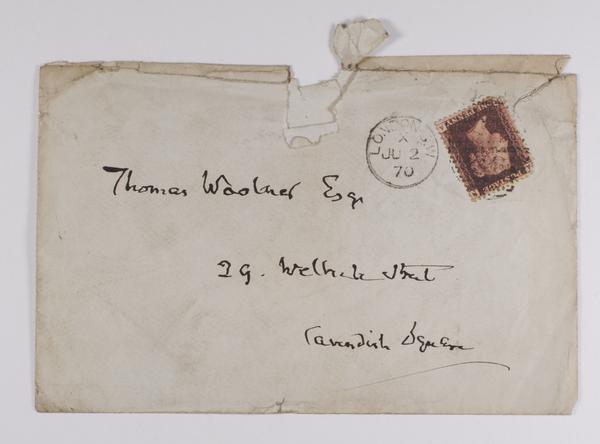
The Penny Red, seen on this envelope, was used from 1841 to 1879, making it Britain’s longest-running stamp.
By the mid-1850s, sending a letter became even easier. Letter boxes were fitted to houses and collection points called ‘pillar boxes’ were installed. The eventual standardisation of the red pillar box made it an iconic, lasting feature of Britain’s street furniture.
The impact of the Penny Post
Thanks to the Penny Post, letter-writing became the top form of communication in Britain. The number of letters mailed in Britain more than doubled in the first year, from 76 million in 1839 to 169 million in 1840.
Londoners of all backgrounds could afford to write letters exchanging news, gossip and stories. With multiple deliveries a day, the postal service was the most reliable way to make arrangements for meeting people.
It also led to a boom in businesses making and selling cards towards the end of the 19th century. Developments in the printing industry increased the production of commercial picture postcards, which were incredibly popular. Greetings cards for Christmas and Valentine’s Day were also mass produced.
The painting below from our collection is by George Hicks. It captured the chaotic rush of the last Friday post at the General Post Office. This was the last chance of the week to send letters, newspapers or magazines, and drew people to watch the spectacle.. In the middle, you can see people rushing past the crowd of onlookers with their stamped letters and packages.

Loose and bundled newspapers are being flung into the post room in George Hicks’ painting of the last Friday post.
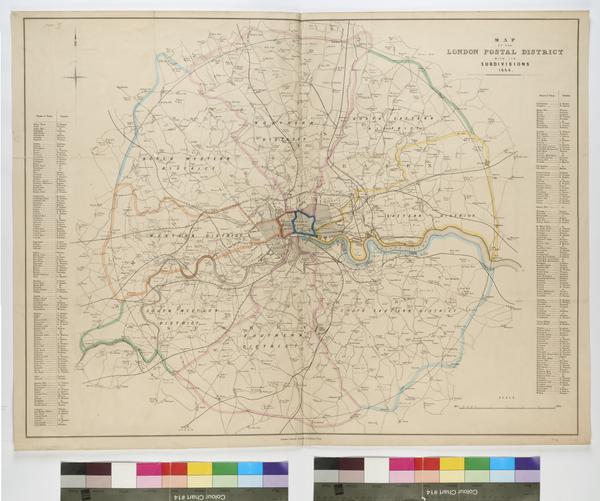
In London, Rowland Hill created a solution to improve mail delivery by creating 10 postal districts, each with their own post office for sorting letters. This meant that mail didn’t have to go through the country’s main sorting office, the General Post Office in the City of London.
The Post Office provided jobs for many working-class Londoners. By 1900, it employed over 160,000 people. Those who delivered the post were often proud of their work and their uniform, and it was regarded as a good, stable job.
Tags
-
Library
-
-
-
-
-
Printed Ephemera
-
Paintings, Prints & Drawings
 Paintings, Prints & Drawings
The Royal Mails starting from the General Post Office, London (coloured etching and aquatint)
Pollard, James, Reeves, R.G., McLean, Thomas
1830-04-19
-
Paintings, Prints & Drawings
 Paintings, Prints & Drawings
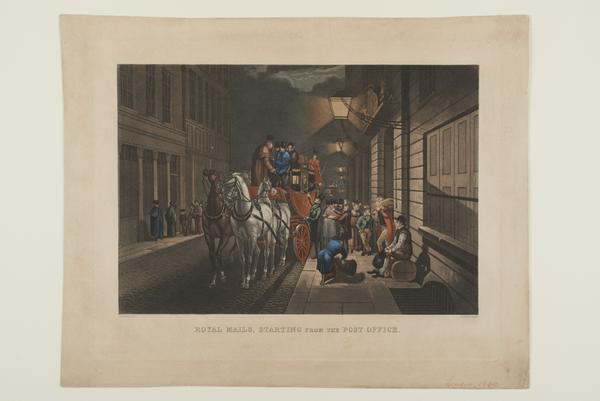
Royal Mails, starting from the Post Office (etching)
Alken, Henry Thomas, Hunt, G.
1830
-
-
Paintings, Prints & Drawings
 Paintings, Prints & Drawings
A North East View of the New General Post Office, with the Royal Mails (& Carts) preparing to Start (coloured aquatint)
Pyall, Henry
1829-1835