A microcosm of Georgian London
Starting in 1808, the printseller Rudolph Ackermann began publishing his Microcosm of London, a collection of views of London’s most famous buildings. The prints inside combined the work of two famous artists: Augustus Charles Pugin and Thomas Rowlandson.
Across London
1808
Who was Rudolph Ackermann?
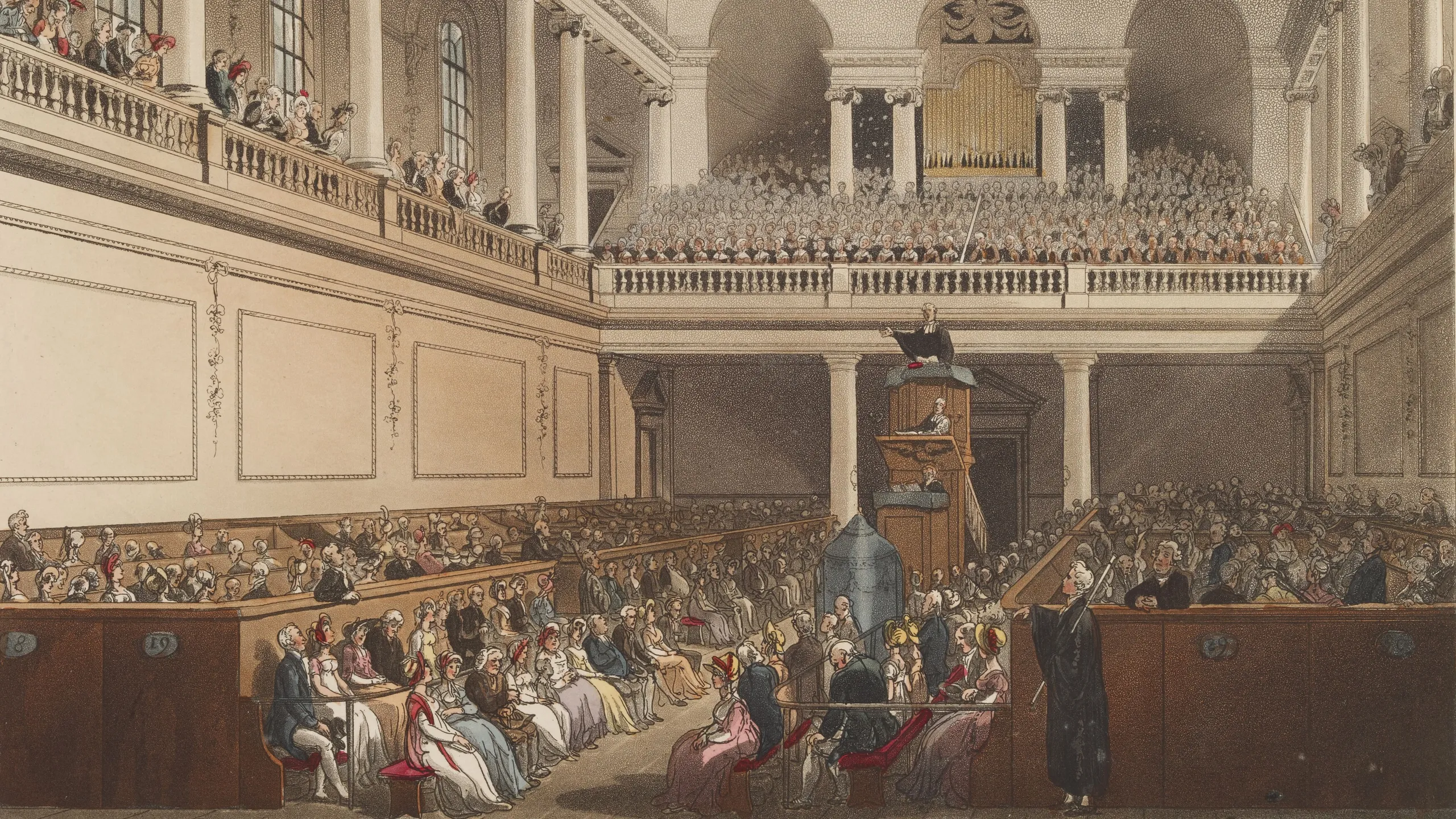
Rudolph Ackermann was a German publisher and printseller who set up a business on the Strand in 1795. In 1808, he began publishing views of London’s buildings in a series he called The Microcosm of London, or London in Miniature. It was originally published in sections, but could later be bought as a full set. This print shows the Foundling Hospital in Bloomsbury.
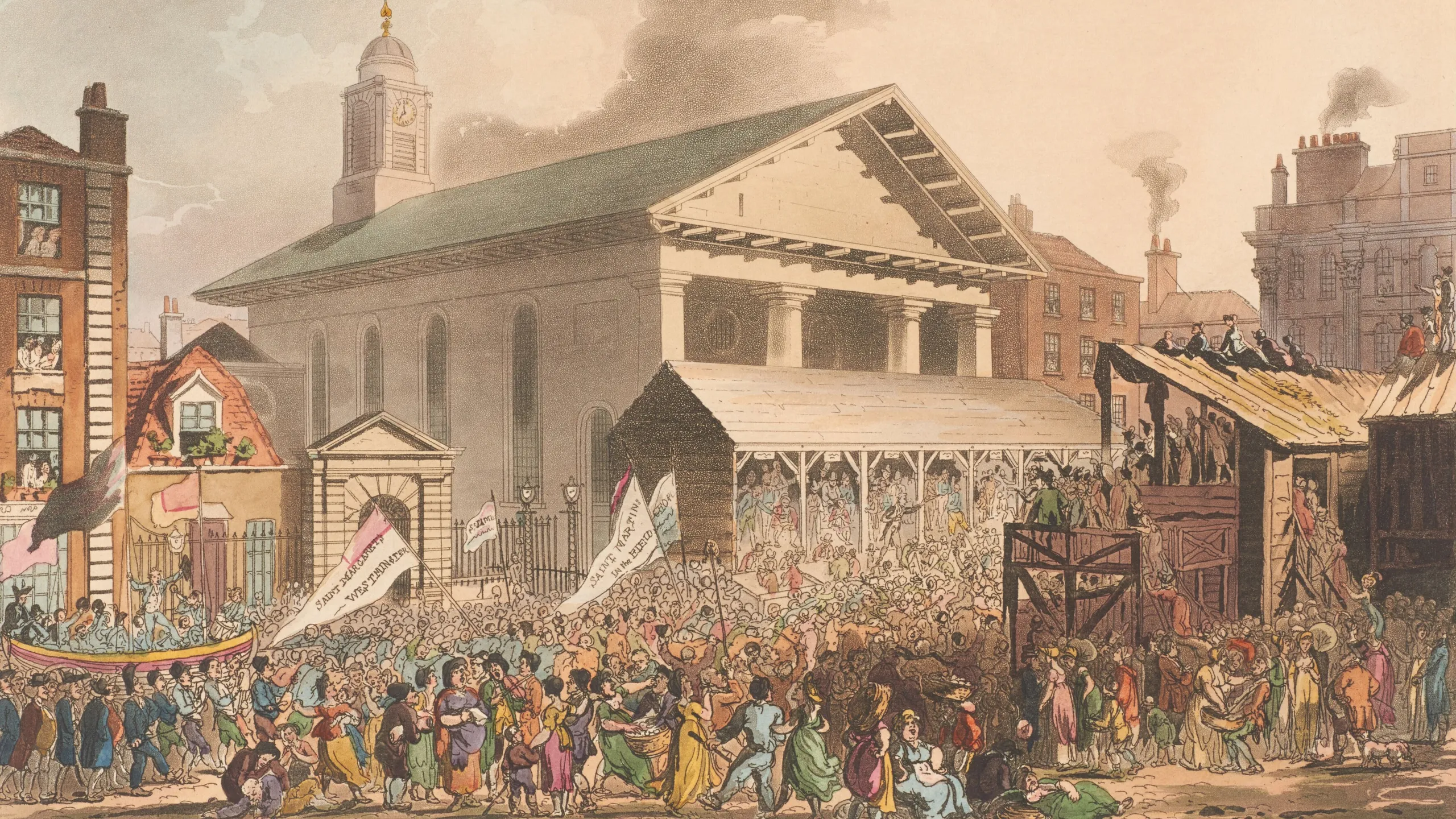
Who were the artists?
The prints inside The Microcosm of London were the work of two of the city’s best artists. Augustus Charles Pugin drew the buildings. Thomas Rowlandson, a famous caricaturist, added the people into the scene.
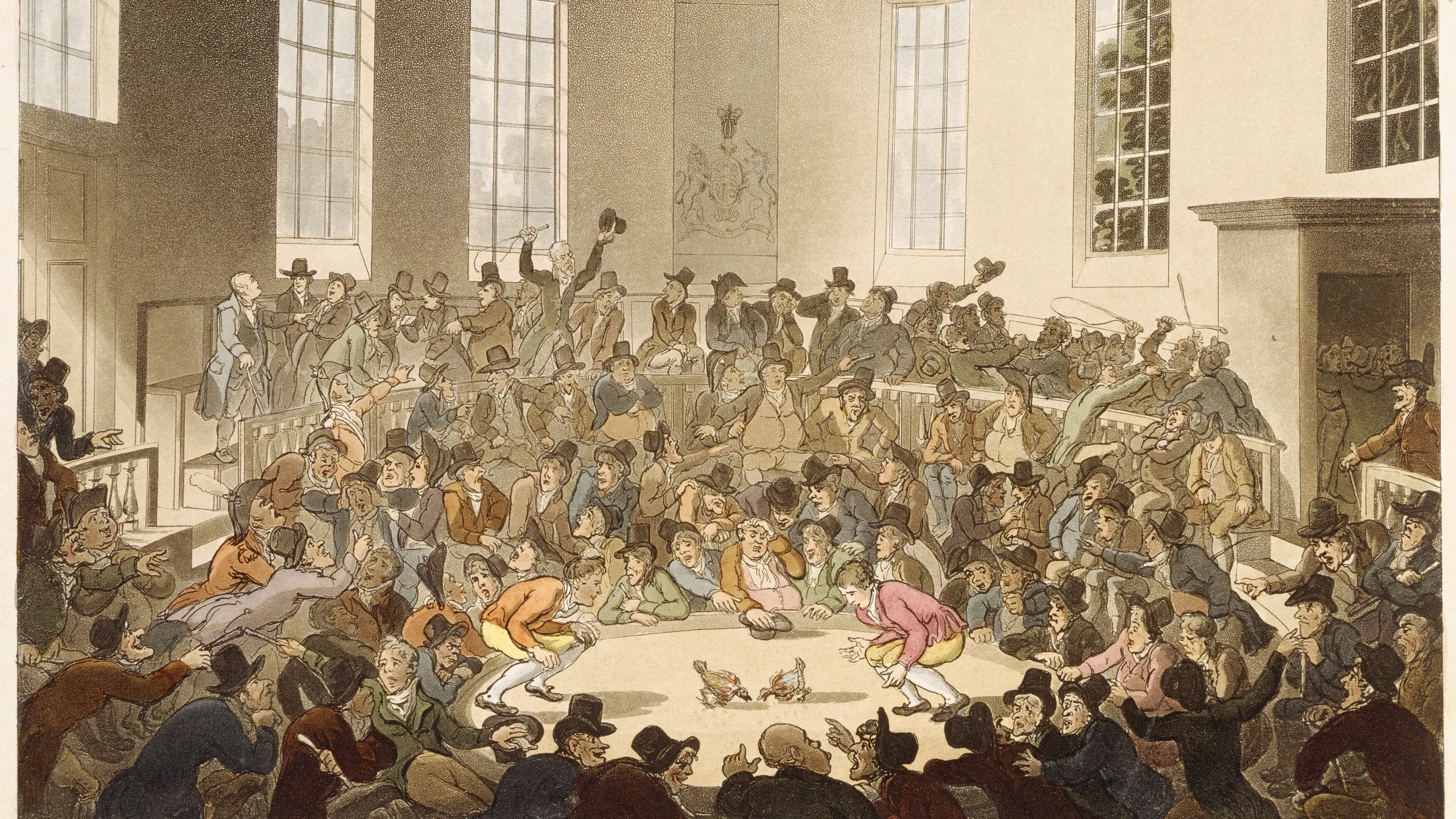
The Royal Cock Pit, Westminster
Rowlandson made his name drawing boisterous characters. This scene is full of them. It depicts a cock fight and the excited crowd of spectators who are shouting, betting and fighting each other. Cockpit Steps, near Birdcage Walk in St James’, is a surviving relic of this cock-fighting venue.
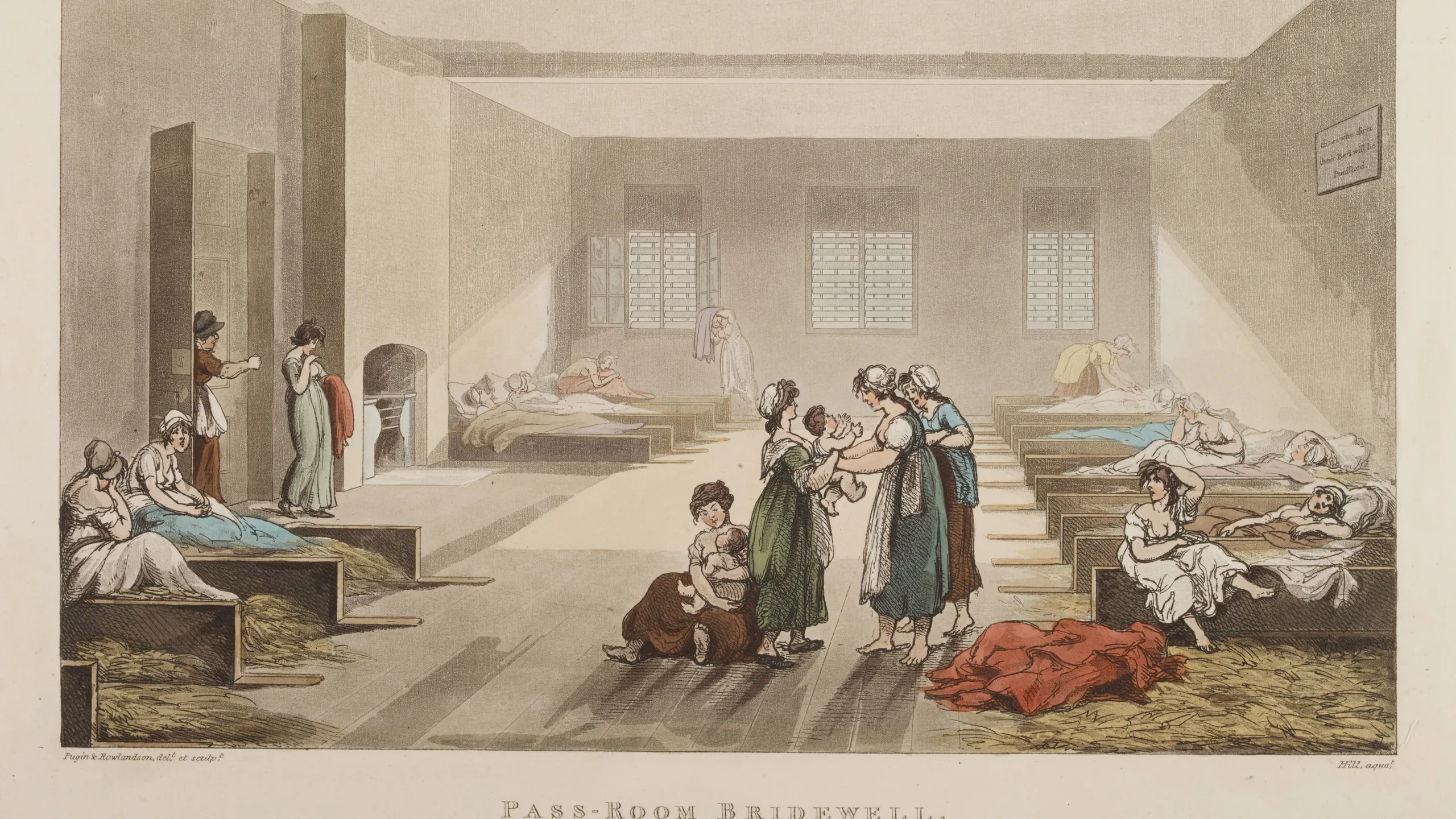
A tour of the city
Though many of the views in The Microcosm of London show grand buildings reserved for the city’s elite, they don’t shy away from other sides of London life. There are workhouses, asylums and, here, Bridewell Hospital, a prison for women.
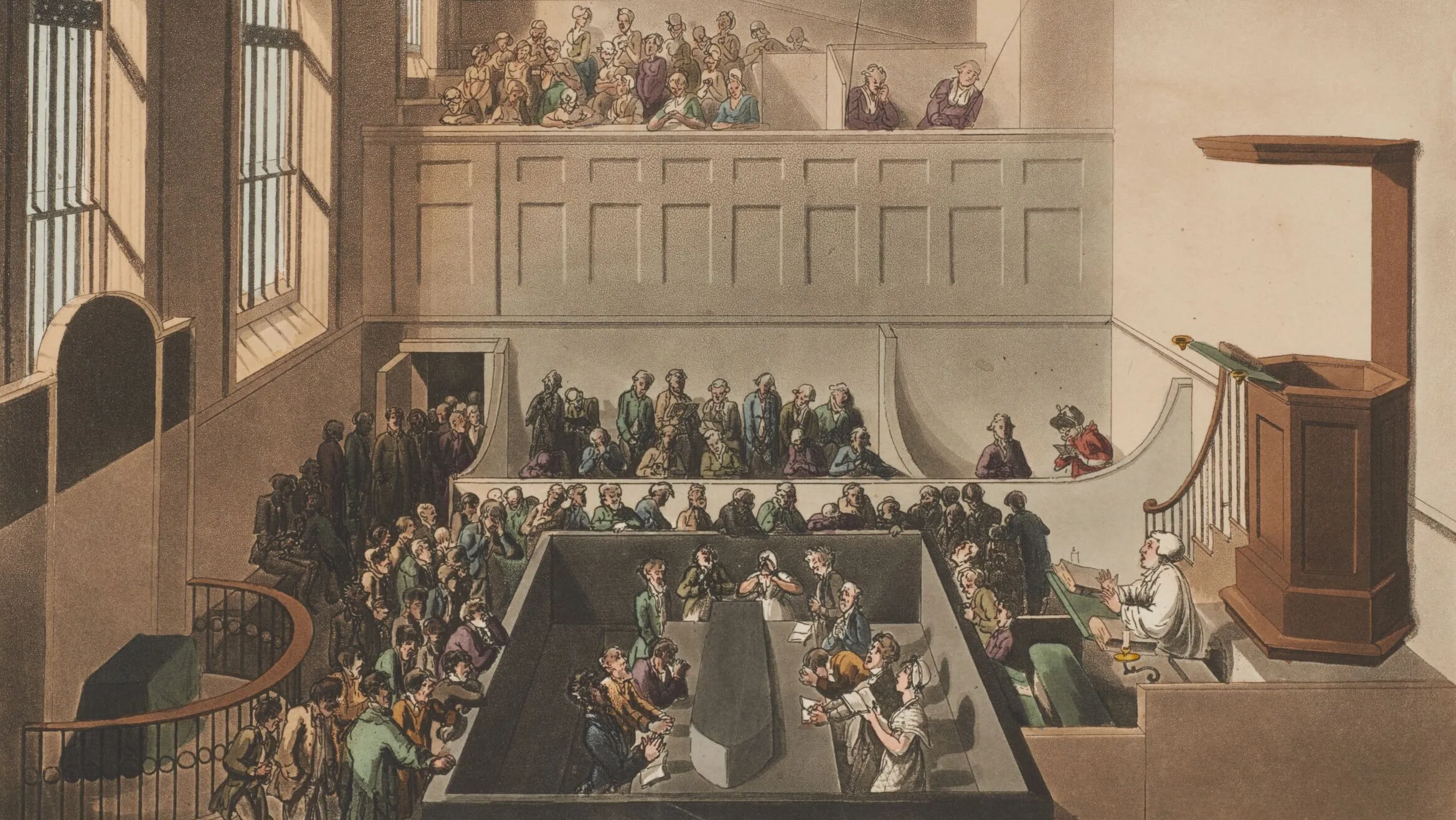
The chapel at Newgate Prison
Here, the artists show a service at Newgate Prison on the Sunday before condemned prisoners face execution. The Microcosm of London also featured descriptions by the writer and illustrator William Henry Pyne. Pyne tells us: “Upon this occasion, a suitable sermon, called the condemned sermon, is preached by the ordinary [prison chaplin]; during which a coffin is placed on a table within an inclosure, called the Dock; and round this coffin are prisoners condemned to die.”
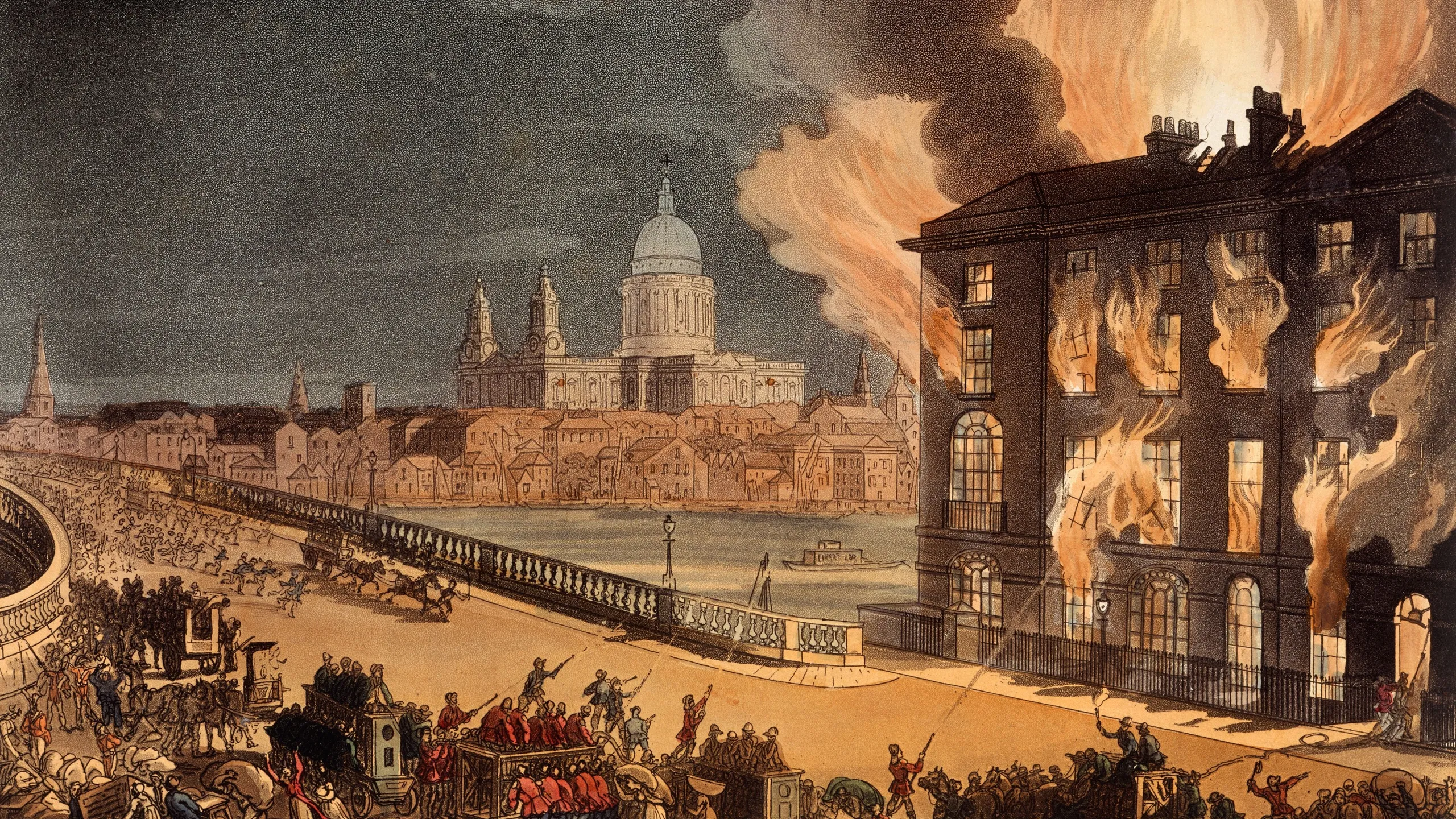
A fire at Albion Mills
This print shows flames consuming a large flour mill which once stood on the south side of Blackfriars Bridge. St Paul’s Cathedral rises in the background.
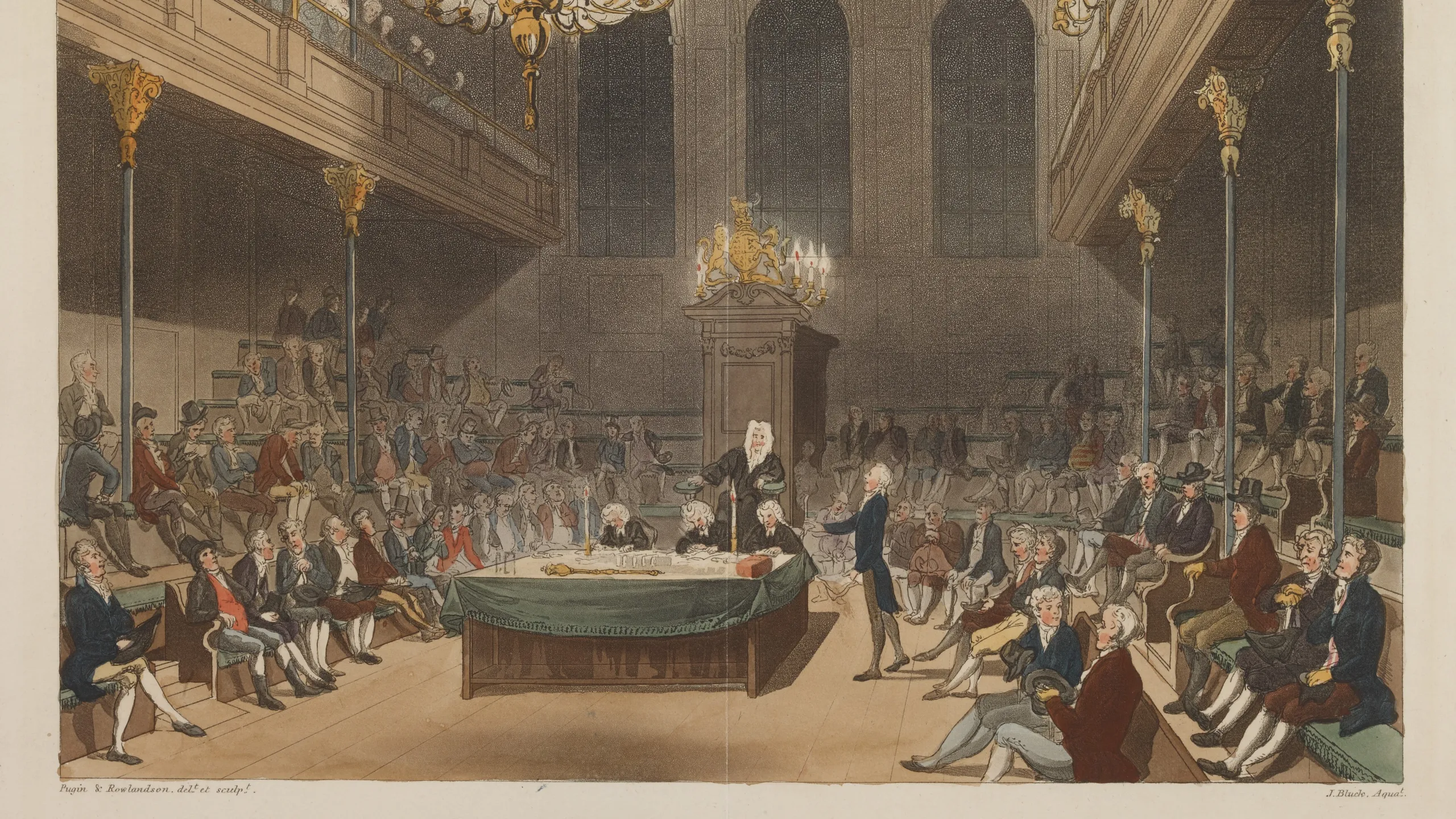
The House of Commons
Many of the views focus on the interiors of London’s most grand and stately buildings. Here, ministers are sitting for a session at the House of Commons. If it doesn’t look familiar, that’s because both Houses of Parliament were destroyed by a huge fire in 1834. Charles Augustus Pugin’s son, confusingly named Augustus Welby Pugin, played a major part in the redesign.
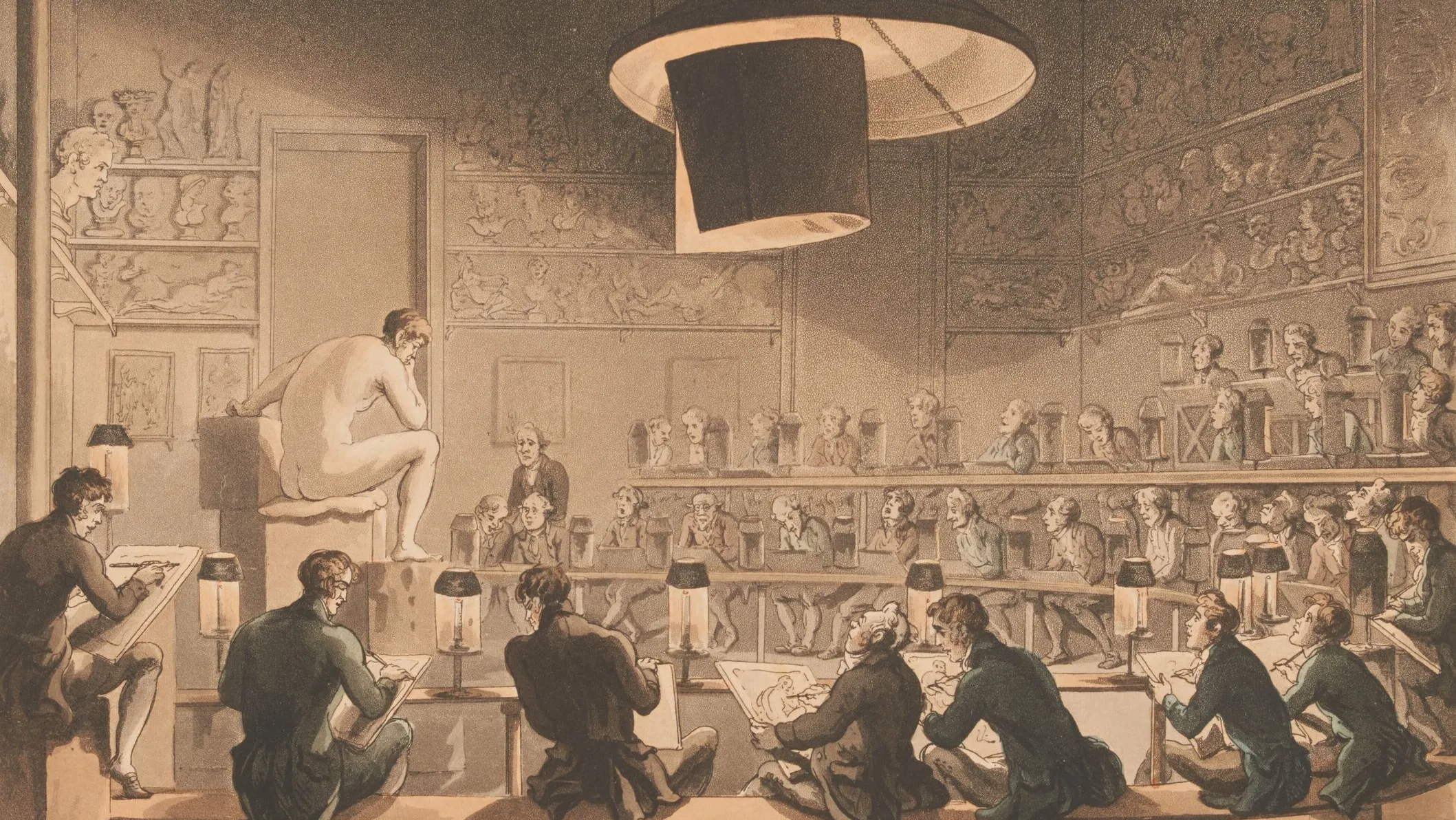
Life drawing at the Royal Academy
Here, students sketch a nude model in their life drawing class at the Royal Academy, when it was based at Somerset House. The Royal Academy moved into its current home, Burlington House, in 1868.
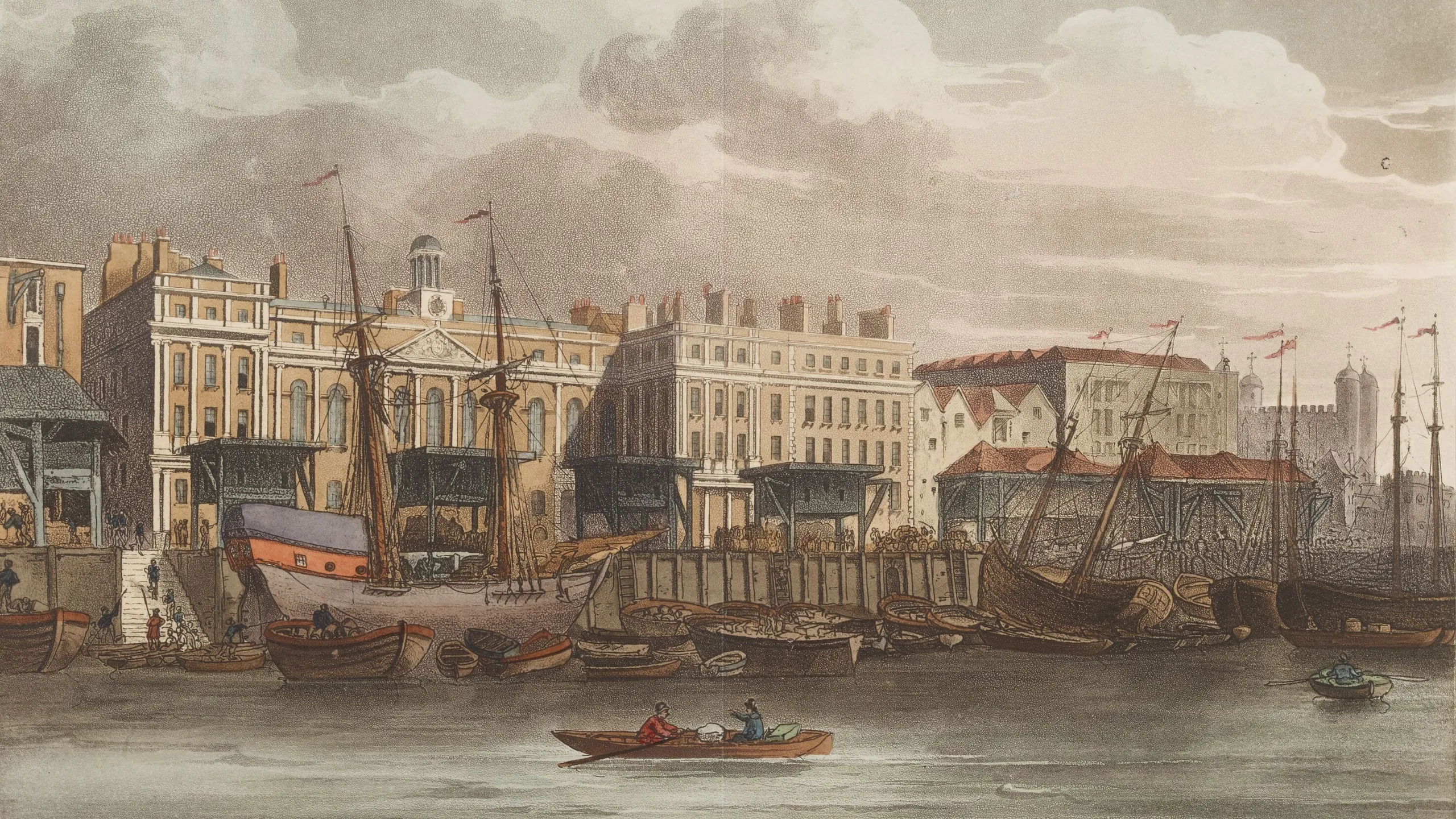
Custom House from the River Thames
This view shows us the busy river in the 19th century. Stairs lead up from the Thames, and vessels are moored directly to the embankment. Custom House was built to collect customs duties from merchants importing and exporting certain goods. The Tower of London is visible on the right-hand side.
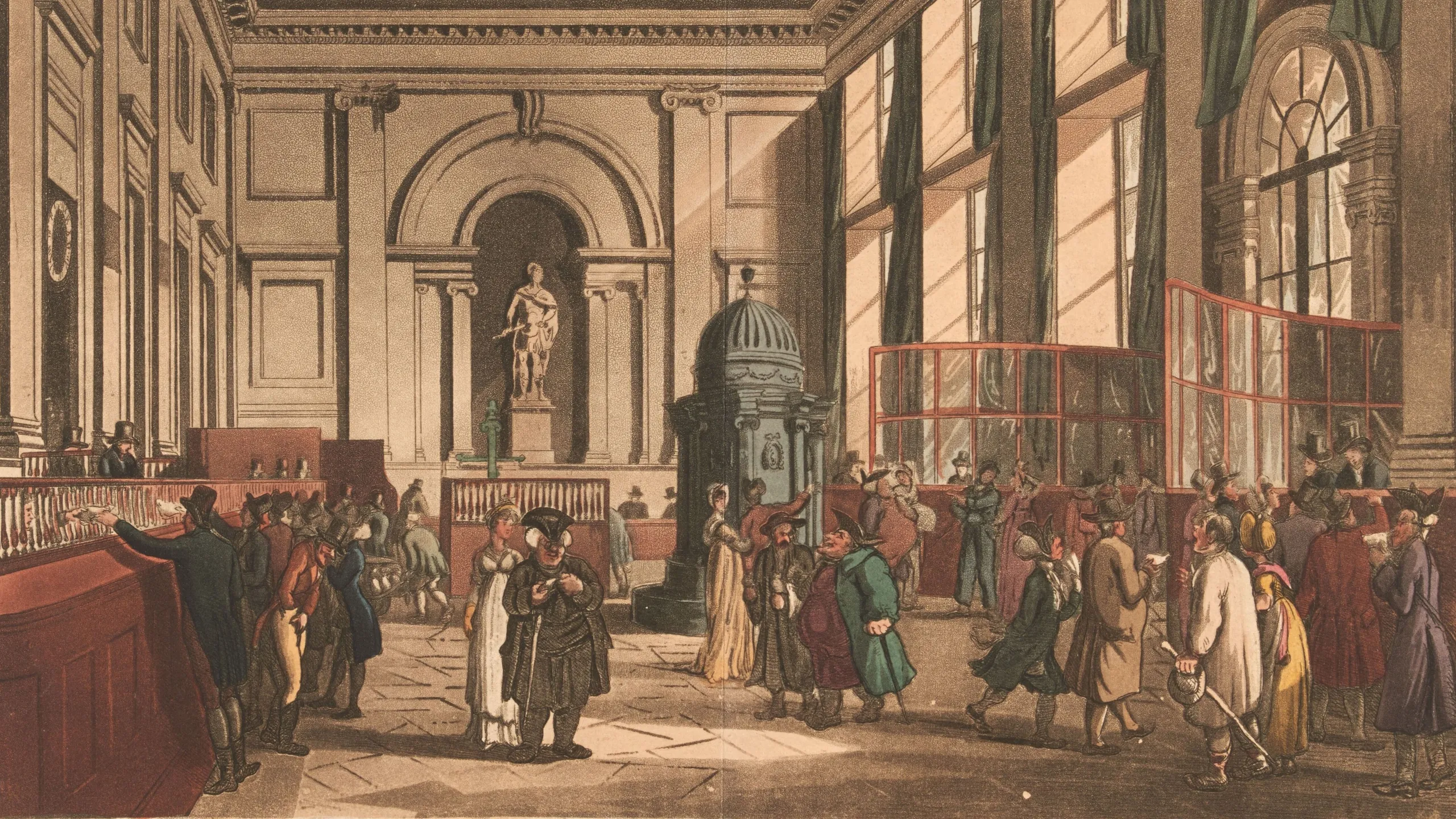
The Great Hall, Bank of England
This shows the bank when it occupied a building on Threadneedle Street designed by John Soane during the late 18th and early 19th century. Bank notes were issued and exchanged in the Great Hall. Most of Soane’s buildings were demolished in the 1920s to make way for a bigger modern replacement that fit the bank’s modern needs.
Tags
-
Paintings, Prints & Drawings
 Paintings, Prints & Drawings
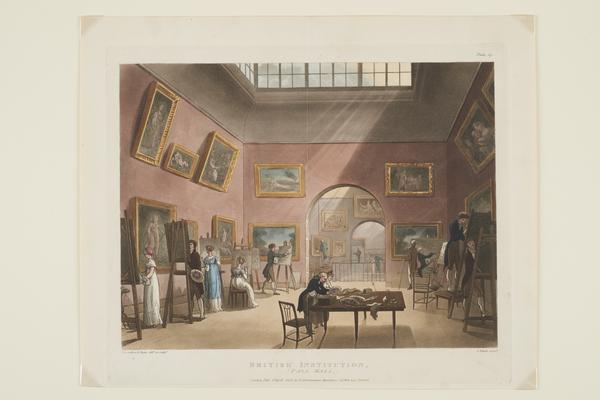
British Institution, Pall Mall (coloured aquatint)
Pugin, Auguste Charles, Rowlandson, Thomas, Bluck, J., Ackermann, Rudolph
1808-04-01
-
Paintings, Prints & Drawings
 Paintings, Prints & Drawings
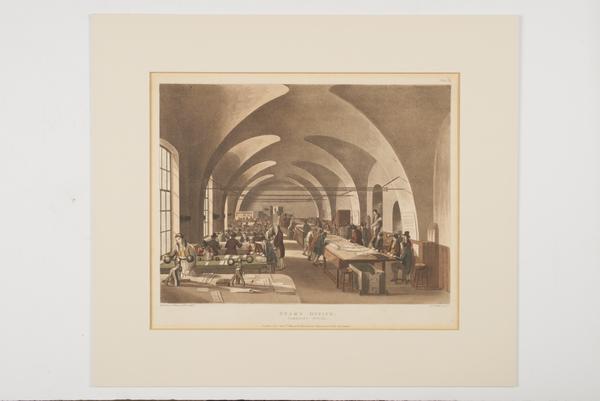
Stamp Office,Somerset House (coloured aquatint)
Rowlandson, Thomas, Pugin, Auguste Charles, Stadler, Joseph Constantine, Ackermann, Rudolph
1809-07-01
-
Paintings, Prints & Drawings
 Paintings, Prints & Drawings
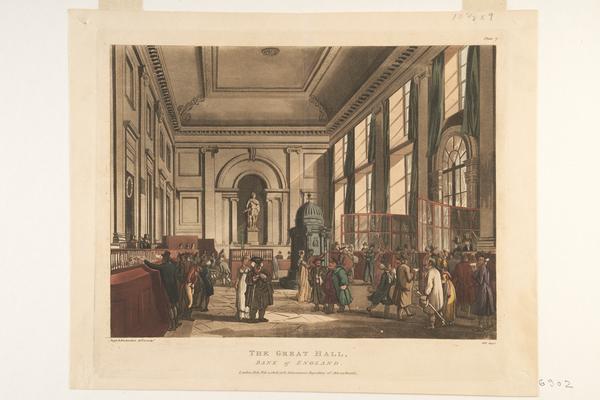
The Great Hall, Bank of England (coloured aquatint)
Pugin, Auguste Charles, Rowlandson, Thomas, Ackermann, Rudolph
1808-02-01
-
Paintings, Prints & Drawings
 Paintings, Prints & Drawings
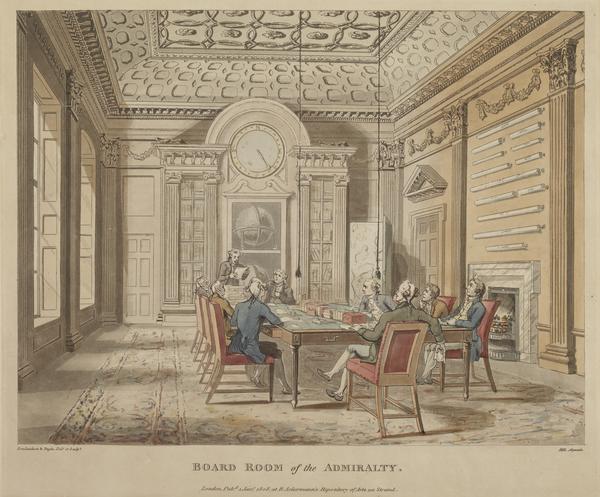
Board Room of the Admiralty (coloured aquatint)
Pugin, Auguste Charles, Rowlandson, Thomas, Ackermann, Rudolph
1808-01-01