The Marchioness Disaster
In 1989, 51 people died when the Marchioness, a boat full of partygoers, sank in the River Thames. It was a shocking tragedy, and the inquiry that eventually followed led to a significant overhaul of safety on the river.
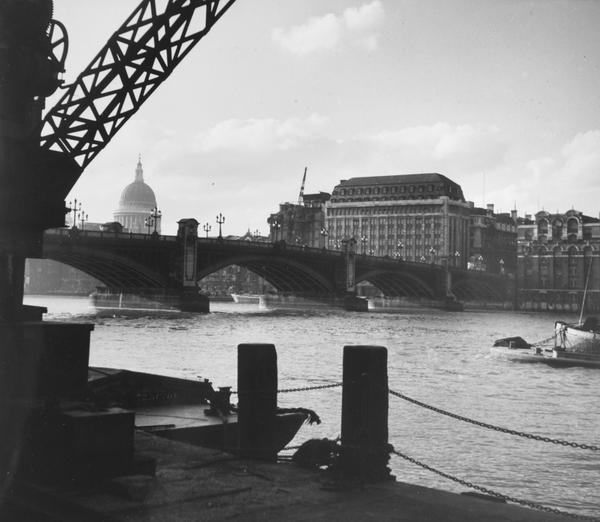
Southwark Bridge, River Thames
20 August 1989
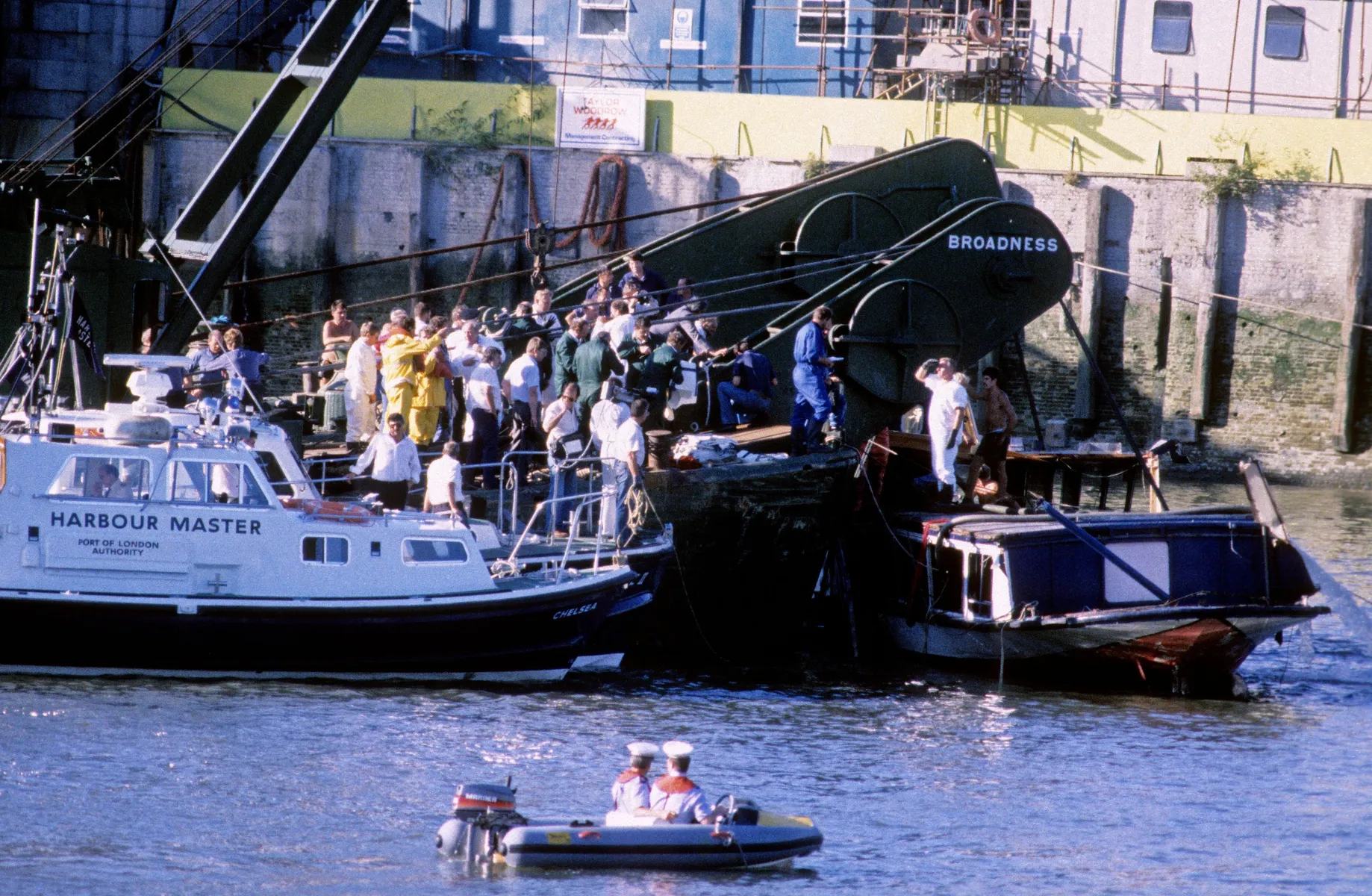
The Marchioness being lifted from the river.
It took tragedy to change the Thames
Around 2am on a warm summer’s night in 1989, two vessels collided on the River Thames in central London.
One was the Marchioness, a boat carrying 131 people, almost all young partygoers celebrating a 26th birthday party. Once struck, the boat sank quickly. Those aboard were either trapped or forced into the strong currents. A total of 51 people died.
There’d been disasters like this before on the Thames. In 1878, the Princess Alice sank near Woolwich, killing 650 people. Most would have expected the river to be a safer place 100 years later.
Friends and families of the Marchioness victims campaigned for answers, justice and change. In 2001, a public inquiry found that neither boat’s crew had kept watch well enough to avoid the collision.
Nobody was prosecuted, but the inquiry’s findings led to a variety of new safety measures – including lifeboat stations in central London.
Who was on board the Marchioness?
The Marchioness was a pleasure cruiser. During the day, the boat carried people, usually tourists, up and down the Thames for their enjoyment.
That night, it had been hired for the 26th birthday party of Antonio de Vasconcellos, a banker.
There were 131 people on board: passengers plus two crew, and two bar staff. Many were friends, many in their 20s. Some worked in finance in the City. Others were creatives, working in music or fashion.
“The Marchioness was rolled over and forced underwater”
How did the Marchioness sink?
The Marchioness sank after being struck by the Bowbelle, a dredging ship. The Bowbelle was a much larger, much heavier vessel.
The Marchioness picked up its passengers from Southwark Pier and set off at 1.25am, heading east. The same direction the Bowbelle was travelling.
At 1.46am, the two vessels collided, throwing passengers on the Marchioness’ deck into the water. The Marchioness was rolled over and forced underwater. It sank almost immediately. Many of those on the lower deck were trapped.
Passengers who fell into the water recall their desperate efforts to avoid the rapidly approaching Bowbelle, and to stay afloat in the strong Thames currents. Many were saved by another party boat, the Hurlingham.
-
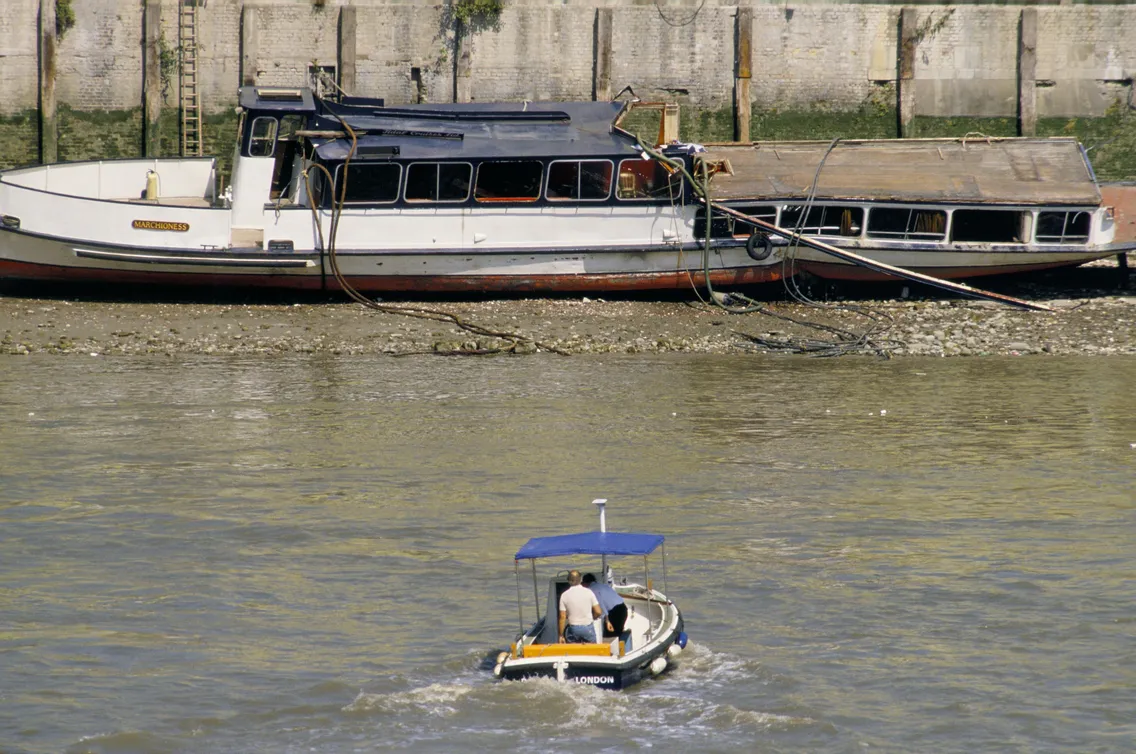
The Marchioness after its sinking.
How many people died in the Marchioness disaster?
A total of 51 people were killed, including Antonio de Vasconcellos, whose birthday it was, and the captain of the Marchioness, Stephen Faldo.
The Marchioness was recovered from the river and 24 of the bodies were found on board. The others were pulled out of the river at various places, with some only being found days after the incident.
In the efforts to identify over 20 of the victims, the coroner decided to cut off their hands for fingerprinting. This decision became a point of distress for the friends and families of those affected. Some of the severed hands weren’t returned to the bodies.
The coroner’s decision was subsequently criticised. It eventually led to an overhaul of how the police and coroners identify the casualties of disasters.
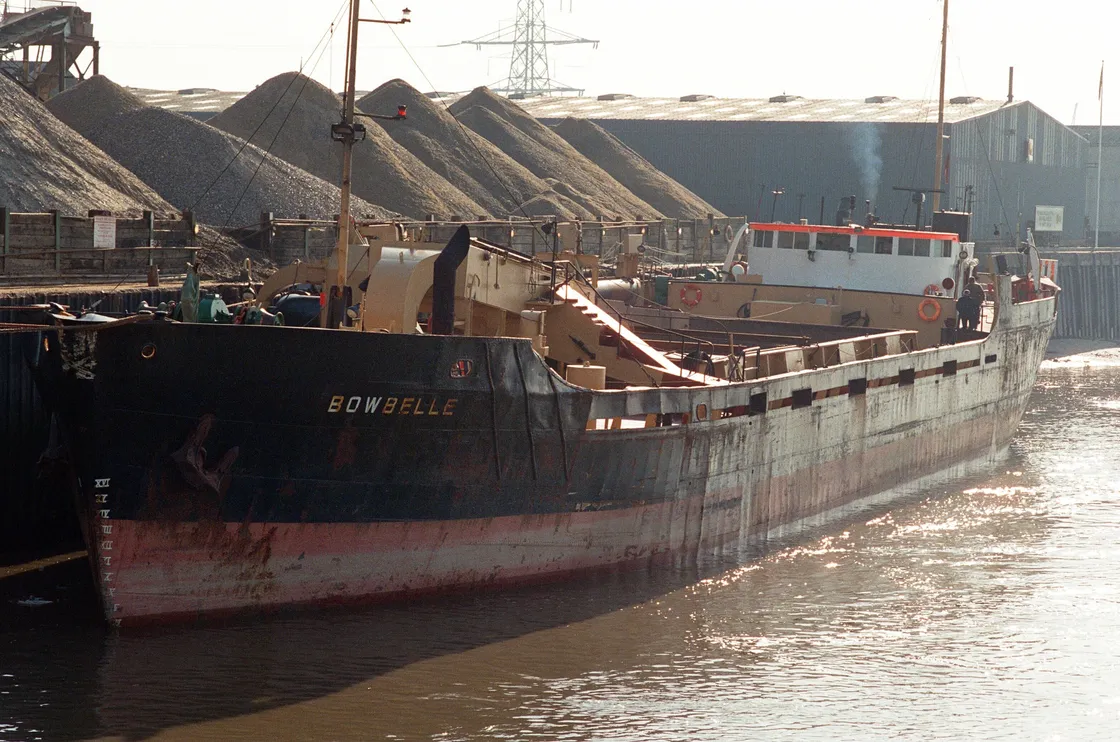
The Bowbelle, the dredging ship which hit the Marchioness.
Who was responsible?
The captain of the Bowbelle and its owner both faced trials, and were both acquitted.
A public inquiry was eventually started in 2000, releasing its final findings in 2001. This found that the collision was caused by poor lookouts on both vessels. They simply didn’t have a system in place to see each other in time to avoid crashing.
The inquiry also found that the Metropolitan Police was not properly prepared for a major incident on the river.
The inquiry scrutinised the captain of the Bowbelle because he’d drunk six pints of beer the afternoon before the disaster. Though the inquiry’s report criticised his actions, it accepted that he probably had no alcohol in his bloodstream at the time of the collision.
What changed after the disaster?
Anthony Clarke, the senior judge who led the inquiries, made 74 recommendations to make the Thames safer.
The Coastguard took responsibility for the whole of the tidal Thames, about 150km of river from Teddington out to the sea. The RNLI (Royal National Lifeboat Institution) also established four stations on the River Thames. And the Port of London Authority (PLA) now tracks large boats by GPS, similar to the way air traffic control works.
Lights were mounted to bridges which show when a larger vessel is approaching. Chains were hung from embankments and bridge piers to give anyone thrown into the water something to hold on to.
For boats, new rules were introduced on life jackets, life rafts, fire detection and extinguishing equipment. Changes were also made to boat masters’ licenses and qualifications.
A memorial to those who died was installed at Southwark Cathedral. Their families and survivors of the disaster gather there every year to honour them.
Tags
-
-
-
-
-
Photography
-
Photography
 Photography
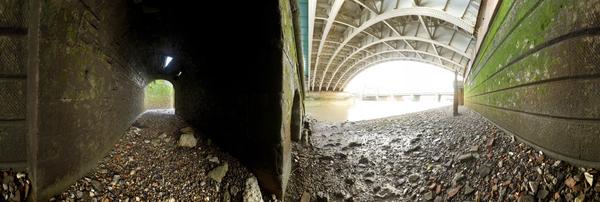
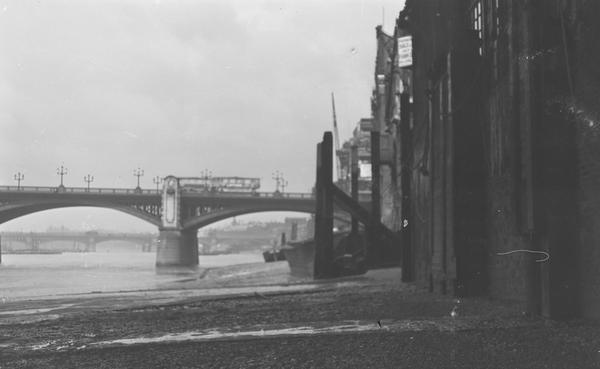
Docks (non -PLA): Looking westwards along the north bank of the Thames from Dowgate Dock at low water in June, 1927. (cellulose acetate)
Linney, Albert Gravely
1927