London’s first South Asian MPs
In the late 19th and early 20th century, three Indian Members of Parliament (MPs) took their seats in the House of Commons. These pioneering politicians represented London constituencies, and two called for Indian independence from British rule.
Westminster
1841–1929
-
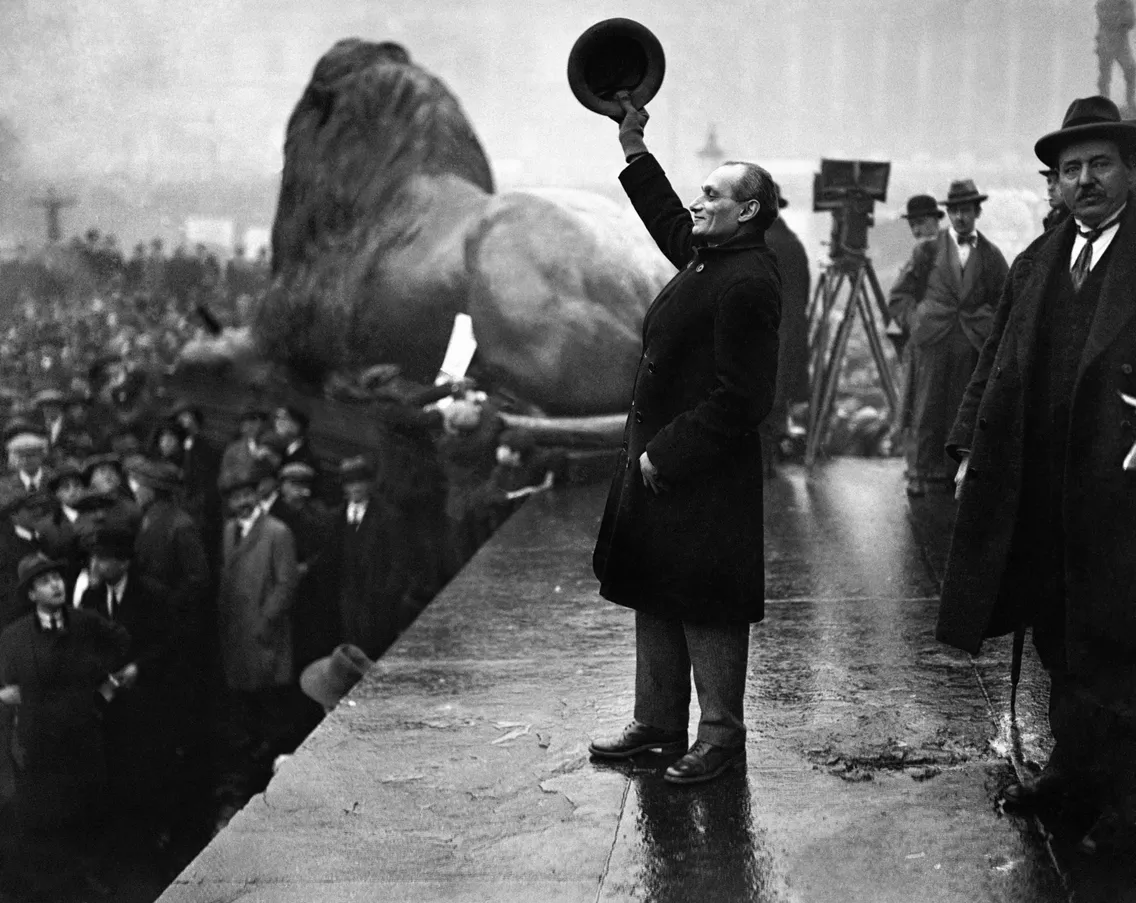
Shapurji Saklatvala speaking at Trafalgar Square in 1923.
The politics of empire
In 2022, Rishi Sunak became the UK’s prime minister and the first person of South Asian heritage to lead the country. At the same time, Sadiq Khan, the son of Pakistani parents, was serving as the mayor of London.
It was a symbolic moment in the centuries-long history of South Asian politicians in Britain.
David Ochterlony Dyce Sombre, elected in Suffolk in 1841, was the first Member of Parliament (MP) of South Asian heritage.
Then, between 1892 and 1922, three Indian men were elected to the UK’s parliament. All three represented parts of London.
At that time, India was a British colony, under British rule. The question of how India should be governed was a major issue for these three politicians, though not all actively supported Indian independence.
This early flash of diversity in British politics was short lived. India won independence in 1947, and it wasn’t until the 1980s that more MPs of South Asian heritage were elected to the House of Commons. It took until 2010 for a woman from a South Asian background to become an MP.
Dadabhai Naoroji, 1825–1917
Dadabhai Naoroji was the UK’s second South Asian MP, and the first for London. He was elected in 1892 as the Liberal MP for Central Finsbury.
This businessman, academic and activist was born in Mumbai in 1825. He moved to London in the 1850s to help found Cama & Co, a textile company that was possibly the first Indian-owned business in the UK.
He’s famous for challenging accepted ideas about empire with his ‘drain theory’. This argued that the British empire did not benefit India, as was usually claimed by the British establishment. Instead, he believed India’s widespread poverty was caused by Britain’s abuse of the country’s resources.
Naoroji was determined to represent Indian people in Parliament. For him, Westminster – the political heart of the empire – was the place to make change.
While he was an MP, Naoroji campaigned to allow Indian people to join the Indian civil service, but was unsuccessful. He also supported women’s right to vote and Irish independence.
-
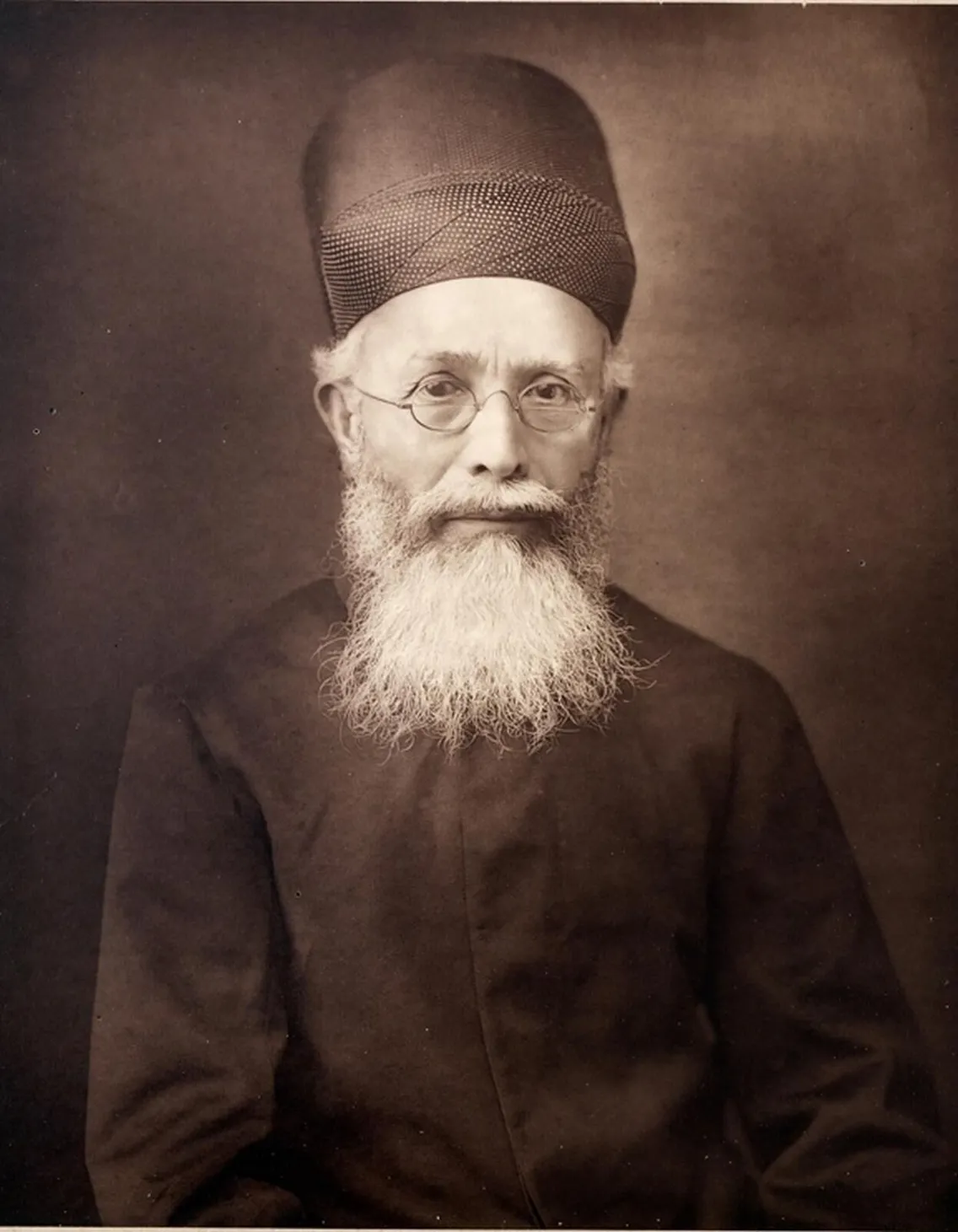
A portrait of Naoroji.
-
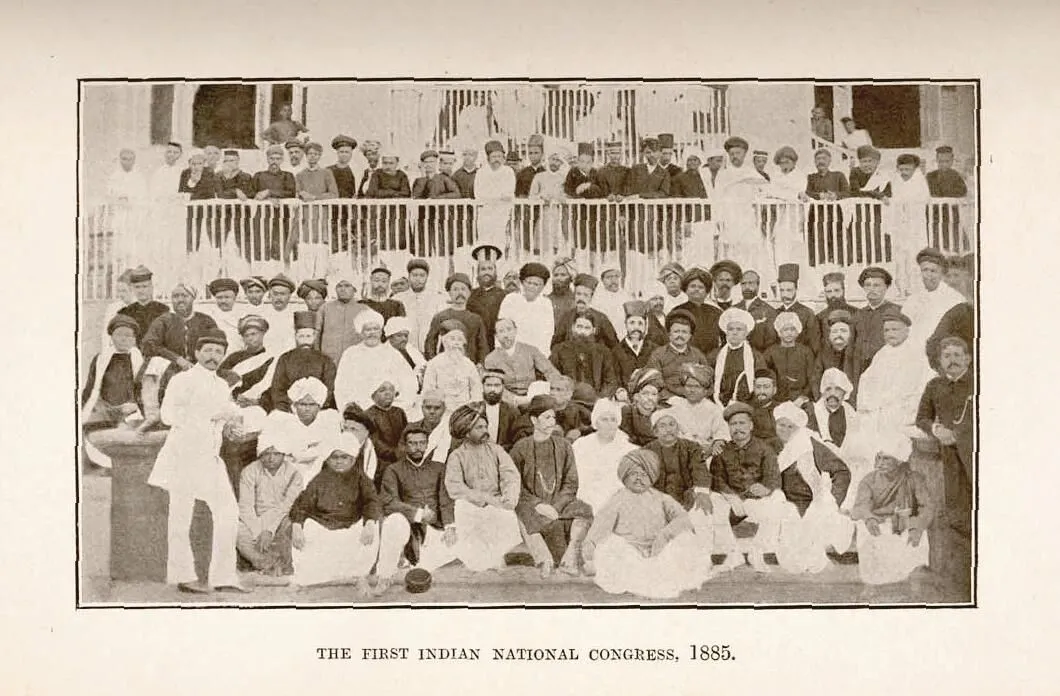
Naoroji at the first Indian National Congress, 1885.
Naoroji was only an MP for three years, losing his seat in the 1895 election. Two years later, he moved to Penge, in Bromley, where he lived for around 10 years. There’s a blue plaque honouring him at 72 Anerley Park.
But Naoroji’s legacy didn’t end with his electoral defeat in 1895. Instead, it spurred him to openly demand Indian independence, known as self-rule or ‘swaraj’.
This was a radical stance at the time. But it slowly gained credibility, and was championed by the Indian National Congress Party, which he’d helped found in 1885. The party went on to be led by both Mohandas (or ‘Mahatma’) Gandhi and Jawaharlal Nehru, two figures pivotal to Indian independence.
Mancherjee Bhownaggree, 1851–1933
Also born in Mumbai, Mancherjee Bhownaggree represented a different opinion on British rule in India.
After Naoroji won his seat, a group of pro-British Indians felt they needed their voices heard in Parliament. They turned to the lawyer Mancherjee Bhownaggree, who’d moved to London to study in 1882.
Bhownaggree stood as a Conservative Party candidate and won the 1895 election for Bethnal Green North-East. His competitor in that election, George Howell, complained that he’d been “kicked out by a black man, a stranger from India, one not known in the constituency or in public life”.
Bhownaggree claimed to represent India, but he supported British rule. This was met with anger among Indians who supported independence. He was nicknamed ‘Bow-the-knee’ for this reason.
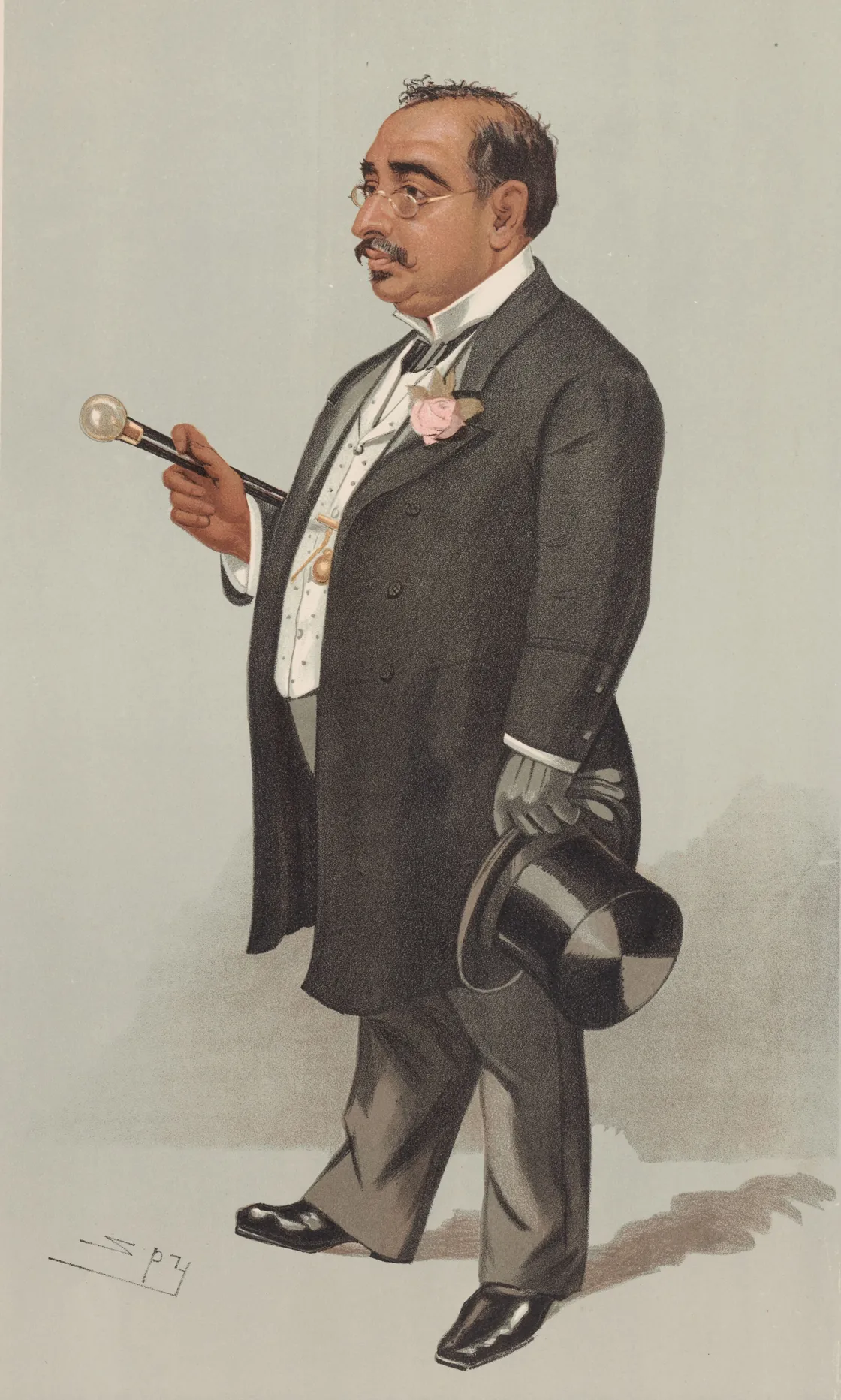
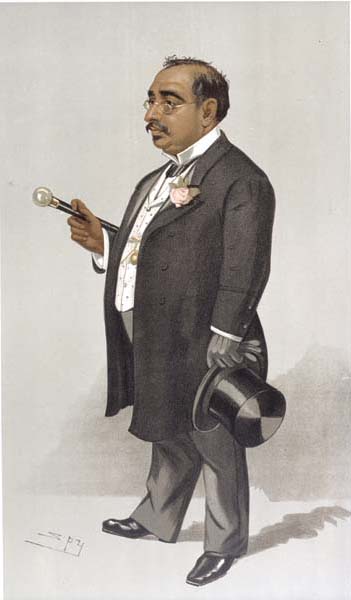
A caricature of Bhownaggree.
Shapurji Saklatvala, 1874–1936
Shapurji Saklatvala was also born in Mumbai, and was part of the extended Tata family, a powerful commercial and industrial dynasty.
In 1905, he travelled to England, where he helped manage Tata’s Manchester office. Here, he saw the difficult lives of workers and was attracted to socialist politics.
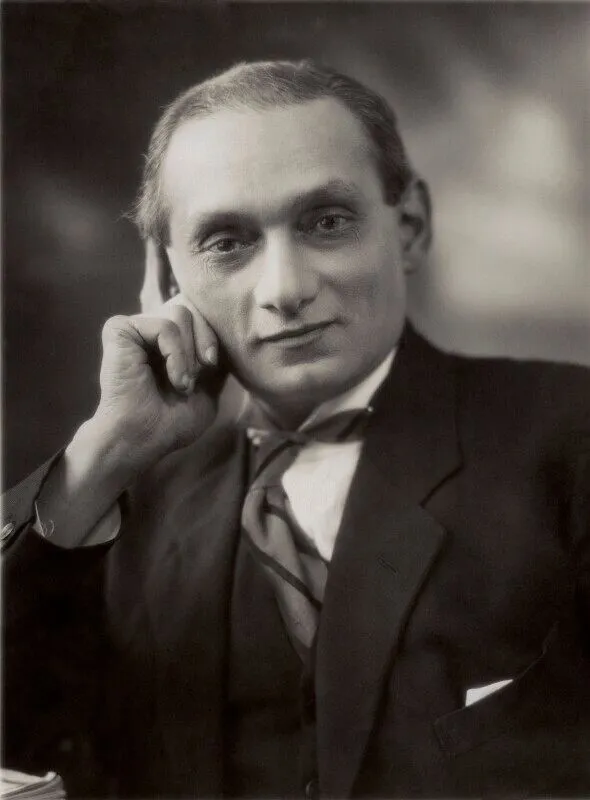
A portrait of Saklatvala.
Saklatvala was elected as the Labour candidate for Battersea North in 1922. After briefly losing his seat, he was reelected in 1924, this time as a Communist MP, since Labour had banned Communist party members from its ranks. He held the seat until 1929.
His communist ideas and support for Indian independence meant he was viewed as an extremist. In 1926, Saklatvala was arrested for sedition over speeches he made about the General Strike, when more than a million workers walked out in solidarity with coal miners. Saklatvala was sent to prison for two months.
After a speaking tour of India in 1927, the British government banned him from travelling to India again. He died at his home on Highgate Road in 1936. A plaque in his honour can be found by the Labour Party office on Lavender Hill in Battersea.
Tags
-
Paintings, Prints & Drawings
 Paintings, Prints & Drawings
SIr Mancherjee Bhownaggree (print and accompanying text)
Vanity Fair
1897-11-08
-
Printed Ephemera
-