Kensington Market led British alt fashion for 33 years
Where Freddie Mercury sold clothes, designers launched their careers and London’s bohemian, punk and goth fashion thrived.
49–53 Kensington High Street
15 September 1967 – 29 January 2000
Youth culture heaven
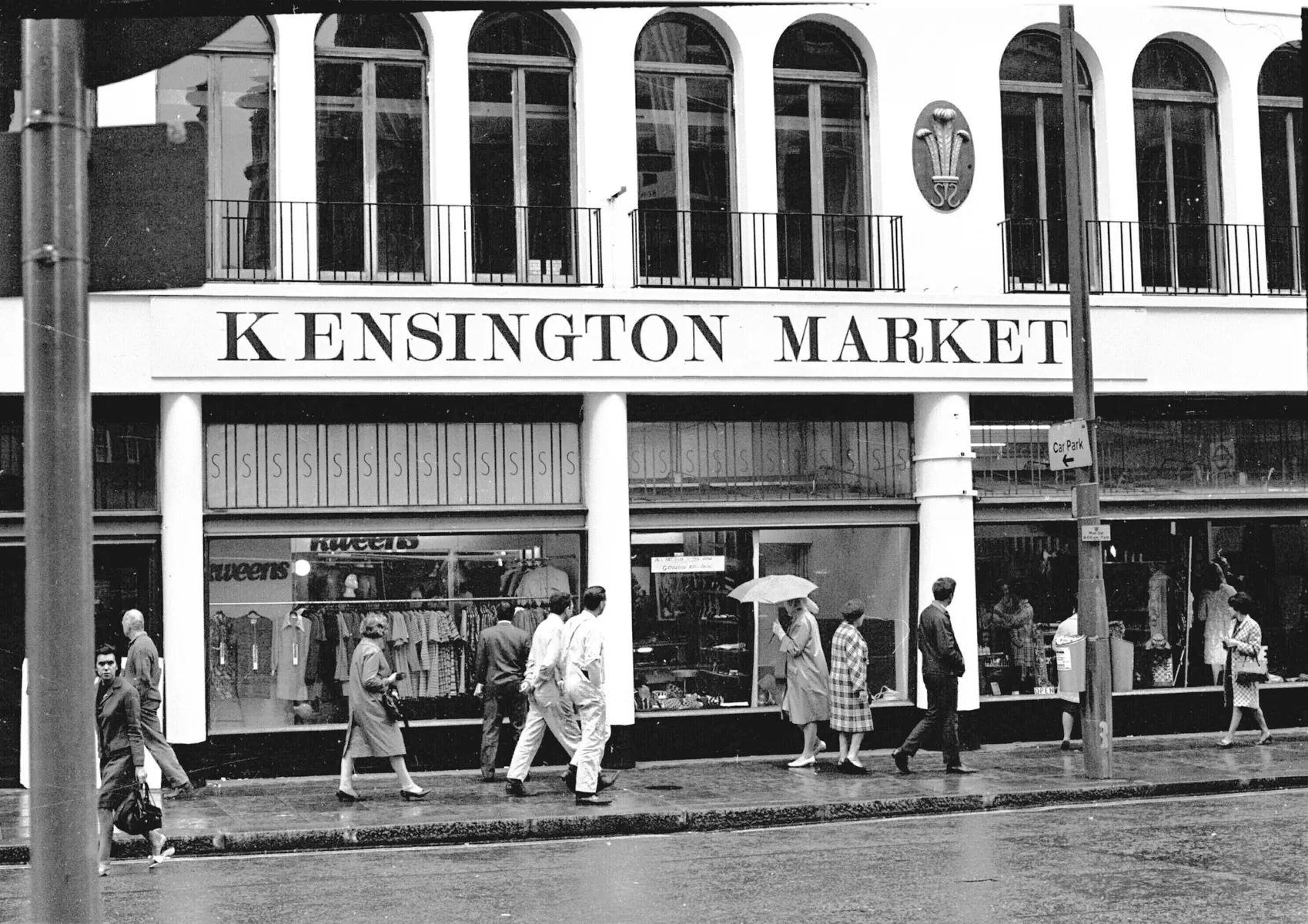
Kensington Market was an indoor market located at 49–53 Kensington High Street in the borough of Kensington and Chelsea. Open between 1967 and 2000, it was famous for influencing several youth subcultures, including punk and goth.
Spread over three storeys, the market attracted bohemian and hippie crowds of the late 1960s and 1970s. Music legends such as Queen’s Freddie Mercury and fashion icons like Zandra Rhodes ran stalls here. Celebrity shoppers included rock stars David Bowie and Boy George.
The market had a labyrinthine layout of tiny stalls and independent shops, each packed with personality. It was the birthplace of many fashion labels that went on to influence the next generations, including Johnson’s, Red or Dead and ArtificialEye.
The market closed after its lease ran out on 29 January 2000. Despite running for just 33 years, Kensington Market left a lasting impact on London’s cultural history.
“Everything from Antiques to Zebra skins, and with more boutiques than Carnaby Street”
Kensington Market advertisement, 1967
Kensington has a long history as a shopping hotspot
Kensington High Street was a fashionable shopping destination in the late 1800s. It was home to department stores like Derry & Toms and Barkers of Kensington.
As the late 1960s saw a growing demand for bohemian style and DIY trends, the high street adapted. Barbara Hulanicki’s fashion label Biba opened its first boutique store on the high street in the 1960s, and in 1973, it later moved into the empty huge Derry & Toms store after it closed down.
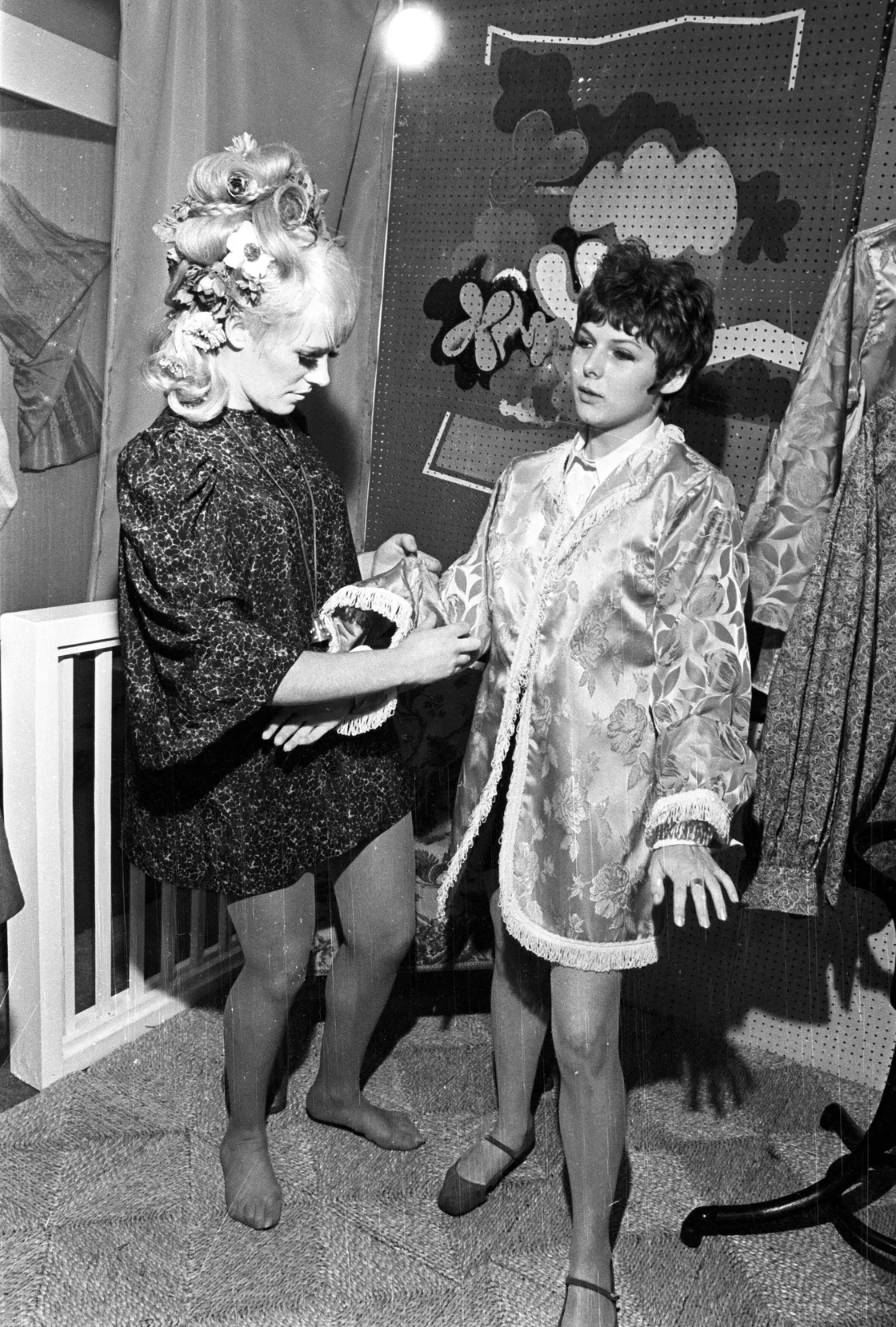
A boutique stall at Kensington Market in 1967.
A market for alternative fashion
On 15 September 1967, Kensington Market opened in a former three-storey department store. It housed around 100 stalls supporting independent designers, vinyl record stores, tattoo artists and craft boutiques.
The stalls format gave young designers an affordable outlet without expensive shop leases. Media coverage marvelled at the camaraderie between traders in these stylistic ‘boutiques’.
“I made it look like a silver submarine with a porthole entrance...pure rock'n'roll”
Lloyd Johnson, founder of Johnson’s
The market was also one of the few Kensington High Street retailers open on Saturdays at the time.
One advert for the market claimed it was “best shelter from the rain in London”, selling “‘With it’ and ‘Way Out’ Gear”. Another promised “stalls selling everything from Antiques to Zebra skins, and with more boutiques than Carnaby Street”.
Our collection includes gold mock snakeskin men’s ankle boots by Johnson’s, one of the market’s first retailers. These boots represent a post-punk era of menswear in London.

These ‘rockabilly’ style boots were produced as a one-off sample for Johnson’s, sold in Kensington Market in the late 1970s.
The boutique’s ‘La Rocka’ jacket was immortalised by George Michael in his 1987 Faith video.
Founder Lloyd Johnson told The Guardian: “I took a stall in Kensington market, made it look like a silver submarine with a porthole as the entrance…and created what I saw as stage wear for the street…pure rock'n'roll.”
Styling rock and punk stars in the 1970s
In the early 1970s, before forming the band Queen, Roger Taylor and Freddie Mercury (then known as Freddie Bulsara) ran a stall there. Mercury famously fitted emerging pop star David Bowie for boots in Kensington Market. Twelve years later, they collaborated on Under Pressure.
Zandra Rhodes also ran a stall at the market, but didn’t know Mercury at the time. In the early 1970s, she designed his white pleated kimono look and the replicas for the 2018 biopic, Bohemian Rhapsody.
-

Freddie Mercury in concert, wearing an outfit designed by Zandra Rhodes.
-
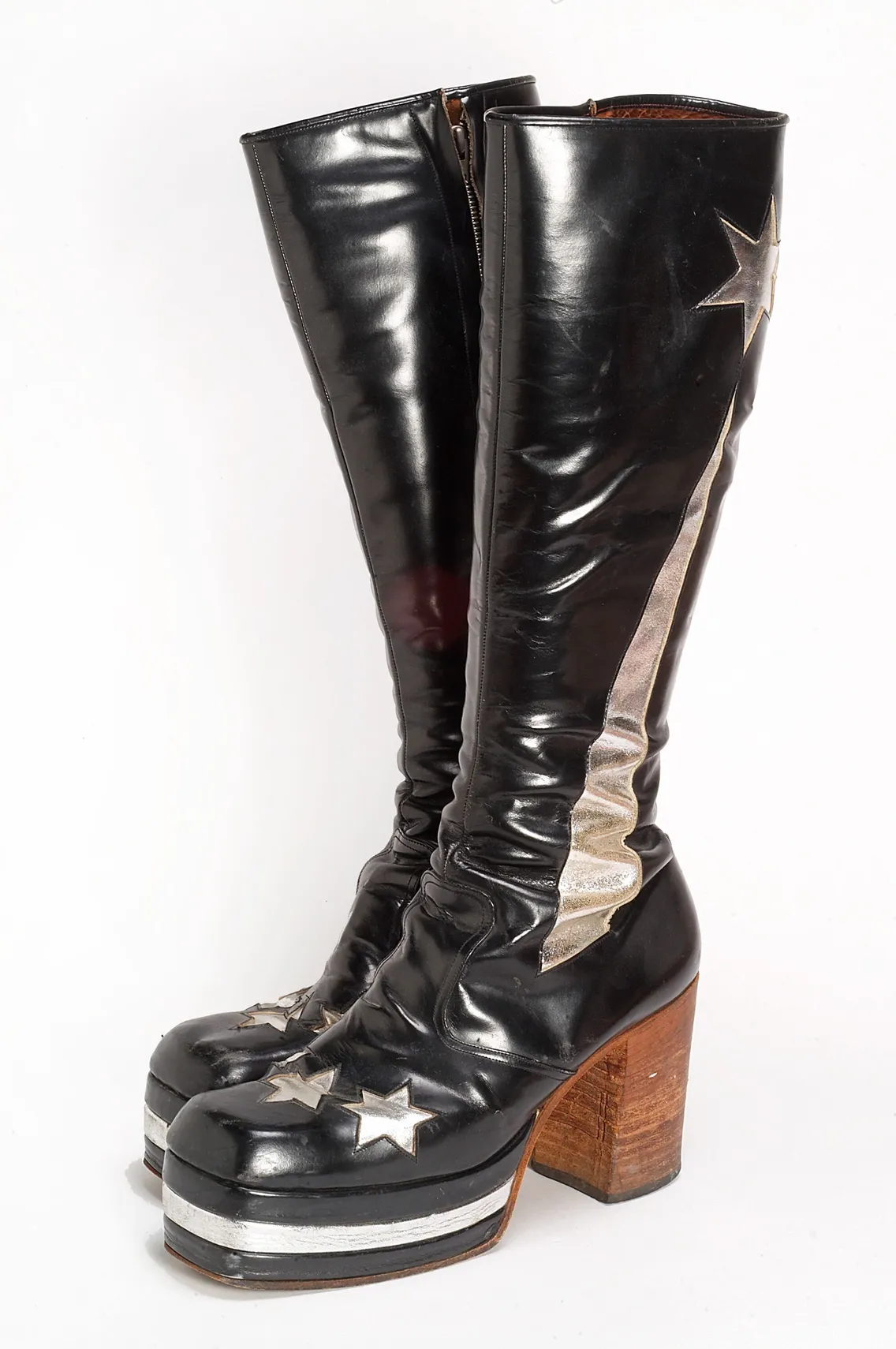
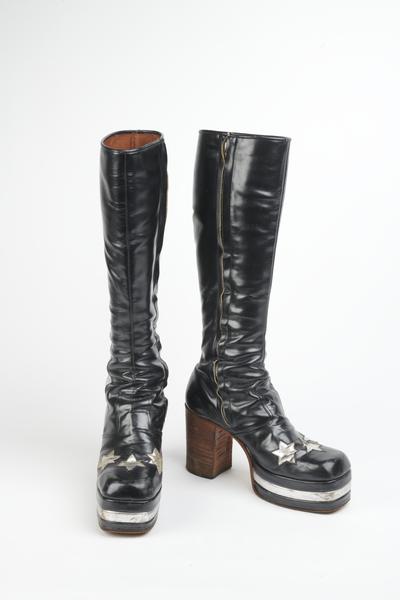
Terence Kettle wore these boots from Kensington Market to music gigs in the 1970s.
The market attracted punk and rock band followers like Terence Anthony Howard Kettle, whose favourite high-heeled leather boots are in our collection. He regularly attended gigs in the 1970s wearing these boots designed by Lionel Avery and bought at Todds in Kensington Market.
Following reports of drug raids in 1971, Kensington Market gained notoriety as a suspected drug-dealing hub in the borough, adding to its counter-culture reputation.
It went through a slump in the late 1970s, leaving many stalls empty and keeping the rent cheap. But in 1979, Chelsea’s punk haven Beaufort Market closed. Kensington offered Beaufort’s traders a new home, leading to a revival in punk and alternative clothing at the market.
A sanctuary of 1980s subcultures
The 1980s saw new subcultural styles added to the punk merchandise on offer. Gothic fashion arrived in the form of black garments, flowing velvet fabrics and occult-themed accessories. Garish, frilly and theatrical outfits kitted out the new romantics, who emerged from London’s club scene from the late 1970s.
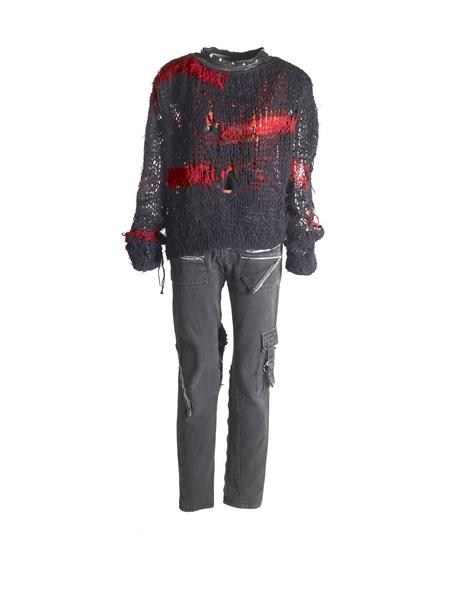
The bondage trousers and a studded t-shirt in our collection, seen below, were worn by punk artist Marian Williams. The outfit is typical of the edgy style that drew the crowds.
-

This outfit was worn by Marian Williams, a singer in a punk band.
-
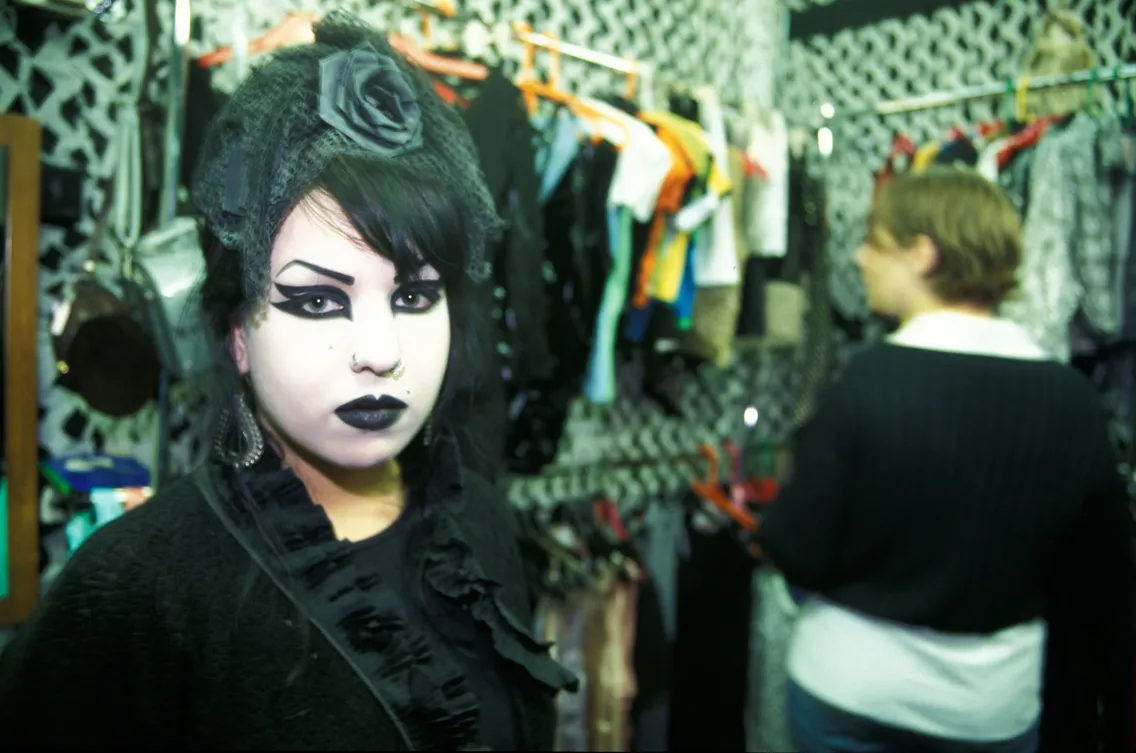
A shop assistant at Kensington Market.
The street style fashion label Red or Dead was also born in Kensington Market. Wayne and Gerardine Hemingway rented a stall for £12 a week selling clothes sewn on-site. They were quickly discovered by the popular New York department store Macy’s and went on to clothe British band Bros and Kylie Minogue.
In the 1980s, the market “was youth culture heaven,” Wayne wrote in the Telegraph, “full of tattoo artists, hairdressers and people with sewing machines selling the clothes they were busy making”.
Cuts hairdressers, a one-chair unit founded by James Lebon, was known for the post-punk and rockabilly styles of the early 80s. As his reputation grew, he partnered with Steve Brooks, eventually moving to Soho, where it’s still running strong.
The end of a fashion institution
In the 1990s, changing retail trends, rising rents and high street competition caused the market’s decline in profitability.
Plans for a luxury retail and housing complex sparked resistance from traders and Londoners who saw Kensington Market as a fashion institution. In 1999, English Heritage intervened to delay demolition.
However, when the lease expired, the 120 stall owners couldn’t prevent closure. They went out with a bang, holding an exhibition honouring the market’s famous alumnus Freddie Mercury.
Kensington Market closed on 29 January 2000, having been at the forefront of British alt fashion for three decades. After standing empty for a year, the building was demolished in 2001.