How the telegraph took off in Victorian London
This invention sparked a communication revolution in the capital. With an impact on the scale of the invention of the internet, telegraphs welcomed a new age in which messages could be sent almost instantly across vast distances.
From the 1840s
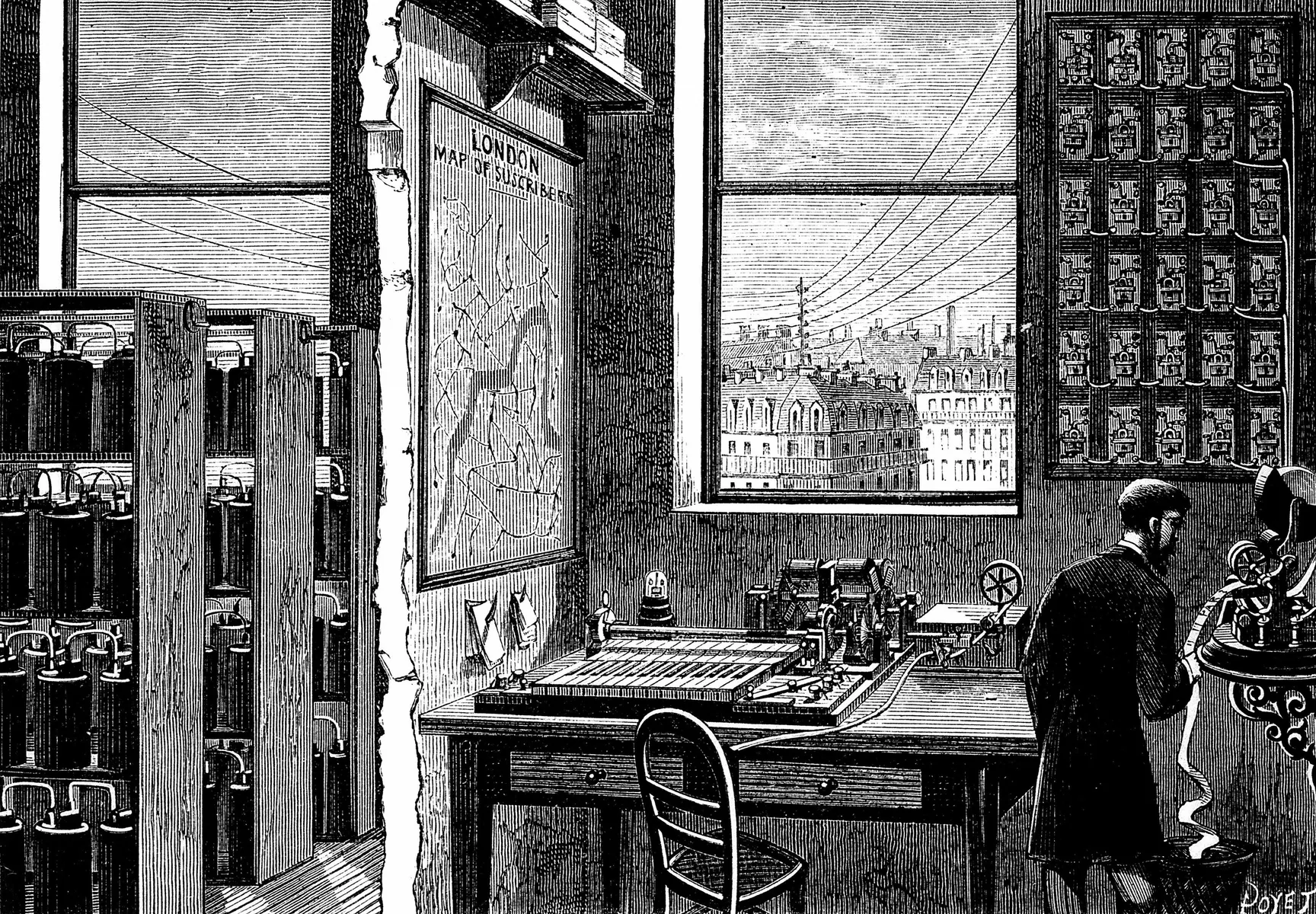
The main station of the Exchange Telegraph Company in London showing an operator receiving a message on a ticker-tape machine.
The instant messaging of the Victorian age
Life started to move pretty fast in mid-19th century London. The growing network of steam-powered railways could speedily carry you across the country. And a cheaper and more efficient postal system, called the Penny Post, made sending letters the most popular form of communication for businesses and the public.
The development of telegraph technology accelerated the pace of Victorian society even further. Telegraph messages could be sent almost instantly through networks of wires, connecting London to the rest of the country, and later to the rest of the British empire.
The telegraph revolutionised how people communicated with each other. It was even used to transmit a standardised time across the country, which was required for safely and effectively running the new railway network. Britain was no longer ruled by the rhythms of the sun.
Many objects in our collection chart the rise of telegraphy in the 1800s. They show us the role London played in developing, manufacturing and applying this technology to the modern, industrial world.
How did early telegraphs work?
Studies of electricity in the 1700s had allowed the development of the electric telegraph. But the first practical application of telegraphy was developed in the 1830s.
Two British inventors named William Fothergill Cooke and Charles Wheatstone patented the world’s first practical commercial electric telegraph system in 1837. Meanwhile, in America, the inventor Samuel Morse and his assistant Alfred Vail were also developing a transmitter that sent messages using a system of dots and dashes, known as Morse Code.
On the left below is an example of one of Cooke and Wheatstone’s early inventions, a four-needle telegraph made in 1838 or 1839. Electric currents were sent through four wires, and magnetised coils pushed the needles left or right to point to a letter on the alphabet displayed on the receiver. This spelled out messages letter by letter.
-

This four-needle telegraph came before the double-needle instrument, which relied on a signalling code.
-
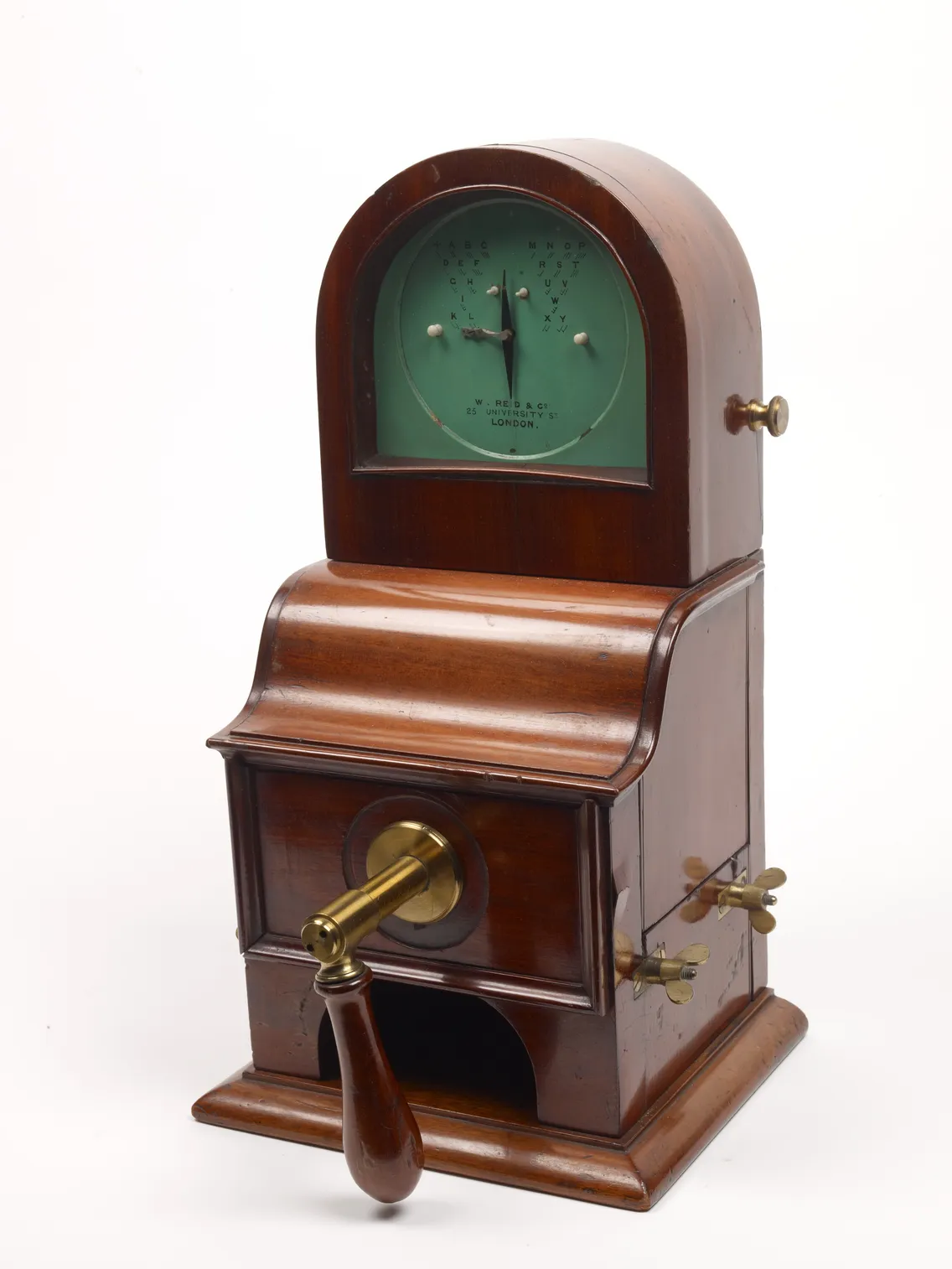
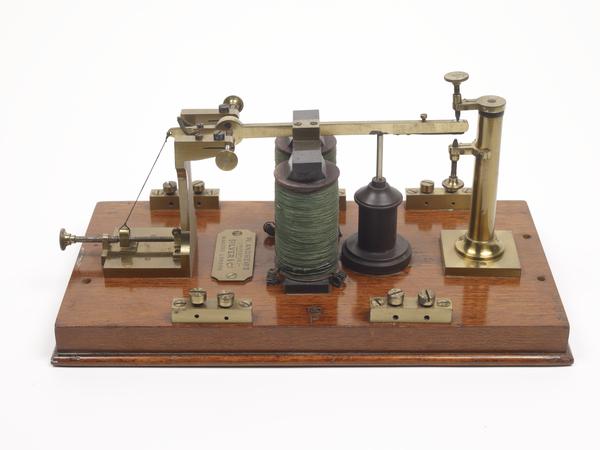
This single-needle telegraph was made by William Reid’s firm, who were one of the country’s top telegraph manufacturers.
Soon, the pair had developed a telegraph using only one needle, shown above on the right. This was cheaper, as it only used one wire. But it required training on the complex signalling code used to work out each letter from how the needle moved.
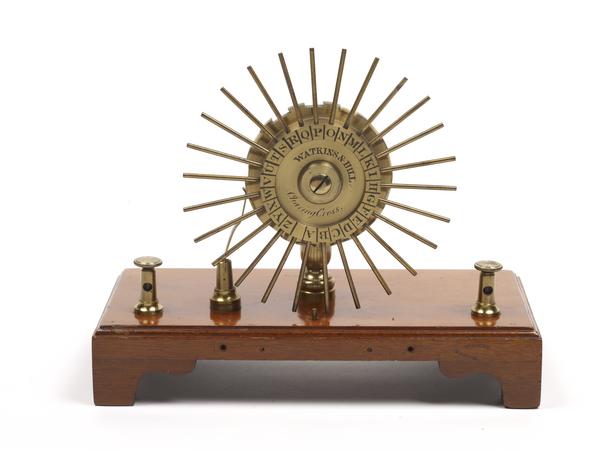
Cooke and Wheatstone also developed alphabetic or ‘ABC’ telegraphs, such as the one in our collection below. Each of the 27 rods corresponds with a letter or a space. You’d turn it like a dial, and each letter sent an electromagnetic pulse spelling out the message to be read by the receiver.
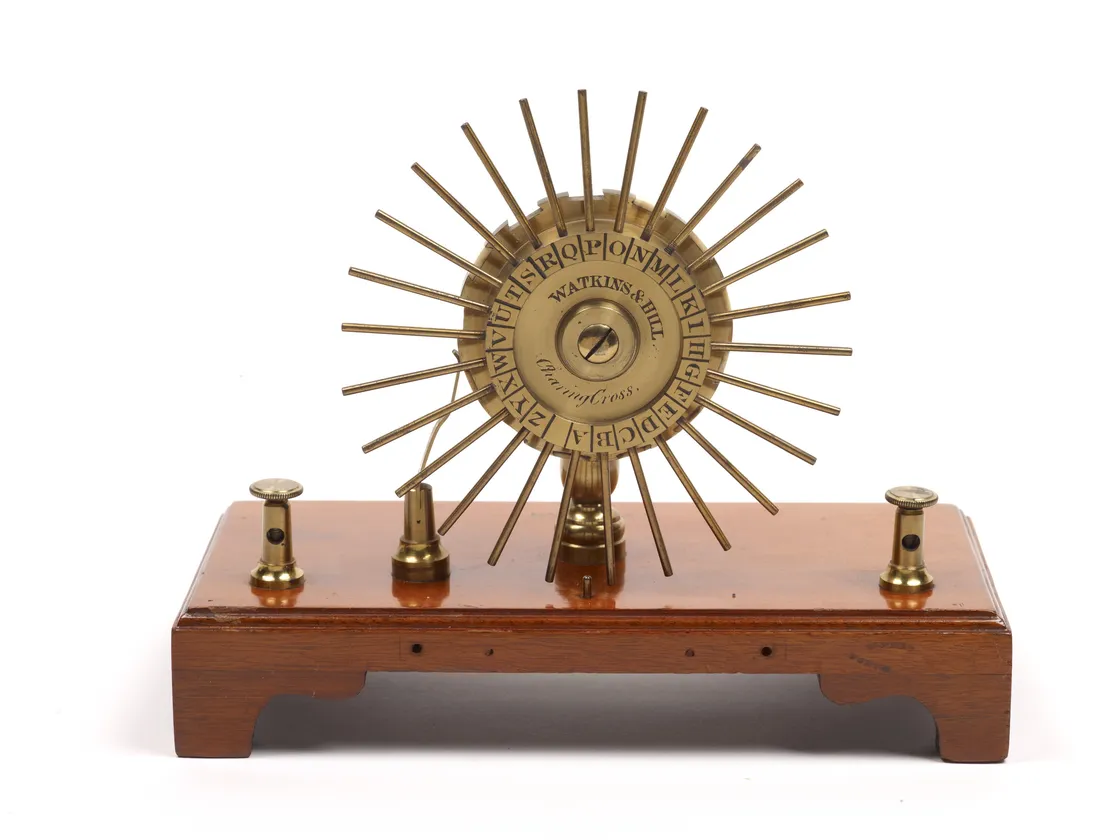
An early version of an alphabetic telegraph made around 1840.
Telegraph technology was launched on the railway
Cooke and Wheatstone knew the railway would be the perfect place to apply their inventions.
In 1839, Cooke installed a demonstration telegraph line using four-needle instruments alongside the Great Western Railway between London Paddington and West Drayton.
The London and Blackwall Railway, which opened in 1840, was one of the first commercial applications of Cooke and Wheatstone’s telegraph instruments. It was used to send messages to the line’s winding engine operators, which hauled train carriages using a cable.
Telegraph systems were developed to provide efficient communication across the expanding network. For example, they were used for signalling and showing where trains were along a line, flagging any delays or blockages. Punch magazine called the steam train and the telegraph “the two giants of the time”.
Telling time with telegraphs
Telegraphs also enabled the standardisation of time across the country. This was crucial to the efficient running of the new railway network.
Previously, towns and cities used the sunrise and sunset to determine their own ‘local’ time. For example, London time was 11 minutes ahead of Bristol time. But a railway network needed a standard time to operate safely and punctually on an increasingly busy timetable.
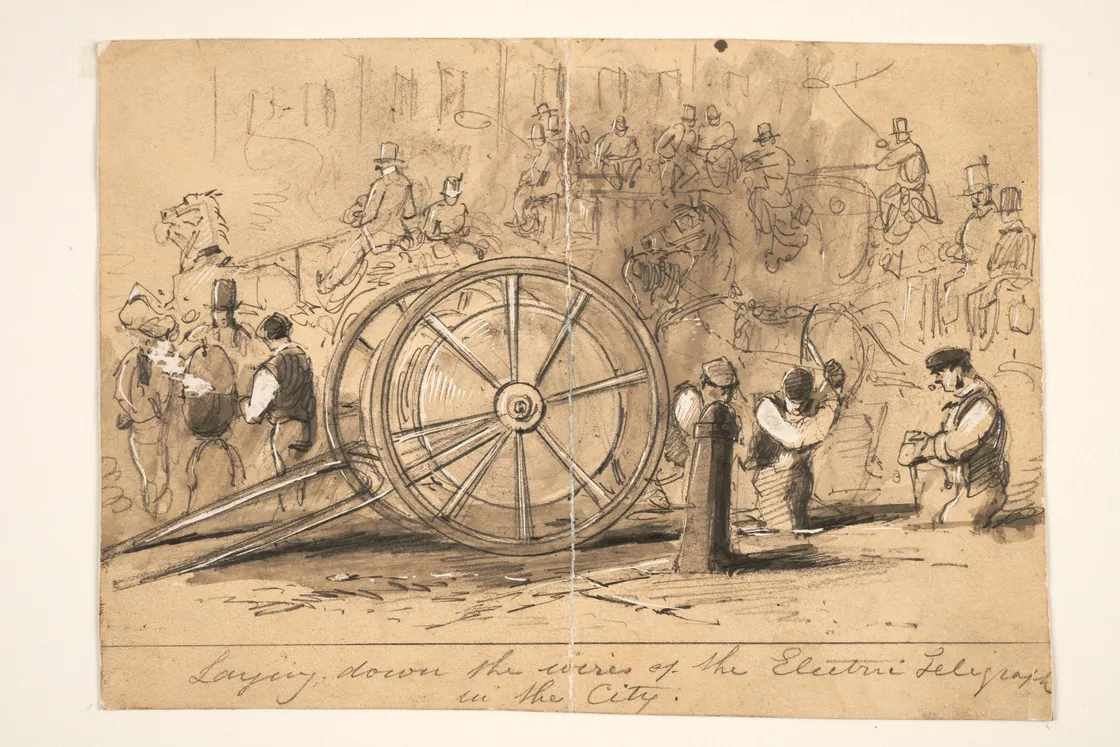
This 1850s drawing by Robert Thomas Landells shows men digging the streets to lay down electric telegraph cables in the city.
The telegraph system was used to introduce a national standard ‘railway’ time system. This was eventually brought in line with Greenwich Mean Time (GMT), an international system of time that uses Greenwich, southeast London, as its start point.
By 1848, 1,600km of railway had telegraphic wires transmitting messages and standard time to over 200 of the country’s main towns and cities. These wires became a familiar feature of the British landscape. In his 1854 novel Hard Times, Charles Dickens described the wires running alongside a track as “a colossal strip of music-paper out of the evening sky”.
Telegraphs were big business
The development of telegraphs captured the public’s imagination. It was a very exciting invention – commentators at said these machines could break down time and space.
At the 1851 Great Exhibition, one of the most popular attractions of 19th-century London, 13 telegraphic devices were put on display as examples of revolutionary new technology.
There were many different private telegraph companies in the mid-19th century installing telegraph lines. The first, the Electric Telegraph Company, set up their own telegraphic newsrooms to feed news, stock exchange information and weather updates from London across the country.
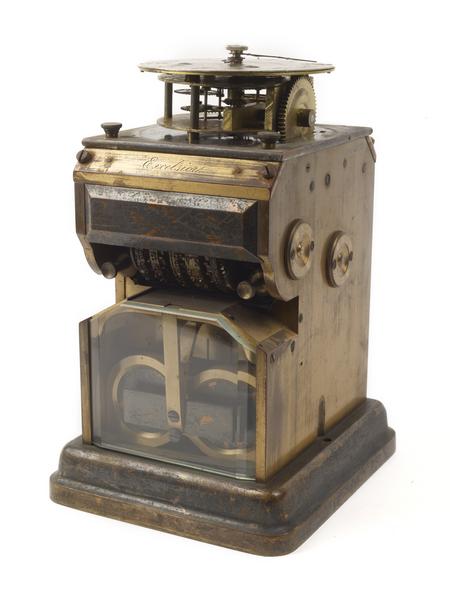
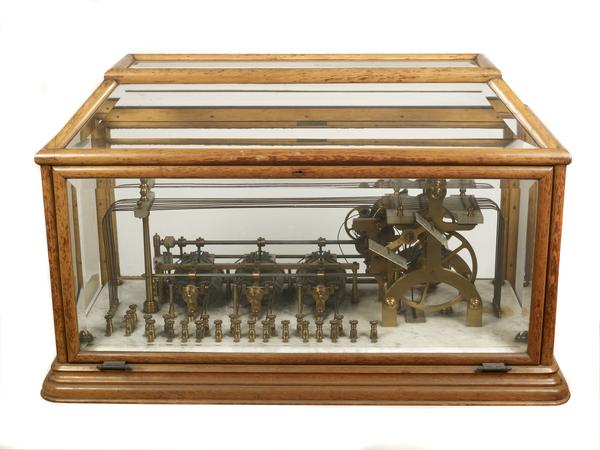
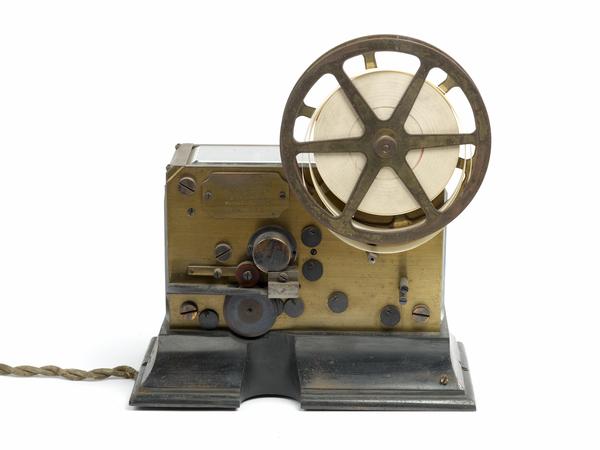
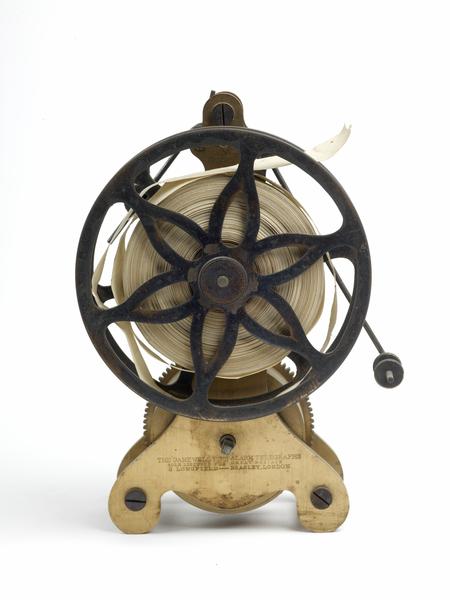
Emergency services also adopted telegraph connections. From 1880, the London Fire Brigade installed street fire alarms that could activate an alarm bell in the station, saving Londoners a frantic run to their nearest station to report a fire. The American company Gamewell also supplied fire alarm machines to businesses, public buildings and private homes. Some of these objects are now in our collection.
-
-
Working History
 Working History
Fire alarm time stamp
Gamewell Fire Alarm Telegraphs, Beasley, George Longfield
1900-1910
-
-
Working History
 Working History
Fire alarm automatic repeater
Gamewell Fire Alarm Telegraphs, Beasley, George Longfield
1900-1910
-
Working History
 Working History
Fire alarm paper winder
Gamewell Fire Alarm Telegraphs, Beasley, George Longfield
1900-1910
London was a manufacturing capital
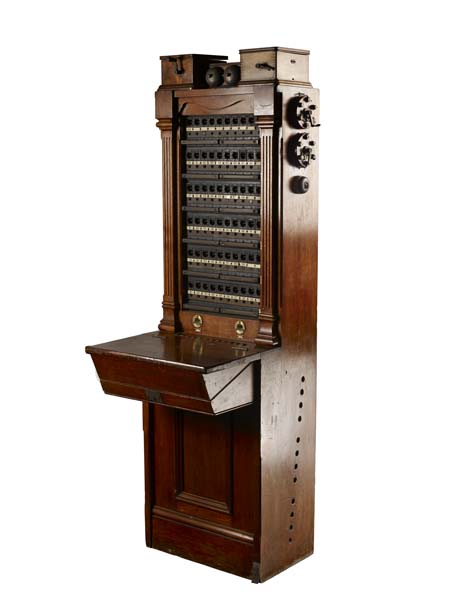
London dominated this new industry of telegraphic cable manufacture. There were factories all over the city, including Henley’s at Silvertown, Bullivant’s at Millwall, Hooper’s at Millwall Dock and William Siemens’ at Charlton.
The capital also manufactured undersea telegraph cables which, by the 1860s, had linked the capital to the world’s major cities. These became known as the ‘nervous system of the British empire’.
-
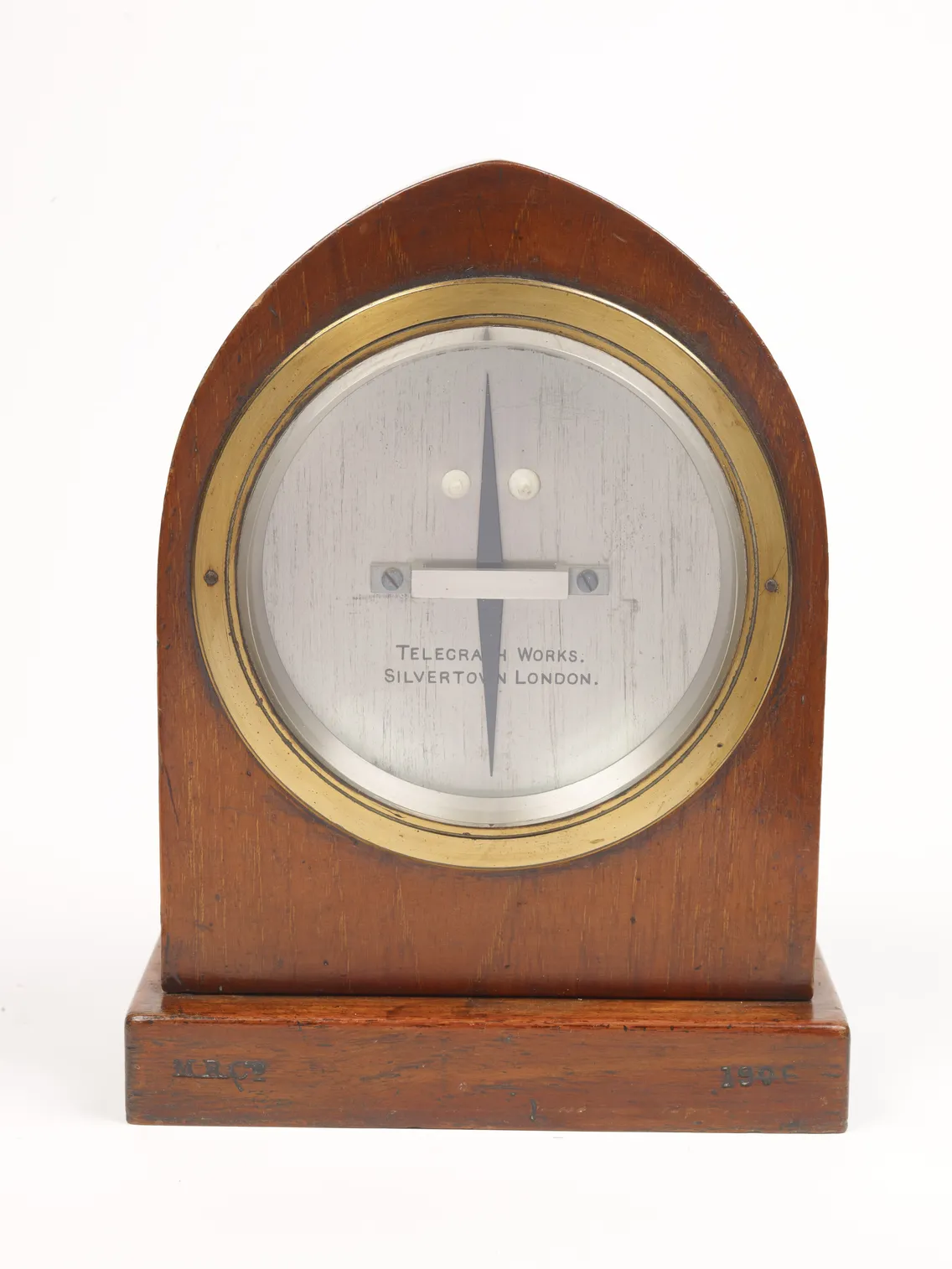
This galvanometer, used to detect and measure electric currents, was manufactured in Silvertown in 1906.
-
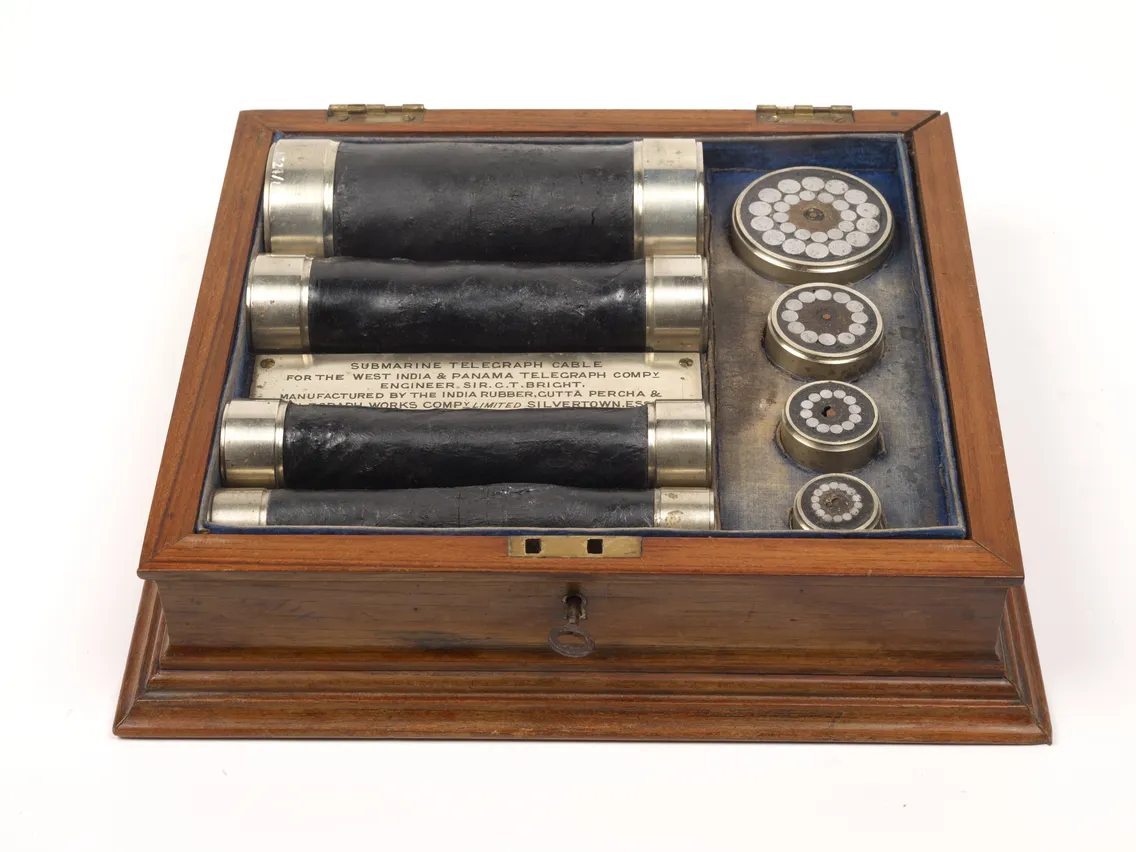
This box contains sections of telegraph cable supplied to the West India and Panama Telegraph Company, the first major submarine cable manufactured at Silvertown.
The age of the telegram
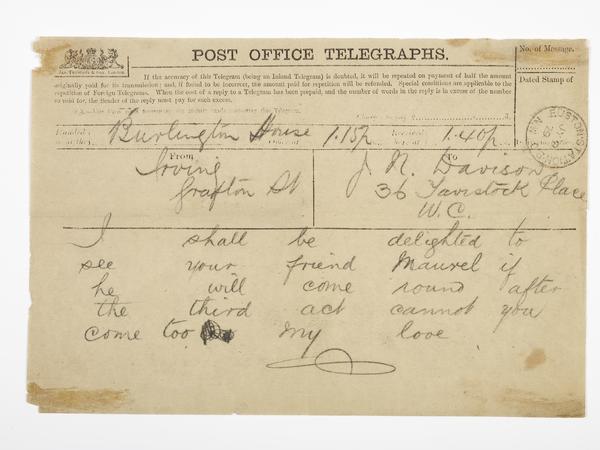
Telegrams were the short messages the public sent and received using telegraphs. At first, these were quite expensive and only used in emergencies or for special celebrations. Telegrams congratulating newly married couples would be read out in wedding speeches. They were also used in wartime to inform families of the injury or death of loved ones.
From 1870, the Post Office took over all of the country’s telegraph services from the private companies. You’d write your message on a form at your local telegraph office, which would be sent via telegraph wires to the telegraph office closest to the receiver. Your message would then be delivered by foot by telegram messengers, who were mostly teenage boys.
This transformed how people communicated with each other. For the first time, you could send news and personal messages almost instantly across the country – even across the British empire.
As Britain's global influence grew through its imperial domination, telegraph messages were a key tool in communication between the government in London and officers controlling overseas colonies.
Henry Collins, an employee at the news agency Reuters, wrote how “the result of the English derby reached Reuters’ office at Bombay [India] within the short space of four minutes”.
Tags
-
Printed Ephemera
 Printed Ephemera
The Electric & International Telegraph Company's Map of the Telegraph Lines of Europe 1856 (map)
Day and Son
1856
-
-
Paintings, Prints & Drawings
 Paintings, Prints & Drawings
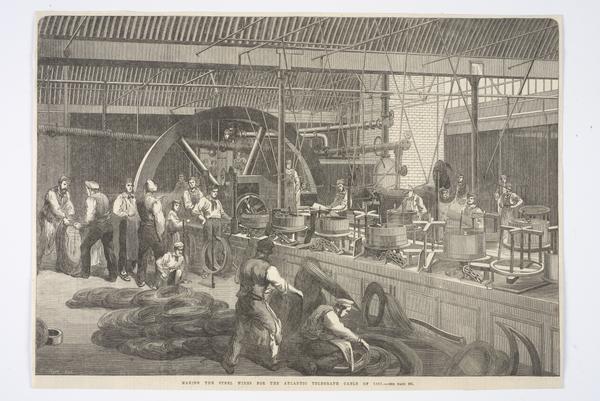
Making the steel wires for the Atlantic telegraph cable of 1865 (wood engraving)
Mallett, J., Illustrated London News
1865-1870
-
-
-
Paintings, Prints & Drawings
 Paintings, Prints & Drawings
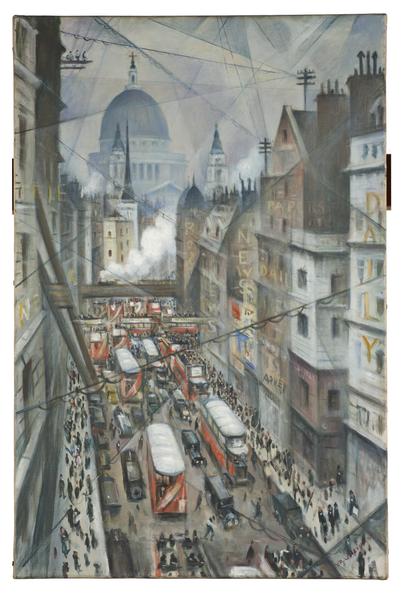
Amongst the nerves of the world (oil on canvas)
Nevinson, Christopher Richard Wynne
1930