A history of the London Charterhouse
Charterhouse has stood just north of Smithfield, in Clerkenwell, for over 600 years. Much of its existence has passed in peace and quiet – but this historic site has also witnessed flashes of violence and destruction.
Clerkenwell, Islington
Since 1348
The many lives of a medieval survivor
In the late-14th century, a Catholic Carthusian monastery, known as a ‘charterhouse’, was founded outside London’s city walls, on the site of an emergency plague cemetery.
Monks here lived a strict, silent existence until the mid-1500s, when the Tudor King Henry VIII forcibly closed all Catholic religious houses in the country. A number of the London Charterhouse monks were tortured and killed for their beliefs.
After the monastery’s closure, or ‘dissolution’, the medieval building was briefly transformed into a mansion fit for wealthy owners. From the 1600s, it became a school and an almshouse, providing affordable housing for older people in need.
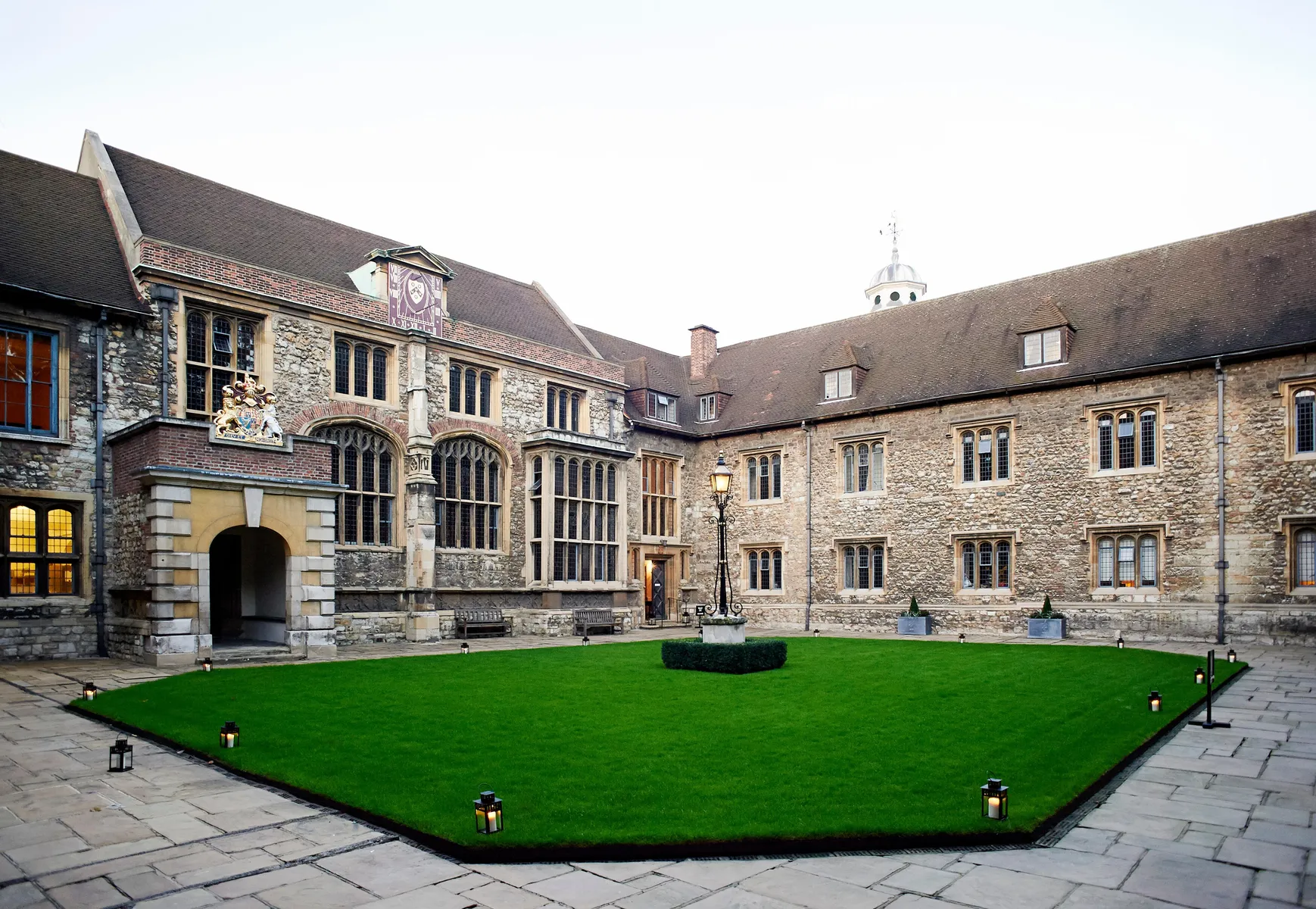
Today, the Charterhouse still runs as a charity supporting independent living for its residents.
The burial ground under Charterhouse Square
The Great Pestilence, now commonly called the Black Death, was one of London’s deadliest outbreaks of bubonic plague. Between 1348 and 1353, it killed over half of the city’s population.
The city’s cemeteries were unable to cope with the disaster. So in 1348, Walter Manny, one of King Edward III’s knights, leased land just outside the City walls to be used as an emergency burial ground. Manny also built a chapel to pray for their souls.
It’s thought as many as 20,000 people were buried in the cemetery, which is known as West Smithfield. Sections of it were discovered under Charterhouse Square in 2013, during digging for the Elizabeth Line.
Life in London’s Carthusian monastery
In 1370, Manny helped fund a new monastery on land next to the cemetery. This was a Carthusian monastery, a type of Catholic community or ‘order’, where monks lived in austere and secluded communities.
The London Charterhouse was the fourth monastery of this kind to have been founded in Britain – and the first to be right on the edge of a big city.
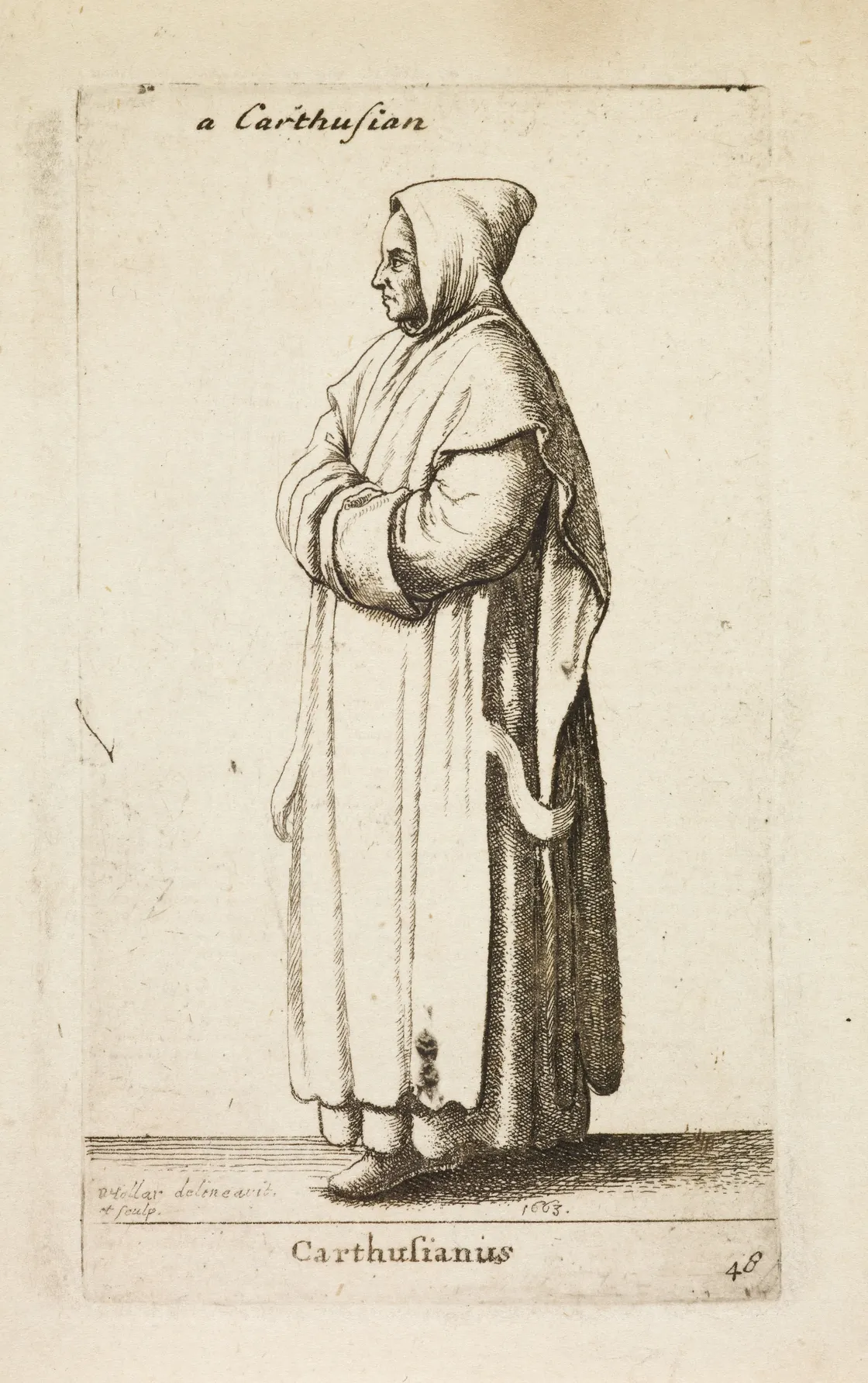
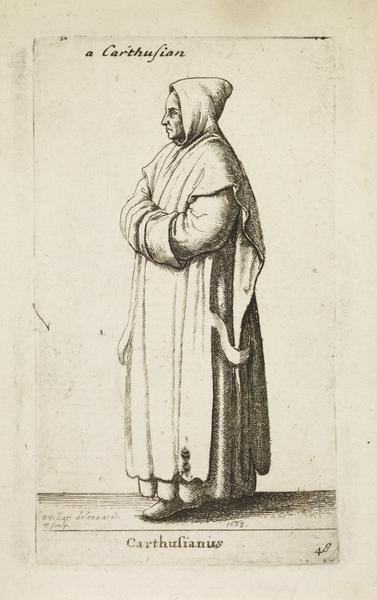
The artist Wenceslaus Hollar depicts a Carthusian monk in this print from 1663.
There were 25 monks living here in ‘cells’, which were small dwellings with their own gardens, workrooms, bedrooms and living rooms. Daily life was silent and mostly solitary, except on Sundays and feast days, when monks could gather in a dining hall.
The monks ate a strict meat-free diet of food plucked from the Charterhouse garden, served to them through a hatch in their cell door.
The Charterhouse was funded by various groups and wealthy Londoners. You could even ‘sponsor’ a monk, and by doing so add your family coat of arms onto the doorways of their cells. Sometimes donors were even buried in the Charterhouse.
Charterhouse and the English Reformation
The Carthusian monks’ days of quiet, pious solitude were ruptured during the English Reformation. In the 1530s, the Europe-wide religious revolution against Catholicism and towards a new Christian religion, Protestantism, picked up pace in England under the reign of King Henry VIII.
In 1534, Henry broke away from the Catholic Church and declared himself the head of the Church in England. He did this to secure a divorce from his first wife, Catherine of Aragon, which the pope had rejected.
All religious officials were asked to take an oath putting their allegiance to Henry above the pope. Most agreed – you’d be considered a traitor if not. But in 1535, the Charterhouse prior and some of his monks refused. They were later executed at the Tyburn gallows, near present-day Hyde Park. One of the prior’s arms was displayed at the Charterhouse as a brutal warning to other dissenting monks.
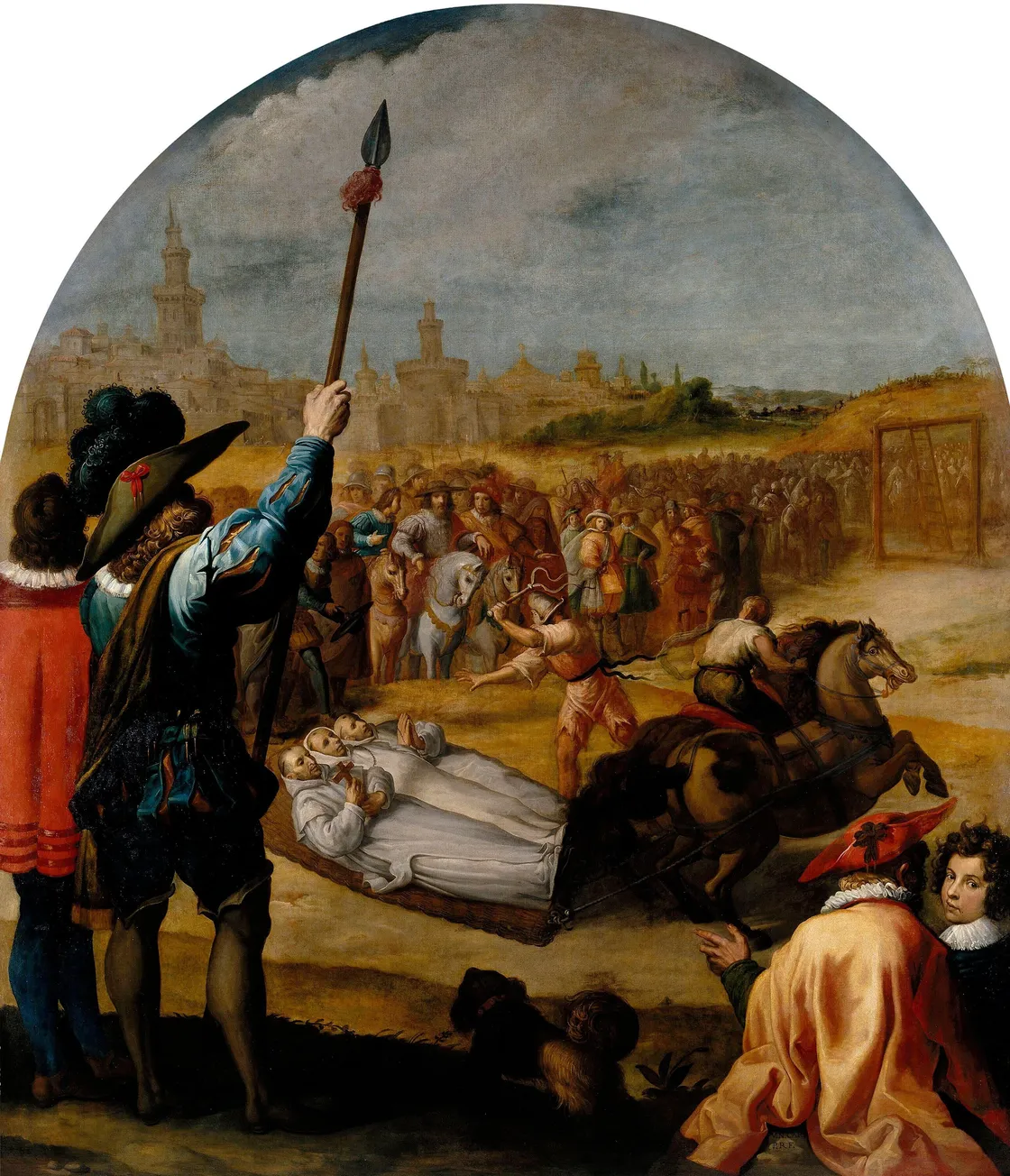
17th-century painting by Vincente Carducho depicts the martyrdom of three London Carthusians.
By 1540, 18 Carthusians had been imprisoned, tortured and killed for refusing the oath.
The monastery was dissolved – and became a mansion
The Charterhouse was one of the 800 Catholic religious houses shut down between 1536 and 1540, in a process known as the dissolution of the monasteries. Like other monasteries and nunneries, the Charterhouse’s building and its land were seized by the Crown and sold to private buyers. Henry pocketed the profits.
While many of London’s monasteries were converted into non-religious buildings, such as grand private mansions, some historic institutions were destroyed or fell into ruins.
After a brief spell as a storage place for the king’s tents and hunting nets, the Charterhouse was transformed into a large and luxurious mansion. The church and other monastic buildings on the site were destroyed. Only a part of a wall survives from the medieval building.
-
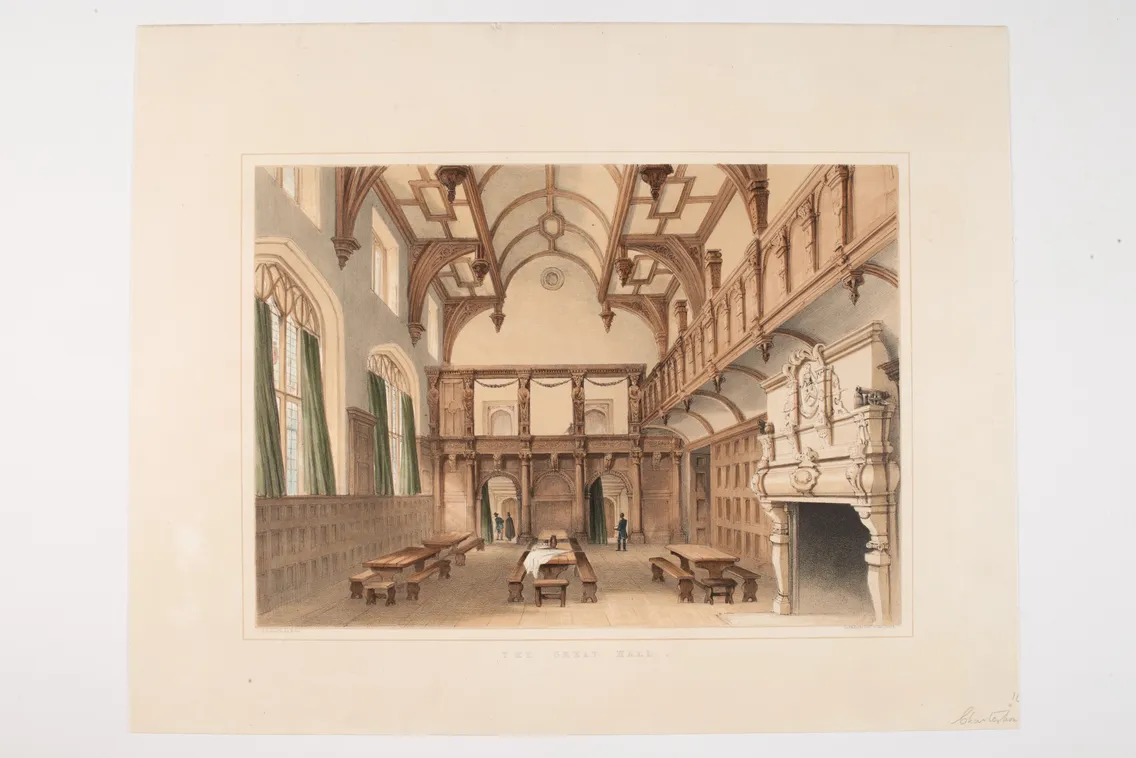
A coloured print of the Charterhouse’s Great Hall, 1846.
The manor passed through the hands of many wealthy nobles over the second half of the 1500s. Queen Elizabeth I visited the Charterhouse a number of times, and her successor, King James I, stayed there before he was crowned in 1603.
The Charterhouse charity
In 1611, the Charterhouse was bought by Thomas Sutton, a businessperson and civil servant who’d become rich over his lifetime. Sutton was getting old, and he wanted to give his wealth back to the public.
He founded a school for 40 ‘poor boys’ and a hospital, or almshouse, to provide housing for 80 ‘poor gentlemen’.
The school outgrew the site and moved to Surrey in 1872, where it’s now a well-known private school. Some of the London Charterhouse’s ex-students include the novelist William Makepeace Thackeray and former Prime Minister Robert Jenkinson.
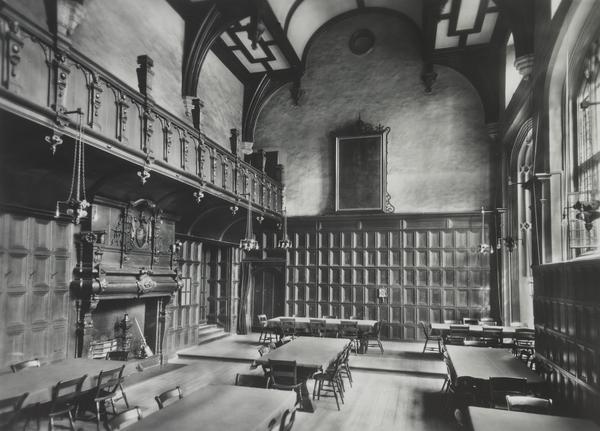
The Charterhouse continues to exist as an almshouse. The pensioners living onsite, known collectively as ‘brothers’, are no longer exclusively men. But they still live together like they would have done 400 years ago, eating communally in the Great Hall.
What Charterhouse buildings survive today
In the 1880s, the Charterhouse site was under threat of development. The Society for Photographing Relics of Old London used the relatively new medium of photography to record sites like Charterhouse that were earmarked for demolition.
-
Photography
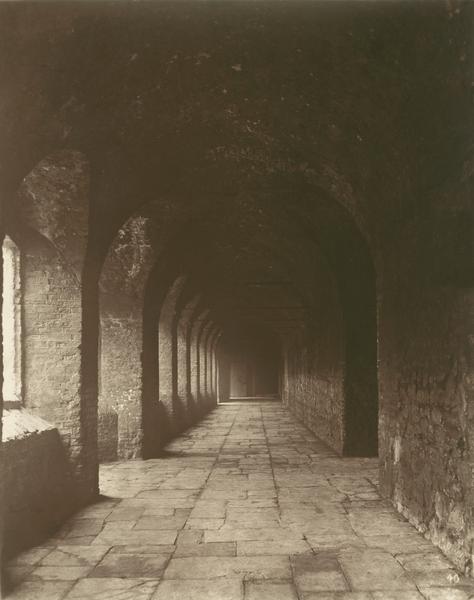 Photography
Charterhouse - Cloisters (carbon print)
Dixon, Henry, Strudwick, William, Bool, Alfred & John
1880
-
Photography
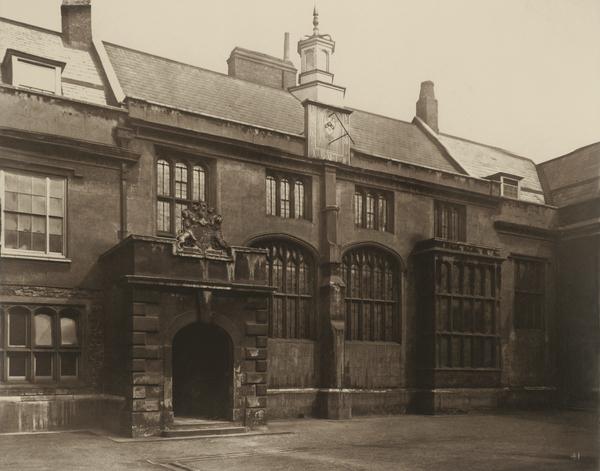 Photography
Charterhouse - Great Hall (carbon print)
Dixon, Henry, Strudwick, William, Bool, Alfred & John
1880
-
Photography
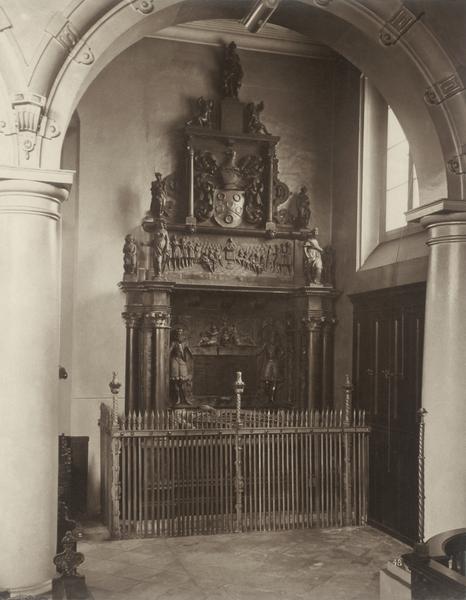 Photography
Charterhouse - Founder's Tomb (carbon print)
Dixon, Henry, Strudwick, William, Bool, Alfred & John
1880
-
Photography
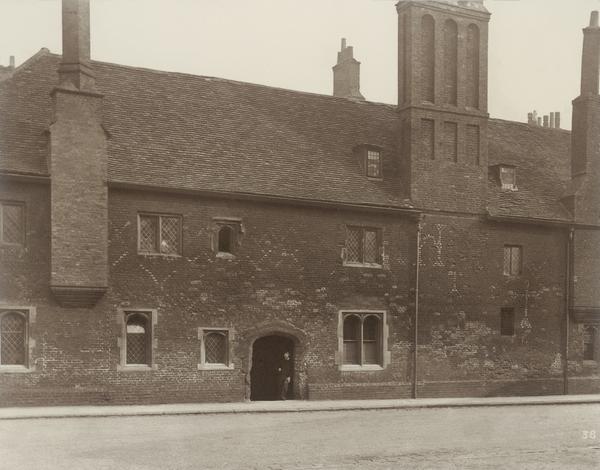 Photography
Charterhouse - Washhouse Court (carbon print)
Dixon, Henry, Strudwick, William, Bool, Alfred & John
1880
-
Photography
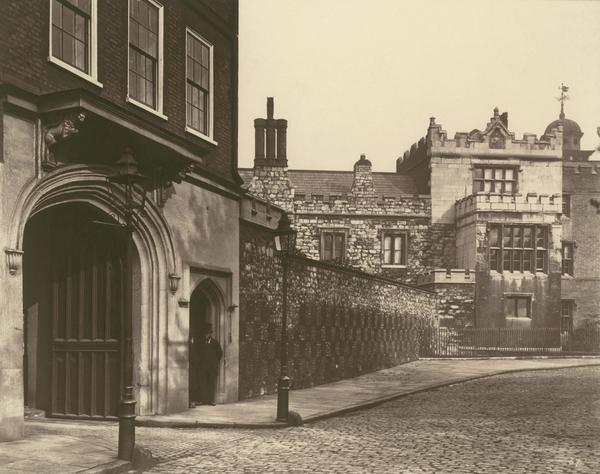 Photography
Charterhouse - General View (carbon print)
Dixon, Henry, Strudwick, William, Bool, Alfred & John
1880
-
Photography
 Photography
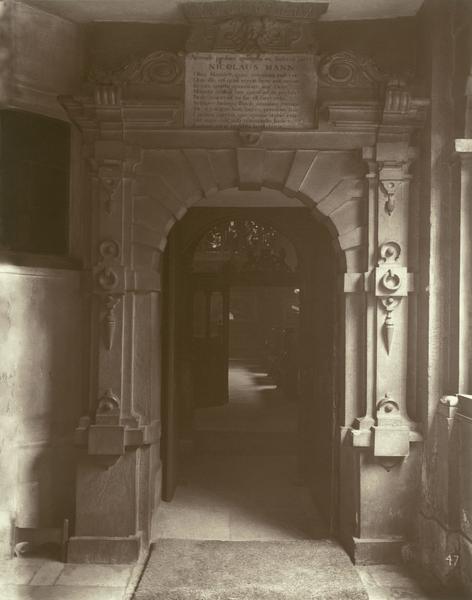
Charterhouse - Entrance to Chapel (carbon print)
Dixon, Henry, Strudwick, William, Bool, Alfred & John
1880
The photographs in our collection above give us a record of what Charterhouse looked like at the time. The building survived the 1800s, but these records proved to be particularly important.
During the Second World War (1939–1945), German planes bombed British cities in a campaign known as the Blitz. Charterhouse was badly damaged in the intense raid of 10 May 1941.
Many of its historic buildings caught fire. The original entrance courtyard and the main part of the Tudor mansion, including the Great Hall and Great Chamber, were left in ruins. After the war, Charterhouse took on the huge project to conserve and restore the buildings to the condition we see today.
Tags
-
Paintings, Prints & Drawings
 Paintings, Prints & Drawings
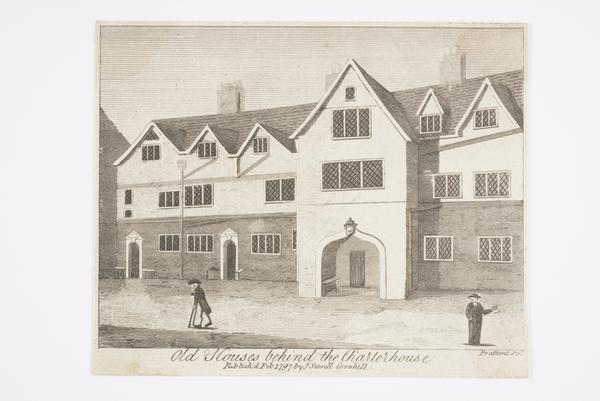
Old houses behind the Charterhouse (engraving)
Sewell, John, Prattent
1797-02
-
Paintings, Prints & Drawings
 Paintings, Prints & Drawings
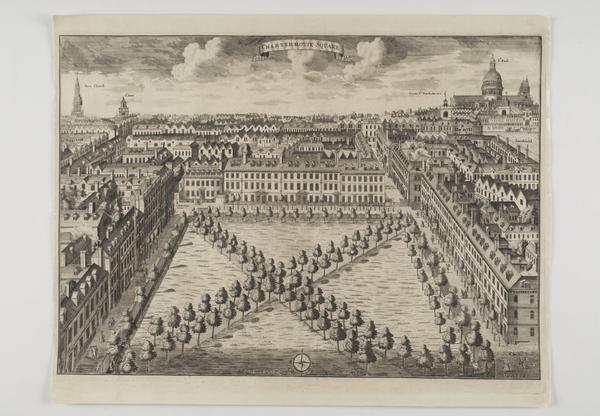
Charterhouse Square (engraving)
Nicholls, Sutton, Bowles, John
1730-1735
-
Photography
 Photography
Charterhouse interior; the Great Hall looking east (silver gelatin print)
Reid, George Davison
1920-1933
-
Paintings, Prints & Drawings