
The Green Park: Fireworks, robberies & scandal
The Green Park, as it’s officially known, is the smallest of the royal parks. But what this central London landmark lacks in size, it certainly makes up for in exciting stories and scandals.
Westminster
Since 1660s
The park whose history reads like a thriller
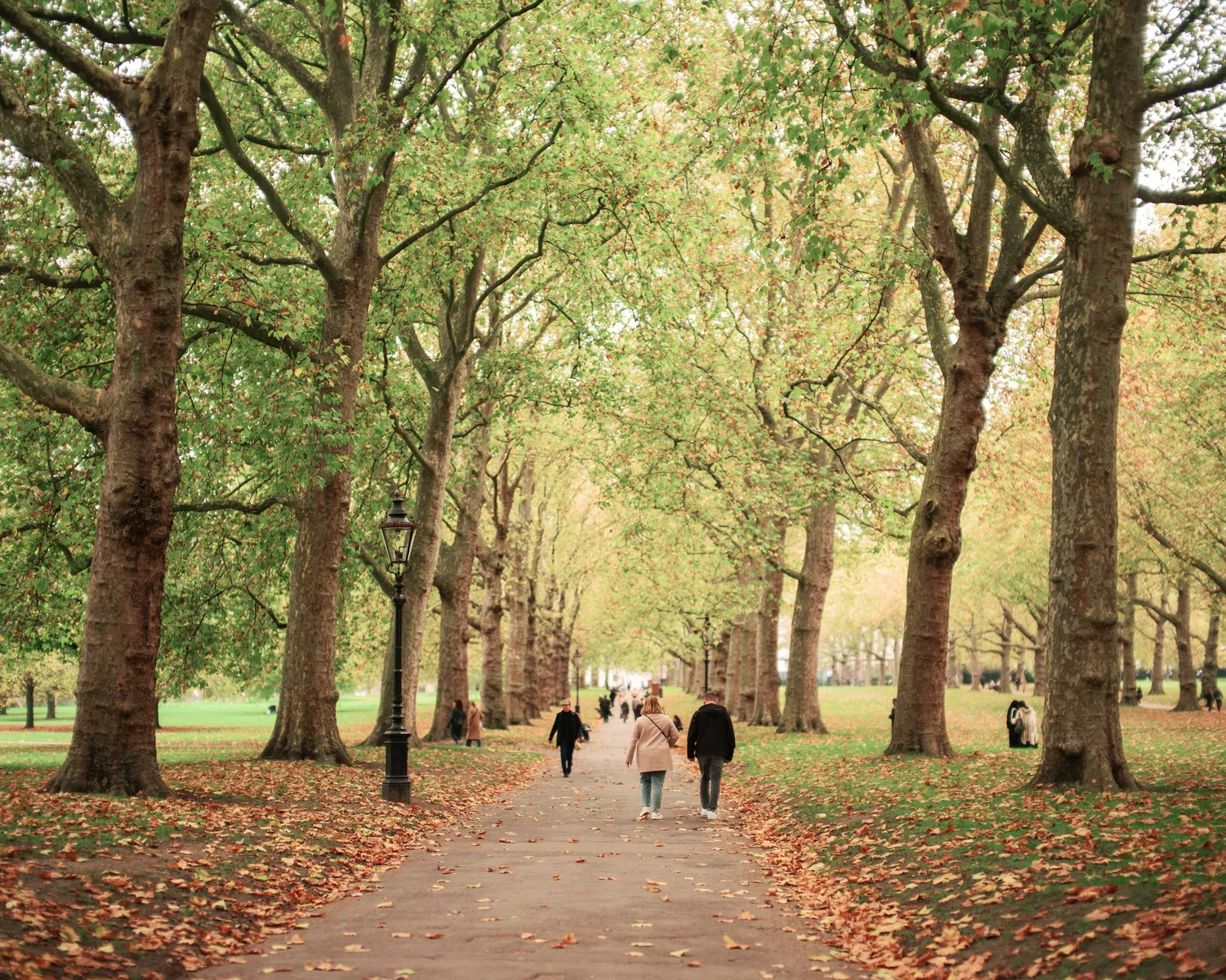
Between the grandeur of Buckingham Palace and the buzz of Piccadilly sits Green Park, a modest breath of fresh air in central London. While its neighbour St James’s Park shows off with flowerbeds and pelicans, Green Park keeps things simple with gentle meadows and mature trees.
But it’s not always been so peaceful. In the 18th century, highwaymen terrorised visitors, and a fireworks display ended in disaster. In the 19th century, Queen Victoria survived multiple assassination attempts along Constitution Hill. And in the early 20th century, MI5 used a park telephone junction box to intercept King Edward VIII's secret calls to his lover Wallis Simpson.
Royal walks and romantic scandals
Much like many of the other royal parks, Green Park was originally one of Henry VIII’s hunting grounds.
In 1660, King Charles II wanted to link Hyde Park to St James’s Park, creating an unbroken chain of royal land. He surrounded his new park with brick walls and named it Upper St James’s Park. His daily walks, or ‘constitutionals’, gave Constitution Hill, the road running along the south of Green Park, its name.
“Charles II’s wife caught him picking flowers there for another woman”
Charles II is said to have commissioned one of Britain’s earliest ice houses here to serve cold drinks to guests, creating an early version of today’s park cafes.
You won’t find formal flowerbeds in Green Park. It’s said that Charles II’s wife, Catherine of Braganza, caught him picking flowers there for another woman. She then had all the flowers removed. This explains how the park was given its name in 1746.
The park was transformed in the 1700s
In the 1700s, Green Park was plagued with highwaymen and robbers. Writer Horace Walpole was robbed at gunpoint by the ‘gentleman highwayman’ James MacLaine there.
However, by the mid-18th century, Green Park had become a fashionable spot for London’s aristocracy, who watched lavish firework displays and went on summer strolls. Queen Caroline, wife of King George II, added features we still see today, like the Queen's Walk and the Queen's Basin.
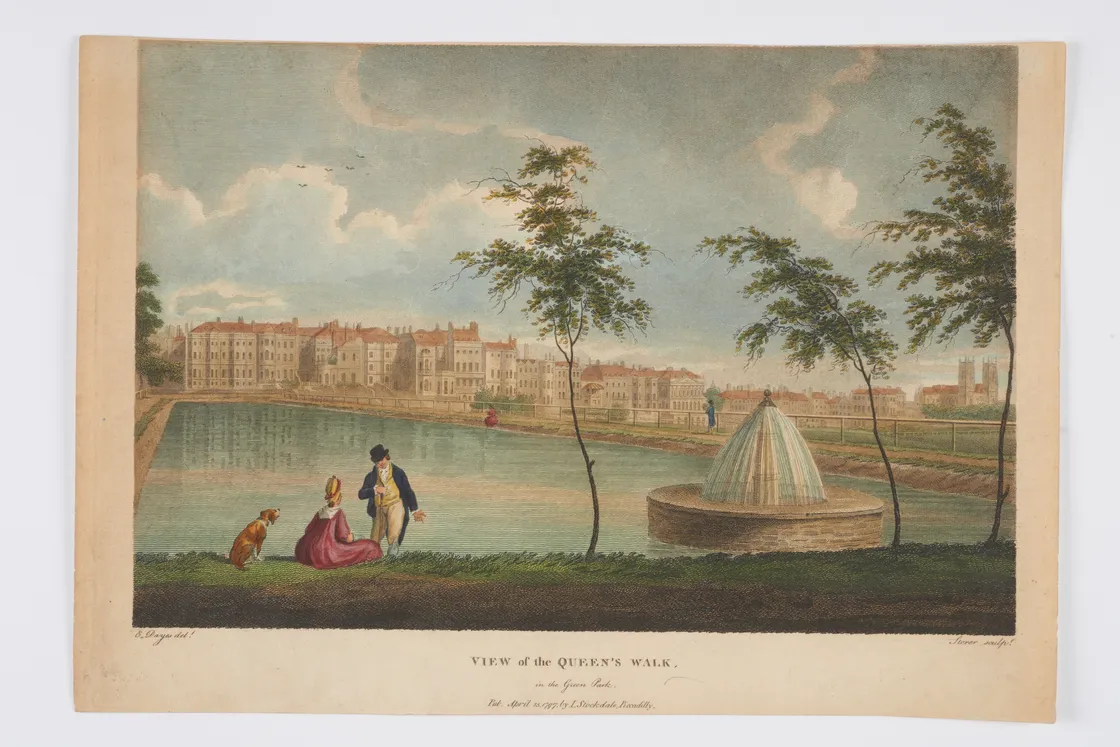
A view of the Queen's Walk in Green Park in 1797, with a fountain in the lake in the foreground.
Some spectacular – and disastrous – celebrations
In 1749, King George II commissioned a grand fireworks show to celebrate the end of the War of the Austrian Succession (1740–1748). Britain, France, and the Dutch Republic had signed the Treaty of Aix-la-Chapelle, which placed Britain’s ally, Maria Theresa, as the ruler of the Habsburg empire.
The famous composer George Frideric Handel had even written a resounding piece of music to introduce the royal fireworks.
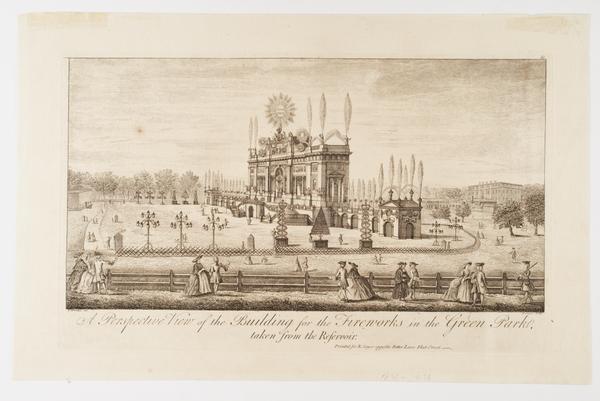
The show ended in disaster. The Temple of Peace, a temporary pavilion, exploded when 10,000 fireworks went off at once, killing three people.
Peace in Europe was also short-lived. The treaty failed, and eight years later, Britain, Prussia, Austria, France and other European powers were fighting again in the Seven Years War (1756–1763).
-
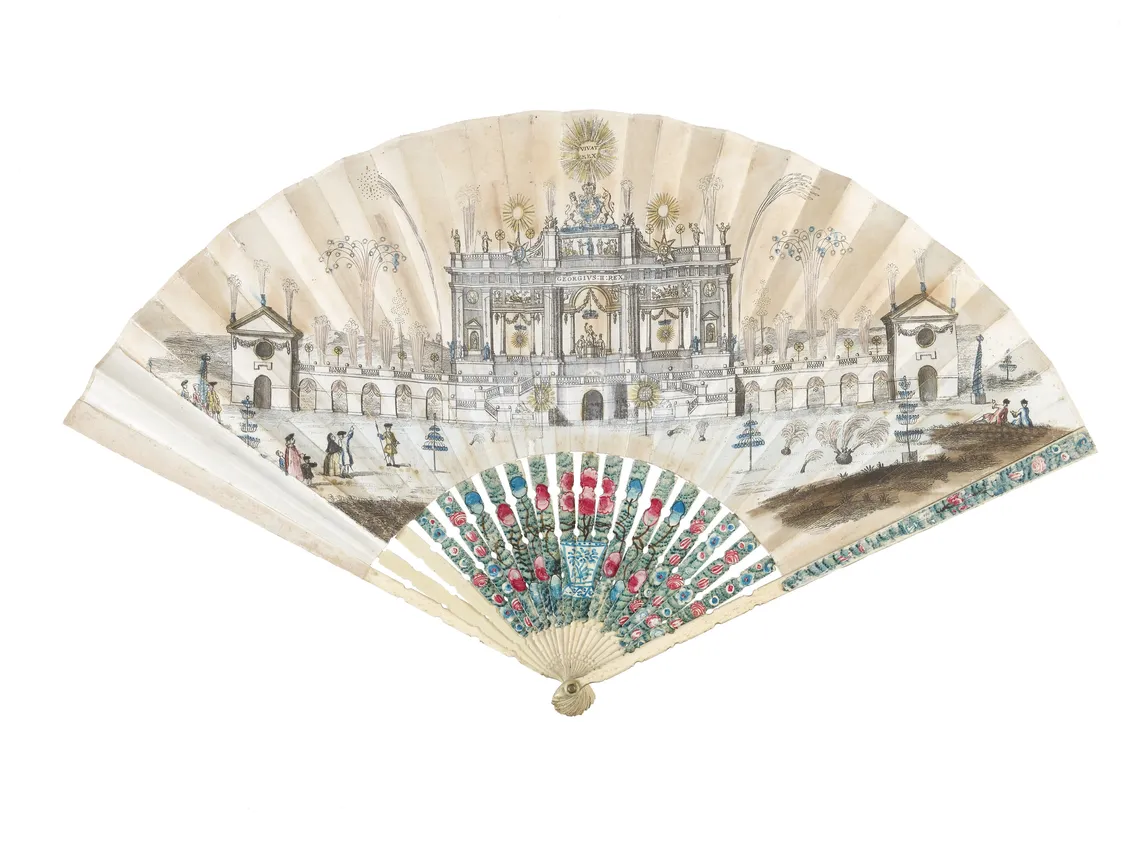
This souvenir fan shows the huge Temple of Peace built for the 1749 fireworks display.
-
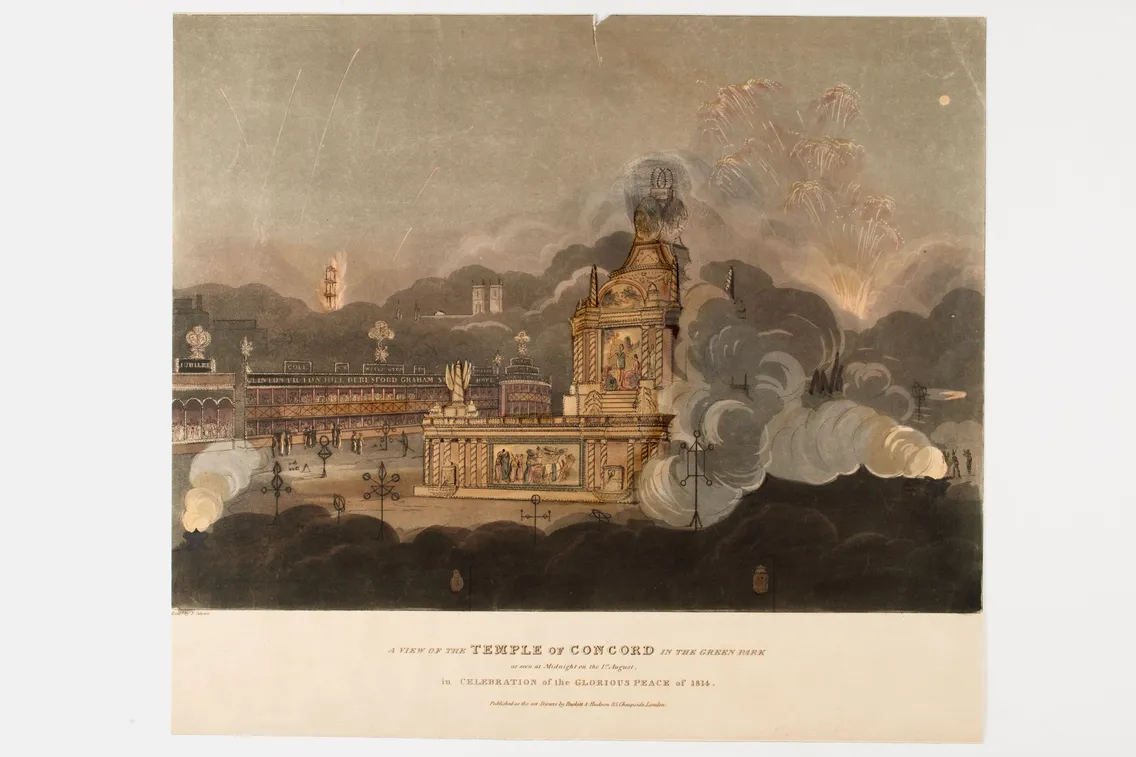
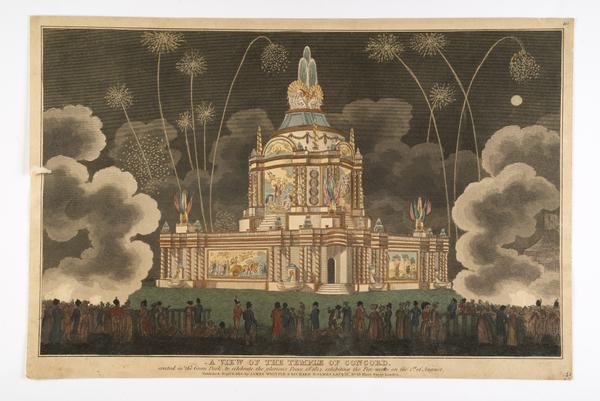
A print depicting the celebrations at the Temple of Concord in Green Park on 1 August 1815.
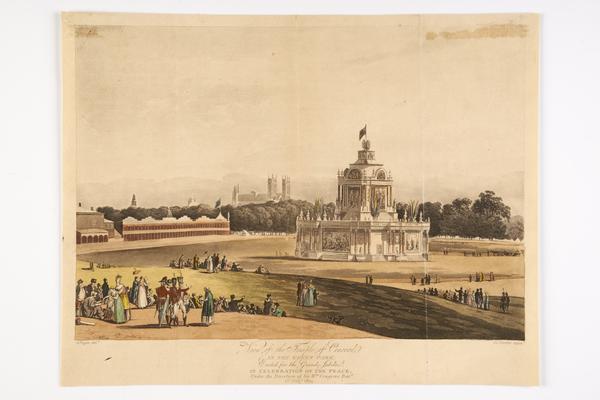
In 1814, another showpiece called the Temple of Concord was erected in Green Park – and this one could revolve. It was built to celebrate the 1814 Treaty of Paris, one of the peace treaties of the Napoleonic Wars (1803–1815), and 100 years of Hanoverian rule.
The Temple was illuminated by fireworks during the festivities. But unfortunately, the pagoda in the neighbouring St James’ Park caught fire. You can see it in flames to the left of the print in our collection above.
John Nash gave Green Park a facelift
In the 1820s, architect John Nash reshaped the park. This was part of a broader redesigning project that included St James’s Park, and eventually the Regent’s Park area.
He added trees and straightened Constitution Hill to create the grand processional route leading to The Mall, just approaching Buckingham Palace. Previously, Constitution Hill was a narrower, more winding path.
The park has witnessed dramatic royal moments
In 1840, a young Queen Victoria was shot at along Constitution Hill as she drove past with Prince Albert. Another similar attempt on her life happened here in 1849. In total, there were eight known assassination attempts on the queen.
In 1936, a seemingly unremarkable telephone junction box in tThe Green Park played a role in the love story between King Edward VIII and the American socialite Wallis Simpson. Edward wanted to marry Simpson. But the government considered her an unsuitable wife and objected – she had already divorced her first husband and then wanted to divorce her second husband.
Edward didn’t trust the Buckingham Palace switchboard, which is now in our collection, to handle his personal calls. Instead, he used a private switchboard that went through a telephone junction box in the park. It was through this telephone junction that MI5 intercepted the king’s phone calls and spied on the couple. Edward eventually abdicated the throne to marry Simpson in 1937.
-
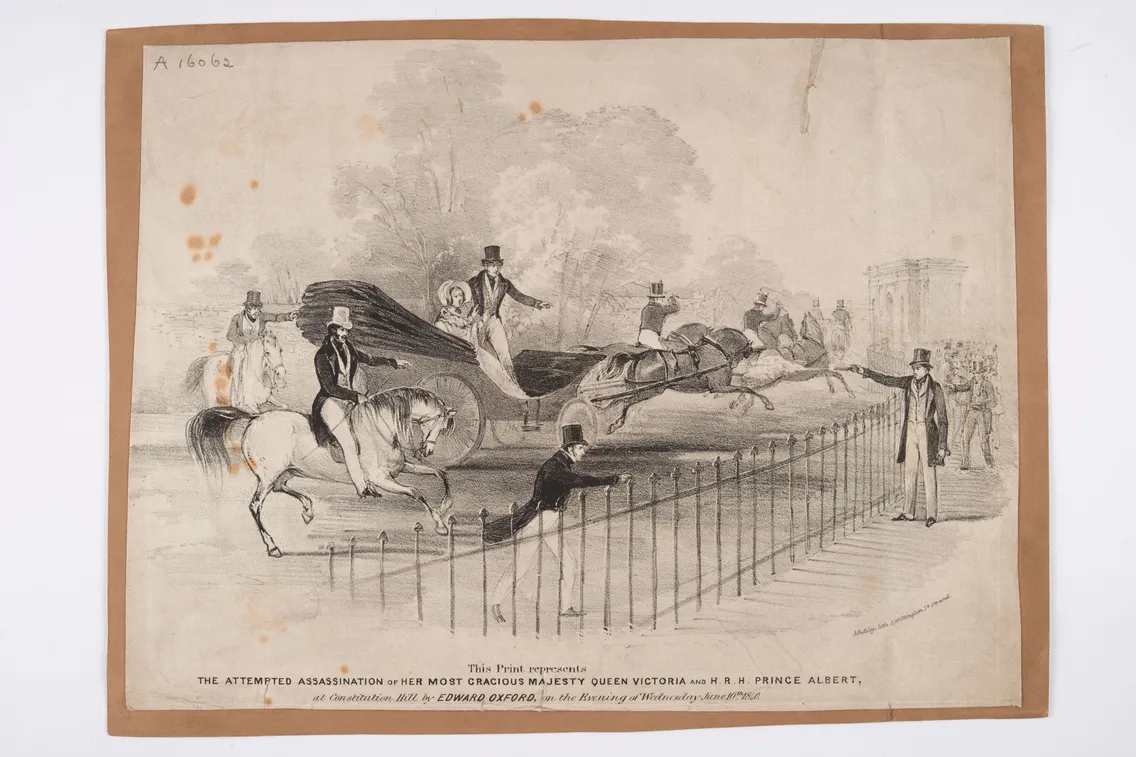
The assassination attempt against Queen Victoria, Constitution Hill, Westminster, London, 1840.
-
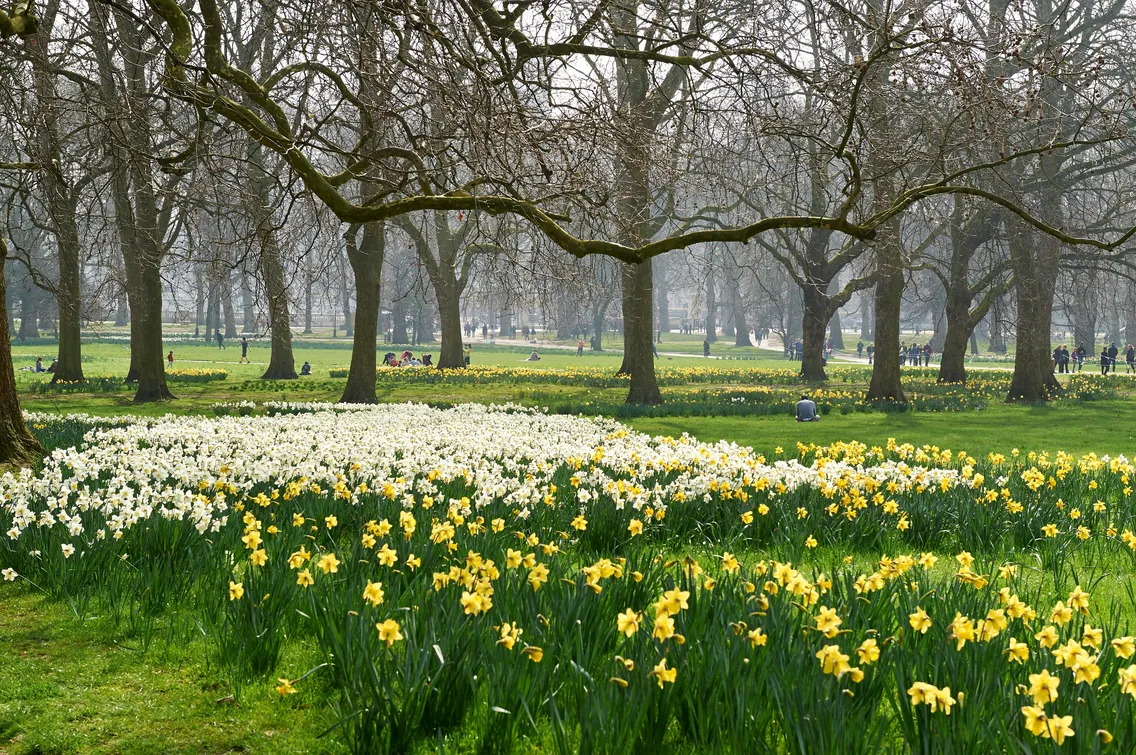
A carpet of daffodils covers Green Park every spring.
Natural beauty in the heart of Westminster
Green Park may not have any formal flower beds, but it’s still famous for its springtime display of daffodils. Hundreds of thousands of bulbs creating a stunning yellow carpet each March and April.
Today's Green Park forms part of the ‘green lung’ of central London, alongside St James's Park and Hyde Park.
Green Park was awarded Grade II-listed status in 1987. Recent years have seen the park increasingly focus on biodiversity, with areas of longer grass maintained to support pollinators and other wildlife.
Tags
-
Paintings, Prints & Drawings
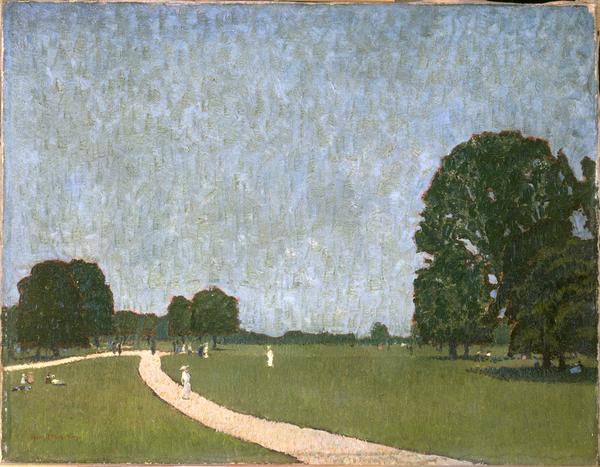 Paintings, Prints & Drawings
An Evening Scene in Green Park (oil painting)
Hay, James Hamilton
C. 1911
-
Paintings, Prints & Drawings
 Paintings, Prints & Drawings
Temple of Concord, in Green Park (coloured aquatint)
Stadler, Joseph Constantine, Pugin, Auguste Charles, Ackermann, Rudolph
1814-08-01
-
Paintings, Prints & Drawings
 Paintings, Prints & Drawings
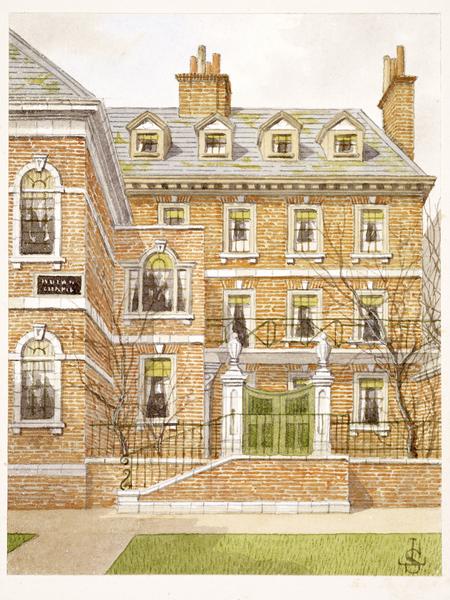
Judge Jeffries House, Duke St., Westminster: Green Park front (watercolour)
Stewart, James Lawson
C. 1890
-
Paintings, Prints & Drawings
 Paintings, Prints & Drawings
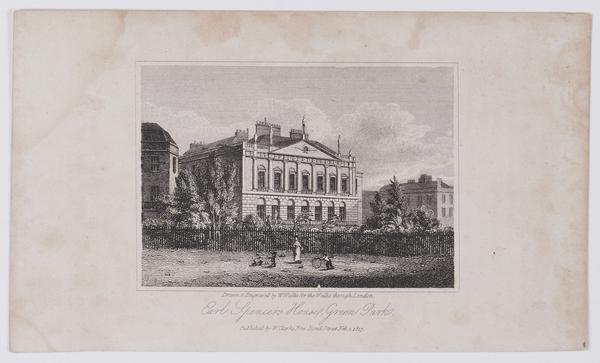
Earl Spencers House, Green Park (engraving)
Wallis, W., Clarke, W.
1817-02-01
-
Paintings, Prints & Drawings
 Paintings, Prints & Drawings
A View of the Temple of Concord erected in the Green Park to celebrate the glorious Peace of 1814, exhibiting the Fire-works on the 1st of August (coloured etching)
Whittle, James, Laurie, Richard Holmes
1814-09-09
-
Paintings, Prints & Drawings
 Paintings, Prints & Drawings
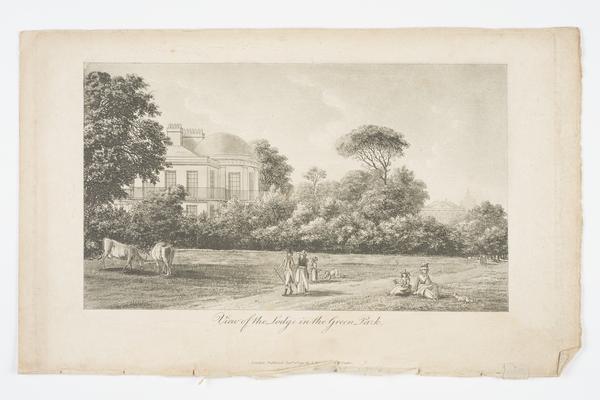
View of the Lodge in the Green Park (etching and aquatint)
Robertson, A., Faden, W.
1791-01-01
-
Paintings, Prints & Drawings
-
Paintings, Prints & Drawings
 Paintings, Prints & Drawings
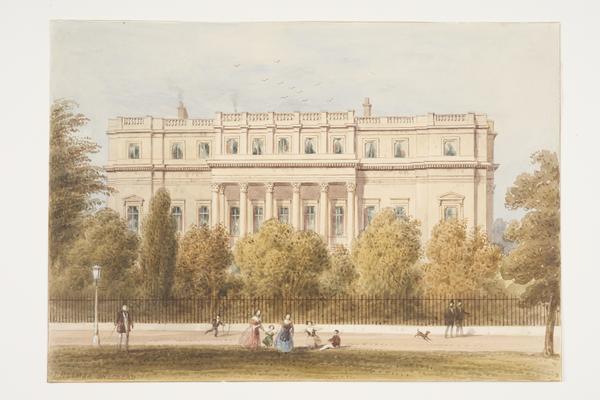
Stafford House facing Green Park (watercolour)
Shepherd, Thomas Hosmer
1845
-
Paintings, Prints & Drawings
 Paintings, Prints & Drawings
A Perspective View of the Building for the Fireworks in the Green Park taken from the Reservoir (engraving)
Sayer, Robert
1749
-
Paintings, Prints & Drawings
 Paintings, Prints & Drawings
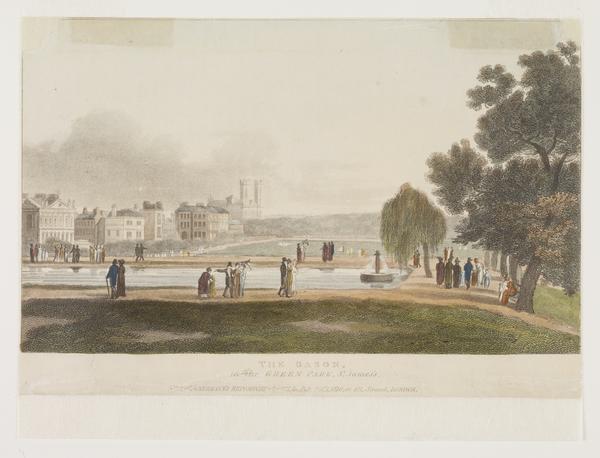
The Bason, in the Green Park, St James's (hand-coloured etching and aquatint)
Ackermann, Rudolph
1810