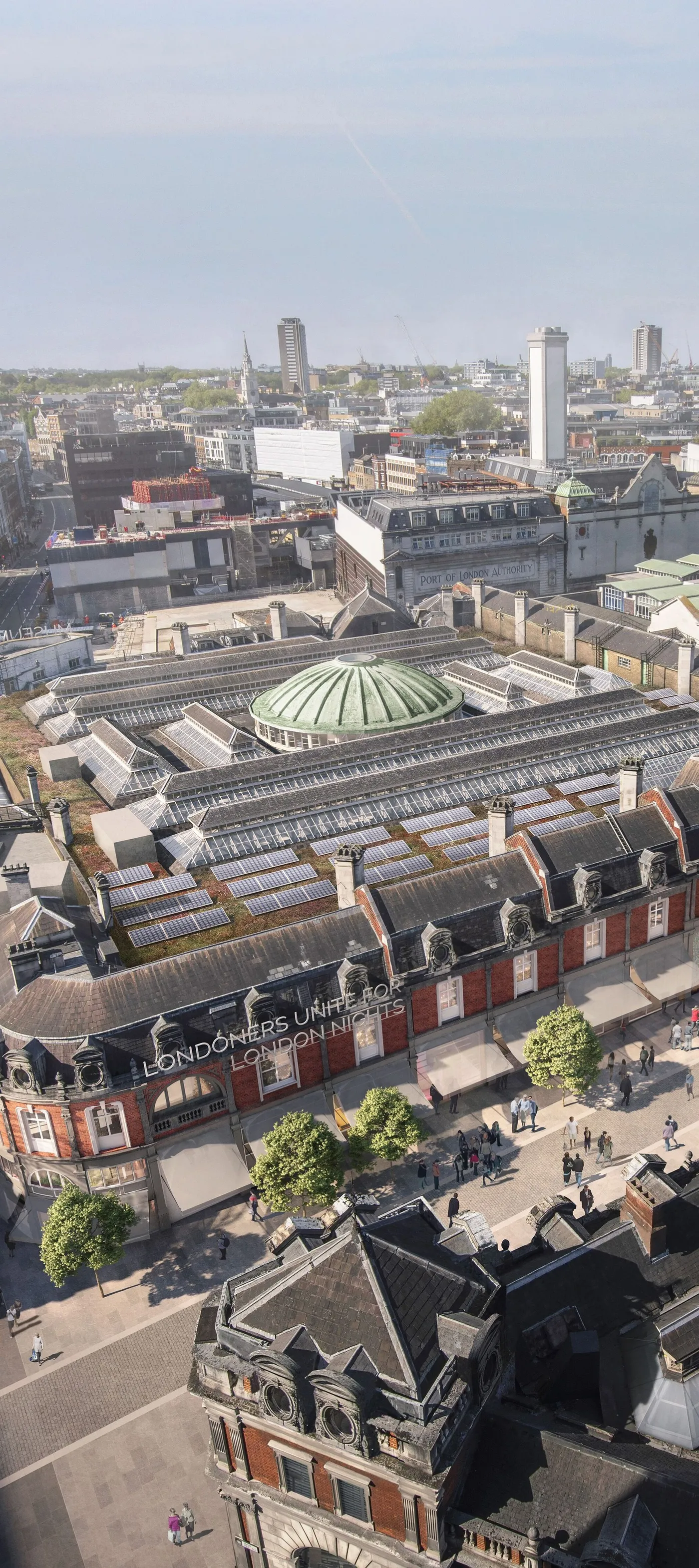
The 7 main gates of London Wall
London was a walled city for 1,500 years. If you wanted to enter or leave the city, you’d probably pass through one of the wall’s main, majestic-looking gates.
City of London
200 CE – 1760s
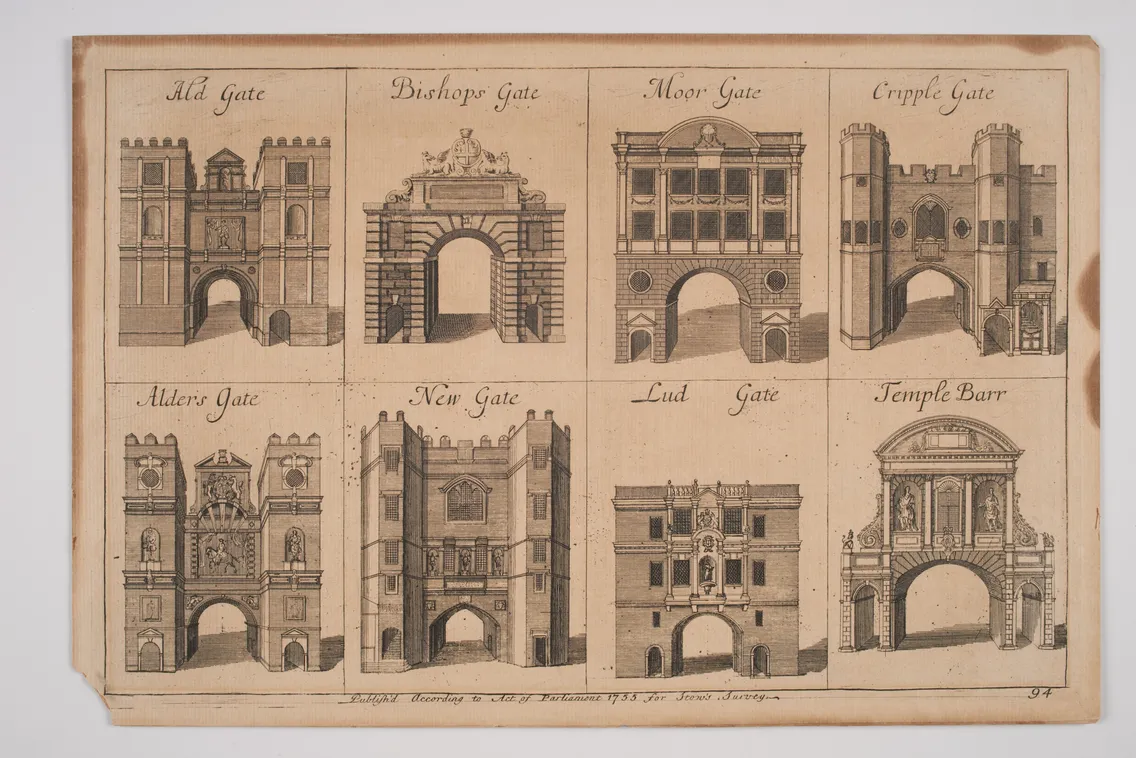
Long-gone landmarks of Roman and medieval London
From around 200 CE, the Romans built a two-mile-long, six-metre-high defensive stone wall around their capital, Londinium. They built into it six gates, later known as Aldgate, Aldersgate, Bishopsgate, Cripplegate, Newgate and Ludgate.
The gates remained an important feature of life in London and were repaired and rebuilt many times. Moorgate, originally a smaller pedestrian gate, was enlarged in the 1400s to become the seventh main gate.
The gates were big multistorey buildings that housed apartments and prisons and protected the city with gates and portcullises. They controlled trade and traffic in and out of London, and were used to collect taxes. They also were used to display important public information – as well as the body parts of executed people.
By the mid-1700s, London’s population had doubled since the mid-1600s to around 700,000 people. The city was growing beyond its Roman boundary. So in the 1760s, the wall and its gates were demolished. By then, they were deemed more of a nuisance and cause of traffic congestion.
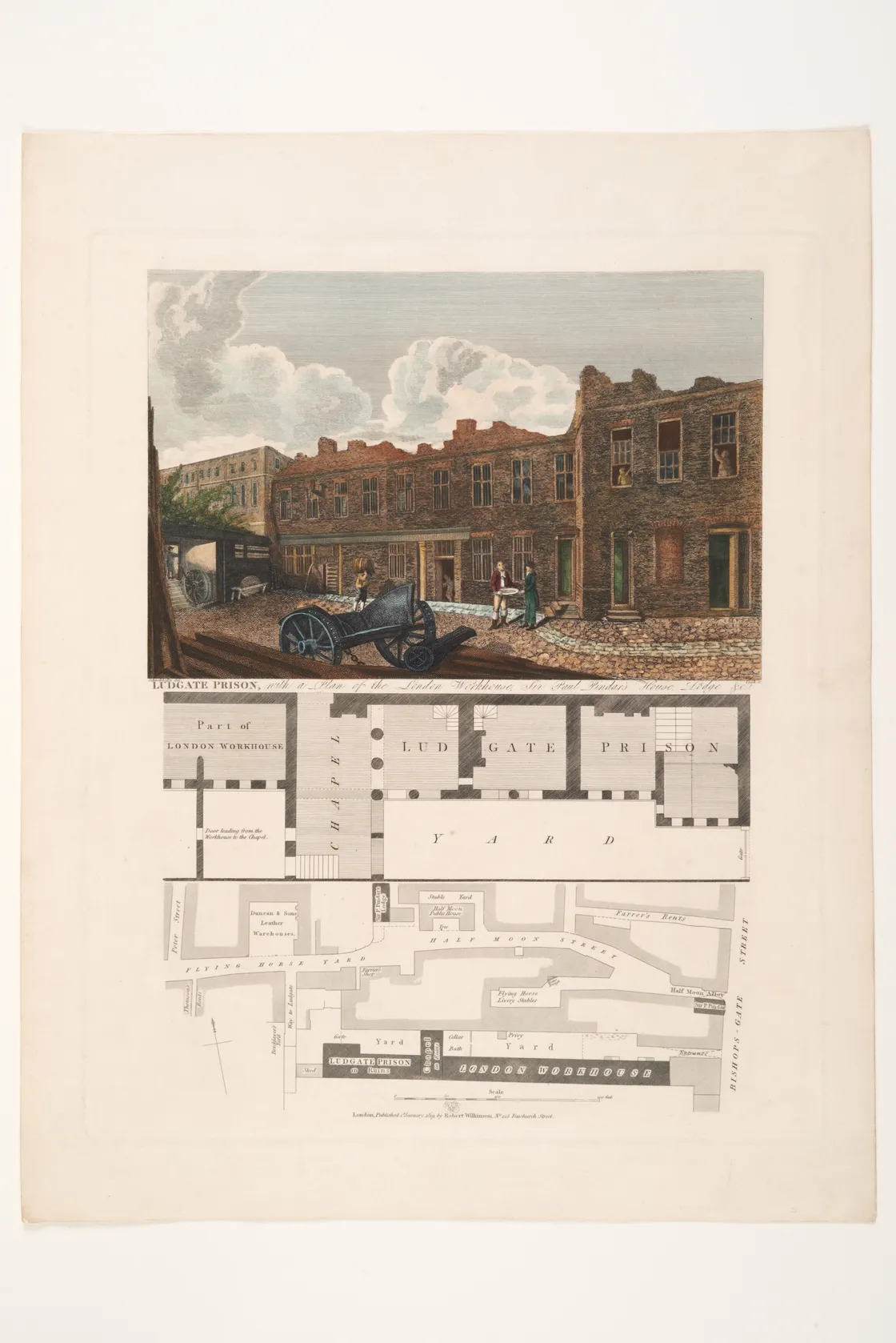
A print of Ludgate Prison from 1819.
Ludgate
Ludgate was the most westerly gate in London Wall. Those walking through the gates would have been struck by the presence of St Paul’s Cathedral, which sat near the top of Ludgate Hill within the City. The River Fleet ran outside the gate to the right.
This busy gate was decorated with a number of statues, including the mythical King Lud and the real Queen Elizabeth I. King Richard II converted Ludgate into a prison in 1378 for people unable to pay back debt or charged with minor offences. But the gate and the prison were demolished in 1760, making way for a clear road all the way up to St Paul’s.
-
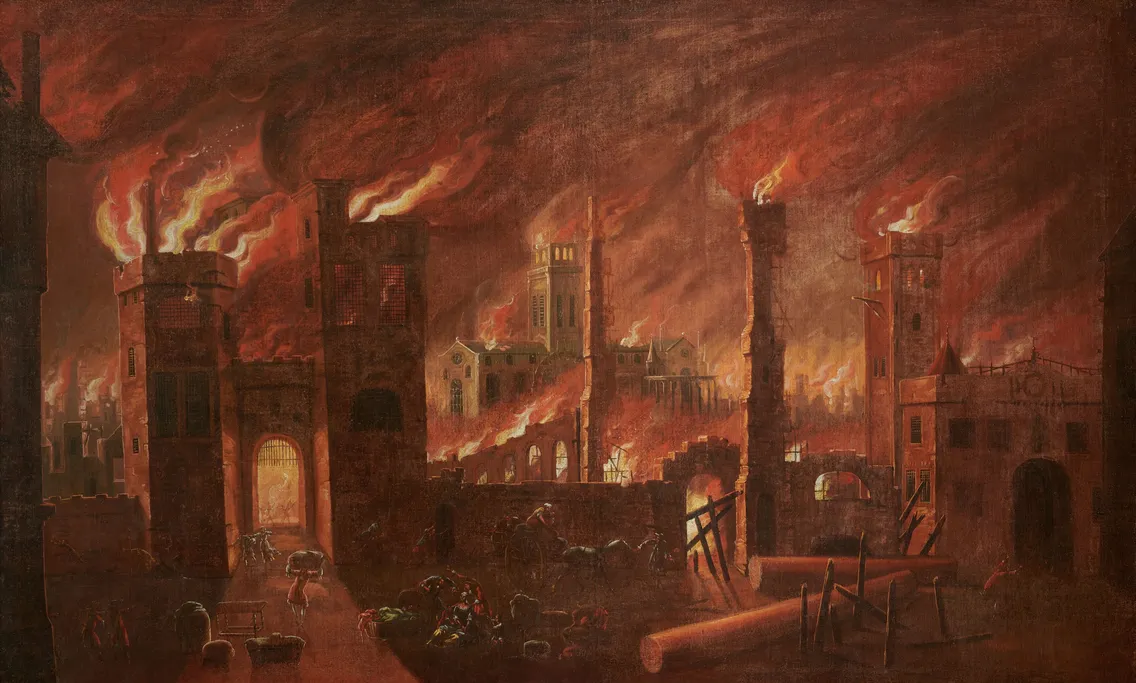
A painting of the Great Fire of London, made in 1675.
Newgate
Just to the north of Ludgate sat Newgate, one of the original Roman gates in the City which was rebuilt in the early 1100s. The notorious Newgate Prison was originally housed in the gate from at least 1190. St Sepulchre-without-Newgate, which now houses the bell that rang before public executions, sat nearby outside the City walls. As did St Bartholomew’s Hospital, which was founded in 1123,
After the Great Fire of London damaged the gate in 1666, it was rebuilt featuring stone statues of Justice, Mercy and Truth. Newgate was the last of the gates to be dismantled, finally taken down in 1777. The prison closed in 1902 and was demolished in 1904.
Aldersgate
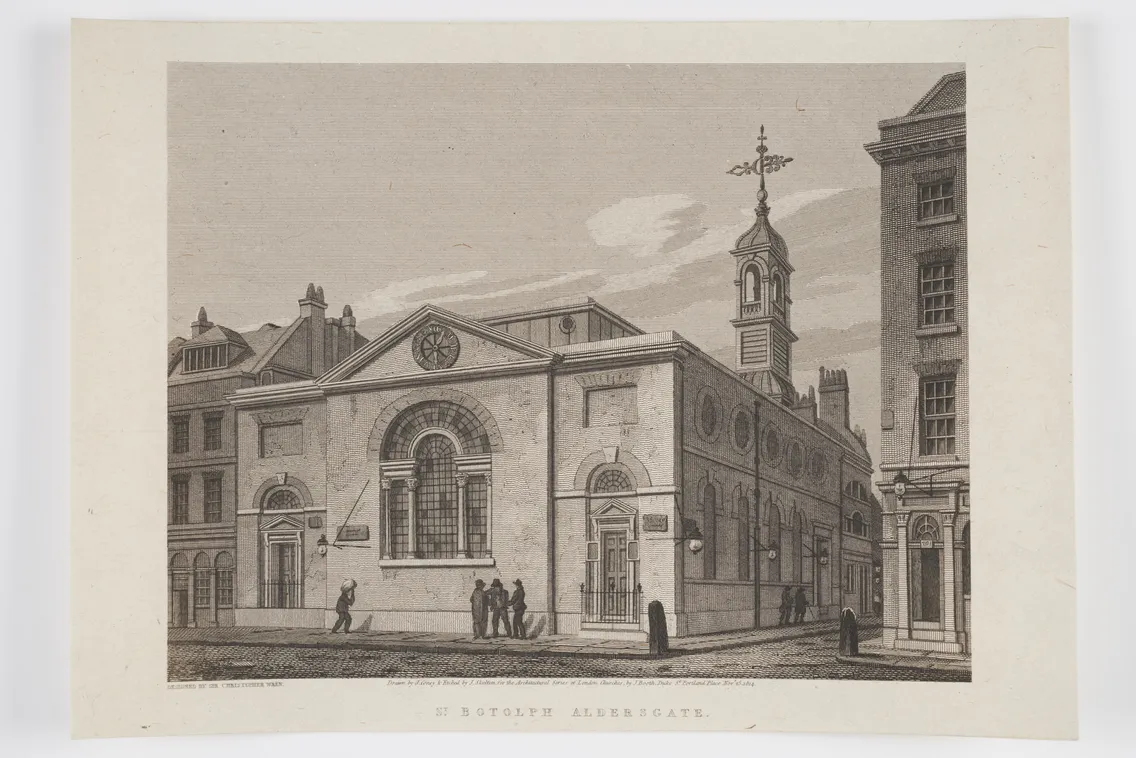
Aldersgate was originally built by the Romans on the north-west corner of the City, some time after the city wall was constructed. St Botolph’s Church, first recorded in the early 1100s, sat just north. The gate was close to St Bartholomew’s Priory and Hospital. And it would have also been used by people heading to and from the livestock market in neighbouring Smithfield.
It’s thought that King James I entered London through Aldersgate when he came from Scotland to claim England’s throne in 1603. The gate later featured a relief of the Stuart king on horseback. But it also featured more gruesome sights – diarist Samuel Pepys wrote in 1660 that he encountered the “limbs of some of our new traitors” on the gate. It survived for a century more before being demolished in 1761.
Cripplegate
On the north side of the wall was Cripplegate, one of the original Roman gates that once led into a Roman fort. Shallow streams passed under the wall nearby, with one of them getting the name the Walbrook. St Giles-without-Cripplegate Church, one of the city’s oldest surviving medieval buildings, sat just outside.
As well as being a key part of London’s defences, at times during the medieval period, the gate was used as a prison. The body parts of executed people were sometimes displayed on Cripplegate as warnings. The apartments over the gate were let out to City officials. But these had fallen into disrepair by the time the gate was demolished in 1760, making way for a wider street.
-
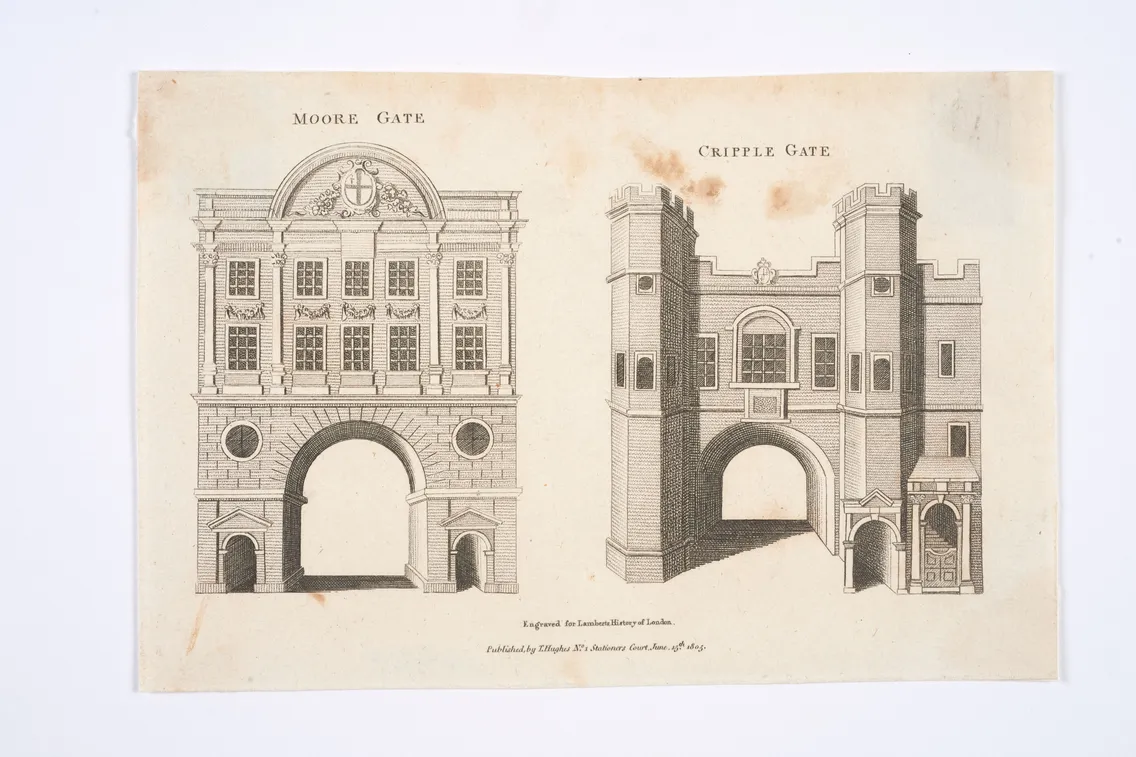
Engravings of two main gates: Moorgate and Cripplegate.
Moorgate
Moorgate sat east from Cripplegate on the north side of the wall. Exiting the City through the gate would take you to the marshland of Moorfields, from which the gate takes its name. Until the area was developed in the 1600s, Londoners used the large boggy expanse for walking, games, doing laundry and, in the winter, ice skating when the water froze over.
A full-sized city gate was constructed here in 1415, replacing a small postern gate. This made it the last of London’s seven main gates to be built. It was said to look pretty impressive, too, featuring apartments and the City coat of arms over the gates. When it was demolished in 1761, the gate’s stone was used to support the centre arch of the newly widened London Bridge.
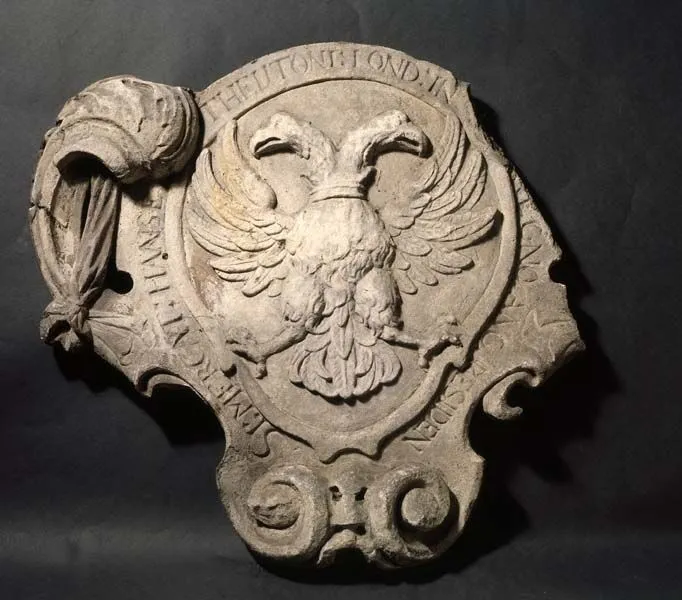
Plaque carved with the arms of the Hanseatic League, a double-headed eagle.
Bishopsgate
Bishopsgate was first built by the Romans and was the starting point for the Roman road of Ermine Street, which ran north to Lincoln and York. Tenements, townhouses and inns were built on both sides of the gate from the 1300s onwards. Bethlem Hospital, England's first (and most infamous) psychiatric hospital, was also founded nearby in 1247, on the site of modern-day Liverpool Street Station. It was rebuilt near Moorgate in 1676.
From the late 1200s to the 1500s, the gate was maintained and defended by the Hanse, merchants from Germanic countries who traded with London. They were allowed to move their goods (which included wheat, ropes, tar, linen cloth and other merchandise) through the gates without paying tolls in return. The gate was demolished in 1760.
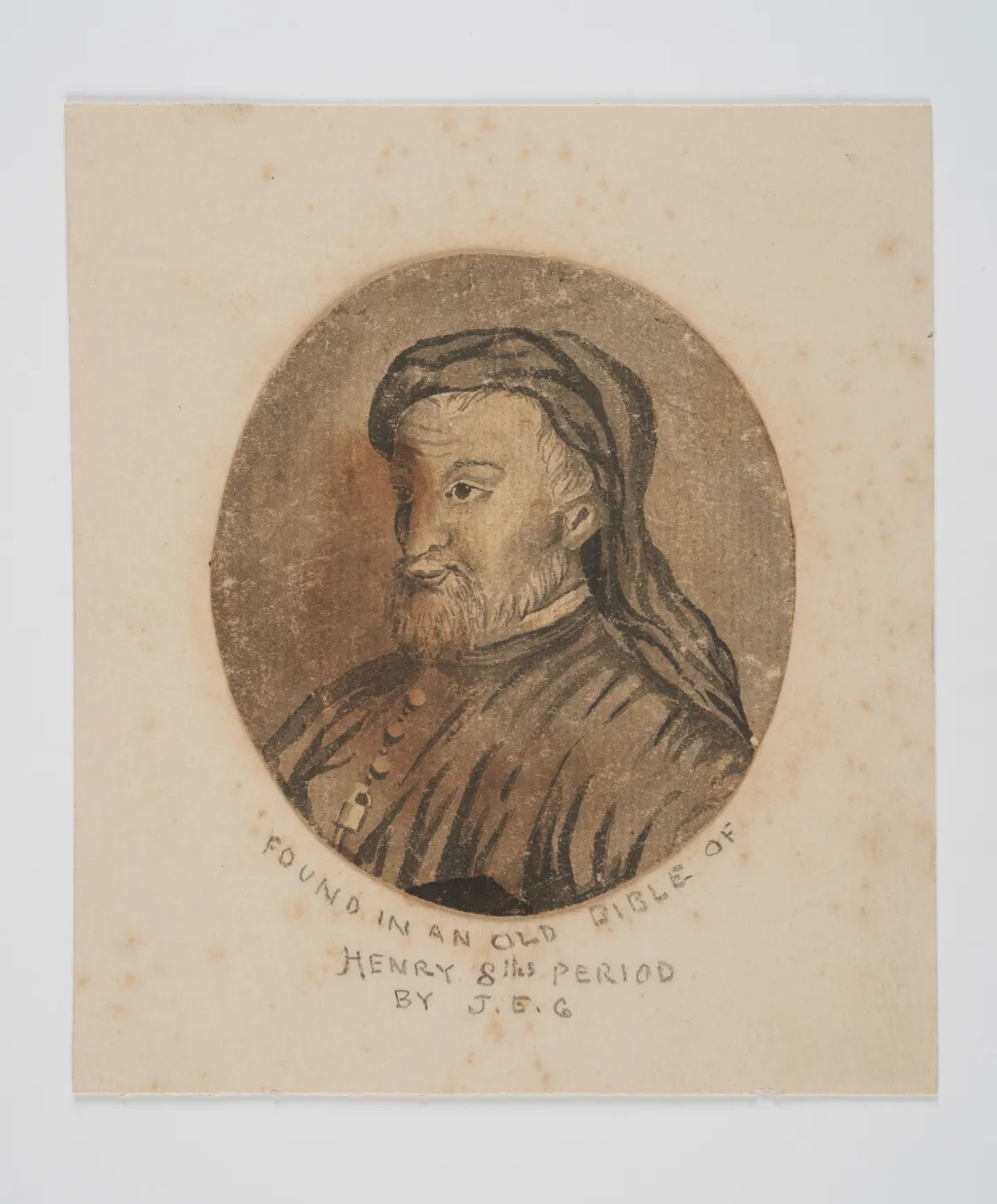
Portrait of Geoffrey Chaucer.
Aldgate
Aldgate was London Wall’s most easterly gate, connecting the City of London and the Roman settlement of what’s now Colchester, Essex. A main route in and out of London, the gate was once lined with inns and taverns like the Hoop and Grapes, one of the City’s oldest surviving pubs. Jewry Street, which runs adjacent to the old gate, was a centre for London’s medieval Jewish population.
The gate’s defences were opened to allow rebels to enter during the Peasants’ Revolt in 1381, who then caused destruction within the City. Poet Geoffrey Chaucer was living in an apartment above the gate at that time. When Aldgate was rebuilt between 1607 and 1609, sculptures of two Roman soldiers with stone balls in their hands defended the entrance – until the whole thing was demolished in 1761.
Further reading: Alan Brooke Gates of the City of London