

17 October 2025 — By Kate Sumnall
The sacred River Thames
The Thames has been a sacred space for millennia. Mudlarks have found Bronze Age weapons, Roman god statues, medieval pilgrim badges and Hindu offerings, that show the river's spiritual significance across cultures.
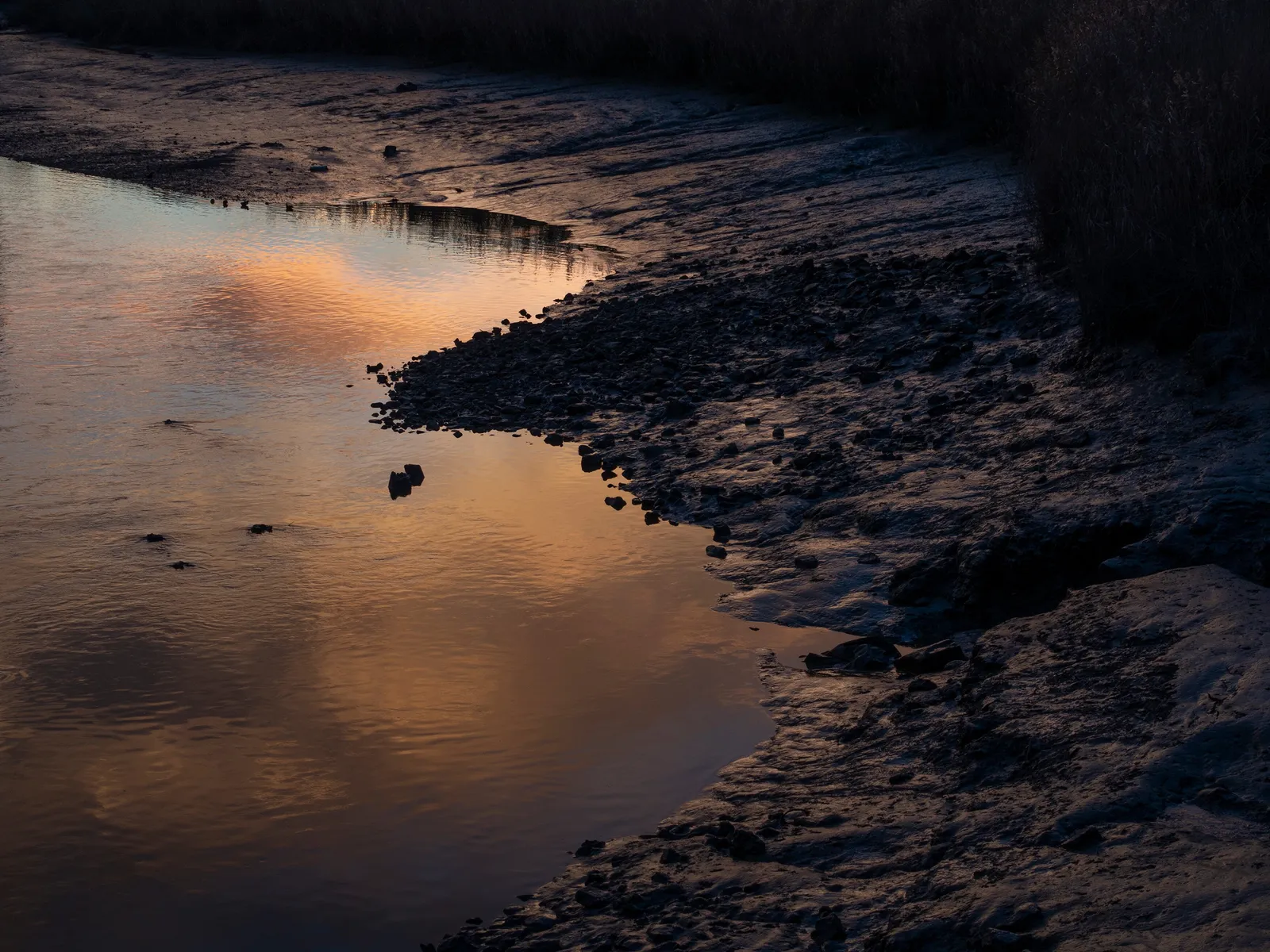
The River Thames curls sinuously through the heart of London, an iconic landmark and the backdrop to busy lives. Too often overlooked, but if you pay attention, the river reveals some of its secrets.
Mudlarked discoveries reveal the Thames has been revered by many as a sacred space for thousands of years, stretching back into prehistory.
Different gods and goddesses have been associated with the Thames. For the Romans, the mother goddess Isis has been linked with the river, and, by the 18th century, there were records of Old Father Thames depicted with flowing hair and beard, shown as a river god.
-
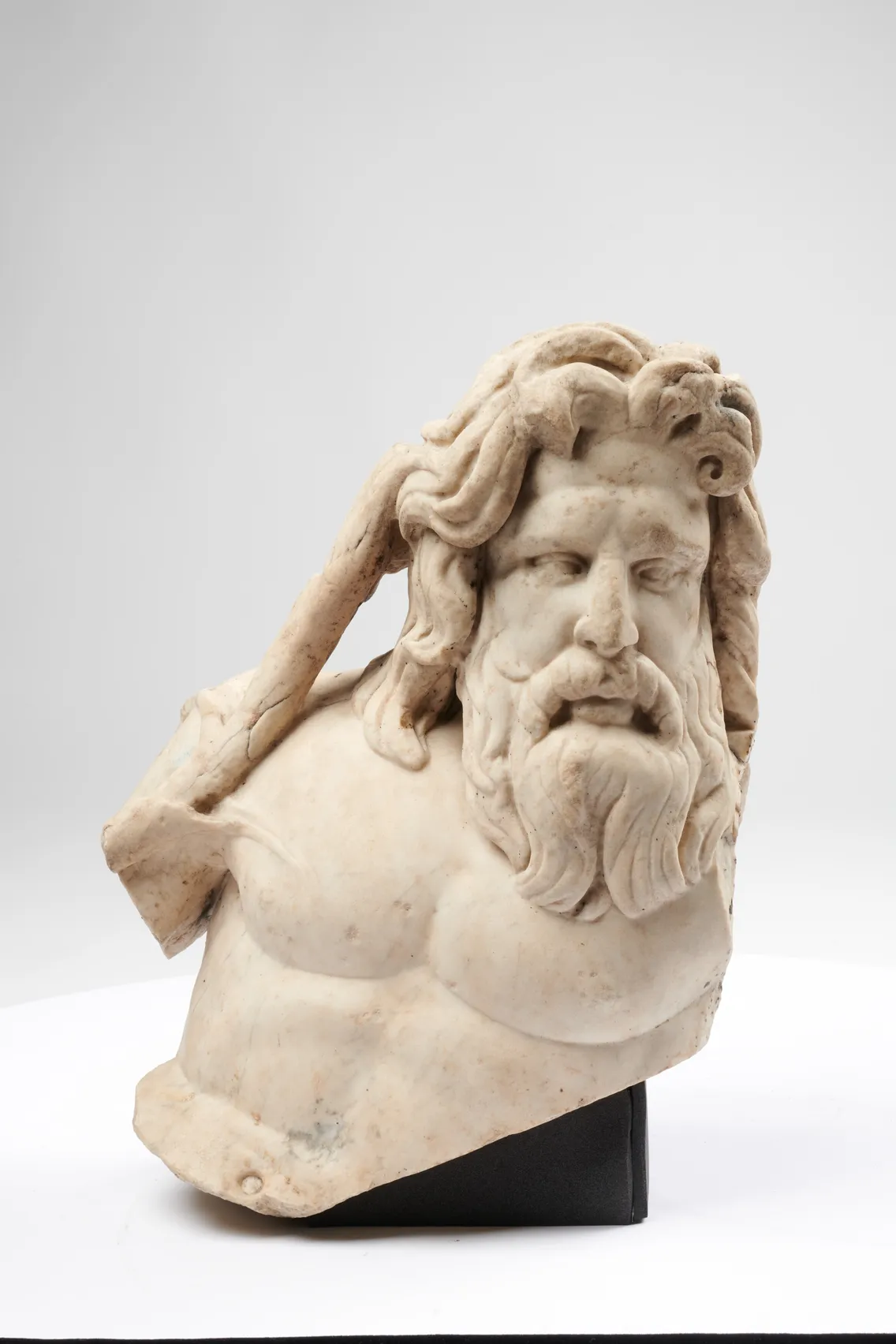
Roman statue of Neptune or a river god.
-
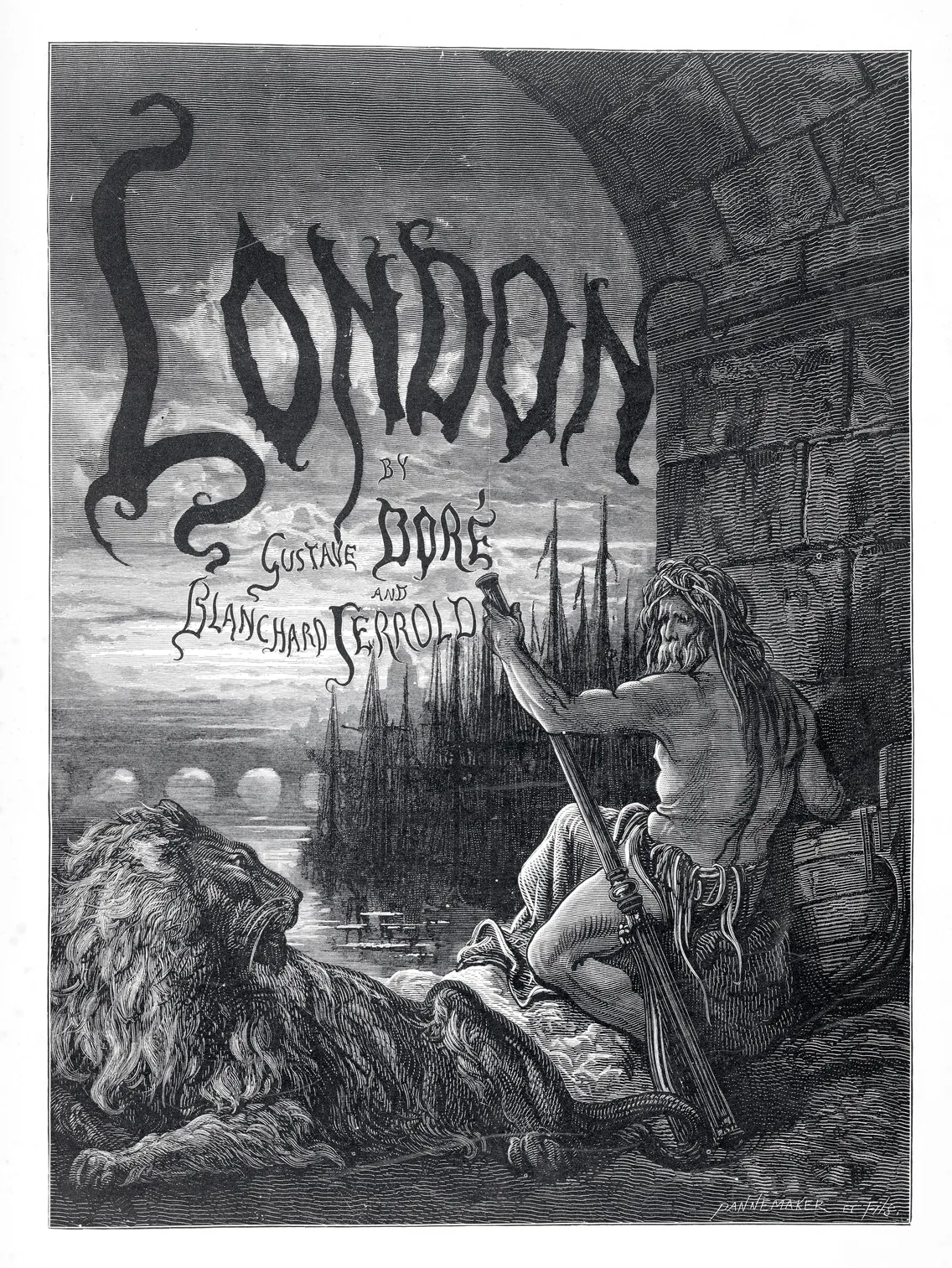
Father Thames as depicted by the artist Gustav Doré.
The importance of rivers across beliefs
For the ancient Greeks, the River Styx connected the living and the dead. River Jericho (in present-day Jordan) was said to be the place of Christ’s baptism, a symbolic washing away of sins. In the Indian peninsula, the River Ganges is considered holy by millions, a source of purification, meditation and spiritual connection.
Through the ages, rivers have been important and central to everyday life. A source of sustenance and resources, as well as a connection with other places and people. Since prehistory, people knew rivers were essential for survival, but could also be dangerous and unpredictable, especially the ever-changing, tidal Thames. Rivers were links between the world of the living and that of the dead.
Ancient offerings to the river
For millennia, people have cast special things into the river’s flowing waters. From beautiful, highly crafted stone tools and weapons, to bronze objects such as the recent discovery of a Bronze Age sword (1150–950 BCE) reported to London’s Finds Liaison Officer.
-
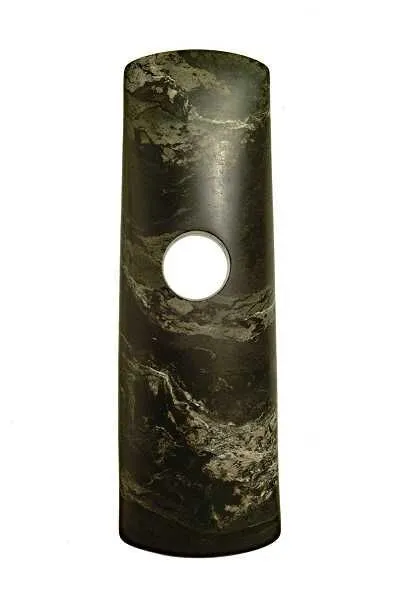
Early Bronze Age polished stone mace head.
-
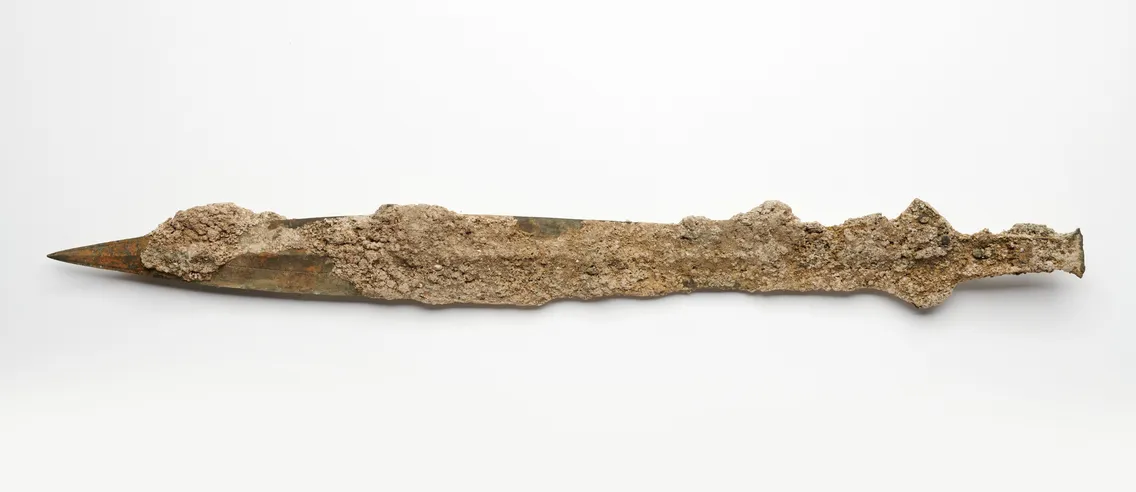
Late Bronze Age bronze sword.
We don’t know the reasons why people put these precious objects into the river, but the number and type of objects suggest it was deliberate and that the river was a special place. Were these objects offerings to give thanks, for protection, or to accompany the dead?
Roman river deities
About 2,000 years ago, the Romans believed springs and rivers were sacred and connected with the gods. The river gods and goddesses were powerful – offering both punishment and protection.
There were often shrines and altars on bridges. At crossing places, objects were thrown into the water for good luck. Statues of gods have been found in the Thames depicting Mercury, Venus and Dea Nutrix, a mother goddess.
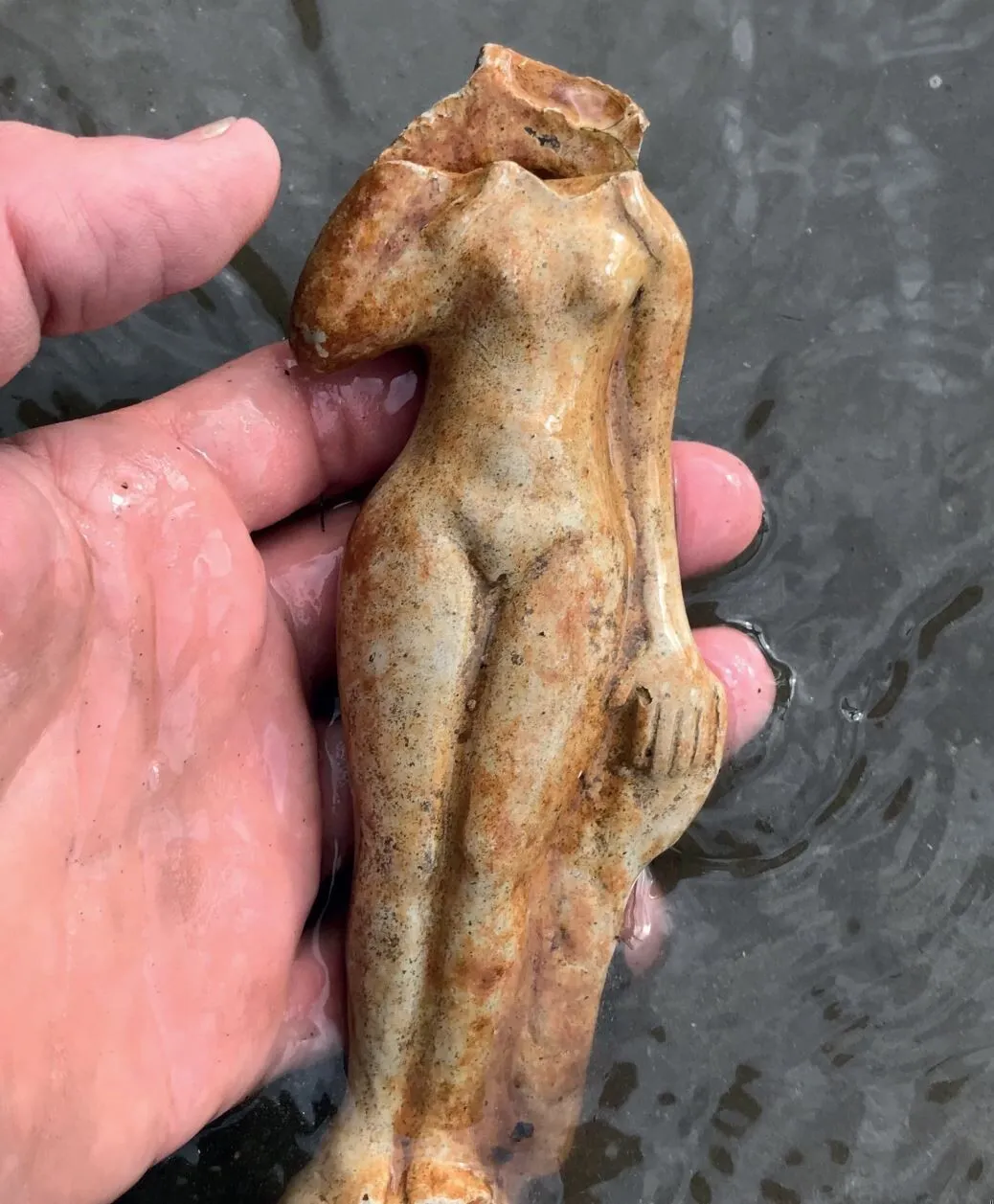
Roman pipeclay Venus figurine found on the Thames foreshore.
Across the Roman beliefs, nature was a living entity that humans were utterly dependent upon. They acknowledged that life was vulnerable and the relationship with nature was an important one.
A keeper of pilgrim badges and offerings
Among the many relics found on the Thames foreshore, there are hundreds of medieval pilgrim souvenirs. The sheer number of them show that pilgrimage was an integral part of medieval life. Many people set off from London following different pilgrimage routes and brought back affordable souvenirs from the shrines. These were often blessed and sometimes held holy water.
But why were so many found in the Thames?
Perhaps, pilgrims threw them into the river to give thanks for a safe journey as they returned to London. Or, perhaps, they felt the pilgrimage had been successful and they, or their loved one, was no longer ill or suffering. It’s also likely that many of these thin, lead souvenirs broke and were lost or thrown away into the river.
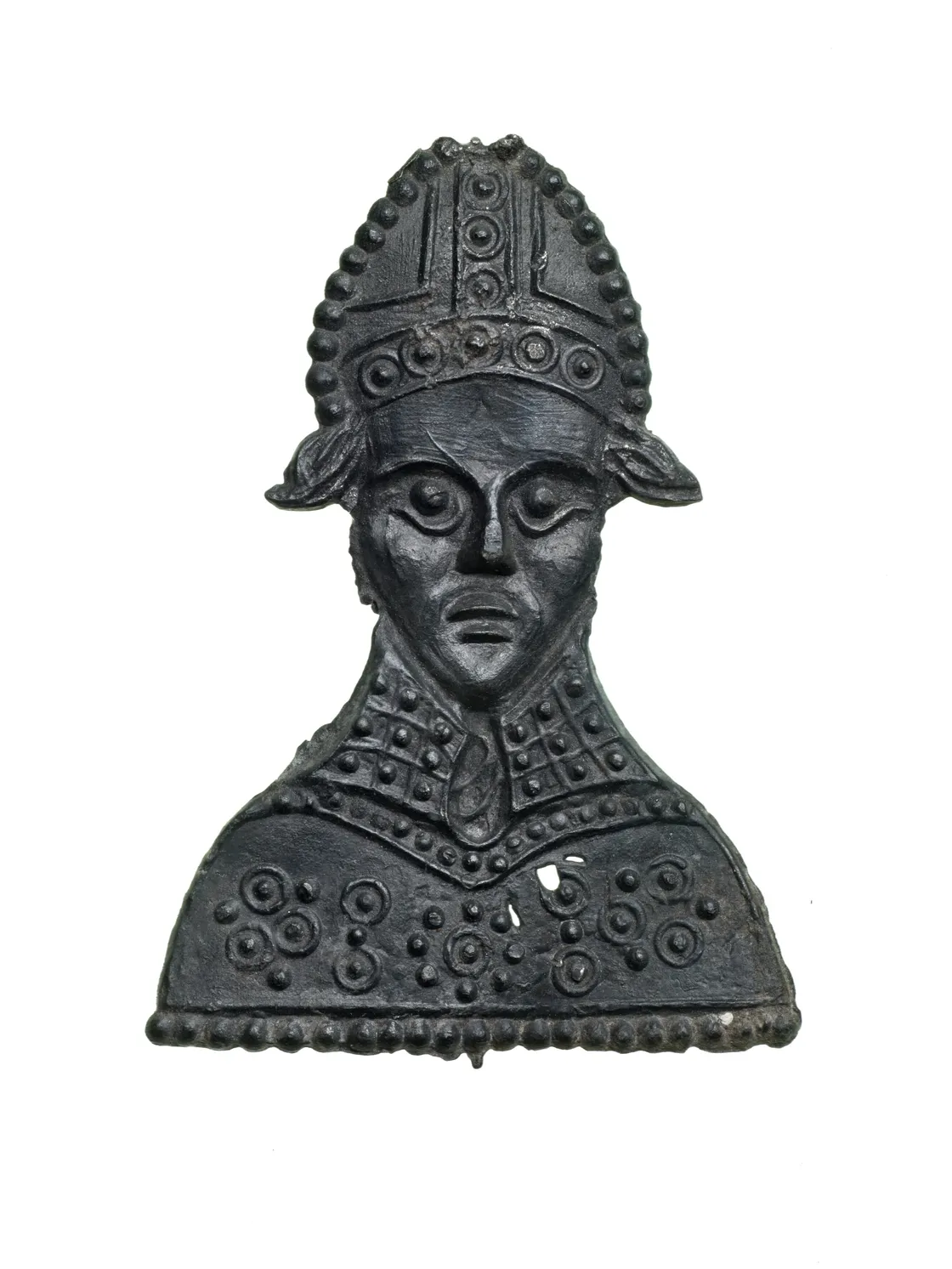
Medieval St Thomas Becket pilgrim badge.
The Thames as a Hindu sacred river
For Hindus, rivers are sacred spaces for purification, meditation and spiritual connection. The Thames is no exception. In the 1970s, the Thames was sanctified as a holy river by Yogiji Maharaj. Mudlarks continue to find many statues of gods and goddesses, blessings, diyas (lamps) used at Diwali and other festivals, votive coconuts and flowers. These objects represent personal offerings, celebrations and even funerary rituals.
Some Diwali diyas, like the ones in our collection, would have been immersed in the river as a way to let go of negativity and as the right place to put these objects after their use.
-
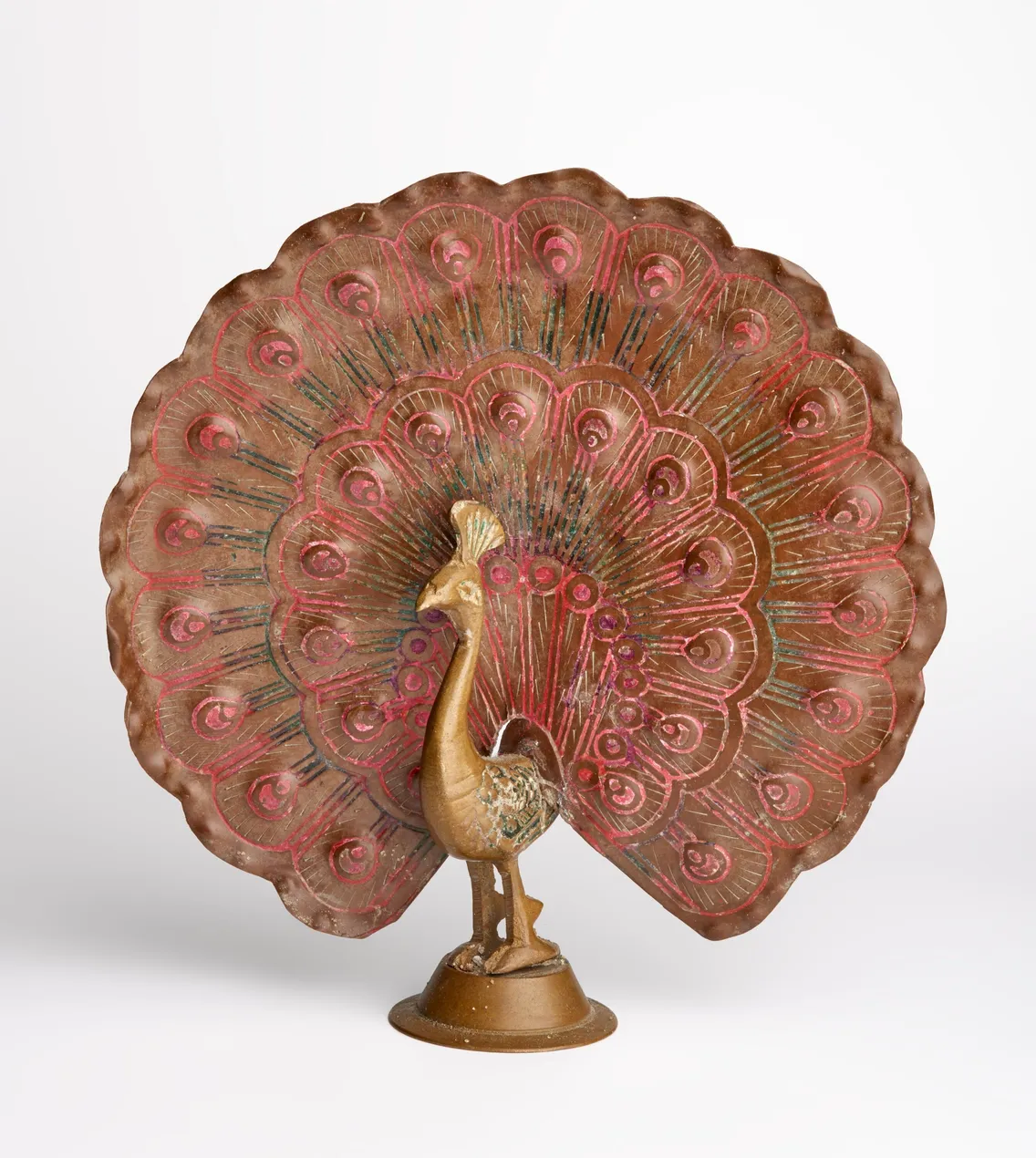
A modern statue of a peacock found on the Thames foreshore.
-
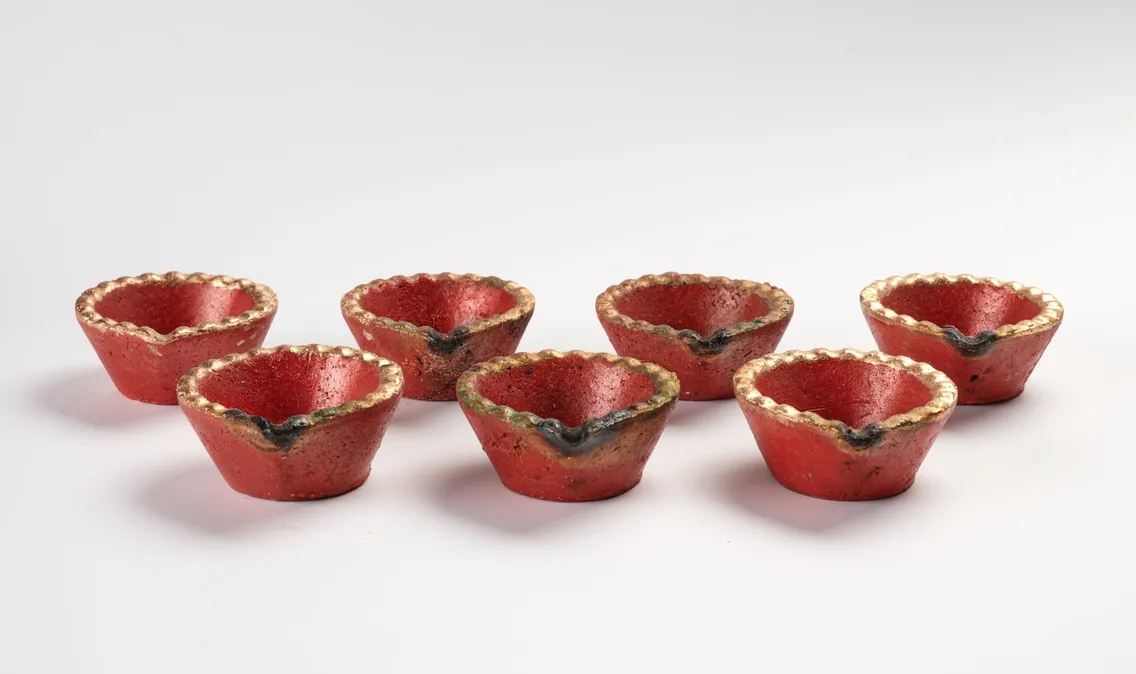
Earthen lamps, diyas, used during Hindu festivals like Diwali.
The annual Christian blessing of the Thames
The river continues to be a sacred space for many. Every year in January, there’s a Christian blessing of the river. People walk from Southwark Cathedral and St Magnus the Martyr to the centre of London Bridge, where the Bishop of Southwark blesses the river. The Bishop leads a prayer for those who live or work on the river, before casting a wooden cross into the water.
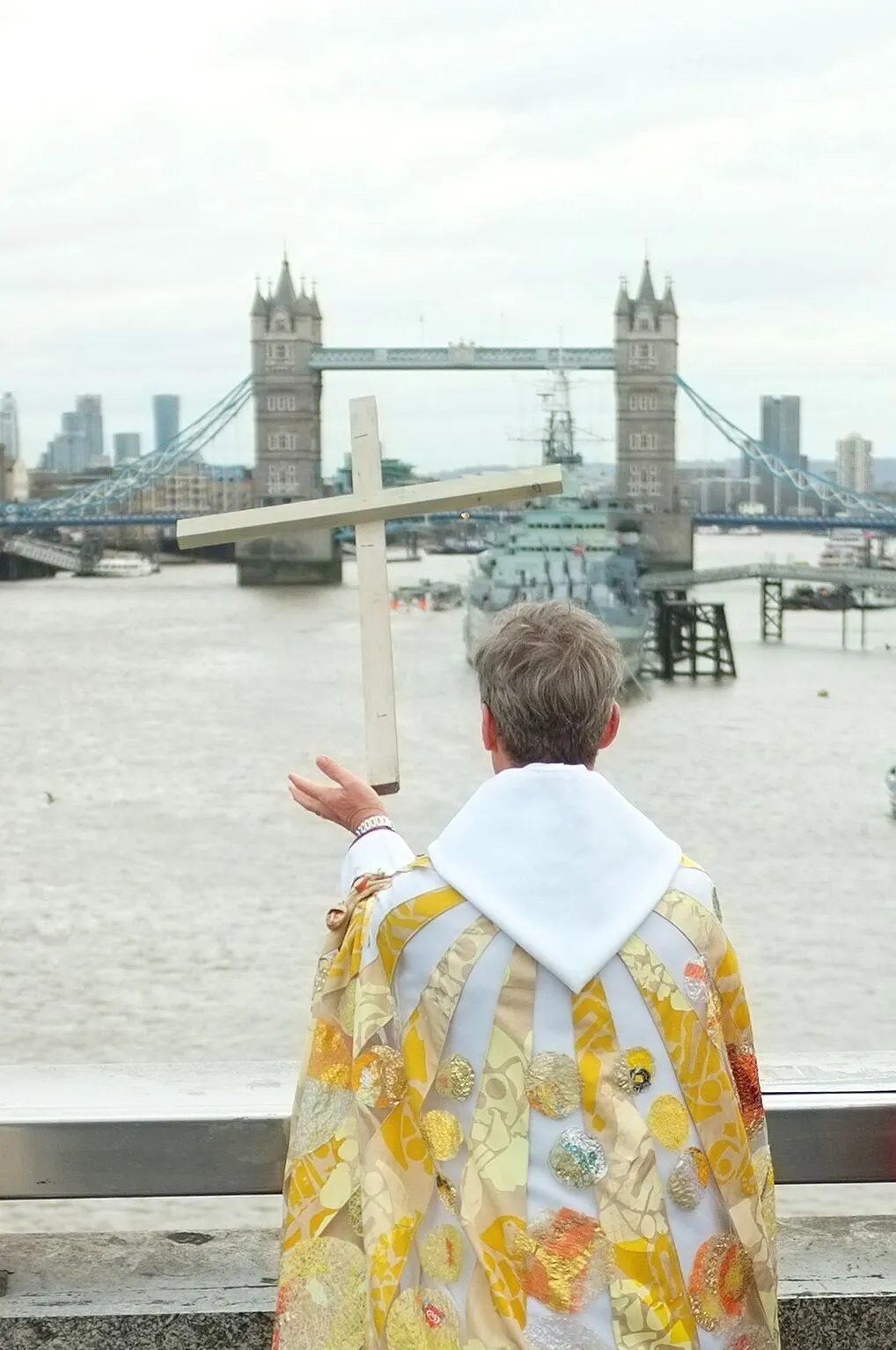
The Blessing of the Thames 2019, the Bishop of Southwark is wearing the Thames cope ‘From Profane to Sacred’ made by Sarah Wilson. It featured plastic fished out from the river.
From formal religions to personal beliefs, the River Thames continues to play an important role in the everyday lives of the people drawn to it. Whenever mudlarks search the foreshore, they never know if they are going to find the sacred, the lost or the rubbish.
For many, it doesn’t matter. The quiet, patient search is like meditation, and the river is a soothing and special place. “I'm not religious... but the river is the closest thing I know to a religious place,” writes mudlark and author Lara Maiklem in her 2024 book, A Mudlarking Year.
Kate Sumnall is Curator, Archaeology at London Museum.
Tags
-
 Exhibitions
The lost Doves Type: A Thames mystery solved
A grumpy printer dumped his masterpiece into the Thames to spite his partner. A hundred years on, mudlarks fished it back up
-
 From our experts
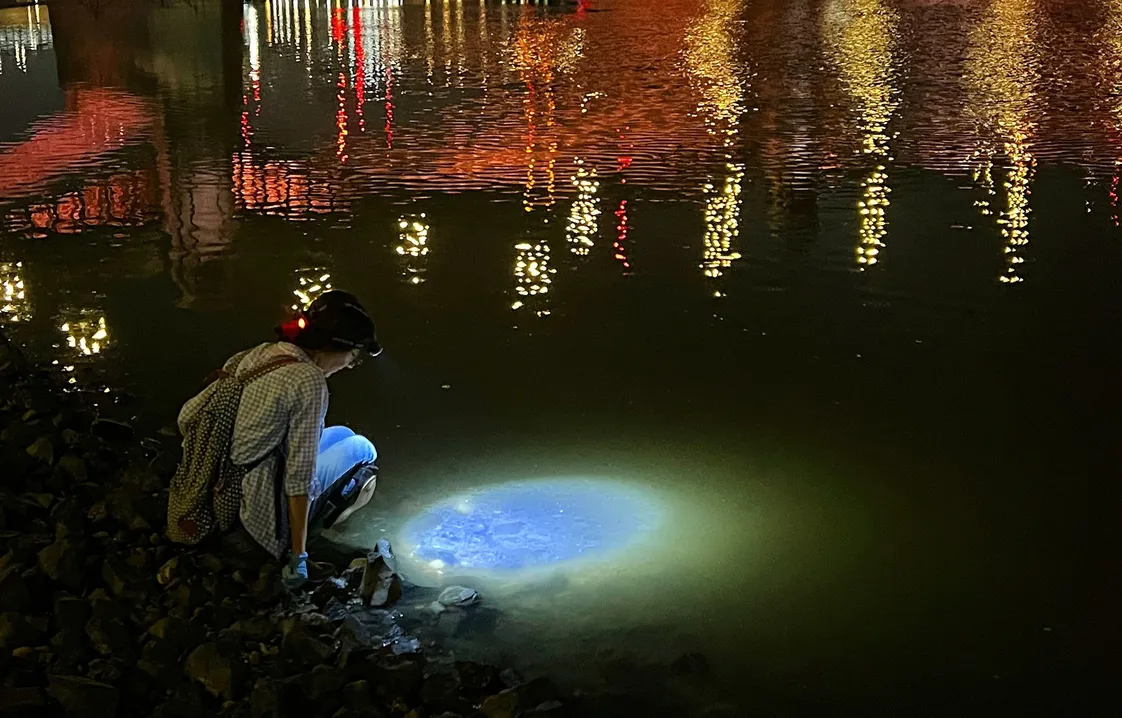
Why Mudlarks search the Thames foreshore at night
It's about the quiet magic of mudlarking by moonlight
-
 From our experts
My life as a mudlark: Finding the sacred in the River Thames
Mudlark Caroline Nunneley shares her journey discovering medieval artefacts in the Thames
-

-
 From our experts
Gold struck: A mother-son mudlarking adventure on the Thames
River reflections of a mudlark over 50 years
-
 From our experts
Fired up about pipe finds: A Thames mudlark’s passion
While plain tobacco pipes are common, decorated ones are a special find for Germander Speedwell