10 February 2026 — By Ben Paites
How archaeological finds help tell LGBTQ+ stories
From Roman figurines to medieval coins, three objects recorded with the Portable Antiquities Scheme offer ways to discuss LGBTQ+ stories.
The study of sexuality and gender has historically been quite a challenge. Often, there’s little or no evidence of same-sex attraction or gender non-conformity in historical and archaeological records. So, those of us attempting to find the traces of queer existence have had a real challenge on our hands.
With minimal physical evidence and non-inclusive interpretation, historians and archaeologists find it difficult to talk about some of the stories that resonate with the LGBTQ+ community. However, it is this scarcity of evidence that makes it even more important to share these stories.
Joining the dots
This gap of LGBTQ+ representation in history was something I thought about a lot as I was stuck indoors in 2020 during the Covid-19 pandemic. I started compiling a list of 50 objects recorded with the Portable Antiquities Scheme (PAS) that relate to themes of LGBTQ+ history and culture. The PAS is a voluntary organisation that records archaeological objects found by the public, this could be on the foreshore of the Thames or in their back garden.
I had already published 50 Finds from Essex and worked with the same format. I found several examples of objects that could connect with LGBTQ+ history and, thus, 50 LGBTQ+ Finds came about.
Whether referring to historical figures, symbols or characters in mythology, I wanted to showcase objects that span thousands of years of our history. And though these objects might not have been owned by or always directly relate to LGBTQ+ people, they allow us to tell their stories.
Here are three of them.
Mercury and Crocus
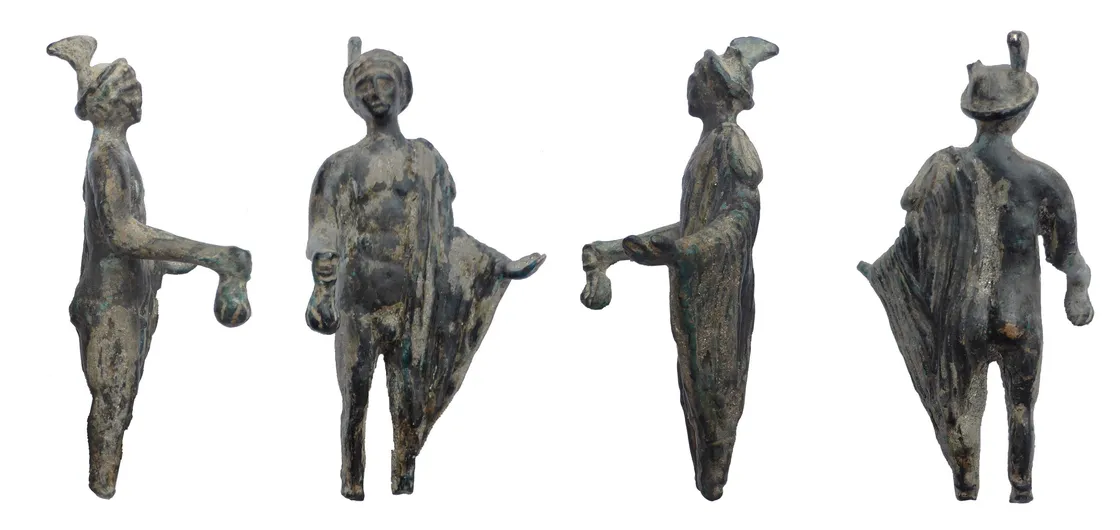
A Roman figurine of Mercury.
This Roman period (45–410 CE) figurine of the god Mercury, with his distinctive winged cap, was found on the foreshore of the River Thames. The god of commerce and travel, Mercury, is often regarded as a symbol of androgyny, ie, a combination of masculine and feminine characteristics.
Figurines like this are found across Britain, with a well-known example being the Mercury found at Gosbecks near Colchester, and currently in the Colchester Museums collections. They likely came from shrines on routes in and out of towns, where travellers could make prayers and offerings for a safe journey.
I find the story of Mercury and Crocus very interesting. Mercury was said to be in love with a young man named Crocus, but accidentally killed him in a discus throwing contest. Distraught, Mercury transformed Crocus into a flower, supposedly giving the plant its name.
Was King William II queer?
From mythology to historical figures, an 11th-century brooch made from a coin of William II was found in Hampshire. William II was the son of William the Conqueror and ruled England from 1087 to 1100, and this coin would have been minted during his reign.
-
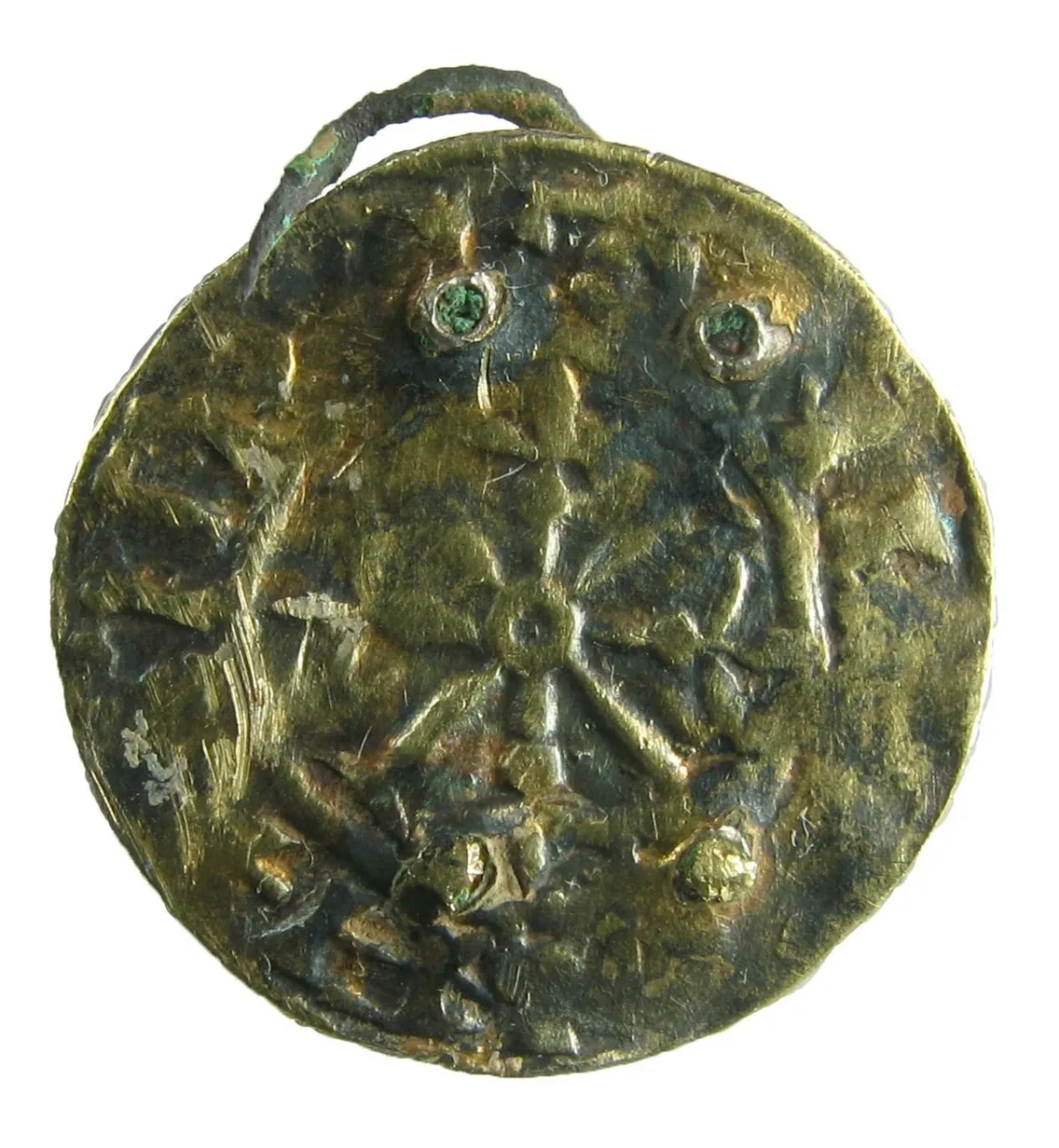
A silver penny of William II turned into a brooch.
-
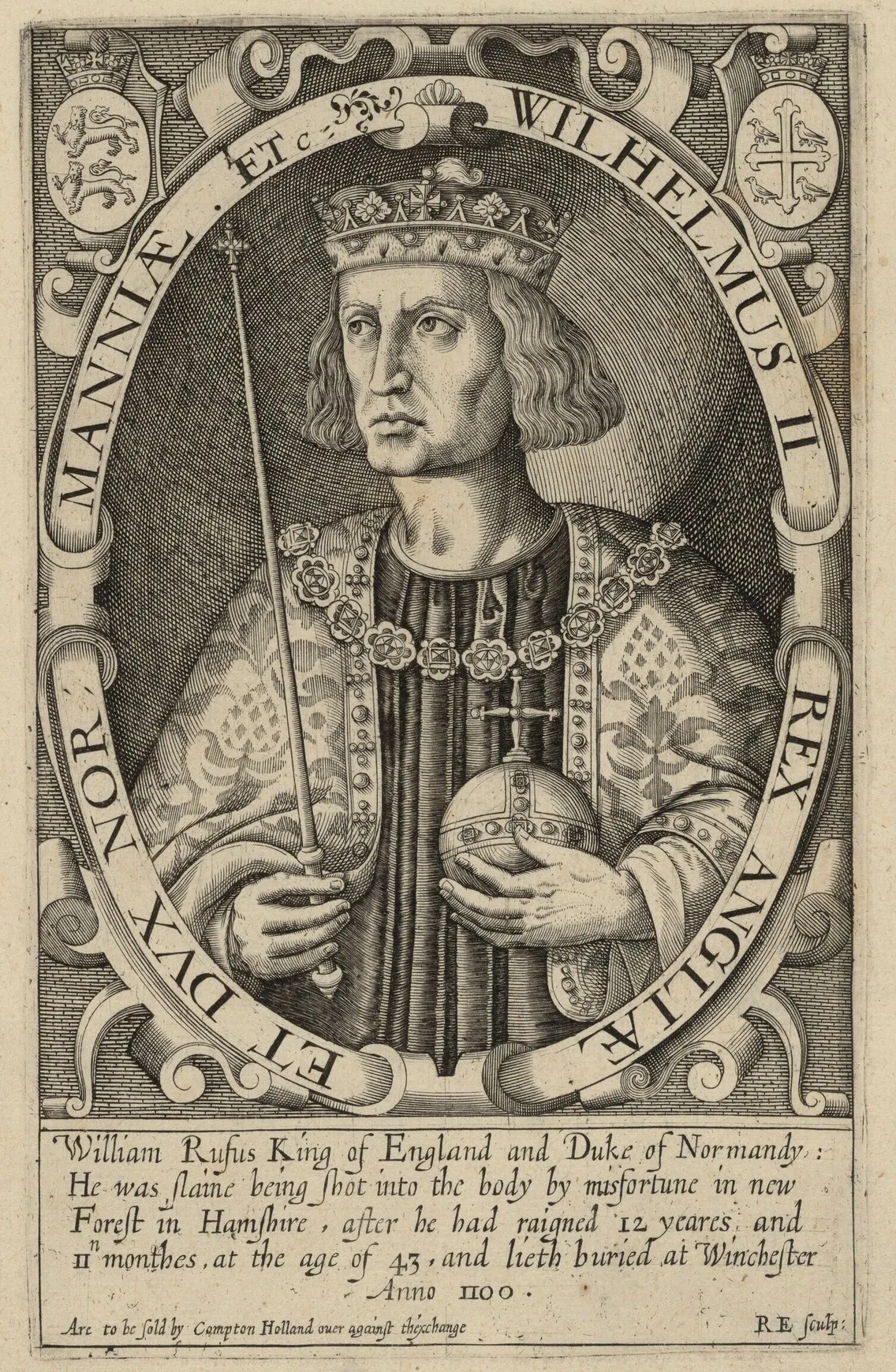
An engraving of William II.
While he has never been openly known to have been gay or bisexual, more recent studies have speculated that William II might have had sexual relations with men. There are several accounts of same sex activities in his court. William II never married nor had any children, which was quite unusual for a monarch.
While this might be indicative of asexuality or self-imposed chastity, there are records of the church’s disapproval of the long-haired young men in William’s court. Historian Frank Barlow, in his book William Rufus, is convinced that there is enough evidence to point to “the king’s bisexuality”.
Symbolisms from nature
In my list, I wanted to include examples from the natural world. Not only because research increasingly shows animals displaying same-sex sexual behaviour, but also because LGBTQ+ people have used nature as symbols throughout history. One key example is the pansy, which has for decades been used as a homophobic slur.
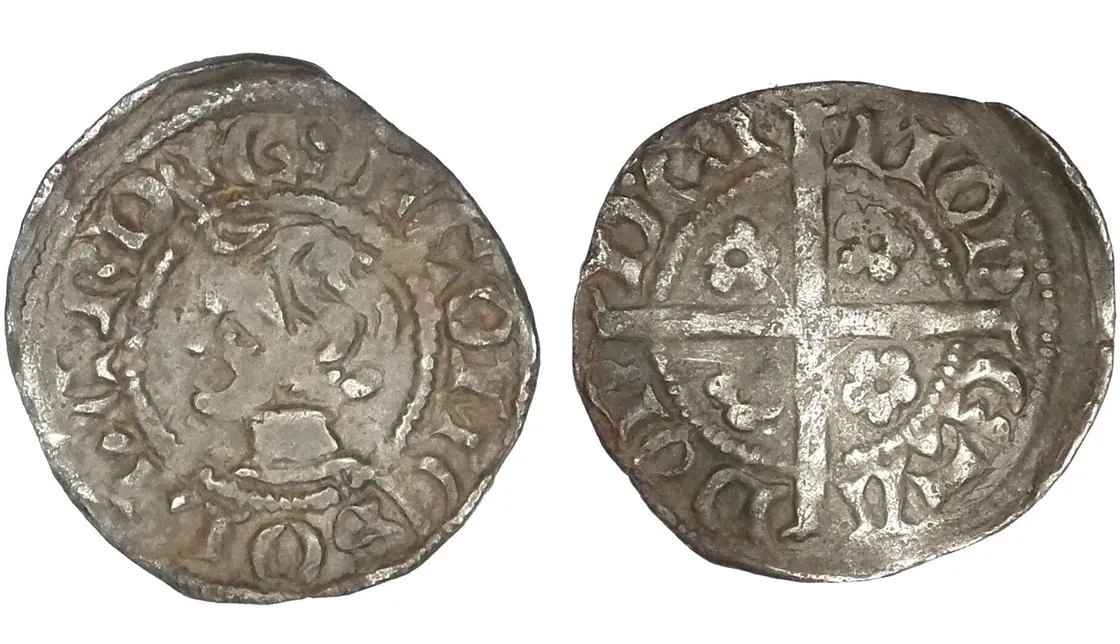
A medieval penny of King Floris V of the Netherlands, featuring pansies.
In response to this, artist Paul Harfleet set up the Pansy Project in 2005, planting pansies at the sites of homophobic abuse. The largest concentration of these pansies is sadly in the Greater London area. This medieval silver coin, found in Suffolk, features a pansy on the reverse. And, though not connected directly to sexuality, it provides an opportunity to talk about the history of the flower and its symbolic use, including within the queer community.
These three objects are just some of the many that give us a way to tell LGBTQ+ stories, bridging past and present.
Ben Paites is Senior Curator at Colchester Museums and author of 50 LGBTQ+ Finds, which uses objects recorded with the PAS to explore five key themes: historical figures, the natural world, language and symbols, and mythology and communities.
Tags
-
 Exhibitions
The lost Doves Type: A Thames mystery solved
A grumpy printer dumped his masterpiece into the Thames to spite his partner. A hundred years on, mudlarks fished it back up
-
 Collections
Mapping London’s LGBTQ+ history in our collection
We look through our collection for symbols of the long struggle by LGBTQ+ Londoners for equal rights
-
 From our experts
Gold struck: A mother-son mudlarking adventure on the Thames
River reflections of a mudlark over 50 years
-
 From our experts
Fired up about pipe finds: A Thames mudlark’s passion
While plain tobacco pipes are common, decorated ones are a special find for Germander Speedwell
-
 From our experts
The most infamous scandal in Victorian London?
Two mudlarks, thousands of forgeries and a story full of intrigue, deceit and ingenuity