Live streams for primary schools
The live stream programme for primary schools at London Museum has been running since 2016. A dynamic and highly popular suite of interactive history broadcasts, our live streams are a thriving programme that has flourished year on year.
Our live stream programme
Our live streams bring topics that the museum is well known for, like the Great Fire of London, to schools across London, the UK and internationally. Through a broadcast format, the sessions reach large numbers of pupils at once with a free and accessible offer.
The key appeal of the streams is that they give teachers and pupils an opportunity to ask questions about their classroom topics to our specialist curators, who they’d otherwise not have access to.
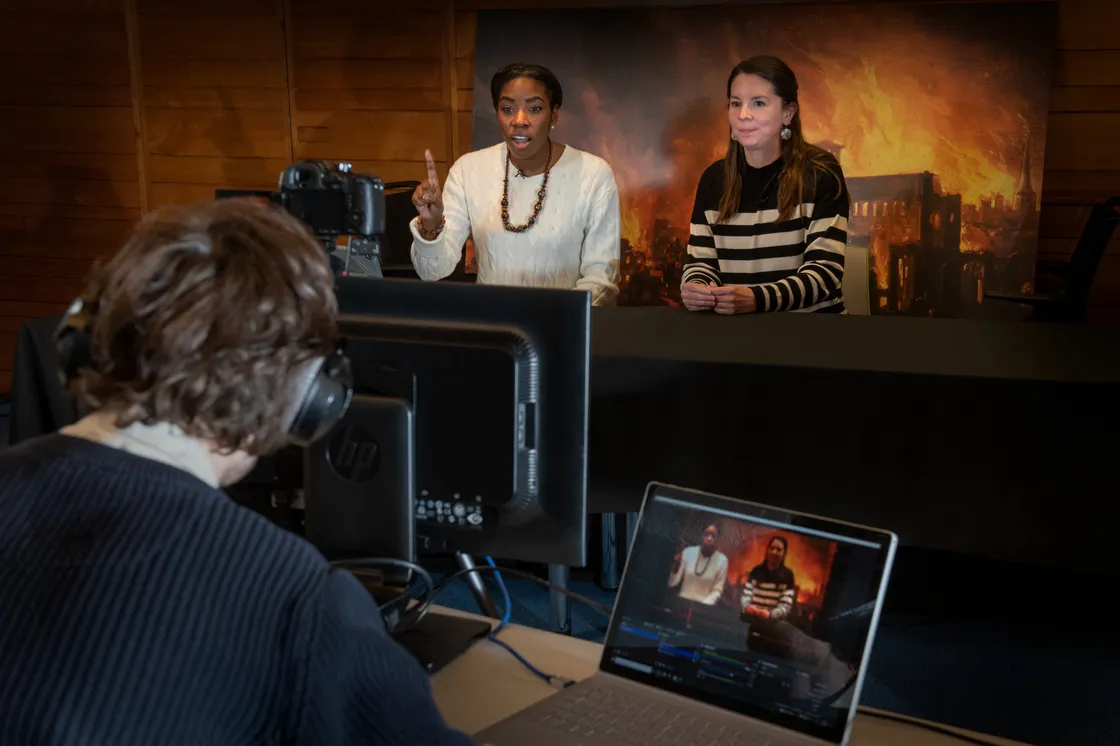
The Great Fire of London live stream in action.
What are live streams?
At their simplest, live streams involve the sharing of live video and audio over the internet. Within this overarching idea, audiences may have differing expectations of the term regarding platform, duration or interactivity.
Live streams are streamed to multiple viewers at once and typically have high production values, combining live and pre-recorded elements. Live streams are also usually one way, meaning stream hosts cannot see participants. In our case, live streams allow teachers to share pupils’ thoughts and questions via the text chat, with curators responding in real time.
“Across 2025/26 schools from every London borough attended our live streams”
Why does London Museum offer live streams for schools?
The motivations behind the live stream offer at London Museum have changed since the programme’s inception – from a desire to explore new technologies, to an integral part of our contemporary learning programming.
During the move to the new London Museum in Smithfield, the live streams have been particularly important. The closure of the London Wall site – which housed popular galleries on primary history topics like the Great Fire of London, Prehistoric London and Roman London – saw teachers increasingly turn to our digital offer.
The live streams have allowed pupils to continue to connect with our expertise and collection objects, despite a lack of physical space. This development is reflected in booking data gathered by the programme. In the 2021/22 academic year prior to the closure of the London Wall site, the live stream programme engaged over 15,000 pupils. By 2025/26, this had risen to nearly 22,000.
Other factors also make live stream museum sessions an appealing proposition to teachers. Schools from across the UK have participated in our streams, as have others from as far as Australia and the USA – who might never otherwise have been able to engage with London Museum.
Analysis has shown that 48% of schools viewing the live stream programme across 2025/26 were outside London boroughs. Attendance from within the 32 London boroughs is equally important to us and continues to rise, likely in response to the challenges of organising and executing school trips. Across 2025/26 schools from every London borough attended our live streams – the most popular being Lewisham (8% of schools who booked) and Southwark (7%).
“Really age appropriate, engaging and kept the children entertained”
Teacher feedback collected after participating in a live stream.
What content do live streams include and how are they presented?
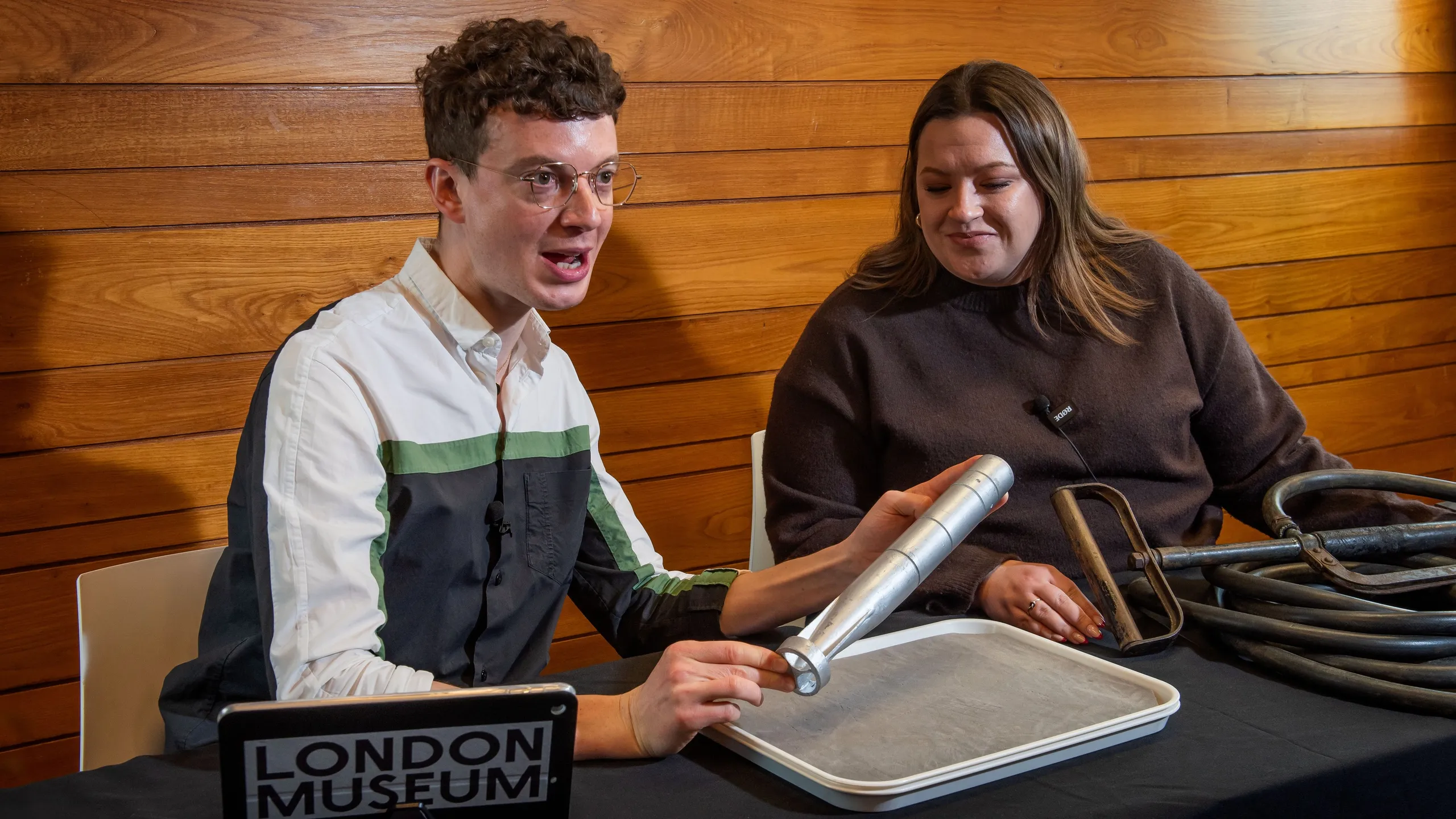
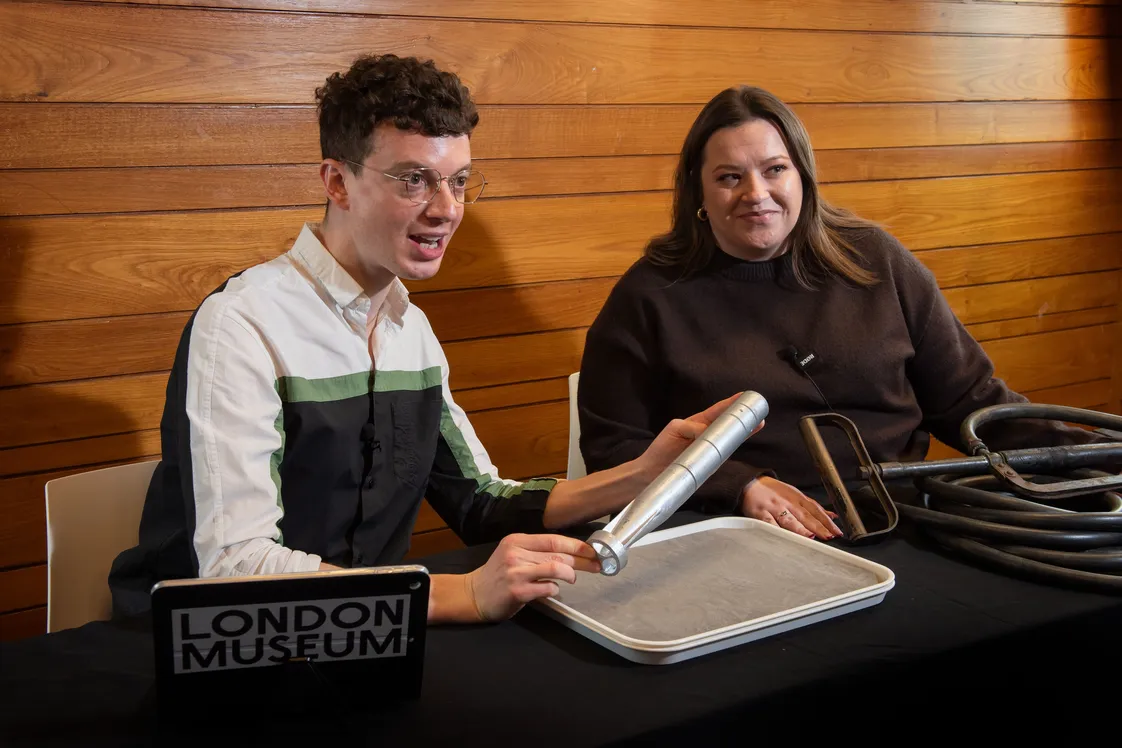
The live streams centre on two people presenting to camera, a curator who leads on subject knowledge, and a host who drives the momentum and energy of the session.
Structurally, the streams have four key areas. Pupils are led through a slideshow of activities and visuals, they get to see real museum objects handled on screen, they participate in challenges and group conversations and they have their questions answered by a curator.

A curator and host presenting prehistoric objects to camera.
Content is shaped by the national curriculum for England, as we know that the museum is a trusted source of information for key stage 1 and key stage 2 primary History topics.
The objects in our collections also play a key role in live stream content. Objects used have included a mammoth jawbone, a Second World War incendiary bomb and a Pudding Lane brick charred by the Great Fire of London. The Great Fire of London is by far our most popular live stream topic, both due to being taught nationwide and the unique geographic connection London Museum has to the event.
We like to play with a mixture of live and pre-recorded ‘as live’ video. Pre-recorded content includes gallery tours and participatory games, while live action moments feature activities such as ‘act this out’, ‘discuss with a partner’ or our ‘myth-buster challenges’.
Genuinely live content is of course essential, and this forms the majority of the stream. A highlight of this is the Q&A section, where the host asks the museum expert pupils’ questions. The opportunity for schools and pupils to hear their names read out and have experts answer their questions is something we frequently receive positive feedback on.
“Everyone was engaged in the learning, the pace was perfect, especially with the breaks and there was a lot of information shared in an appropriate way”
Teacher feedback collected after participating in a live stream
How do we measure the success of the live streams?
We regularly analyse the data collected through the programme, using this to understand and improve on the live streams’ content and technical set-up.
Through questions asked during the booking process, we've learnt which streams are most popular with different school year groups, and have shaped the style, content and complexity appropriately.
The Great Fire of London is most popular with years 1 and 2, whereas London’s Docklands in the Blitz is most popular with year 6. We therefore made the Great Fire live stream shorter than the Blitz stream, to account for younger attention spans.
Similarly, we’re learning what motivates teachers to book onto the streams. Topic and curriculum relevance accounted for 71% of booking motivations recorded from 2024/25. But bookings can also be a result of recommendations between teachers or accessibility reasons, which made up 12% of the same data set.
Evaluation has been a consistent aspect of the programme’s development. Finding effective ways to encourage teachers to complete evaluation is important to us, and we’ve found success in this area by offering a certificate of participation for their pupils.
We’ve learnt a lot from evaluation, with teachers telling us that they appreciate their pupils seeing museum spaces and objects and hearing from experts without having to leave the classroom. Above all, they say that they're interested in unique ways of engaging their pupils, who find it exciting to be part of a live, shared experience and to have their own questions answered. Despite developments in pupils’ relationships with technology outside the classroom, the live stream experience remains engaging.
Our live stream programme will continue to develop in response to evaluation and technical improvements, alongside changing expectations from viewers. It’s this ongoing growth which keeps teachers booking and classes engaged.
By Alex Noble, Learning AV Coordinator
-
 Online at your school
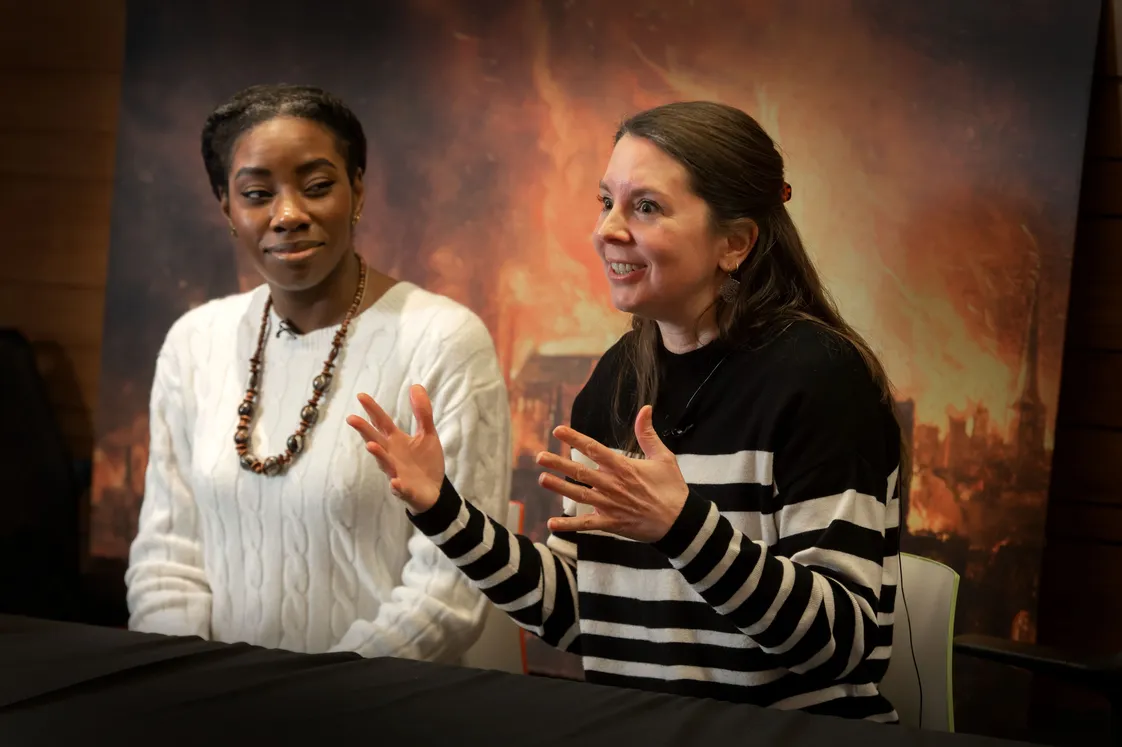
Live stream: The Great Fire of London
How did the Great Fire of London impact the lives of Londoners in 1666? Find out in this live stream delivered directly to your classroom
-
 Online at your school
Live stream: Prehistoric London
Find out what archaeology is and what it tells us about London’s past directly from your classroom
-
 Online at your school
Live stream: London's Docklands in the Blitz
Experience the realities of Londoners living through the Blitz directly from your classroom