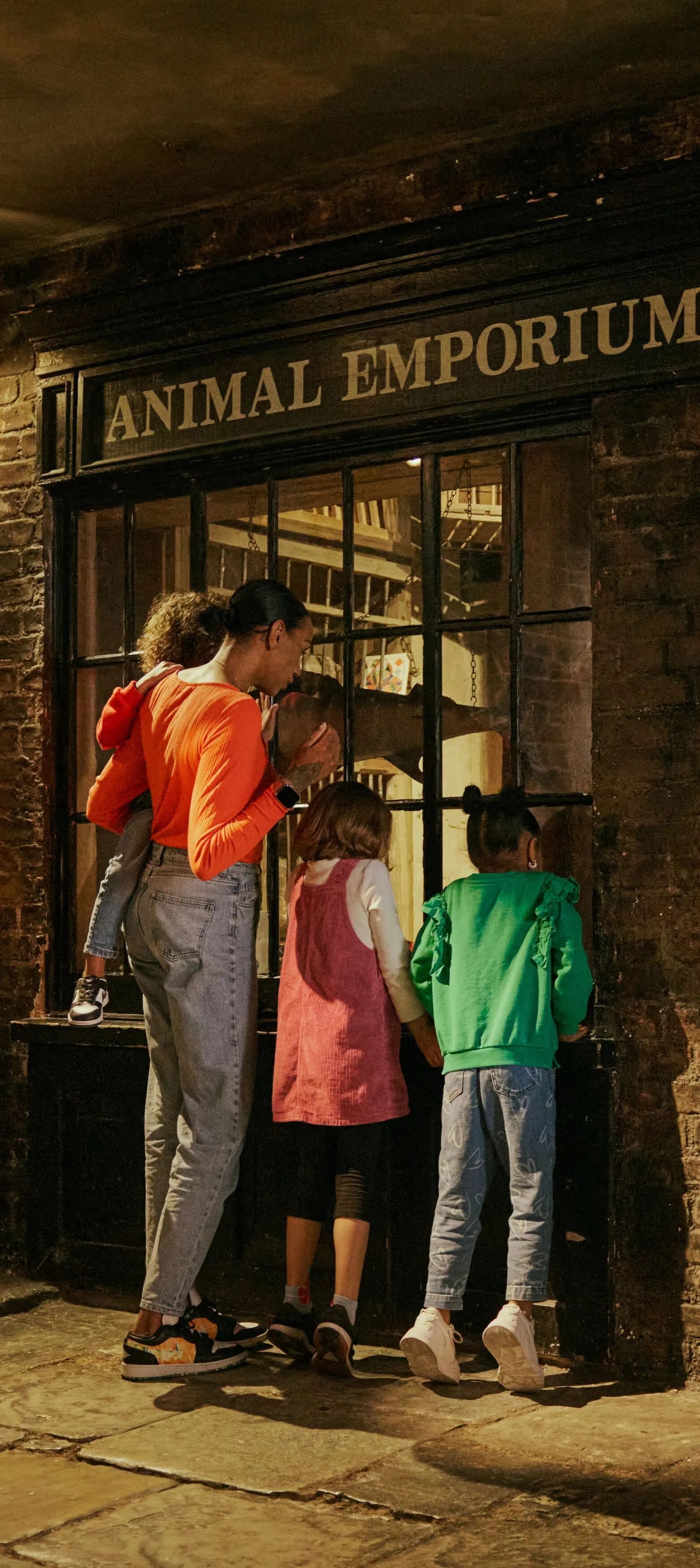

Compassion in London: Life on Buses
This research examines compassion on London buses, showing how lived experience shapes compassionate exchanges, with significant differences across disability, generation and gender.
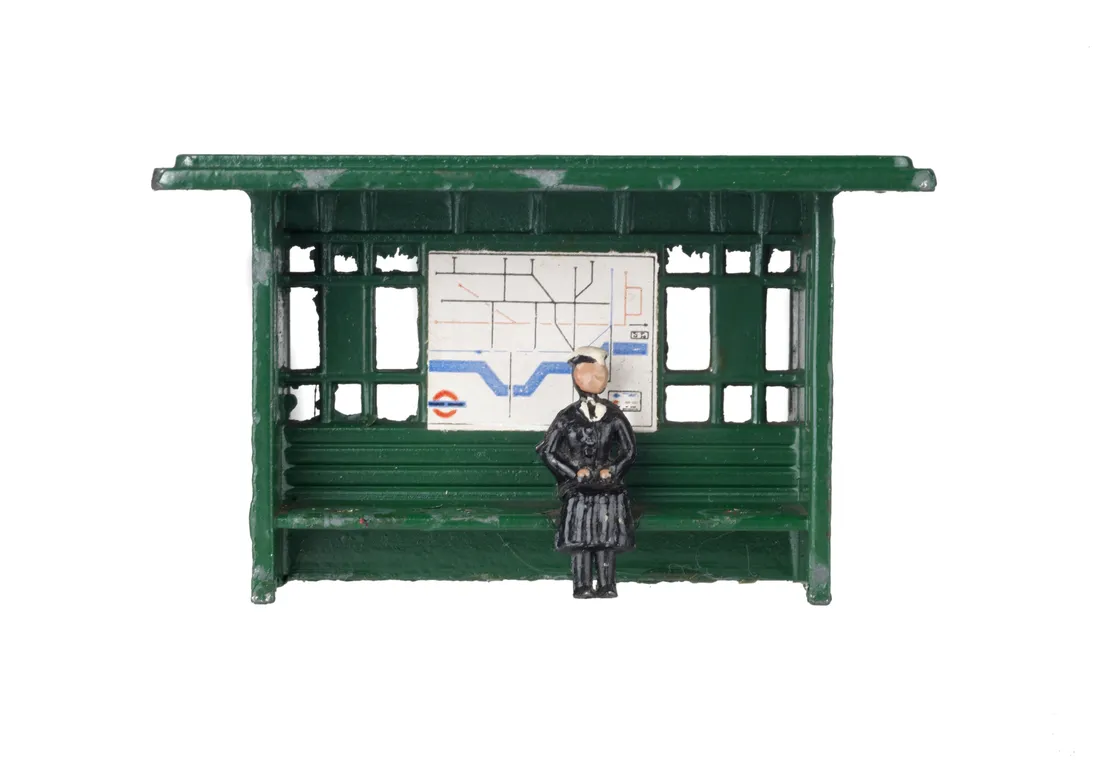
A miniature cast metal bus shelter from 1935–1948.
Duration: September–December 2024
Research associate: Bethan Mobey, Participatory Research Specialist
Community researchers: Mirza Hazira Begum (Community leader), Benna Braithwaite (Writer, poet and spoken word artist), Dana Moreno Perez (Design educator), Sistah Stella (CEO, Rastafari Movement UK Wellbeing)
Academic partners: Prof Frances Maratos (Chartered psychologist and Professor of Psychology and Affective Science, University of Derby), Adanna Uzoma (BSc Psychology, University of Derby)
“Small acts of compassion, a smile, a kind word, or respecting each other’s space can make a huge difference in how people experience public spaces”
Mirza Hazira Begum, Community Researcher
Urban life is often portrayed as marked by anonymity and self-interest, yet such characterisations fail to account for the complex realities of shared public spaces. ‘Compassion in London: Life on Buses’ is a project that challenges these narratives by examining how acts of compassion emerge in everyday interactions of Londoners on the move.
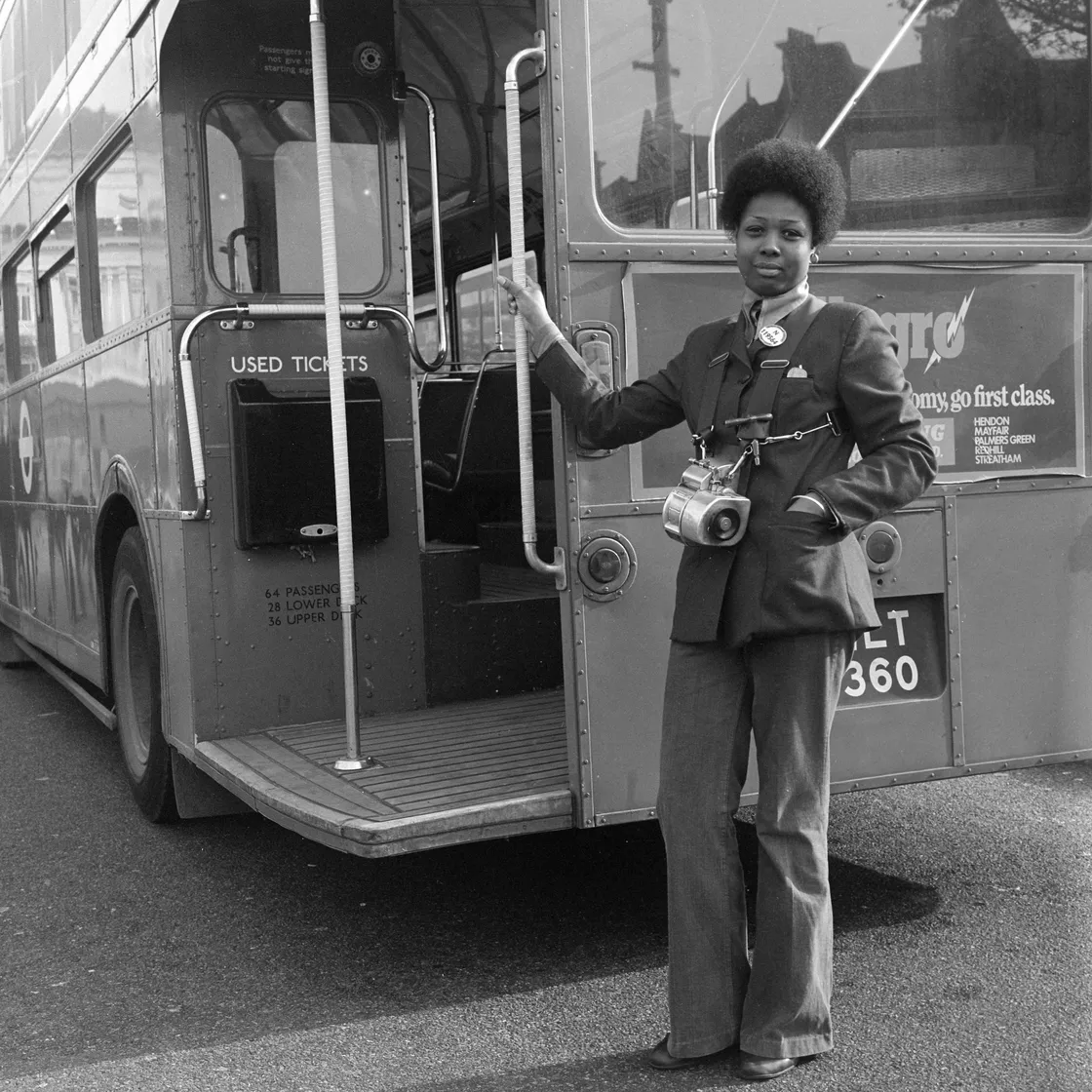
A female bus conductor pictured in March 1975.
London’s public transport system provides a compelling lens for exploring these dynamics. As a site of constant flux emblematic of the city’s diversity, yet often framed as impersonal, this project foregrounds the human connections that occur within these spaces.
Drawing on participatory methodologies, we employed new approaches to understand the city through inclusive, collaborative research with Londoners themselves.
This amplifies voices that are often marginalised in institutional research. It demonstrates the value of co-produced knowledge in challenging static interpretations of the city and embracing its dynamic, contested narratives.
What is compassion?
The journey began in February 2024 with two exploratory workshops to examine how compassion might manifest in contemporary London. The participants included activists, academics, artists, care workers and community leaders.
These sessions revealed compassion as inherently active rather than passive, requiring both empathy and action. Participants explored what compassion means, its opportunities and limitations, and how museums can research it.
More details on the methodology and creative techniques used in these sessions can be found in the report Co-producing Research with Londoners: Exploring Compassion, which you can download below.
Life on buses
These sessions generated research themes that informed a 2024–2025 museum-funded project examining Londoners’ interactions on buses.
A focused study was conducted between September and December 2024, which included workshops and surveys. Community researchers worked with the University of Derby's School of Psychology to examine how people with different life experiences encounter compassion on London buses.
These were the primary questions:
- How is compassion demonstrated on public transport?
- How can we use different mediums, eg, music, art, etc to talk about compassion?
- How this is an experience all Londoners share – except from the wealthy?
Using focus groups, observational recordings, and a survey, the research uncovered significant patterns in how compassion flows through the city.

The community researchers also co-developed a brief for an art commission, which resulted in a short experimental film called Careless by artist Bella Denise.
Denise says, “I chose to use a slow-looking frame to make the work, mostly because I want the viewer to feel peaceful for a moment. This style of filmmaking enables me to establish a more intimate relationship with the city… I take the confusing syncopated rhythms and juxtapositions around me and remix them into slow, hypnotic dreamscapes. A pursuit of stillness amidst the madness is at the centre of my work.”
A Festival of Compassion: UCL collaboration
The project also generated a collaboration with the MA Art Education, Culture and Practice, MA Museums and Galleries in Education, and MA Cultural Heritage Studies programmes at University College London (UCL).
Students on the Curation and Education module engaged with the provocations raised at the initial ideas-generation sessions, developing their own creative and critical responses to researching compassion in London.
Their work culminated in ‘A Murmuration III: A Festival of Compassion’ at Willesden Green library and gallery in Brent (March–April 2025). Here, findings were explored through five curated exhibitions, public programming, workshops and screenings. This public-facing exhibition further demonstrated how art, visual and material-based inquiry can translate research insights into forms that encourage reflection, dialogue and emotional engagement beyond specialist audiences.
What we found
Findings reveal that lived experience often shapes compassionate behaviour. Disabled Londoners proved more likely to offer help across every measure. Parents showed more sensitivity to the challenges of travelling with small children. Generational divides emerged, with younger Londoners valuing personal space and safety differently than older generations.
The research found that gender played a role in giving and receiving compassion, whether it was to give up a seat or resolve conflicts. Finally, it was felt that Londoners look at small acts of compassion as a way to feel connected with one another.
Public transport, especially buses, are one of the few places where people from all walks of life cross paths in London. This research shows how compassion shapes Londoners’ identity, but tensions complicate how it’s given and received.
Download findings from the exploratory workshops
PDF: 6.8 MB
This paper documents workshops exploring compassion in London, outlining the process that led to undertaking research on London’s public transport.
More in projects
-

Sugar and its Legacies
How has sugar shaped London through slavery, industrialisation and its impact on health?
-
Finding Home in Football
How do London’s varied football spaces empower communities to forge a sense of ‘home’ in the city?
-

We are the Youth of Today
What does life in London mean for Generation Z?
-

Museums, Class & the Pandemic
Documenting the pandemic’s disproportionate impact on low-paid workers