
Spital Square burials
The medieval burials excavated from Norton Folgate and Spital Square were found during four excavations in the 1980s. These took place within the precinct of the former Augustian priory and hospital of St Mary Spital.
In the 1980s, several excavations took place within the precinct of the former Augustinian priory and hospital of St Mary Spital, which had been the largest hospital in medieval England.
Here, information about 126 human remains from four of those excavations (NRF88, NRT85, SPQ88, SSQ88) are presented. These excavations took place at Norton Folgate and Spital Square, and have been published in Thomas et al (1997).
SPQ88: A total of 15 individuals were recovered from the first phase of the infirmary hall/chapel and dated between 1280 and 1320.
SSQ88: Nine skeletons were recovered from the priory, and dated to 1197–1235. Although 10 graves were identified during the excavation, one had only a small number of disarticulated bones, suggesting a prior exhumation.
NRF88 and NRT85: A total of 102 human remains were recovered from the hospital cemetery, and dated to 1235–1280. Of them, 54 individuals were from the north section (NRT85), and 45 from the south (NRF88).
Methods
Non-metrics and dental measurements were not recorded for subadults on this site.
Preservation
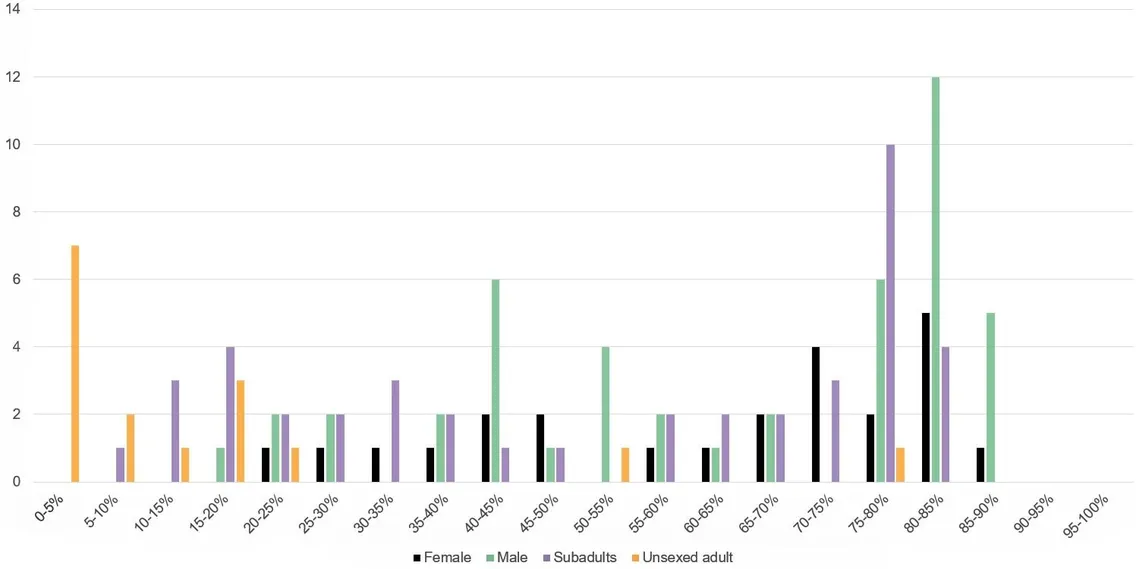
Overall, the quality of the bone was good, and the majority of individuals were more than 50% complete.
| Preservation | N= | % |
|---|---|---|
Good |
123 |
99.2 |
Medium |
1 |
0.8 |
Poor |
0 |
0 |
Figure 1: Skeletal completeness (N=384)
Demography
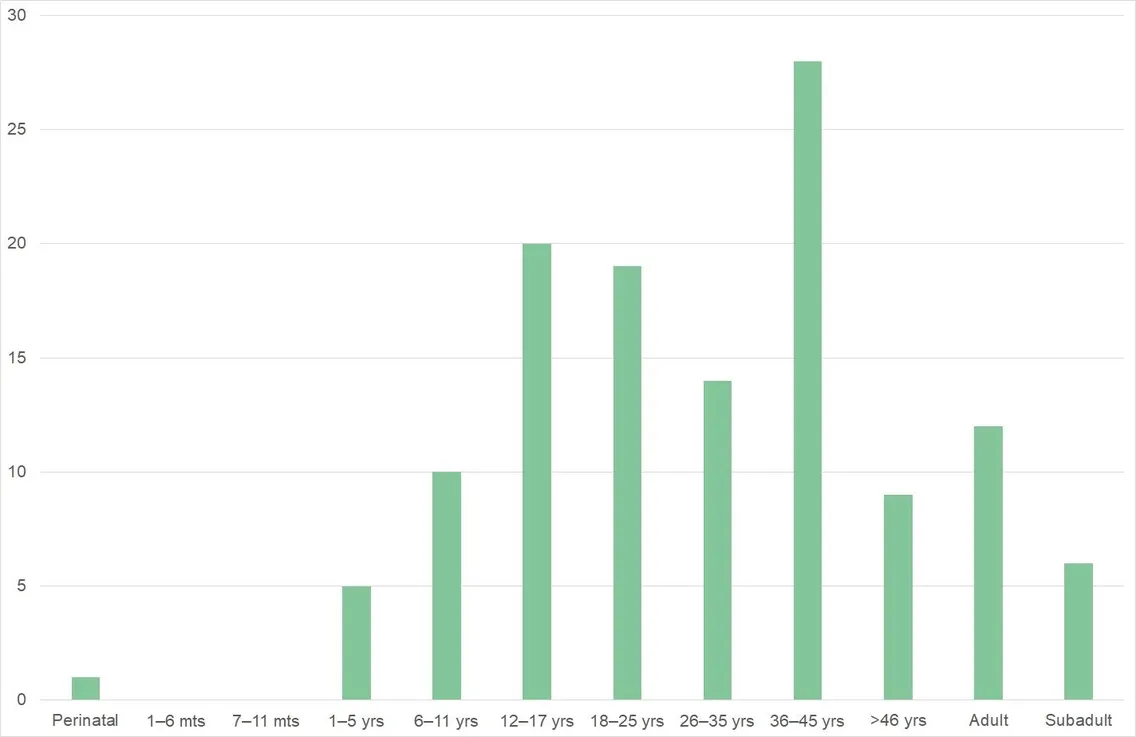
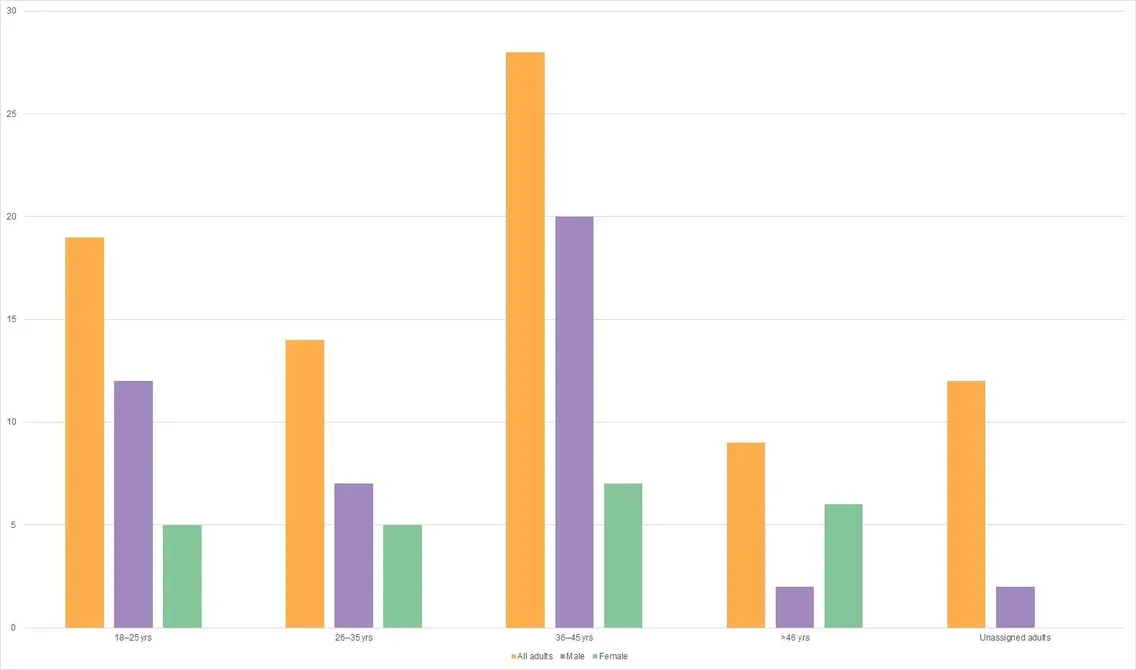
A total of 124 individuals were analysed, comprising 43 males, 23 females and 42 subadults. Of all adults, the single largest group was the 36–45-year age category, accounting for 67% of the adult population. The combined male-to-female ratio for the site was almost 2:1, but was higher in the 18–25 (8:1) and 36–45 (9:1) categories. However, females outnumbered the males by 3:1 in the mature adult demographic.
There was an unusually high representation of subadults recovered, accounting for approximately one-third of the burials. The majority died between the ages of 12 and 17 years. Approximately 24% were aged between 6 and 11 at the time of death.
Figure 2: Age distribution (N=124)
| Age | N= | % |
|---|---|---|
Perinatal |
1 |
0.8 |
1–6 months |
0 |
0.0 |
7–11 months |
0 |
0.0 |
1–5 years |
5 |
4.0 |
6–11 years |
10 |
8.1 |
12–17 years |
20 |
16.1 |
18–25 years |
19 |
15.3 |
26–35 years |
14 |
11.3 |
36–45 years |
28 |
22.6 |
>46 years |
9 |
7.3 |
Adult |
12 |
9.7 |
Subadult |
6 |
4.8 |
Figure 3: Adult male and female distribution (N=82)
| All adults | % | Male | % | Female | % | |
|---|---|---|---|---|---|---|
18–25 years |
19 |
23.2 |
12 |
27.9 |
5 |
21.7 |
26–35 years |
14 |
17.1 |
7 |
16.3 |
5 |
21.7 |
36–45 years |
28 |
34.1 |
20 |
46.5 |
7 |
30.4 |
>46 years |
9 |
11.0 |
2 |
4.7 |
6 |
26.1 |
Unsexed adults |
12 |
14.6 |
2 |
4.7 |
0 |
0.0 |
Total |
82 |
43 |
23 |
Stature
Stature, calculated using complete femora, indicated that both males and females were of average height when compared to individuals from other British medieval populations (Roberts and Cox, 2003).
| Sex | Avg_stat | SD | VAR | MIN | MAX | N |
|---|---|---|---|---|---|---|
Female |
161.1 |
5.8 |
34 |
159.0 |
170.4 |
10 |
Male |
169.5 |
4.8 |
23.3 |
161.1 |
178.7 |
20 |
Pathology
Of the adult population, 19.5% suffered some form of trauma and although more individual cases were recorded among males, females had a higher prevalence of healed fractures. 17% of the adult population exhibited some form of infection, including 1 case of tuberculosis, while 14% of subadults had non-specific infections.
Of further interest are a case of Osgood-Shlatter's disease and a probable case of Kienböck’s disease.
Vertebral pathology
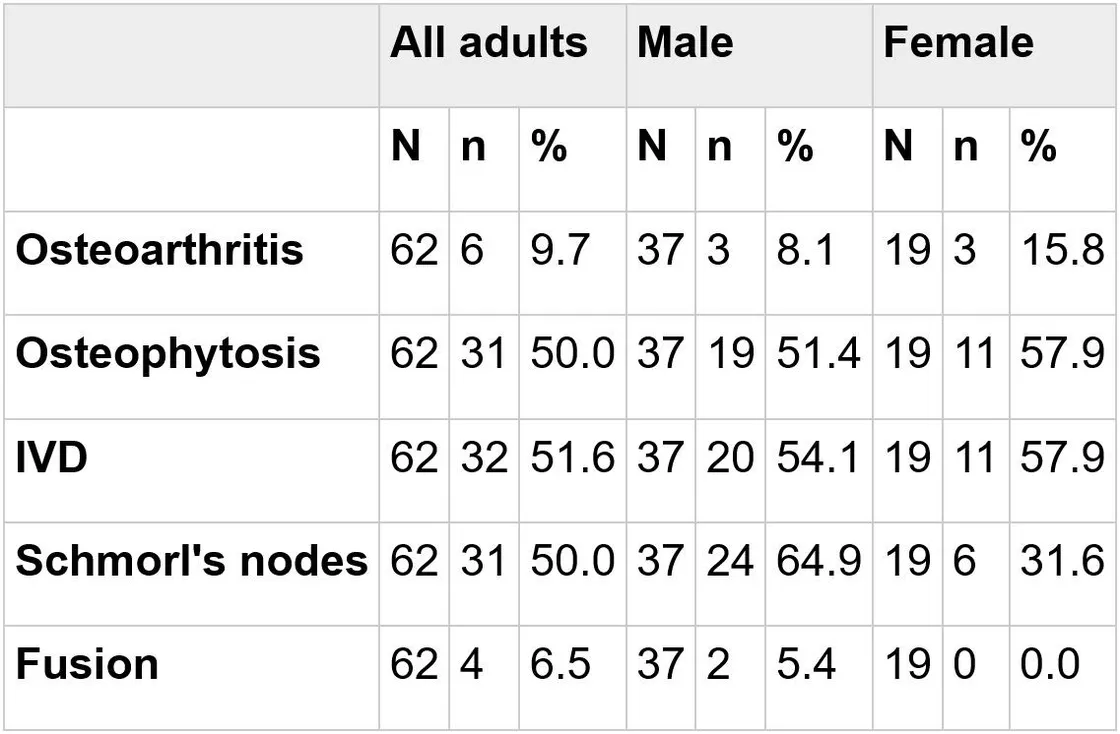
Vertebral pathology was consistently higher among females except in the case of Schmorl’s nodes, of which there were almost double the prevalence in males.
Table 5: Distribution of vertebral pathology by sex in adults with one or more vertebrae present
Dental pathology
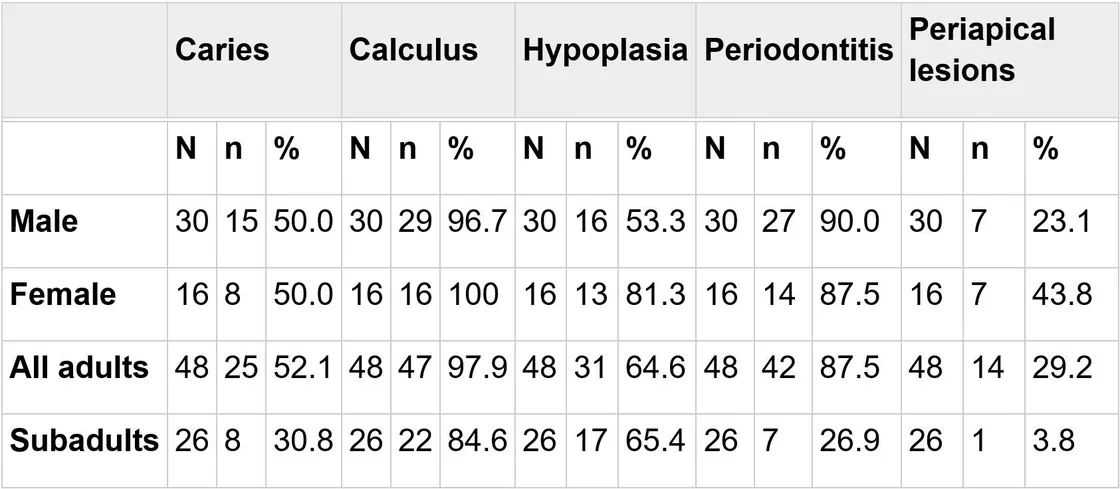
Dental analysis revealed a high prevalence of calculus across the population, and high levels of caries, enamel hypoplasia and periodontal disease. A particularly high prevalence of hypoplasia was recorded among the females of the population.
Table 6: Distribution of dental pathology in subadults and adults
Discussion
Medieval Spital Square represents a stratified population from a medieval Augustinian priory and hospital. This assemblage provides an ideal sample for comparative study with other British medieval populations and populations from continental hospitals of a similar period.
Downloadable documents
XLSX: 19.2 KB
This downloadable MS Excel file contains photographs of the human remains excavated at the Spital Square site.
XLSX: 11.0 KB
This downloadable MS Excel file contains all data of the human remains excavated at the Spital Square site.
Site reference
Thomas, C, Sloane, B and Phillpotts, C (eds). 1997. Excavations at the Priory and Hospital of St Mary Spital, London. London: MoLAS Monograph 1.
Site location
1-3 Norton Folgate, E1
Site code: NRT85
4-12 Norton Folgate, E1
Site code: NRF88
38 Spital Square, E1
Site code: SSQ88
4 Spital Square, E1
Site code: SPQ88
Last update: 2025
More medieval sites
-

Dominican Friary: Carter Lane
During two phases of excavations – in 1987 and 1988 – a substantial part of the medieval cemetery of London Blackfriars was revealed
-
Guildhall Art Gallery, Guildhall Yard cemetery
What the analysis of the human remains of 68 individuals tells us about health concerns of medieval Londoners
-

St Benet Sherehog cemetery
Excavations found 270 burials from an 11th-century church destroyed in Great Fire of London
-
 From our experts
Following the Roman princess of Spitalfields
Sr Curator of Archaeology, Dr Rebecca Redfern’s interest in the intriguing Spitalfields Princess spans over two decades
-
 London Places
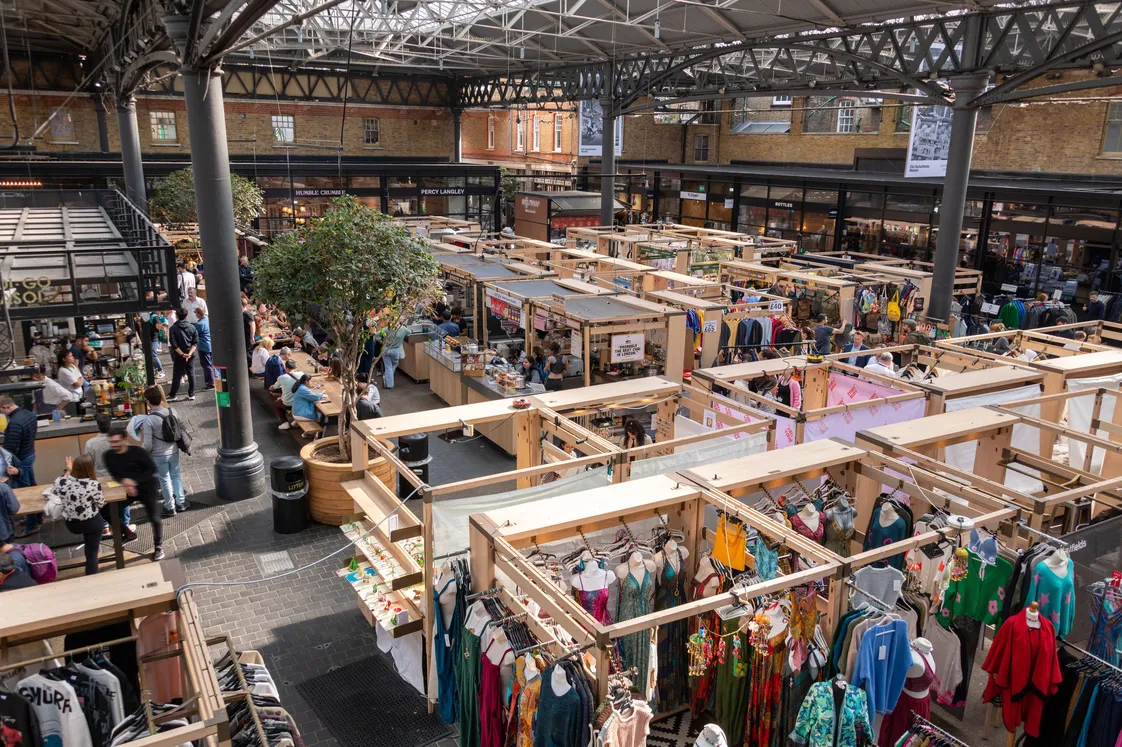
Spitalfields Market: 400 years of feeding London
A former fruit and veg trading hub in the heart of the East End
-
 Collections
London’s ‘tiniest’ dragon & medieval fashion laws
What does a tiny medieval dragon belt-mount say about London’s fashion, social status and laws
-
 London Places
Lundenwic: The other medieval London
When Roman London was abandoned, a new settlement sprang up beyond the walls