
Medieval London cemeteries
A summary of information held at London Museum from medieval burial sites dating from about 1066 to 1547.
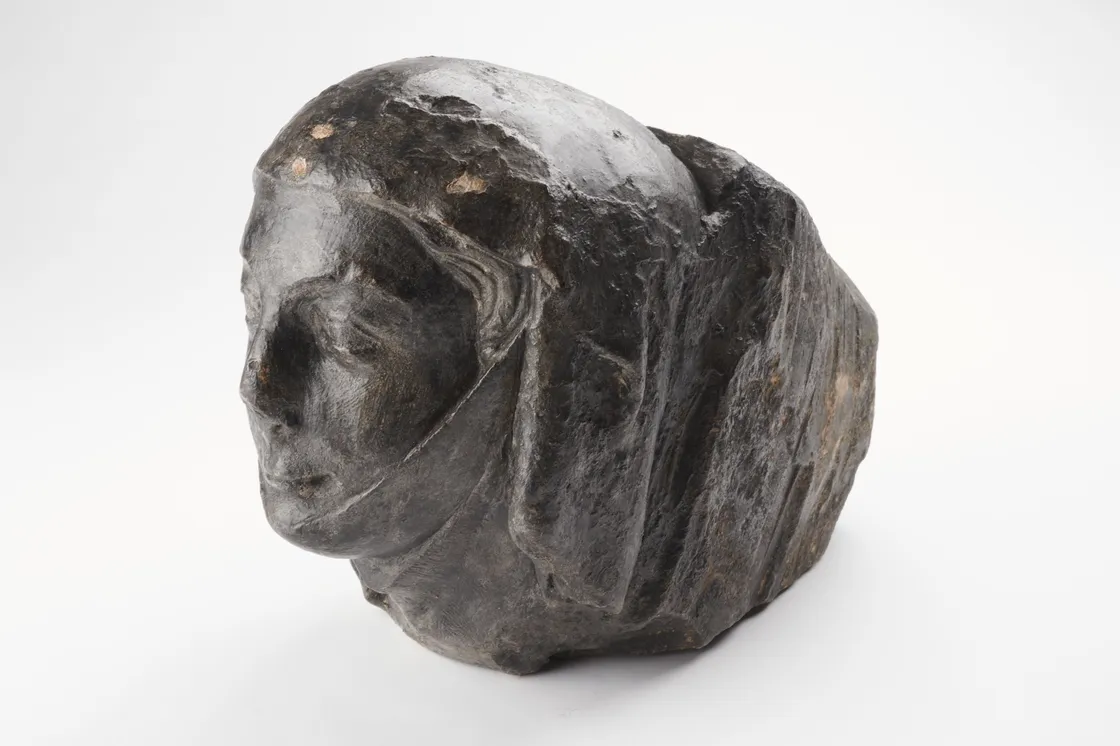
Corbel of a nun's head.
In Britain, the medieval period covers the 11th to 16th centuries (about 1066–1547), ie, the Norman conquest until the Reformation. It was a time of immense change, with increasing population, the re-introduction of urban settlements, and multiple episodes of climate change which caused famines. It also saw many disease pandemics, including the Great Pestilence (1348–1350).
Medieval burial practices
At this time, Christian, Muslim and Jewish communities lived in Britain. And, so, a diverse range of burials practices have been found or are recorded in the primary sources.
In London, only Christian burial grounds have been excavated, with individuals interred in single burials, usually without any grave goods. During times of famine and pandemic, mass burials have been found, such as at St Mary Spital.
Cemeteries dated to the medieval period
- Dominican Friary: Carter Lane (Site code: PIC87)
- Guildhall Art Gallery, Guildhall Yard Cemetery (Site code: GYE92)
- Spital Square (Site codes: NRF88, NRT85, SPQ88, SSQ88)
- St Benet Sherehog cemetery (Site code: ONE94)
Sites from other time periods
-

Prehistoric London human remains
Prehistoric human remains dating back to the Neolithic have been found in London
-

Roman London cemeteries
Human remains from the Roman period excavated from the City and Greater London area
-

Early medieval London cemeteries
Excavation in London have revealed early medieval burials
-

Post-medieval London cemeteries
Human skeletal remains from burial sites dating from 1547 to 1852