The Suffragettes’ window-smashing campaign of 1912
The window-smashing campaign saw hundreds of business premises damaged in a coordinated attack. It marked a new phase of militancy in the Suffragettes’ fight for women’s right to vote.
West End
March 1912
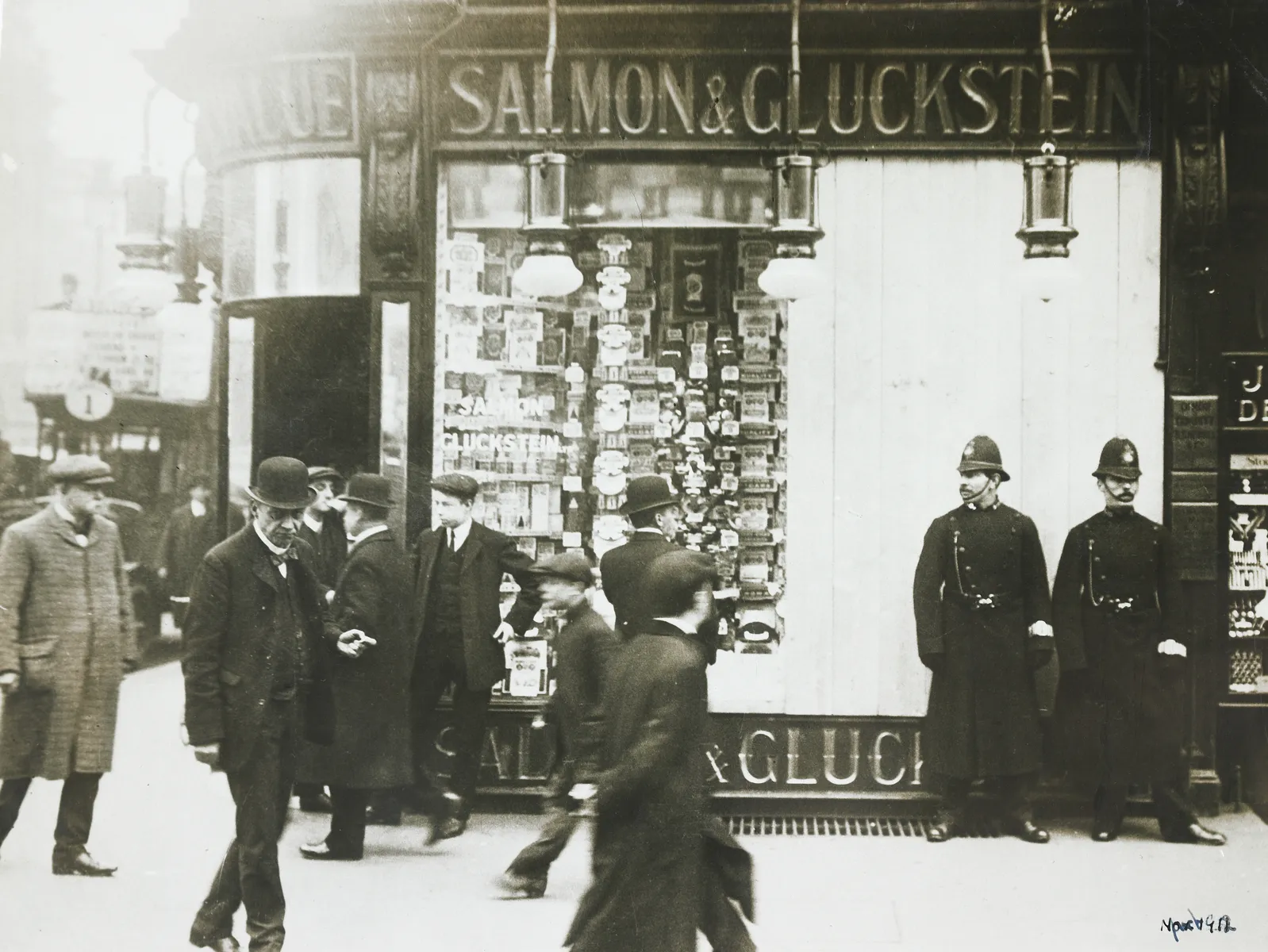
Broken windows at tobacconists’ Salmon & Gluckstein.
“Better broken windows than broken promises”
On 30 June 1908, activists Edith New and Mary Leigh broke windows at 10 Downing Street, the official residence of the British prime minister. These were the first windows smashed in the name of the Suffragette cause. They weren’t the last.
In November 1911, window smashing was officially adopted as a campaign tactic by Suffragette leaders Emmeline and Christabel Pankhurst. “Better broken windows than broken promises” was the message.
In March 1912, there was an orchestrated attack on hundreds of windows of business premises across the West End. Over 200 Suffragettes were arrested for damaging property, and many of them were sent to Holloway Prison in Islington.
For some Suffragettes, this was the beginning of more militant action in their quest to win women the vote. For many, it would be the first and last time they went to prison for the cause.
“The message of the broken pane is that women are determined that the lives of their sisters shall no longer be broken”
Christabel Pankhurst, Broken Windows, 1912
The window-smashing campaign of 1912
The Women’s Social and Political Union (WSPU) adopted window smashing as an official campaign tactic in November 1911.
In March 1912, over 200 women took part in a coordinated window-smashing effort across the West End. They hit windows at over 270 premises, including Harrods department store, causing over £6,660 worth of damage, equivalent to over £670,000 today.
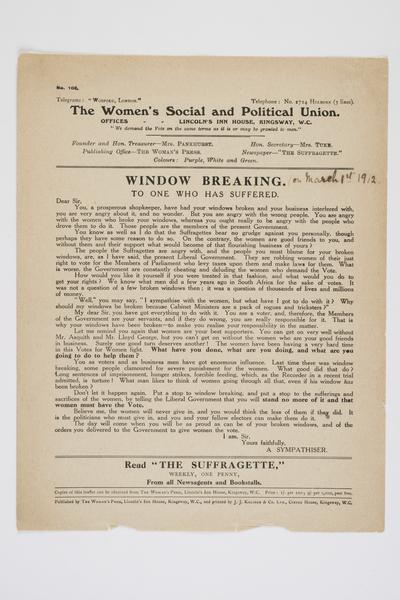
The idea was to cause such disruption to businesses that their owners would pressure the government to grant women the vote. As Christabel Pankhurst wrote in a 1912 WSPU leaflet: “The message of the broken pane is that women are determined that the lives of their sisters shall no longer be broken.”
Hundreds of arrests were made, with women receiving prison sentences ranging from seven days to six months. Their sentences were determined by the financial value of the damage they caused.
Hammers and coshes
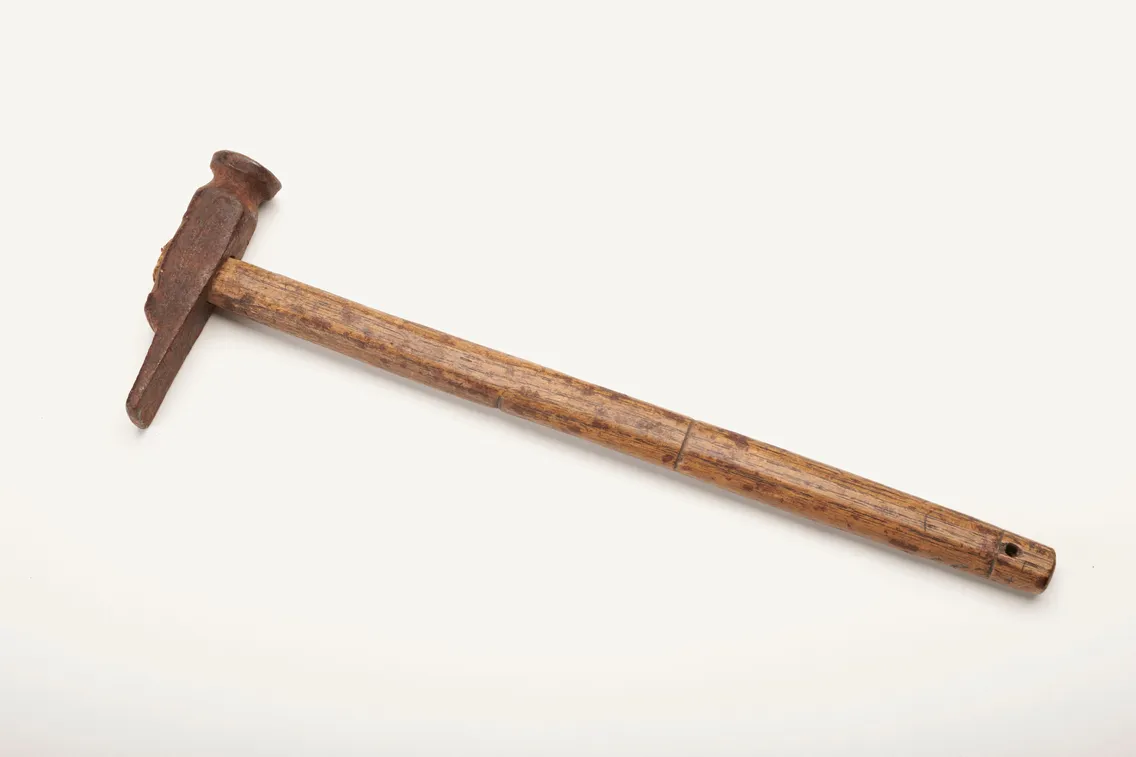
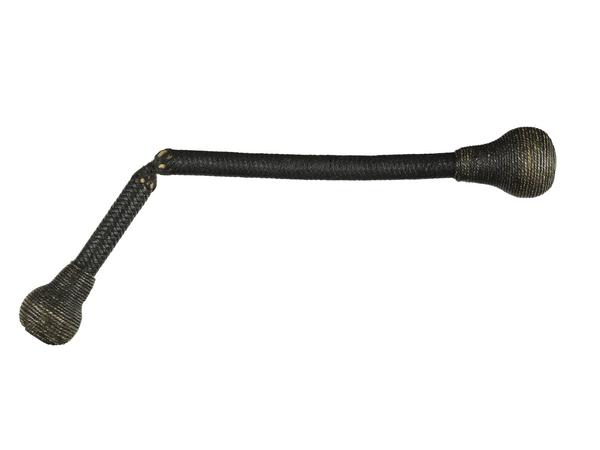
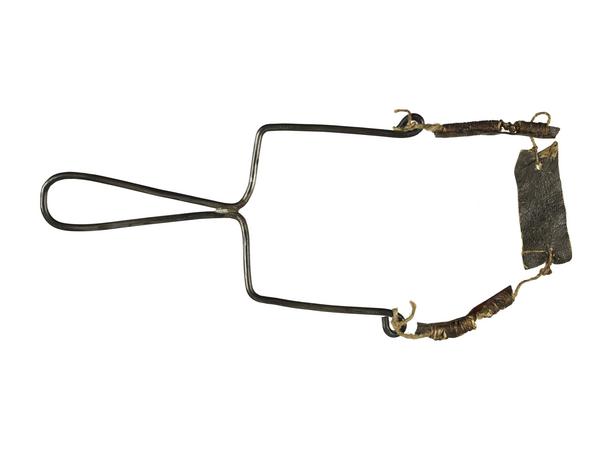
Catapults, coshes – short sticks of wood wrapped in leather – and toffee hammers were used to smash the windows. These small hammers, originally designed to break up hard slabs of confectionery, were readily available and easy to hide in clothing.
Many Suffragettes who took part in the window-smashing campaign commemorated their action by wearing toffee hammer brooches.
-

A toffee hammer used by Suffragettes to smash windows.
-
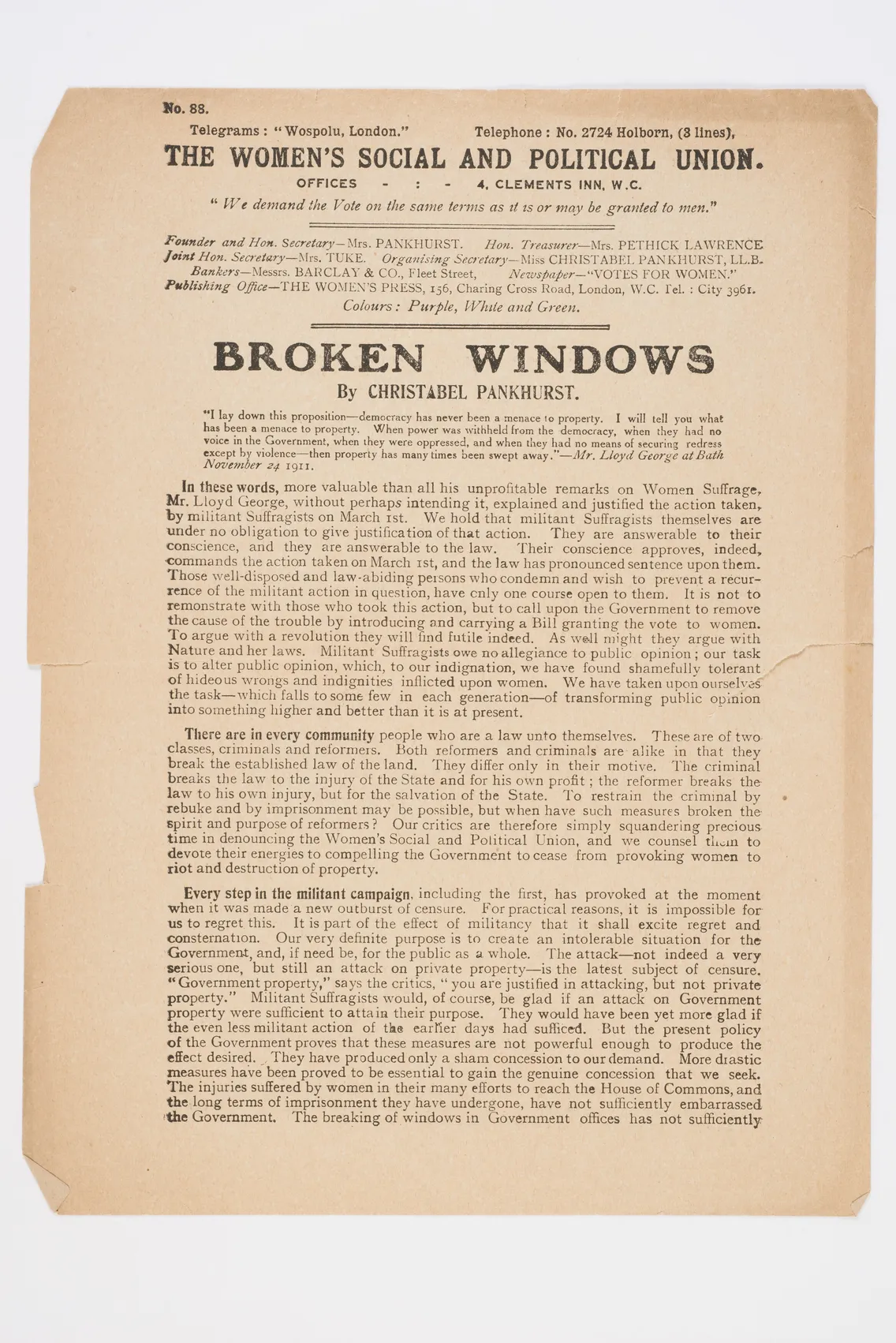
Christabel Pankhurst justifies the window-smashing in this pamphlet.
-
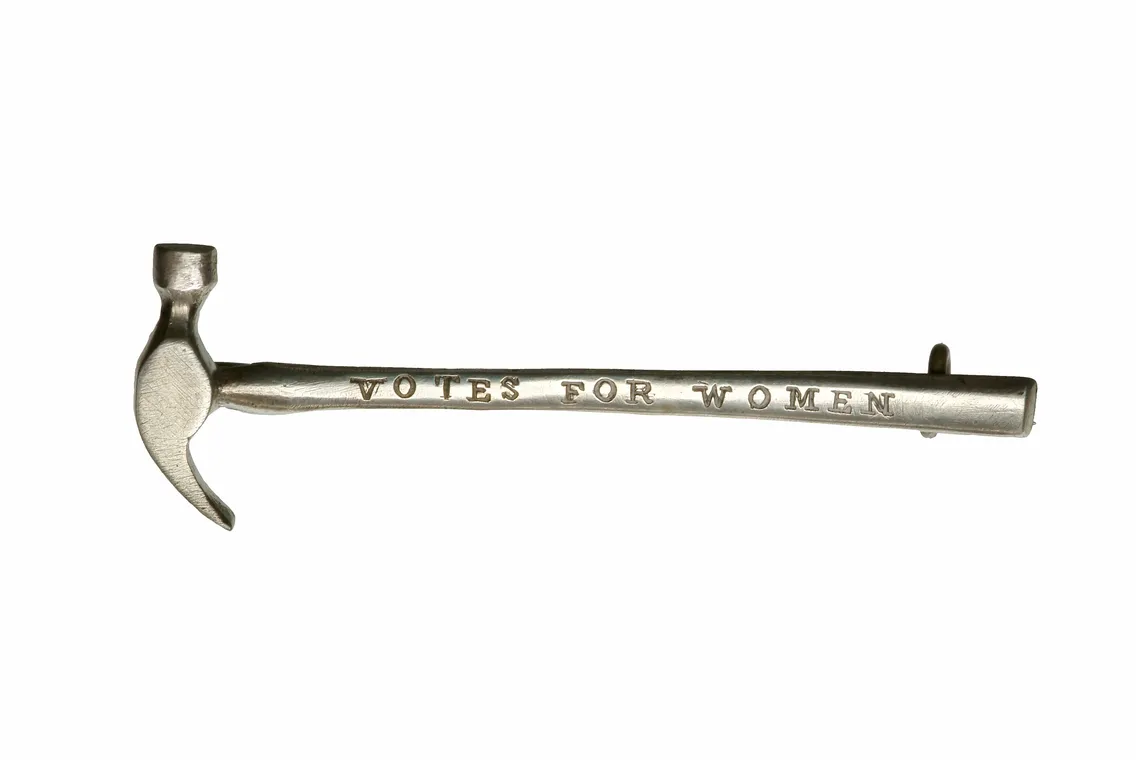
Toffee hammer-shaped brooches like this were worn by Suffragettes to celebrate their militancy.
Who were the window-smashing women?
Suffragette supporters were drawn to the cause from a wide range of backgrounds. Some were young and working class, and others were married with children. For many, taking direct militant action that risked arrest, such as window smashing, was a potentially frightening experience. There were also differences of opinion on how extreme these tactics should be.
Some of the women who took part in the window-smashing campaign committed more acts of criminal damage. Olive Wharry was a Suffragette who was imprisoned for smashing windows. She had never broken the law before, but said at her trial that it was the duty of every ‘self-respecting’ woman to take part in the protests. She went on to set fire to the tea pavilion in Kew Gardens in 1913, and was sent to prison again.
For many women, window smashing was their only instance of militant action, and they didn’t risk any further action that could lead to imprisonment.
-
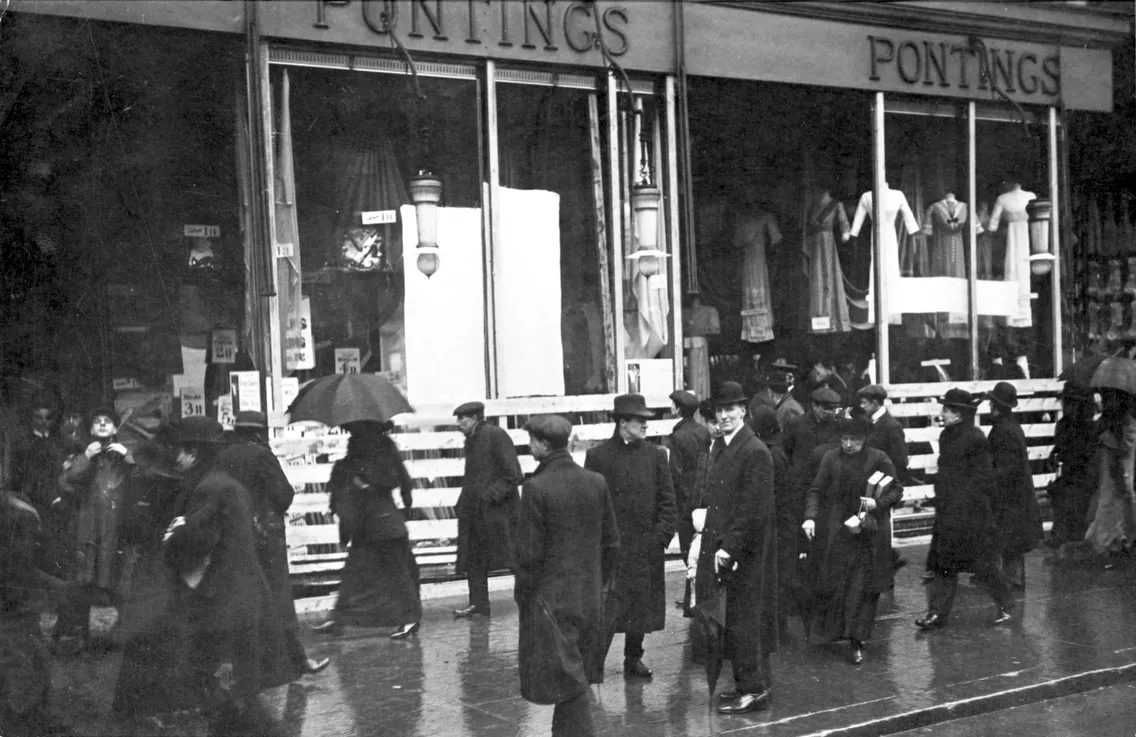
Broken windows at Pontings on Kensington High Street.
-
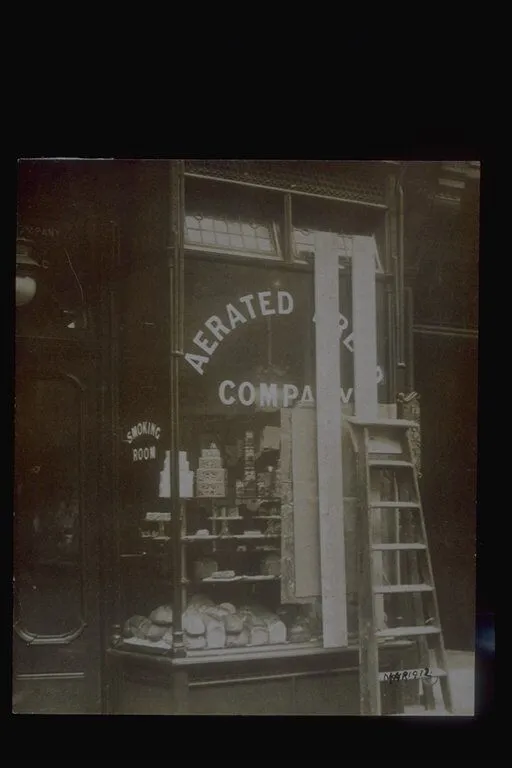
Smashed windows at the Aerated Bread Company.
-
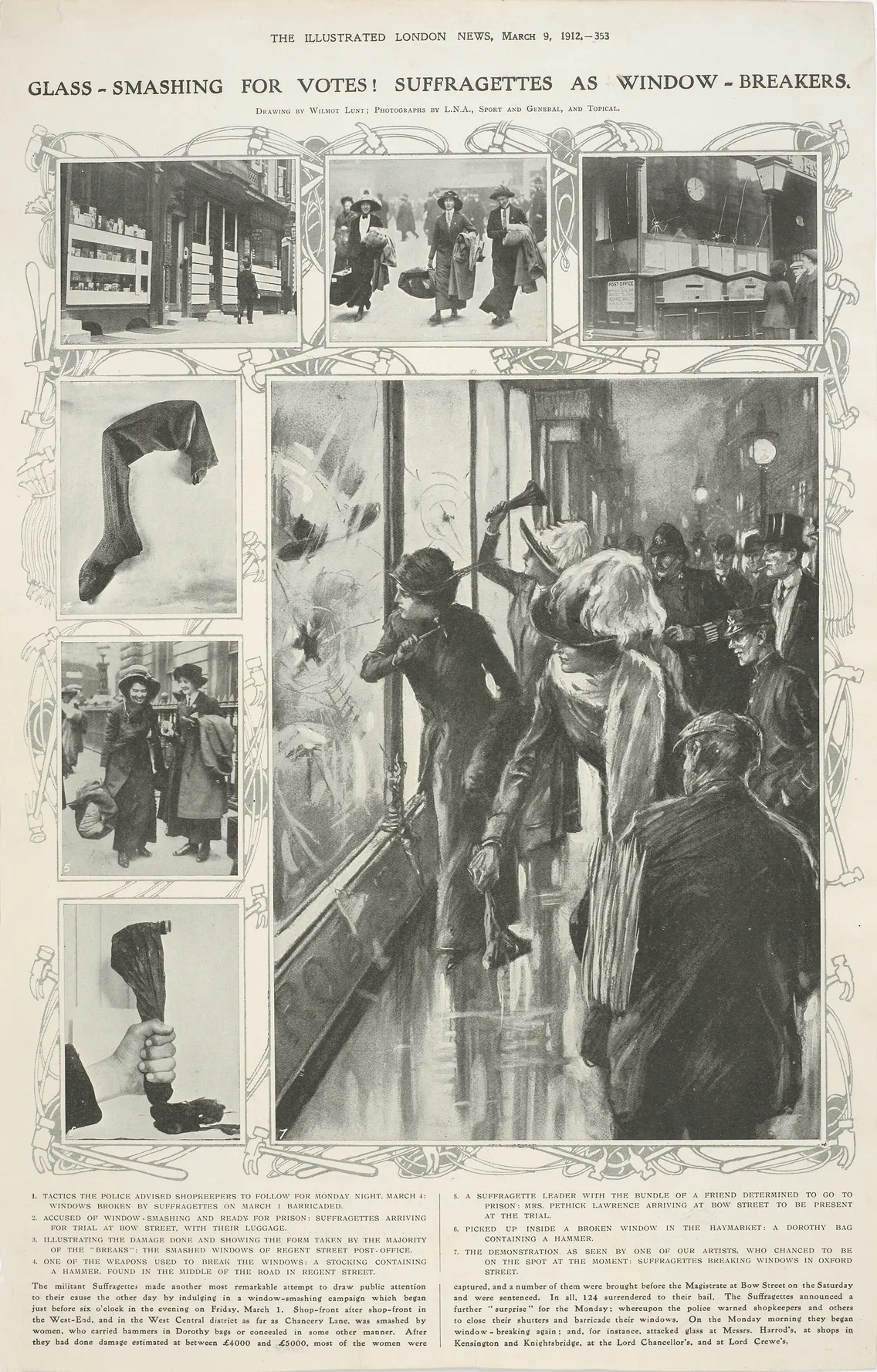
An Illustrated London News article depicting the window-smashing campaign.
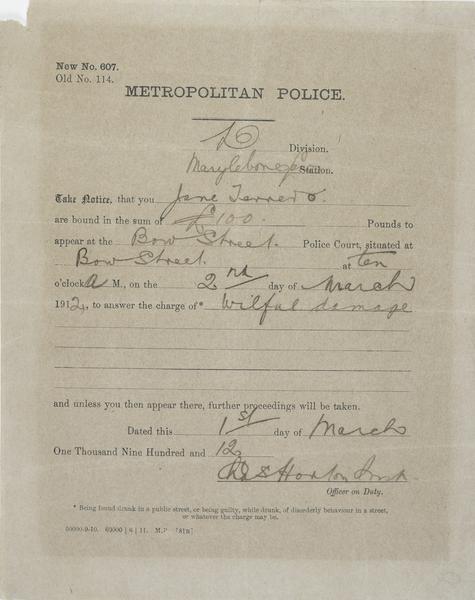
Alice Farmer, Winefride Rix and Janie Terrero
Alice Farmer, Winefride Rix and Janie Terrero were three Suffragettes who joined in the window-smashing campaign and were only imprisoned once. We have objects belonging to them in our collection.
There’s a hammer and glove used by Alice Farmer to break windows in Piccadilly. She was sentenced to four months’ imprisonment, which she served at Winson Green in Birmingham due to overcrowding at Holloway.
She joined the Suffragette prisoner hunger strike protest against not being sentenced as political prisoners. While being subjected to the government’s policy of force-feeding hunger-striking prisoners, the tube used for this brutal procedure was mistakenly inserted into her lungs. She was violently sick and was found to have developed pneumonia and chest pains after being released.
Winefride Rix, who was married and had a 12-year-old daughter, was sent to Holloway for two months for smashing a window at the War Office in Whitehall. She made a calendar out of a card label, originally attached to a box of apples sent by her husband, on which she crossed off each day of her sentence.
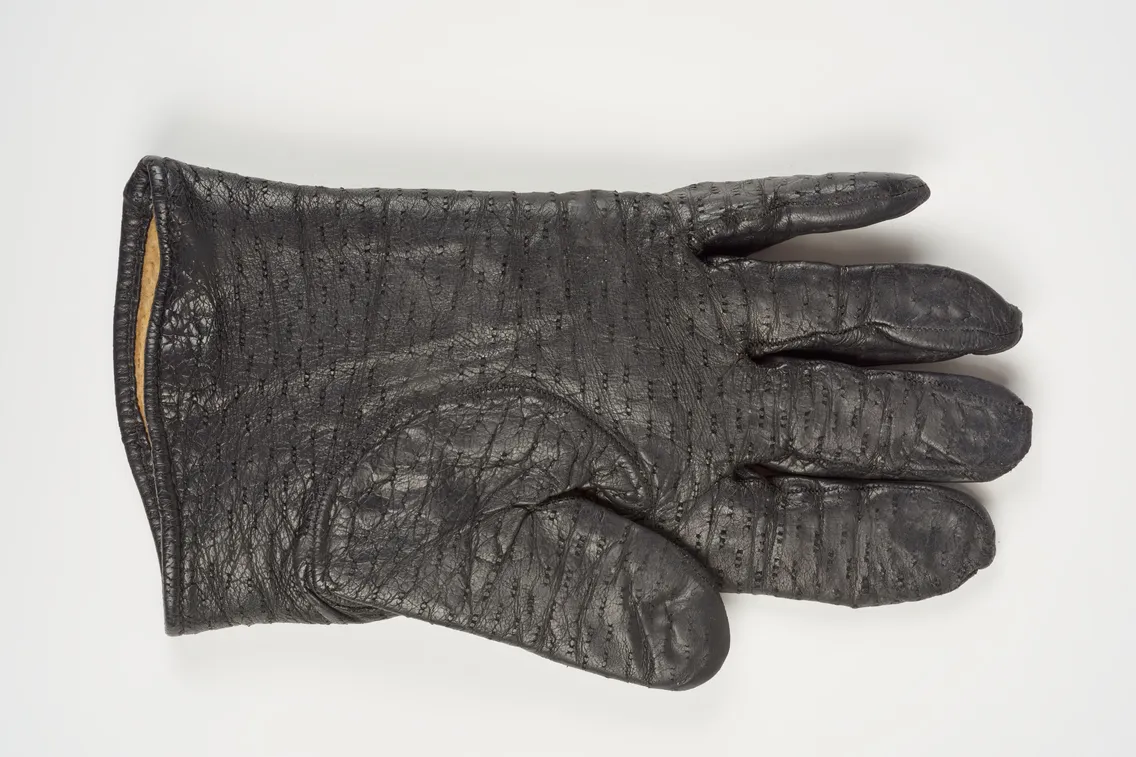
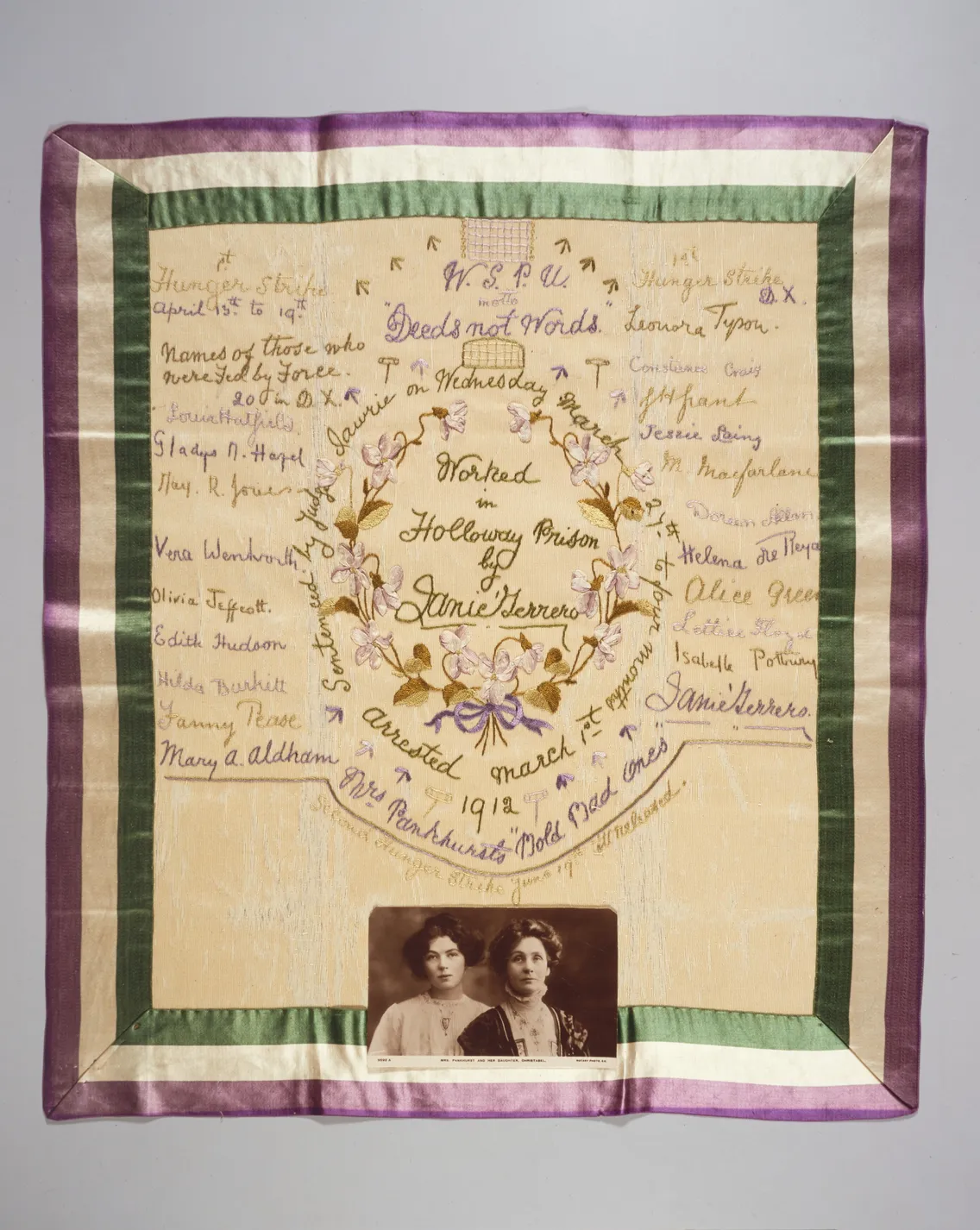
Janie Terrero was originally a member of the National Union of Women’s Suffrage Societies (NUWSS), the peaceful suffrage organisation led by Millicent Fawcett. She joined the WSPU in 1908, established a branch in Pinner, a suburb in Harrow, in 1910 and took part in the window-smashing campaign in 1912.
During her four-month sentence at Holloway, she embroidered a silk panel featuring the signatures of 20 Suffragettes who went on hunger strike.
After her release, Terrero became disillusioned with the leadership style of Emmeline and Christabel Pankhurst and stopped taking an active role in the militant campaign.
What did window smashing achieve?
Hugely disruptive and destructive tactics, such as mass window smashing, shocked society. At a time when women took little role in public life, this ‘extreme’ action encouraged cartoonists and publishers to mock Suffragettes as ‘unwomanly’.
The negative coverage didn’t stop them, though. The Suffragettes escalated their campaign by committing arson, attacking public artworks and bombing property.
Militant action was put on hold at the outbreak of the First World War (1914–1918), and the Suffragettes supported the war effort. While partial female suffrage was achieved in 1918, women only obtained full voting rights in 1928. The debate continues as to whether the militant tactics of the WSPU benefitted or hindered the votes for women cause.
Tags
-
-
-
Printed Ephemera
 Printed Ephemera
Window Breaking To One who has suffered (leaflet)
Women's Social and Political Union
1912
-
-
 Rights & Activism
Emmeline Pankhurst: Suffragette icon
Pankurst’s leadership of the militant votes-for-women campaign made her a feminist hero
-
-
 Politics & Society
Why did Suffragettes go on hunger strike?
Imprisoned for militant action, some Suffragettes went to extreme lengths to continue their protest
-
 Rights & Activism
Christabel Pankhurst: Suffragette leader
An inspiring leader whose radical tactics intensified women’s fight for the vote
-
 Rights & Activism
How Black Friday changed the Suffragette struggle
A day of aggression in the battle for women’s right to vote