Peek inside the prestigious Sotheby’s auction house
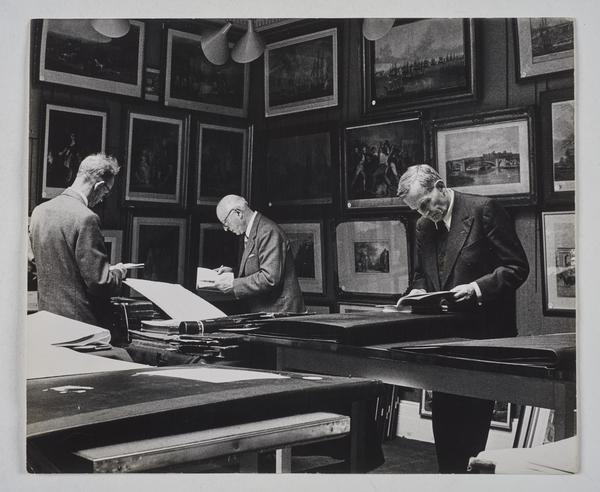
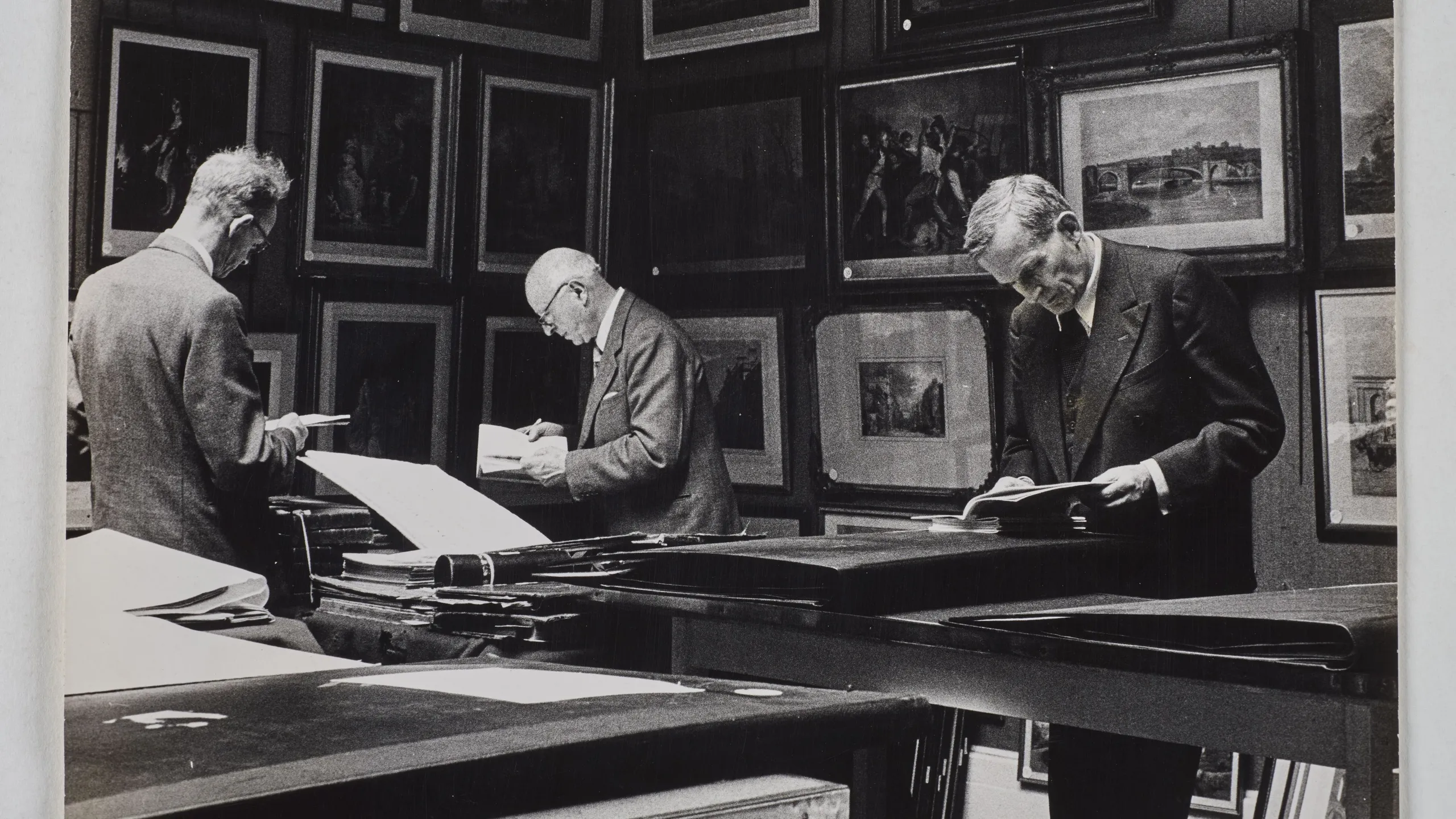
Sotheby’s was set up in Westminster in 1744, and until the 1900s, was known as an auctioneer of books and manuscripts. Over the 20th century, it increasingly focused on selling fine art – particularly big-name pieces at blockbuster prices. Henry Grant visited the New Bond Street auction house around the time of this transformation, photographing the inner workings of this mysterious luxury business.
New Bond Street, Westminster
1962
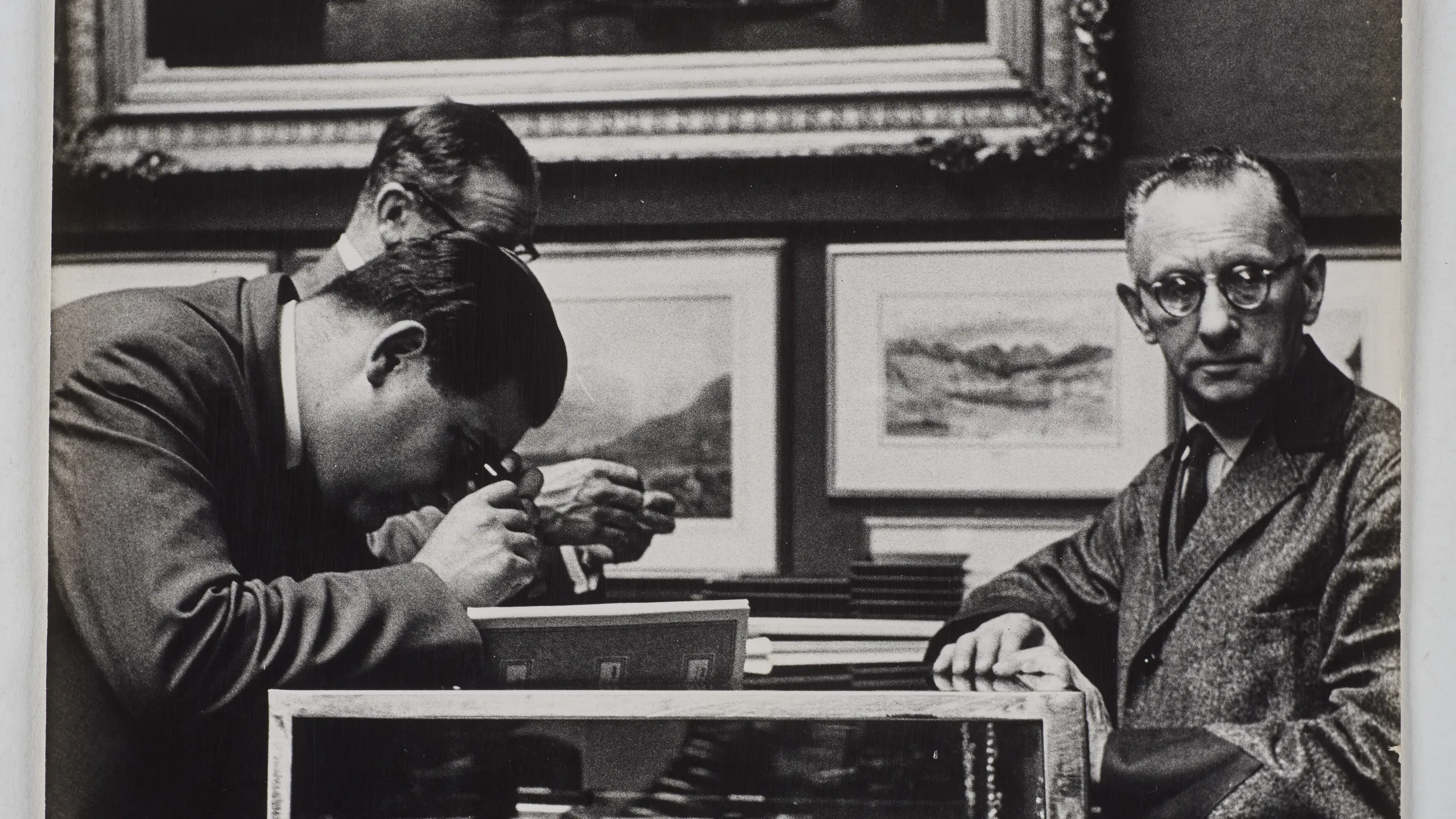
How does an auction house like Sotheby’s work?
Auction houses are complex businesses. They’re essentially the go-between for sellers and buyers, so they rely on building relationships with dealers, collectors and institutions. Auction houses calculate the value of an object and catalogue it by providing a detailed description for buyers. They’ll then sell the object to the highest bidder in the auction. Nowadays, this happens both in-house and online.
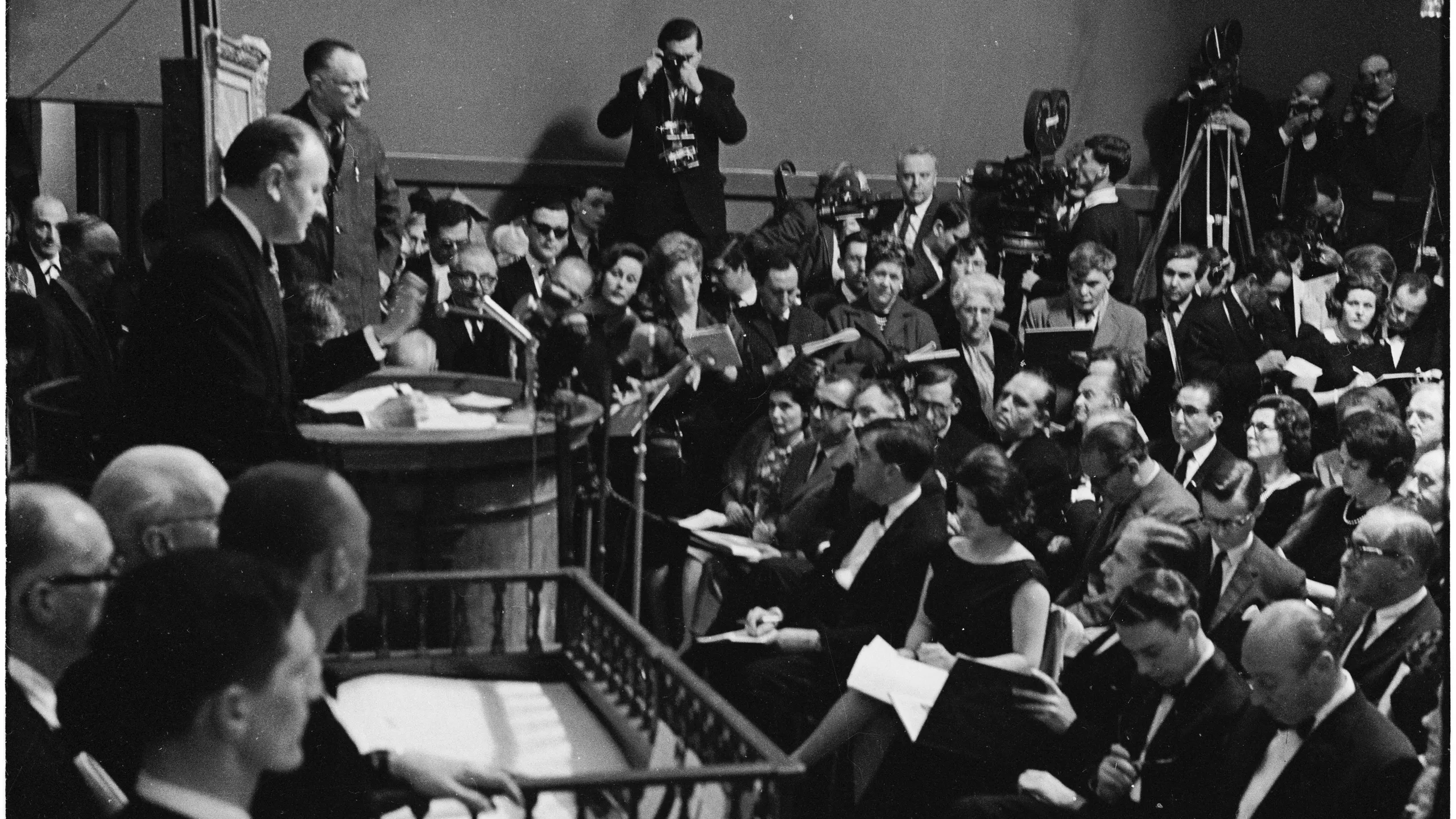
Sotheby’s began life as a book auction house
Sotheby’s was founded by bookseller and auctioneer Samuel Baker. Baker died in 1778 and the business passed in part to his nephew, John Sotheby. The Sothebys helped run the Covent Garden-based business until 1861, and their name lasted. In that time, the auction house expanded into selling prints, coins, medals and antiques. In 1928, the original manuscript of Lewis Carroll’s Alice’s Adventures in Wonderland was sold at Sotheby’s for £15,000 – that’s around £800,000 in today’s money.
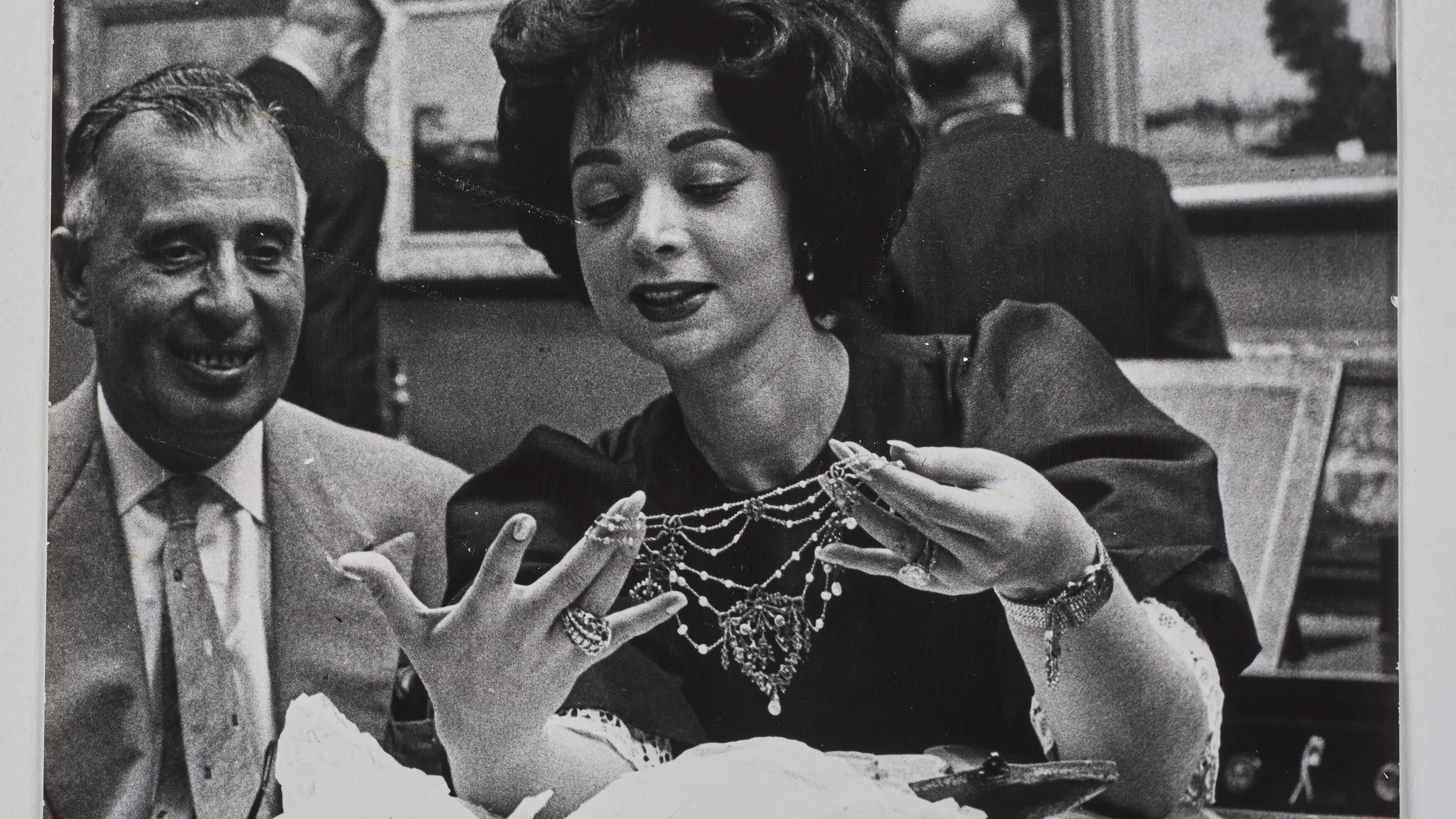
Sotheby’s became a seller of fine art
In 1917, the company moved from Covent Garden to New Bond Street in Mayfair, near the West End’s many private art galleries. It became known for auctioning many great art collections. Soon, Sotheby’s was rivalling the city’s established art auctioneers Christie’s, which was also founded in Westminster in the 1700s.
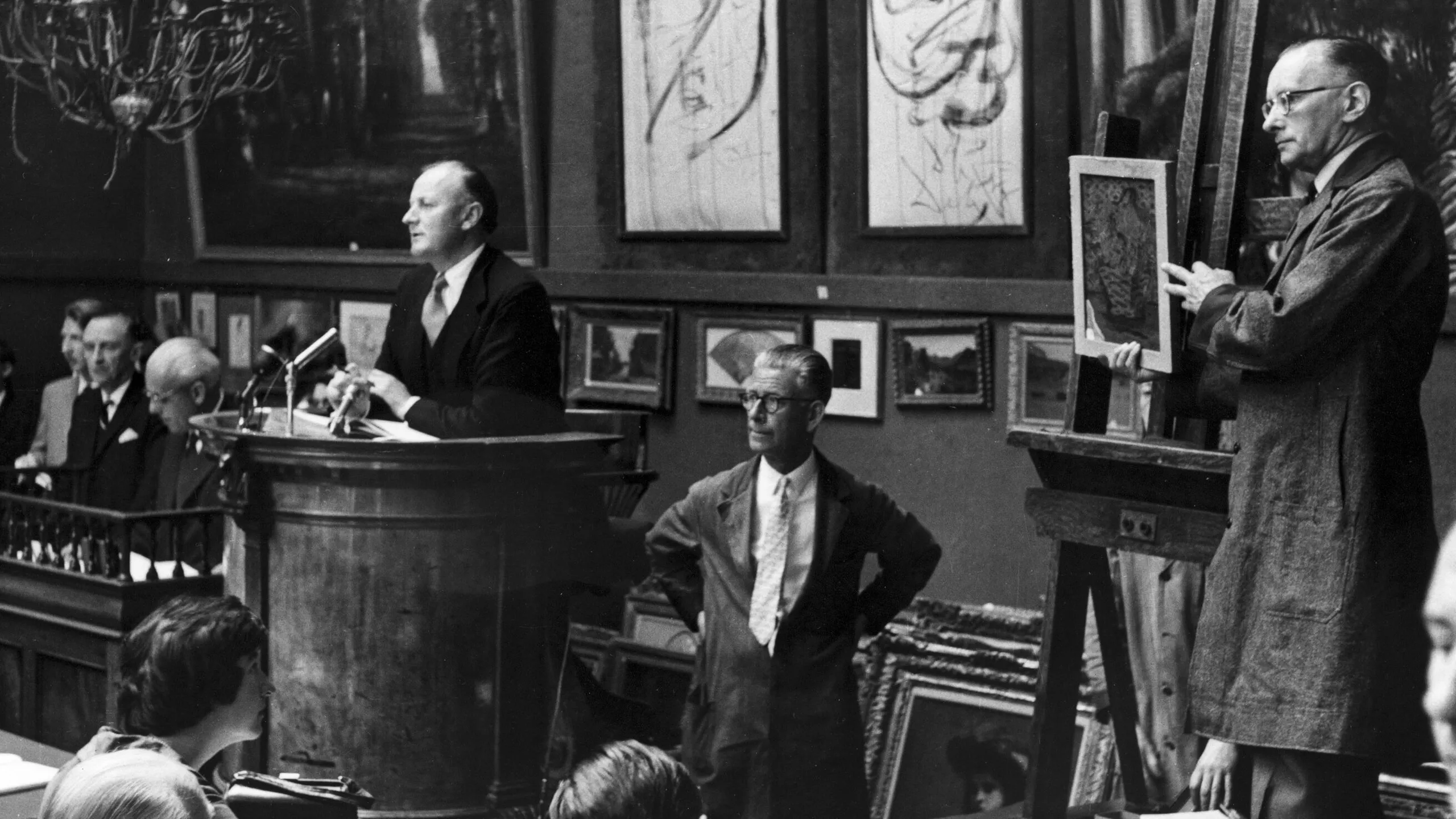
Chairman Peter Wilson
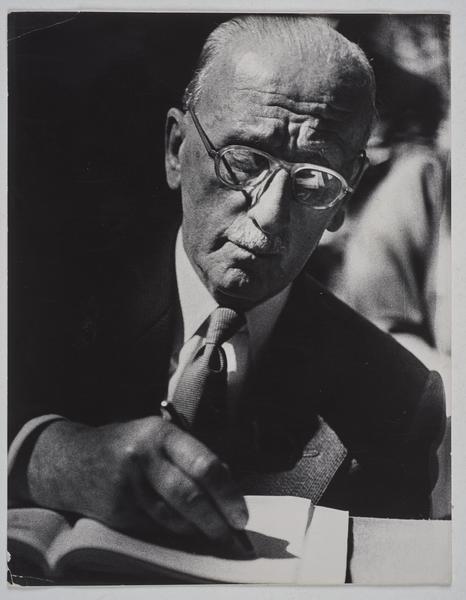
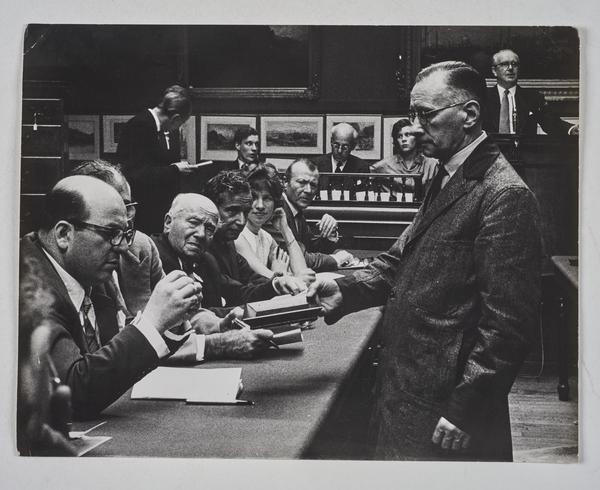
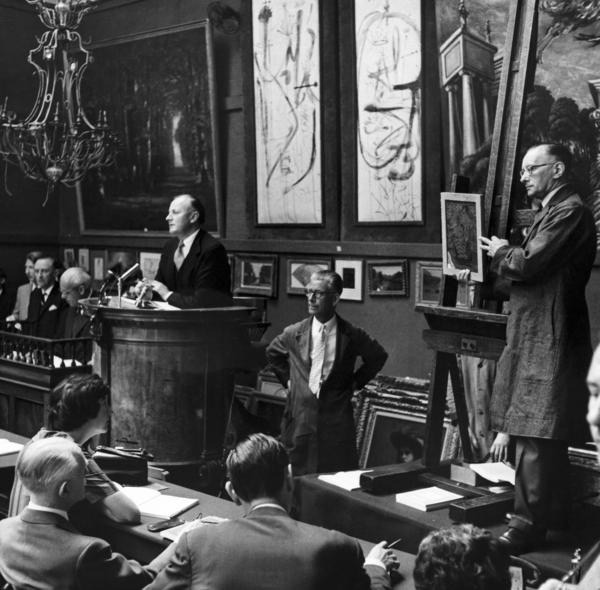
Here’s Peter Wilson, on the left, leading an auction of an artwork. Wilson was Sotheby’s chairman from 1958 to 1980. He was a driving force in the company’s expansion into the art world, and helped modernise it by introducing things like telephone bidding, currency converter boards and art sales statistics.
Inspections before auctions
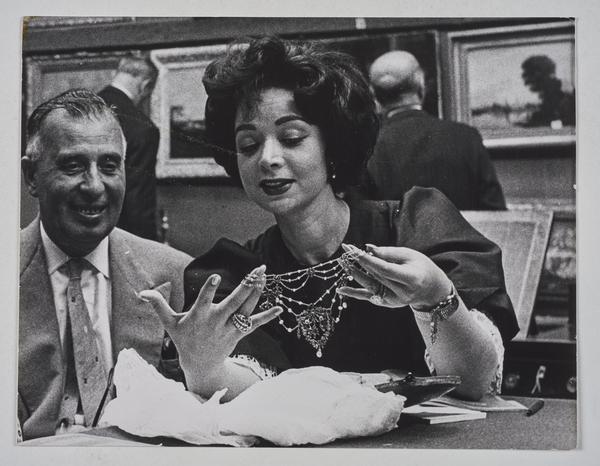
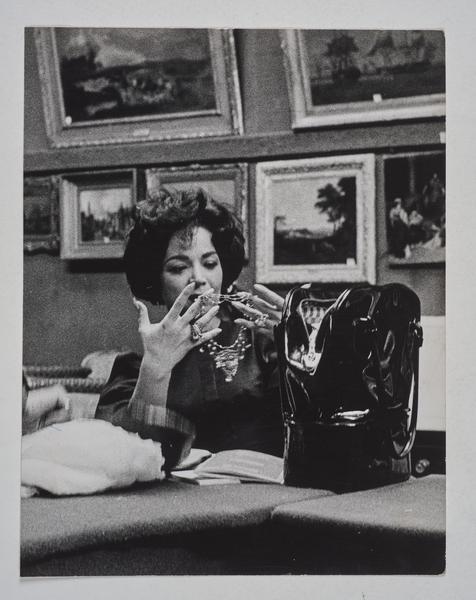
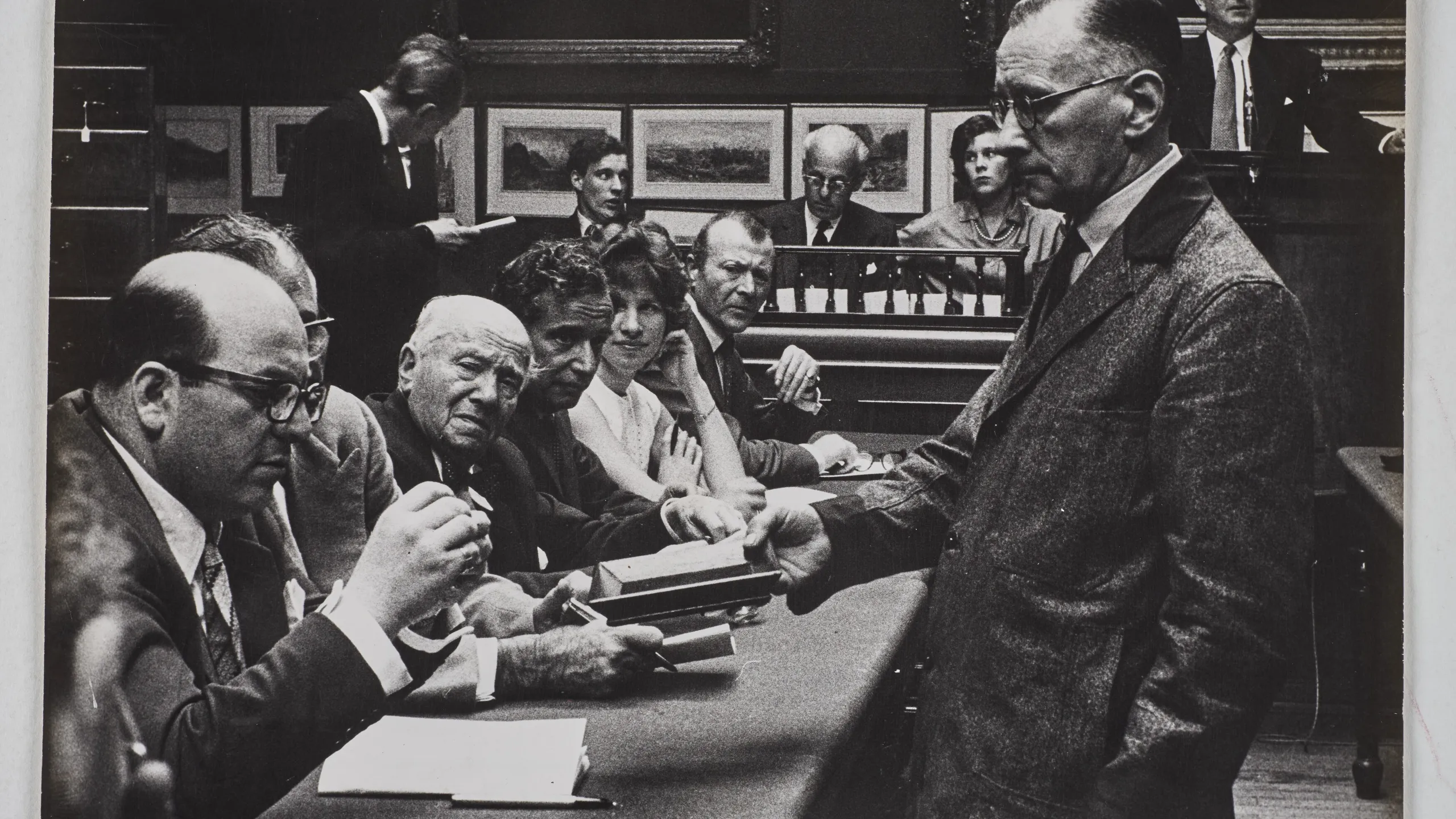
The people sitting here are taking turns to examine a piece of jewellery before bidding begins. Most of Sotheby’s auctions are free and open to the public. Their high-profile evening auction events, known as marquee sales, are the ones that make the headlines and attract those at the top of the art world. You’d need a ticket to get into one of these.
The Goldschmidt collection
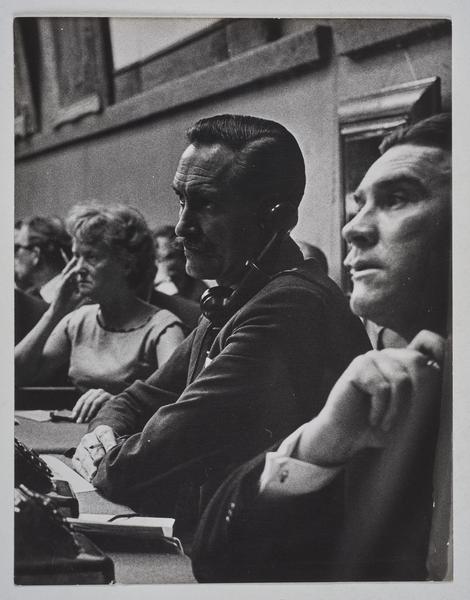
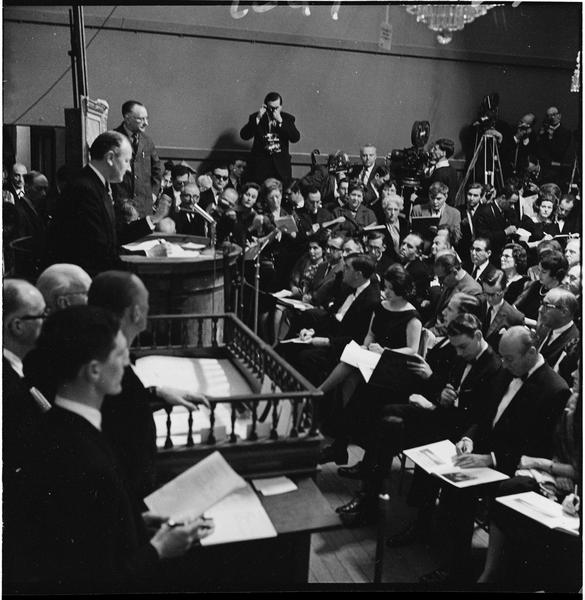
In 1958, around the time these photographs were taken, Sotheby’s auctioned the collection of New York banker Jakob Goldschmidt. The seven paintings auctioned included masterpieces by Vincent Van Gogh and Paul Cézanne, which sold for record prices. The event was attended by the rich and famous. It was the first time the traditional daytime auction had been turned into a glamorous evening event.
Tags
-
-
-
Photography
 Photography
Paintings owned by Somerset Maugham are auctioned at Sotheby's (negative)
Grant, Henry
1962-04-10
-
-
-
-
Photography
-