Kenric: London’s long-running lesbian social group
Kenric was founded in 1965 as a space for London’s lesbians to hang out and connect. At a time of widespread transphobia and homophobia, the group’s social events have been combating the isolation experienced by many lesbians in the LGBTQ+ community.
Kensington & Richmond
Since 1965
A pioneering lesbian organisation
It was challenging for lesbians to meet each other in the 1960s. Bricks and mortar spaces like nightclubs and bars were scarce, and lesbian events often relied on word-of-mouth. A hostile, homophobic and transphobic environment forced many to hide their sexual orientation.
Kenric, founded in 1965, broke down the isolation felt in the community. This social group offered safe, welcoming spaces for lesbians to meet each other through a range of events and hangouts. For many, Kenric gave them their first encounters with other lesbians and vital access to a community.
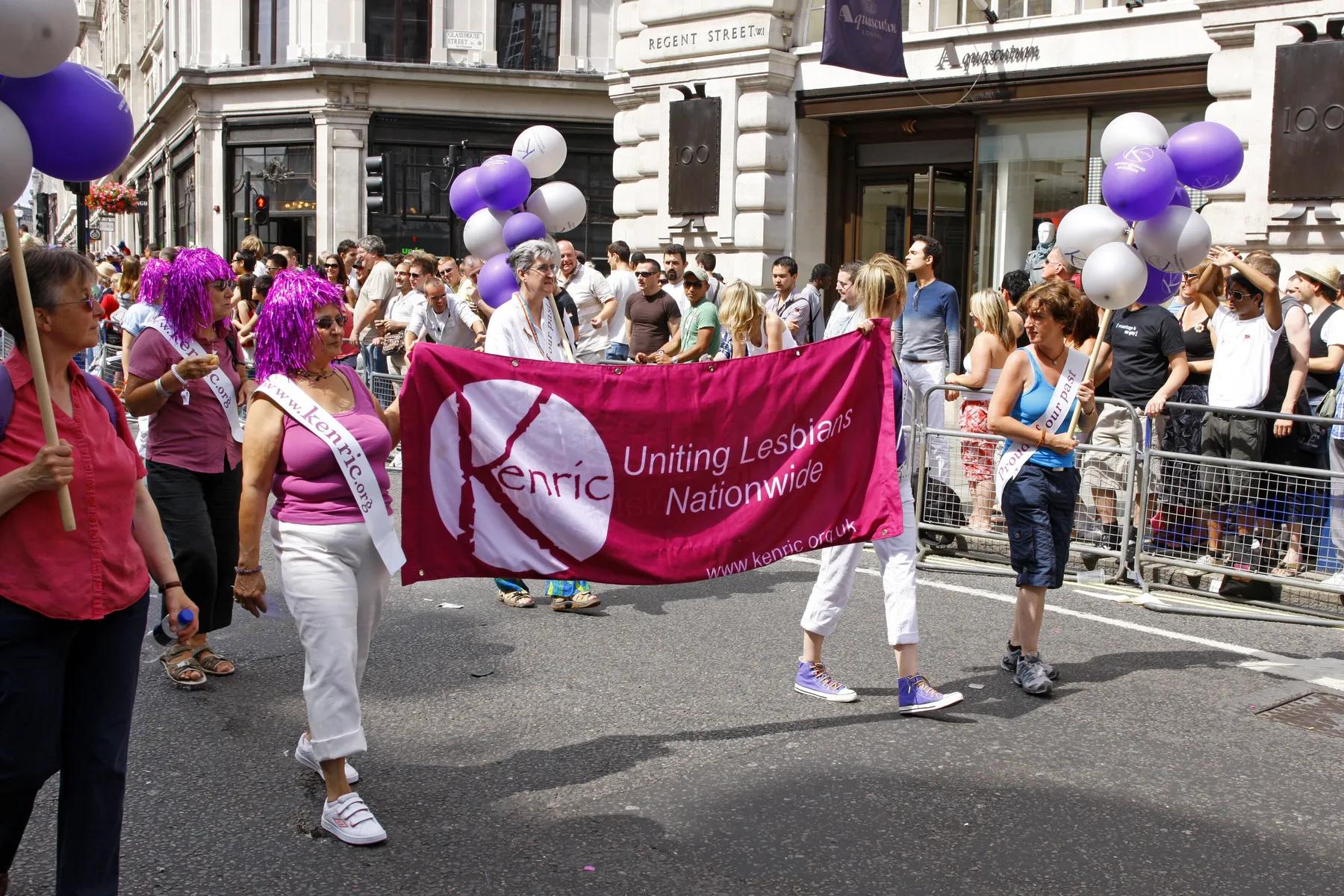
The grassroots organisation is still going today. It’s grown from its humble west London beginnings into the country’s longest-running social group for women and trans women who identify as lesbian.
Kenric splintered from the Minorities Research Group
Some of Kenric’s founding members were a part of the Minorities Research Group (MRG), one of the earliest organisations advocating for lesbians, founded in 1963. The MRG aimed to reduce the stigma of being a lesbian through organising conferences and meetings, many held at the Shakespeare’s Head pub on Carnaby Street.
The group also published a monthly magazine called Arena Three. This was the first British lesbian magazine and a bold publication that showed the lesbian community was standing up for their rights and not sitting in silence.
The 1960s saw several new LGBTQ+ organisations set up in London. The 1957 Wolfenden Report recommended only a partial decriminalisation of sex between men. It didn’t mention lesbians, as the law has historically not sought to regulate sexuality between women as much. This caused a shift in the public visibility and political representation mostly of gay men. But it also meant lesbians felt empowered to organise.
In the early years of the MRG, some of the group's members decided they wanted more social activities and to make the organisation more democratic. They split from the MRG in 1965 and founded Kenric, an organisation run for its members, by its members. The name is short for Kensington and Richmond, where the founders were based.
The MRG and the magazine continued to run until 1971, when a new magazine called Sappho was set up by three members of Arena Three’s board. Sappho was published until 1981 as a more explicitly activist platform than Arena Three, representing a change in direction propelled by the UK’s newly formed Gay Liberation Front.
A social, non-political space
Kenric’s mission objective was to “remedy the sense of isolation experienced by many lesbians, by arranging meetings, discussions and other activities". By giving its members a sense of safety and community, they’d have the space to be themselves.
It was also founded as an explicitly ‘non-political’ organisation. The turn of the 1970s saw a growth in political activism around the liberation of LGBTQ+ people. Organisations like the Gay Liberation Front organised protests, direct action events and, in 1972, London’s first Gay Pride march. But Kenric steered clear of actively campaigning around lesbian issues.
Some criticised the organisation for being ‘inward-looking’ in the 1960s and 1970s. But for others, this was part of Kenric’s appeal.
Kenric’s events brought lesbians together
Events have always been Kenric’s bread and butter. From January 1966, these were shared via a newsletter. Monthly meet-ups included gatherings at other members’ homes, trips to theatres or galleries, or big outings like camping or visits to the seaside. It also held a library of books and publications.
-
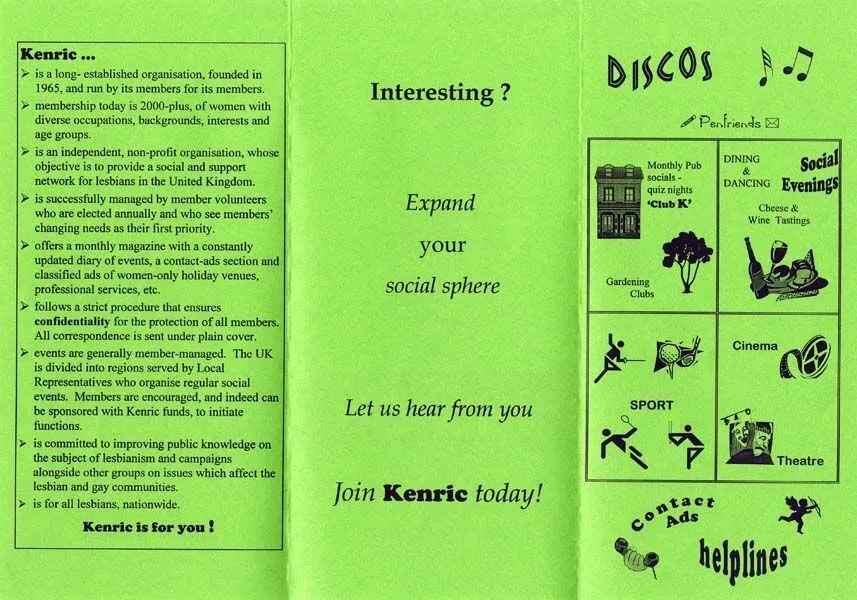
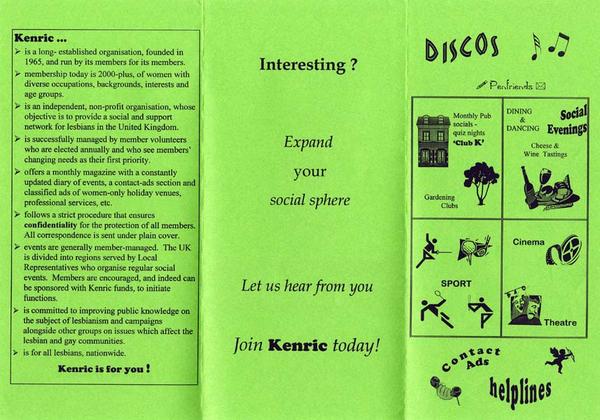
This leaflet from 1999 gives information about the organisation’s history and the activity on offer.
This 1999 leaflet in our collection advertises the many activities on offer – including low-key hangouts like pub quizzes and gardening, and wellbeing services like helplines and penfriends.
By then, Kenric had grown to around 2,000 members from its 400 or so in 1969. Lesbians from all over Britain were a part of the organisation, although the majority were from London and the surrounding counties.
“I can go to a gay disco and dance the night away. No one thinks it’s strange”
Ruth Magnani, Kenric member
Meetups at the Gateways club
Kenric started holding regular socials at the capital’s most famous post-war lesbian members' club, Gateways, in Chelsea.
This small, smoky basement opened on the King’s Road in 1931 as a haunt of west London bohemians, artists, musicians and writers. But by the mid-1960s, it was run exclusively as a lesbian venue, becoming the centre of the city’s growing lesbian culture.
Kenric meetings happened on a Monday night, when the Gateways club was otherwise closed. Members seemed to love them. One named Ruth Magnani fondly remembered the socials as her way of dancing and enjoying herself in a way she couldn’t at a “heterosexual disco”: “I can go to a gay disco and dance the night away. No one thinks it’s strange.”
Some Gateways regulars commented on the noticeable difference from the club’s typical crowd. One recalled sneaking in on a Monday night and finding themselves in “another world… I thought, this is an odd night, it’s very sedate and there’s no beer spilt anywhere. The jukebox was playing, but it was fairly subdued romantic music. I don’t think anyone was dancing, they were just talking.”
A sense of belonging that continues today
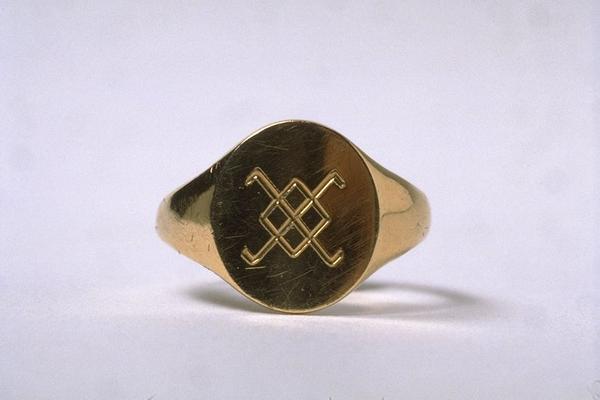
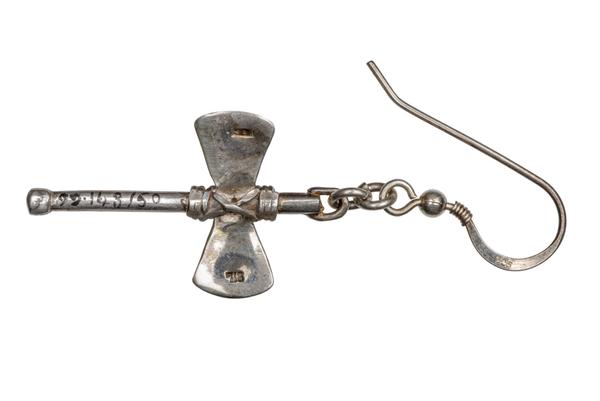
This gold ring finger in our collection is one of a group of 12 made for Kenric members in 1968. The organisation said the rings were made “to provide a silent recognition between members: secrecy became style, fashion concealed discretion.”.

Violet Blacker designed this gold finger ring, which once belonged to Kenric’s first chairperson.
It was a subtle way of connecting with others and showing solidarity, without jeopardising personal safety.
Kenric has evolved in the decades since. As a volunteer-run, not-for-profit organisation, it continues to bring together women and trans women who identify as lesbians in safe and welcoming spaces.