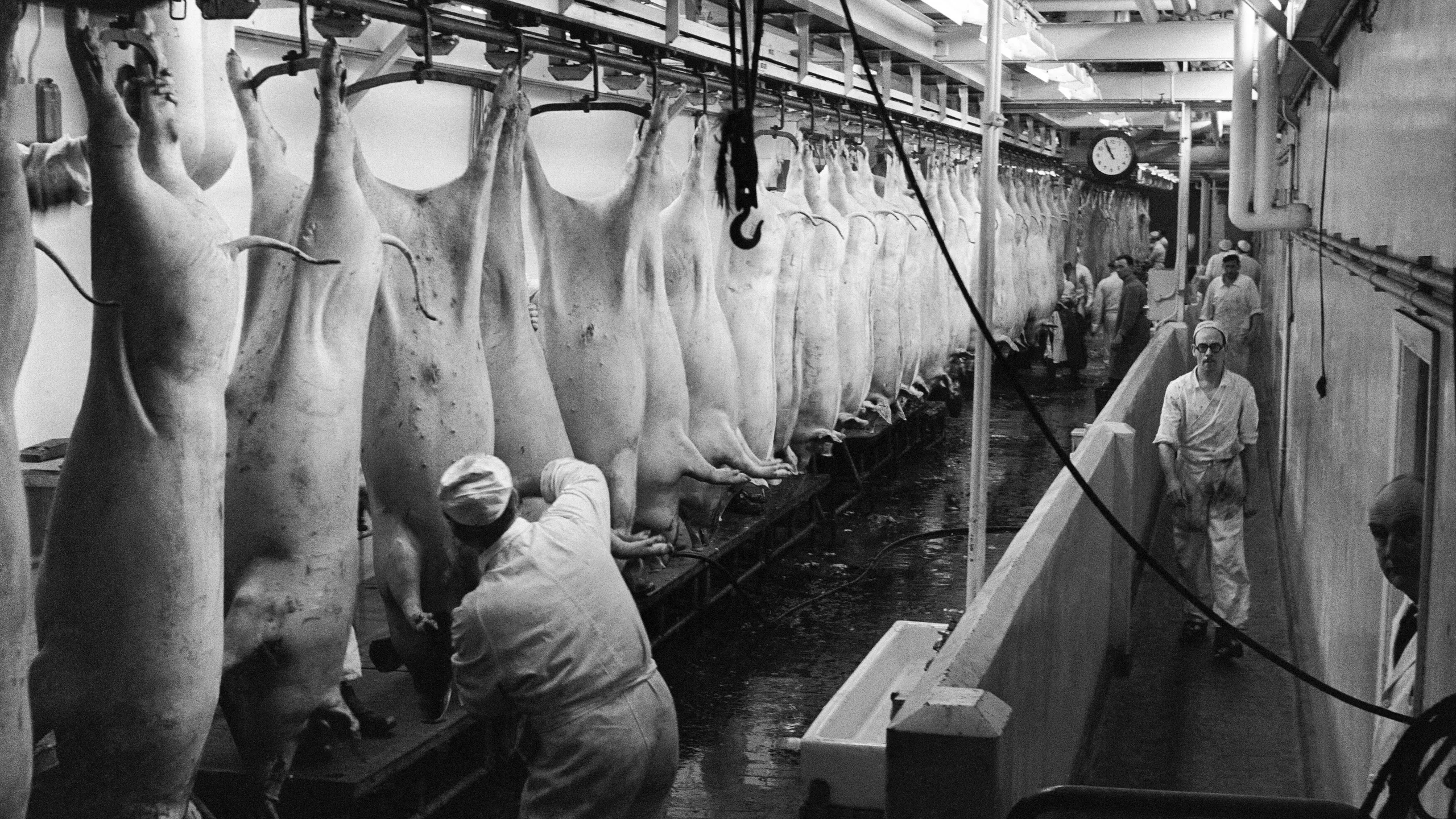
Inside the Wall’s meat factory, 1959
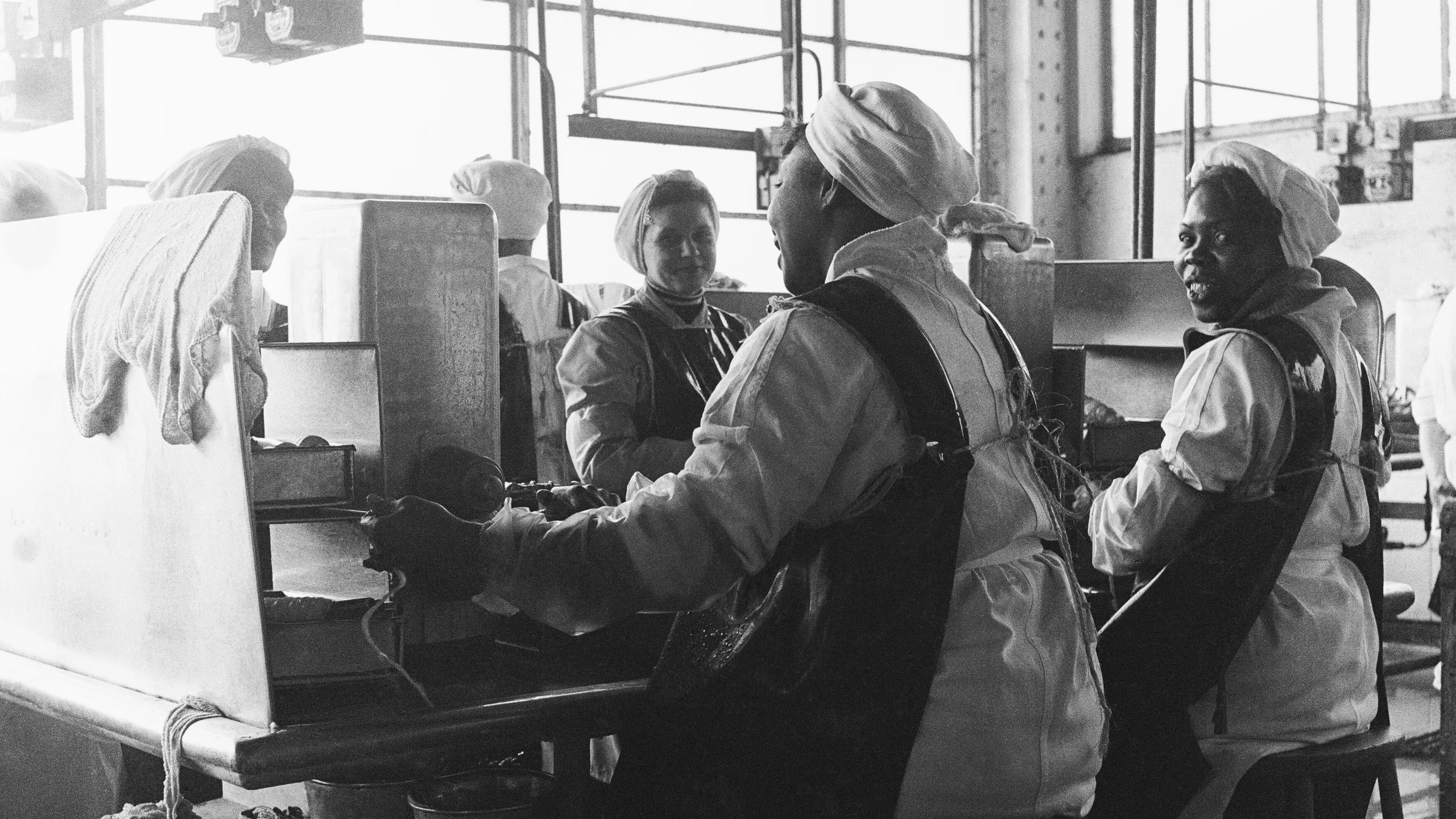
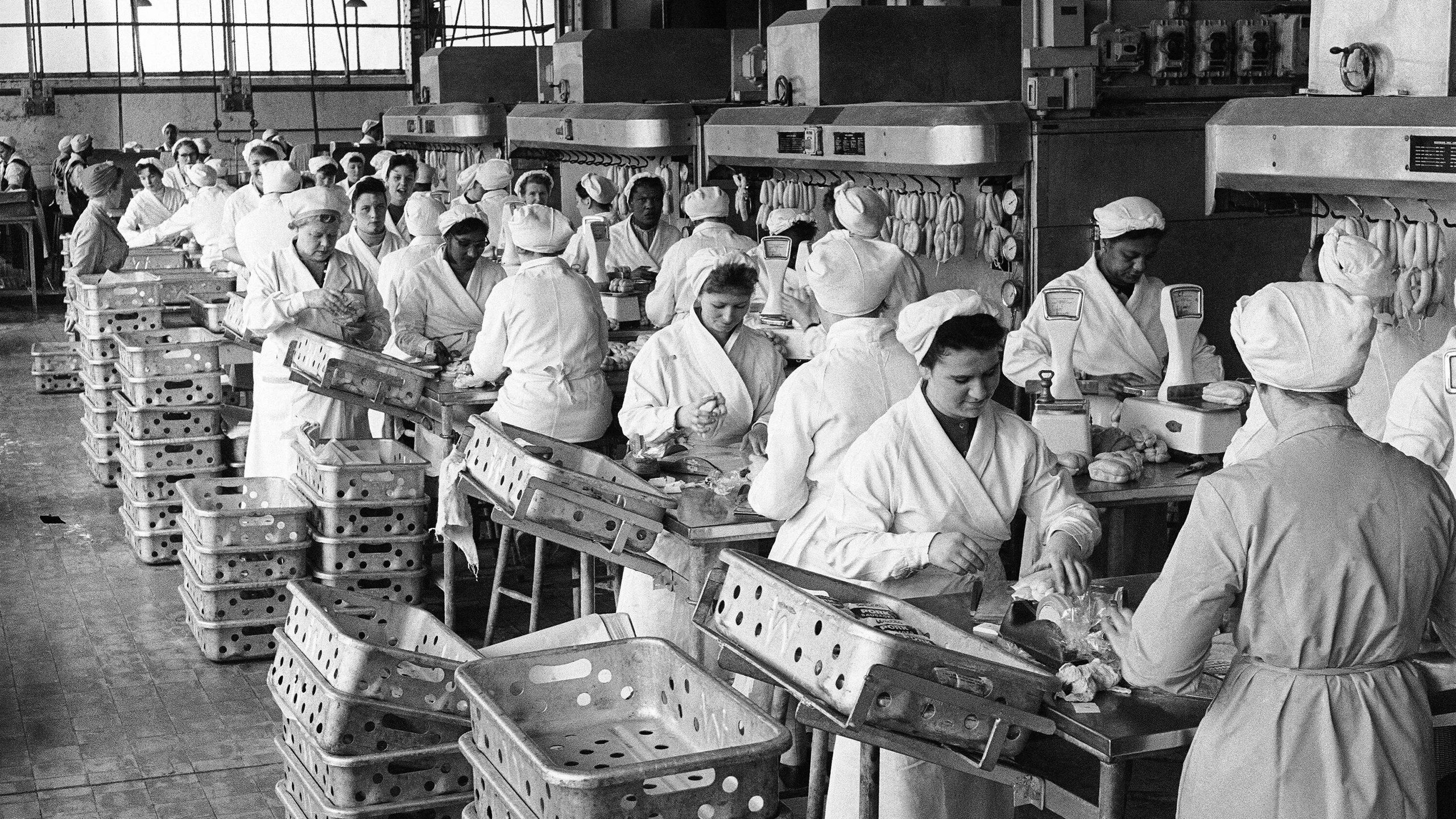
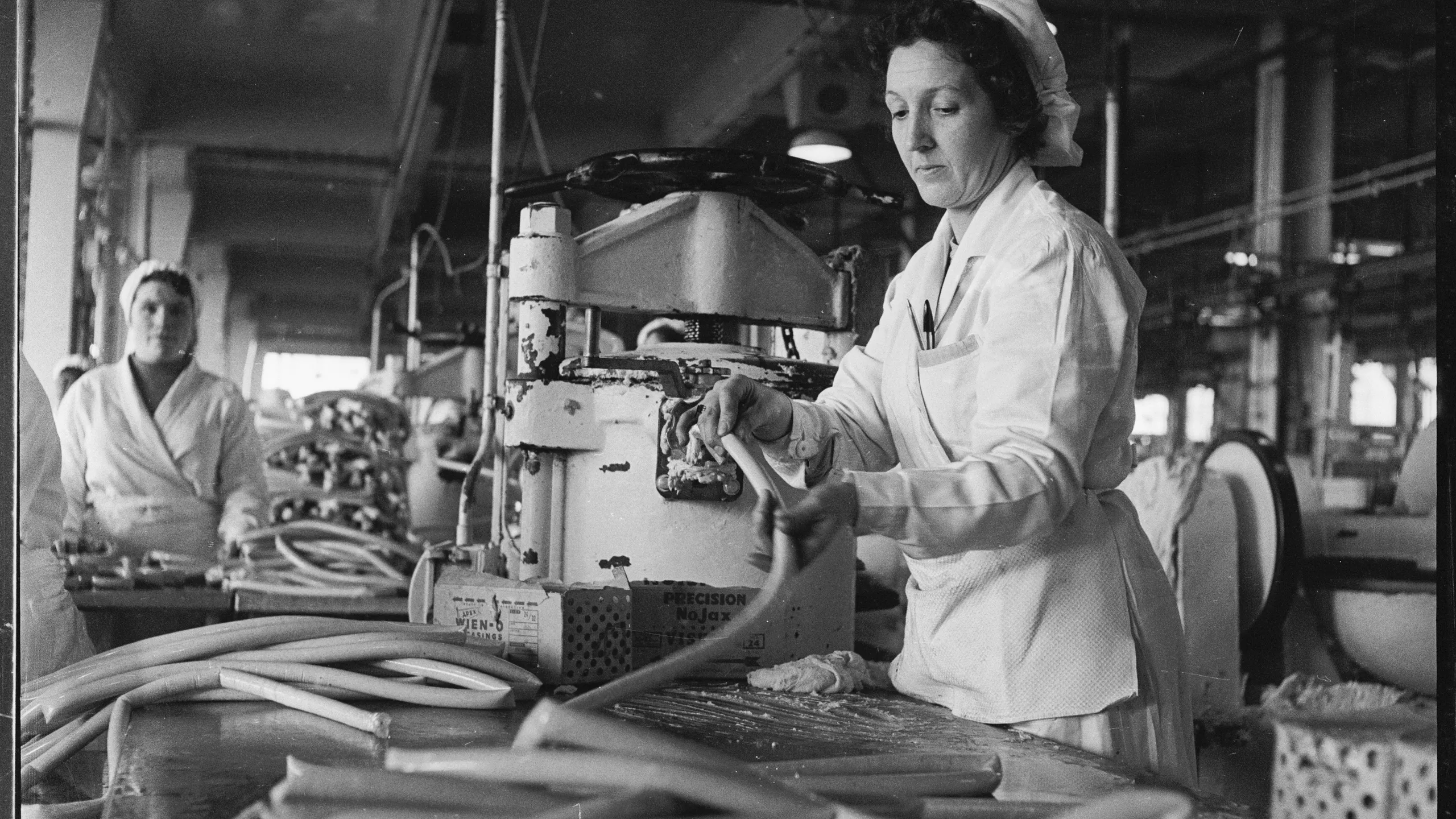
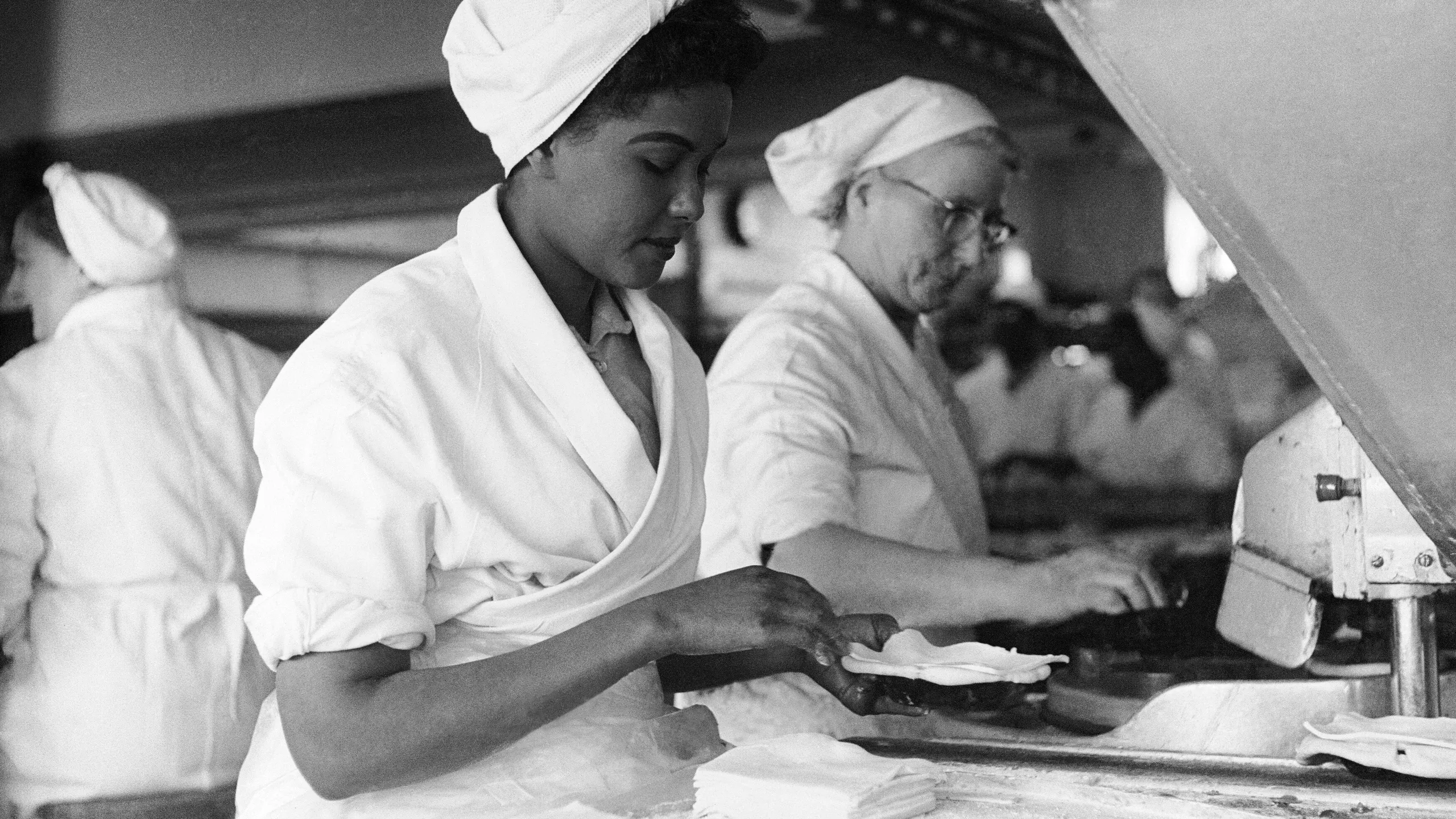
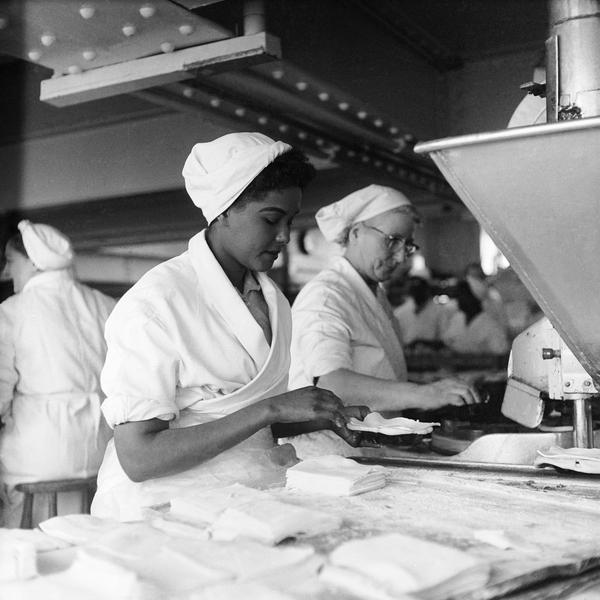
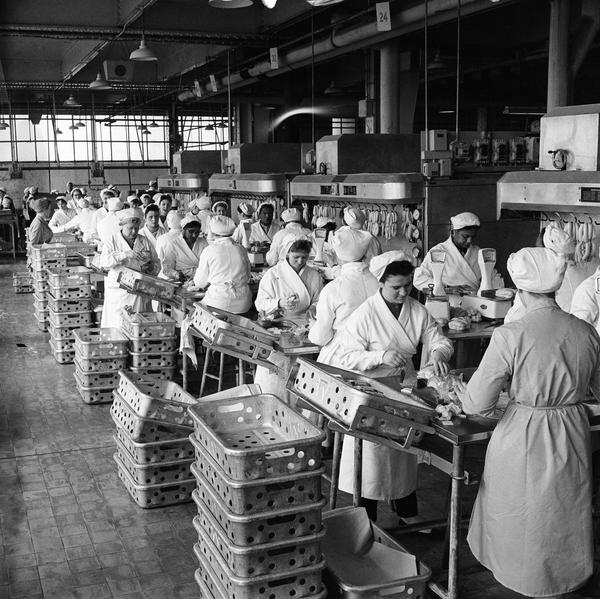
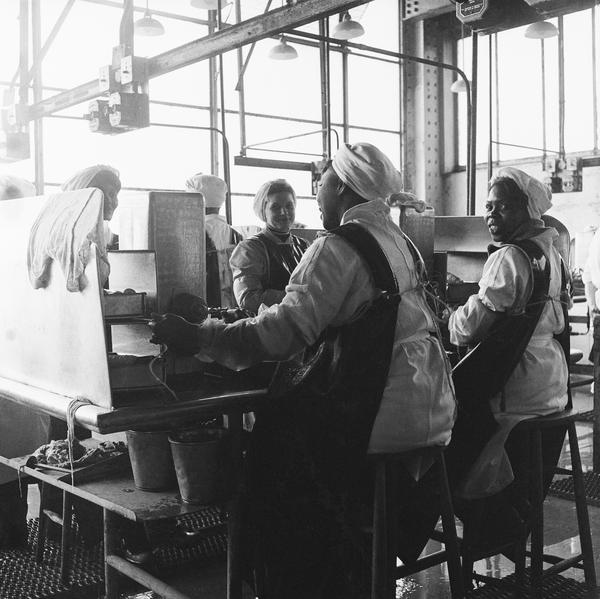
Today, Wall’s is best known for ice creams like Cornettos, Twisters and Feasts. But this London-born company has also been flogging sausages and pies for over 200 years. In 1959, photographer Henry Grant visited a west London factory to document the workers slaughtering pigs and packaging up products.
Acton, Ealing
1959
The Walls were known for their meats
The Wall family has a long history as pork butchers and sausage manufacturers. In the late 1700s, Richard Wall set up the family’s first business on Jermyn Street in Westminster, having trained as an apprentice to a butcher in nearby St James’s Market. The next Wall generations transformed the business into a sausage kingdom, supplying the royal family as well as London’s hotels, clubs and high-end department stores.
Industrial Acton
This part of west London was mostly rural up to the 20th century. During the First World War (1914–1918), munitions factories were based there. After the war, the area was developed into a major industrial site. Factories in Acton and neighbouring Park Royal produced all kinds of goods. There was both a Heinz food factory and a Guinness brewery.
Wall’s moved into the ice cream business
Wall’s was known for its sausages and meat pies. But sausages didn’t sell as well in the height of summer. So from 1922, Wall’s started to make and sell ice creams to counter this seasonal dip in sales. Their ice cream factory was also in Acton, in Friars Place.
Wall’s Atlas Road factory
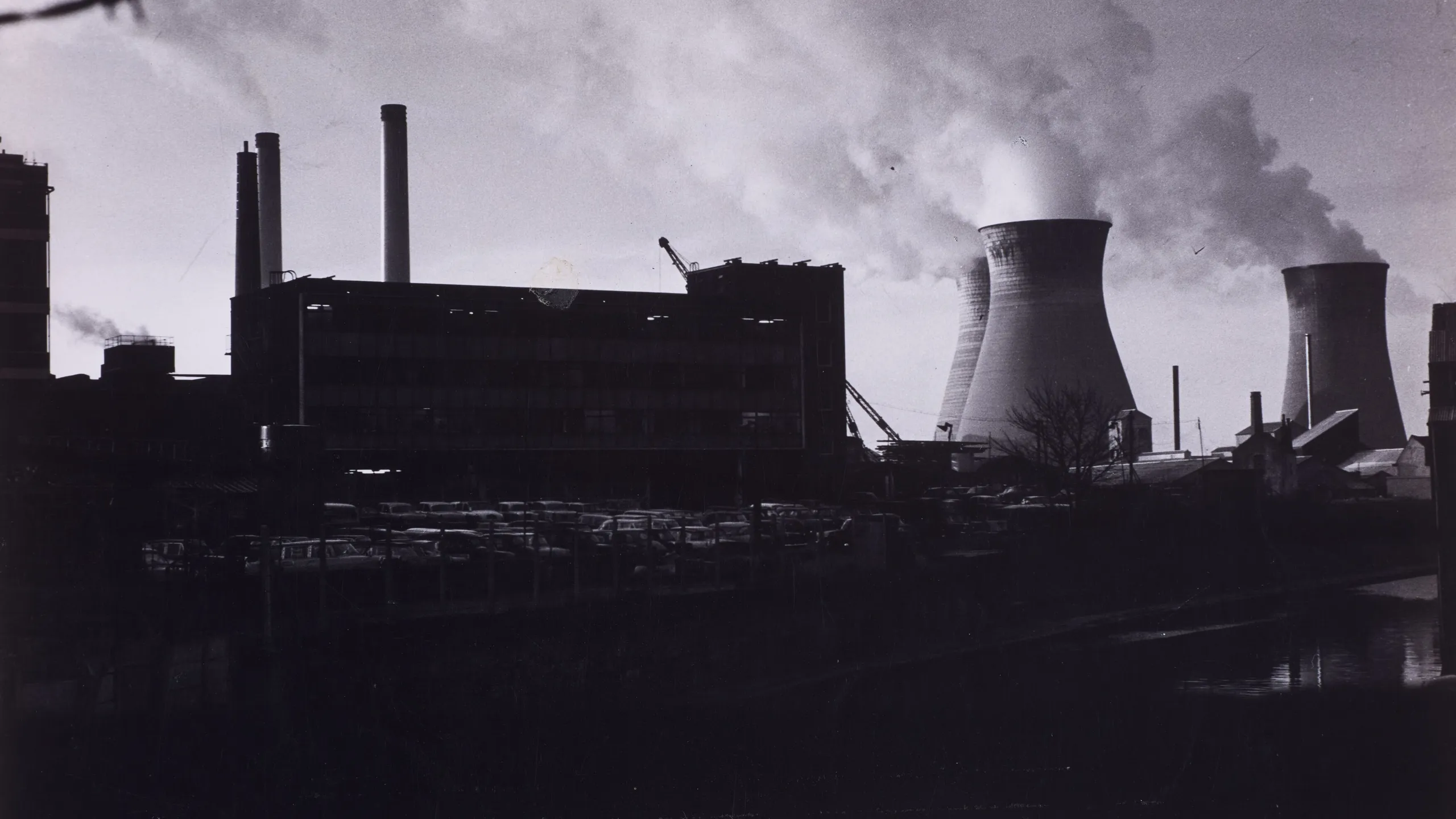
This factory on Atlas Road was built in 1936 for slaughtering and processing pigs. By 1949, it had 350 employees and in 1956, the company moved all of its meat production to Atlas Road. The entire sausage- and pie-making process, from the slaughterhouse to product packaging, took place here. In 1958, the Friars Place and Atlas Road factories employed over 3,000 people.
Henry Grant photographed daily life in London
From the 1950s to the 1970s, Grant dedicated his life’s work as a photojournalist to capturing everyday life in London. We have around 80,000 of his photographs in our collection, showing the city’s many communities working, learning, relaxing, protesting and celebrating.
The factory shut down after 50 years
As the British economy declined in the 1970s, firms began to close down or move out of Acton and Park Royal. The Atlas Road factory shut around 1978. The area is now being redeveloped for a new transport hub at Old Oak Common, which will eventually serve the troubled, much-delayed High Speed 2 (HS2) railway.
Tags
-
Photography
-
Photography
-
Photography
-
-