Gay’s The Word: Britain’s oldest LGBTQ+ bookshop
Since 1979, Gay’s The Word has stuffed its shelves with LGBTQ+ literature and been a safe place for the queer community. It has survived homophobic attacks, gentrification and state-sponsored censorship.
Bloomsbury, Camden
1979
A pioneer, a fighter and a survivor
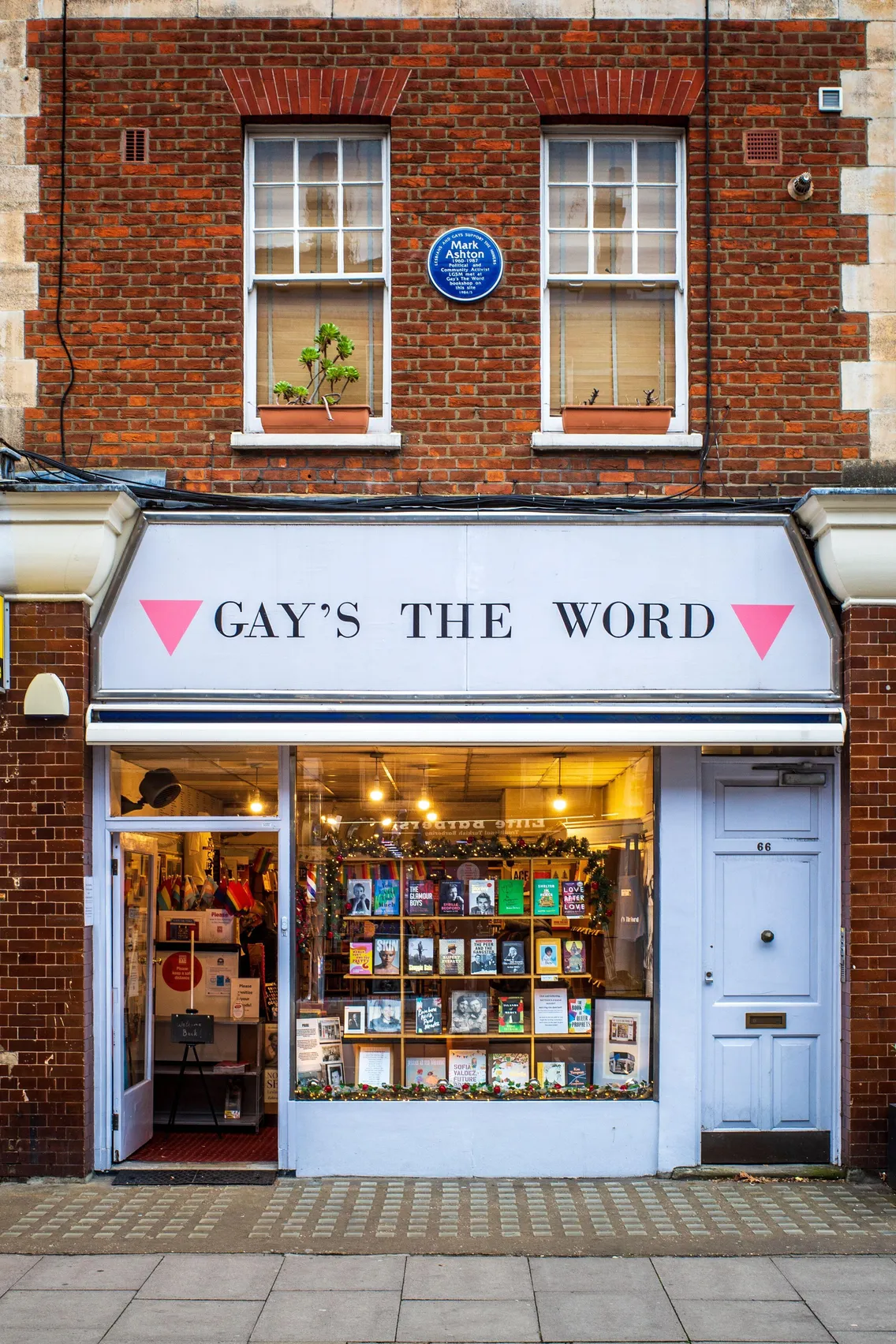
Gay’s The Word opened on Marchmont Street in 1979. This was a time of widespread discrimination against LGBTQ+ people, and few places existed for the queer community to find literature that related to their lived experiences.
The shop quickly became an important community and cultural hub, being used for political organising and as a place to socialise and feel safe.
Gay’s The Word has weathered many storms over the decades. In 1984, HM Customs and Excise officers raided the Bloomsbury shop. The high-profile campaign that followed brought Gay’s The Word to international attention.
Founding Gay’s The Word
Gay’s The Word was founded by members of a socialist social group called Gay Icebreakers. One of them, Ernest Hole, had his own roaming bookshop and mail-order service for gay and lesbian literature, which he’d set up at gay venues and events. But the group thought London needed somewhere more permanent.
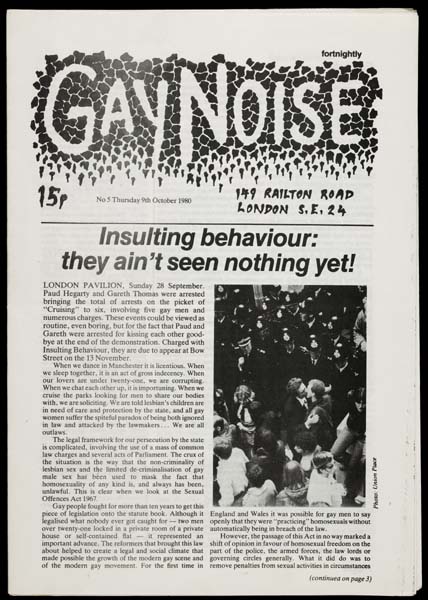
Places to buy LGBTQ+ books were few and far between in Britain. Many had relied on the fortnightly newspaper Gay News’ mail-order list. Gay’s The Word was a much-needed outlet for the queer community.
The cosy space was stacked floor-to-ceiling with books, spanning novels and non-fiction, health and wellbeing, sex and relationships. They were mostly imported from the US. Although the 1970s saw new gay and lesbian publishing emerge in Britain, there weren’t many titles published here.
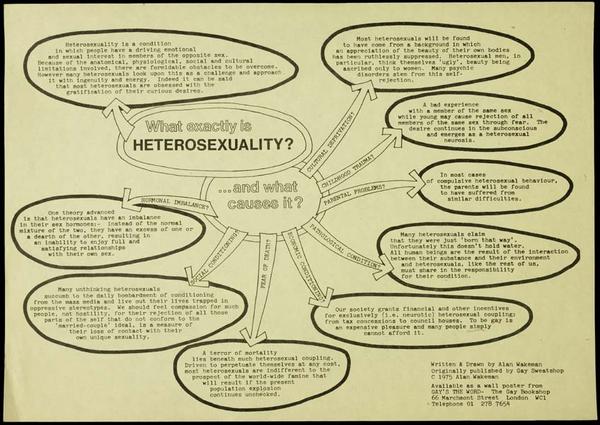
Gay’s The Word also sold merchandise, like this poster in our collection titled What exactly is heterosexuality… and what causes it? The artist said it gave straight people “an inkling of what it feels like to be got at in the non-stop, subtle and insidious way we gays were before gay liberation changed everything”.
-
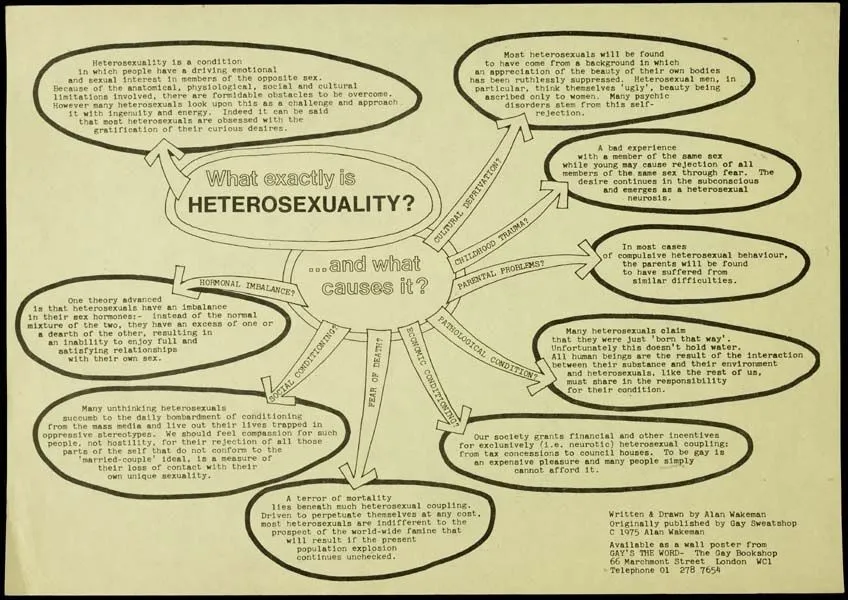
Satirical diagram from 1975 titled What exactly is heterosexuality… and what causes it?
A hub of political organising
“The bookshop rapidly became what I had always wanted it to be,” Hole told Polari Magazine, “a meeting place as well as an information point for lesbians and gay men.”
Homophobia was widespread in British society in the late 1970s. And months after Gay’s The Word opened, the country elected Margaret Thatcher as the new right-wing Conservative prime minister who, in 1988, passed the ‘homophobic law’ Section 28. LGBTQ+ people faced oppression and discrimination at work, on the streets and in their private lives.
The shop quickly became an important community hub, providing space for people to gather and organise at a time when there weren’t many resources to share information. On Thursday nights, cabaret performer Mark Bunyan was known to take over the shop’s piano.
Political and community groups used it as a meeting space, including Lesbians and Gays Support the Miners, the Gay Black Group and the Lesbian Discussion Group. The summer after opening, Gay’s The Word also led the Gay Pride march through London.
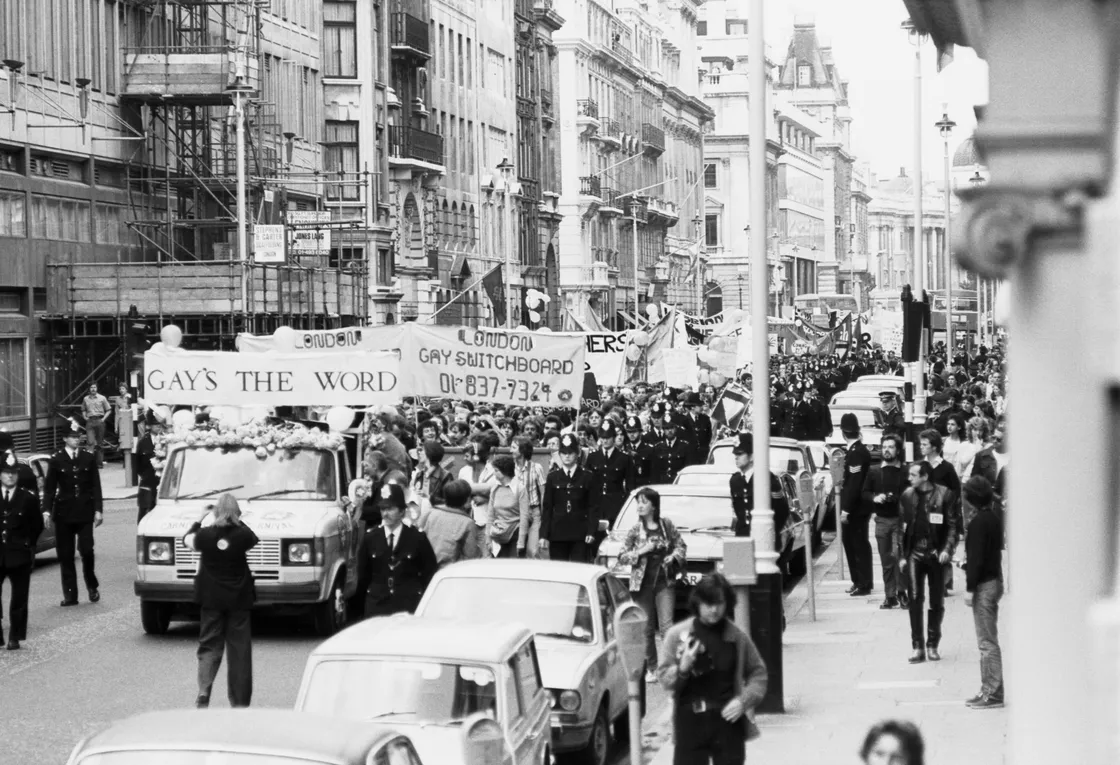
A Gay’s The Word banner at the front of the 1979 London Gay Pride parade.
The ‘Operation Tiger’ raids, 1984
On 10 April 1984, HM Customs and Excise officers raided the shop. Customs officers rifled through the shelves for books allegedly containing pornography. Poetry, history books, medical literature, magazines – even novels by prolific writers like Gore Vidal and Tennessee Williams – were all seized.
The homophobic state-sponsored raid, named ‘Operation Tiger’, was carried out under a 19th-century law banning the import of “indecent or obscene” books, paintings, prints and other articles. The comparably small number of books published in Britain were exempt.
The raid was a pretext to suppress freedom of expression. And it was later found that officers also lacked proper training to assess the material.
“We are booksellers, not pornographers”
Glenn McKee, Gay’s The Word director
Customs had been monitoring and disrupting LGBTQ+ businesses for years ahead of Operation Tiger, but this was by far the largest attack.
To resist the biased reading of an outdated law, Gay’s The Word would ask suppliers to wrap their packages in plain paper to avoid them being intercepted.
In the following months, HM Customs and Excise seized over 140 titles, around a third of Gay’s The Word’s stock. The shop’s nine directors were also charged with conspiracy to import indecent books, with director Glenn McKee famously declaring in court: “We are booksellers, not pornographers.”
The ‘Defend Gay’s The Word’ campaign
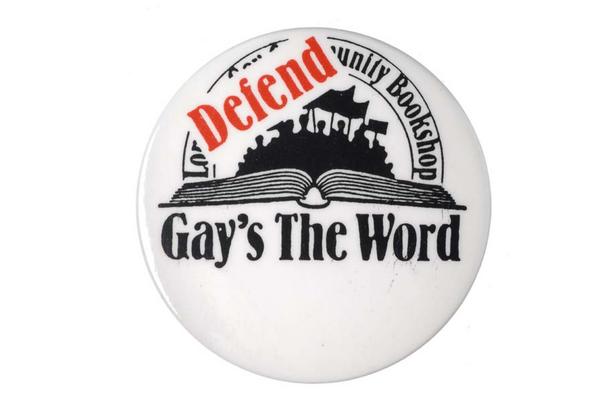
Operation Tiger led to an immediate reaction not just within the LGBTQ+ community, but also by wider society, including authors, publishers and Members of Parliament (MPs). There were fundraisers, letter-writing, lobbying and protests. MPs started a parliamentary campaign against the raid. People wore badges, like the one in our collection below, to show their support.
As a result, ‘Defend Gay’s The Word’ raised over £30,000 against legal costs.

A ‘Defend Gay’s The Word’ badge from 1984 or 1985.
The case was due to go to trial at the Old Bailey. But, thanks in part to the pressure from the Defend Gay’s The Word campaign, the charges were dropped. All but 19 titles seized by Customs were judged not to be obscene and were returned. Those 19 books still deemed obscene were sent back to the supplier in the US.
The shop stays open
Today, Gay’s The Word remains a cornerstone of the LGBTQ+ community. For part of the early 2000s, it was Britain’s only LGBTQ+ bookshop.
This Bloomsbury institution has faced other challenges after Operation Tiger. In 2007, rising rents and increasing competition from online sales almost forced it to close before a community campaign saved it. The shop’s been vandalised and burgled, and its front windows have been broken in homophobic attacks. It also temporarily shut its doors during the Covid-19 pandemic.
Still, Gay’s The Word – this little central London sanctuary – stands firm, reminding us of the importance of solidarity and resistance.
Tags
-
-
-
Printed Ephemera
-
-