Who are the Cockneys?
All Londoners were once considered Cockney, but the definition narrowed to apply to working-class east Londoners. Their rhyming slang, songs and characteristic humour remain one of London’s hallmarks.
East End
Since 1500s
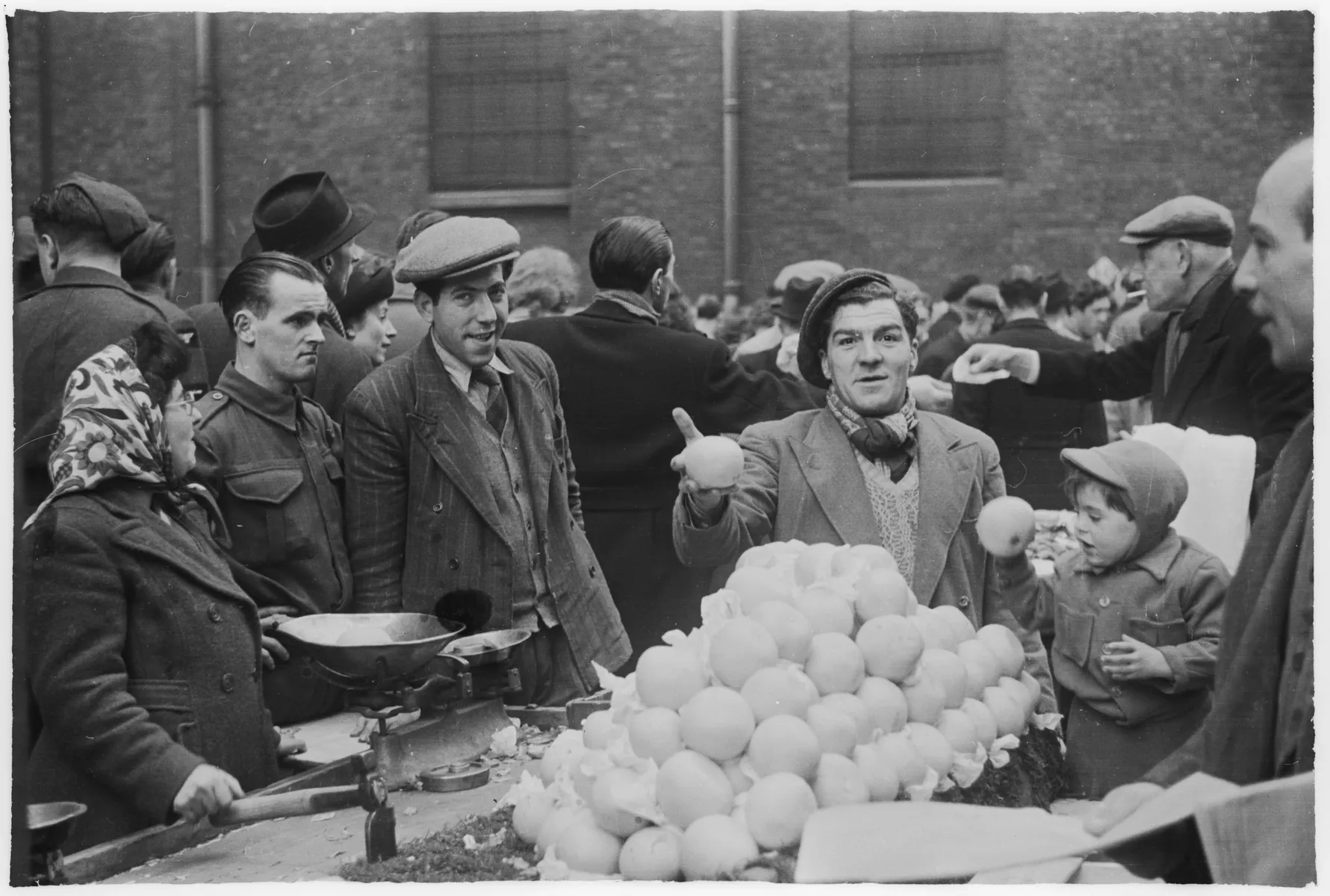
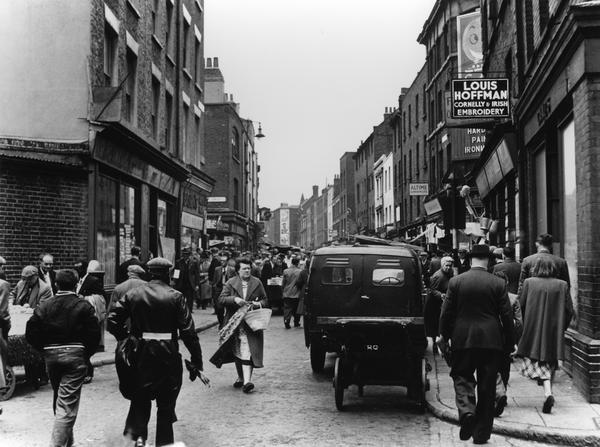
Petticoat Lane market, 1952.
Would you Adam and Eve it?
Cockney is a way of speaking. Cockney is an identity. And it’s uniquely London.
Traditionally, a Cockney is said to be anyone born within earshot of the Bow Bells, the church bells of St Mary le Bow on Cheapside, central London.
But it’s more common to think of Cockneys as working-class East Enders who speak the Cockney version of English. Pie and mash, pub singalongs, boisterous market traders and trademark Cockney resilience are just a taste of their culture.
Cockney identity began to emerge in the 1500s and took centuries to take shape. It wasn’t until the 19th century that Cockney rhyming slang came along.
The evolution continues. Young working-class Londoners now speak in new forms. Parts of east London are affluent. And many Cockneys have left the city in the last 70 years, taking their culture and memories of the old East End to Essex, Kent and beyond.
Where does the word ‘Cockney’ come from?
The word ‘Cockney’ comes from the medieval word ‘cokeney’ for a cock’s egg, meaning something odd or unnatural. By the 16th century, the term was used to mock the supposedly soft or peculiar ways of urban people, in contrast to the ‘tougher’ rural folk. The definition eventually narrowed to only apply to Londoners.
-
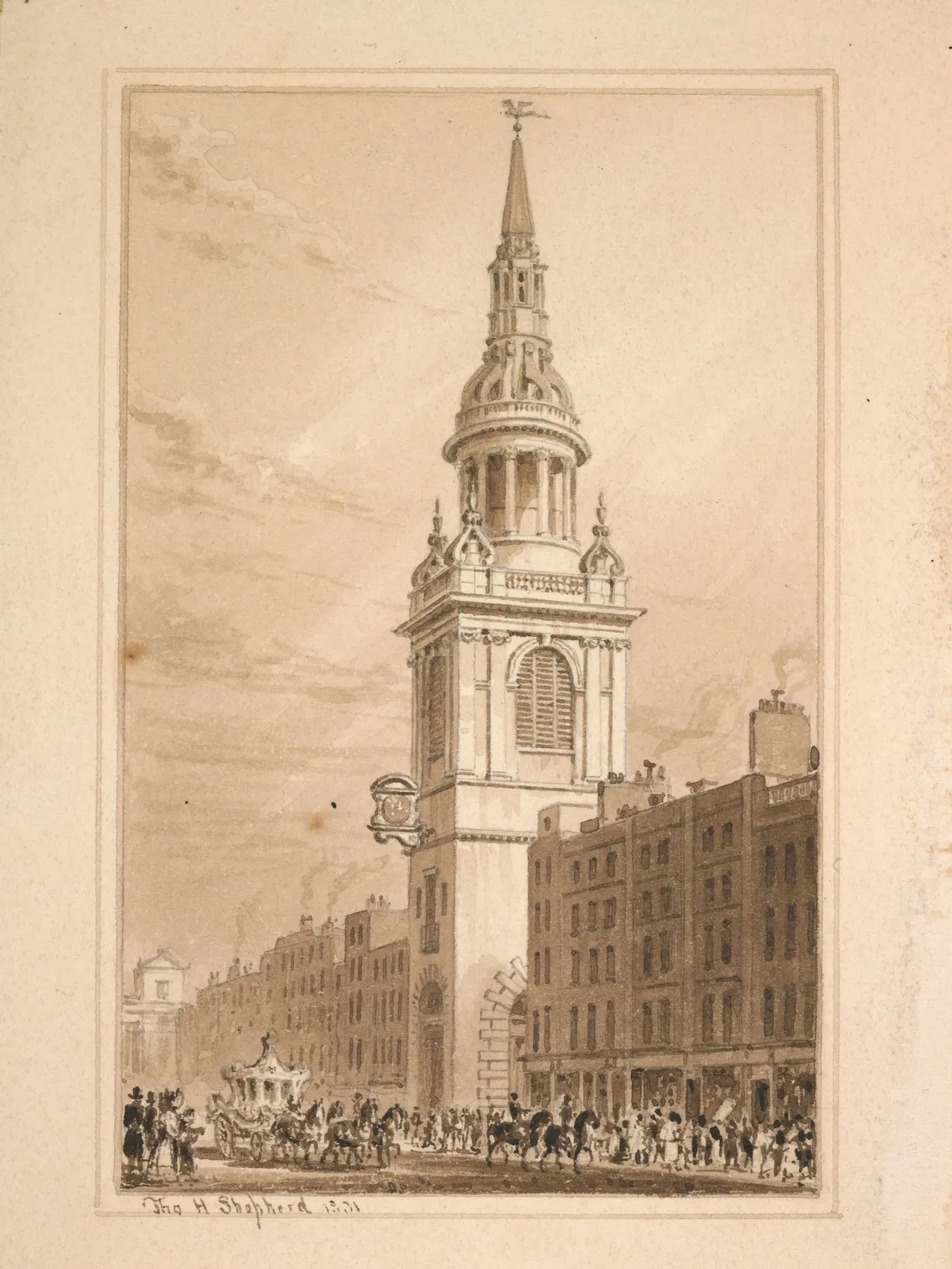
Bow Church on Cheapside in the City of London.
-
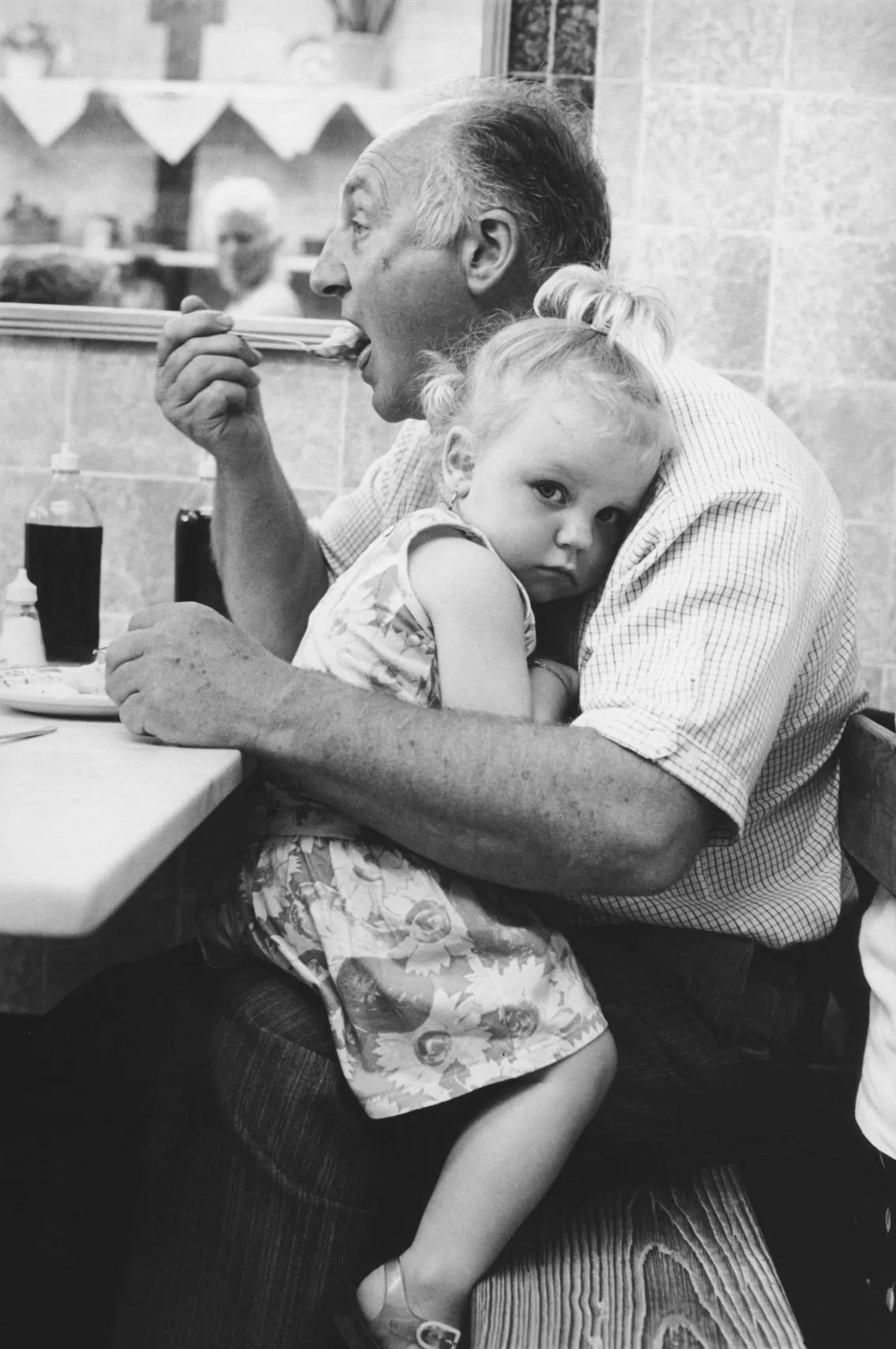
Robin’s eel and pie shop, East Ham.
The evolution of Cockney identity
Until the 18th century, all Londoners were considered Cockneys, regardless of class or neighbourhood.
The Bow Bells definition came from a bishop’s sermon in 1517. But this wasn’t meant to exclude. When the city’s population was much smaller, London was less noisy, so the church bells at St Mary le Bow could be heard across much of the city.
Cockney identity only narrowed in the 1700s and 1800s. As some Londoners became more educated and socially ambitious, they wanted ways to show it. Self-help books targeted this expanding pool of aspiring middle-class customers. The writers highlighted new ways that working-class Londoners were speaking, and advised their readers to avoid these ‘Cockney’ habits.
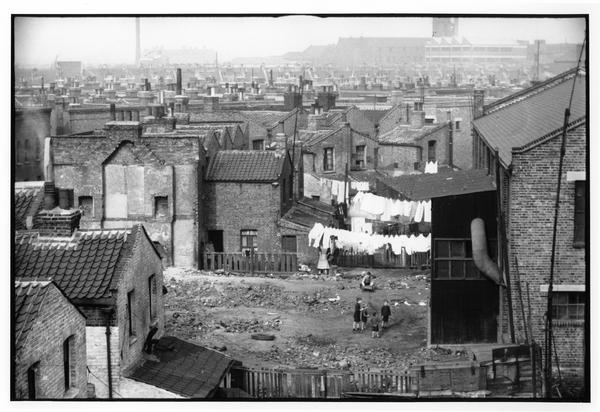
‘Cockney’ became a byword for working-class London. This tied it to the city’s culturally diverse East End, an area primarily home to working-class people.
Cockney identity was never limited by ethnicity or religion. In fact, Cockney dialect was partly shaped by Jewish refugees who arrived in the East End in the late 19th century, adding their own slang. African Caribbean people who settled in London from the 1950s became Cockneys too, blending their patois with the Cockney dialect.
Nowadays, large numbers of Cockneys also live beyond the East End and outside London. In the second half of the 20th century, many people in the East End moved out to better housing in London boroughs further east, and beyond the city boundaries to Essex and Kent. You’ll find pie and mash shops in both counties catering to Cockney customers.
-
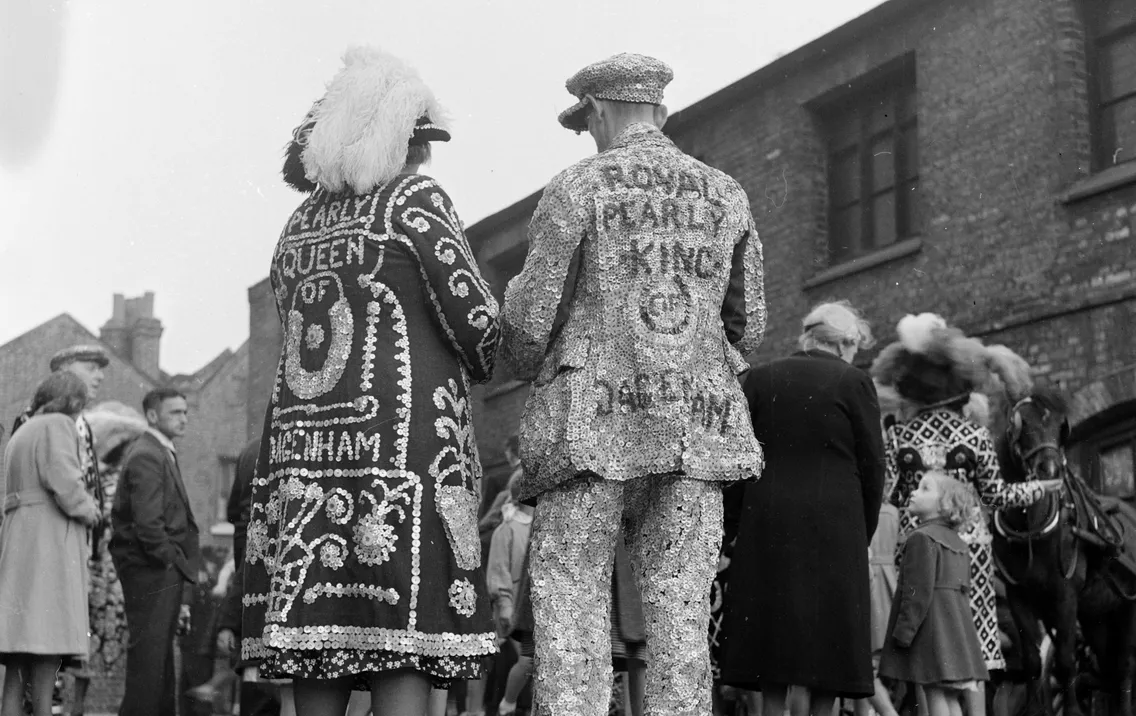
The pearly tradition began in the East End, but every borough has pearly kings and queens.
-
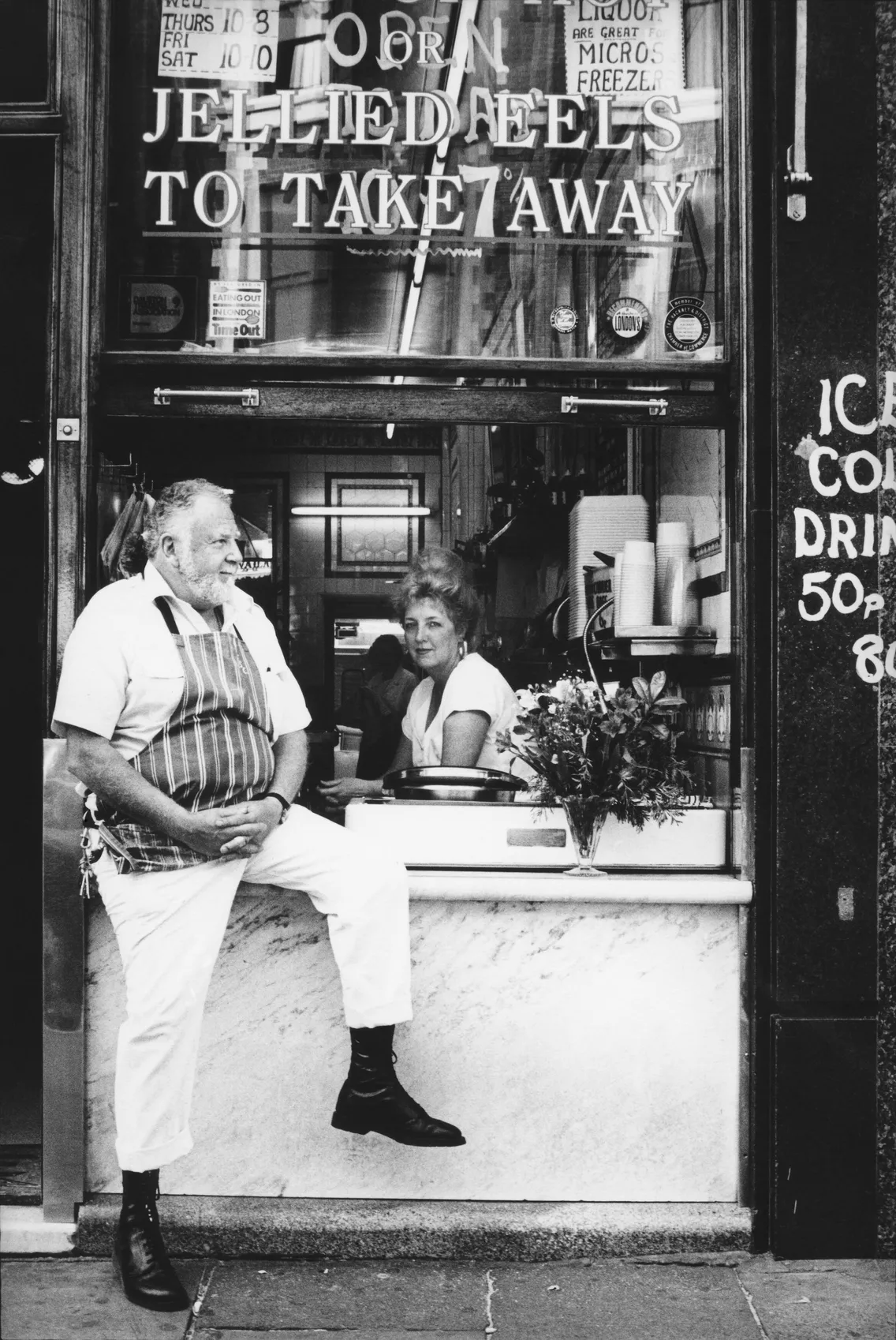
F Cooke’s eel and pie shop, Dalston.
What is Cockney rhyming slang?
Cockneys have their own dialect, a distinct way of speaking. What makes Cockney unique is a combination of pronunciation, grammar, sentence structure, vocabulary and slang.
Rhyming slang is one part of Cockney speech, and a relatively recent one. It works like a code which substitutes rhyming phrases for certain words.
Some are said as a whole, like ‘Adam and Eve’ for ‘believe’. Others use only parts. To ‘have a butcher’s’ at something means to ‘have a look’. The rhyming phrase here is ‘butcher’s hook’, but ‘hook’ is left unsaid.
Rhyming slang emerged in the early 19th century. It may have been a way for traders or criminals to speak secretively. Or it may just be a particularly creative use of language. Rhyming slang isn’t unique to London – Glasgow has some too.
-
Printed Ephemera
-
-
Printed Ephemera
-
-
Printed Ephemera
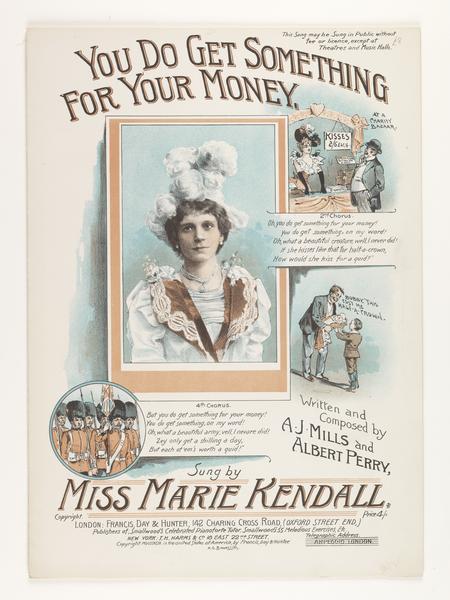 Printed Ephemera
You do get something for your money (sheet music)
Francis Day and Hunter, Banks, H.G.
1899
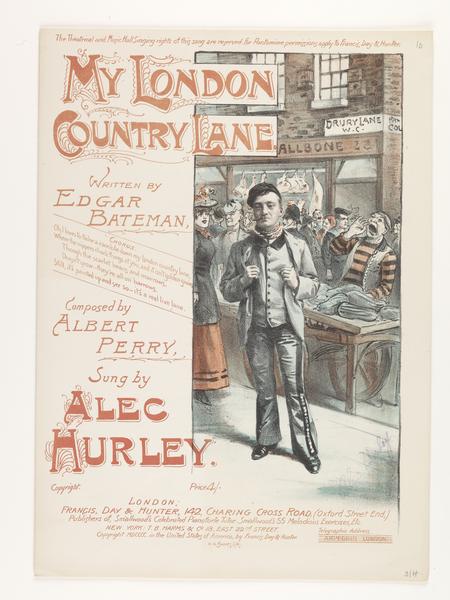
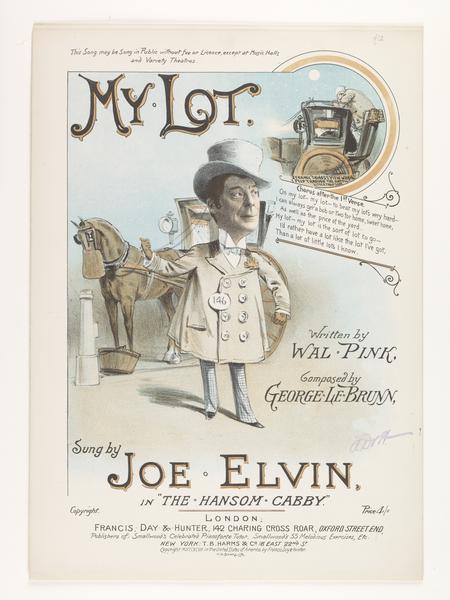
Cockneys on stage
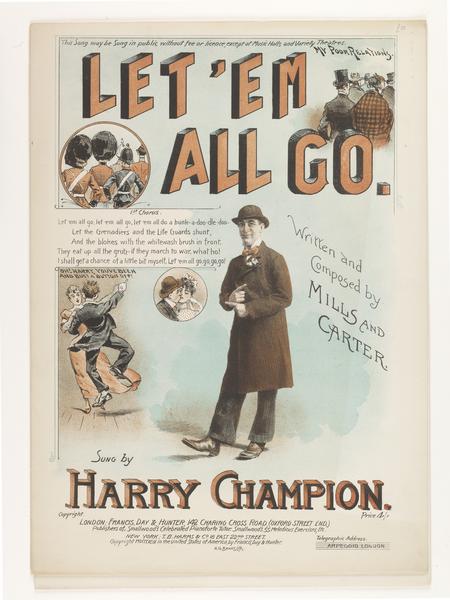
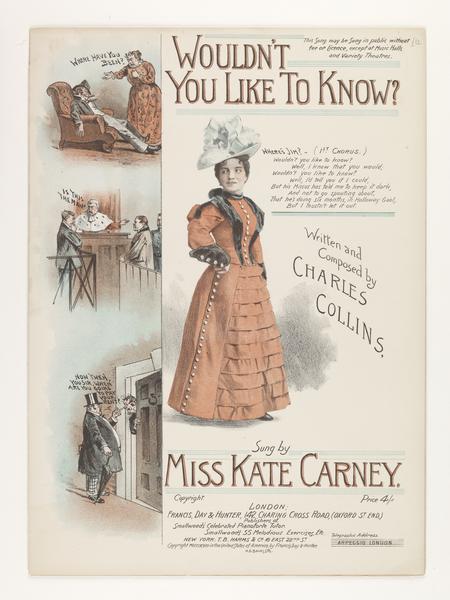
Cockney culture and slang was popularised on stage in the late 19th century by music hall performers known as ‘coster comedians’.
Many played the character of a coster, street traders who sold fruits and vegetables from their barrows. It was costermongers who created the pearly kings and queens tradition, another proud part of Cockney culture.
The music hall performers sang about working-class life and filled their songs with plenty of humour. Stars in this style included Albert Chevalier, Marie Lloyd, Dan Leno and Gus Elen.
Elen sang about the overcrowded East End in If It Wasn’t For the Houses in Between; Or The Cockney’s Garden. Our collection includes the song sheet for another of his songs, ‘You could see as ‘ow ‘e didn’t feel at ‘ome’.
Some songs that appeared in music halls are still associated with Cockneys. Knees up Mother Brown was originally a 19th-century pub song. Other Cockney classics came after the music halls closed in the 20th century, like Maybe it’s because I’m a Londoner, written by Hubert Gregg in the 1940s.
Tags
-
-
Photography
 Photography
An elevated view looking over the East End towards Bow (photograph)
Monck, Margaret, Monck, Margaret
1931-1940
-
Photography
Photography
An elevated view looking over the East End towards Bow (photograph)
Monck, Margaret, Monck, Margaret
1931-1940
-
-