The bustling port of Roman London
The port was the beating heart of the Roman city, an area stuffed with people, warehouses and workshops dealing in goods from across the empire.
City of London
Around 62–250 CE
London’s portal to the rest of the Roman world
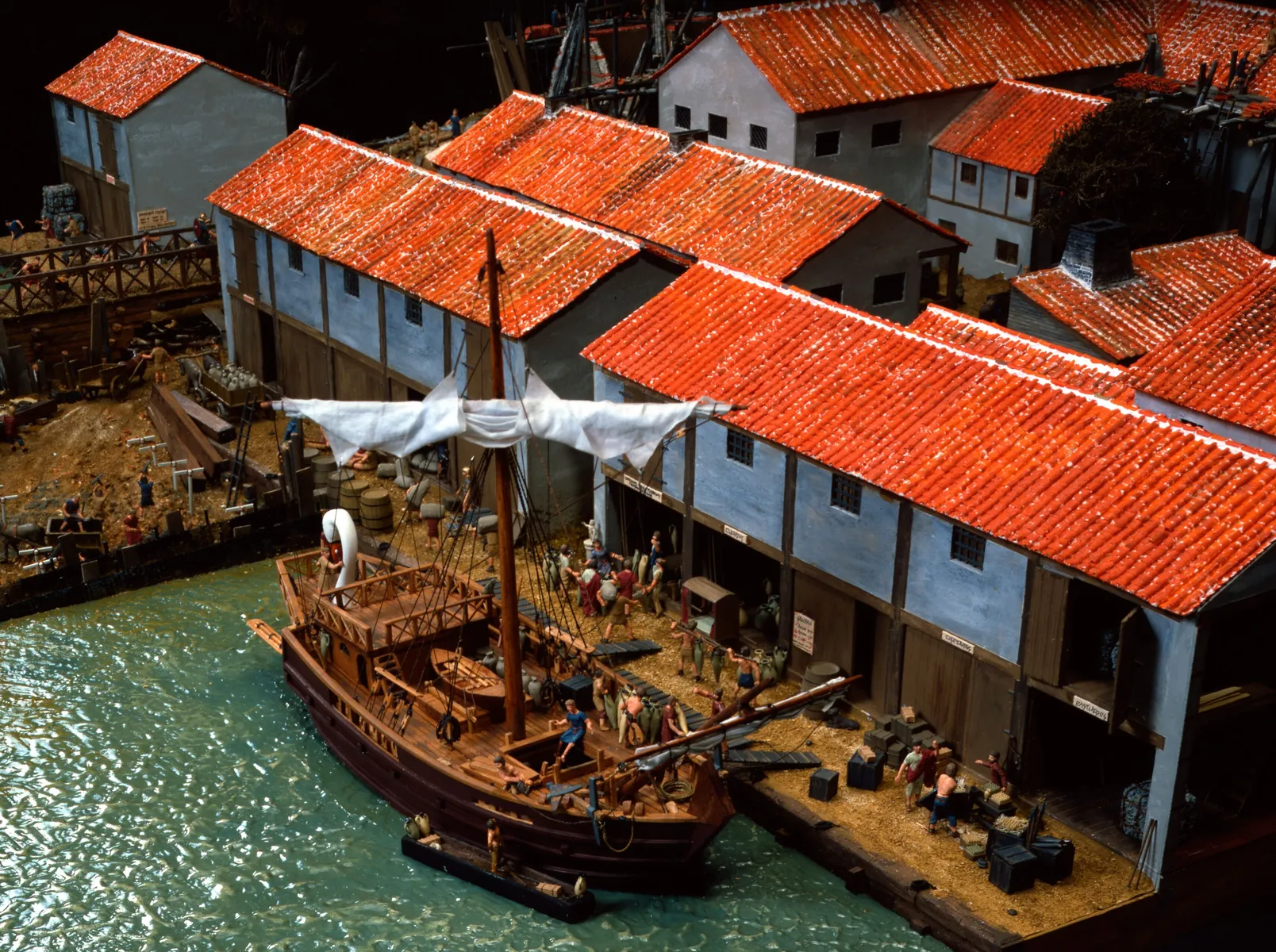
The port was a timber centrepiece of Roman London. It was one of the city’s busiest areas, crowded with merchants, shippers and dockworkers moving goods off ships, through the quays and into the riverside warehouses. A mix of trades, like metalworkers and carpenters, fanned out from the waterfront.
Built in the mid-1st century, the port served the needs of the expanding city over the next 200 years. Commodities like stone, olive oil, fish sauce and textiles were shipped in from all over the empire. These objects and the containers they were transported in, like amphorae, have helped us understand what came in and when.
In the 3rd century, instability across the empire and a shift in military supply routes caused trade through the port to decrease. The construction of a defensive wall around London created a physical barrier between the riverside and the city, which also contributed to its decline.
Building the Roman port
Roman London owed much of its success to its location on the Thames. Back then, the river was much wider and shallower than it is today. The focus of the Roman settlement was on the northern bank, where the Thames narrowed – a convenient spot to cross the river and for boats to reach.
We think the waterfront construction on the northern bank began around 62 or 63 CE. This was a few years after early London was burned to the ground during the Boudican rebellion against the Romans. Military engineers built timber quays and warehouses to receive goods from around the empire, which supplied the military, government officials and the growing population. These goods would have also been taken to other settlements in Britain.
-
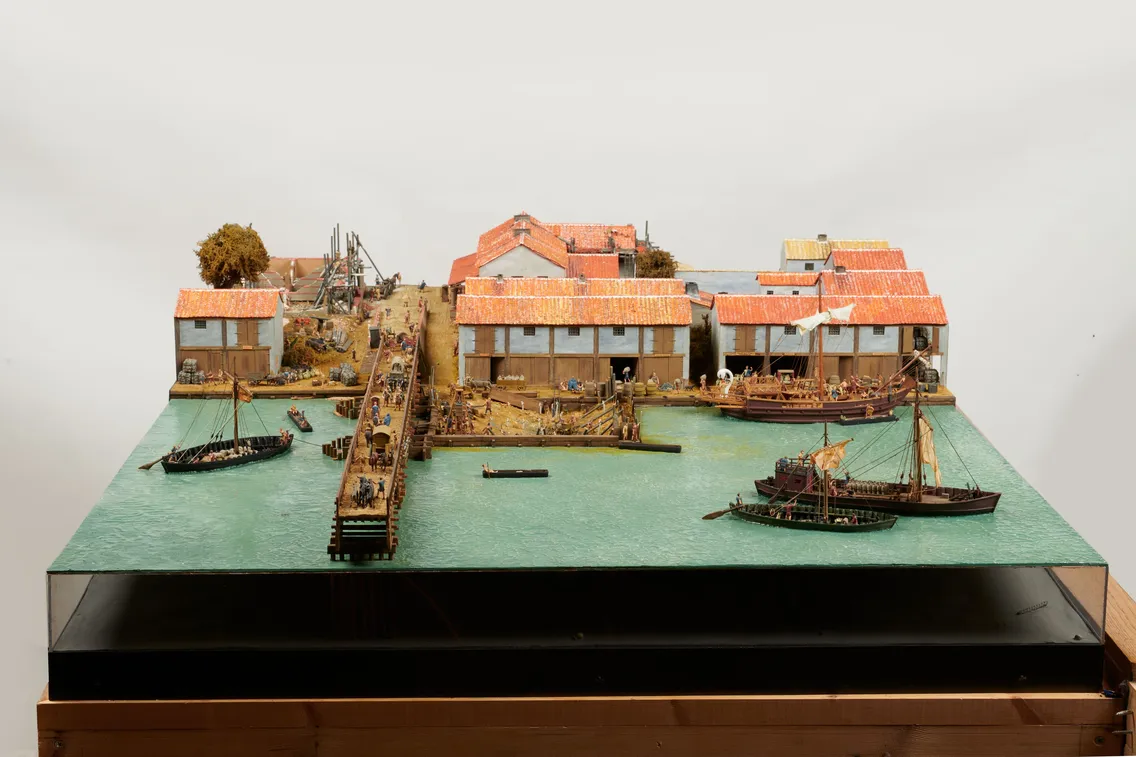
Model of London’s Roman port, showing the quayside to the east of London's first bridge in about 100 CE.
The port stretched around 650 metres eastwards from modern-day Cannon Street Station to Custom House, following the path of Lower and Upper Thames Streets. Over time, as water levels dropped and quays became blocked with silt, the Romans built new quays that extended further out into the river.
Connections to the empire and the province
The Romans also built a bridge near the port sometime after the mid-1st century. Not much of the Roman structure remains. But we know it was near London Bridge, thanks to the position of nearby streets and the large number of coins found in the riverbed.
London was the biggest town in the province by the late 1st century, and both goods and people came to the settlement from all over the Roman empire.
The port played an important role in distributing goods across the province, particularly along the network of Roman roads. Open-fronted warehouses enabled goods to be stored in transit. Much of what came into London through the port was destined for the city itself. The surviving containers and lead seals help us understand what came in and out.
It’s unlikely that big ships would have been able to travel up to the port. Navigating the tides and shoals would have been too dangerous. Smaller ships called lighters would have taken goods from the ships to shore.
“The river and port served the needs of a growing London”
Things like preserved figs, olive oil, wine and pottery were transported to London from places like France, Spain and the Mediterranean. These were often transported in ceramic containers called amphorae. Wine also came in wooden barrels whose lids were sealed with pine resin. People from the Continent and high-status Britons would have been familiar with these goods.
Fragile glass or ceramic tableware came from western provinces, which were territories spanning much of western Europe and North Africa. Clay pipe figurines of gods and goddesses were imported from France, as was samian, a common form of shiny red pottery. Pottery analysis shows that London had vast quantities of samian ware dining sets. This indicates that entertaining and business were part of everyday life for many in the city.
-
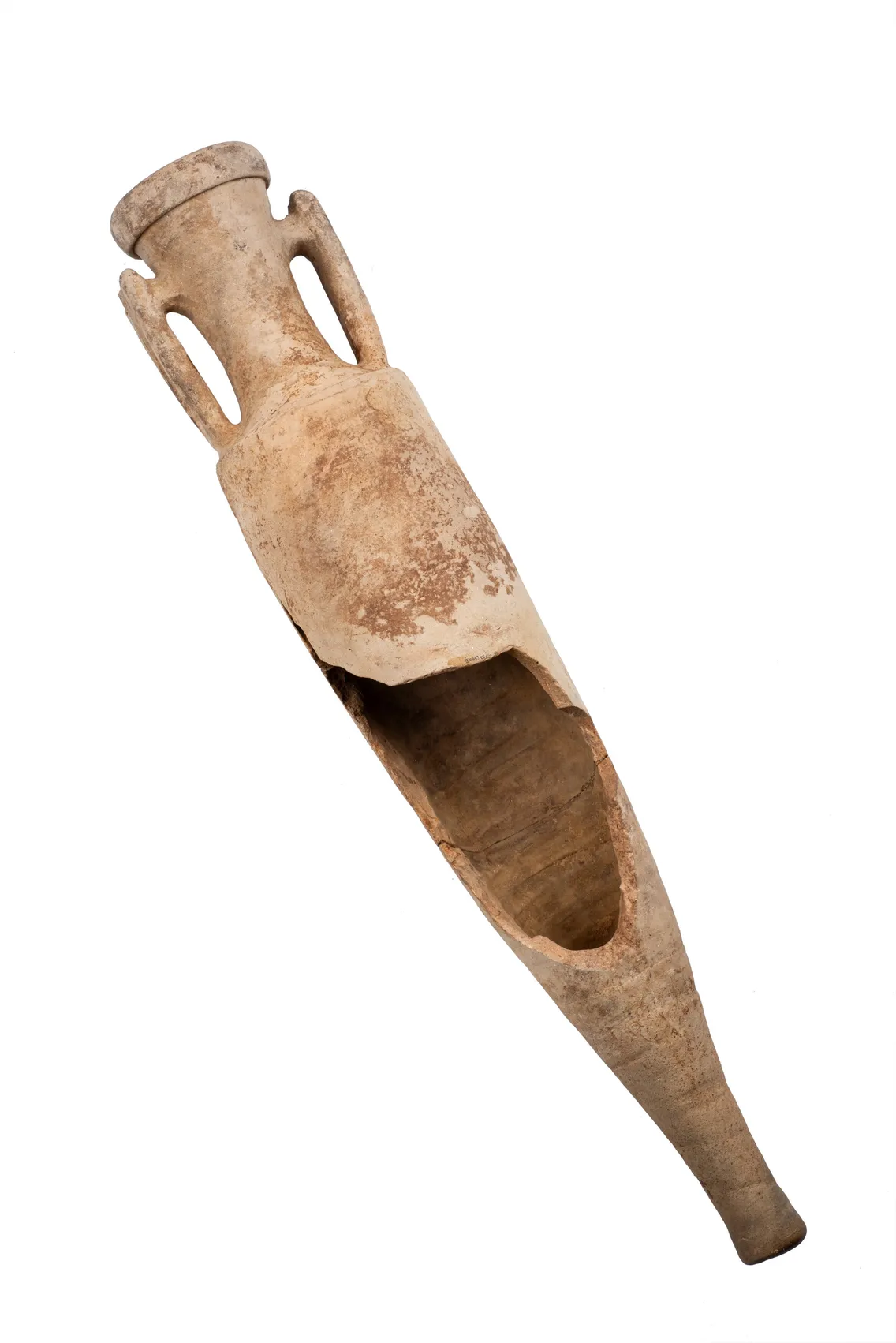
This amphora came from Antibes in France and was used to transport fish sauce.
-
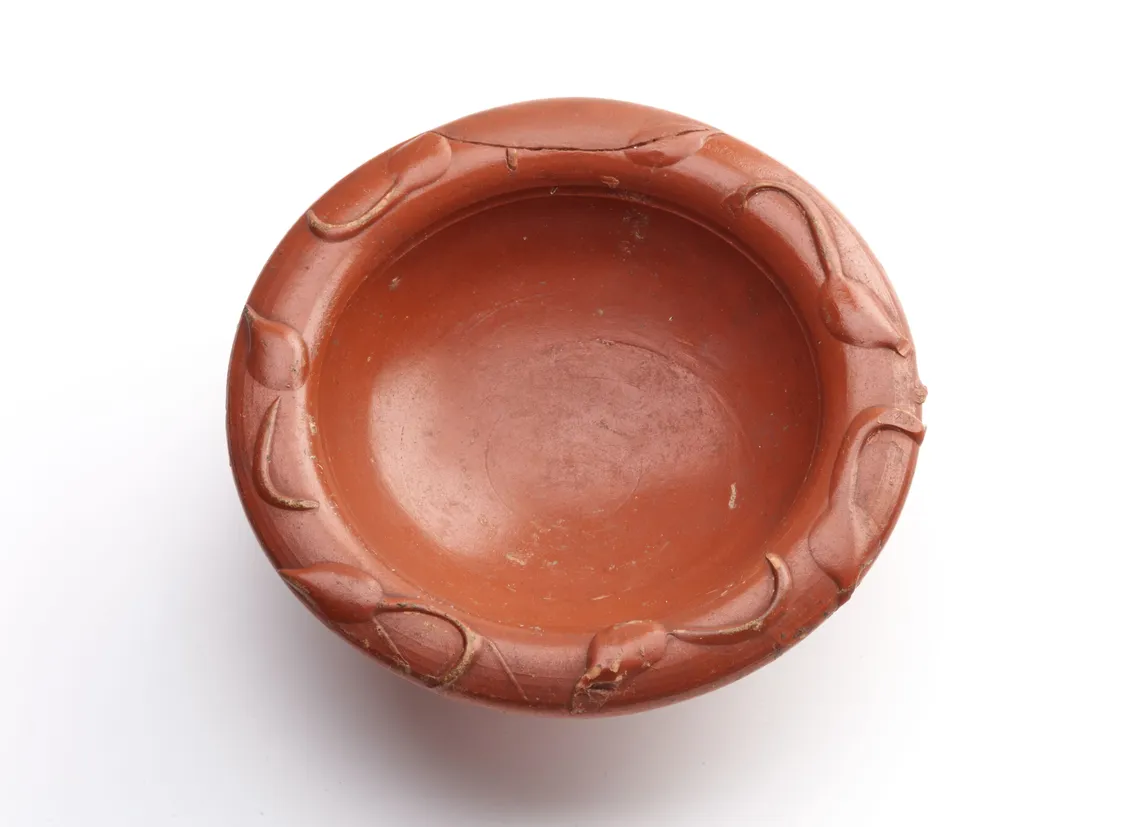
Samianware like this cup was very popular in Roman London.
London also saw strong demand for expensive products from the Continent, which suggests that there were many wealthy people in the city and across Britain. Silk textiles, ivory, amber and fine pottery would have been found decorating the houses and adorning the bodies of rich and powerful Londoners.
The river and port serviced the needs of a growing London. While timber and tiles could be sourced from around the city, expensive marble was shipped over from Greece, Turkey and Egypt. As stone became a popular building material, it was quarried elsewhere in Britain and shipped in, as London has no naturally occurring stone. One flat-bottomed boat found in the Thames had Kentish rag onboard, a stone brought from the Medway area for use in the construction of public buildings.
Imports would have far outweighed exports. But we know some items were shipped out from London, such as raw materials like lead, which was extracted from government-controlled mines in Somerset.
Britain also imported and exported enslaved people through London’s port. We know the name of one young enslaved woman, Fortunata, from the deed of sale written onto the wooden tablet below. She was originally from France.
-
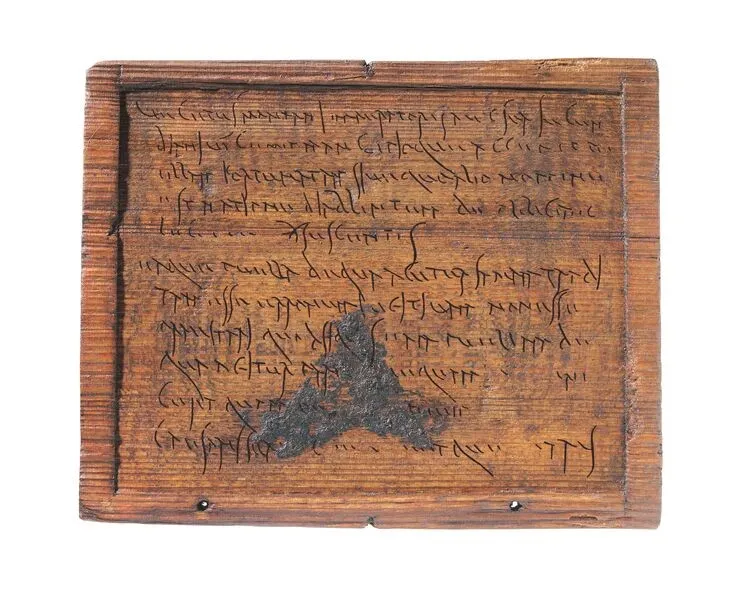
Wooden writing tablet detailing the sale of a young enslaved woman called Fortunata.
Who worked in the port?
The riverside was crowded with sailors, fishermen and merchant communities. Various trades congregated around the port behind the warehouses, including blacksmiths, tanners and leatherworkers. Fish bones of herring and sprat were found just north of the warehouses, suggesting this was where fish was processed. It may have been where garum, a popular fish sauce, was locally produced.
Nearby, in the tidal creeks and tributaries of the Thames, were pottery manufacturers, glass workshops, boneworkers, leather workers and shipyards.
We know the name of one trade representative in London, Tiberinius Celerianus, from the Latin inscription on this tablet below. We think it might have been made around 160 CE.
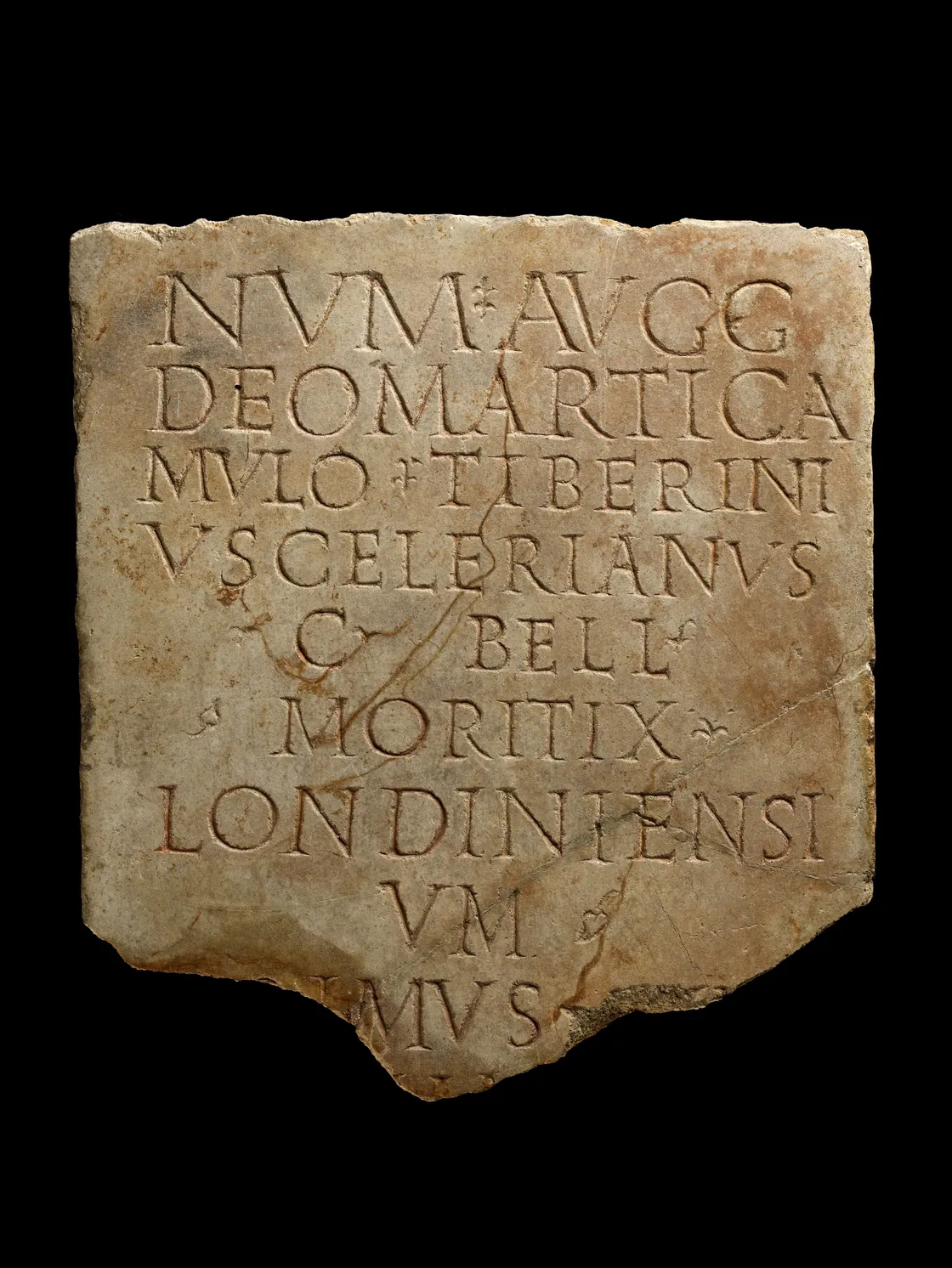
Inscription naming the trade representative Tiberinius Celerianus.
The inscription calls Celerianus “a citizen of the Bellovaci, moritix”. The Bellovaci were a community in northern Gaul, now France, and ‘moritix’ is a rare Gaulish-Latin word translated to mean a representative of a trade association.
Not everyone living in the empire had citizenship, and it was a social status that gave certain legal protections and the right to vote. This is the only known inscription of this kind found in Britain.
Why was the Roman port shut down?
The port was active until around 250 CE. There are multiple reasons for the port’s decline. Trade had decreased, the city needed the protection of a defensive wall, and military supply routes had shifted north. London’s role in supplying the Roman army had been overtaken by places like York. However, trade continued on the south bank in Southwark, where warehouses have been found, and markets may have happened at low tide.
London was also impacted by the turbulent times across the empire, which was itself weakened by conflict at its borders and power struggles among its rulers.
By about 275 CE, a defensive wall had been built into the Thames on its northern bank, severing the waterfront buildings from the river. This was an extension of the Roman wall that encircled the northern part of the city – defence had become the priority. The beginning of the decline of Roman Britain began just a few decades later.
By the 4th century, the timber quays had been largely dismantled.