Anti-nuclear protests in dangerous times
In the UK, major protests calling for a ban on nuclear weapons began in the late 1950s, led by the Campaign for Nuclear Disarmament (CND). The anti-nuclear, pro-peace campaign group became a feature of the city’s culture and politics, particularly in the 1960s and again in the 1980s.
Trafalgar Square & Hyde Park
1957–1987
The dawn of the nuclear age
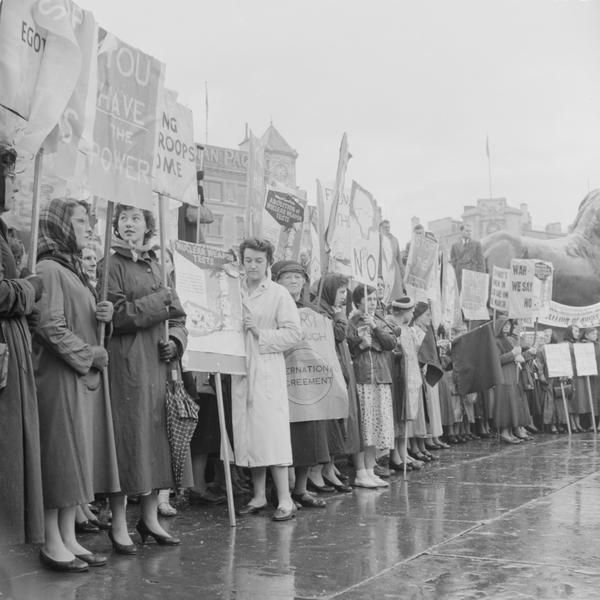
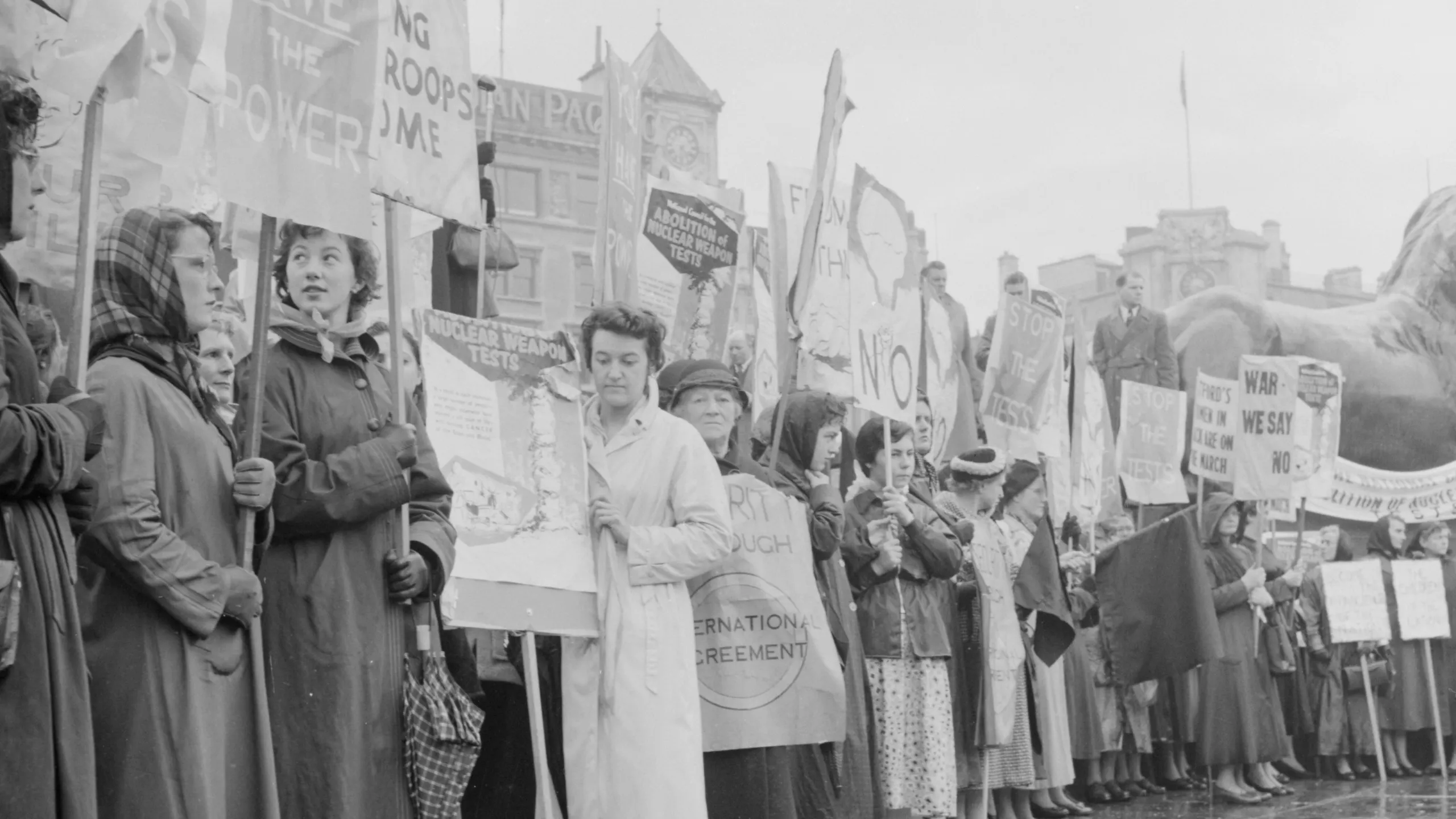
In August 1945, the US dropped two atomic bombs on Japanese cities, killing over 100,000 people and effectively ending the Second World War (1939–1945). By 1953, Britain had completed its own nuclear test. But there was concern over the terrifying power and toxic radioactivity of the new weapons. This protest at Trafalgar Square in 1957 was staged by a precursor to CND.

The Campaign for Nuclear Disarmament
Founded in 1957, CND was conceived as the central organisation for a mass movement against nuclear weapons. Their campaign mobilised the first mass protests in Britain since before the Second World War. Many took place in London. CND is still running today.
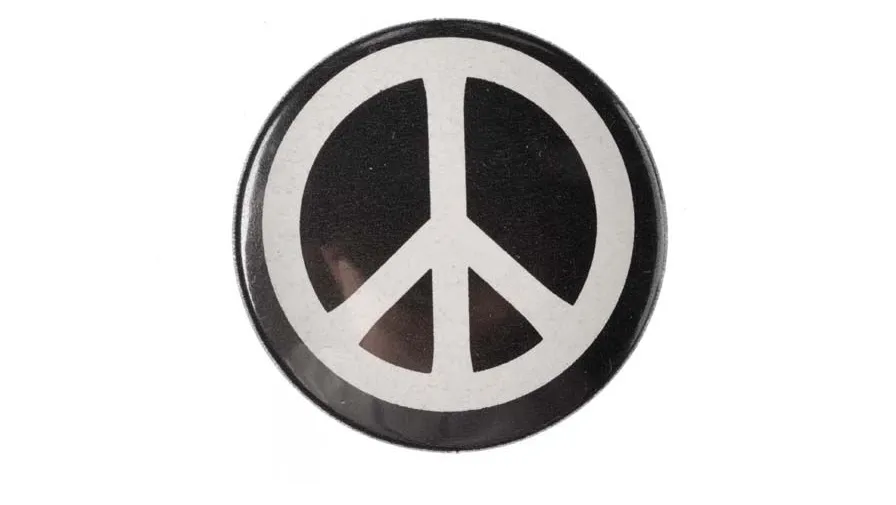
The CND symbol
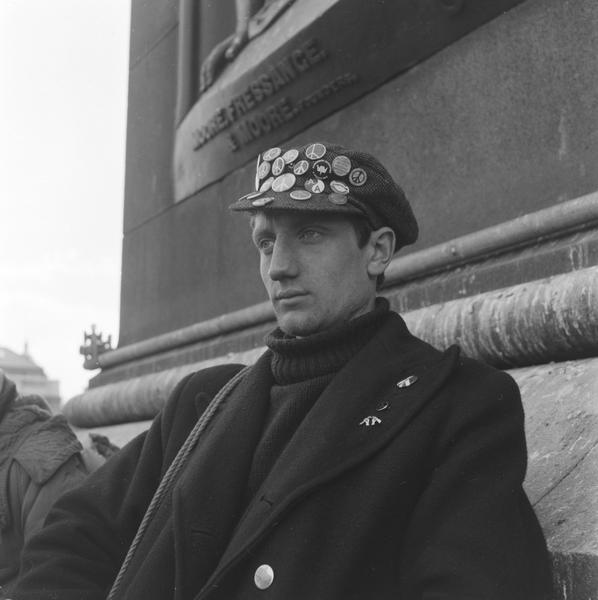
The CND symbol was designed ahead of the group’s first major march in 1958. It’s now a global symbol for peace. The man behind it was Gerald Holtom, a designer and artist who’d studied at London’s Royal College of Art. He began with the simplified image of someone on their knees, arms desperately outstretched in front of them. The resulting shape combines the signs for ‘N’ and ‘D’ in the semaphore signalling system.
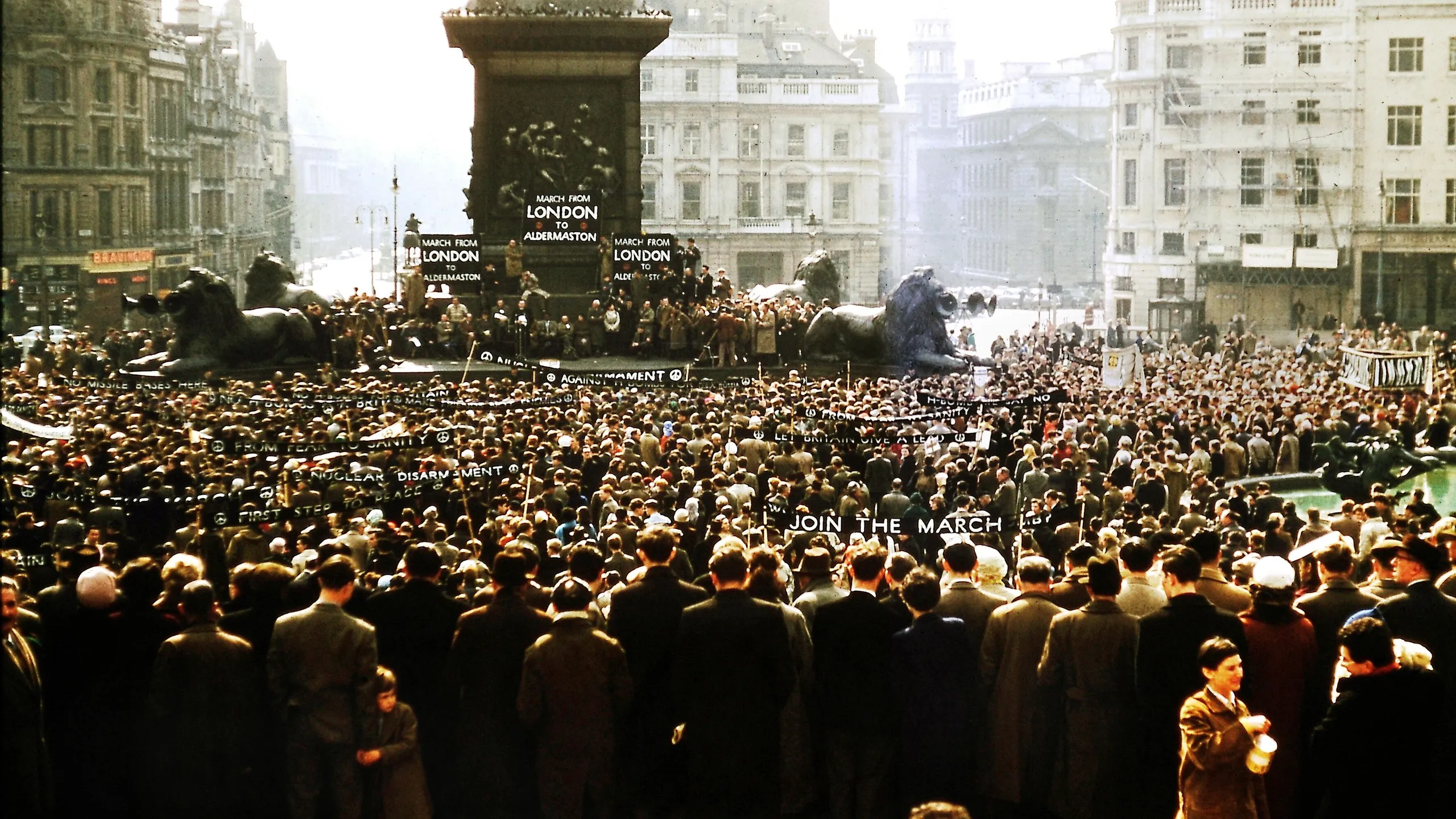
The first march to Aldermaston
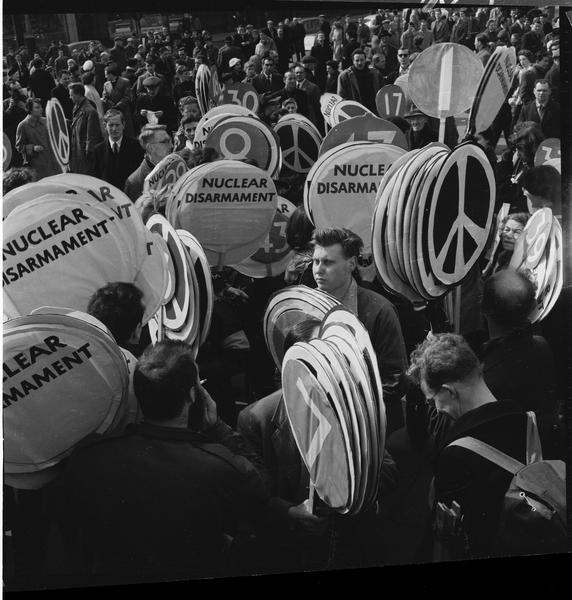
CND gained widespread public attention with their first mass march during the Easter holiday in April 1958. Over four days, protesters walked 52 miles from London to the nuclear research site at Aldermarston in Berkshire. At least 6,000 people were in Trafalgar Square as the march set off.
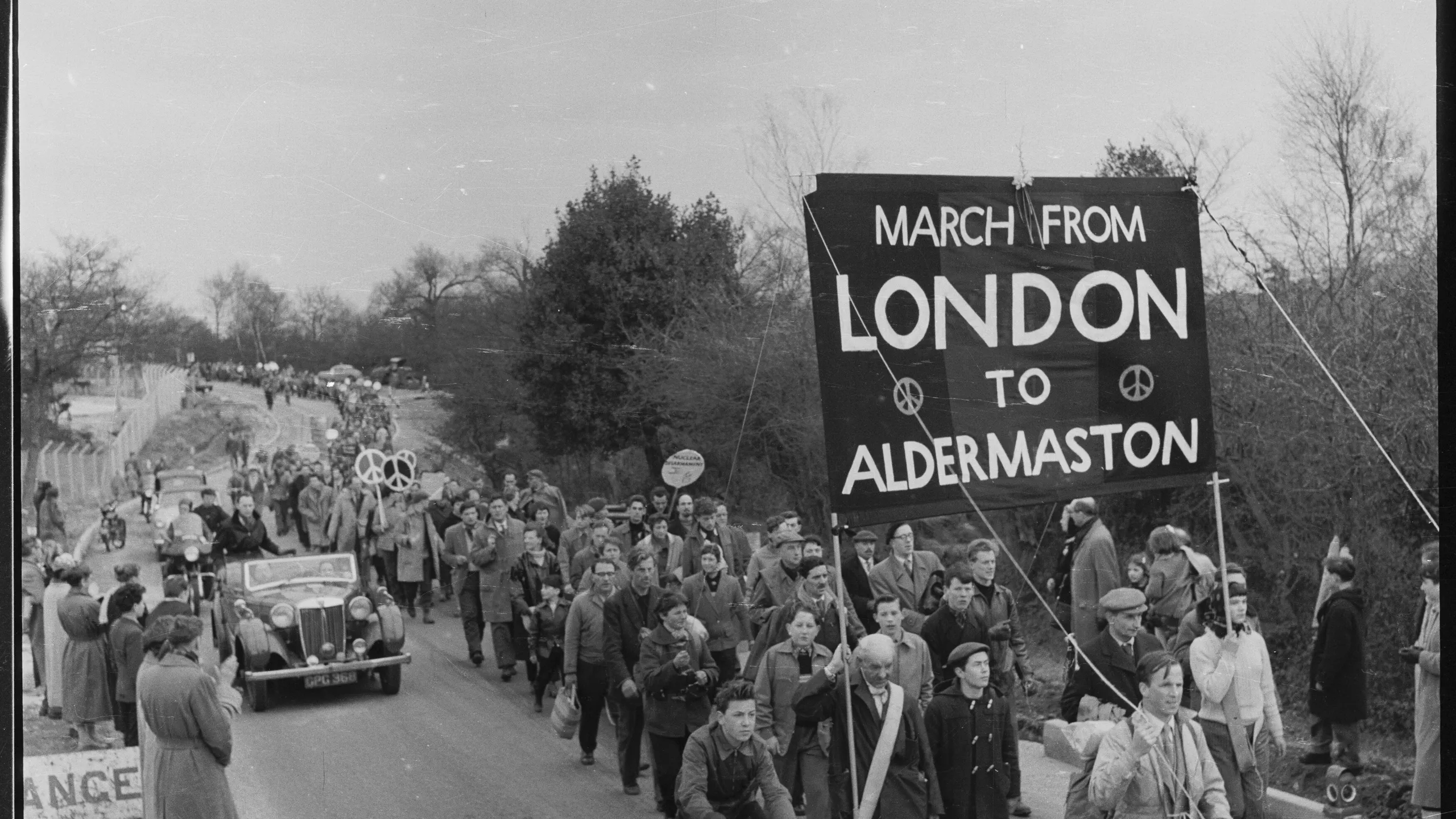
The Aldermaston marches continued
The following year, the march headed in the opposite direction, ending in Trafalgar Square. This became an annual Easter tradition, a fixture of the widespread anti-nuclear activism of the 1960s. The marches drew people from across Britain who were concerned about the environmental impacts of weapons testing, and the danger of global nuclear warfare.

Bertrand Russell
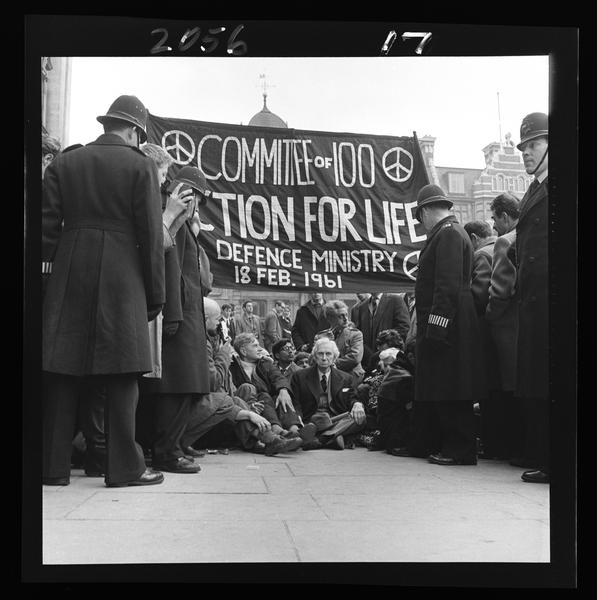
The philosopher Bertrand Russell was one of the co-founding members of CND, together with the Anglican priest John Collins and activist Peggy Duff. This photo shows Russell in February 1961, at the age of 89, attending a protest against Polaris, Britain’s first submarine-launched nuclear missile system.
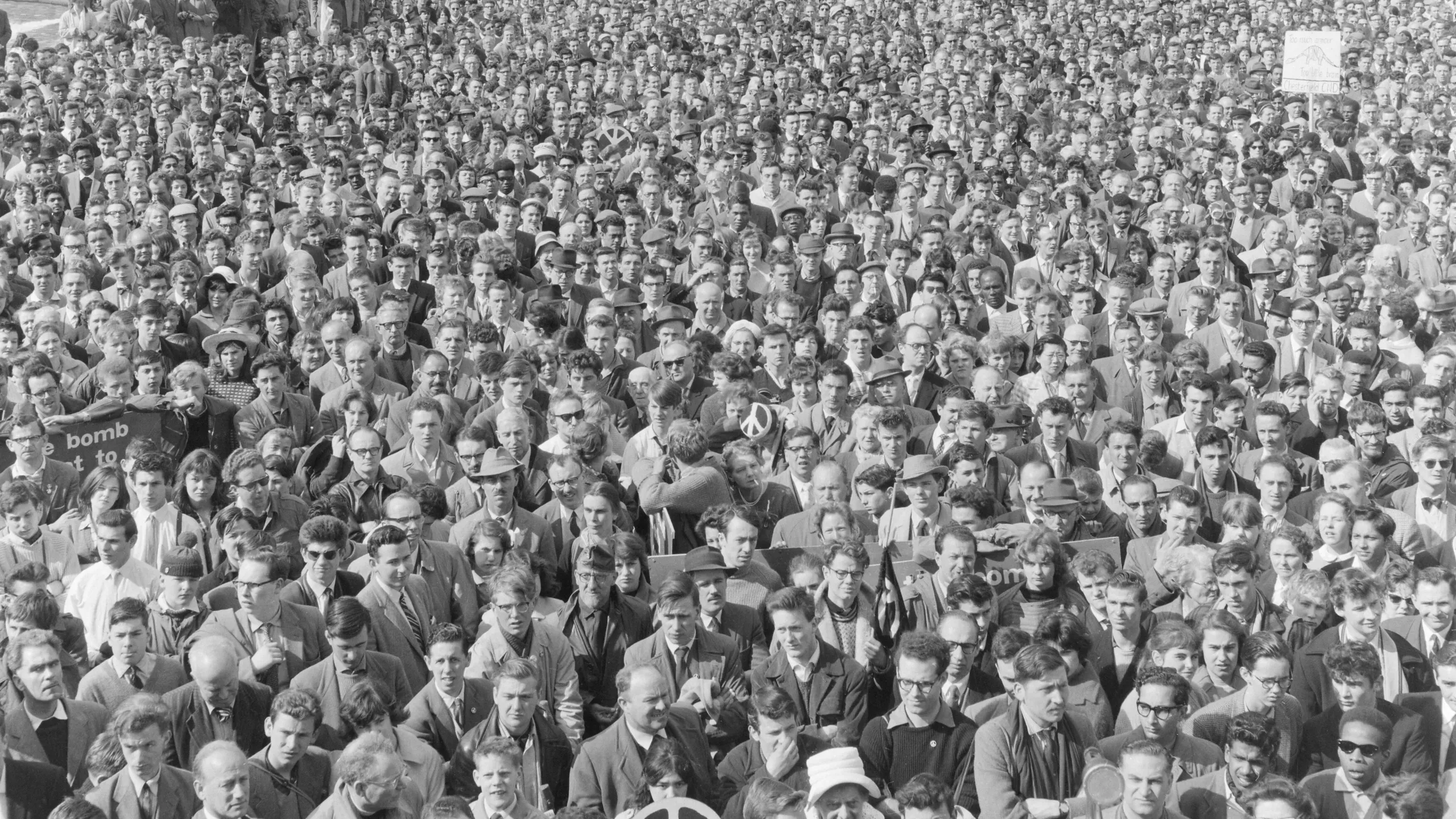
A dangerous world
In the 1960s, the US and the USSR were competing as the world’s dominant superpowers, a rivalry known as the Cold War. In 1962, the Cuban Missile Crisis brought them close to all-out war. In this context, more countries, including Britain, developed their own atomic arsenal. The nuclear threat was firmly in the public consciousness.

A breakthrough agreement
In 1968, the governments of the USSR, UK, US and other countries without nuclear weapons signed the Nuclear Non-Proliferation Treaty. They promised to cooperate to limit the spread of nuclear weapons and to move towards disarmament, though with no agreed timeline. Most countries are now part of the agreement, but some nuclear powers have either left (North Korea) or never joined (Israel).
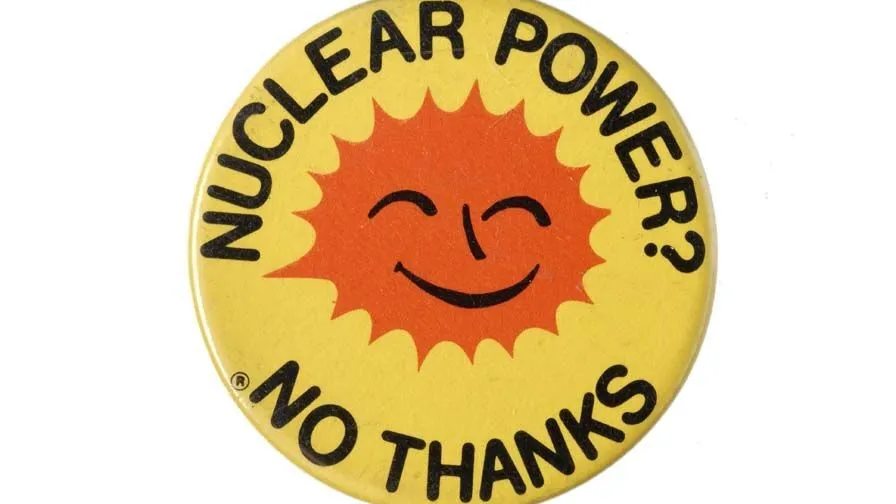
Against nuclear power
This protest badge from the 1980s focuses on the generation of nuclear power, rather than weapons. Many people have considered nuclear power stations to be dangerous. Those fears were increased by the 1986 Chernobyl disaster, when a nuclear reactor exploded in what’s now Ukraine, spewing radioactive material far and wide.

The Euromissile crisis
The late 1970s and 1980s saw another wave of anti-nuclear protests. This stemmed from the decision to deploy US nuclear missiles at NATO bases in five European countries, including the UK. Nuclear war seemed dangerously close once again. The protest pictured here took place in Hyde Park in 1981.

A nuclear-free London
In the 1980s, the Greater London Council (GLC) encouraged the city’s local authorities and residents to protest against nuclear waste being transported through London. The radioactive waste was carried by train from British nuclear power stations. At the time, the GLC was led by Labour’s Ken Livingstone.

A local fight – and an ongoing fight
CND had branches across London who fought their own local campaigns. The nuclear issue faded from the spotlight after a 1987 international treaty and the fall of the USSR in 1991. However, our world is more volatile now. More nuclear weapons are being produced again. And CND is still calling for a global ban.
Tags
-
-
-
Photography
-
-
Photography
 Photography
Bertrand Russell at the anti-Polaris protest, Whitehall (negative)
Grant, Henry
1961-02-18