A Museum of Uncollected Things
A Museum of Uncollected Things is an AHRC-funded two-year project exploring what’s missing from museum fashion collections: the clothes, stories and experiences that were lost, forgotten or never collected.
What’s missing in fashion collections?
Duration: September 2025–September 2027
Funder: Arts and Humanities Research Council (AHRC; grant number UKRI2104)
Researchers: Prof Ellen Sampson (Principal Investigator), University of the West of England; Dr Andrew Richardson (Co-investigator), Northumbria University; Dr Cyana Madsen (Research Fellow), University of the West of England
Academic partners: Northumbria University; Beatrice Behlen, Senior Curator, London Museum
“Bringing omitted or erased histories to light is central to creating a more equitable heritage sector”
What museums choose to collect, and what they leave out, is under growing scrutiny and debate. This project – A Museum of Uncollected Things – turns that question around. Working with London Museum’s Dress and Textile Collection, the project doesn’t ask what the collection holds, but what’s missing from it. What was lost, or never acquired?
Clothes carry personal and collective history, but museum collections only ever capture part of that story. Many dress collections were shaped by narrow ideas of what ‘fashion’ is, and were often focused on European styles and the clothing of wealthy people. This means that many communities and everyday experiences are not well represented. And it’s harder for people to see themselves or their histories in museum displays.
Clothing also presents a special challenge because it is so fragile. Many historical garments don’t survive if they were never collected. So, museums need new ways to recognise and share the stories of the clothes that are missing.
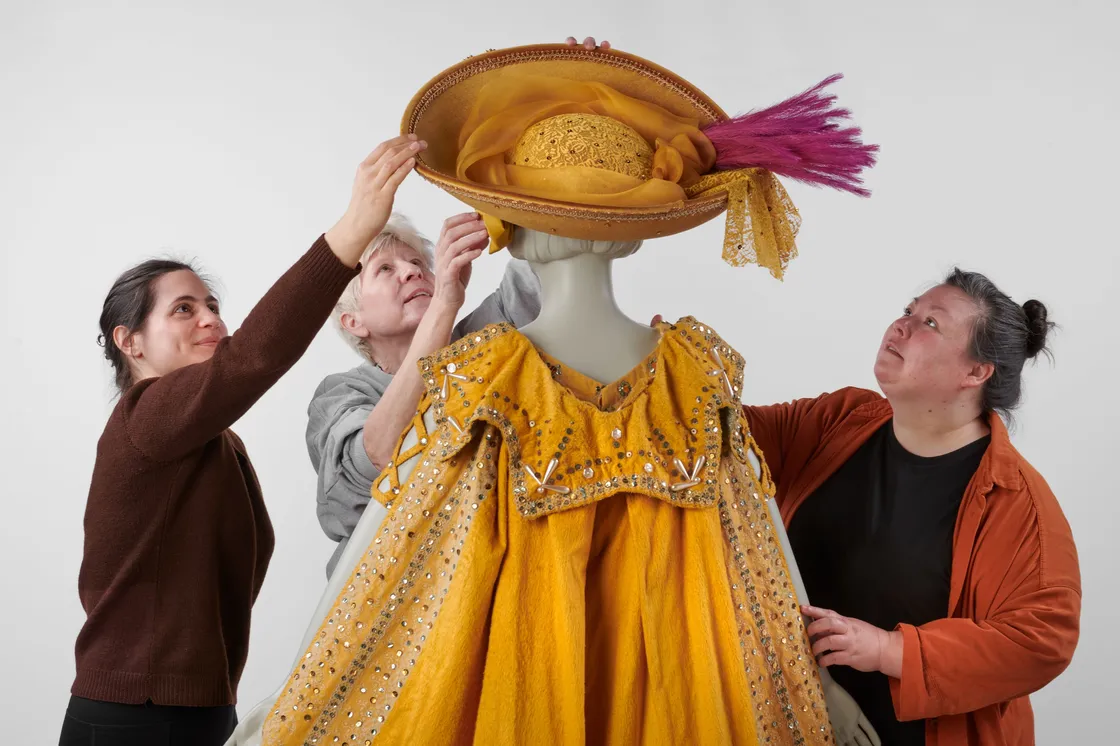
Curators and conservators mounting a dress on a mannequin.
The objective
Bringing omitted or erased histories to light is central to creating a more equitable heritage sector. Taking London Museum as its case study, the project asks:
- How can museums acknowledge what’s missing without collecting new objects?
- How can doing so help us tell broader, more inclusive stories about fashion and history?
- What can this research teach us about the histories of fashion in museums and current museum practices?
- And what can research led by communities themselves teach museums about fixing these gaps in collection policies and practices?
The methodology
A Museum of Uncollected Things uses creative, collaborative methods, including data visualisation, interviews, film-making and artist-led workshops, to explore what’s missing from museum fashion collections. The project brings researchers, museum staff and communities together to think about absence and how to represent it.
The work is broadly organised into five themes:
- Framing what ‘absence’ means for museums through data, interviews and creative visualisation
- Mapping and visualising gaps in the London Museum Dress & Textiles collection
- Running participatory workshops and artist commissions that respond to those gaps
- Sharing the results through exhibitions and screenings
- Building a practical toolkit to help museums address bias without collecting new objects
Get more details
London Museum is a project collaborator. The research team has recruited community participants for compensated focus groups exploring gaps in its Dress & Textiles collection.
For more information, visit the A Museum of Uncollected Things website or email [email protected]
More in Projects
-

Sugar and its Legacies
How has sugar shaped London through slavery, industrialisation and its impact on health?
-

Calling for Change
Young Londoners’ views on a sustainable future for their city
-

Compassion in London: Life on Buses
Are Londoners compassionate on buses?
-

Museums, Class & the Pandemic
Documenting the pandemic’s disproportionate impact on low-paid workers