Purple, white & green: How the Suffragettes built a brand
Running a political campaign requires excellent organisation, clear messaging and plenty of cash. The Suffragettes nailed all three, and created an iconic brand in the process.
1903–1914
A well-oiled marketing machine
Long before rock bands and sports teams started selling merch, the Suffragettes were doing it. Using distinctive colours, creating products and hosting events, they became a brand – a highly successful one.
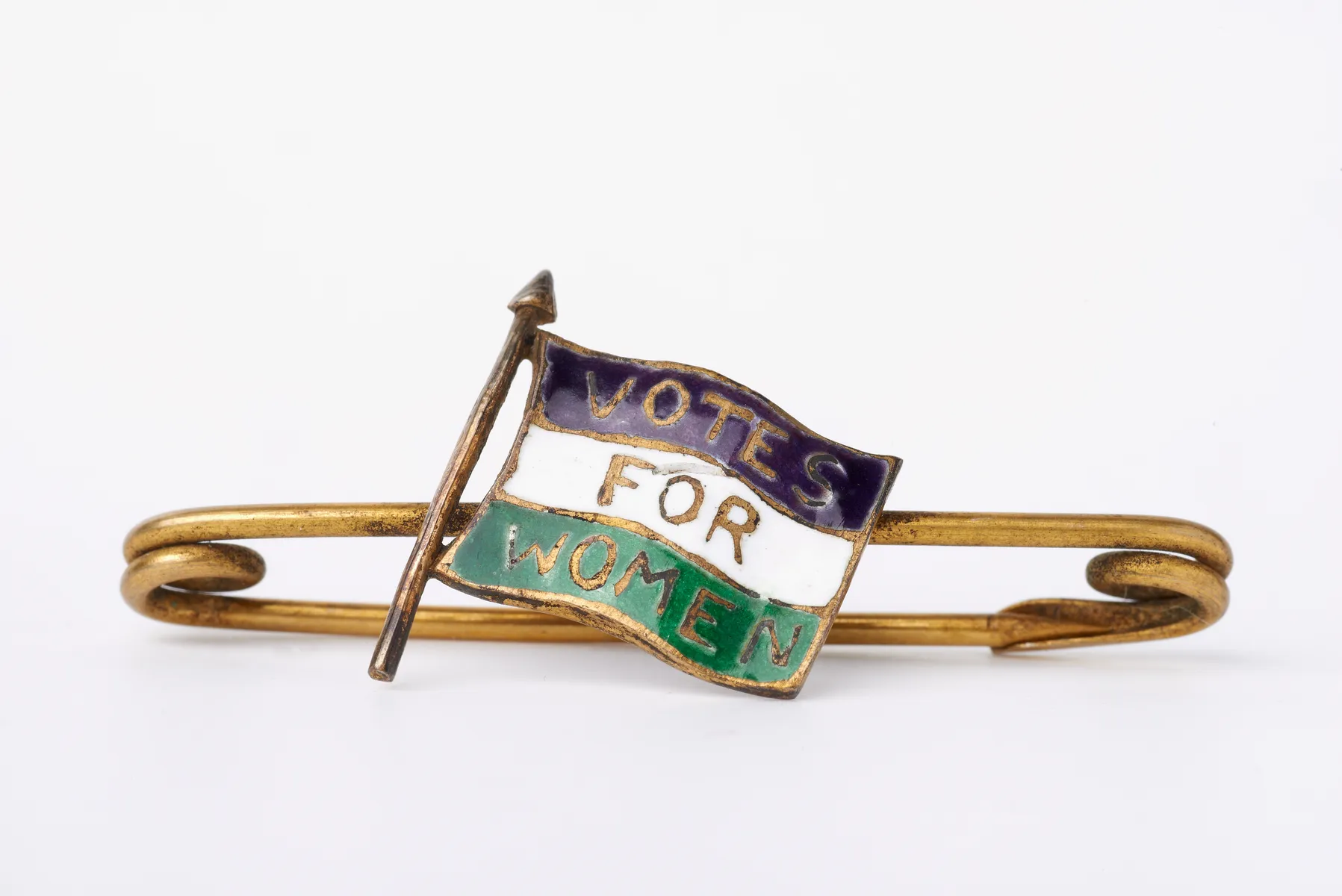
The Suffragettes knew how to run a good marketing campaign in their fight for women’s right to vote. The purple, white and green colour scheme was instantly recognisable and highly visible.
Their products, including the Votes for Women newspaper, helped to amplify the cause and recruit more members. Women wore ribbons and rosettes to support the cause in their everyday life.
Fundraising schemes and events, like the Women’s Exhibition held in London in 1909, also contributed to the Women’s Social and Political Union’s (WSPU) ‘war chest’. This money was essential as it funded meetings and propaganda production. It also paid for full-time organisers to spread the votes for women message around the country.
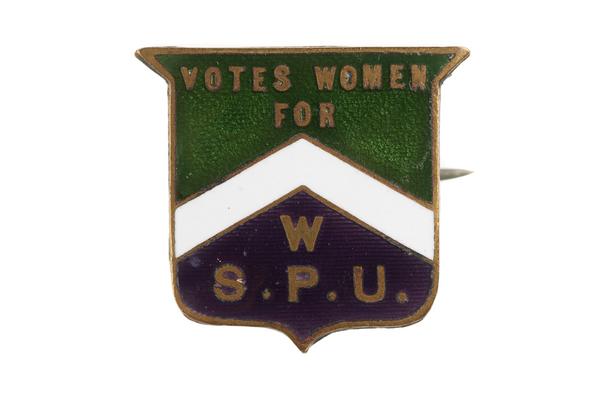
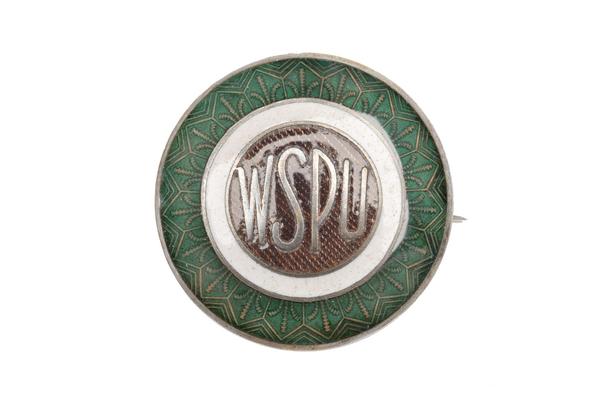
Purple, white and green
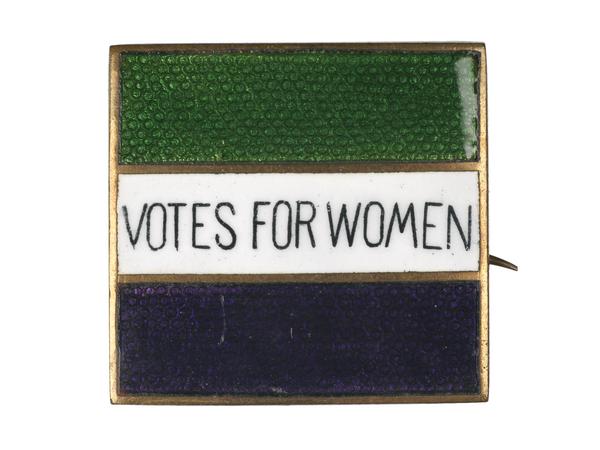
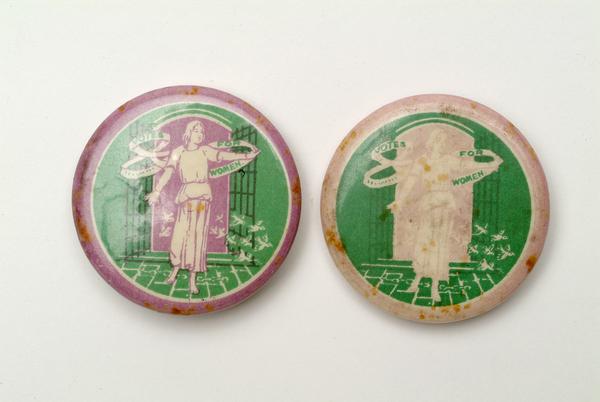
The WSPU was instantly identifiable thanks to its purple, white and green colours. Emmeline Pethick-Lawrence, WSPU treasurer and co-editor of the Votes for Women newspaper, designed the colour scheme. Purple stood for dignity, white for purity and green for hope.
Suffragette Sylvia Pankhurst, who’d trained at the Royal College of Art, produced many designs using the colours. She also created the angel of freedom logo that featured on numerous objects.
Suffragette marches would be a sea of purple, white and green, with women wearing sashes and carrying embroidered banners. But these wouldn’t be the only places to see the Suffragette branding.
Shopping for Suffragette merchandise
To keep attention on and raise money for the campaign, the Suffragettes sold a wide range of merchandise, including fashion accessories, Christmas cards and board games. Everything was branded with Suffragette slogans and colours.
These items could be bought via mail order or purchased at WSPU high street shops. There were 19 of these shops in London alone. Department stores like Selfridges and Liberty also stocked tricolour products, such as ribbons, slippers, soap and even underwear.
-
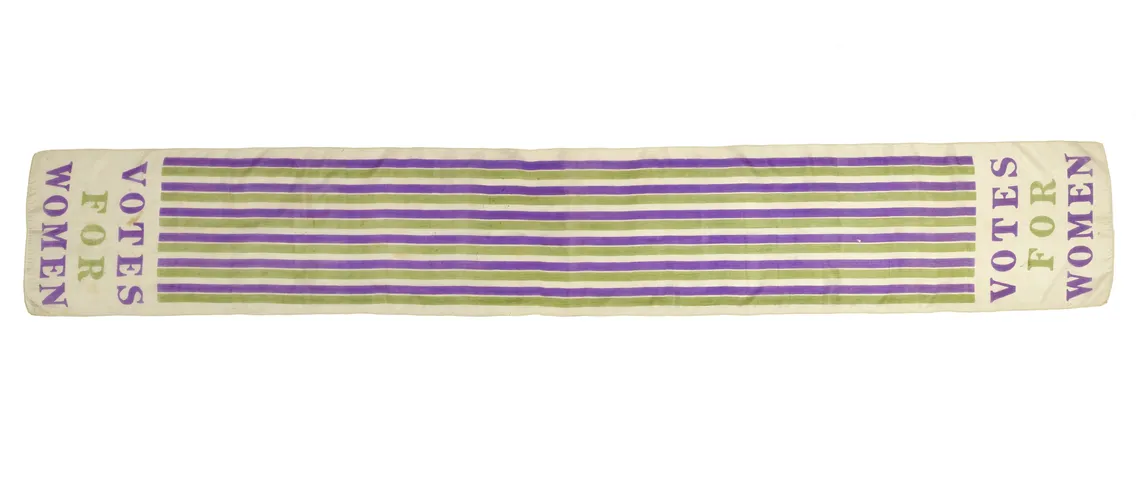
A silk motoring scarf in the Suffragette colours.
-
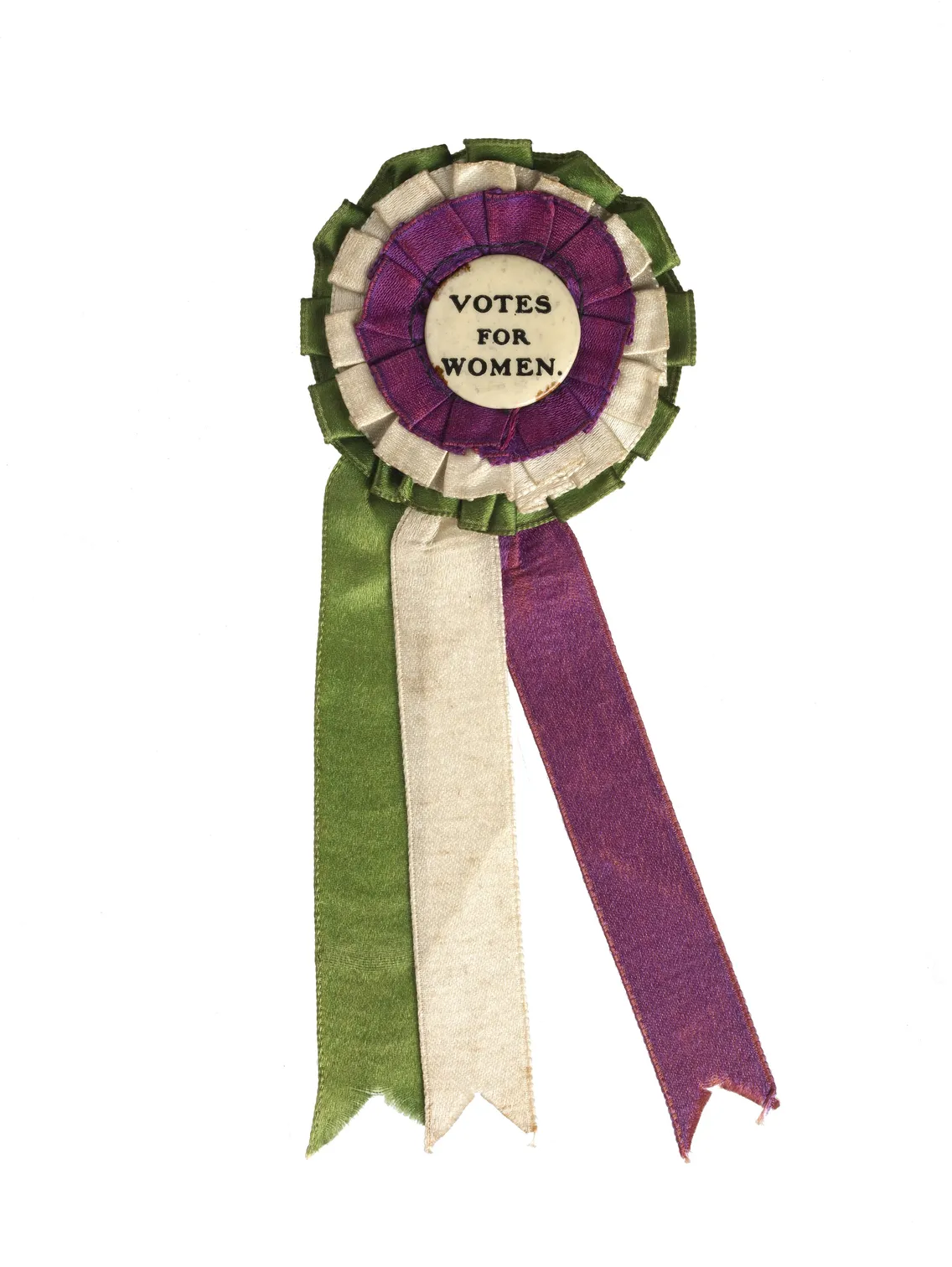
Suffragettes were encouraged to wear these rosettes at all times.
-
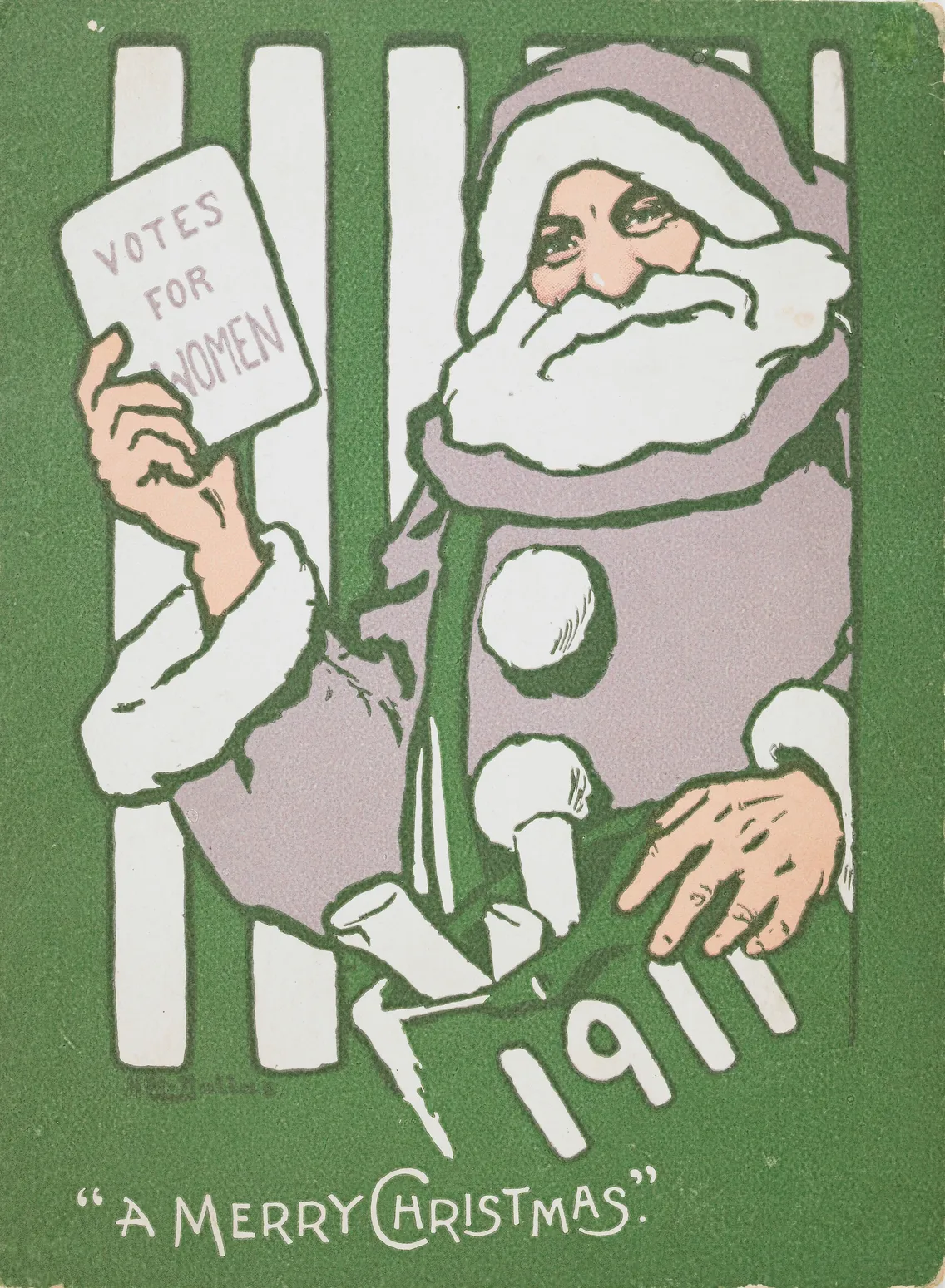
Wish someone a Merry Christmas and support votes for women with this card.
-
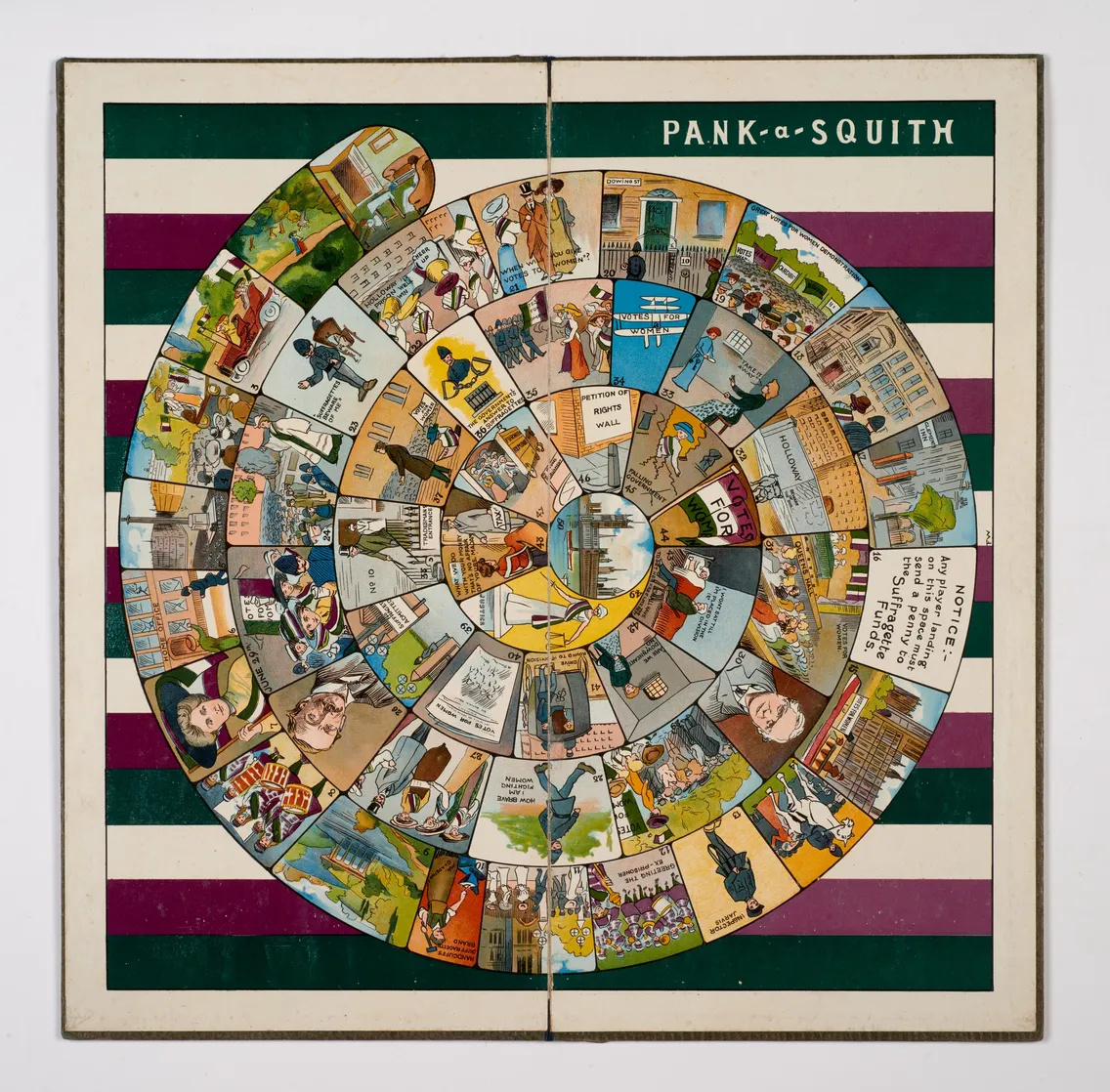
In the Pank-a-Squith board game, players attempt to move a Suffragette from her home to the Houses of Parliament.
These items helped bring the votes for women message into people’s homes. The use of fashion also worked as a recruitment method.
Leadership encouraged Suffragettes to ‘wear the colours with pride’ and embrace, rather than challenge, their femininity. Suffragette processions through London became a spectacular vision of purple, white and green that attracted crowds of spectators and press photographers.
“Wear the colours as a duty and a privilege. Never be seen without your badge.”
Votes for Women
As well as selling branded products, the Suffragettes also had their own newspaper. Votes for Women was established and co-edited by Emmeline Pethick-Lawrence and her husband Frederick, who funded the paper.
Beginning as a monthly publication in October 1907, it was published weekly from April 1908. The paper was sold in WSPU shops, other newsagents like John Menzies and by Suffragettes on the streets. It encouraged women to don the purple, white and green, declaring: “Wear the colours as a duty and a privilege. Never be seen without your badge.” Stores selling Suffragette products often took out advertisements in the paper.
At its height, Votes for Women sold around 40,000 copies a week and had an average weekly readership of 160,000.
Fundraising events and the Women’s Exhibition
Fundraising schemes and events were critical to maintaining the campaign’s ‘war chest’. The WSPU introduced self-denial weeks, where supporters would give up little luxuries and donate the money saved to the campaign. It was common to place jewellery in collection plates at the end of their meetings.
Local WSPU branches would draw on the baking and sewing skills of their members and hold garden parties, fairs and bazaars.
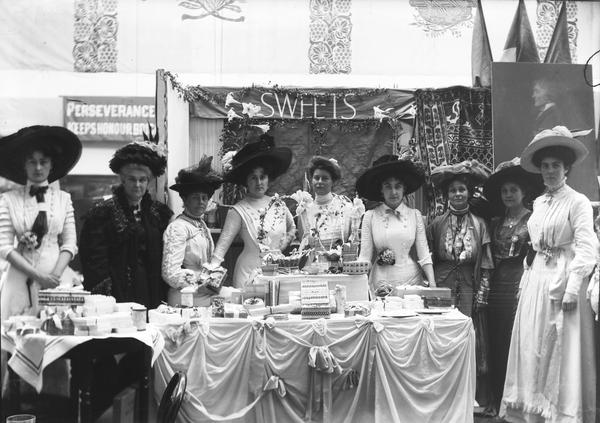
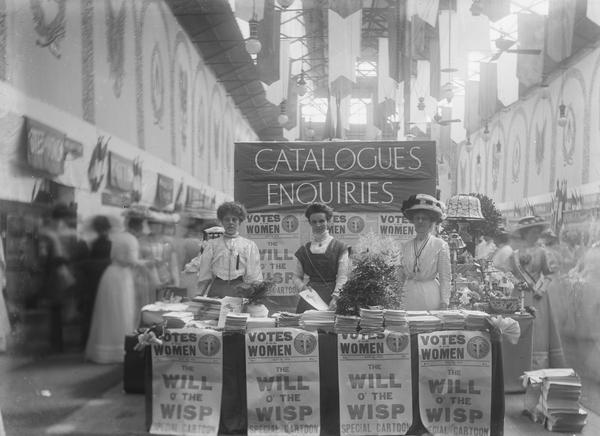
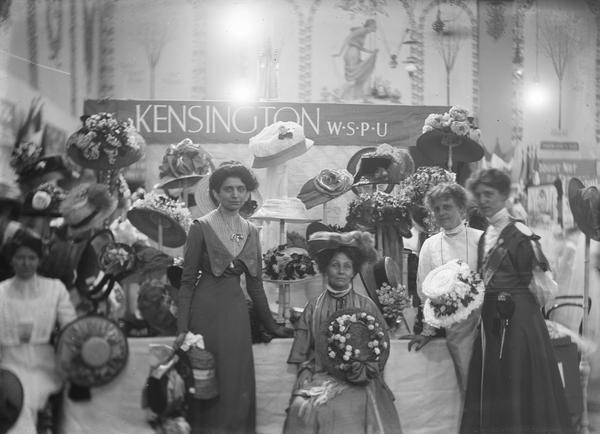
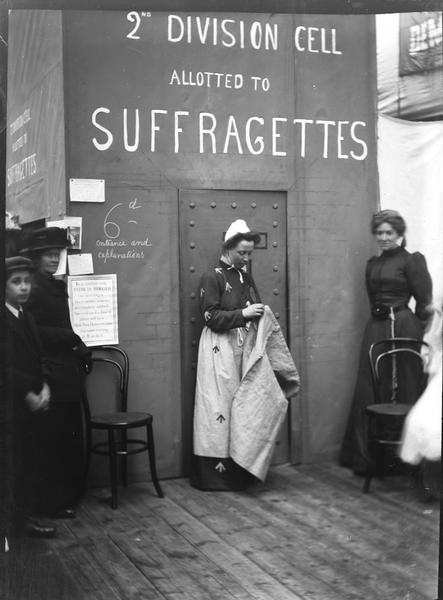
In May 1909, the WSPU held the Women’s Exhibition and Sale of Works in the Colours at Prince’s Skating Rink in Knightsbridge, one of London’s early ice rinks. The two-week event featured over 50 stalls decorated in purple, white and green, selling items made by Suffragettes and donated by local businesses.
-
Photography

-
Photography
-
Photography
 Photography
Suffragette stand at The Women's Exhibition, Knightsbridge (glass plate)
Broom, Christina
1909-05
-
Photography
 Photography
Kensington W.S.P.U. stand at The Women's Exhibition, Knightsbridge (glass plate)
Broom, Christina
1909-05
-
Photography

-
Photography
 Photography
Reconstructed prison cell at the Women's Exhibition (glass plate)
Broom, Christina
1909-05
There were stalls selling farm produce, hats, sweets, and catalogues. There was even a reconstructed prison cell allowing attendees to experience the conditions endured by the Suffragettes sent to Holloway Prison. We have photographs of these stalls, taken by pioneering photographer Christina Broom.
The refreshments stall was the most popular of all, taking a total of £600 – almost £64,000 in today’s money – across the two weeks.
Tea services, featuring Sylvia Pankhurst’s purple, white and green ‘trumpeting angel’ motif, were commissioned for the occasion. These were sold off after the exhibition, raising even more money for the campaign. We have a teapot, plate, sugar bowl and cup and saucer in our collection.
-
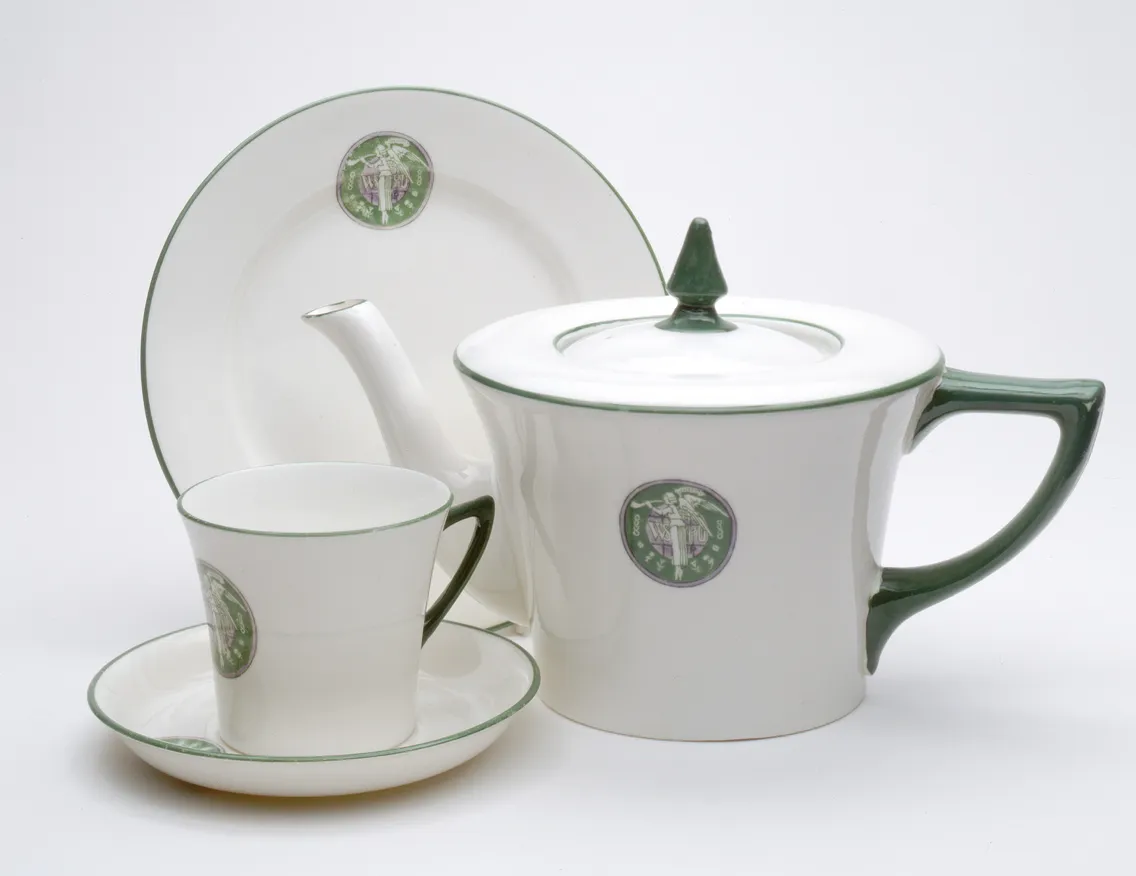
A china teapot, plate, cup and saucer decorated with a Suffragette logo.
The Women’s Exhibition was a big success, raising over £5,000, equivalent to over £530,000 now, and recruiting more than 250 members.
Big money moves
By 1909, the WSPU had an annual income of £21,213 – over £2.2 million today – and growing. That’s more than double the funding the Labour Party was receiving at the time. In five years, Emmeline Pethick-Lawrence helped to raise the equivalent of £6.8 million.
The WSPU was a highly organised campaign movement dominated by charismatic leaders. Its unprecedented success in creating a unique brand ensured the Suffragette tricolour became globally recognised. This helped raise the votes for women cause to the top of the political agenda.
Tags
-
Printed Ephemera
 Printed Ephemera
The Women's Exhibition, May 1909 (photographic postcard)
Barrett's Photo Press
1909-05
-
Printed Ephemera
 Printed Ephemera
Women's Exhibition and Sale of Work, Knightsbridge. Women's Social and Political Union. (notice)
Women's Social and Political Union
1909
-
-
Printed Ephemera

-
Printed Ephemera
 Printed Ephemera
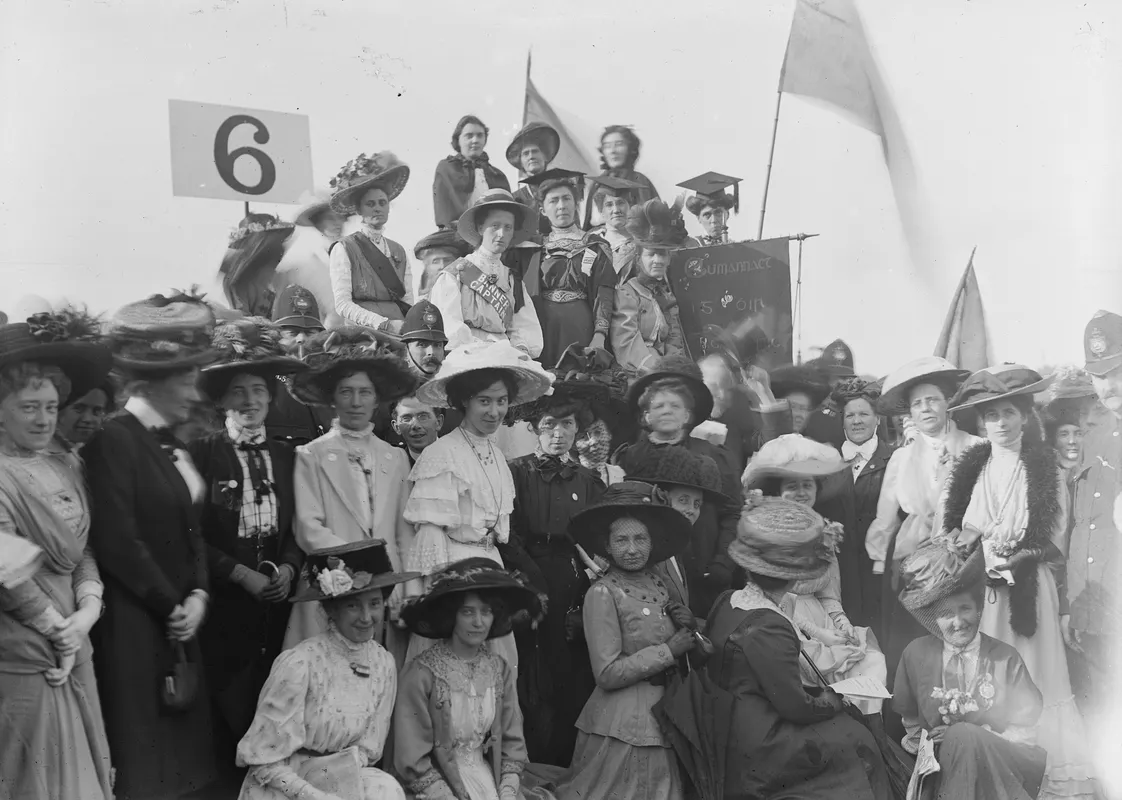
Suffragettes Gathered at Hyde Park for the speeches on 'Women's Sunday' 21st June 1908 (photographic print)
Women's Social and Political Union
1908-06-21

-
-
 Politics & Society
Why did Suffragettes go on hunger strike?
Imprisoned for militant action, some Suffragettes went to extreme lengths to continue their protest
-
 From our experts
Are the Suffragettes still relevant today?
Hammers, banners and prison medals: How Suffragettes continue to inspire and provoke
-
 From our experts
The forgotten Suffragettes & tales of militancy
These four forgotten champions who fought bravely for female suffrage